
Choosing the right mower size for large lawns isn’t just about horsepower—it’s about matching your equipment to your yard’s unique needs. A mower that’s too small will leave you frustrated, while one that’s too large may damage your turf or overwhelm you. With the right size mower, you’ll mow faster, cut cleaner, and spend less time maintaining your lawn. Whether you need a self-propelled push mower, a zero-turn riding mower, or a robotic model, this guide helps you make the smartest choice for a lush, well-maintained lawn.
When you own a large lawn—say, over an acre—mowing isn’t just a chore. It’s a time investment that can take hours, especially if you’re using a small push mower. On the flip side, choosing a mower that’s too big or poorly suited to your yard can lead to missed spots, uneven cuts, or even turf damage. So, how do you choose the right mower size for large lawns? It all comes down to understanding your lawn’s unique layout, your physical capabilities, and the type of mowing experience you want.
A well-maintained large lawn isn’t just about looks—it boosts curb appeal, increases property value, and supports local ecosystems. But to keep your lawn healthy, you need the right tool. The good news? With a little planning and the right mower, mowing a large lawn can be efficient, enjoyable, and even relaxing.
Let’s walk through the key factors to consider when selecting a mower that fits your large yard perfectly.
Key Takeaways
- Measure your lawn accurately: Calculate total square footage to determine mower capacity needs and mowing frequency.
- Choose the right mower type: Push mowers work for under 1 acre, riding mowers for 1–2 acres, and zero-turn models for over 2 acres with complex layouts.
- Consider terrain and obstacles: Hilly, rocky, or wooded areas require mowers with better maneuverability and safety features.
- Factor in fuel and maintenance: Electric or robotic mowers may reduce long-term costs but need proper charging or setup.
- Match mower size to operator: A mower that’s too heavy or tall can cause fatigue—choose one that fits your strength and reach.
- Think about mulching vs. bagging: Larger lawns often benefit from mulching to recycle nutrients, but bagging is better for heavy debris.
- Plan for storage and transport: Compact or foldable mowers are easier to store, while riding mowers may need a trailer for transport.
Quick Answers to Common Questions
How big should my lawn be to justify a riding mower?
A riding mower is ideal for lawns over 1 acre, especially if you have dense grass, hills, or limited time. For smaller yards under 1,500 square feet, a push or self-propelled mower is usually more practical.
Can I use a robotic mower on a large, sloped lawn?
Most robotic mowers can handle gentle slopes, but steep hills may cause them to tip or lose efficiency. Look for models rated for slope use and ensure the perimeter wire is securely installed.
What’s the difference between a zero-turn and a standard riding mower?
A zero-turn mower can pivot on the spot, offering tighter turns and faster mowing in complex layouts. Standard riding mowers have fixed turning radii and are better for straight, open lawns.
How often should I mow a large lawn?
Most lawns should be mowed every 5–7 days during peak growing season. Longer grass can stress the turf, so consistent mowing promotes healthier, denser growth.
Is it better to mulch or bag on a large lawn?
Mulching is usually best for large lawns—it recycles nutrients and reduces cleanup. Bag only if you have heavy debris or don’t want clippings on your grass.
📑 Table of Contents
- 1. Measure Your Lawn Accurately
- 2. Match Mower Type to Lawn Size
- 3. Consider Terrain and Obstacles
- 4. Evaluate Cutting Width and Deck Size
- 5. Think About Fuel Type and Maintenance
- 6. Match Mower Size to Your Physical Abilities
- 7. Decide Between Mulching, Bagging, and Side Discharge
- 8. Plan for Storage and Transport
- Conclusion
1. Measure Your Lawn Accurately
Before you even think about mower types or brands, you need to know how much grass you’re dealing with. Measuring your lawn might seem obvious, but many people underestimate or overestimate their yard size—especially if it includes irregular shapes, curves, or outbuildings.
Start by sketching a rough map of your property. Break it into sections: front yard, backyard, side yards, garden beds, and any areas with trees or driveways. Then, use a measuring tape or a free app like Google Earth to calculate the square footage of each section.
For example:
– A typical suburban lot might be 8,000 to 10,000 square feet (about 0.18 to 0.23 acres).
– A large estate could easily exceed 5,000 square feet just in the back.
Once you have your total square footage, divide it by the cutting width of the mower you’re considering. This tells you how many passes you’ll need per mowing session. For instance, a 21-inch mower covers about 350 square feet per pass. If your lawn is 7,000 square feet, you’ll need roughly 20 passes—plus turning time. That’s why a larger mower with a 42-inch or wider cutting deck can save hours of labor.
2. Match Mower Type to Lawn Size
Visual guide about How to Choose the Right Mower Size for Large Lawns
Image source: cdn.shopify.com
Not all mowers are created equal, and size matters—literally. The type of mower you choose should align with your lawn’s square footage and your personal comfort level.
Push Mowers: Best for Small to Medium Lawns
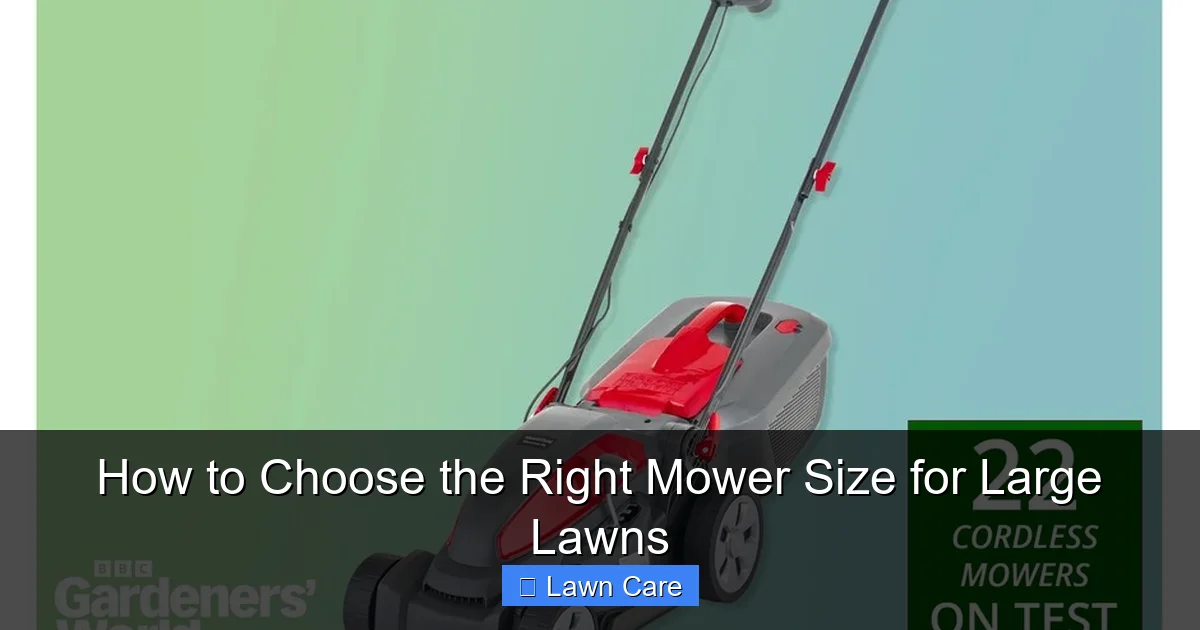
Push mowers are lightweight, affordable, and great for yards under 1,500 square feet. They’re ideal if your large lawn has narrow paths, flower beds, or tight corners. However, mowing over an acre with a push mower can take 2–3 hours, depending on grass height and terrain. If you’re physically able and enjoy the workout, a self-propelled push mower might work—but expect to spend more time mowing.
Self-Propelled Mowers: The Middle Ground
These mowers reduce the physical effort needed by driving themselves forward. They’re perfect for hilly or uneven terrain and work well for lawns between 1,500 and 3,000 square feet. If your large lawn has slopes or thick grass, a self-propelled model can save your back and prevent missed spots.
Riding Mowers: The Gold Standard for Large Lawns
For lawns over 1 acre, a riding mower is often the best choice. These mowers seat you, offer wider cutting decks (30 to 54 inches), and can mow up to 2 acres in under an hour. They’re especially useful if you have mobility issues, dense grass, or frequent mowing needs.
Zero-Turn Mowers: Maximum Efficiency
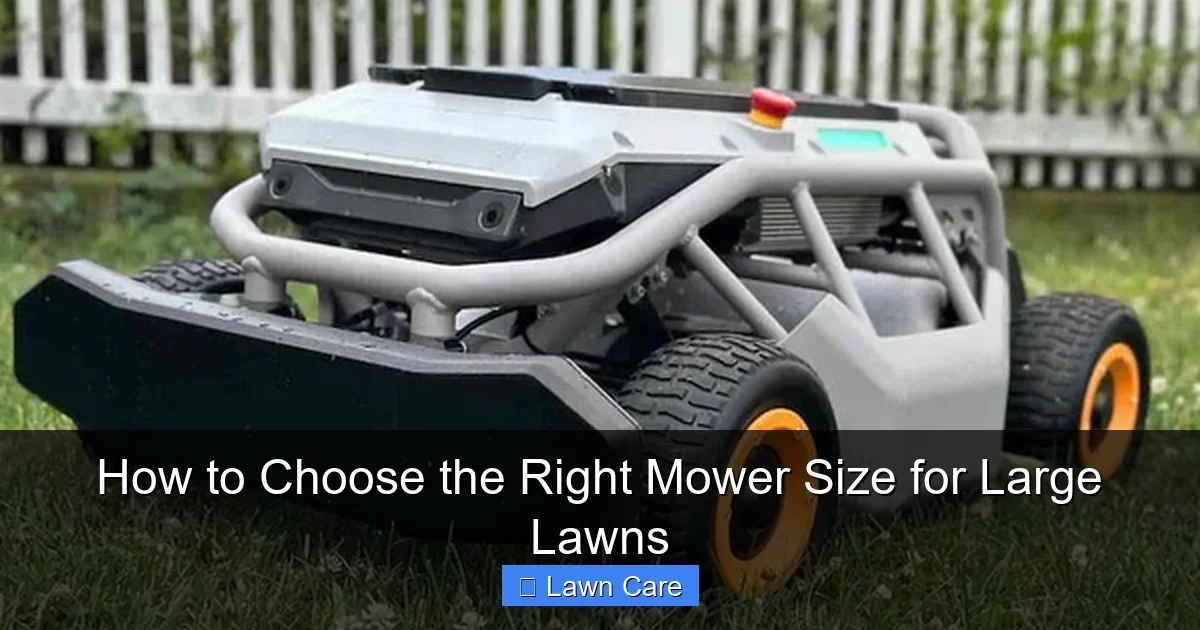
Zero-turn mowers are the Ferrari of lawn mowers. With their ability to pivot on the spot, they excel in complex layouts—like those with circular flower beds or winding paths. They’re ideal for large, irregularly shaped lawns over 2 acres. While they cost more upfront, their speed and precision often justify the investment.
Robotic Mowers: The Future of Lawn Care
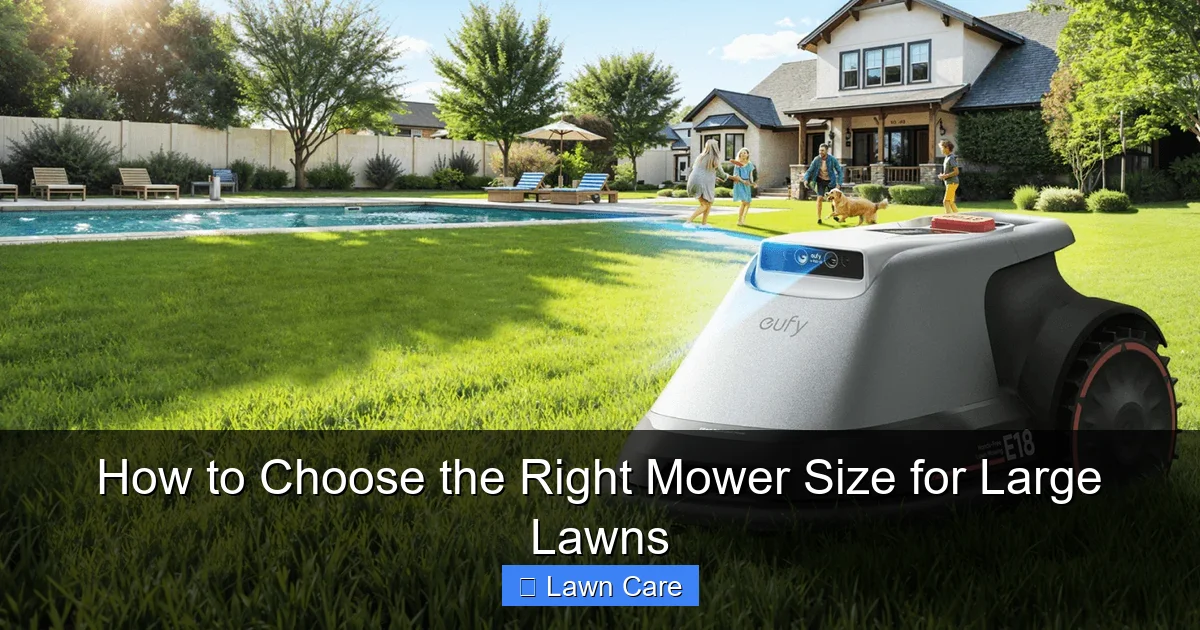
If you want a hands-off approach, robotic mowers are an excellent option. They cut grass automatically using GPS and sensors, and many can handle lawns up to 1.5 acres. They’re quiet, eco-friendly, and require minimal maintenance—but they need a perimeter wire and regular setup.
3. Consider Terrain and Obstacles
Visual guide about How to Choose the Right Mower Size for Large Lawns
Image source: cdn.shopify.com
Your mower’s size isn’t the only factor—its ability to handle your lawn’s terrain plays a huge role. A flat, open lawn is easy to mow, but hills, rocks, and trees change everything.
Hilly Lawns
If your yard has slopes, avoid front-wheel-drive mowers—they can tip or lose traction. Instead, choose a rear-wheel-drive riding mower or a self-propelled push model with good balance. Zero-turn mowers also handle hills well, especially those with suspension systems.
Rocky or Uneven Ground
Loose stones or raised tree roots can damage mower decks or blades. Look for mowers with high ground clearance and durable construction. Some models even come with reinforced decks or protective skirts.
Trees, Shrubs, and Obstacles
Tight spaces around trees require mowers with excellent maneuverability. A zero-turn or a compact riding mower with a tight turning radius (under 12 inches) is ideal. Avoid mowers with long decks that can get caught on branches.
4. Evaluate Cutting Width and Deck Size
Visual guide about How to Choose the Right Mower Size for Large Lawns
Image source: farmcitystate.com
Cutting width directly affects how much ground your mower covers per pass. A wider deck means fewer passes, less fatigue, and faster mowing—but it also means a larger machine that may struggle in tight spaces.
For large lawns:
– 21–24 inches: Best for small yards or detailed work.
– 30–36 inches: Great for medium to large yards with open spaces.
– 42–54 inches: Ideal for lawns over 1 acre with few obstacles.
Keep in mind that a wider deck doesn’t always mean better. If your lawn has flower beds, fences, or winding paths, a narrower mower (like a 30-inch zero-turn) gives you more control.
5. Think About Fuel Type and Maintenance
The power source of your mower impacts both performance and long-term costs.
Gas Mowers
Most riding and zero-turn mowers run on gas. They’re powerful and reliable but require regular maintenance—oil changes, spark plug checks, and fuel stabilizer in winter. They’re loud and emit emissions, but they’re great for large, demanding lawns.
Electric Mowers
Corded electric mowers are limited by cord length, so they’re not ideal for large lawns. Battery-powered models are better—especially robotic mowers. They’re quieter, cleaner, and require less maintenance. Just make sure your battery life supports the size of your lawn.
Robotic Mowers
These run on electricity and cut grass automatically. They’re perfect for large, open lawns with minimal obstacles. They’re quiet, energy-efficient, and require almost no effort—but they need proper setup and occasional blade maintenance.
6. Match Mower Size to Your Physical Abilities
Even the best mower won’t help if you can’t operate it comfortably. Consider your height, strength, and any physical limitations.
– A mower that’s too heavy or tall can cause back strain.
– Self-propelled models reduce effort but still require some physical input.
– Riding mowers take the strain off your body but may be too large if you have limited mobility.
If you’re unsure, test-drive a few models at a local dealer. Many stores offer rental options or demo days where you can try before you buy.
7. Decide Between Mulching, Bagging, and Side Discharge
How you dispose of clippings affects your mower choice.
– Mulching: Recycles nutrients back into the soil. Ideal for large lawns with healthy grass—no need to bag.
– Bagging: Collects clippings for disposal. Best for lawns with heavy growth or debris.
– Side discharge: Blows clippings to the side. Useful for quick cleanup but less efficient than mulching.
Most riding and zero-turn mowers offer all three options. For large lawns, mulching is often the most practical—it saves time and improves lawn health.
8. Plan for Storage and Transport
A large mower takes up space. If you live in an apartment or have limited storage, consider a foldable deck or a compact model. Riding mowers may need a trailer for transport—check local regulations.
Robotic mowers are compact but require charging stations and perimeter wire installation. Gas mowers need seasonal storage and maintenance.
Conclusion
Choosing the right mower size for large lawns is about balance. You want a mower that’s powerful enough to handle your grass, maneuverable enough to navigate obstacles, and comfortable enough for you to use regularly. Whether you go with a self-propelled push mower, a spacious riding mower, or a cutting-edge robotic model, the key is matching the machine to your lawn’s size, shape, and your lifestyle.
Remember, the best mower isn’t always the biggest or the most expensive—it’s the one that keeps your lawn healthy, saves you time, and makes mowing a pleasure, not a chore. With the right mower, your large lawn won’t just look good—it’ll feel like a sanctuary.
Frequently Asked Questions
What is the best mower for a 2-acre lawn?
A zero-turn riding mower with a 42-inch or wider deck is ideal for a 2-acre lawn. It offers speed, maneuverability, and efficiency for large, open areas with few obstacles.
Can I use a push mower on a large lawn if I’m in good shape?
Yes, but it will take significantly more time and effort. A self-propelled push mower is a better option for large lawns, as it reduces physical strain while still being manageable.
How do I maintain my riding mower for long-term use?
Regular maintenance includes changing the oil, sharpening the blades, checking the air filter, and storing the mower properly in winter. Refer to your owner’s manual for specific guidelines.
Are electric mowers powerful enough for large lawns?
Modern battery-powered mowers are quite capable, especially robotic models designed for large lawns. Just ensure the battery life matches your yard size and consider charging multiple batteries.
What should I do if my mower leaves strips of uncut grass?
This is often due to overlapping passes or a dull blade. Adjust your mowing pattern to overlap each pass by 50%, and sharpen the blade every 10–15 hours of use.
Can I convert my push mower to a riding mower?
No, push mowers aren’t designed to be converted into riding models. Instead, consider upgrading to a riding or zero-turn mower for large lawns.