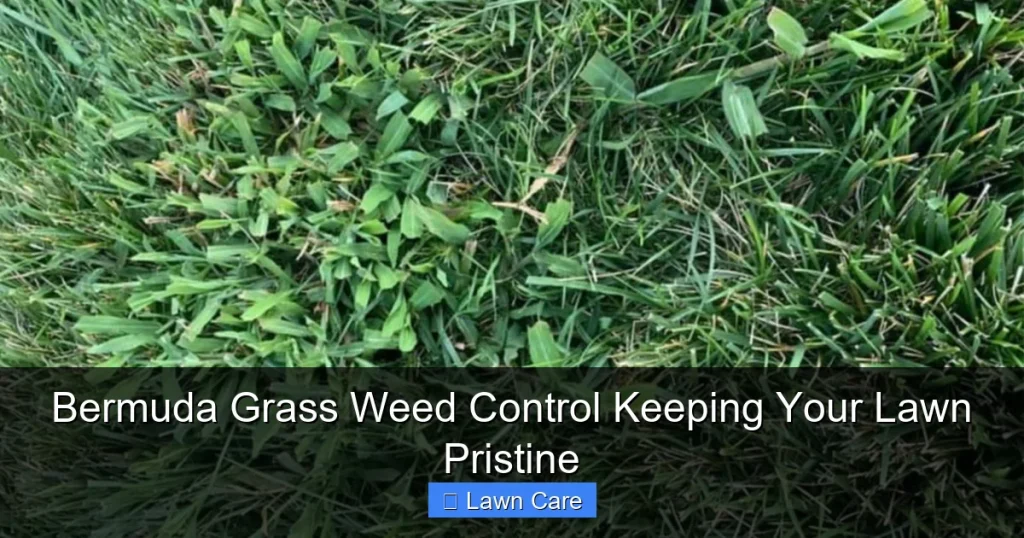
Achieving a pristine Bermuda grass lawn means mastering weed control. This guide covers proactive strategies, identification, effective treatment methods, and preventative measures to keep your lawn looking its best. Understanding your enemy and employing the right tactics are key to a lush, weed-free landscape.
## Bermuda Grass Weed Control: Keeping Your Lawn Pristine
Imagine stepping out onto your lawn – a sea of lush, vibrant green. The sun is shining, the birds are singing, and your grass is so perfect, it looks like a golf course fairway. Sounds like a dream, right? For many Bermuda grass lawn owners, this dream can quickly turn into a nightmare when weeds decide to crash the party. These unwelcome guests can steal nutrients, sunlight, and that picture-perfect aesthetic you’ve worked so hard to achieve. But don’t despair! With the right knowledge and a consistent approach, you can effectively tackle Bermuda grass weed control and keep your lawn looking pristine year-round.
Bermuda grass is a fantastic choice for many lawns, especially in warmer climates. It’s known for its dense growth, excellent wear tolerance, and beautiful green color. However, its vigorous spreading nature also means it can be a bit of a diva. When it’s healthy and thriving, it can outcompete many weeds. But when stressed, or when certain conditions favor weed growth, you can find yourself battling everything from dandelions to crabgrass. This article will equip you with the essential strategies for effective Bermuda grass weed control, ensuring your lawn remains the envy of the neighborhood.
### Understanding the Enemy: Weed Identification
Before you can effectively fight weeds, you need to know what you’re up against. Not all weeds are created equal, and different types require different approaches. Broadly, weeds in a Bermuda grass lawn fall into two main categories: broadleaf weeds and grassy weeds.
#### Broadleaf Weeds
These are probably the most recognizable. They have leaves that are typically wider than grasses and often have a network of veins. Common examples include dandelions, clover, chickweed, and plantain. Broadleaf weeds are usually annuals or perennials and can spread through seeds or root systems.
#### Grassy Weeds
These look similar to your Bermuda grass, which can make them trickier to spot and control. They have narrow, blade-like leaves and grow in a similar fashion. Crabgrass, goosegrass, and foxtail are common culprits. Many grassy weeds are annuals that germinate from seeds left in the soil.
### The Foundation of Defense: Promoting a Healthy Bermuda Grass Lawn
The most effective way to combat weeds is to create an environment where they can’t gain a foothold. A dense, healthy Bermuda grass lawn is your best natural defense. This means focusing on the fundamentals of good lawn care.
#### Mowing Height Matters
Don’t scalp your Bermuda grass! Mowing too short stresses the grass, making it susceptible to weeds and disease. For most Bermuda grass varieties, a mowing height of 1 to 1.5 inches is ideal. This height encourages dense growth and shades the soil, suppressing weed seed germination. Always use a sharp mower blade to ensure clean cuts, preventing ragged edges that can invite disease.
#### Watering Wisely
Consistent, deep watering is crucial for Bermuda grass health. Instead of frequent, shallow watering, aim for less frequent but deeper watering. This encourages the grass roots to grow deeper into the soil, making the grass more drought-tolerant and resilient. Water early in the morning to minimize evaporation and allow the grass blades to dry before nightfall, reducing the risk of fungal diseases. Overwatering can also create conditions favorable for certain weeds.
#### Fertilization for Vigor
A well-fed Bermuda grass lawn is a strong lawn. Proper fertilization provides the nutrients your grass needs to thrive and outcompete weeds. For Bermuda grass, a balanced fertilizer applied at the right times of the year is key. Typically, this involves fertilizing during the active growing season, which for Bermuda grass is spring through early fall. Avoid over-fertilizing, as this can also encourage weed growth or lead to disease problems. Consider using a slow-release fertilizer to provide a steady supply of nutrients. Check out this guide on complete Bermuda grass lawn maintenance to know the best times to feed your lawn.
#### Aeration and Dethatching
Compacted soil and excessive thatch buildup can hinder water and nutrient absorption, weakening your Bermuda grass and creating opportunities for weeds. Aeration involves removing small plugs of soil to improve air circulation, water penetration, and nutrient uptake. Dethatching removes the layer of dead grass and organic matter that builds up on the soil surface. Both practices contribute to a healthier root system and a more resilient turf. The best time to aerate a Bermuda grass lawn is usually when it is actively growing.
### Proactive Protection: Pre-Emergent Weed Control
The best weed control is preventing them from sprouting in the first place. Pre-emergent herbicides are designed to kill weed seeds before they germinate and establish themselves. These are applied to the lawn before weeds typically appear in the spring and sometimes again in the fall, depending on the weed types you’re targeting.
#### How Pre-Emergents Work
Pre-emergent herbicides create a chemical barrier in the soil. When weed seeds absorb water and attempt to germinate, they absorb the herbicide, which then prevents their root and shoot development. It’s important to remember that pre-emergents do not kill existing weeds; they only prevent new ones from growing.
#### Timing is Everything
Applying pre-emergents at the correct time is critical for their effectiveness. For warm-season grasses like Bermuda, the first application is usually made in late winter or early spring, just before soil temperatures consistently reach 55°F, which is when many annual weeds begin to germinate. A second application in late spring or early summer might be necessary to control summer annual weeds. Always read and follow the label instructions carefully, as timing can vary based on your specific climate and the product you are using.
#### Choosing the Right Pre-Emergent
There are many pre-emergent herbicides available. Some are selective, targeting specific types of weeds, while others are more general. When choosing a product, consider the types of weeds you’ve had problems with in the past. For lawns with Bermuda grass, ensure the product is labeled as safe for use on Bermuda grass. Some common active ingredients in pre-emergent herbicides include pendimethalin and dithiopyr.
### Reactive Strategies: Post-Emergent Weed Control
Despite your best preventative efforts, some weeds will inevitably pop up. When this happens, it’s time for post-emergent weed control. These herbicides are designed to kill weeds that have already germinated and are actively growing.
#### Spot Treatment vs. Broadcast Application
For scattered weeds, spot treatment is often the most efficient and cost-effective method. This involves applying the herbicide directly to the weed. For widespread weed problems, a broadcast application might be necessary, where the herbicide is applied over the entire lawn.
#### Selecting the Right Post-Emergent Herbicide
This is where knowing your weeds is crucial.
* **For Broadleaf Weeds:** Herbicides containing active ingredients like 2,4-D, MCPP, or dicamba are generally effective against broadleaf weeds. Many lawn care products are “weed and feed” formulations that combine fertilizer with a broadleaf herbicide. For Bermuda grass, it’s important to use a product that is specifically labeled as safe for this grass type. For instance, looking for the best weed and feed for Bermuda grass can help simplify this selection.
* **For Grassy Weeds:** Controlling grassy weeds in a Bermuda grass lawn can be more challenging because they resemble your desired grass. Some herbicides are selective and can target specific grassy weeds without harming the Bermuda grass. However, many post-emergent herbicides that kill grassy weeds can also injure or kill Bermuda grass. This is why it is so important to choose a product carefully. For example, you might need to look for the best post emergent weed killer for Bermuda grass that is specifically formulated for it. Products containing fluazifop or quinclorac can sometimes be used, but always verify the label.
#### The Importance of Reading Labels
This cannot be stressed enough: always read and follow the product label. Labels provide critical information on application rates, timing, safety precautions, and most importantly, which grass types the herbicide is safe to use on. Using the wrong herbicide can severely damage or kill your Bermuda grass.
### Mechanical and Manual Weed Control Methods
Sometimes, the most effective and environmentally friendly way to deal with weeds is through physical means. These methods are particularly useful for smaller infestations or for those who prefer to avoid chemical treatments.
#### Hand-Pulling Weeds
For individual weeds or small patches, hand-pulling is an excellent option. The best time to hand-pull is after a rain or watering, when the soil is moist and the weeds will come out with their entire root system. Make sure to get as much of the root as possible, especially for perennial weeds that can regrow from root fragments. Dispose of the weeds properly to prevent them from reseeding.
#### Hoeing and Cultivating
A hoe can be a useful tool for removing shallow-rooted weeds. Keep the hoe shallow to avoid disturbing the soil surface too much, which can bring dormant weed seeds to the surface. This method is best for garden beds or areas where you want to avoid using herbicides.
#### Weed Eaters and Edging Tools
While not strictly for removing weeds from the lawn itself, tools like weed eaters and edging shears are essential for maintaining clean borders and preventing weeds from encroaching from sidewalks, driveways, and flower beds. Keeping these areas tidy can significantly reduce the number of weeds that spread into your lawn. For more on this, you might find how to weed eat your lawn like a pro helpful.
### Long-Term Strategies for a Weed-Free Lawn
Controlling weeds is not a one-time event; it’s an ongoing process. By integrating various strategies and staying vigilant, you can maintain a pristine Bermuda grass lawn for years to come.
#### Addressing Bare Spots Promptly
Bare or thin patches in your lawn are invitations for weeds. Bermuda grass spreads by stolons and rhizomes, and it’s excellent at filling in gaps. However, if a patch is too large or the grass is struggling, weeds will take over quickly. Address bare spots by overseeding with Bermuda grass seed or sodding as soon as they appear. Proper soil preparation and ensuring adequate sunlight and water will help the Bermuda grass establish quickly. For advice on bringing your lawn back to life, see how to repair Bermuda grass lawn.
#### Seasonal Weed Control Tactics
* **Spring:** Apply pre-emergent herbicides to prevent summer annual weeds. Monitor for early broadleaf weeds and treat as needed.
* **Summer:** Bermuda grass is actively growing. Continue to monitor for weeds. Some post-emergent herbicides can be applied, but be mindful of heat stress on the lawn.
* **Fall:** Apply pre-emergent herbicides to prevent winter annual weeds. Continue to manage any broadleaf weeds that appear. This is also a good time to consider aeration and overseeding if needed.
* **Winter:** While Bermuda grass is dormant, winter annual weeds may still be a concern. Pre-emergent applications in late fall can help.
#### Eco-Friendly Approaches
For those looking to minimize chemical use, there are several eco-friendly practices for weed control. Organic methods often focus on strengthening the turf, using natural herbicides, or employing mechanical removal. Exploring the best organic weed control methods for a safe lawn can provide valuable alternatives. Remember, a healthy ecosystem in your lawn is the best defense against unwanted invaders.
### Conclusion: Your Pristine Bermuda Grass Lawn Awaits!
Achieving and maintaining a pristine Bermuda grass lawn free from the nuisance of weeds is an attainable goal. It requires a commitment to understanding your lawn’s needs, identifying weed threats, and implementing a consistent, integrated approach to control. By focusing on building a robust and healthy Bermuda grass turf, utilizing pre-emergent strategies to stop weeds before they start, and employing timely and appropriate post-emergent treatments or manual removal when necessary, you can conquer even the most persistent weeds. Don’t let weeds detract from the beauty and enjoyment of your outdoor space. With the right knowledge and a little effort, your Bermuda grass lawn can truly be a pristine carpet of green.
Key Takeaways
- Proper Lawn Health is the First Defense: A thick, healthy Bermuda grass lawn naturally crowds out weeds. Focus on good mowing, watering, and fertilizing practices.
- Identify Your Weeds: Knowing the type of weed (broadleaf or grassy) dictates the most effective control method.
- Integrated Weed Management is Best: Combine cultural practices, mechanical removal, and chemical treatments for optimal results.
- Timing is Crucial: Apply pre-emergent herbicides before weeds germinate and post-emergent treatments when weeds are actively growing.
- Mechanical Removal is Effective for Small Infestations: Hand-pulling or using tools can be efficient for a few scattered weeds.
- Choose the Right Herbicide: Select herbicides specifically labeled for Bermuda grass and the type of weed you are targeting.
- Prevention is Key: Maintain a dense turf, address bare spots promptly, and manage irrigation and fertilization to discourage weed growth.
Quick Answers to Common Questions
What is the best time to apply pre-emergent herbicides to Bermuda grass?
The best time to apply pre-emergent herbicides to Bermuda grass is in late winter or early spring, just before soil temperatures consistently reach 55°F. A second application may be needed in late spring or early summer.
Can I use weed killer on my Bermuda grass lawn?
Yes, but you must use weed killers specifically labeled as safe for Bermuda grass. Always read and follow the product label to avoid damaging your lawn.
How do I get rid of broadleaf weeds in my Bermuda grass?
Broadleaf weeds can typically be controlled with post-emergent herbicides containing active ingredients like 2,4-D, MCPP, or dicamba, provided they are safe for Bermuda grass. Hand-pulling is also effective for smaller infestations.
What should I do about bare spots in my Bermuda grass lawn?
Address bare spots promptly by overseeding with Bermuda grass seed or sodding. This prevents weeds from taking root and allows your Bermuda grass to fill in the area.
Is it better to pull weeds by hand or use chemicals?
For small infestations, hand-pulling is often more effective and environmentally friendly as it removes the entire root system. For larger or more persistent weed problems, carefully selected and applied herbicides may be necessary.
Frequently Asked Questions
How often should I fertilize my Bermuda grass lawn for weed control?
Fertilize your Bermuda grass during its active growing season (spring through early fall) according to a regular schedule. Proper nutrition strengthens the grass, helping it naturally crowd out weeds.
Will mowing my Bermuda grass shorter help control weeds?
No, mowing Bermuda grass too short (scalping) stresses the grass and makes it more susceptible to weeds. Maintaining an optimal mowing height of 1 to 1.5 inches promotes dense growth and suppresses weeds.
What are the signs of a stressed Bermuda grass lawn that might encourage weeds?
Signs of a stressed Bermuda grass lawn include thinning turf, yellowing or browning patches, and increased susceptibility to pests and diseases. This stress can be caused by improper watering, mowing, or fertilization.
Can I use a “weed and feed” product on my Bermuda grass?
Yes, but you must ensure the product is specifically formulated and labeled as safe for Bermuda grass. Always check the label before application.
How can I prevent weeds from growing in my flower beds adjacent to my Bermuda grass lawn?
You can prevent weeds from spreading into your flower beds by maintaining a clear edge between the lawn and the beds, mulching flower beds, and pulling any weeds that attempt to establish themselves promptly. For more aggressive solutions, consider a targeted application of a Bermuda-safe weed barrier or herbicide near the bed’s edge.
Are there any natural or organic ways to control weeds in Bermuda grass?
Yes, natural methods include hand-pulling weeds, improving soil health, maintaining dense turf through proper care, and using organic mulches. Some gardeners also explore natural herbicides derived from essential oils or vinegar, but caution is advised as they can sometimes affect grass if not applied carefully.