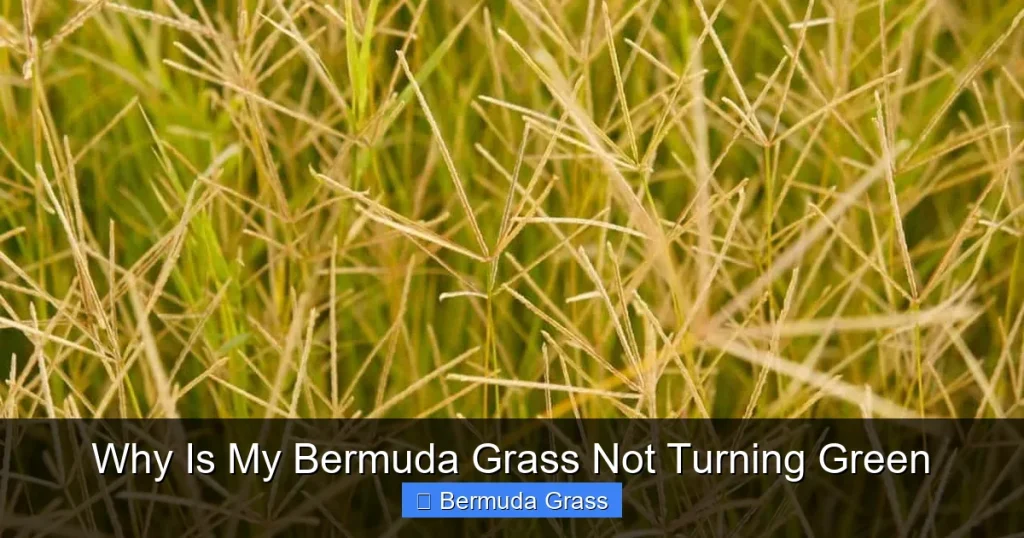
If your Bermuda grass isn’t turning green, several factors could be at play, such as nutrient deficiencies, improper watering, or stress. This guide will walk you through simple steps to diagnose the problem and restore your lawn’s vibrant color, ensuring your Bermuda grass looks healthy and lush again.
Key Takeaways
- Nutrient Deficiency: Lack of essential nutrients like nitrogen can cause Bermuda grass to turn yellow or brown.
- Improper Watering: Overwatering or underwatering can stress the grass and prevent it from turning green.
- Pest or Disease Problems: Pests and diseases can damage roots and blades, leading to discoloration.
- Soil pH Imbalance: An incorrect soil pH can hinder nutrient absorption, affecting grass color.
- Environmental Stress: Excessive heat, drought, or shade can cause Bermuda grass to lose its vibrant green hue.
- Proper Fertilization: Regular, balanced fertilization promotes healthy, green growth.
- Best Practices: Consistent care, testing, and addressing problems promptly will keep your Bermuda grass lush and green.
Introduction
If you’ve noticed your Bermuda grass isn’t turning green, you’re not alone. Many lawn owners face this issue at some point. A healthy, vibrant lawn depends on proper care, nutrients, and environmental conditions. In this guide, you’ll learn why Bermuda grass might lose its green color and, more importantly, how to fix it. Whether your lawn is yellow, brown, or just dull, these step-by-step instructions will help you diagnose the problem and restore its lush appearance.
Understanding Why Bermuda Grass Turns Yellow or Brown
Bermuda grass is a warm-season grass known for its durability and vibrant green color during the growing season. However, various factors can cause it to lose that color:
- Nutrient deficiencies
- Water stress
- Pest or disease damage
- Soil pH imbalance
- Environmental stress
By identifying which of these issues is affecting your lawn, you can take targeted action to bring back its green vibrancy.
Step 1: Inspect Your Lawn
Examine the Color and Texture
Look closely at your Bermuda grass. Is it yellow, brown, or dull green? Are patches uneven? Feel the blades — are they brittle or soft? This initial inspection helps determine if the problem is widespread or localized.
Check for Pests and Diseases
Look for signs of pests like grubs or chinch bugs, or disease symptoms such as fungal spots or mold. Pests often cause the grass to turn yellow or brown, especially in patches.
Assess Soil and Water Conditions
Is the soil overly dry or waterlogged? Check the soil moisture by digging a small hole. Proper moisture levels are crucial for healthy grass.
Step 2: Test Your Soil
Why Soil Testing Matters
Soil pH and nutrient levels directly impact grass health. Testing reveals deficiencies or imbalances that may prevent Bermuda grass from turning green.
How to Perform a Soil Test
- Purchase a soil test kit from a garden store or contact your local extension office.
- Collect soil samples from different areas of your lawn.
- Follow the kit instructions to analyze pH and nutrient levels.
Most tests will tell you if your soil is too acidic or alkaline and whether you need to add nutrients like nitrogen, phosphorus, or potassium.
Step 3: Address Nutrient Deficiencies
Focus on Nitrogen
Nitrogen is essential for lush, green grass. A deficiency often causes yellowing.
- Apply a nitrogen-rich fertilizer specifically formulated for Bermuda grass.
- Follow the recommended application rates to avoid over-fertilization.
Apply Balanced Fertilizer
If your soil test shows deficiencies in other nutrients, use a balanced fertilizer (e.g., 16-4-8) to support overall health.
Tip: Fertilize during the active growing season, typically late spring to summer.
Step 4: Optimize Watering Practices
Adjust Watering Schedule
Bermuda grass needs about 1 to 1.5 inches of water weekly. Water deeply and infrequently to encourage deep roots.
Prevent Overwatering or Underwatering
- Overwatering can lead to root rot and fungal issues, turning grass brown.
- Underwatering stresses the grass, causing it to turn yellow or brown.
Use a rain gauge or soil moisture meter to monitor conditions accurately.
Step 5: Manage Pests and Diseases
Identify Common Pests
Chinch bugs and grubs are common culprits. Look for signs such as wilting or patchy discoloration.
Control Measures
- Use appropriate insecticides if pests are present.
- Implement cultural practices like aeration and proper watering to reduce pest populations.
Address Diseases
Fungal diseases like dollar spot or rust can cause discoloration. Fungicides may be necessary, and removing affected grass can help prevent spread.
Step 6: Improve Soil pH and Aeration
Adjust Soil pH
If your soil is too acidic (
Aerate Your Lawn
Compacted soil prevents roots from absorbing nutrients. Aeration creates small holes, improving water and nutrient penetration.
Step 7: Environmental Stress Management
Extreme heat or drought can cause Bermuda grass to turn brown or yellow. Mulching, shading, or watering during cooler parts of the day can help mitigate stress.
Additionally, avoiding shade that blocks sunlight can promote a healthier, greener lawn.
Practical Tips for Maintaining a Green Bermuda Lawn
- Fertilize regularly during the growing season.
- Water deeply but infrequently.
- Test soil annually to adjust care practices.
- Control pests and diseases promptly.
- Aerate and overseed when necessary.
Troubleshooting Common Problems
If your Bermuda grass remains yellow or brown despite these steps:
- Check fertilization: Are you applying enough nitrogen?
- Evaluate watering: Is your lawn getting too much or too little water?
- Inspect for pests: Are pests present? Use appropriate control methods.
- Test soil: Is the pH balanced? Adjust accordingly.
Persistent issues may require consulting a lawn care professional for a thorough diagnosis.
Conclusion
Reviving a dull or discolored Bermuda grass lawn is achievable with proper care and timely intervention. By inspecting your lawn, testing your soil, adjusting watering and fertilization, managing pests, and improving soil conditions, you can restore your lawn’s lush, green appearance. Remember, consistency is key. Regular maintenance and observation will keep your Bermuda grass healthy and vibrant year-round.