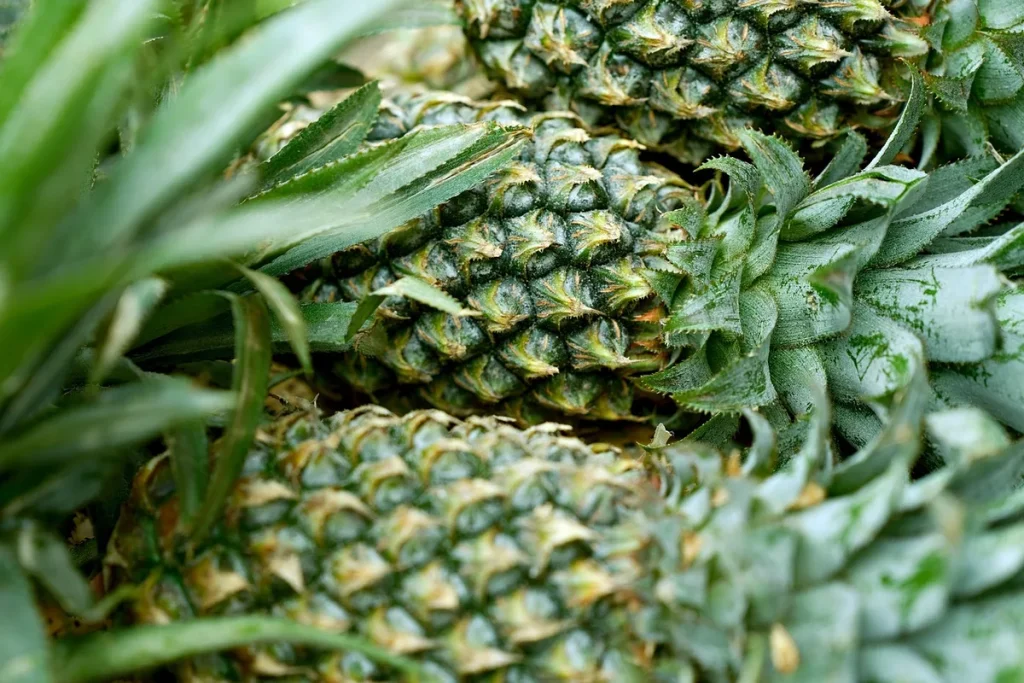
You've noticed white spots on pineapple leaves and you're wondering whether your plant is in trouble. That's a smart instinct, because those spots can mean anything from a harmless quirk of nature to a fungal infection that'll spread to every plant nearby if you don't act. The good news is that most causes are identifiable once you know what to look for, and the fix is usually straightforward.
In our research, we found that the four most common culprits are fungal leaf spot, scale insects, sunscald, and nutrient deficiency. Each one produces a slightly different pattern on the leaf, and the University of Hawaii's College of Tropical Agriculture notes that pineapple plants (Ananas comosus) are particularly susceptible to fungal issues when humidity stays above 80 percent for extended periods. Let's walk through how to figure out exactly what you're dealing with and what to do about it.
Image source: Pixabay / ignartonosbg (Pixabay Content License)
Quick Answer: The 4 Most Likely Causes
White spots on pineapple leaves usually come from one of four sources. Fungal infections create circular or irregular patches, often with a yellow halo. Scale insects look like tiny raised bumps that don't wipe off easily.
Sunscald shows up as bleached, papery patches on the side facing the light. Nutrient deficiencies cause pale or white streaking, usually starting at the leaf tips. Identifying which pattern matches your plant is the first step to fixing it.
How to Diagnose Leaf Spot vs. Pest Damage vs. Environmental Stress
Getting the diagnosis right matters more than you'd think. Treat a fungal problem with pest spray and you've wasted time while the infection spreads. Assume sun damage is a bug infestation and you'll stress your plant with unnecessary chemicals.
Here's how to tell them apart.
Checking Spot Pattern, Texture, and Location
Start by looking at the spots closely. Grab a magnifying glass if you have one.
Fungal spots tend to be circular or irregular with defined edges. They often start small, maybe 2 to 5 millimeters across, and merge into larger patches as the infection progresses. The texture feels slightly sunken or papery, and you might see a yellow or tan border around the white center.
These spots usually appear on older, lower leaves first.
Environmental stress spots don't follow a circular pattern. Sunscald shows up as large, irregular bleached areas, typically on the upper surfaces of leaves that get the most direct light. The tissue feels dry and crispy, not soft or sunken.
What Pest Damage Looks Like Up Close
Scale insects are the most common pest that produces white spots on pineapple leaves. They look like tiny, flat or slightly raised discs, usually 1 to 3 millimeters across, clustered along the leaf midrib or near the base of the leaf where it meets the stem. They don't move.
If you scrape one off with your fingernail, you'll see a soft body underneath and possibly a small wound on the leaf.
Mealybugs are another possibility. They look like tiny bits of cotton fluff, usually hiding in the leaf axils where the leaf meets the center of the plant. They're easier to spot than scale because of their white, waxy coating.
When It's the Environment, Not a Disease
If the white spots are on the upper leaf surfaces and the plant sits in direct afternoon sun, sunscald is the likely cause. Pineapple plants prefer bright, indirect light or morning sun with afternoon shade. When suddenly exposed to intense direct sunlight, the leaves develop bleached, white-to-tan patches that feel dry and brittle.
Nutrient deficiency shows up differently. Calcium deficiency causes white or pale streaks starting at the leaf tips and working backward. Magnesium deficiency produces interveinal chlorosis, the tissue between the veins turns pale while the veins stay green.
Zinc deficiency causes narrow, distorted new leaves with irregular white patches.
Fungal and Bacterial Infections: What to Look For
Fungal infections are the most serious cause of white spots on pineapple leaves, and they're also the most common in humid environments. If you're growing pineapples outdoors in a tropical or subtropical climate, or keeping them in a humid greenhouse, this is the category you need to pay the most attention to.
Common Pathogens That Target Pineapple Leaves
Several fungal species cause leaf spot on Ananas comosus. Ceratocystis paradoxa, which causes black rot and leaf spot, produces dark-centered lesions that can appear white or gray in early stages. Penicillium species cause similar spotting, often with a fuzzy or powdery texture.
Fusarium species tend to produce elongated, tan-to-white lesions that follow the leaf veins.
Bacterial infections are less common but possible. They typically produce water-soaked spots that turn white or tan as the tissue dies. The key difference is that bacterial spots often have a greasy or translucent appearance in early stages, while fungal spots are drier and more defined.
How Spores Spread and What Makes It Worse
Fungal spores spread through water splash, wind, and contaminated tools. Overhead watering is one of the biggest risk factors because it splashes spores from infected soil onto lower leaves. High humidity above 80 percent, poor air circulation, and temperatures between 75 and 85 degrees Fahrenheit create ideal conditions for spore germination.
Once an infection takes hold, it can spread rapidly through a planting. In commercial pineapple production, fungal leaf spot can reduce yields significantly if not managed. The University of Florida IFAS Extension recommends removing and destroying affected plant material rather than composting it, since spores can survive in compost and reinfect your garden later.
Pests That Leave White Spots on Pineapple Plants
Pests are the second most common cause of white spots, and they're often easier to treat than fungal infections. The challenge is catching them early, because both scale insects and mealybugs can establish large populations before you notice the damage.
Scale Insects: The Most Common Culprit
Image source: iNaturalist / Irene
Pineapple scale (Diaspis bromeliae) is the species most commonly found on Ananas comosus. These tiny insects attach themselves to the leaf surface and feed on plant sap, which causes the surrounding tissue to turn white or yellow. A heavy infestation can weaken the plant significantly, stunting growth and reducing fruit quality.
Scale insects are protected by a waxy covering that makes them resistant to many contact insecticides. Horticultural oil or neem oil works by smothering them, which is why these are the go-to treatments. You can also remove them manually with a cotton swab dipped in rubbing alcohol, which is practical for houseplants with light infestations.
The lifecycle of scale insects is about 30 days under optimal conditions, so a single treatment won't be enough. Plan to reapply oil treatments every 7 to 14 days for at least two full lifecycle breaks to catch newly hatched crawlers before they develop their protective coating.
Mealybugs and Other Sap-Feeders
Mealybugs are soft-bodied insects covered in a white, waxy secretion that makes them look like tiny cotton balls. They tend to cluster in the crown of the plant and in leaf axils, feeding on sap and excreting honeydew, which can lead to sooty mold growth.
Treatment for mealybugs is similar to scale. Neem oil, insecticidal soap, or rubbing alcohol applied directly to the insects will kill them on contact. For severe infestations, a systemic insecticide containing imidacloprid can be effective, though this is generally reserved for commercial operations and should be used according to label instructions.
Thrips can also cause white streaking on pineapple leaves, though their damage tends to look more like silvery scratches than distinct spots. They're tiny and fast, so you'll often see the damage before you see the insects. Sticky traps can help confirm their presence.
Sunburn, Nutrient Deficiency, and Other Environmental Causes
Not every white spot is caused by a living pathogen or pest. Environmental factors are responsible for a surprising number of cases, and the fix is usually simpler than you'd expect.
Sunscald on Pineapple Leaves
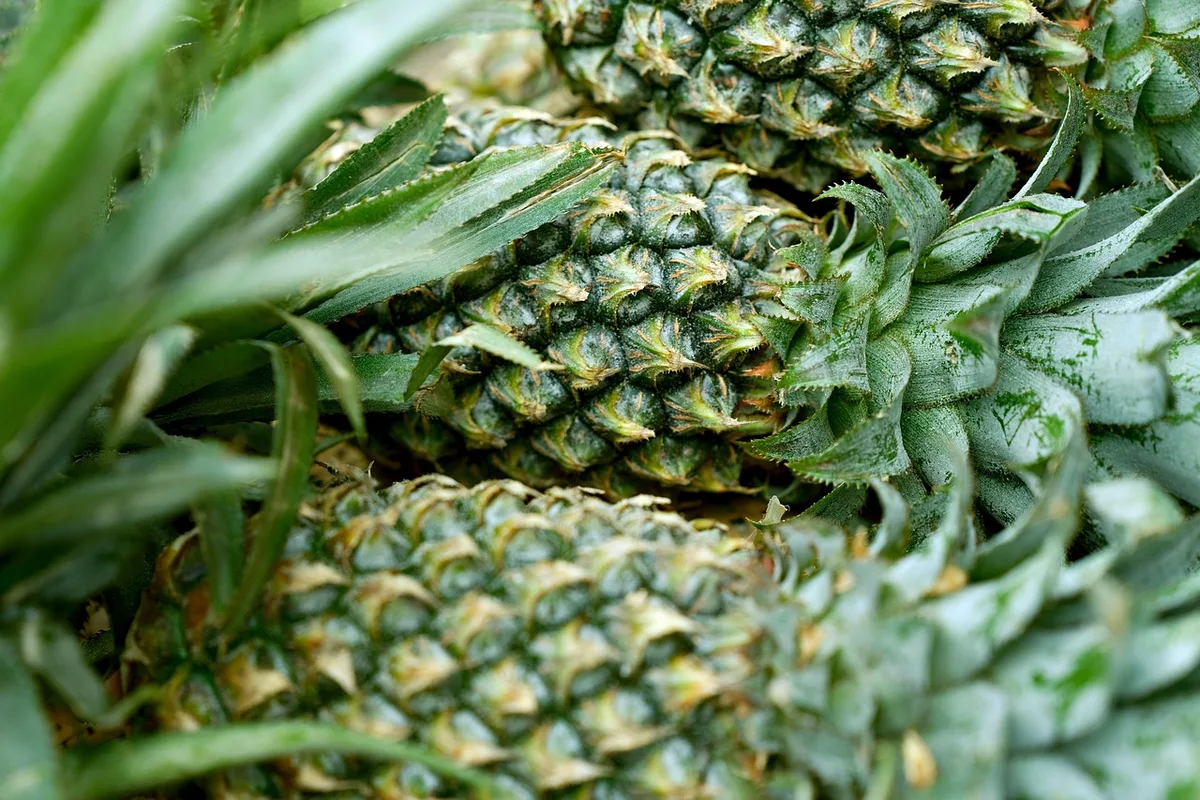
Image source: Pixabay / ignartonosbg
Pineapple plants that have been growing in lower light and are suddenly moved into direct sun are the most vulnerable. The leaves haven't developed enough protective pigments to handle intense UV exposure, and the result is large, irregular white or tan patches on the most exposed surfaces.
The damage is cosmetic and won't kill the plant, but the affected tissue won't recover. New growth should come in green and healthy as long as you adjust the light exposure. Move the plant to a spot with bright, indirect light or provide afternoon shade if it's outdoors.
Gradually acclimating plants to higher light levels over one to two weeks prevents this issue entirely.
Calcium, Magnesium, and Zinc Deficiency Signs
Nutrient deficiencies in pineapple plants often show up as white or pale discoloration on the leaves. Here's how to tell them apart.
- Calcium deficiency: White or pale streaks starting at leaf tips, progressing backward. New growth is most affected. Common in acidic soils below pH 4.5.
- Magnesium deficiency: Pale tissue between the veins while veins remain green. Older leaves show symptoms first. Corrected with Epsom salt solution (1 tablespoon per gallon of water).
- Zinc deficiency: Irregular white patches on new leaves, which may also appear narrow and distorted. Common in soils above pH 7.0.
Soil pH plays a huge role in nutrient availability for pineapple plants. The optimal range is 4.5 to 6.5. Outside this range, certain nutrients become chemically locked out even if they're present in the soil.
A simple soil pH test kit can save you a lot of guesswork.
When It's Just Natural Variegation
Some pineapple varieties naturally produce leaves with white or cream-colored striping. Variegated cultivars like Ananas comosus 'Variegatus' have built-in white margins or streaks that are completely healthy. If the white areas are symmetrical, consistent across multiple leaves, and the plant is otherwise growing well, you're probably looking at natural variegation rather than a problem.
The key difference is that natural variegation appears on new growth from the start and doesn't spread or change shape over time. Disease spots and pest damage appear suddenly and tend to worsen if left untreated.
Step-by-Step: How to Treat White Spots on Pineapple Leaves
Image source: Pixabay / AUREOSCR (Pixabay Content License)
Once you've nailed down the cause, treatment is a matter of working through the right sequence. Skipping steps or applying the wrong fix wastes time and can make things worse. Here's the process that works for all four major causes.
Step 1: Isolate and Inspect
Move the affected plant away from any other plants immediately. Fungal spores and pests both spread fast, and a few minutes of prevention saves you treating your whole collection. Put the plant somewhere with good air circulation and indirect light while you work through the diagnosis.
Inspect every leaf, including the underside and the base where leaves meet the stem. Take note of how many leaves are affected and whether the newest growth shows symptoms. That tells you how long the problem has been developing.
Step 2: Identify the Cause Using the Decision Guide
If the spots are circular with yellow halos, you're dealing with a fungal infection. If you see tiny raised bumps that scrape off, it's scale. Papery bleached areas on sun-facing leaves point to sunscald.
Pale streaking from the tips or between veins suggests a nutrient issue.
When you can't tell, start with the most serious possibility. Treat for fungus first, then reassess in a week if spots continue spreading. That way you don't lose ground waiting.
Step 3: Apply the Right Treatment
For fungal infections, apply a copper-based fungicide to all leaf surfaces, both sides. Repeat every 7 to 14 days for three applications. Remove severely affected leaves with clean pruning shears and dispose of them in the trash, not compost.
For scale insects, spray the entire plant with neem oil or horticultural oil, making sure to coat the undersides of leaves. Use a cotton swab dipped in 70 percent isopropyl alcohol for spot treatment on light infestations. Reapply oil treatments every 10 days for at least three rounds.
For sunscald, move the plant to brighter indirect light or provide afternoon shade outdoors. No chemical treatment is needed. The damaged leaves won't recover, but new growth should come in healthy.
For nutrient deficiencies, adjust soil pH first. Apply dolomitic lime to raise pH or sulfur to lower it, targeting that 4.5 to 6.5 range. Then address the specific deficiency with an appropriate foliar spray or soil amendment.
Step 4: Adjust Your Care Routine
Overwatering and poor drainage are the two biggest underlying stressors that make pineapple plants vulnerable to every problem on this list. Let the top inch of soil dry out between waterings. Make sure the pot has drainage holes and the soil mix is fast-draining.
A mix of perlite, peat, and coarse sand works well.
Stop overhead watering if you've been doing it. Water at the soil level to keep leaves dry and reduce fungal spore spread. Improve air circulation around the plant by spacing it away from walls or other plants.
Step 5: Monitor Recovery Over the Next 2–4 Weeks
New growth is your best indicator. Healthy new leaves emerging green and spot-free means the treatment is working. Keep monitoring for another full month after symptoms stop, because fungal spores and pest eggs can survive a single round of treatment.
If spots continue spreading after two rounds of fungicide, the pathogen may be resistant. Switch to a different active ingredient, chlorothalonil or mancozeb, and ensure you're coating both leaf surfaces thoroughly.
Decision Guide: Which Treatment Matches Your Situation
Use this quick reference to skip straight to the right fix based on what you're seeing.
| What You See | Likely Cause | First Treatment |
|---|---|---|
| Circular white spots with yellow halos, lower leaves first | Fungal leaf spot | Copper fungicide, remove affected leaves |
| Tiny raised white or brown bumps that scrape off | Scale insects | Neem oil spray, alcohol swab spot treatment |
| Large bleached patches on sun-facing leaf surfaces | Sunscald | Move to indirect light, prune damaged leaves |
| White streaks from leaf tips or between veins | Nutrient deficiency | Test soil pH, apply targeted amendment |
| White cottony clusters in leaf crown or axils | Mealybugs | Insecticidal soap, neem oil, isolate plant |
| Symmetrical white stripes, plant otherwise healthy | Natural variegation | No treatment needed |
If you're unsure whether a spot is fungal or environmental, apply this rule. Fungal spots spread to new leaves within a week and often develop darker centers. Environmental spots stay put and don't change shape once they appear.
Watch for three days. If nothing new shows up, you can relax.
Common Mistakes That Make White Spots Worse
People tend to make the same handful of errors when dealing with white spots on pineapple leaves. Steering clear of these will save you time and keep your plant healthier.
Overhead watering during a fungal outbreak. Spraying water over the canopy splashes spores onto healthy tissue and creates the humid leaf surface that fungi love. Always water at the base of the plant.
Using the wrong spray. Applying insecticidal soap to a fungal problem does nothing. Putting fungicide on sunburned leaves stresses the plant with chemicals it doesn't need. Match the treatment to the cause before you spray anything.
Removing too many leaves at once. If more than a third of the foliage is spotted, cut the worst leaves first and wait a week before removing more. The plant needs photosynthetic capacity to recover.
Ignoring soil pH. You can apply all the magnesium sulfate you want, but if your soil pH is wrong, the plant won't be able to absorb it. Testing pH takes five minutes and eliminates the biggest variable.
Treating only once. One application of anything, fungicide or oil spray, is almost never enough. Fungal spores persist in soil and on plant surfaces. Scale eggs hatch weeks after the adults die.
Plan on multiple treatments spaced 7 to 14 days apart.
When to Worry and When to Relax
Not every case of white spots is an emergency. Here's how to gauge the severity.
Relax if: The spots are limited to one or two older leaves, the plant is producing healthy new growth, and the spots aren't spreading after a week of observation. Minor sunscald and early-stage nutrient deficiencies fall into this category.
Act quickly if: Spots are appearing on new growth, multiple leaves are affected, or you see insects or fuzzy mold. Fungal infections that reach the crown of the plant can cause heart rot, which is often fatal. Scale infestations that cover more than 20 percent of the leaf surface will significantly weaken the plant.
Consider starting over if: The crown itself is soft, discolored, or smells rotten. Crown rot caused by Phytophthora species is very difficult to reverse. If the plant is a houseplant and the main stem is compromised, it's often more practical to remove it, sterilize the pot and soil, and start with a fresh crown.
How to Prevent White Spots From Coming Back
Prevention is easier than treatment, and most of it comes down to consistent cultural practices.
Water correctly. Let the soil surface dry between waterings. Use a well-draining mix with plenty of perlite or coarse sand. Never let the pot sit in standing water.
Provide the right light. Bright indirect light or morning sun with afternoon shade is ideal for most pineapple plants. If moving a plant outdoors for summer, acclimate it over 7 to 14 days by increasing direct light exposure gradually.
Maintain air circulation. Space plants at least 12 inches apart. Indoors, a small fan running nearby helps keep leaf surfaces dry and discourages fungal growth.
Test soil pH annually. Pineapple plants are sensitive to pH shifts, especially in container growing where the mix breaks down over time. A simple test kit from any garden center will do.
Inspect regularly. Make it a habit to check the undersides of leaves and the crown every time you water. Catching scale or fungal spots early means a quick spot treatment instead of a full spray program.
Quarantine new plants. Any new pineapple or bromeliad should sit isolated for two weeks before joining your collection. This is the single most effective way to avoid introducing pests or pathogens.
Frequently Asked Questions
Can white spots on pineapple leaves spread to other plants?
Fungal infections and pests both spread to nearby plants. Fungal spores travel through water splash, wind, and contaminated tools. Scale insects crawl to adjacent plants or get carried by airflow.
Isolate any affected plant immediately and treat it away from your collection until symptoms stop progressing.
How long does it take for a pineapple plant to recover from leaf spot?
With proper treatment, you should see healthy new growth within 2 to 4 weeks. Existing damaged leaves won't recover, but the plant will push out new foliage if the underlying cause is resolved. Full recovery, meaning no new spots and strong new growth, typically takes 4 to 6 weeks.
Should I cut off leaves with white spots?
Remove leaves that are more than 50 percent affected. Leave partially spotted leaves in place, since they still contribute to photosynthesis. Always use clean pruning shears and dispose of removed foliage in the trash, not compost, to avoid spreading spores or pests.
Is it safe to eat fruit from a pineapple plant with white spots on the leaves?
In most cases, yes. Fungal leaf spot and scale insects affect the foliage but don't typically compromise the fruit itself. However, if the infection has reached the crown or the plant shows signs of heart rot, the fruit quality may be affected.
When in doubt, inspect the fruit for soft spots, off odors, or discoloration before consuming.
What's the best fungicide for pineapple leaf spot?
Copper-based fungicides are the most widely recommended for fungal leaf spot on Ananas comosus. Apply as a thorough spray covering both sides of every leaf. For resistant infections, products containing chlorothalonil or mancozeb are effective alternatives.
Always follow the label instructions for concentration and application frequency.
Can pineapple plants get white spots from tap water?
Tap water with high mineral content can leave white residue on leaf surfaces, but this is superficial and wipes off easily. It's not the same as a disease or pest issue. If you notice white crusty deposits, wipe the leaves with a damp cloth and consider using filtered or rainwater for future watering.