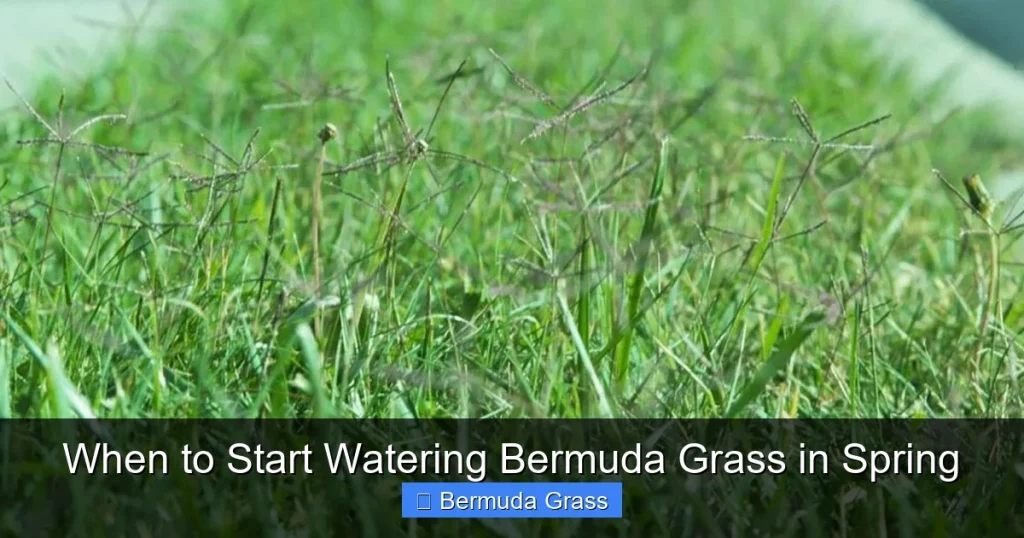
Knowing when to start watering Bermuda grass in spring is key to a healthy lawn. Timing your watering schedule correctly helps promote strong growth and prevents issues like disease or drought stress. This guide walks you through the perfect time to begin watering as temperatures rise.
When to Start Watering Bermuda Grass in Spring
If you want a lush, green Bermuda grass lawn, knowing when to start watering in spring is essential. Proper timing ensures your grass gets the moisture it needs without overdoing it, which can cause disease or root problems. In this guide, you’ll learn how to identify the right moment to begin watering, how often to water, and tips to keep your lawn healthy all season long.
Key Takeaways
- Monitor soil temperature: Begin watering when soil consistently reaches around 65°F to 70°F for optimal growth.
- Assess grass appearance: Start watering when Bermuda grass begins to green up and recover from winter dormancy.
- Check for soil moisture: Ensure the soil is slightly dry but not overly dry before starting watering routines.
- Gradually increase watering: Slowly introduce watering to avoid over-saturating the soil and causing disease.
- Adjust based on weather: Modify watering frequency according to rainfall and temperature fluctuations.
- Avoid early spring watering: Do not water too early in winter or when frost is still present to prevent damage.
Understanding Bermuda Grass Growth Cycles
Bermuda grass is a warm-season grass that thrives in hot climates. It goes through dormancy in winter, turning brown and slowing growth. As spring approaches and temperatures rise, Bermuda grass begins to recover. Recognizing these stages helps you determine the perfect time to start watering.
Step 1: Monitor Soil and Air Temperatures
Check the soil temperature
Start by measuring the soil temperature in your yard. Use a soil thermometer to insert into the ground at a depth of 2-4 inches. The ideal time to begin watering is when soil temperatures stabilize around 65°F to 70°F. This indicates that the ground is warm enough to support active growth.
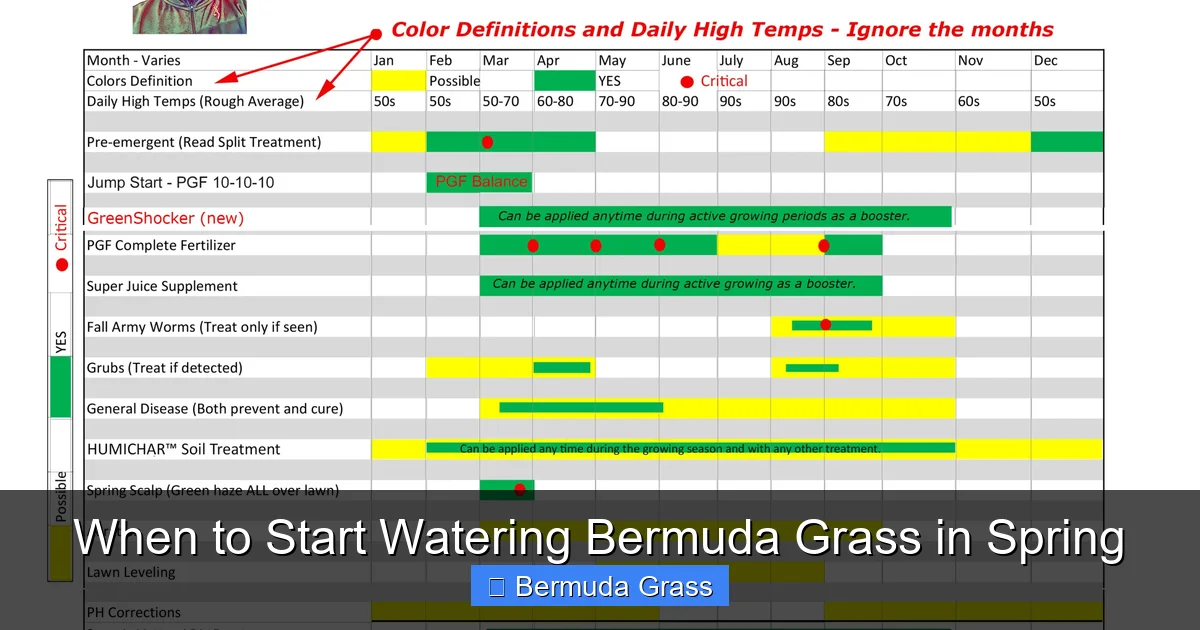
Visual guide about When to Start Watering Bermuda Grass in Spring
Image source: bermudalawnguide.com
Observe air temperature trends
Spring temperatures can fluctuate. Wait until daytime highs consistently reach at least 70°F. Avoid starting watering too early when frost is still possible, as cold temperatures can damage new grass growth.
Step 2: Observe Your Bermuda Grass
Look for signs of green-up
As the weather warms, Bermuda grass begins to green up from its dormant, brown state. This indicates that the grass is waking up and ready for moisture. Usually, this happens when daytime temperatures reach 75°F or higher.
Check for grass recovery
If your lawn shows signs of new growth and green blades, it’s a good sign that watering can commence. Avoid watering when the grass is still brown or dormant, as this can promote disease or weak root development.
Step 3: Assess Soil Moisture Levels
Test soil moisture
Before starting your watering routine, check how moist your soil is. Insert a soil probe or finger into the ground. If the soil feels dry at 2-4 inches deep, it’s time to water. If it’s still moist from winter precipitation, delay watering to avoid over-saturation.
Maintain proper moisture balance
For Bermuda grass, the soil should be slightly dry before watering again. Overwatering can encourage fungal diseases, while underwatering stresses the grass. Aim for consistent soil moisture that supports healthy root growth.
Step 4: Develop a Gradual Watering Schedule
Start with light watering
Initially, water deeply but less frequently. For example, apply about 0.5 to 1 inch of water once or twice a week. This encourages deep root growth and drought resilience.
Adjust based on weather conditions
If it’s particularly hot or windy, you might need to water more often. Conversely, if rainfall occurs, reduce watering to prevent overwatering.
Use proper watering techniques
Water early in the morning to allow grass blades to dry during the day, reducing disease risk. Avoid watering late in the evening or at night, which can promote fungal problems.
Step 5: Fine-Tune Your Watering Routine
Monitor lawn response
Watch your lawn for signs of stress or overwatering. Wilting, yellowing, or soggy soil are signs you need to adjust your watering schedule.
Keep an eye on weather forecasts
Rainfall can supplement your watering schedule. If rain is forecasted, skip watering sessions to conserve water and prevent overwatering.
Adjust as the season progresses
As summer approaches, Bermuda grass may require more frequent watering. Continue to monitor soil moisture and grass health to adapt your routine.
Troubleshooting Common Issues
- Grass remains brown despite watering: Check if soil temperature is sufficient; your grass may still be dormant. Ensure you’re watering deeply enough but not excessively.
- Fungal diseases appear: Water early in the morning and avoid overwatering. Improve air circulation and remove debris to prevent fungal buildup.
- Water runoff or puddling: Water in smaller amounts and more frequently. Use slow, steady watering to allow absorption.
Conclusion
Starting to water Bermuda grass at the right time in spring sets the foundation for a healthy, green lawn all season long. Monitor soil and air temperatures, observe grass recovery, and assess soil moisture to determine the perfect moment to begin watering. By gradually increasing watering and adjusting based on weather, you will promote strong root growth and prevent common lawn problems. Remember, patience and observation are key to a vibrant Bermuda grass lawn.
Additional Tips for a Healthy Bermuda Grass Lawn
- Apply a light fertilization after the grass greens up to encourage lush growth.
- Mow regularly, but never remove more than one-third of the grass blade at a time.
- Maintain proper mowing height—around 1.5 to 2 inches—to promote healthy growth.
- Keep your lawn free of debris to improve air circulation and reduce disease risks.