If you're staring at brown patches in your lawn and wondering whether grubs are the culprit, timing is everything when figuring out when to apply grub control to lawn. Treat too early and the product breaks down before grubs are actually vulnerable. Treat too late and the damage is already done, sometimes to the point where no product will fully save the turf.
Getting the timing right is less about a specific calendar date and more about matching your application to the grub's life cycle and what you're actually seeing in your yard.
Here's the part most people miss: grub control splits into two completely different strategies, preventive and curative, and each has its own window. Manufacturer specifications for preventive products like chlorantraniliprole (the active ingredient in GrubEx) indicate residual activity of roughly two to four months after application, which is why the timing of that application matters so much. Let's walk through how to figure out exactly when to act for your situation.
Quick Answer
The best time to apply preventive grub control is mid-June through late July in most northern and transition-zone regions. This targets newly hatched grubs when they're small and most vulnerable.
If you already have active damage, curative products work best when applied from late August through October. That's when grubs are feeding aggressively near the soil surface but are still small enough for curative chemistry to be effective.
If you're not sure which situation you're in, scout your lawn first. Skip to the section below on how to check for grubs before spending money on a product you may not need yet, or may be too late for.
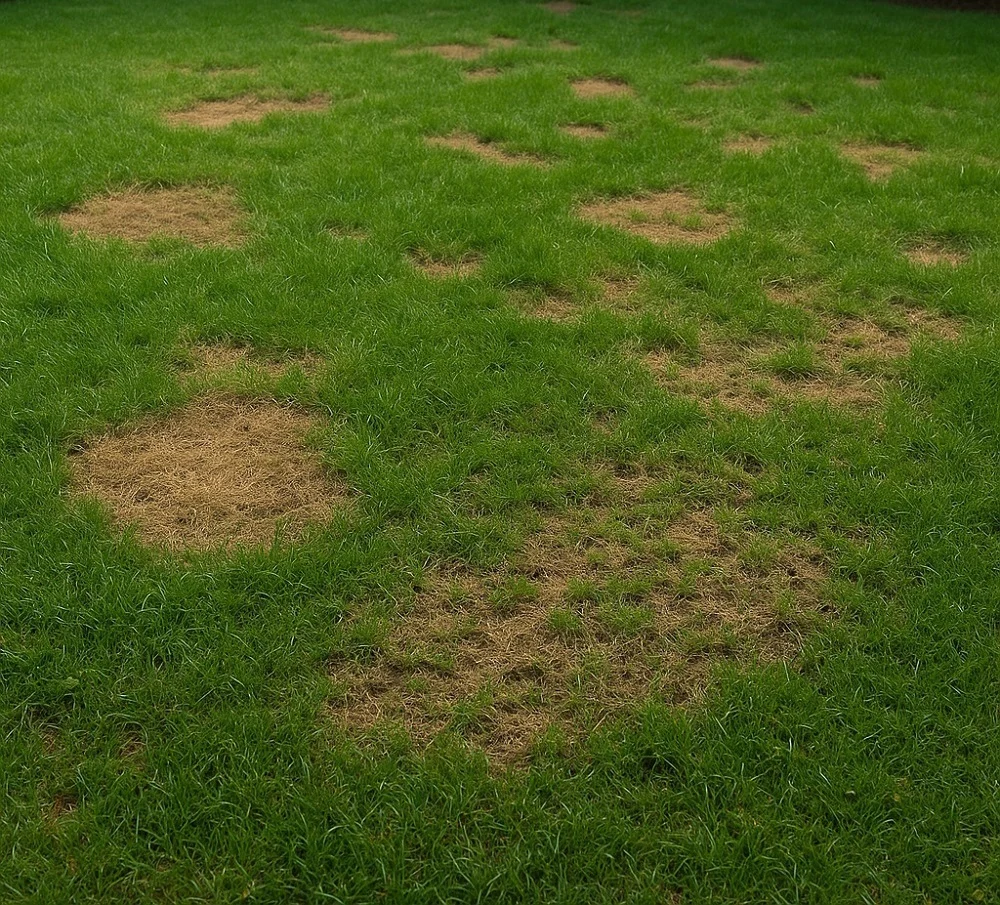
Image source: Bing (Web (fair-use with source credit))
First, Scout Your Lawn — Don't Treat Blind
Before you buy a single bag of product, you need to confirm you actually have a grub problem and figure out how serious it is. Plenty of people treat for grubs that aren't there, spending money and putting chemicals into the soil for no reason. Others ignore grubs until skunks and raccoons finish off what the larvae started.
How to Identify Actual Grub Damage
Grub damage shows up as irregular brown patches that feel spongy underfoot. The key test: grab the edge of a damaged patch and pull. If the turf lifts up like a loose carpet, grubs have chewed through the roots underneath.
Drought stress and fungal disease don't cause that. Dog urine spots are usually smaller, more circular, and have a ring of dark green around the brown center.
Secondary damage is another big clue. Skunks, raccoons, and armadillos dig small cone-shaped holes or peel back sections of sod overnight looking for grubs. If you're seeing digging concentrated in certain areas of the lawn, that's often a stronger indicator of grub activity than the brown patches themselves.
The Cut-and-Lift Test
Here's the definitive way to find out what's going on. Cut a 1-foot by 1-foot square of turf in the damaged area using a spade or knife, about 2 inches deep. Peel it back and look at the soil and root zone.
Count every grub you find in that square foot.
Repeat this in a few different spots, especially where healthy turf meets damaged areas. The threshold for treatment is generally 6 to 10 grubs per square foot for most cool-season grasses. Below that, most lawns can outgrow the damage.
Above 15 per square foot, you're in severe territory and treatment is urgent.
Why Grub Species Matters
Not all white grubs are the same. Japanese beetle grubs, European chafer grubs, masked chafer grubs, and black turfgrass ataenius grubs each have slightly different life cycle timings and feeding patterns. Japanese beetle grubs are the most common and the most damaging across the Midwest and Northeast.
If you can identify which species you're dealing with, your county extension office is the best resource, you'll pick better products and time applications more precisely.
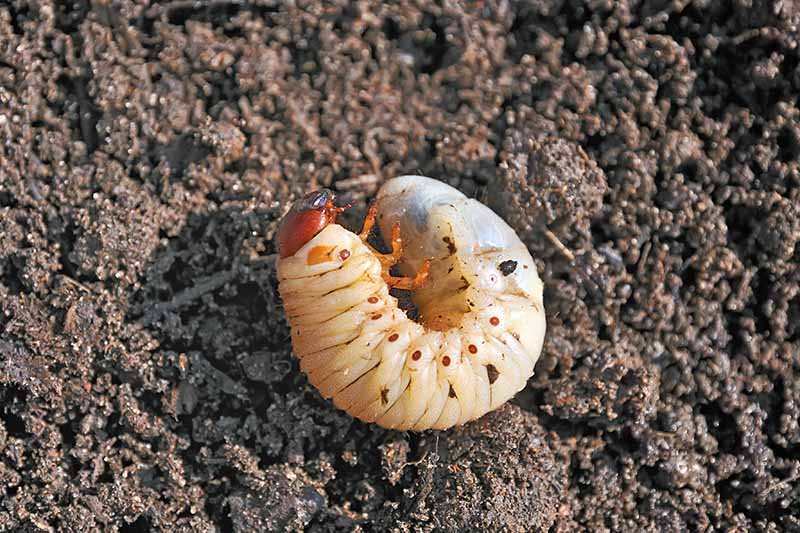
Image source: Bing (Web (fair-use with source credit))
How Grub Life Cycles Dictate Your Timing
Understanding the grub life cycle is the single most important piece of knowledge for getting timing right. Everything below flows from this, so it's worth spending a minute here.
The Full Cycle
Scarab beetles, the adult form of common lawn grubs, follow the same general pattern year after year:
- Adult beetles emerge from the soil in early to mid-summer (typically June through August depending on species and region).
- Females lay eggs in moist soil, usually in full-sun areas of lawn.
- Eggs hatch within two to three weeks, triggered by soil temperatures in the 50 to 65°F range at a 4-inch depth.
- Young larvae (grubs) begin feeding on grass roots in late July through September. This is when they're most vulnerable and when the most root damage occurs.
- Grubs move deeper into the soil as temperatures drop in fall, entering a dormant overwintering state.
- In spring, grubs move back toward the surface briefly to feed before pupating and emerging as adults, restarting the cycle.
Why the Larval Stage Is Your Only Real Control Window
Here's what matters for timing: adult beetles flying around your yard in July are not what kills your lawn. The grubs they produce, feeding underground in August and September, are the problem. And by the time you see brown patches in late spring the following year, the grubs that caused that damage have already done their work and are preparing to pupate.
Applying curative product in April or May after seeing old damage is almost always too late to help that year's turf.
This is the single biggest timing mistake people make, and it's completely understandable if you didn't know the cycle. You see damage, you buy a product, you apply it. But by spring, the grubs are large, deep in the soil, and about to stop feeding entirely.
They're essentially unreachable by most products at that point. You need to be either preventing them the summer before, or hitting the new generation in late summer and fall.
Soil Temperature as Your Trigger
Rather than relying on calendar dates alone, experienced lawn managers track soil temperature. When soil at a 4-inch depth consistently reads between 50 and 65°F, you're approaching the hatch window for most common grub species. Many state extension services publish regional soil temperature maps during the growing season, which is a far more reliable signal than any fixed date on the calendar.
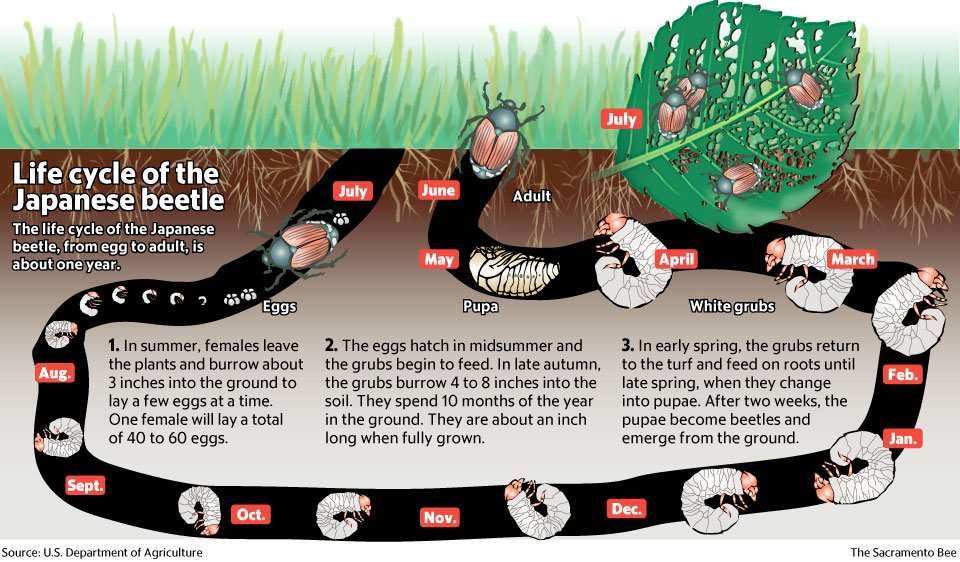
Image source: Bing (Web (fair-use with source credit))
Preventive Grub Control: When and Why
If your lawn has had grub problems before, or you're in a region with known high pressure (most of the Northeast, Midwest, and Mid-Atlantic), a preventive approach is almost always more effective and less stressful than waiting for damage to appear.
The Best Application Window
For most northern and transition-zone cool-season lawns, the optimal window for preventive grub control is mid-June through late July. This timing lines up with adult beetle activity and egg-laying, so the product is active in the soil right when eggs hatch and tiny grubs start feeding.
In warm-season grass regions like the Southeast, the window shifts earlier, typically May through early June, because the beetle species active there have earlier flight periods.
Here's a regional breakdown:
| Region | Preventive Application Window | Primary Species |
|---|---|---|
| Northeast US | Late June – Late July | Japanese beetle, European chafer |
| Midwest US | Mid-June – Mid-July | Japanese beetle, masked chafer |
| Mid-Atlantic | Mid-June – Late July | Japanese beetle, oriental beetle |
| Southeast (warm-season turf) | May – Early June | Japanese beetle, green June beetle |
| Pacific Northwest | Late June – Late July | European chafer, black turfgrass ataenius |
How Preventive Products Actually Work
Preventive grub control products don't kill eggs. They work by creating a treated zone in the root zone of your turf. When newly hatched grubs begin feeding on roots, they ingest the active ingredient and stop feeding within hours.
Death follows within a day or two.
This is why timing matters so much. If you apply too early, the product's residual activity may degrade before eggs hatch. If you apply too late, grubs may have already grown large enough to cause significant damage before encountering the treated zone.
The sweet spot is having the product at peak activity during the two-to-three-week hatch window.
Why Spring Application Is Too Early for Prevention
This catches a lot of people off guard. You see brown patches in April or May, you buy a preventive product, you apply it. But preventive products target the new generation of grubs that will hatch from eggs laid by adult beetles in the coming summer.
The grubs causing your spring damage are from last year's egg hatch, and they're about to pupate. A spring application of preventive product sits in the soil for months before the new eggs even appear, losing much of its potency by the time it's needed.
If you had damage last year and want to prevent a repeat, mark your calendar for June, not April.
Product Options for Prevention
The two most common active ingredients in preventive grub control are:
- Chlorantraniliprole (found in GrubEx and similar products). This is a lower-toxicity option with strong residual activity. It's effective at low application rates and has a favorable environmental profile compared to older chemistry.
- Imidacloprid (found in Merit and various store-brand products). This is a neonicotinoid with a long track record of effectiveness. However, it's restricted or banned in several states due to pollinator concerns, so check your state's regulations before purchasing.
Both require watering in after application, typically with about half an inch of irrigation or rainfall, to move the active ingredient into the root zone where grubs feed.
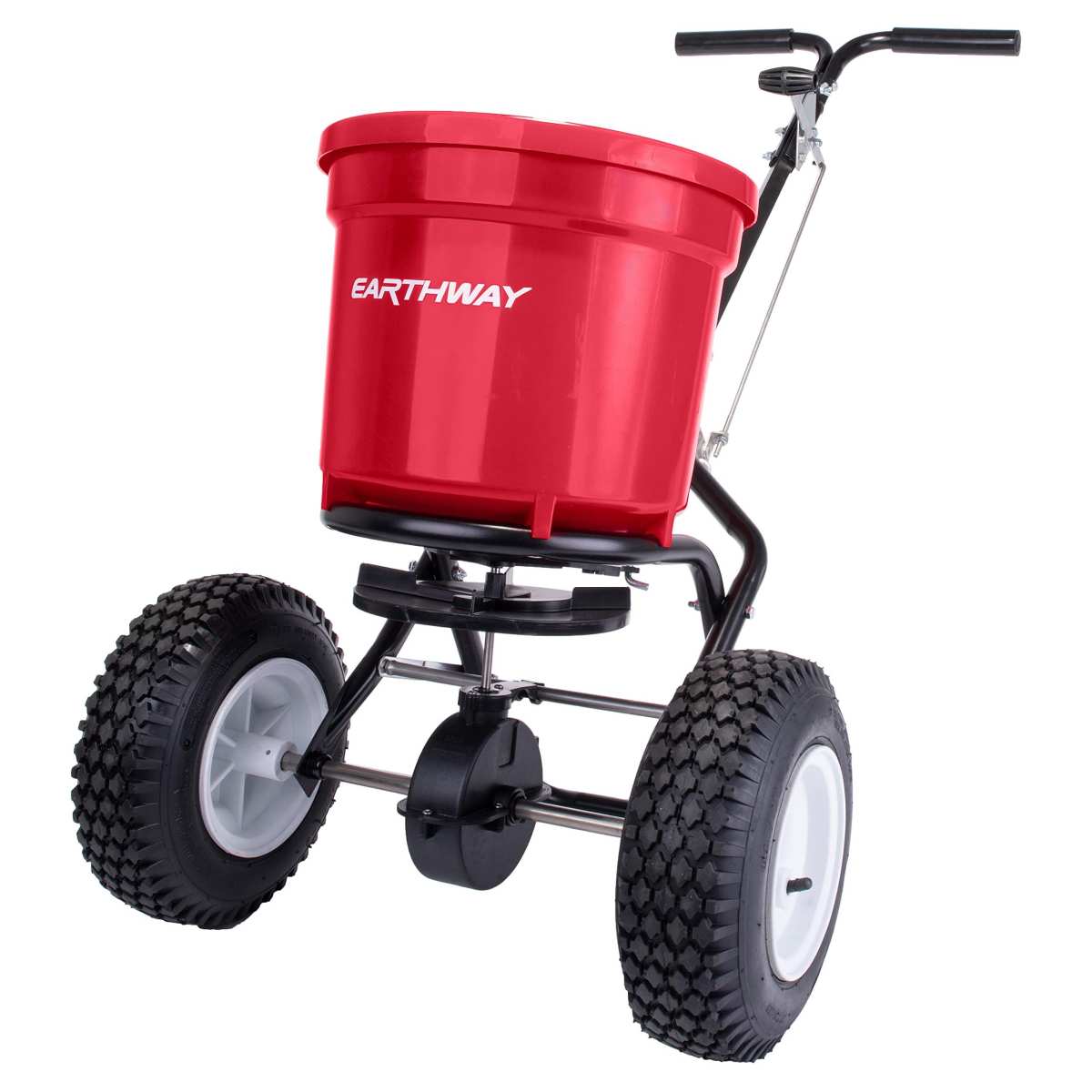
Image source: Bing (Web (fair-use with source credit))
Curative Grub Control: When You're Already Too Late for Prevention
If you're reading this in late summer or early fall and you've already found grubs, or you're seeing fresh damage right now, preventive products won't help. You need a curative approach.
When Curative Treatment Makes Sense
Curative grub control is the right call when:
- You've scouted and found more than 10 grubs per square foot in late summer or early fall.
- You're seeing active brown patches that peel back like carpet from root feeding.
- You're noticing fresh digging from skunks, raccoons, or birds concentrated in specific lawn areas.
- You missed the preventive window and adult beetles were active in your yard earlier this summer.
The key difference is that curative products are designed to kill grubs that are already present and actively feeding. They work fast, often within 24 to 72 hours, but they have shorter residual activity. You're solving today's problem, not preventing next year's.
Why Late Summer and Early Fall Are the Sweet Spot
From late August through October, grubs are small to medium-sized, feeding aggressively near the soil surface, and haven't yet burrowed deep for winter. This makes them the most vulnerable they'll be all year. Curative products applied during this window contact grubs in the upper root zone where the product settles after watering in.
By November in most northern regions, grubs have moved too deep for curative products to reach them effectively. And by the following spring, as we covered above, they're large, deep, and about to pupate. The fall curative window is narrow but highly effective when you hit it.
Trichlorfon-Based Products and How Fast They Work
The most widely used curative active ingredient is trichlorfon, found in products like Dylox. Per manufacturer specifications, trichlorfon kills grubs within 24 to 72 hours of ingestion. It's a fast-acting organophosphate that works on contact and through ingestion, which is why it's effective against larger grubs that preventive products might not fully control.
The trade-off is that trichlorfon has a shorter residual window, typically one to two weeks. That's fine for curative use since you're targeting an existing population, not trying to protect the lawn for months. But it means you need to apply when grubs are actively feeding near the surface, not after they've gone deep for winter.
Why Curative Treatment in Spring Rarely Solves the Problem
If you apply a curative product in April or May, you're targeting grubs that are nearly mature. They've already done their root damage. They're deep in the soil.
And they're about to stop feeding and pupate, which means they're not ingesting the product. You'll spend money and effort for minimal results.
The one exception: if you find active feeding damage in spring and confirm grubs are still near the surface (unusual but possible in mild winters), a curative application can stop further damage. But in most cases, spring curative treatment is a band-aid on a wound that already healed, or didn't. Your better move is to plan a preventive application for the coming summer.
Biological and Organic Alternatives
If you'd rather keep synthetic chemicals out of your yard, and you've got patience, biological controls do work. They just follow different rules and timelines.
Beneficial Nematodes
Heterorhabditis bacteriophora is the nematode species most commonly used for grub control. These microscopic roundworms actively hunt grubs in the soil, enter their bodies, and release bacteria that kill the host within 24 to 48 hours. Application timing matters here because nematodes are living organisms.
They need soil temperatures above 55°F and below 90°F to stay active, and they need moisture to move through the soil profile.
August through early October is the best window for nematode application in most regions. Apply in the evening or on overcast days, since UV light kills them quickly. Water the lawn before and after application to keep them alive and help them penetrate the soil.
Aggregate user reviews suggest nematode treatments work best when grub populations are moderate. Heavy infestations may need synthetic backup.
Milky Spore Disease
Paenibacillus popilliae, commonly called milky spore, is a bacterium that specifically targets Japanese beetle grubs. When grubs ingest the spores while feeding, the bacteria multiply in their blood and kill them. The spores then return to the soil and can remain viable for years.
The catch is that milky spore takes time. It typically needs two to four years of establishment in the soil before providing meaningful suppression. It also works best in regions where soil temperatures stay above 60°F for extended periods, which limits its effectiveness in cooler northern climates.
Milky spore is a long-term investment, not a quick fix.
Common Timing Mistakes That Waste Money and Damage Lawns
Even with the right product, bad timing can turn a simple treatment into an expensive disappointment. Here are the patterns our research shows come up again and again.
Treating Preventively After Grubs Are Already Established
This one is incredibly common. You find grubs in August, you buy a preventive product labeled for season-long control, you apply it in September. Preventive products target tiny newly hatched larvae.
They're far less effective against large, mature grubs already feeding aggressively. If you've confirmed an active infestation, reach for a curative product instead.
Applying Curative Products Before Egg Hatch
The opposite mistake. You see adult beetles in June, you panic, and you apply a curative product immediately. But curative products have short residual activity, often one to two weeks.
If eggs haven't hatched yet, the product degrades before grubs ever encounter it. Curative products work best when grubs are already present and feeding, not as a preemptive strike.
Skipping the Water-In Step
Granular grub control products need water to move the active ingredient from the soil surface down into the root zone where grubs feed. Without irrigation or rainfall after application, the granules just sit on top of the soil doing nothing. Manufacturer labels for most granular products specify a half-inch of water within 24 to 48 hours of application.
If rain isn't in the forecast, run your sprinklers.
Confusing Adult Beetle Activity With the Treatment Window
Seeing Japanese beetles on your roses in July doesn't mean you should treat your lawn that week. The beetles need time to mate, lay eggs, and for those eggs to hatch. The treatment window follows the beetle activity by several weeks.
Use beetle sightings as a signal to prepare, not as a signal to apply immediately.
Over-Treating Healthy Lawns
If your scouting turns up fewer than five grubs per square foot and you're not seeing damage, skip the treatment. Not every lawn needs annual preventive applications. If you've had clean results for two or three years in a row, consider monitoring instead of treating.
You'll save money and reduce unnecessary chemical load in your soil.
Step-by-Step Decision Guide for Your Situation
Here's a straightforward way to figure out what to do right now, based on where you are in the season and what you're seeing.
Step 1: Do You Have Active Damage or Not?
Walk your lawn and look for brown patches that peel back easily, spongy turf, or animal digging. If the answer is no, move to Step 2. If yes, skip to Step 3.
Step 2: No Signs of Grubs, Preventive Strategy
If it's June or July and you're in a region with known grub pressure, apply a preventive product like chlorantraniliprole. Water it in thoroughly. Mark your calendar to scout again in late August.
If it's already August or later with no damage, you're likely fine this year. Plan a preventive application for next June.
Step 3: Active Infestation, Curative Strategy
Cut and lift a few sections of turf. Count the grubs. If you're finding more than 10 per square foot and it's late August through October, apply a curative product like trichlorfon.
Water it in. Monitor the damaged areas over the following two weeks. You should see feeding stop and the grubs die off.
If it's spring and you're finding grubs, resist the urge to treat curatively. Instead, note the damage and plan a preventive application for the coming summer. The current grubs are about to pupate and your product won't reach them effectively.
Step 4: Uncertain, Scout First
If you're not sure what you're looking at, don't treat yet. Cut a few test squares in the transition zone between healthy and damaged turf. Count what you find.
Take clear photos and contact your county extension office for help identifying the species. A few days of scouting saves you from spending money on the wrong product at the wrong time.
Regional Timing Reference
Grub species and climate vary enough across the country that a one-size-fits-all calendar doesn't work. Here's a tighter breakdown by region.
Northeast and Midwest US
Japanese beetle and European chafer dominate here. Adult flight peaks in late June through July. Egg hatch runs from mid-July through mid-August.
Apply preventive products from mid-July through early August. Curative window runs from late August through October. These regions see the most severe grub damage due to heavy populations and favorable soil conditions.
Mid-Atlantic and Transition Zone
Mixed species including Japanese beetle, oriental beetle, and masked chafer. The longer growing season means adult activity can stretch from June through August. Preventive applications work best from late June through late July.
Curative treatments are effective through October and sometimes into early November before soils cool.
Southeast and Warm-Season Turf
Bermuda, zoysia, St. Augustine, and centipede lawns face different grub species, including green June beetle and southern masked chafer. The earlier warm season shifts everything forward.
Preventive applications should go down in May through early June. Curative treatments work from August through October. Warm-season grasses can sometimes outgrow moderate grub damage during peak summer growth, but severe infestations still require treatment.
Pacific Northwest
European chafer and black turfgrass ataenius are the primary concerns. The cooler, wetter climate extends the grub feeding period. Preventive applications from late June through July are standard.
Curative treatments remain effective into November in many areas due to milder fall temperatures.
Expert Tips Most People Miss
These are the details that separate a successful treatment from a wasted application. They don't make it into most quick-read guides, but they matter.
Adult Beetle Activity Predicts Next Year's Problem
If you're seeing heavy Japanese beetle activity in your yard this summer, that's your signal to plan a preventive application for next June. The beetles you see now are laying the eggs that become next year's grubs. Keep a simple log of when you first notice adult beetles and when the activity peaks.
Over a few years, you'll build a reliable local calendar that's more accurate than any generic regional guideline.
Time Grub Treatment Around Aeration and Overseeding
If you core-aerate in early fall, don't apply curative grub control right before or after. The aeration holes disrupt the treated soil zone and can reduce product effectiveness. Instead, treat grubs first, wait two weeks, then aerate and overseed.
For preventive applications in summer, fall aeration won't interfere since the product has already done its job.
Read the Label for Water-In Requirements
Not all products have the same water-in specifications. Some need immediate irrigation, others are rainfast within hours. The label tells you exactly how much water and how quickly it needs to happen.
This isn't a suggestion. It's the difference between a product that works and expensive granules sitting uselessly on the soil surface.
One Well-Timed Application Beats Three Poorly Timed Ones
A single preventive application at the right moment provides better season-long control than multiple curative applications thrown at the lawn whenever you remember. If you're going to treat, do it once, do it at the correct time, and water it in properly. That's the whole game.
Safety, Legal, and Environmental Considerations
Grub control products are pesticides, and they come with responsibilities beyond just killing larvae.
Neonicotinoid Restrictions Vary by State
Imidaclidprid and clothianidin, two common neonicotinoid active ingredients, are restricted or banned for lawn use in Maryland, Connecticut, Vermont, and several other states as of 2026. Some states require applicator licenses for purchase above certain quantities. Check your state department of agriculture website before buying.
The regulations change, and what was legal last year may not be legal now.
Protect Pollinators During Application
Don't apply grub control products to blooming weeds or flowering plants within the lawn. Clover, dandelions, and other broadleaf flowers attract bees. If your lawn has significant bloom, mow first to remove flowers, wait a few days for the clippings to dry, then apply.
This simple step eliminates most pollinator exposure risk.
Pet and Child Re-Entry Intervals
Most granular grub control products require keeping pets and children off the treated area until the product has been watered in and the turf has dried. This is typically 24 to 48 hours. Check the specific product label for exact re-entry times.
Liquid formulations may have different requirements than granular ones.
Buffer Zones Near Water
Maintain buffer zones around ponds, streams, and storm drains when applying any grub control product. Runoff carrying active ingredients into water bodies harms aquatic invertebrates and can violate local environmental regulations. Most labels specify minimum distances from water features.
Frequently Asked Questions
Can I apply grub control and fertilizer at the same time?
Yes, in most cases. Many homeowners combine a preventive grub control application with a summer or early fall fertilizer. Just make sure both products are compatible and water everything in according to the grub control label requirements.
Some combination products are also available that bundle both into a single application.
Will grub control kill earthworms?
Most modern grub control products, particularly chlorantraniliprole-based formulations, have minimal impact on earthworms when applied according to label directions. Older broad-spectrum insecticides were more harmful to non-target soil organisms. If earthworm populations are a priority, stick with targeted products and avoid over-application.
How long after treatment before I can reseed?
For preventive products like chlorantraniliprole, most labels allow immediate overseeding after application and watering in. Curative products like trichlorfon may have a shorter waiting period, typically one to two weeks. Always check the specific product label, as re-entry and reseeding intervals vary by active ingredient and formulation.
What if it rains right after I apply?
Rainfall of a quarter-inch to half-inch after granular application is actually ideal. It waters the product into the root zone exactly as needed. Heavy rainfall beyond an inch may cause runoff, especially on sloped lawns.
If a downpour hits within hours of application and you see granules washing into gutters or low spots, you may need to reapply at a reduced rate once the lawn drains.
Do I need to treat every year?
Not necessarily. If scouting shows low grub counts and no damage for two consecutive years, you can skip preventive treatment and monitor instead. Many lawns in low-pressure areas never need grub control.
Annual treatment makes sense in regions with consistent Japanese beetle or European chafer pressure, or if your lawn has a history of damage.
Final Recommendation: Your Grub Control Timing Plan
Here's how to put all of this into a simple seasonal plan you can follow year after year.
May through June: Scout your lawn for any lingering damage from last year. Note adult beetle activity. If you're in a warm-season grass region, apply preventive products now.
June through July: This is the primary preventive window for cool-season lawns. Apply chlorantraniliprole-based products, water them in, and you're set for the season. Keep watching for adult beetles to gauge next year's risk.
August through September: Scout aggressively. If you find more than 10 grubs per square foot, apply a curative product immediately. This is also the window for beneficial nematode applications if you're going the biological route.
October through November: Late curative treatments can still work in warmer regions. In northern areas, grubs are heading deep and treatment effectiveness drops sharply. Shift focus to fall lawn care and planning next year's preventive strategy.
December through April: Don't treat. Scout if you're curious, but hold off on any product applications until the cycle restarts. Use this downtime to research products, calibrate your spreader, and mark your calendar for the coming preventive window.
The whole system comes down to one principle: match your action to the grub's life cycle, not to the calendar on your wall. Scout first, identify what you're dealing with, then pick the right product for the right moment. That's how you protect your lawn without wasting money or putting unnecessary chemicals into the ground.