Knowing when to apply grub killer to lawn is the difference between a quick fix and a wasted weekend. The timing depends on what product you're using, what species is in your soil, and what life stage those grubs are in right now. Get it wrong and you'll spend money on a treatment that does almost nothing.
Here's the core issue most people miss. Preventive products and curative products work at completely different points in the grub life cycle. A preventive like GrubEx (chlorantraniliprole) needs to be in the soil before eggs hatch.
A curative like Dylox (trichlorfon) only works on small, young grubs. Apply either one at the wrong time and you've basically watered your lawn with expensive granules for nothing.
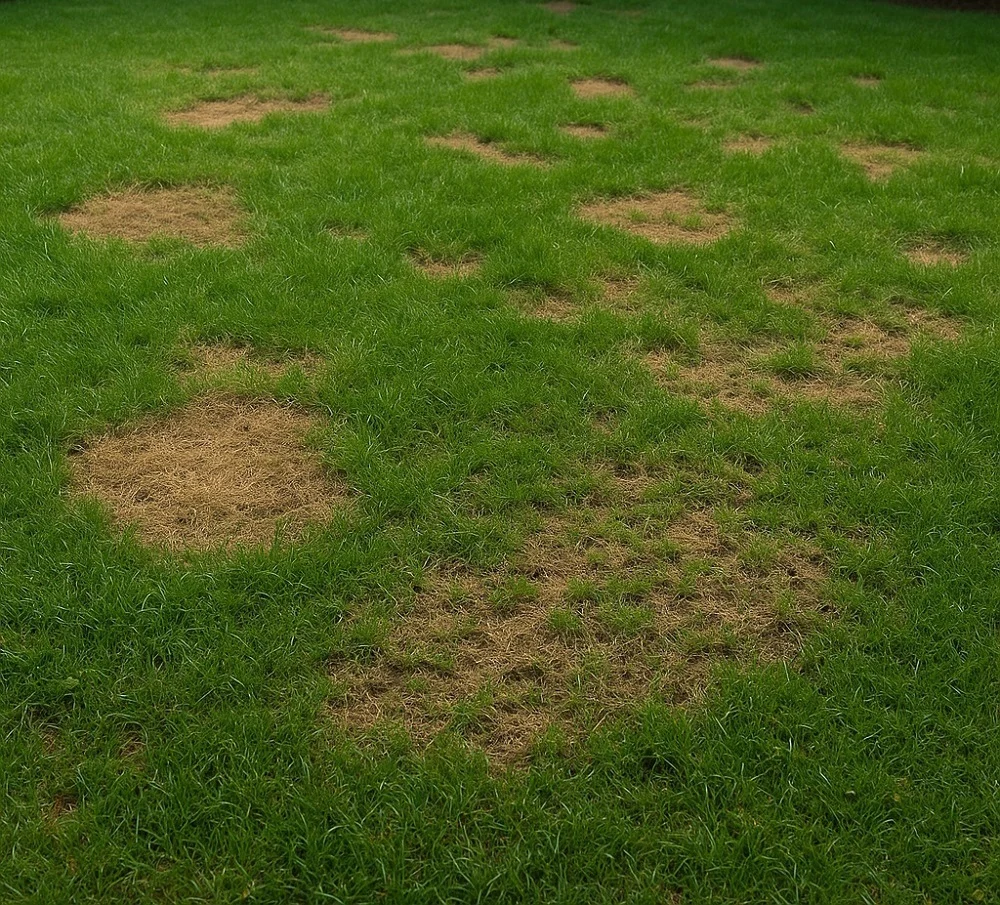
Image source: Bing (Web (fair-use with source credit))
Quick Answer
Apply preventive grub killer between late June and early August, before eggs hatch. Apply curative grub killer from late August through October when grubs are small and actively feeding near the surface. The exact window shifts by region and grub species.
Always confirm grub presence by cutting a test square before treating.
How to Know You Actually Have Grubs (Before You Treat)
Brown patches don't automatically mean grubs. Drought stress, fungal disease, dog urine, and compacted soil all cause similar-looking damage. The only way to know for sure is to check the soil directly.
Here's the simple test. Cut a 1-foot by 1-foot flap of turf in a damaged area. Peel it back and look at the top 2 to 3 inches of soil.
Count the white, C-shaped larvae you find. Push the sod back down and water it. It'll re-root within a week.
The economic threshold varies by grass type and lawn health. Most cool-season lawns can tolerate around 5 to 10 grubs per square foot before you see real damage. Stressed or newly sodded lawns may show damage at lower counts.

Image source: Bing (Web (fair-use with source credit))
If you find fewer than 5 grubs per square foot, treatment probably isn't worth the cost. If you're seeing 10 or more, or if you're getting secondary damage from skunks and raccoons digging at night, it's time to act.
One more thing worth noting. If the sod pulls up easily like a loose carpet, the grubs have already severed most of the roots. That's a sign the population is high enough to cause permanent turf loss if you don't treat soon.
The Single Mistake That Makes Grub Killer Waste Money
The biggest mistake homeowners make is applying preventive grub control too late. Most people see damage in September, buy a preventive product, and put it down in October. By that point, the grubs are already large and the preventive won't touch them.
Preventive products like chlorantraniliprole work by being present in the soil when tiny larvae first hatch and begin feeding. They don't kill large grubs. If you're past the egg-hatch window, you need a curative product instead.
Here's how to think about it. Ask yourself two questions before buying anything.
- When did you last treat? If you applied a preventive last summer and you're seeing damage this fall, you may have missed the window or the product washed out.
- What month is it right now? If it's July or earlier, preventive is your move. If it's August or later and you're seeing active damage, go curative.
The other common mistake is treating without confirming grubs are actually present. Some people put down grub control every spring out of habit. That's unnecessary expense and adds chemicals to the soil without a confirmed need.
Test first. Treat second.
Preventive vs. Curative: Two Completely Different Timing Windows
Understanding the grub life cycle is what makes or breaks your treatment timing. Most common lawn grubs in the US, Japanese beetles, European chafers, and June beetles, follow a similar annual pattern.
Adult beetles lay eggs in mid to late summer. Those eggs hatch into tiny larvae within about two weeks. The young grubs feed on grass roots through late summer and fall, grow larger, then burrow deep into the soil to overwinter.
They return to the root zone briefly in spring, feed a little, then pupate into adults.

Image source: Bing (Web (fair-use with source credit))
This cycle creates two distinct treatment windows.
Preventive window (late June through early August): The product needs to be in the soil and active when eggs hatch. Chlorantraniliprole-based products like GrubEx provide season-long residual control from a single application. The granules sit in the thatch layer, get watered in, and are taken up by roots.
When tiny grubs begin feeding, they ingest the active ingredient and stop feeding within hours.
Curative window (late August through October): By this point, grubs are actively feeding and causing visible damage. You need a product that kills on contact or through ingestion quickly. Trichlorfon-based products like Dylox work within 1 to 3 days.
The grubs need to be small enough for the product to be effective. Large, late-stage grubs are much harder to kill.
Spring treatment is generally not recommended for preventive products. The residual from a previous year's application is gone, and it's too early for the new cycle. Spring curative treatment can work if you find active grubs, but by then the damage is already done and the grugs will soon pupate anyway.
The Species Behind the Damage and Why It Changes Your Dates
Not all grubs are on the same schedule. The species in your region shifts the timing by weeks, which matters when your treatment window is narrow.
Japanese beetles are the most common lawn grub across the eastern and midwestern US. Adults emerge in early to mid-summer, lay eggs in late July through August, and grubs hatch shortly after. Preventive treatment targets the period just before and during egg-laying.
European chafers are prevalent in the Northeast and Upper Midwest. They hatch slightly earlier than Japanese beetles, often by mid-July. If you're in Connecticut, New York, or Pennsylvania, your preventive window may need to start in late June.
June beetles (Phyllophaga species) have a longer life cycle, sometimes taking 2 to 3 years to mature. Their grubs can be present and feeding across multiple seasons. This makes timing less predictable and often favors curative treatment when damage appears.
May beetles and Asiatic garden beetles are more common in the South. Their hatch window extends longer into the season, sometimes into early fall. Warm-season lawns in the South may need a slightly later preventive application.
European crane fly larvae (leatherjackets) are a different animal entirely. They're not true grubs but are often treated similarly. They're most active in the Pacific Northwest and their peak feeding is in late winter through early spring, which flips the timing entirely.
If you're not sure which species you're dealing with, your local cooperative extension office can often help with identification. Knowing the species lets you narrow your treatment window from a broad seasonal guess to a specific two-to-three-week target.
Grub Killer Timing by Product Type and Your Lawn's Situation
The right timing depends on matching the product to both the calendar and what's happening in your soil. Here's a breakdown of the main product categories and when each one makes sense.
| Product Type | Active Ingredient | Best Application Window | Kill Speed | Residual |
|---|---|---|---|---|
| Preventive | Chlorantraniliprole | Late June – early August | Stops feeding in hours, death in days | Full season (4–6 months) |
| Curative (fast) | Trichlorfon | Late August – October | 1–3 days | Short (days to 2 weeks) |
| Biological | Milky spore | Anytime soil is workable | Slow (weeks to months) | Years (builds over time) |
| Biological | Beneficial nematodes | Late August – September | 1–2 weeks | None (one-time treatment) |
Chlorantraniliprole products are the go-to for most homeowners who want one-and-done prevention. Apply in early to mid-summer, water in thoroughly, and you're covered through fall. The key is getting it down before the adult beetles finish laying eggs.
Trichlorfon products are your rescue option. When you're seeing brown patches in late summer and confirm a high grub count, this is what works fast. It has a short residual, so timing matters.
Apply when grubs are small and near the surface, typically late August through October in most regions.
Milky spore (Paenibacillus popilliae) is a biological option that specifically targets Japanese beetle grubs. It takes 2 to 3 years to build up in the soil but can provide long-term control once established. It's not a quick fix.
Think of it as a multi-year investment.
Beneficial nematodes (Heterorhabditis bacteriophora) are microscopic worms that seek out and kill grubs. They work best in late summer when soil temperatures are warm and grubs are active. You need to keep the soil moist before and after application.
They're a solid option for organic-minded homeowners.
Your lawn's specific situation also affects timing. If you have irrigation, you have more flexibility because you can water in products on your schedule. If you're relying on rainfall, watch the forecast and apply when rain is expected within 24 to 48 hours.
Newly sodded or seeded lawns are more vulnerable to low grub counts, so you may want to treat at lower thresholds.
As of 2026, several states have restricted or banned neonicotinoid-based grub products. Check your state's pesticide regulations before purchasing. Products containing imidacloprid may not be available in Maryland, Connecticut, Vermont, Massachusetts, and parts of Canada.
Chlorantraniliprole and trichlorfon remain widely available but always verify your state's registration status.
How to Count Grubs and Confirm Treatment Is Actually Needed
Don't treat blind. A quick soil check takes five minutes and saves you from spending money on a problem you might not have.
Pick three to five spots across your lawn, especially where the grass looks thin or brown. At each spot, cut a 1-foot square flap down about 3 inches. Peel it back and count every white grub you see in the soil and roots.
Push the flap back into place and step on it to reseat the sod.
Average your counts across all the spots. If you're finding fewer than 5 grugs per square foot, your lawn can probably handle it without treatment. Between 5 and 10, you're in the gray zone where lawn health and irrigation matter.
Above 10, treat.
One important detail. Grubs cluster. You might find 20 in one square foot and zero in the spot right next to it.
That's why checking multiple locations matters. A single test square can give you a misleading number either way.
Also check the thatch layer. Thick thatch, more than half an inch, can shield grubs from products that don't get watered in properly. If your thatch is heavy, consider dethatching before or shortly after treatment so the granules reach the soil where grubs actually live.
Step-by-Step: Applying Grub Killer for the Right Result
Once you've confirmed the need and chosen the right product for your timing, application is straightforward. The details matter though, because poor application is the second biggest reason treatments fail.
Step 1: Mow first. Cut your lawn to normal height before spreading granules. This helps the particles reach the soil surface instead of getting trapped in tall grass blades.
Step 2: Check the spreader setting. Most granular grub products list spreader settings on the bag. Rotary spreaders and drop spreaders use different settings, so match yours to what the label recommends. If your spreader brand isn't listed, start with a mid-range setting and test on a small area.
Step 3: Apply to dry grass. Granules stick to wet turf unevenly and can clump. A dry lawn gives you the most uniform coverage.
Step 4: Spread in two directions. Go over the lawn once in one direction, then again perpendicular to the first pass. This prevents the striping pattern you get from a single-direction application.
Step 5: Water in immediately. This is the step people skip and it kills the treatment. Most products need about ¼ to ½ inch of water to move the active ingredient from the granules down into the soil and thatch layer. Run your sprinklers for 15 to 20 minutes and check depth with a rain gauge or tuna can.
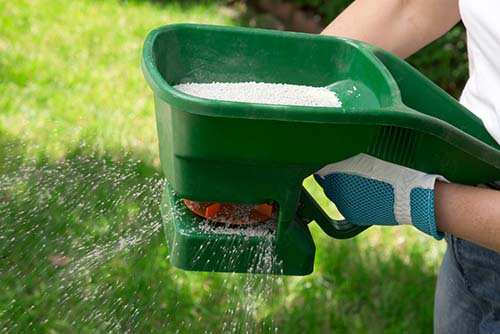
Image source: Bing (Web (fair-use with source credit))
Step 6: Keep pets off until dry. Once you've watered in and the grass surface has dried, it's safe for pets and kids to be on the lawn again. The active ingredient binds to soil particles and isn't readily absorbed through skin.
If you're using beneficial nematodes instead of granules, the process is different. You mix them with water and apply through a hose-end sprayer or watering can. The soil needs to stay moist for 7 to 10 days afterward.
Apply in the evening since UV light kills nematodes quickly.
Common Mistakes That Ruin Grub Treatments
Even with the right product and timing, a few common errors can make the whole effort pointless.
Skipping the watering step. Granular products sitting on top of the thatch do nothing. The active ingredient has to reach the root zone where grubs are feeding. Without water, you've just spread expensive sand across your lawn.
Applying to the wrong life stage. Putting down a preventive in September when grugs are already large and actively damaging roots is the number one waste of money. Match the product to the grub size and season.
Using the wrong spreader rate. Too little product means patchy coverage and surviving grubs. Too much wastes money and can stress the lawn. Calibrate your spreader before you start.
Treating the whole lawn when damage is localized. If grub damage is confined to one area, spot-treat that zone instead of blanketing everything. You'll save product and reduce unnecessary chemical load.
Ignoring secondary damage. If skunks, raccoons, or armadillos are tearing up your lawn at night, they're after the grubs. Killing the grubs stops the digging. But repair the torn areas quickly or weeds will move in before the grass recovers.
Expecting instant results with preventive products. Chlorantraniliprole stops grubs from feeding within hours but they may take several days to die. That's normal. If you need visible fast kill, that's what curative products are for.
Costs, Coverage, and Pricing Breakdown
Here's what you can expect to spend depending on your approach and lawn size.
A typical bag of chlorantraniliprole-based preventive covers about 5,000 to 7,500 square feet and runs $25 to $45 at most retailers. For a 5,000-square-foot lawn, that's roughly $30 to $40 per application. One application per year is all you need.
Trichlorfon-based curative products cost a similar amount per bag but may require a second application 2 to 3 weeks later if the grub population is heavy. Budget around $50 to $80 total for a curative treatment on an average lawn.
Professional lawn care companies typically charge $75 to $200 per treatment depending on your region and lawn size. The advantage is they handle timing, product selection, and application. The disadvantage is you're paying for convenience and may get treatments you don't need if they use a blanket schedule.
Beneficial nematodes run $30 to $60 per treatment but don't persist in the soil. You'd need to reapply annually. Milky spore costs $30 to $50 per treatment but builds over multiple years, so the long-term cost per year drops after the initial applications.
| Approach | Upfront Cost (5,000 sq ft) | Frequency | Long-Term Annual Cost |
|---|---|---|---|
| DIY preventive (granular) | $25–$45 | Once per year | $25–$45 |
| DIY curative (granular) | $25–$45 per app | 1–2 apps as needed | $25–$90 |
| Professional treatment | $75–$200 | 1–2 per year | $75–$400 |
| Beneficial nematodes | $30–$60 | Annual | $30–$60 |
| Milky spore | $30–$50 | Every 3–5 years after initial | $10–$25 (amortized) |
Safety and Regulatory Considerations You Should Know
Every grub control product sold in the US is regulated by the EPA. The label is a legal document. Following it isn't optional, it's the law.
The label tells you application rates, safety precautions, environmental restrictions, and re-entry intervals.
Keep children and pets off the lawn during application and until the grass has dried after watering in. Once the product is watered into the soil and the surface is dry, exposure risk is minimal. The active ingredients bind to soil particles and aren't readily absorbed through skin.
Don't apply near wells, storm drains, or water bodies. Most labels specify a buffer zone. Check the product label for exact distances.
Runoff into waterways is one of the main environmental concerns with any lawn insecticide.
Neonicotinoid restrictions are worth repeating. Imidacloprid-based products are banned or restricted in several states due to concerns about pollinator exposure. Chlorantraniliprole and trichlorfon are not neonicotinoids and remain widely available, but always verify your state's current registration before purchasing.
If you're hiring a professional, ask what product they're using and request the label. You have a right to know what's being applied to your property. Reputable companies will provide it without hesitation.
Real-World Scenarios: What to Do When in Each Major Situation
Scenario 1: It's July and you had grubs last year. Apply a preventive product now. Water it in well. You're protecting against this year's hatch.
Scenario 2: It's September and you're seeing brown patches. Cut a test square. If you find 10 or more grugs per square foot, apply a curative product immediately. Water it in and expect results within a few days.
Scenario 3: Skunks are digging nightly but you don't see many grubs. The animals know where the clusters are even if your test square missed them. Spot-treat the dug-up areas with a curative product.
Scenario 4: You just moved into a new home and don't know the lawn's history. Test in late July. If counts are low, apply preventive. If you're already seeing damage in fall, go curative and plan to apply preventive the following summer.
Final Recommendation: Your Quick Decision Guide
If it's June through July, use a preventive product with chlorantraniliprole. If it's August or later and you've confirmed grugs, use a curative product with trichlorfon. Always test before treating.
Always water in after applying.
Frequently Asked Questions
Can I apply grub killer and fertilizer at the same time?
Yes. Many homeowners combine a fertilizer application with preventive grub control in early summer. Just make sure both products are compatible and apply each at its labeled rate.
Don't mix them in the same spreader, run separate passes.
How long does grub killer take to work?
Curative products like trichlorfon kill grugs within 1 to 3 days. Preventive products like chlorantraniliprole stop feeding within hours but grugs may take several days to die. Both are working even if you don't see instant results.
Is spring too late for grub killer?
Spring is generally too late for preventive products and too early for curative ones. Grugs found in spring are large and about to pupate. Treatment in spring rarely provides meaningful benefit.
Focus on summer prevention instead.
Will grub killer hurt earthworms?
Chlorantraniliprole has low toxicity to earthworms. Trichlorfon is more broadly toxic and can reduce earthworm populations temporarily. If earthworm health is a priority, chlorantraniliprole-based products are the better choice.
Do I need to treat every year?
Not necessarily. Test your soil each summer. If grub counts stay below the treatment threshold for two consecutive years, you can skip treatment.
Many lawns don't need annual applications.