If you've ever searched "when should i put down grub control," you've probably found the same frustrating answer everywhere: a vague date range that doesn't match what's actually happening in your yard. That's because there's no universal calendar date that works. The right timing depends on where you live, what grub species is active in your region, and what product you're using.
The biological trigger that actually matters is soil temperature, not the calendar. When soil at a 4-inch depth consistently hits the 50°F to 60°F range, adult beetles start laying eggs. That's your real starting line, and it moves earlier or later depending on your winter, your latitude, and your season.
As of 2026, regional cooperative extension services continue to confirm this temperature-based approach as the most reliable method for homeowners.
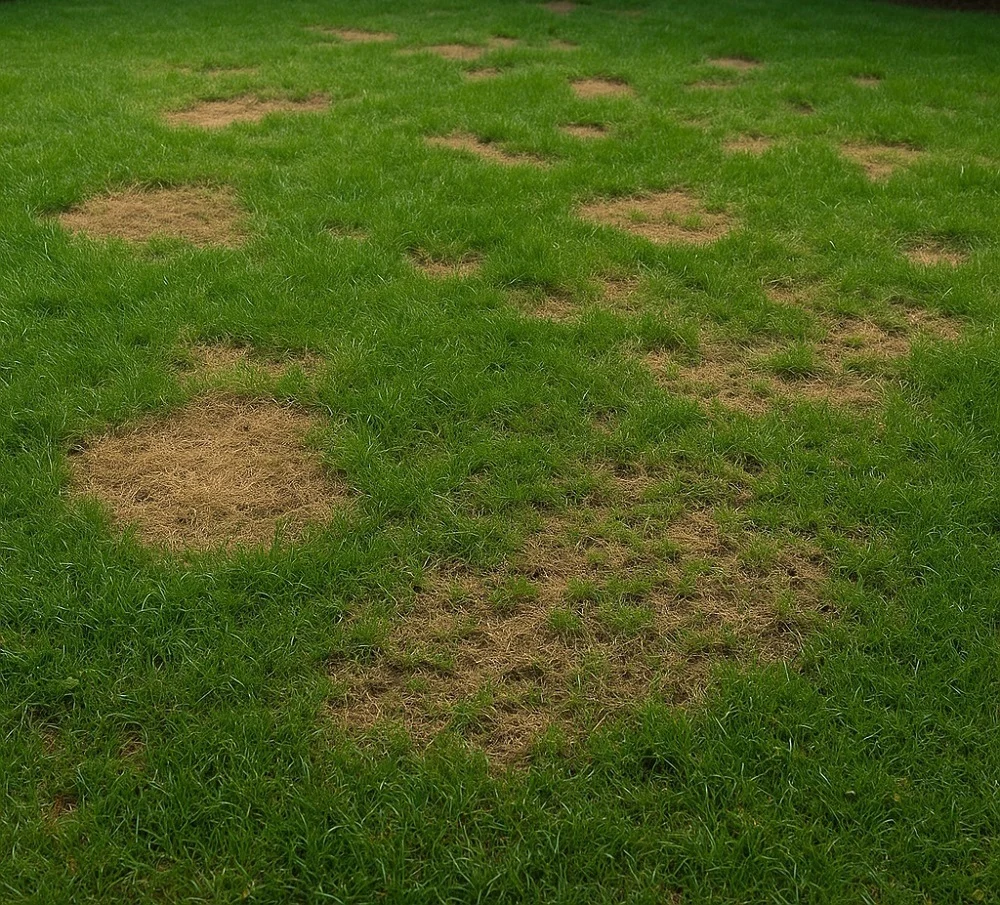
Image source: Bing (Web (fair-use with source credit))
Quick Answer
Put down preventative grub control when soil temperatures at 4-inch depth reach 50°F to 60°F. This typically falls between late April and early July depending on your region. Apply curative control products in late summer when grubs are small and actively feeding.
Water in granular products with 1/4 to 1/2 inch of irrigation within 48 hours of application.
Why There's No Single "Right Day" for Grub Control
The biggest mistake we see is homeowners treating grub control like fertilizing, where you pick a date and show up. Grub control isn't a calendar event. It's a biological response to what insects are doing underground right now.
Different grub species lay eggs at different times in different regions. Japanese beetles across the Midwest might not start laying eggs until late June. Oriental beetles in the Southeast could already be laying by early May.
European chafers in the Pacific Northwest hit their stride in between. If you apply a preventative product based on a national "June" recommendation without knowing your species and your soil window, you're guessing.
And preventative products don't kill grubs on contact. They work by creating a treated zone in the soil that young larvae pick up when they hatch and start feeding. If you apply too early, that barrier may degrade before eggs hatch.
If you apply too late, the grubs are too large for the product to be effective.
The One Factor That Actually Determines Your Timing
Soil temperature is the single most reliable predictor of when adults lay eggs and when larvae will emerge. Research from multiple land-grant university entomology departments consistently shows that grub species begin egg-laying activity when soil at a depth of 4 inches reaches the 50°F to 60°F threshold.
You don't need expensive equipment. A basic soil thermometer pushed into the turf gives you a reading in seconds. Check it in the morning a few times a week starting in mid-spring for your region.
When you see those soil temps climbing into the target range, you've got a 2-to-4-week window to get preventative product down before peak egg-hatch.
Daylength and air temperature aren't reliable proxies either. A warm air streak in March doesn't mean the soil is ready. A cold snap in May can set everything back.
Go by what the soil is telling you.
How to Pin Down Your Window Based on Where You Live
Your region determines which grub species you're dealing with and roughly when soil temperatures hit that critical range. Here's how it breaks down across the major turf zones in the US.
Northern Lawns: Midwest, Northeast, and Pacific Northernwest
If you're in USDA Hardiness Zones 4 through 6, your primary species are likely Japanese beetle, European chafer, and black turfgrass ataenius. Adults typically take flight from mid-June through late July. Soil temperatures usually reach the 50°F to 60°F range sometime in May to mid-June depending on spring conditions.
That puts your preventative application window roughly between mid-May and early July. The sweet spot for most northern lawns is late May through mid-June, giving the product time to establish in the soil before eggs hatch in July and August.
Mid-Atlantic and the Transition Zone
Zones 6 and 7 are trickier because you often have multiple species overlapping. Japanese beetle, masked chafers, and sometimes Oriental beetle are all active. Soil warms faster here, often hitting that threshold in late April through May.
Your preventative window runs earlier accordingly, typically from late April through mid-July depending on the specific species mix. You may need to pay closer attention to adult beetle activity indicators and local extension recommendations.
Southern and Warm-Season Grass Regions
Zones 8 and 9, particularly across the Southeast, see the earliest activity. Oriental beetle, Asiatic garden beetle, and Japanese beetle populations all start earlier. Soil temperatures can reach the target range as early as March or April.
Your preventative window here typically falls between late February and early July. Warm-season grasses like Bermudagrass, zoysiagrass, and St. Augustinegrass are all susceptible, and the longer growing season means grubs have more time to feed and cause damage if left untreated.
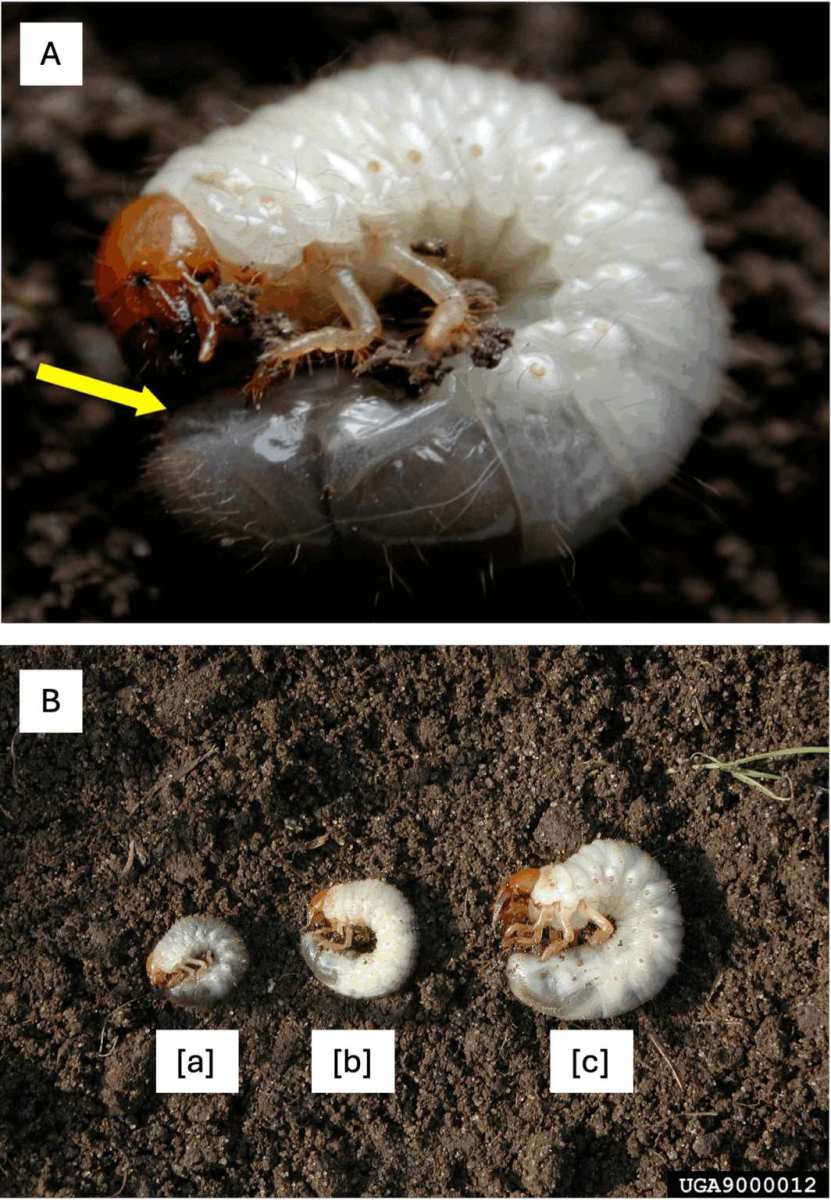
Image source: Bing (Web (fair-use with source credit))
Preventative vs. Curative: Two Completely Different Timelines
This distinction trips up more homeowners than anything else. Preventative and curative grub products work at completely opposite ends of the grub life cycle, and using the wrong type at the wrong time wastes your money.
Preventative products contain active ingredients like chlorantraniliprole or imidacloprid. They need to be in the soil before eggs hatch so that first-instar larvae encounter the product when they're tiny and most vulnerable. These products don't work well on large, established grubs.
Curative products use faster-acting active ingredients like trichlorfon or carbaryl. They're designed to kill existing grubs on contact or through ingestion. They work best in late summer and early fall when grubs are actively feeding near the soil surface but haven't yet grown past the second-instar stage.
Use this framework:
- If you're protecting against new damage: Use preventative products in late spring through midsummer.
- If you already have grubs feeding: Use curative products in late summer through early fall.
- If you can't tell which situation you're in: Cut back a section of damaged turf in late summer and count the grubs. More than 5 to 10 per square foot means you've got an active infestation that needs curative treatment.
Step-by-Step: How to Find Your Exact Application Date
Here's the workflow to zero in on your specific timing, regardless of your region or grub species.
Step 1: Know Your Region and Grub Species
Start by checking your state's cooperative extension service publications or website. Most states maintain annual pest monitoring updates and species-specific scouting guides. Knowing whether you're dealing with Japanese beetle, European chafer, or a mix tells you roughly what to expect.
You can also ask yourself what you've seen in prior years. Brown patches that peel back like carpet in September, skunks digging up the yard overnight, flocks of birds feeding on the lawn surface, all of these point to active grub pressure.
Step 2: Start Watching Soil Temperature in Late Spring
Get a soil thermometer and start checking in the morning once daytime air temperatures consistently reach the 60s and 70s. Push it to 4 inches depth in a few spots around the lawn. When readings consistently hit 50°F to 60°F, you're entering the egg-laying period for most common grub species.
Write these numbers down. Track them weekly. The first day you see a reliable 50°F reading is your signal to start planning your application within the next 2 to 4 weeks.
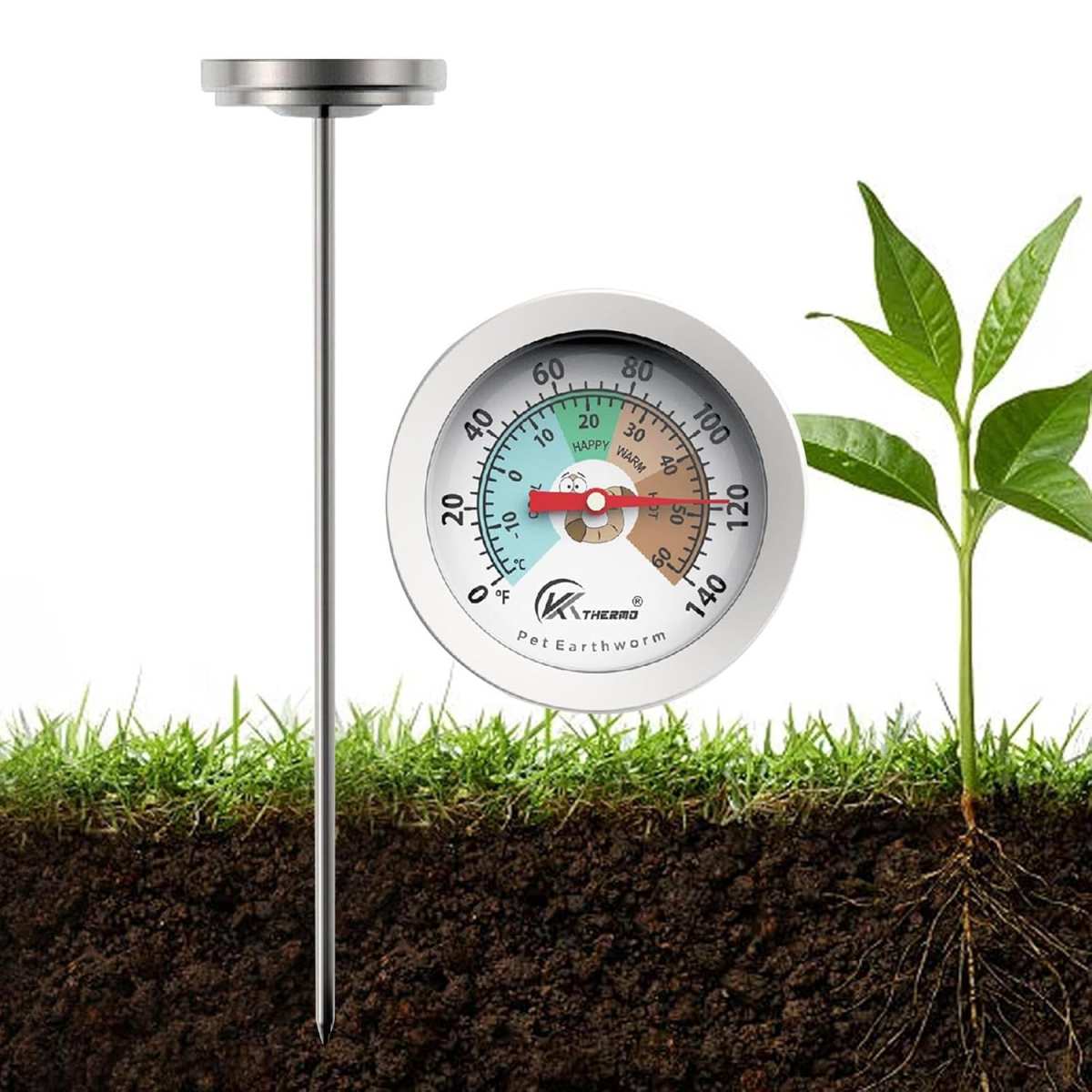
Image source: Bing (Web (fair-use with source credit))
Step 3: Overlay Adult Beetle Activity
Soil temperature tells you when eggs are likely being laid. Adult beetle activity confirms it. Different species look different and show up at slightly different times.
Japanese beetles are the easiest to spot. They're metallic green and copper, about half an inch long, and they feed on leaves of linden trees, roses, and grapevines in broad daylight. When you start seeing them in noticeable numbers, egg-laying is beginning.
European chafers look like tan or light brown June bugs. They swarm around porch lights at dusk in late spring and early summer. Asiatic garden beetles are small, velvety brown, and also nocturnal.
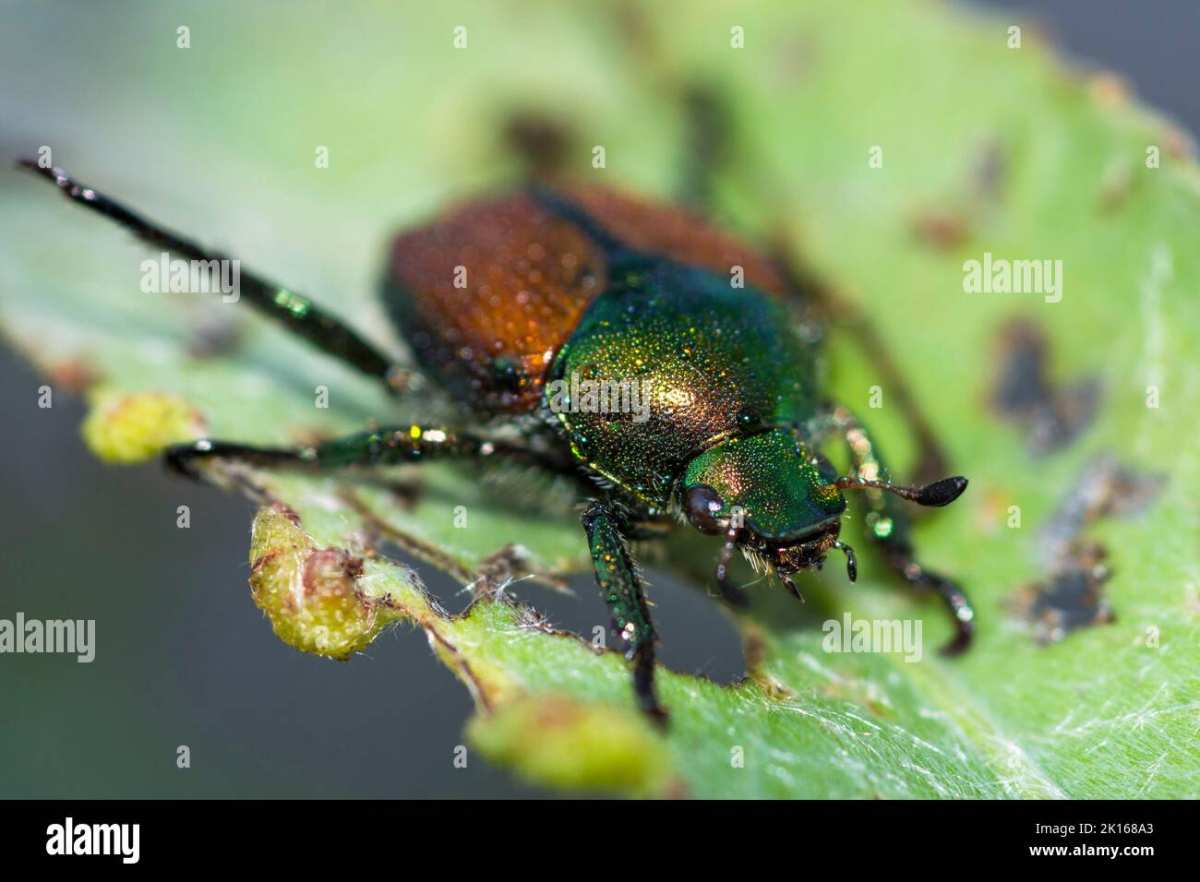
Image source: Bing (Web (fair-use with source credit))
Seeing adult beetles in your yard confirms what the soil thermometer is telling you. If soil is in range AND you're seeing adult beetles, you're in the window. Apply preventative product within the next few weeks.
Step 4: Apply Your Product at the Right Moment
This is where region type and product type intersect.
Cool-season grass lawns in Zones 4 to 6:
Apply preventative granules from late May through mid-June. Soil temperatures should be in the 50°F to 60°F range and holding. Don't wait until July in most northern yards.
By then, eggs may already be hatching.
Cool-season grass lawns in Zones 6 and 7:
Apply from late May through early July depending on the species mix. Warmer springs in the transition zone can push the window earlier.
Warm-season grass lawns in Zones 8 and 9:
Apply from late March through early June. Some southern states have multiple grub generations, and your extension service can advise on whether a second application is warranted for late-hatching species.
For curative applications: Wait until late July through August in most regions. That's when grubs are small, active, and close enough to the soil surface for contact products to reach them.
Step 5: Water It In
This step separates effective applications from wasted ones. Granular grub control products need to move from the surface into the root zone where grubs live. Without irrigation or rainfall, granules sitting on top of thatch do almost nothing.
Apply 1/4 to 1/2 inch of water within 24 to 48 hours of spreading product. Use a rain gauge or tuna can to measure output. Light, thorough soaking is better than a heavy blast that causes runoff.
If rain is reliably in the forecast within 48 hours, you can spread ahead of it. But don't gamble on uncertain weather. Irrigate manually if needed.
The product label specifies this requirement, and following it is part of getting full product performance.
What Happens If You Apply Too Early or Too Late
Timing errors on either side cost you, but in different ways.
Too early: The product residue breaks down before larvae hatch. Most preventative products maintain effective soil concentrations for roughly 60 to 120 days depending on active ingredient, soil conditions, and microbial activity. If you apply in April for grubs that don't hatch until early August, the window may have closed.
You'll see damage in September and assume the product failed when the real issue was timing.
Too late for preventative products: The grubs have already hatched and grown past the vulnerable first-instar stage. Preventative products are much less effective on mid-to-large grubs. You wasted money and still have an active infestation.
Too late for curative products: Grubs have either pupated and turned into adult beetles, or they've moved deep into the soil to overwinter. Curative products like trichlorfon don't work well on large, nearly mature grubs or on grubs that are no longer actively feeding near the surface.
The fix when you miss the preventative window: Switch to a curative approach in late summer. If you realize in July that you never applied preventative product, you can still treat effectively. Apply trichlorfon-based products while grubs are still small and actively feeding.
This is generally faster-acting but also shorter-lived in the soil.
When Curative Treatment Is Your Only Move
Sometimes the window has already passed and you're dealing with visible damage. Maybe you bought a new house in September and found six grubs per square foot. Maybe you skipped last year and now you're repairing.
Curative treatment is your path.
Here's when curative approaches make sense:
- You discover grub damage in late summer or early fall from missed spring timing.
- You find more than 5 to 10 grubs per square foot on a lawn census in August or September.
- You have animal digging damage from skunks or raccoons actively harvesting grubs.
- You live in a region where preventive applications were missed due to weather or product availability.
Active ingredients that work for curative treatments:
| Active Ingredient | Product Examples | Speed of Control | Residual Duration | Notes |
|---|---|---|---|---|
| Trichlorfon (Dylox) | Dylox 420 SL, Dylox 6.2G | 1 to 3 days | Short (days to weeks) | Best on small grubs; water in lightly |
| Carbaryl (Sevin) | Sevin Granules, Sevin SL | 1 to 3 days | 1 to 2 weeks | Broad-spectrum; apply when grubs are near surface |
| Chlorantraniliprole | GrubEx, Acelepryn | 7 to 14 days | 2 to 3 months | Slower kill but longer residual; label allows curative use |
Trichlorfon gives the fastest knockdown, which matters when you're already seeing damage. Chlorantraniliprole works more slowly but hangs around longer. Carbaryl sits between the two.
The Application Mistakes That Waste Your Money
Even with the right timing and the right product, application errors kill effectiveness. Here are the ones we see most often:
- Skipping watering-in. Granules sitting on thatch or dry soil don't reach the root zone. Always irrigate 1/4 to 1/2 inch after application.
- Spreading on wet grass. Granules cling to wet blades and don't reach the soil. Apply to dry grass, then water in.
- Using the wrong spreader or wrong setting. Uneven application means some areas get enough product while others get almost nothing. Calibrate your spreader for the specific product's rate.
- Treating drought-stressed turf. Severely dry soil reduces product uptake and can stress grass further. Water the lawn a day or two before application if conditions are very dry.
- Confusing thatch problems with grub damage. A thick thatch layer insulates grubs from surface-applied products. If your thatch is more than half an inch thick, consider dethatching first.
- Applying granular product right before heavy rain. More than an inch of rain shortly after application can wash product off target. A light soaking is what you want, not a flood.
Expert Tips Most People Miss
These are the details that separate a solid grub control program from one that only works half the time.
Record your soil temperatures and application date each year. After two or three seasons, you'll know your specific lawn's pattern better than any regional guide. Your south-facing slope warms faster than your north-facing one. Microclimates matter.
Fall is your diagnostic window. Digging a 1-square-foot test cut in September tells you what's actually happening. If you find fewer than 5 grubs, your program is working. If you find more, you know to adjust timing or product next spring.
Don't forget irrigation audits. If your sprinkler coverage is uneven, your grub control will be uneven too. Dead zones in the sprayer mean untreated zones where grubs survive and recolonize.
Check the label for timing instructions. Some products now have specific application windows written right on the label for your region. Follow those exactly. They're based on species-specific biology for that area.
Consider nematodes if you're avoiding synthetic products. Beneficial nematodes like Heterorhabditis bacteriophora actively hunt and kill grubs. They work best when soil temperatures are between 60°F and 80°F and require careful handling and application but offer a non-chemical alternative.
Treat the whole lawn, not just the visible damage. Grubs move laterally through the soil, and grubs in one area predict problems in adjacent areas within a season or two. Spot-treating is almost never sufficient.
Quick-Reference Timing Chart by Region and Product Type
Use this as a starting point, then verify against your local soil temperatures and extension service recommendations.
| Region | Primary Grub Species | Preventative Application Window | Curative Application Window |
|---|---|---|---|
| Upper Midwest, New England, Zones 4-5 | Japanese beetle, European chafer | Late May to late June | Late July to early September |
| Mid-Atlantic, Zones 6-7 | Japanese beetle, masked chafers | May to mid-June | Late July to mid-September |
| Southeast, Zones 8-9 | Oriental beetle, Asiatic garden beetle | March to early June | Mid-July to early September |
| Pacific Northwest, Zones 6-8 | European chafer, black turfgrass ataenius | Late May to mid-June | Late August to late September |
Frequently Asked Questions
Is spring too early to put down grub control?
It depends on your region and product. If you're in the Midwest or Northeast, applying preventative product in late April or early May is usually too early because soil hasn't warmed enough and the product can degrade before eggs hatch. However, if you're in the South and soil has already hit 50°F, spring application makes sense.
Use a soil thermometer to confirm rather than guessing by the calendar.
Does GrubEx work when applied in the fall?
GrubEx (chlorantraniliprole) is primarily labeled for preventative use in late spring through midsummer. In fall, grubs are already present and actively feeding, so curative products like trichlorfon (Dylox) are a more effective choice. GrubEx can have some curative activity on very small newly hatched grubs, but it's not designed as a primary curative treatment.
What month should I put grub control down in my yard?
That depends entirely on your region. In the Northeast and Midwest, June is typically the target month for preventative applications. In the transition zone, May through early June is more common.
In the Southeast, March through May is realistic. Always verify with soil temperature readings rather than picking a month blindly.
Can I put down grub control and fertilizer at the same time?
Yes, many homeowners combine these into a single pass for convenience. Just make sure both products are compatible and applied at their respective correct rates. Use a broadcast spreader calibrated for each product, or mix pre-blended products designed for combined application.
Don't let one product's timing override the other if their windows don't overlap.
How long after applying grub control does it work?
Preventative products like GrubEx create a treated soil zone and don't show visible results until grubs hatch and begin feeding, usually 4 to 8 weeks after application depending on timing. Curative products like Dylox can show visible grub die-off in 1 to 3 days. Watering in the product within 48 hours is essential for either type to perform as labeled.
Your Decision Guide: What to Do Right Now
Here's a simple framework to get you from where you are to the right action.
If it's late spring and you haven't applied anything yet:
Check your soil temperature. If it's 50°F or above at 4 inches, get a preventative product down within the next 2 to 4 weeks. Calibrate your spreader, apply evenly, and water in thoroughly.
If it's midsummer and you noticing adult beetles:
You may still have time for preventative product, especially in northern regions. If beetles have already been active for several weeks, consider switching to a curative approach in the next few weeks to target newly hatched larvae.
If it's late summer and you see brown patches that peel back:
Do a lawn census. Cut a 1-square-foot section 2 inches deep and count the grubs. If you find more than 5 to 10 per square foot, apply a curative product immediately.
Trichlorfon options work fastest. Water it in and stop the damage before grubs move deeper for winter.
If it's fall and grubs are already deep:
If you're finding fewer than 5 grubs per square foot, you're probably fine to wait and plan for spring. If numbers are still high, a curative application now can prevent further root damage before winter dormancy. Either way, record what you found and plan your preventative timing for next spring based on this year's soil temperature data.
The bottom line is this: grub control timing isn't about a date on the calendar. It's about soil temperature, species biology, and matching your product to the right stage of the grub life cycle. Once you start tracking soil temps and watching for adult beetle activity, you'll stop guessing and start hitting the window consistently year after year.
When to Call in a Professional
Most homeowners can handle grub control themselves with a broadcast spreader and a soil thermometer. But there are situations where a licensed lawn care operator is worth the cost.
Call a pro if your lawn has recurring grub damage year after year despite treatment. This often signals a deeper issue like excessive thatch, poor drainage, or a species mix that requires a more complex rotation of products. A professional can do a thorough soil assessment and identify what's really going on.
Call a pro if you have a large property. Lawns over 10,000 square feet are harder to cover evenly with a consumer-grade spreader. Professional equipment delivers more consistent coverage and calibrated application rates.
Call a pro if you're dealing with multiple pest problems at once. Grubs plus chinch bugs plus sod webworms in the same season requires a treatment plan that accounts for product interactions and timing conflicts. Getting this wrong can mean treating one pest while making another worse.
Call a pro if you have pollinator-friendly plantings near your lawn. Some grub control products have restrictions around flowering plants and pollinator habitat. A licensed applicator understands buffer zones, product selection, and application techniques that minimize off-target exposure.
Expect to pay between $50 and $150 per application for a typical residential lawn depending on your region and lawn size. Many companies bundle grub control into a seasonal lawn care program, which can reduce the per-treatment cost.
Frequently Asked Questions
Is spring too early to put down grub control?
It depends on your region and product. If you're in the Midwest or Northeast, applying preventative product in late April or early May is usually too early because soil hasn't warmed enough and the product can degrade before eggs hatch. However, if you're in the South and soil has already hit 50°F, spring application makes sense.
Use a soil thermometer to confirm rather than guessing by the calendar.
Does GrubEx work when applied in the fall?
GrubEx (chlorantraniliprole) is primarily labeled for preventative use in late spring through midsummer. In fall, grubs are already present and actively feeding, so curative products like trichlorfon (Dylox) are a more effective choice. GrubEx can have some curative activity on very small newly hatched grubs, but it's not designed as a primary curative treatment.
What month should I put grub control down in my yard?
That depends entirely on your region. In the Northeast and Midwest, June is typically the target month for preventative applications. In the transition zone, May through early June is more common.
In the Southeast, March through May is realistic. Always verify with soil temperature readings rather than picking a month blindly.
Can I put down grub control and fertilizer at the same time?
Yes, many homeowners combine these into a single pass for convenience. Just make sure both products are compatible and applied at their respective correct rates. Use a broadcast spreader calibrated for each product, or mix pre-blended products designed for combined application.
Don't let one product's timing override the other if their windows don't overlap.
How long after applying grub control does it work?
Preventative products like GrubEx create a treated soil zone and don't show visible results until grubs hatch and begin feeding, usually 4 to 8 weeks after application depending on timing. Curative products like Dylox can show visible grub die-off in 1 to 3 days. Watering in the product within 48 hours is essential for either type to perform as labeled.