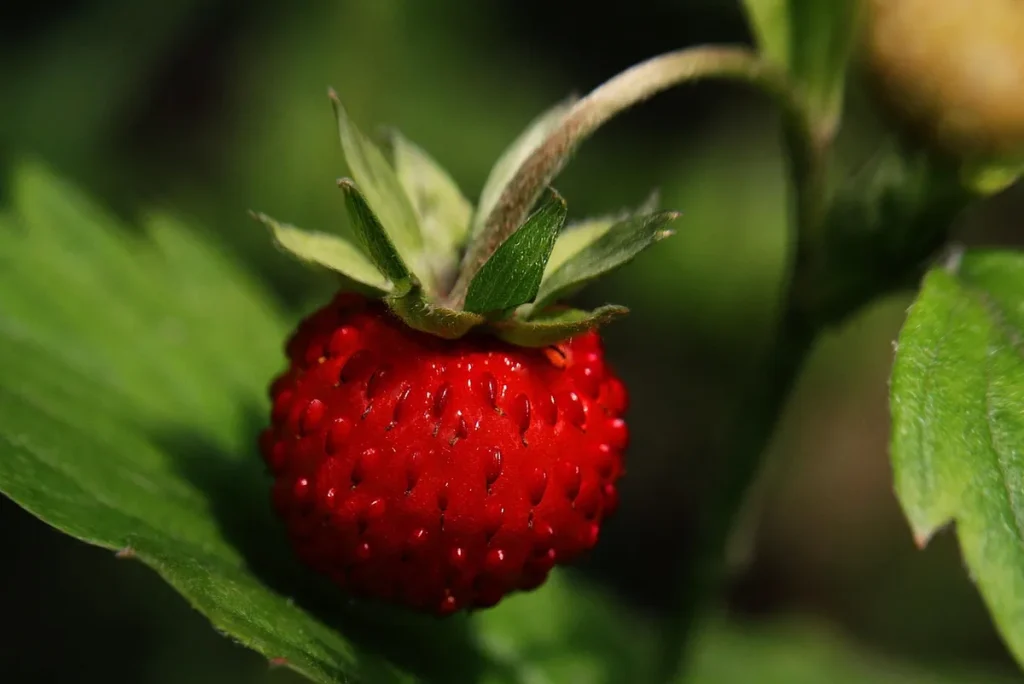
You walk out to your strawberry patch and notice the leaves are riddled with holes or covered in strange spots. It's frustrating, especially when you've been looking forward to a good harvest. Figuring out what's eating your strawberry plant leaves comes down to matching the damage pattern to the right pest, because each one leaves a distinct signature on the foliage.
University extension services across the U.S. track dozens of strawberry pests, and the treatment that works for one does absolutely nothing for another. A misdiagnosis wastes time, money, and can kill off the beneficial insects you actually want in your garden. Once you learn to read the damage, you'll know exactly what you're dealing with and how to stop it.
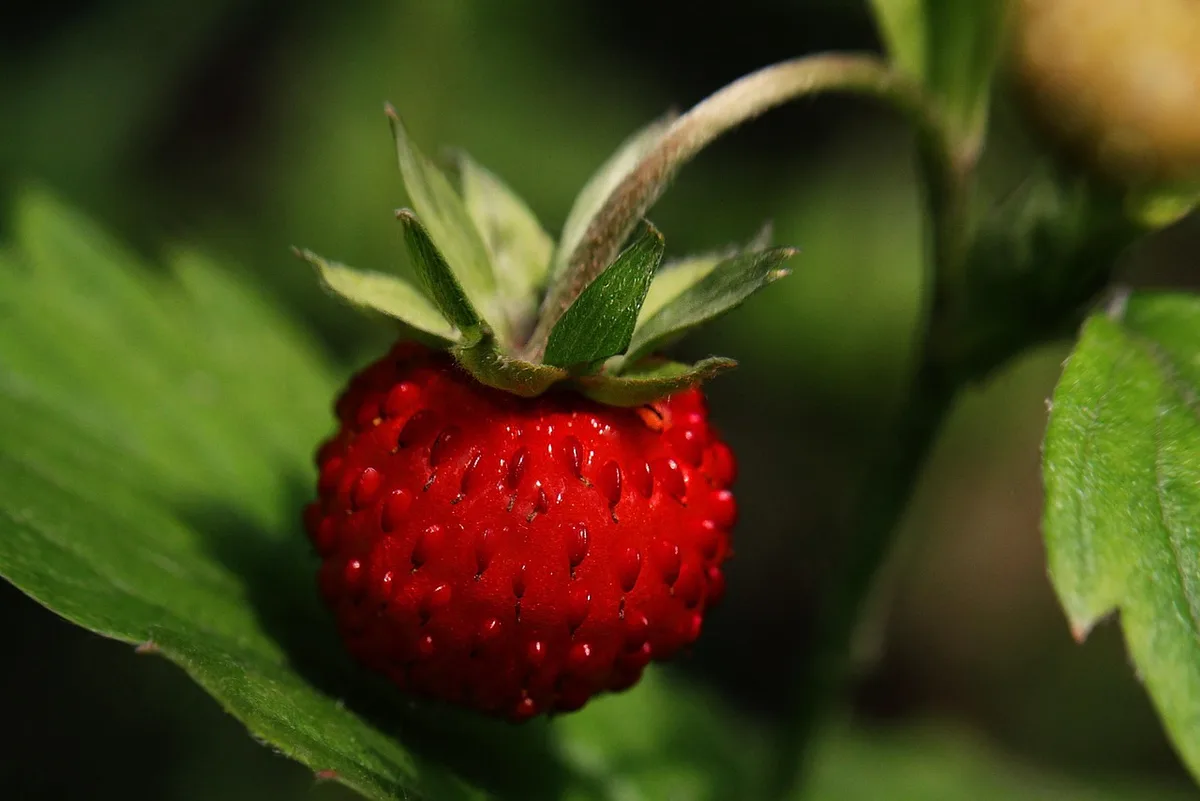
Image source: Pixabay / Henrix_photos (Pixabay Content License)
Quick Answer
Several common pests eat strawberry plant leaves. The culprits include Japanese beetles, spider mites, slugs, tarnished plant bugs, and strawberry leafrollers. Each pest creates a distinct damage pattern on the leaves.
Identifying the pattern is the first step to choosing the right treatment.
The 4 Quick Questions to Ask First
Before you grab a spray bottle, take a close look at what's actually happening. The answers to these four questions will narrow down the suspect list fast.
- What does the damage look like? Holes, stippling, skeletonized tissue, or webbed leaves all point to different pests.
- When did you first notice it? Some pests are seasonal. Japanese beetles show up in early summer, while spider mites explode during hot, dry stretches.
- Can you see the pest itself? Shake the leaf over a white piece of paper. Check the undersides with a magnifying glass. Go out at night with a flashlight.
- What's your weather been like? Dry and hot favors mites. Wet and humid conditions bring slugs and fungal issues that can look like pest damage at first glance.
Write down what you find. Even a quick phone photo of the damage and any bug you spot will help you match it to the right pattern below.
Damage Pattern #1 — Holes Chewed from the Leaf Edges Inward
This is the most common complaint. Something is taking bites out of the leaves, and the damage can look different depending on the culprit.
Japanese Beetles
These metallic green and copper beetles are about 3/8 inch long and feed in groups. They skeletonize leaves, eating the tissue between the veins and leaving a lacy, brown framework behind. They tend to start at the top of the plant and work down.
They're most active in June and July across the eastern and midwestern U.S. You'll often see them clustered on the plant during the day, which makes identification straightforward.
Earwigs
Earwigs are dark brown, about 1/2 to 3/4 inch long, with pincers on their rear end. They create ragged, irregular notching along leaf margins. The tricky part is they're nocturnal.
If you only check during the day, you'll never see them.
Go out after dark with a flashlight. Look under leaves and around the base of the plant. That's where earwigs hide during daylight hours.
Slugs and Snails
These leave irregular, smooth-edged holes in the middle of leaves, not just the edges. The giveaway is a dried slime trail on leaves or on the soil surface around the plant. Slugs are also nocturnal and thrive in damp, heavily mulched beds.
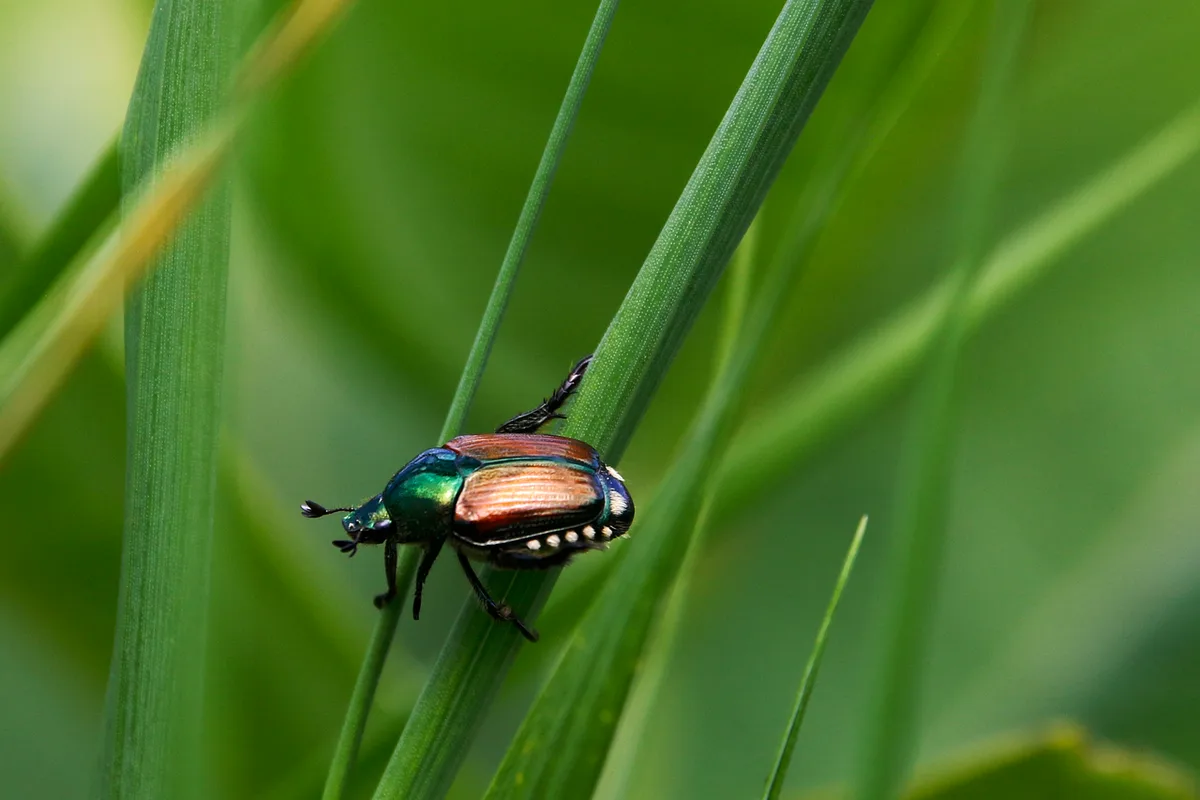
Image source: Pixabay / rfotostock (Pixabay Content License)
Quick comparison for Pattern #1:
| Pest | Damage Type | When Active | Key Sign |
|---|---|---|---|
| Japanese beetles | Skeletonized leaves | Day, June–July | Metallic green bugs visible |
| Earwigs | Ragged notching | Night | Pincers on rear, hide by day |
| Slugs/snails | Smooth irregular holes | Night, wet conditions | Slime trails on leaves or soil |
Damage Pattern #2 — Tiny Yellow or White Specks Across the Leaf Surface (Stippling)
If the leaf looks like it's been dotted with a pin, you're probably dealing with a sap-sucking insect rather than a chewing pest. This type of damage is easy to mistake for a nutrient deficiency or disease at first.
Spider Mites
Spider mites (Tetranychus urticae) are tiny, about the size of a grain of salt, and they live on the undersides of leaves. They suck the chlorophyll out of individual cells, creating a fine stippling pattern that eventually turns leaves bronze or brown. In heavy infestations, you'll see fine webbing covering the leaf undersides and stem junctions.
They thrive in hot, dry conditions. If your strawberry bed is against a south-facing wall or has been without rain for a while, mites are a prime suspect. University extension guidelines note that mite populations can double in as little as three to five days under ideal conditions.
Tarnished Plant Bug
The tarnished plant bug (Lygus lineolaris) is a small, oval, brownish bug about 1/4 inch long with a distinctive yellow triangle on its back. It feeds on new leaves and developing buds, causing a "shot-hole" effect where small sections of leaf die and fall out, leaving tiny holes surrounded by dead tissue.
This pest is especially damaging because it also attacks flower buds, which can cause misshapen or aborted fruit. It's active from early spring through summer.
Thrips
Thrips are slender, tiny insects (under 1/16 inch) that scrape the leaf surface and feed on the sap. Damage shows up as silvery streaks or patches on the leaf surface. You may also see tiny black specks of frass (insect droppings) on the leaves.
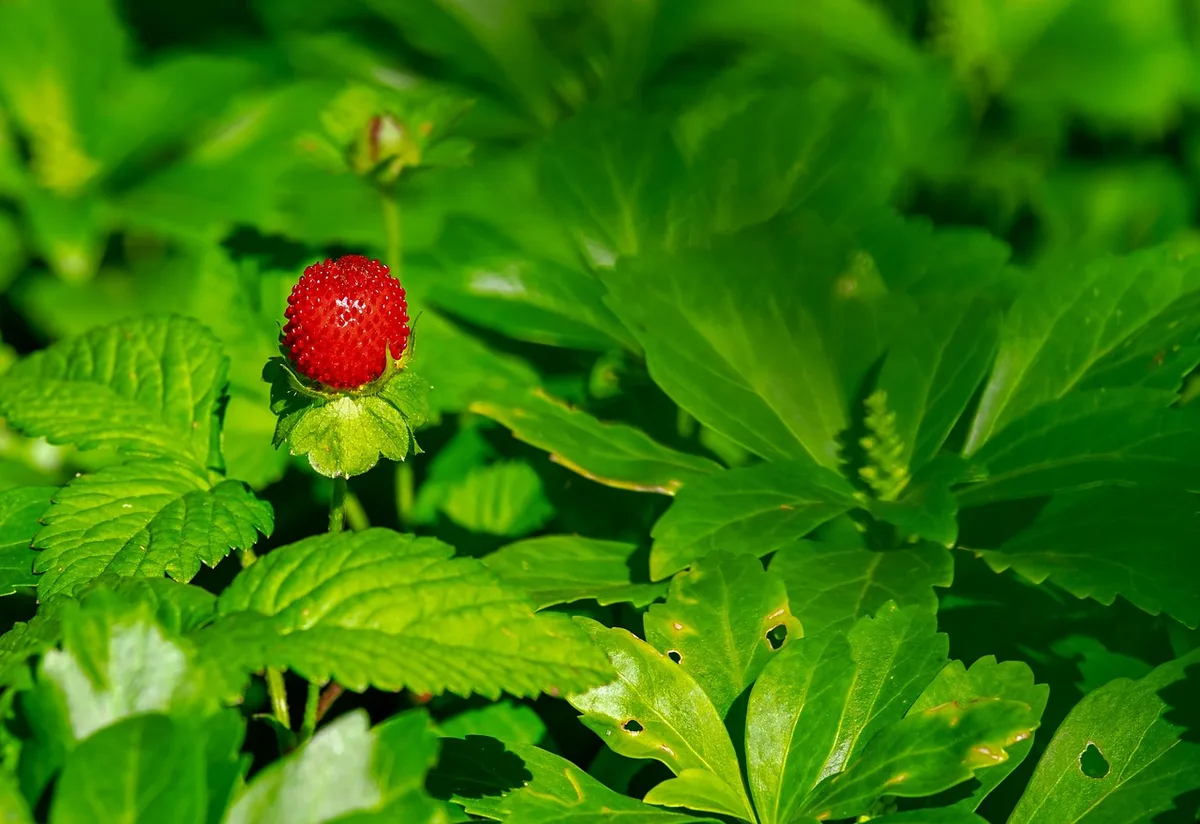
Image source: Pixabay / Couleur (Pixabay Content License)
Quick comparison for Pattern #2:
| Pest | Damage Type | Where to Look | Key Sign |
|---|---|---|---|
| Spider mites | Fine stippling, bronze leaves | Leaf undersides | Fine webbing |
| Tarnished plant bug | Shot-holes in new leaves | Growing tips, buds | Yellow triangle on back |
| Thrips | Silvery streaks | Leaf surface | Tiny black frass specks |
Damage Pattern #3 — Leaves Rolled Up or Tied Together with Silk
When strawberry leaves look like someone stitched them together with silk thread, a caterpillar is almost certainly the cause. The larva weaves a shelter out of one or more leaves and feeds safely inside it.
Strawberry Leafroller
The strawberry leafroller (Ancylis comptana) is a small green or brown caterpillar, about 1/2 inch long, that rolls or ties leaves together with silk. It feeds on the leaf tissue inside the shelter, and heavy infestations can significantly reduce the plant's ability to photosynthesize.
The adult is a small brown moth with a wingspan of about 1/2 to 5/8 inch. The moths lay eggs on leaf undersides in late spring, and the larvae begin feeding shortly after. There are typically two to three generations per growing season, with peak activity in June and again in August.
Leaf Tiers
Leaf tier moths behave similarly but tend to tie multiple leaves together into a larger shelter rather than rolling a single leaf. The damage is the same: protected caterpillars eating leaf tissue inside their silk enclosures.
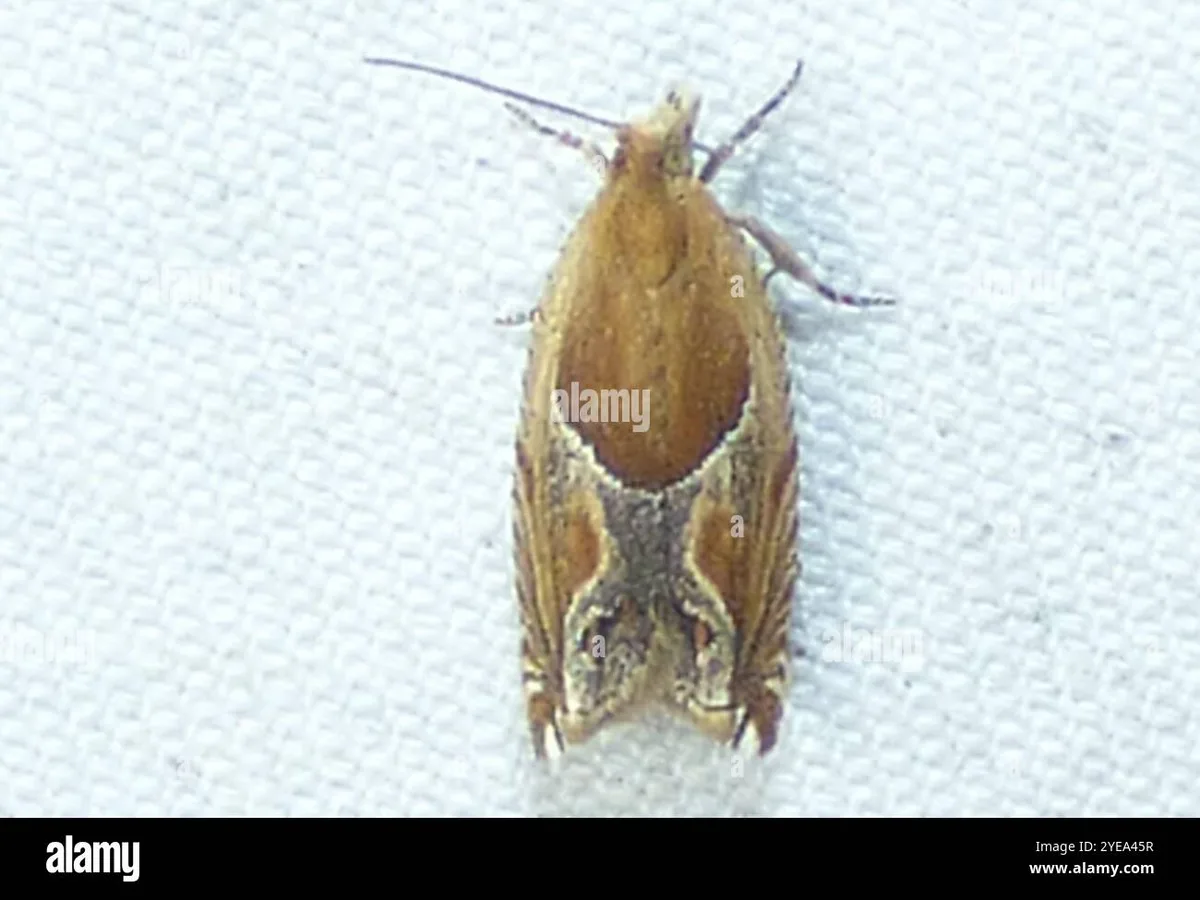
Image source: Bing (Web (fair-use with source credit))
What to do about rolled leaves:
- Open the rolled or tied leaves gently and look for the caterpillar inside.
- If you find caterpillars on less than 20% of the plant's foliage, hand-pick them and drop them in soapy water.
- If the infestation is widespread, apply Bacillus thuringiensis (Bt), a biological insecticide that targets caterpillars but is safe for beneficial insects, pets, and people. Follow the label for concentration and reapplication timing.
- Avoid broad-spectrum insecticides. They kill parasitic wasps and other natural predators that keep leafroller populations in check.
Damage Pattern #4 — Clean, Semicircular Cuts from Leaf Edges
This one surprises a lot of gardeners. If you see perfectly round or oval pieces cleanly cut out of leaf margins, you're looking at leafcutter bees (Megachile species). These are solitary native bees, and they use the leaf pieces to line their nest cavities.
Don't treat these insects. Leafcutter bees are important pollinators. The cosmetic damage to strawberry leaves is minimal and doesn't affect fruit production. If you can tolerate the look, leave them alone.
They're doing your garden a favor.
Damage Pattern #5 — Whole Plants or Large Sections Missing
When entire leaves or big sections of a plant disappear overnight, you're dealing with a larger animal.
Deer
Deer tear leaves rather than cutting them cleanly. The damage looks ragged and torn, often on higher growth. Deer can strip a strawberry bed in a single night.
They're most active at dawn and dusk.
Rabbits
Rabbits make clean cuts at a 45-degree angle, usually close to ground level. If the damage stops about 12 to 18 inches above the soil line, rabbits are the likely culprit. Look for small round droppings nearby.
Groundhogs
Groundhogs (also called woodchucks) cause large-scale defoliation, typically near their burrow openings. They're daytime feeders, so you may catch them in the act if you check at midday.
How to Confirm What You're Dealing With
Still not sure? These detective steps will help you pin down the pest before you treat.
- Nighttime inspection. Grab a flashlight and head out one to two hours after dark. Slugs, earwigs, and many caterpillars feed at night and hide during the day.
- Shake test. Hold a leaf over a white sheet of paper and give it a sharp tap. Spider mites, thrips, and tarnished plant bugs will fall onto the paper and become visible.
- Magnifying glass check. Examine leaf undersides, stem junctions, and new growth. Spider mites and their eggs are tiny but visible at 10x magnification.
- Sticky traps. Place yellow or blue sticky traps just above the plant canopy. They'll catch flying pests like tarnished plant bugs and thrips, giving you a positive ID.
- Soil and debris check. Lift mulch and check around the plant base. Slugs, earwigs, and some caterpillars shelter in damp debris during daylight.
Treatment Options Matched to Each Pest
Once you've identified the problem, here's what actually works for each pest.
| Pest | First-Line Organic Treatment | If That's Not Enough |
|---|---|---|
| Japanese beetles | Hand-pick into soapy water early morning | Neem oil spray, spinosad |
| Earwigs | Traps (rolled newspaper, soy sauce traps) | Diatomaceous earth around plant base |
| Slugs/snails | Beer traps, copper tape barriers | Iron phosphate bait (safe around pets) |
| Spider mites | Strong water spray on leaf undersides every 2–3 days | Neem oil, insecticidal soap, predatory mites |
| Tarnished plant bug | Remove weeds (they overwinter in weed hosts) | Spinosad, pyrethrin at dusk |
| Strawberry leafroller | Hand-pick caterpillars from rolled leaves | Bacillus thuringiensis (Bt) |
| Deer | Fencing (8 feet tall for reliable exclusion) | Deer repellent sprays, motion-activated sprinklers |
| Rabbits | Chicken wire fence buried 6 inches underground | Live trapping (check local regulations) |
A note on neem oil
Neem oil is a solid all-purpose option for many soft-bodied strawberry pests. It works as a feeding disruptor and repellent. Apply it in the early morning or late evening to avoid burning the foliage in direct sun.
Reapply every seven to ten days, and always coat the leaf undersides where pests tend to hide. Per University of California IPM guidelines, neem oil is safe for beneficial insects once it dries, since it must be ingested to affect the pest.
Common Mistakes That Make Things Worse
Even with the right identification, a few missteps can turn a manageable problem into a recurring nightmare.
- Spraying broad-spectrum insecticides. Products like permethrin and malathion kill everything, including ladybugs, lacewings, and parasitic wasps that naturally control strawberry pests. You often end up with a worse infestation a few weeks later because the predators are gone.
- Confusing disease with pest damage. Fungal leaf spot, powdery mildew, and leaf scorch can all look like insect damage at first. If you don't see any insects or slime trails, check for fungal signs like powdery coatings, concentric rings, or spreading brown lesions.
- Treating at the wrong time. Spraying during the day wastes product and can harm pollinators. For most strawberry pests, early morning or late evening application is best. For nocturnal pests like slugs and earwigs, evening treatment is essential.
- Ignoring the pest's life cycle. One spray rarely solves the problem. Most pests have multiple generations per season or eggs that survive in soil and debris. Plan for follow-up treatments based on the pest's life cycle, not just a single application.
- Overlooking nearby host plants. Weeds, wild brambles, and garden debris near your strawberry bed serve as pest reservoirs. Tending to the surrounding area is just as important as treating the strawberries themselves.
How to Prevent Next Season's Damage
The best pest control starts before you even see damage. A few simple practices can cut your pest pressure dramatically year over year.
- End-of-season cleanup. After harvest, remove old leaves, mulch, and plant debris. Many pests overwinter in this material. Compost it only if your pile reaches at least 140°F. Otherwise, bag it and dispose of it.
- Row covers. Lightweight floating row covers (with a mesh size under 0.5 mm) can exclude many flying pests during the critical early growing season. Remove them when plants begin to flower so pollinators can reach the blossoms.
- Companion planting. Strong-smelling herbs like thyme, basil, and chives planted near strawberries can repel some pests. Marigolds may help deter nematodes and certain beetles. The evidence is mixed, but it doesn't hurt and adds biodiversity.
- Encourage beneficial insects. Plant yarrow, dill, fennel, and sweet alyssum nearby to attract ladybugs, lacewings, and parasitic wasps. These predators provide free, ongoing pest control. Avoid killing them with unnecessary sprays.
- Rotate your strawberry beds. If possible, move your strawberry planting to a fresh location every three to four years. This breaks pest and disease cycles that build up in the soil over time.
When to Worry vs. When to Let It Go
Not every chewed leaf is a crisis. Healthy strawberry plants can tolerate a surprising amount of leaf damage without any impact on fruit production.
- Under 20% leaf damage. Generally no action needed. The plant can photosynthesize plenty with 80% of its foliage intact. Focus on prevention for next season.
- 20, 40% leaf damage. Time to treat. The plant is still fine, but the pest population is growing. Identify the culprit and apply the appropriate organic treatment.
- Over 40% leaf damage or growing tips heavily attacked. Act fast. This level of defoliation stresses the plant and can reduce next year's harvest. Tarnished plant bugs attacking buds are especially concerning at this stage.
- New transplants with any significant damage. Young plants are much more vulnerable. Even minor pest pressure can set back a newly planted strawberry. Protect transplants with row covers until they're established.
Frequently Asked Questions
How do I keep bugs off my strawberry plants naturally?
Start with row covers during the early growing season. Encourage beneficial insects by planting flowering herbs nearby. Use beer traps for slugs and hand-pick Japanese beetles in the early morning when they're sluggish.
Neem oil and insecticidal soap handle most soft-bodied pests without harming pollinators once dry.
What is eating my strawberry leaves at night?
The most common nighttime feeders are slugs, snails, earwigs, and strawberry leafrollers. Go out with a flashlight one to two hours after sunset to catch them in the act. Look for slime trails to confirm slugs, and check leaf undersides for earwigs hiding in tight spaces.
Can I spray my strawberry plants with something safe for eating?
Yes. Neem oil, insecticidal soap, spinosad, and Bacillus thuringiensis (Bt) are all approved for use on edible crops when applied according to the label. Always check the pre-harvest interval on the product label.
This tells you how many days to wait between your last spray and picking fruit.
Are holes in strawberry leaves caused by bugs or disease?
Both can cause holes, but the pattern usually tells you which one. Bugs create irregular holes, skeletonized tissue, or clean cuts. Diseases tend to produce spots with defined edges, concentric rings, or a yellow halo around the lesion.
If you see insects, slime trails, or webbing, it's pests. If you see powdery coatings or spreading lesions without any bugs, it's likely fungal.
Do spider mites go away on their own?
Sometimes. A strong rain or a period of high humidity can knock spider mite populations back naturally. But in hot, dry conditions, they reproduce so fast that natural control usually isn't enough.
Spray leaf undersides with water every two to three days, and consider releasing predatory mites if the infestation is severe.