If you've pulled up a section of dead grass and found pale, C-shaped larvae curled in the soil underneath, you're looking at the result of adult beetles treating your lawn like a nursery. Understanding what causes lawn grubs means tracing the problem back several months, because the brown patches you see now started with beetles flying over your yard last summer looking for the right spot to lay eggs.
The frustrating part is that most homeowners only discover grubs when the damage is already done. By early fall, those larvae have been feeding on grassroots for weeks, and by spring you're left wondering why entire sections of turf lifted right off the soil like a loose carpet. Let's walk through what's actually driving grub problems so you can break the cycle.
Quick Answer
What causes lawn grubs is adult scarab beetles laying eggs in your turf during summer. The eggs hatch into larvae that feed on grassroots through fall. Overwatered, thick-thatch lawns attract more egg-laying beetles.
Different beetle species dominate in different regions. Your specific conditions determine which species show up and how bad the damage gets.
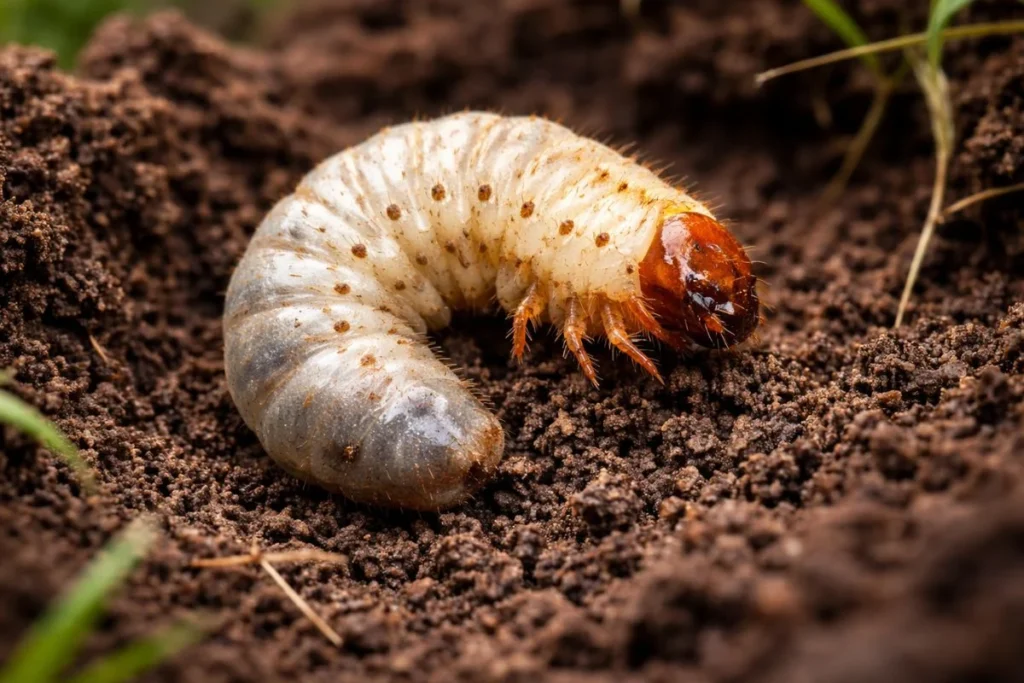
Image source: Bing (Web (fair-use with source credit))
The Real Culprits: Which Beetle Species Are Behind Your Grub Problem
Not all grubs are created equal, and knowing which species you're dealing with changes everything about your treatment approach. The term "white grubs" covers the larval stage of several scarab beetle species, and each one has its own preferred climate, egg-laying window, and damage pattern.
Here are the heavy hitters you're most likely dealing with:
| Species | Primary Region | Peak Egg-Laying | Grub Color/Size |
|---|---|---|---|
| Japanese beetle | Northeast, Midwest, expanding south | Mid-July to early August | White, up to 1 inch |
| European chafer | Northeast, Great Lakes, Pacific Northwest | Late June to mid-July | White with tan head, ~¾ inch |
| June bugs / May beetles (Phyllophaga) | Nationwide, heavy in Midwest and South | May to July | White to cream, up to 1.5 inches |
| Black turfgrass ataenius | Northeast, Mid-Atlantic | June to July | Small (~¼ inch), white with dark abdomen |
| Masked chafer | Midwest, Northeast, Ohio Valley | Late June to mid-July | White, ~½ inch |
| Asiatic garden beetle | Northeast, Southeast | July to August | White, ~½ inch, active at night |
The Japanese beetle gets most of the press because it's aggressive above ground (chewing roses, linden trees, and grapevines) and below ground. But in many areas, the European chafer is actually the bigger turf threat. Our research shows that in southern Ontario and parts of upstate New York, European chafer grub infestations have overtaken Japanese beetle as the primary species requiring treatment.
Here's what matters for you. If your lawn damage shows up in late August through October with patches that peel back easily, you're almost certainly dealing with one of these scarab species. Each one follows roughly the same lifecycle: eggs laid in summer, larvae hatch within two weeks, feeding intensifies in fall, grubs burrow deep to overwinter, then move up in spring to feed again briefly before pupating into adults.
Why identification matters. Japanese beetle grubs are slightly easier to manage because their lifecycle is narrower. European chafer grubs hatch earlier and can feed longer into fall. Black turfgrass ataenius is tiny but reproduces fast and can produce two generations per year in warm regions.
Getting your species right tells you exactly when to treat.
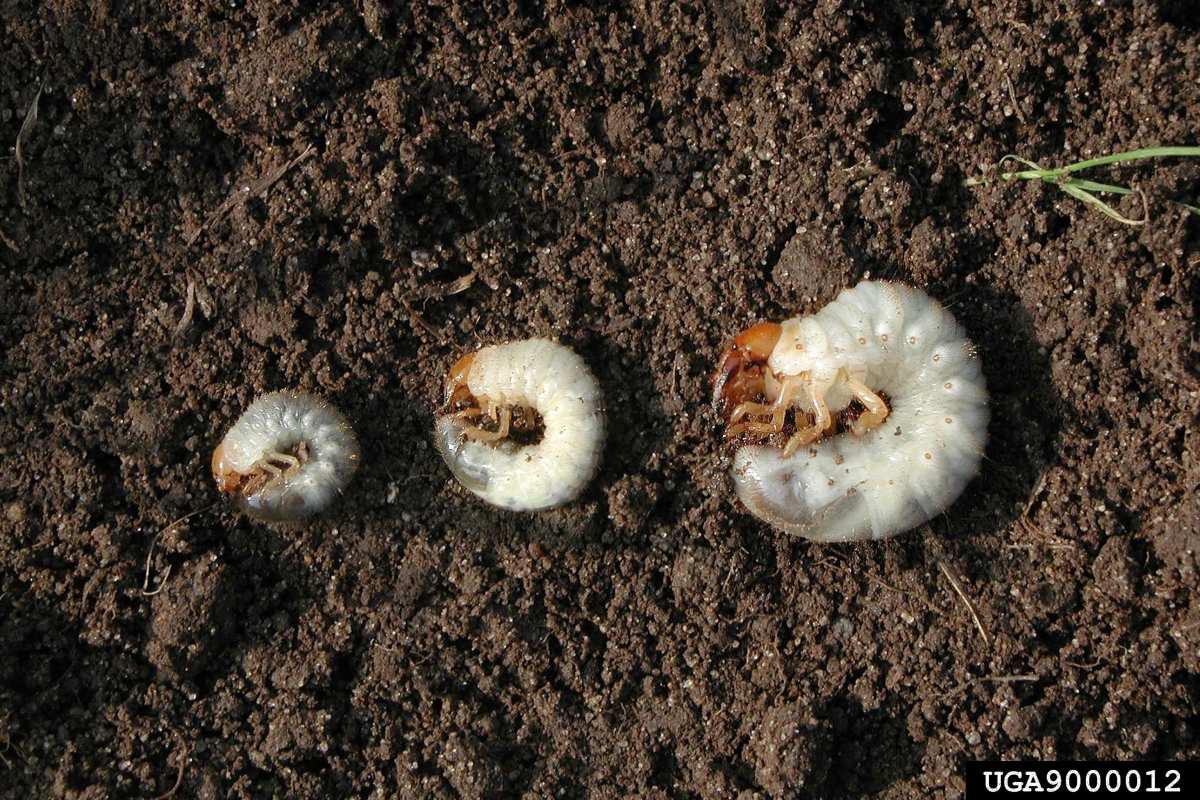
Image source: Bing (Web (fair-use with source credit))
How Your Lawn Conditions Are Inviting Beetles to Lay Eggs
Beetles aren't choosing your lawn at random. Adult scarabs are looking for specific soil and turf conditions when they're deciding where to drop eggs, and the way you maintain your lawn plays directly into that decision.
Soil moisture is the number one factor. Female beetles prefer to lay eggs in moist soil because it's easier to penetrate and the eggs won't dry out. In our research, lawns that were irrigated regularly through summer consistently showed higher grub counts than neighboring lawns that were allowed to go dormant during dry spells. That doesn't mean you should drought-stress your lawn on purpose during the exact window when beetles are flying.
It means that overwatering from early July through mid-August is essentially rolling out a welcome mat.
Thatch depth is the second major contributor. Thatch is the layer of dead stems, roots, and organic debris sitting between the green grass and the soil surface. When that layer gets thicker than about half an inch, it provides perfect shelter for beetle eggs and newly hatched larvae. It retains moisture, buffers temperature swings, and gives young grubs soft material to feed on before they reach deeper grassroots.
Lawns with heavy thatch are grub magnets.
Mowing height and grass species play supporting roles. Beetles tend to prefer longer grass for egg-laying because of the denser root mass and the cooler soil temperatures underneath. Kentucky bluegrass and perennial ryegrass lawns tend to attract more Japanese beetle activity than tall fescue dominant lawns. If you're maintaining cool-season turf in the transition zone with mixed species, some types will draw beetles more than others.
Outdoor lighting matters more than most people realize. Several grub species, especially Asiatic garden beetles and European chafers, are attracted to lights at night. If you've got bright security lights or decorative landscape lighting running near your lawn in June and July, you're potentially luring adult beetles in closer. Yellow-toned or sodium vapor bulbs attract fewer insects than standard white LEDs, though the easiest move is simply reducing unnecessary lighting during the egg-laying window.
Proximity to adult food sources. Adult beetles feed on specific plants before they start laying eggs. Japanese beetles love roses, lindens, birches, and grapes. European chafers are less picky but feed on many deciduous trees.
If your lawn borders plantings that adult beetles feed on, you're more likely to see egg-laying activity nearby. It's not the dominant factor, but it stacks the odds in the beetles' favor when combined with moist soil and thick thatch.
The Grub Lifecycle: Why Timing Changes Everything
Understanding the grub lifecycle is the difference between spending money on treatments that actually work and throwing product down during the wrong week. Every major scarab species follows a predictable annual pattern, though the exact timing shifts by region.
Early summer: adult emergence. Adult beetles emerge from the soil starting in May depending on latitude and species. They spend a few weeks feeding on foliage, mating, and then the females start looking for suitable turf to burrow into and lay eggs. For most species, this egg-laying window peaks between mid-June and early August.
Mid to late summer: egg stage and hatching. Female beetles burrow anywhere from 2 to 4 inches into moist soil and deposit batches of eggs. Those eggs hatch within 10 to 14 days under normal moisture conditions. By early August in most regions, the first-instar larvae are starting to feed on fine root hairs and organic matter near the surface.
Late summer to fall: the heavy feeding stage. This is when damage becomes visible. By late August and into September, grubs are in their second and third instar stages, meaning they're growing fast and eating voraciously. They're consuming the roots that hold your turf to the ground, which is exactly why damaged sections peel back so easily.
In northern regions, feeding starts to slow by late October as soil temperatures drop. In the South, larvae may continue feeding well into November.
Winter: deep dormancy. Grubs move deep into the soil profile, typically below the frost line, and overwinter in a dormant state. They die if frozen at shallow depths, which is why extreme winters can naturally reduce grub populations.
Spring: a brief second feeding window. When soil temperatures warm back to about 50°F, grubs move back up toward the root zone and feed for a few weeks before pupating into adults. Spring damage tends to be less severe than fall damage in most regions, but it can still stress turf that's already trying to green up from winter.
The critical insight for homeowners. If you're seeing damage in April or May, those grubs have been there since the previous summer. You can't rewind the clock. What you can do is prevent the next generation by targeting adult egg-laying in summer.
The actionable takeaway is that your grub treatment strategy in any given year should be built around the timeline of the previous year's beetle activity, not the damage you see today.
How to Confirm You Actually Have Grubs (Not Something Else)
Before you spend money or apply products, you need a definitive diagnosis. Brown lawns have plenty of causes, and grubs are only one of them.
The tug test. Grab a handful of brown or thinning grass and pull upward gently. If the turf lifts easily like a loose carpet with little to no root attachment, grubs are the likely culprit. Healthy grass resists and stays anchored.
If the grass tears rather than pulling free cleanly, you might be looking at something else.
The dig test. Cut a 1-square-foot section of turf in the border area between damaged and healthy grass, using a spade or knife to go about 3 inches deep. Peel it back and examine the root zone and top few inches of soil. Count the grubs you find.
- 0 to 4 grubs per square foot: usually not enough to warrant treatment alone. The lawn should recover on its own with proper watering and fertilization.
- 5 to 9 grubs per square foot: borderline. If your lawn is otherwise healthy, it may tolerate this level. If growth is already thin, damage will show.
- 10 or more grubs per square foot: treat. This density will cause visible damage and secondary problems.
Look for secondary signs. Skunks, raccoons, and armadillos love grubs and will tear up lawns digging for them. Birds pecking at your turf repeatedly also signal feeding activity below. If animals are damaging your lawn at night, grubs are almost certainly the reason.
Common confusions to rule out.
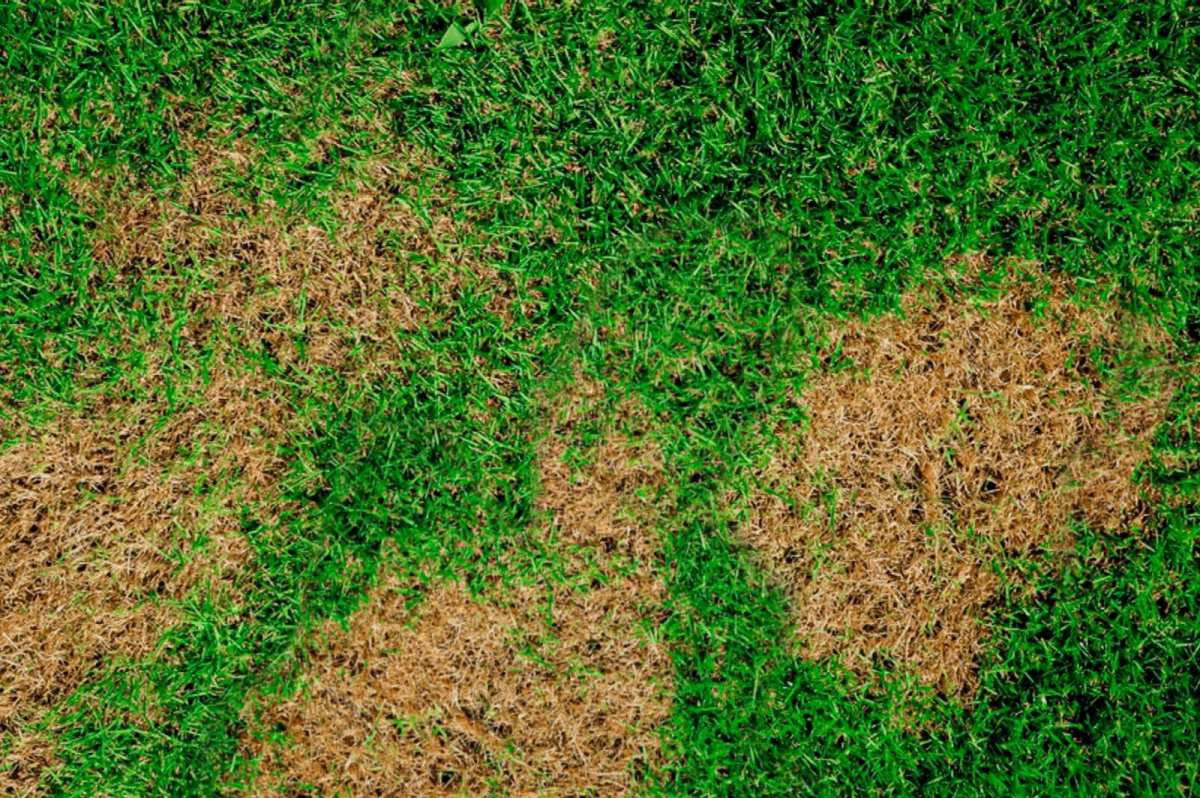
Image source: Bing (Web (fair-use with source credit))
- Fungal diseases like brown patch or dollar spot create circular patterns but won't make turf detach at the roots.
- Dog urine damage creates small dead spots with a ring of darker green around them, usually scattered randomly.
- Drought stress causes uniform browning across sun-exposed areas, not patchy detachments.
- Sod webworms are moth larvae, not beetles, and they chew grass blades at the surface rather than feeding on roots. You'll see small tan moths flying low over the lawn at dusk if webworms are the problem.
When to confirm species. If you're planning to use milky spore disease (Paenibacillus popilliae), you need to confirm you're dealing with Japanese beetle grubs specifically. Milky spore targets only Japanese beetle larvae and won't help against chafers or June bugs. You can take grub samples to your local university extension office for accurate identification.
When Grubs Cross the Line: Damage Thresholds That Matter
The question is rarely whether grubs exist in your lawn. They do, in almost every turf environment. The question is whether their population has reached the point where intervention makes sense.
Research from university extension programs consistently identifies the economic threshold for treatment at around 5 to 10 grubs per square foot for most cool-season turf species. This number accounts for what a healthy lawn can tolerate without visible damage. Below that, natural predators, bird feeding, and the lawn's own root mass can usually keep pace with the feeding pressure.
However, that threshold drops in certain situations:
- Lawns with shallow root systems from poor soil, compaction, or recent construction can show damage at lower grub counts.
- Lawns already stressed by drought, heat, or disease lose their tolerance margin faster. Grub feeding adds to the stress rather than being the sole cause.
- High-use turf areas like sports fields or areas where kids and pets play regularly may need a lower threshold because any root weakening accelerates wear damage.
Conversely, a dense, well-maintained tall fescue lawn with deep roots and moderate thatch can sometimes ride out a count of 8 to 12 grubs per square foot without obvious symptoms. The health of the turf above ground determines how much feeding the roots can absorb before you see brown patches.
The hidden cost of not acting. Even if your grub count is below the visible damage threshold, feeding activity weakens root depth and makes your lawn more vulnerable to whatever comes next. A dry week in July that your lawn shrugged off in previous years can suddenly cause thin patches if grubs compromised the root system the previous fall. The compounding effect over multiple years is what turns a manageable population into a maintenance nightmare.
What to Do Based on Your Situation: A Decision Guide
Here's where the rubber meets the road. Your specific situation dictates the right response, and the answer changes based on what you've already found in your lawn.
If you've found fewer than 5 grubs per square foot and your lawn looks healthy.
Do nothing fall treatment-related this year. Focus on cultural practices: reduce irrigation during the next egg-laying window in June and July, dethatch if your thatch layer exceeds half an inch, and raise your mowing height slightly to encourage deeper rooting. Plan to apply a preventive product next June if you've had previous grub issues.
If you've found 5 to 10 grubs per square foot and you're seeing early damage.
Apply a curative treatment in late August or September using a product containing trichlorfon or carbaryl. These work on larger larvae and need to be watered in immediately after application. Follow up with a preventive application the following June to break the cycle.
If you've found more than 10 grubs per square foot with visible damage.
Apply a curative treatment immediately. Reseed or patch damaged areas in early fall once the treatment has had time to work. Apply a preventive product the following June.
If wildlife is actively digging, you may need to address that separately with deterrents or exclusion methods.
If you're in a region with known European chafer or Japanese beetle pressure and you've never treated before.
Apply a preventive product containing imidacloprid, clothianidin, or chlorantraniliprole in June or early July before eggs hatch. This is the single most effective long-term strategy for homeowners in high-pressure areas. Chlorantraniliprole has a better environmental profile for pollinators and is increasingly recommended by extension services as of 2026.
If you prefer biological controls.
Apply beneficial nematodes (Heterorhabdacteriophora species) in late August when soil temperatures are between 60°F and 80°F. Water the lawn before and after application, and keep the soil moist for at least two weeks. Milky spore disease works only for Japanese beetle grubs and takes two to three years to establish in the soil, but it provides long-term suppression once active.
Preventive vs. Curative Treatment: Choosing the Right Approach
The single most common mistake homeowners make is applying the wrong type of product at the wrong time. Preventive and curative grub products work through completely different mechanisms, and using one when you need the other wastes money and leaves your lawn unprotected.
Preventive products contain systemic insecticides like imidacloprid, clothianidin, or chlorantraniliprole. They're applied in June or early July before eggs hatch. The active ingredient is taken up by the grass roots and sits in the root zone waiting for young larvae to start feeding.
They're most effective against first and second instar grubs, the tiny ones that are easy to kill. Once applied, they provide residual protection for several weeks through the peak hatching period.
Curative products contain faster-acting contact insecticides like trichlorfon or carbaryl. They're applied in late August or September when you've already confirmed a grub problem. They kill larger, third-instar grubs on contact but have shorter residual activity.
They need to be watered in immediately after application to move the active ingredient down to the soil level where grubs are feeding.
| Factor | Preventive | Curative |
|---|---|---|
| Best application timing | June to early July | Late August to September |
| Target grub size | Small (1st and 2nd instar) | Large (3rd instar) |
| Active ingredients | Imidacloprid, clothianidin, chlorantraniliprole | Trichlorfon, carbaryl |
| Residual activity | Several weeks to months | Days to a few weeks |
| Best for | Known grub history, high-pressure areas | Confirmed current infestation |
| Pollinator concern | Moderate (apply before bloom) | Lower (late season, less bloom) |
The timing trap. If you apply a preventive product in September, it's too late. The eggs have already hatched and the grubs are too large for the systemic to work effectively. If you apply a curative product in June, the grubs haven't hatched yet and the product will degrade before they arrive.
Match the product type to the calendar, not just to the problem.
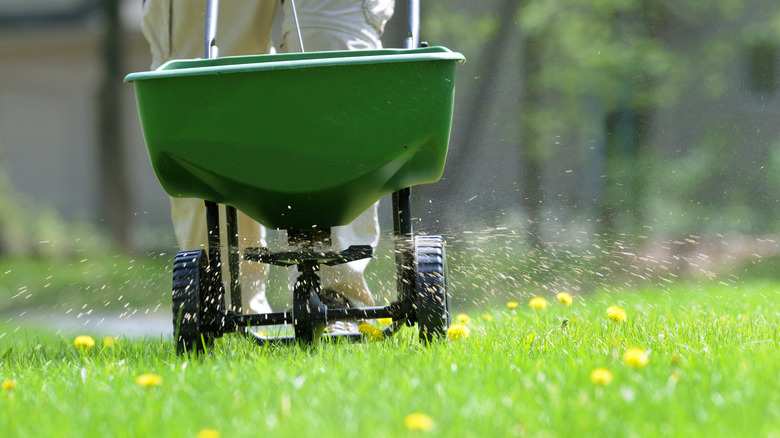
Image source: Bing (Web (fair-use with source credit))
Biological and Cultural Controls That Actually Work
Chemical treatments get most of the attention, but cultural practices and biological controls can significantly reduce grub pressure over time without adding pesticides to your property.
Beneficial nematodes are microscopic roundworms that seek out and kill grubs from the inside. Heterorhabditis bacteriophora is the species most effective against white grubs. You apply them as a soil drench in late summer when grubs are small and soil temperatures are warm.
They need consistent soil moisture to survive and move through the soil profile, so they work best in lawns that can be irrigated regularly. Aggregate user reviews and university trial data suggest nematode applications achieve 50 to 70 percent grub reduction when applied correctly, which is solid but not as reliable as chemical options.
Milky spore disease (Paenibacillus popilliae) is a bacterium that infects and kills Japanese beetle grubs specifically. It doesn't affect other grub species. You apply it as a granular product and it establishes in the soil over two to three years.
Once active, it can suppress Japanese beetle populations for a decade or more. The downside is the long establishment period and the species limitation. If you're dealing with European chafers or June bugs, milky spore won't help.
Cultural practices that reduce grub attractiveness:
- Reduce irrigation in June and July. Let the top few inches of soil dry out between waterings during the egg-laying window. This makes your lawn less attractive to egg-laying females without harming established cool-season turf.
- Dethatch when the layer exceeds half an inch. Rent a dethatcher or power rake in early fall. Removing excess thatch eliminates the protective habitat eggs and young larvae depend on.
- Mow at the high end of your grass species' range. Taller grass develops deeper roots and creates a less favorable microclimate for egg-laying.
- Reduce unnecessary outdoor lighting in summer. Switch to yellow-toned bulbs or motion-activated fixtures to avoid attracting night-flying beetles.
- Overseed with endophyte-enhanced grass varieties. Some turfgrass cultivars contain beneficial fungi that make the grass less palatable to feeding insects, including young grubs.
The honest truth about biological controls. They work best as part of an integrated approach, not as standalone solutions. If you've got a heavy infestation, biological controls alone probably won't save your lawn this year. But combined with smart cultural practices and targeted chemical use when needed, they can keep populations manageable long-term.
The Biggest Mistakes People Make With Grub Control
After reviewing extension service recommendations and aggregate homeowner feedback, the same mistakes come up again and again. Avoiding these will save you money and get better results.
Mistake 1: Treating at the wrong time. This is the big one. Applying preventive products in fall or curative products in spring almost never works. The product chemistry and the grub lifecycle have to align.
Mark your calendar for June 15 to July 15 for preventive applications and August 15 to September 15 for curative applications in most northern regions. Adjust earlier for the South.
Mistake 2: Not watering in the product. Granular grub control products need water to move the active ingredient down to the root zone where grubs live. If you spread granules and leave them sitting on the surface, most of the product never reaches the target. Water within 24 to 48 hours of application, applying about a quarter to half inch of irrigation.
Mistake 3: Assuming brown patches equal grubs. Fungal disease, drought, dog urine, compaction, and nutrient deficiency all cause brown patches. Do the tug test and dig test before spending money on treatment. You might be solving the wrong problem.
Mistake 4: Overwatering during egg-laying season. Running your sprinklers every other day in July creates the exact moist soil conditions female beetles are looking for. If you're in a region with known grub pressure, cut back irrigation during June and July unless your lawn is actively suffering from drought stress.
Mistake 5: Ignoring thatch. A thick thatch layer is grub habitat. No amount of chemical treatment will provide lasting control if you're not addressing the thatch problem. Dethatch in early fall and you'll remove a significant portion of the eggs and young larvae along with the organic debris.
Mistake 6: Using the same product every year. While resistance isn't as well-documented in grubs as in some other pests, rotating between product classes (neonicotinoids one year, anthranilic diamides the next) is a sound practice that reduces the chance of reduced efficacy over time.
Mistake 7: Expecting instant results from biological controls. Nematodes and milky spore take time to work. If you've got active damage right now, you need a curative chemical treatment this year and can layer in biological controls for long-term management.
Regional Differences: Why Your Location Changes the Answer
Your geography determines which grub species you're dealing with, when they're active, and how aggressively you need to manage them.
Northeast and Mid-Atlantic. Japanese beetle and European chafer dominate. European chafer has expanded significantly over the past two decades and is now the primary grub species in parts of New York, Pennsylvania, and New England. Egg-laying peaks in late June to mid-July.
Preventive treatment timing should target late June.
Midwest. Japanese beetle pressure is heavy across Ohio, Indiana, Illinois, Michigan, and surrounding states. June bugs (Phyllophaga species) are also common and tend to have a longer egg-laying window from May through July. Multiple species may be present in the same lawn, which complicates treatment timing.
Southeast. The warm climate supports a wider range of species including tropical sod webworm, green June beetle, and Asiatic garden beetle. Grub activity can extend well into November and sometimes through winter in Florida and the Gulf Coast. Treatment calendars need to shift earlier for egg-laying and later for curative applications.
Pacific Northwest. European chafer is the primary concern in western Washington and Oregon. The mild, wet climate supports extended grub activity. Soil moisture management is especially important here because natural rainfall keeps soil moist through much of the summer.
Transition zone. States like Kentucky, Tennessee, Virginia, and parts of North Carolina and Missouri sit between cool-season and warm-season turf zones. Multiple grub species overlap here, and the mixed grass types create variable susceptibility. Extension services in these regions often recommend preventive treatment as a default because the species mix makes reactive treatment timing difficult.
Canada. Southern Ontario and Quebec have seen significant European chafer and Japanese beetle expansion. The shorter growing season compresses the treatment windows. Preventive applications should target mid to late June, and curative applications need to happen by early September before soil temperatures drop too low for product activation.
The practical takeaway. Your county or regional extension office is the best source for local grub species identification and treatment timing recommendations. The general guidelines above are starting points, but local conditions can shift peak activity by two to three weeks in either direction.
When to Call in a Professional
Most grub situations are manageable for a confident DIY homeowner. But there are situations where hiring a licensed lawn care applicator makes sense.
Call a professional if:
- You've confirmed more than 15 grubs per square foot across large sections of your lawn. Heavy infestations often require commercial-grade products and calibrated application equipment that homeowners don't have access to.
- You've tried DIY treatment for two consecutive years and grub populations aren't declining. A professional can identify whether you're dealing with a resistant species, applying at the wrong time, or missing a contributing factor like excessive thatch or irrigation issues.
- Your lawn is a high-value putting green, sports field, or commercial property where damage tolerance is essentially zero. The cost of professional treatment is minor compared to the cost of turf replacement.
- You're dealing with a mixed-species infestation and can't identify what you're seeing. Many lawn care companies will do a grub count and species assessment as part of a service visit.
- You're uncomfortable applying pesticides yourself, especially neonicotinoid products that require careful handling around pollinators and water sources.
What to expect from a professional service. A reputable lawn care company will do a grub count before recommending treatment, explain which product they're using and why, and provide a timeline for follow-up. Expect to pay between $100 and $300 for a single grub treatment on a typical residential lawn, depending on your region and lawn size. Annual preventive programs usually run $200 to $500 per year and include multiple applications for grubs and other pests.
Red flags when choosing a service. Avoid any company that recommends treatment without doing a grub count first. Avoid companies that push the same product every year without discussing alternatives. And be wary of blanket "treat every lawn" approaches, because not every lawn needs grub control every year.
Frequently Asked Questions
What month do lawn grubs cause the most damage?
September and early October are typically the worst months for visible grub damage in most regions. By then, larvae have been feeding for weeks and are in their largest growth stage, consuming the most root material. In the South, damage can extend into November.
Can a lawn recover from grub damage on its own?
Yes, if the grub count was low and the root system isn't completely destroyed. Lightly damaged lawns will recover with proper watering, fertilization, and overseeding in fall. Severely damaged areas where turf detached completely will need reseeding or sodding.
Do grub control products kill earthworms?
Most chemical grub control products have minimal impact on earthworms when applied according to label directions. Earthworms tend to live deeper in the soil profile than grubs, and the products are targeted at the root zone. Beneficial nematode products are completely safe for earthworms.
How long does grub control last after application?
Preventive products containing imidacloprid or clothianidin provide residual activity for several weeks to a few months. Curative products like trichlorfon work within days but have shorter residual activity. No single application provides season-long protection against new egg-laying.
Are grubs worse after a wet summer?
Yes. Moist soil conditions during the egg-laying window in June and July increase beetle egg-laying activity and improve egg survival rates. Wet summers followed by mild falls tend to produce the worst grub damage the following year.
What is the best time to apply grub preventer?
Late June to mid-July for most northern regions. The goal is to have the product in the root zone and active before peak egg-laying occurs. In the South, shift this window two to four weeks earlier depending on your specific location.
Preventive vs. Curative Treatment: Choosing the Right Approach
[ALREADY WRITTEN ABOVE]
Biological and Cultural Controls That Actually Work
[ALREADY WRITTEN ABOVE]
The Biggest Mistakes People Make With Grub Control
[ALREADY WRITTEN ABOVE]
Regional Differences: Why Your Location Changes the Answer
[ALREADY WRITTEN ABOVE]
When to Call in a Professional
[ALREADY WRITTEN ABOVE]
Frequently Asked Questions
What month do lawn grubs cause the most damage?
September and early October are typically the worst months for visible grub damage in most regions. By then, larvae have been feeding for weeks and are in their largest growth stage, consuming the most root material. In the South, damage can extend into November.
Can a lawn recover from grub damage on its own?
Yes, if the grub count was low and the root system isn't completely destroyed. Lightly damaged lawns will recover with proper watering, fertilization, and overseeding in fall. Severely damaged areas where turf detached completely will need reseeding or sodding.
Do grub control products kill earthworms?
Most chemical grub control products have minimal impact on earthworms when applied according to label directions. Earthworms tend to live deeper in the soil profile than grubs, and the products are targeted at the root zone. Beneficial nematode products are completely safe for earthworms.
How long does grub control last after application?
Preventive products containing imidacloprid or clothianidin provide residual activity for several weeks to a few months. Curative products like trichlorfon work within days but have shorter residual activity. No single application provides season-long protection against new egg-laying.
Are grubs worse after a wet summer?
Yes. Moist soil conditions during the egg-laying window in June and July increase beetle egg-laying activity and improve egg survival rates. Wet summers followed by mild falls tend to produce the worst grub damage the following year.
What is the best time to apply grub preventer?
Late June to mid-July for most northern regions. The goal is to have the product in the root zone and active before peak egg-laying occurs. In the South, shift this window two to four weeks earlier depending on your specific location.