If your lawn has mystery brown patches that don't respond to watering, you're probably wondering how do you know if you have lawn grubs. These C-shaped beetle larvae feed on grassroots below the surface, so the damage looks like other stress problems until you dig in. The good news is that confirming grubs is straightforward once you know what to look for.
White grubs are the larval stage of scarab beetles like Japanese beetles, European chafers, and May/June beetles. A healthy lawn can tolerate some grubs, but once you cross roughly 10 grubs per square foot, the turf starts dying in irregular patches. Let's walk through how to tell if grubs are actually the culprit.
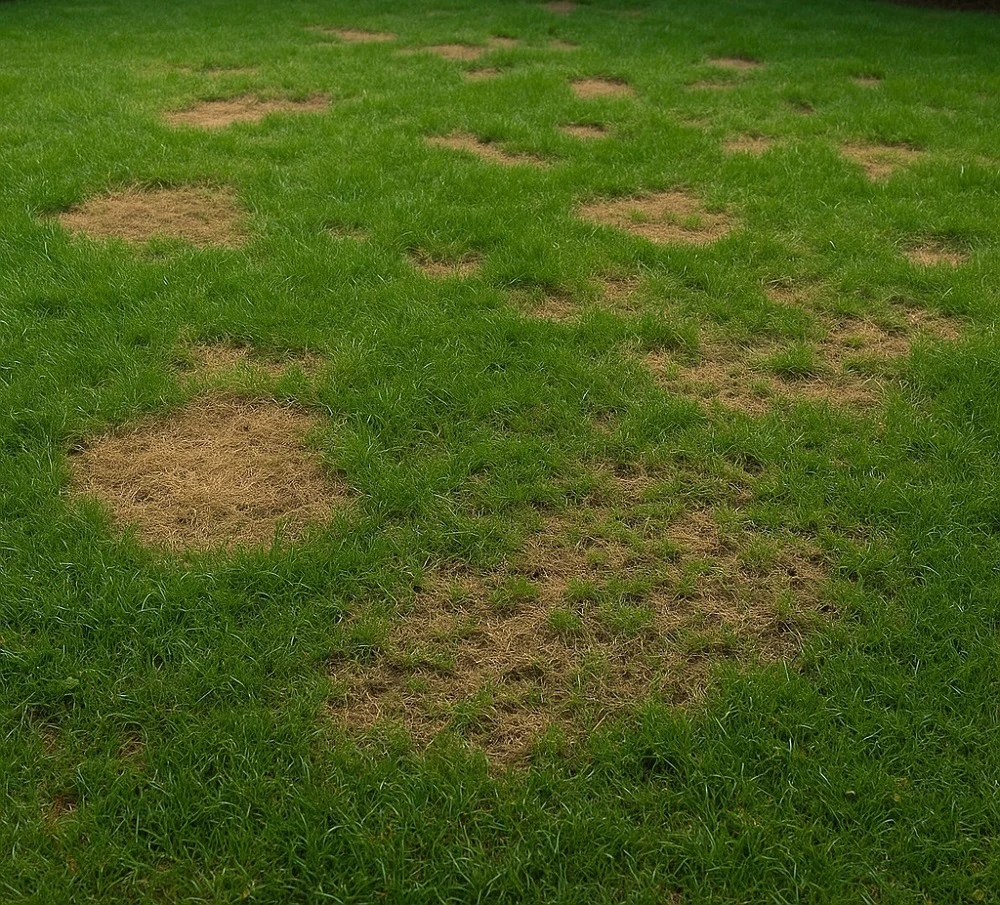
Image source: Bing (Web (fair-use with source credit))
Quick Answer
You know you have lawn grubs when turf pulls up like loose carpet and reveals C-shaped white larvae underneath. Check multiple spots by cutting a 1-square-foot sod sample 2 to 3 inches deep. Count the grubs you find.
More than 10 per square foot in a home lawn usually means treatment is warranted. Secondary signs include raccoon, skunk, or bird digging in the damaged areas.
What Lawn Grub Damage Actually Looks Like
Grub damage doesn't look like neat circles. You'll see irregular, spreading patches of brown or yellow grass that feel spongy underfoot. The turf often separates easily from the soil because the roots have been chewed away.
This is the single most reliable visual clue.
Here's what to watch for above ground:
- Irregular brown patches that don't match sprinkler patterns or fertilizer lines
- Spongy turf that feels loose or soft when you walk on it
- Grass that peels back like a carpet, exposing bare soil underneath
- Damage that worsens during dry spells because damaged roots can't access water
- Dead grass that doesn't green up after a deep watering
The tricky part is that grub damage often shows up during hot, dry weather. Many homeowners assume it's drought stress and water more, which doesn't help because the roots are gone. If your lawn stays brown despite adequate irrigation, grubs move higher on the suspect list.
Timing matters too. In most regions, grub damage becomes visible from late August through October when larvae are largest and feeding heaviest. Spring damage can happen but is less common because overwintered grubs are smaller and feeding slows during cool soil temperatures.
The Quick Test: How to Confirm Grubs in Your Lawn
The only way to know for sure is to inspect the soil directly. Visual guesses from the surface lead to wrong treatments more often than not. Here's the straightforward method turf professionals use.
Pick a spot where damaged grass meets healthy grass. That transition zone is where you'll find the highest concentration of feeding larvae.
Cut three sides of a 1-square-foot section with a spade or knife, about 2 to 3 inches deep. Peel back the sod like a flap. Look at the soil surface and the root zone for white, C-shaped larvae with brown heads and six legs near the head.
Count what you find. Then check two or three more spots across the lawn. Average your counts to get a reliable per-square-foot number.
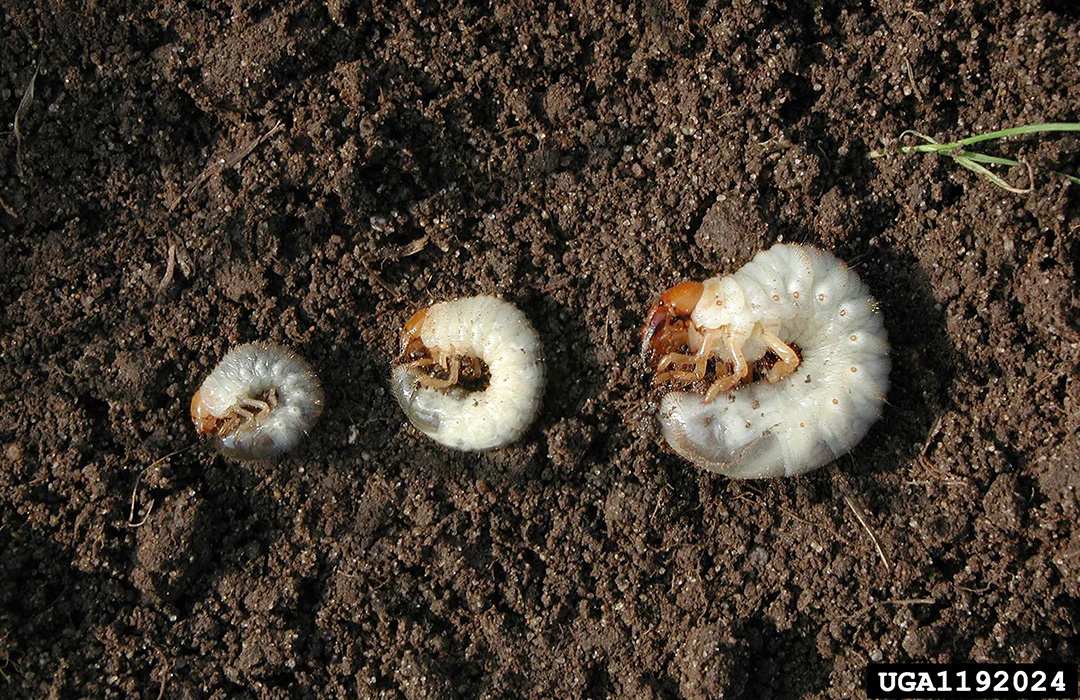
Image source: Bing (Web (fair-use with source credit))
If you find grubs, note their size. Larvae under half an inch long are young instars that curative treatments handle well. Larger grubs, closer to an inch, are harder to kill and may need a different product choice.
After counting, press the sod back into place and water it. Healthy turf with intact roots will reattach within a week or two.
Other Problems That Mimic Grub Damage (And How to Rule Them Out)
Plenty of lawn issues look like grub damage from a distance. Treating for grubs when the real problem is something else wastes money and leaves the actual issue unchecked. Here's how to separate the lookalikes.
Drought stress creates uniform browning across sun-exposed areas, not irregular patches. The grass stays rooted and doesn't pull up easily. A screwdriver slides into dry soil with difficulty, whereas grub-damaged areas often have loose, worked-up soil from animal digging.
Fungal diseases like brown patch or dollar spot create more defined patterns. Brown patch forms roughly circular areas with a darker "smoke ring" edge in humid weather. Dollar spot creates small, silver-dollar-sized spots.
Neither causes the turf to detach from the soil.
Dog urine damage shows as bright green rings surrounding dead brown centers. The pattern is small and scattered, not spreading across large sections. You won't find any larvae underneath.
Compacted soil causes thinning and browning in high-traffic areas. The ground feels hard, not spongy. A screwdriver won't penetrate easily, and the grass roots are shallow but intact.
Fertilizer burn follows application lines or spreader patterns. The damage appears within days of feeding, not gradually over weeks. No grubs present.
Animal digging from raccoons or skunks is actually a secondary sign of grubs, not a separate problem. If you see torn-up sections of sod overnight, something is hunting grubs in your lawn. That's confirmation, not a different diagnosis.

Image source: Bing (Web (fair-use with source credit))
The key differentiator across all these is the pull-up test. If the sod lifts easily and you see larvae in the root zone, you've got grubs. If the grass stays rooted and no larvae appear, look elsewhere.
What Counts as "Too Many" Grubs? Understanding Treatment Thresholds
Finding a few grubs doesn't automatically mean you need to treat. Lawns can tolerate low populations without visible damage. The threshold depends on your turf type, lawn quality expectations, and grub species.
Here are the general guidelines most university extension programs reference:
| Grub Count (per sq ft) | Action for Standard Home Lawn |
|---|---|
| 0 to 5 | No treatment needed |
| 6 to 10 | Monitor; treat if lawn is stressed or high-value |
| 10 to 15 | Treatment recommended |
| 15+ | Treatment strongly recommended |
High-maintenance lawns, like a showcase front yard, might warrant treatment at 5 grubs per square foot. A utility area in the back can often handle 10 or more without issue.
Species matters too. Black turfgrass ataenius can cause damage at just 2 to 3 grubs per square foot in closely mown turf. Japanese beetles and European chafers typically need higher populations before visible symptoms appear.
If your grub count sits right at the threshold, consider the lawn's overall health. Well-watered, properly fertilized turf with deep roots tolerates more feeding pressure than a stressed lawn. A lawn already dealing with heat, drought, or disease has less capacity to outgrow the damage.
Which Grub Species Is in Your Lawn (And Why It Matters)
Not all white grubs are the same. The species determines when they're active, how much damage they cause, and which treatments work best. You don't need to become an entomologist, but knowing the basics helps you time your response.
Japanese beetle grubs are the most common across the eastern and midwestern United States. They have a distinctive V-shaped raster pattern of hairs on the underside of the abdomen near the rear. Damage peaks in late summer, and adults emerge the following June to start the cycle again.
European chafer grubs dominate in the Northeast and northern Midwest. They're slightly larger than Japanese beetle larvae and have a Y-shaped raster pattern. Their feeding window extends later into fall, sometimes into November in mild years.
May/June beetle grubs have a longer lifecycle, taking 2 to 3 years to mature. They're often the largest species found in lawns. Because of the extended lifecycle, damage can appear in patches over multiple seasons.
Northern masked chafers are common in the Northeast and Midwest. They're smaller than Japanese beetle grubs and tend to cause damage earlier in the season, sometimes by mid-August.
If you want to confirm the species, university extension offices often offer identification services. You can also compare photos of the raster pattern on the grub's underside, which is the most reliable field identification feature. For most homeowners, though, knowing you have grubs and counting them is enough to make a treatment decision.
The Right Time to Inspect and Treat Based on Grub Lifecycle
Timing is everything with grubs. Apply a product at the wrong point in the lifecycle and you're wasting money and product. Here's how the calendar breaks down for the most common species in the eastern and midwestern United States.
Adult Japanese beetles emerge in June and July, laying eggs in moist soil. Those eggs hatch by late July or early August. The tiny larvae feed aggressively through early fall, then burrow deeper as soil temperatures drop in November.
They return to the root zone the following spring but cause less damage at that stage because they're smaller and feeding slows in cool soil.
European chafers follow a similar pattern, with adults flying in late June and July. Eggs hatch by mid-August, and larvae feed heavily through October and sometimes into November.
This lifecycle creates two treatment windows.
Preventive window (May through early July): Apply a long-residual product before eggs hatch. Products containing chlorantraniliprene work well here because they provide extended control through the egg-hatch period. The goal is to have the active ingredient in the soil when larvae start feeding.
Curative window (late July through September): If you missed prevention and larvae are actively feeding, use a faster-acting product. Trichlorfon (Dylox) is the go-to curative option because it kills larvae within days rather than weeks. But you need to hit them while they're still small, under half an inch.
Large, late-instar grubs in October are much harder to control.
Applying curative products too early or too late both fail. Too early and the residual breaks down before most eggs hatch. Too late and the grubs are too big to kill efficiently.
Step-by-Step: How to Check Your Lawn for Grubs
If you haven't already done the inspection, here's the full process from start to finish. You don't need special tools, just a spade, a trowel, or even a sturdy knife.
Step 1: Walk the lawn and flag transition zones where brown patches meet healthy grass. These edges are where larvae concentrate.
Step 2: Cut three sides of a square roughly 1 foot by 1 foot in a flagged area. Slice about 2 to 3 inches deep. Don't cut through the roots on the uncut side.
You want to create a flap you can fold back.
Step 3: Peel back the sod gently. Look at the soil surface and the top inch of soil for white, C-shaped larvae. Count each one you see.
Step 4: Poke through the exposed soil with your fingers or a trowel. Some grubs sit deeper, especially on warm afternoons when they burrow down. Check to about 3 inches deep.
Step 5: Repeat this process in at least three separate areas, including one spot that looks totally healthy. Averaging multiple samples gives you a realistic picture of overall grub pressure.
Step 6: Replace the sod flaps and press them down firmly. Water the areas you disturbed so the roots reestablish contact with the soil.
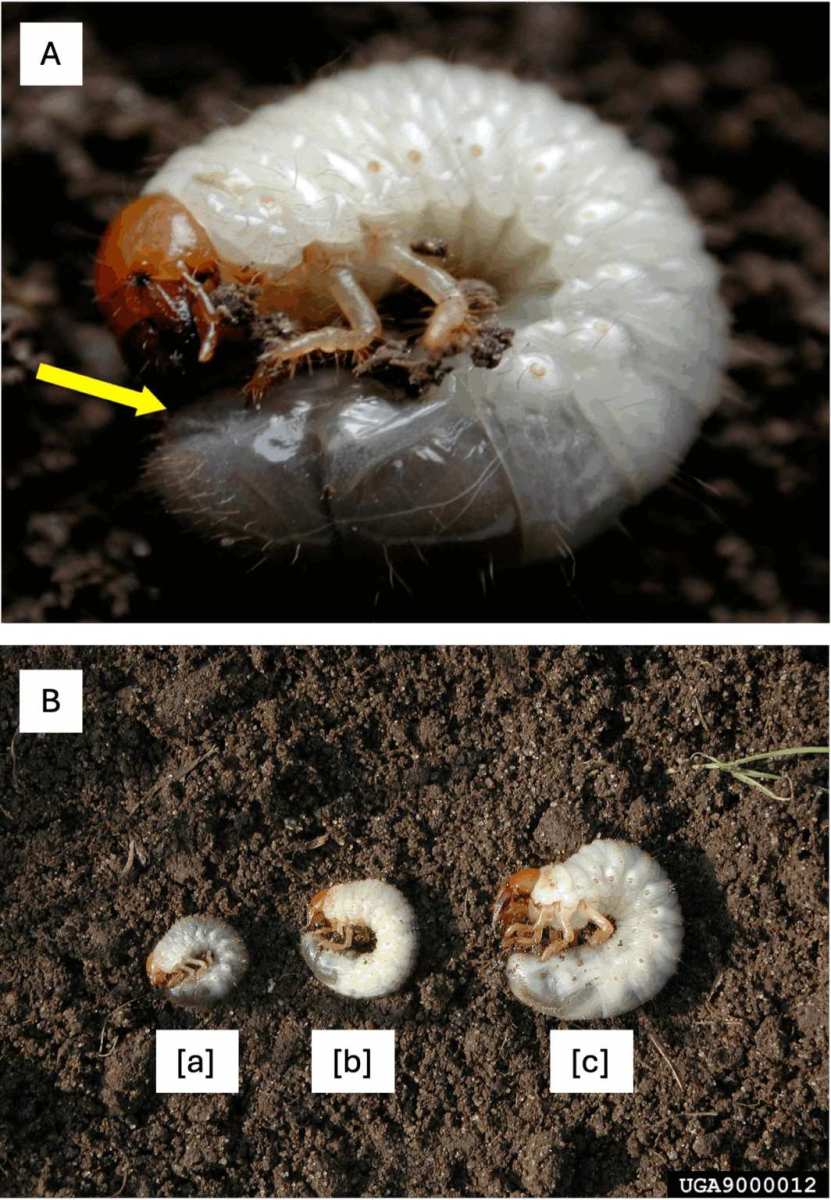
Image source: Bing (Web (fair-use with source credit))
If you find grubs in healthy-looking areas, the population is distributed across the whole lawn and not just a localized outbreak. That changes how broadly you'll need to treat.
Choosing Between Preventive and Curative Treatment
Your decision here depends on timing, your grub count, and whether you've had problems before. There's no one-size-fits-all answer.
Go preventive if:
- You had grub damage last year and want to protect the lawn this season
- You're in the May through early July window and can apply before egg hatch
- Your lawn is high-value or you can't tolerate any visible damage
- Animal digging was an issue the previous fall and you want to break the cycle
Preventive products like those containing chlorantraniliprene or imidacloprid need to be in the soil before larvae start feeding. They work by killing young grubs shortly after they hatch, before they can do meaningful root damage. These products provide residual control for weeks, sometimes the entire larval feeding season.
Go curative if:
- You're inspecting in late July or August and finding active damage
- Grub counts are above threshold and larvae are visible now
- You missed the preventive window and need to act fast
- You're seeing secondary animal damage and want to eliminate the food source quickly
Curative products like trichlorfon work fast but don't last long. They're a rescue treatment, not a long-term strategy. If you use curative control this year, consider switching to preventive next year to avoid the same scramble.
Skip treatment entirely if:
- Grub counts are below 5 per square foot
- The lawn is healthy and well-maintained
- You're not seeing any visible damage
A few grubs in the soil is normal. They're part of the soil ecosystem, and healthy turf outgrows low-level feeding without any intervention.
Biological vs. Chemical Control: What Works When
You've got options beyond synthetic insecticides. Biological controls work well in some situations but have limitations you should understand before relying on them.
Beneficial nematodes are microscopic roundworms that seek out and kill grubs in the soil. Heterorhabditis bacteriophora is the species most effective against Japanese beetle and European chafer grubs. You apply them as a soil drench in late summer when larvae are small and soil temperatures are above 60°F.
They need moisture to move through the soil, so watering before and after application is critical. Results vary, but university trials show 50 to 75 percent control in favorable conditions.
Milky spore (Paenibacillus popilliae) is a bacterium that specifically targets Japanese beetle grubs. It establishes in the soil over 2 to 3 years and can provide long-term suppression. It does not work on European chafers, May/June beetles, or other species.
Milky spore is a long-game strategy, not a rescue treatment. If you've got active damage right now, milky spore won't help this season.
Chemical insecticides offer the most reliable and fastest control. Chlorantraniliprene is a preventive option with a favorable environmental profile and low toxicity to bees and other non-target organisms. Trichlorfon is the standard curative choice for active infestations.
Imidacloprid, a neonicotinoid, has been widely used for prevention but faces restrictions in some states due to concerns about pollinator exposure. Check your state's regulations before purchasing.
Here's a quick comparison:
| Control Type | Best Timing | Speed of Kill | Effective Against | Duration |
|---|---|---|---|---|
| Chlorantraniliprene | May to early July | Slow (preventive) | Most species | Weeks to months |
| Trichlorfon (Dylox) | Late July to September | Fast (1-3 days) | Most species | Short residual |
| Beneficial nematodes | August to September | Moderate (days to weeks) | Japanese beetle, European chafer | Single season |
| Milky spore | Any time (long-term) | Very slow | Japanese beetle only | Years |
When to Call a Professional vs. Handle It Yourself
Most homeowners can manage grub control on their own. But there are situations where a licensed applicator is worth the cost.
DIY makes sense when:
- Your lawn is under 5,000 square feet
- You've confirmed grubs and know the count
- You're comfortable reading and following product labels
- You have a spreader and sprayer for even application
Call a professional when:
- The affected area is large and you need commercial-grade equipment
- You're dealing with recurring damage year after year despite treatment
- You're unsure about species identification and want a definitive diagnosis
- State regulations restrict certain products to licensed applicators
- You have concerns about applying insecticides near water features, vegetable gardens, or play areas
Professional lawn care companies often use restricted-use products that aren't available to homeowners. They also have the equipment to ensure even coverage, which matters more than most people realize. Spotty application leaves untreated pockets where grubs survive and repopulate.
Get at least two quotes if you go the professional route. Ask what product they're using, when they plan to apply it, and what kind of guarantee they offer. A reputable company will explain their timing and product choice without hesitation.
Common Mistakes That Make Grub Damage Worse
The biggest mistake is treating without confirming. Plenty of people see brown patches, assume grubs, and apply insecticide to a lawn that's actually suffering from compaction or disease. You've spent money, killed beneficial soil organisms, and still have a damaged lawn.
Another common error is applying preventive products in September. By then, eggs have already hatched and larvae are feeding. You need a curative product at that point, not a preventive one.
Read the label carefully. It will tell you whether the product is meant for prevention or active infestations.
Overwatering after application can also reduce effectiveness. Some granular products need a light watering to move the active ingredient into the soil, but heavy irrigation washes it past the root zone. Follow the label's water-in instructions precisely.
Waiting too long to reseed is another missed opportunity. Once grubs are controlled, damaged areas won't recover on their own. The dead grass won't magically regrow.
You need to reseed or sod those patches, ideally in early fall when soil temperatures favor germination.
What to Do After Treatment: Recovery and Reseeding
After you've applied your chosen treatment, give it 2 to 3 weeks before assessing results. Curative products should show reduced feeding activity within days. Preventive products work quietly over weeks as larvae hatch and encounter the treated soil.
Once you're confident the grubs are controlled, focus on lawn recovery:
- Rake out dead grass in damaged patches to expose bare soil
- Apply starter fertilizer to support new root growth
- Seed in early fall for cool-season grasses or late spring for warm-season varieties
- Keep seedbed moist with light, frequent watering until germination
- Avoid foot traffic on newly seeded areas for at least 4 to 6 weeks
If animal digging was severe, you may need to tamp down any torn-up sod before it dries out. Raccoon damage can look catastrophic, but the underlying turf often survives if you press it back into contact with the soil quickly.
Frequently Asked Questions
How do I know if grubs or drought is causing my brown patches?
Try the pull-up test. Grab a handful of brown grass and tug. If it lifts easily with no roots attached, grubs are likely the cause.
If the grass stays rooted and the soil underneath is dry and hard, it's probably drought stress.
Can my lawn recover from grub damage without reseeding?
Small patches sometimes fill in from surrounding healthy turf over a growing season. Large dead areas won't recover on their own because the root system is destroyed. Reseeding is the fastest path to full coverage.
When is the worst time to treat for grubs?
Late fall, after soil temperatures drop below 50°F, is the least effective time. Grubs have burrowed deep and stopped feeding. Products can't reach them, and they're not ingesting anything anyway.
Target late summer for curative treatments or late spring for prevention.
Do grub treatments harm earthworms and beneficial insects?
Some broad-spectrum insecticides can affect non-target soil organisms. Chlorantraniliprene has a narrower activity range and is less disruptive to earthworms and beneficials. Beneficial nematodes are highly specific to grubs and won't harm earthworms at all.
How long does it take for grub damage to show after larvae start feeding?
Visible damage typically appears 3 to 4 weeks after larvae begin feeding heavily. By the time you see brown patches, the grubs have been active for a while. That's why early inspection in August catches problems before they become severe.