If you've ever watched patches of your Lawn turn brown and roll up like carpet, you've probably wondered when is the best time to treat for grubs. The frustrating truth is that most people apply grub control at exactly the wrong moment, which means they spend money on product that never actually reaches the larvae when they're vulnerable. The timing window is narrower than you'd think, and missing it by even two or three weeks can be the difference between a protected lawn and a ruined one.
Research from university extension programs consistently shows that successful grub control depends on matching your application timing to the product type and the grub life cycle stage. Manufacturer specifications for products containing chlorantraniliprole (GrubEx), imidacloprid (Merit), and trichlorfon (Dylox) all define specific windows based on adult beetle flight and egg hatch, and we're going to walk through exactly how to use that information for your situation.
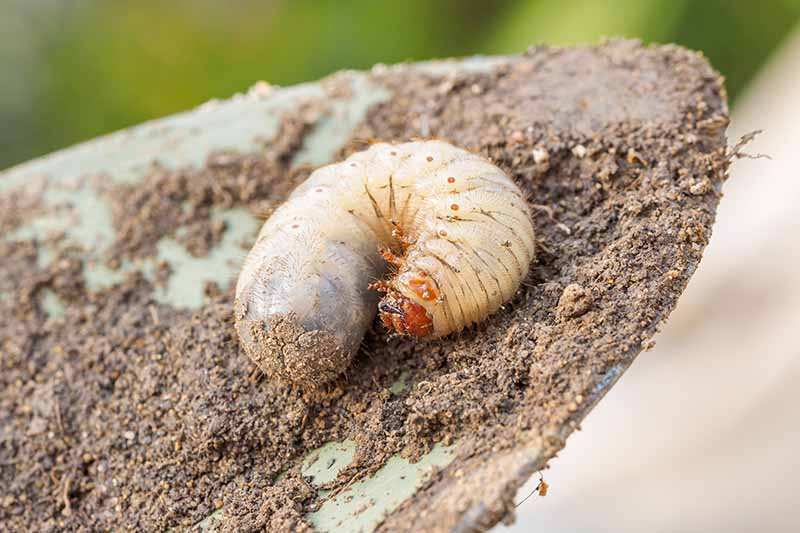
Image source: Bing (Web (fair-use with source credit))
Quick Answer
The best time to treat for grubs depends entirely on which type of product you're using. Preventive products work when applied mid-June through early August, targeting eggs and newly hatched larvae. Curative products work from late August through October, when grubs are actively feeding near the soil surface.
Choose your window based on your product, not the calendar date alone.
The Grub Life Cycle Drives Everything
Here's what most articles skip: the "best time" isn't a date. It's a stage in the grub's life cycle. Until you understand what's happening underground, any timing advice is a guess.
White grubs aren't a single pest. They're the larval stage of several beetle species, including Japanese beetles, European chafers, June beetles, and billbugs. Each has a slightly different timeline, but the general pattern holds across most of North America.
Adult beetles emerge, mate, and lay eggs in your lawn. Those eggs hatch into tiny first-instar larvae. Those larvae grow through three instar stages, feeding on grass roots the whole time.
In fall, they burrow deep into the soil to overwinter. They resurface in spring, feed briefly, then pupate into adult beetles.
The critical window is when grubs are small and near the surface. That's when they're most vulnerable to insecticides, and that's when feeding damage is building toward visible lawn injury.
Why the Calendar Date Matters Less Than You Think
Your neighbor across town might need to treat two weeks before you do. That's because soil temperature drives egg hatch, not the calendar alone. Research from university extension programs indicates that Japanese beetle eggs consistently hatch when soil temperatures reach approximately 60°F at a 2-inch depth, which typically falls between late June and mid-July in the Northeast and Midwest but can arrive weeks earlier in the Southeast.
That's why monitoring adult beetle activity matters more than circling a date on your calendar. When you see Japanese beetles feeding on your roses or trees, the clock is ticking. Egg-laying usually peaks within two weeks of peak adult flight.

Image source: Bing (Web (fair-use with source credit))
Prevention vs. Curative: They Need Completely Different Timing
This is where most homeowners go wrong. They grab a product, apply it whenever they remember, and then wonder why it didn't work. The reason is almost always a mismatch between the product chemistry and the timing window.
Preventive Products
Preventive insecticides target eggs and newly hatched larvae before they grow large enough to cause serious damage. These products need to be in the soil, available and active, when eggs are hatching.
Key products and their timing:
| Product (Active Ingredient) | Best Application Window | How It Works | Soil Persistence |
|---|---|---|---|
| GrubEx (chlorantraniliprole) | Mid-June through late July | Systemic; taken up by roots and ingested by feeding grubs | Full season (3-4 months) |
| Merit (imidacloprid) | Late May through mid-July | Systemic; grubs stop feeding and die within days of ingestion | 8-12 weeks |
| Mach-2 (halofenozide, IGR) | Late May through June | Insect growth regulator; prevents molting | 4-6 weeks after application |
Manufacturer specifications for chlorantraniliprole-based products indicate that application should coincide with adult beetle flight and egg-laying, ensuring the active ingredient is present in the soil when eggs hatch. Imidacloprid-based products work similarly but break down faster, so application timing needs to be slightly more precise.
The key rule: preventive products must go down before or during peak egg hatch. If you're applying in September, you've missed the window entirely. The grubs are already large, established, and actively destroying your root system.
Curative Products
Curative (rescue) products target grubs that are already feeding. They work fast but don't last long in the soil. Timing matters here, just differently.
Dylox (trichlorfon) is the go-to curative option. Per manufacturer label specifications, it should be applied when grubs are actively feeding, typically August through October in most climates. Trichlorfon breaks down quickly through microbial activity and UV exposure in soil, with a residual of roughly one to two weeks.
That means you need grubs active and near the surface when the product is fresh.
Carbaryl (Sevin) also works as a curative treatment on contact. It has a short residual and needs direct contact with target pests, so thorough watering-in and even lawn irrigation a day before application (to bring grubs up toward the surface) improve effectiveness.
The key rule: curative products work best when grubs are small to medium-sized and actively feeding in the upper soil layer. If you wait until November in northern climates, grubs have already descended deep into the soil profile for winter. You'll be treating dirt.
A Common Mistake That Wastes Money
People buy a preventive product and apply it in September. Or they buy a curative product and apply in June. Neither scenario works well.
The preventive's active ingredient has often degraded before peak hatching in the following season. The curative has broken down before target organisms are present in the exposure zone.
Always read the product label for application timing specifics. The label isn't just legal fine print. It's the actual research-based window for that chemistry.
How to Figure Out Your Exact Timing Based on Your Situation
Your treatment window depends on your climate, your grass type, and what grub species are most common in your area. Here's how to narrow it down.
Start With Your Region
University extension programs across the country publish regional grub management calendars that account for local soil temperature patterns and beetle species. Here's a general breakdown for the most common scenarios:
Northeast, Mid-Atlantic, and Upper Midwest (cool-season lawns)
- Japanese beetle adult flight: late June through late July
- Peak egg hatch: mid-July through early August
- Preventive application: mid-June through mid-July
- Curative application: August through early October
Southeast and Gulf Coast (warm-season lawns)
- Adult flight begins earlier: May through June
- Egg hatch: June through early July
- Preventive application: May through June
- Curative application: July through September
- Note: May beetle and European chafer species overlap here, which can extend the window
Transition Zone (southern Midwest, middle states)
- Mixed species pressure (Japanese beetle plus European chafer)
- Preventive application: June through early July covers most species
- Curative application: August through October
Pacific Northwest
- European chafer is the primary pest in western Oregon and Washington
- Adult flight: June through July
- Preventive application: June
- Curative application: late August through October
Then Check Your Own Lawn
Regional calendars give you a starting point. But your specific microclimate, soil conditions, and adult beetle pressure can shift things by a week or two.
The most reliable method is to monitor adult beetle activity in your own landscape. When you start seeing Japanese beetles or European chafers feeding on ornamental plants, trees, or shrubs, that's your signal. Egg-laying typically peaks within 10 to 14 days of peak beetle activity.
Some extension programs recommend using the "soap flush" technique to confirm larval presence if you're uncertain whether treatment is warranted before application. Cut a 1-square-foot section of turf, mix a tablespoon of dish soap in a gallon of water, and pour it over the area. Within 10 to 15 minutes, larvae in the thatch and upper soil layer will migrate to the surface for counting.
This approach works best when target organisms are active near the surface (spring and fall) and less well during summer heat or when larvae are deep in the soil profile.
Match Your Grass Type to Your Approach
Your grass species affects both damage tolerance and treatment strategy:
Cool-season grasses (Kentucky bluegrass, tall fescue, perennial ryegrass)
- Shallow root systems show damage quickly
- Threshold for treatment: 5-10 grubs per square foot
- Higher aesthetic expectations often justify preventive treatment
Warm-season grasses (Bermuda, zoysia, St. Augustine, centipede)
- Deeper root systems and aggressive runners tolerate more feeding
- Threshold for treatment: 10-15 grubs per square foot
- Damage may not appear until grub populations are quite high
- St. Augustine and centipede are exceptions; they're more sensitive
If you're not sure what species you're dealing with, that matters. European chafers cause damage at lower populations than Japanese beetles tend to. Black turfgrass ataenius is a smaller grub requiring lower treatment thresholds.
Correct identification helps you avoid unnecessary applications.
Many university extension services and some state departments of agriculture offer grub identification services. You mail in samples, they tell you what species you have, and that tells you exactly what timing and threshold to use.
Regional Timing by Grass Type
Let's get specific. These windows represent the consensus recommendations from university extension turf programs across major US regions.
Northern Cool-Season Lawns (Northeast, Upper Midwest, Pacific Northwest)
| Beetle Species | Adult Flight Period | Preventive Window | Curative Window |
|---|---|---|---|
| Japanese beetle | Late June – late July | June 15 – July 15 | August 15 – Oct 10 |
| European chaver | June – July | June 1 – June 30 | August 15 – Sept 30 |
| May/June beetle | May – June | May 15 – June 15 | July 15 – Sept 15 |
Data sourced from University of Minnesota Extension, Penn State Extension, and Oregon State University turf programs as of 2025.
Special note for spring treatment in northern regions: By the time soil warms in spring, last year's grubs have already done their feeding damage (which is why you see brown patches emerging in April and May). They're large, deep in the soil, and preparing to pupate. Neither preventive nor curative products work effectively at this stage.
Grubs typically descend below the treatment zone when soil temperatures reach 45-50°F during fall and don't reliably return to the upper root zone until late May or June after pupation is complete. Spring applications of preventive products are generally ineffective because the chemistry is gone long before summer egg hatch begins.
The exception: if you found 15+ grubs per square foot in a fall assessment and didn't treat, a spring application of a curative product (trichlorfon) can deliver a partial knockdown when larvae resurface. However, lawn damage is already underway at that point, so it's a damage-control measure rather than prevention.
Southern Warm-Season Lawns (Southeast, Gulf Coast, Southwest)
| Beetle Species | Adult Flight Period | Preventive Window | Curative Window |
|---|---|---|---|
| Japanese beetle | May – June | May 1 – June 15 | July 1 – Sept 1 |
| May/June beetle (Phyllophaga) | April – May | April 1 – May 15 | June 15 – Aug 15 |
| Black turfgrass ataenius | May – June | April 15 – June 1 | July 1 – Sept 1 |
Sources: University of Georgia Extension, Texas A&M AgriLife Extension, and North Carolina State Extension turf management guidelines.
Warm-season lawns present a different challenge. The adult flight period arrives earlier, so preventive applications need to happen sooner. But warm-season grasses also tolerate more root feeding thanks to aggressive stolon and rhizome growth.
Many turf managers in the Southeast delay preventive treatment until grub counts exceed 10-15 per square foot, relying on the turf's natural recovery ability.
Southwest lawners face yet another scenario. Depending on irrigation patterns and species pressure, may beetles may be the primary pest. Adult flight timing depends on the onset of summer monsoons in arid regions (Phoenix, Albuquerque) or on spring warmth in humid subtropical zones (Houston, Atlanta, New Orleans).
That means timing adjustments of two to four weeks aren't uncommon.
When Biological Options Make Sense
Chemical insecticides aren't your only option, and for some situations, biological controls make more sense. But they have their own timing requirements that are just as strict. Maybe stricter.
Milky Spore Disease (Paenibacillus popilliae)
Milky spore is a naturally occurring bacterium that infects Japanese beetle larvae specifically. It doesn't work on European chafers, May beetles, or other grub species. That specificity is both its strength and its limitation.
Per manufacturer guidelines and university research, milky spore requires soil temperatures consistently above 60°F to establish in the soil profile. That means application during late spring or early summer works best, starting in late May or June depending on your region.
Here's the catch. Milky spore takes one to three years to build up enough spore density in the soil to provide meaningful control. It's a long-term management strategy, not a rescue treatment.
If you've got active grub damage right now, milky spore won't save your lawn this year.
That said, once established, milky spore can persist in the soil for 10-15 years according to research from the University of Connecticut. For homeowners committed to reduced chemical use, it's a solid investment that pays off over time.
Application tips:
- Apply in a grid pattern (dots every 4 feet across the lawn)
- Water in thoroughly after application
- Avoid applying at the same time as chemical fungicides, which can suppress the bacteria
- Be patient; results build gradually
Beneficial Nematodes (Heterorhabditis bacteriophora)
These microscopic roundworms actively seek out grubs in the soil and release bacteria that kill the larvae within 24-48 hours. They're effective against multiple grub species, which makes them more versatile than milky spore.
Nematode viability and infection success rely heavily on proper timing and handling according to product manufacturers and university extension published guidelines.
- Apply when soil temperature is between 55°F and 85°F
- Apply at dusk (nematodes are UV-sensitive and will die in direct sunlight)
- Water the lawn before application and keep soil moist for at least two weeks after
- Use fresh product; nematodes are living organisms with shelf-life limits
- Don't store in a hot car or direct sunlight before application
The best nematode application windows typically fall in late April through May (spring treatment of overwintered grubs) or mid-August through September (fall treatment of newly hatched grubs). Both windows work, but fall applications tend to be more effective because larvae are concentrated in the root zone.
Pro tip from extension program recommendations: Mix nematodes in with a watering can or hose-end sprayer, but remove fine mesh filters. Nematodes are small but can be trapped by sprayer screens rated below 20 mesh.
Neem Oil and Azadirachtin
Azadirachtin (the active compound in neem oil) acts as a feeding deterrent and growth disruptor for grubs. It won't kill them quickly the way a synthetic insecticide does. But it can suppress feeding damage and reduce larval survival over time.
Timing for neem-based products:
- Apply when grubs are small and actively feeding (same curative window as chemical options)
- Multiple applications (every 7-10 days for 3-4 weeks) are typically needed
- Works best as a supplement to other biological controls or as a low-toxicity alternative for light infestations
Organic lawn managers often combine neem applications with milky spore treatment and nematode releases. This integrated approach (aligned with IPM principles) can deliver solid long-term grub management without synthetic chemistry, though it requires more attention and patience than a single granular application.
How to Confirm You Actually Have Grubs

Image source: Bing (Web (fair-use with source credit))
Here's something worth pausing on: not every brown patch in your lawn is grubs. Drought stress, fungal disease, dog urine, compacted soil, and nutrient deficiency can all create symptoms that look similar. Treating for grubs when you don't have them wastes money and adds unnecessary product to your soil.
The Soap Flush Test
This is the simplest diagnostic method, and it works well for confirming active grub presence during the summer and fall months when larvae are near the surface.
What you need:
- Liquid dish soap (any brand works)
- A gallon of water
- A flat shovel or cutting tool
Steps:
- Cut a 1×1-foot section of turf in the damaged area
- Mix 1 tablespoon of dish soap into 1 gallon of water
- Pour the soapy water evenly over the cut section of turf and adjacent soil
- Wait 10-15 minutes
- Count any larvae that surface
The soap irritates the grubs' skin, forcing them to come to the surface for air. It's simple, it's free, and it works reliably when target organisms are active and near the top inch of soil.
Threshold guidelines per species:
- Japanese beetle: Treat at 10+ per square foot
- European chafer: Treat at 3-5 per square foot (more damaging at lower populations)
- Black turfgrass ataenius: Treat at 15+ per square foot (smaller grubs, less individual damage)
- May/June beetle: Treat at 5-8 per square foot
If your soap flush comes back with fewer grubs than the treatment threshold for your species, you may not need an insecticide application at all. Healthy turf can tolerate moderate grub populations, especially with proper irrigation and fertility management.
Distinguishing Grub Damage from Other Problems
Grub damage has a few telltale signs if you know what to look for:
- Damage appears in irregular patches, not uniform patterns
- Affected turf feels spongy or loose underfoot (roots severed)
- Grass pulls up easily, like rolling up a carpet
- Brown patches worsen during dry weather (damaged roots can't access water)
- Secondary animal damage (skunk, raccoon, bird digging) often accompanies heavy infestations
If your damage shows:
- Uniform yellowing across the entire lawn (likely nutrient or watering issue)
- Circular patches with green centers (likely fungal disease)
- Brown spots in patterns matching irrigation coverage (likely dry spots)
- Dead areas primarily on slopes or compacted soil (likely drainage or compaction)
Then you probably don't have grubs, or grubs aren't your primary problem.
A simple tug test is surprisingly effective: grab a handful of brown grass and pull. If it lifts easily with no root resistance, grubs have likely severed the roots. If it holds firm even though it's brown, the problem is probably something else.
The Mistakes That Cause Most Treatment Failures
After reviewing extension program literature, product label requirements, and turf manager reports, certain patterns of error come up again and again. Here are the ones that account for the vast majority of failed grub treatments.
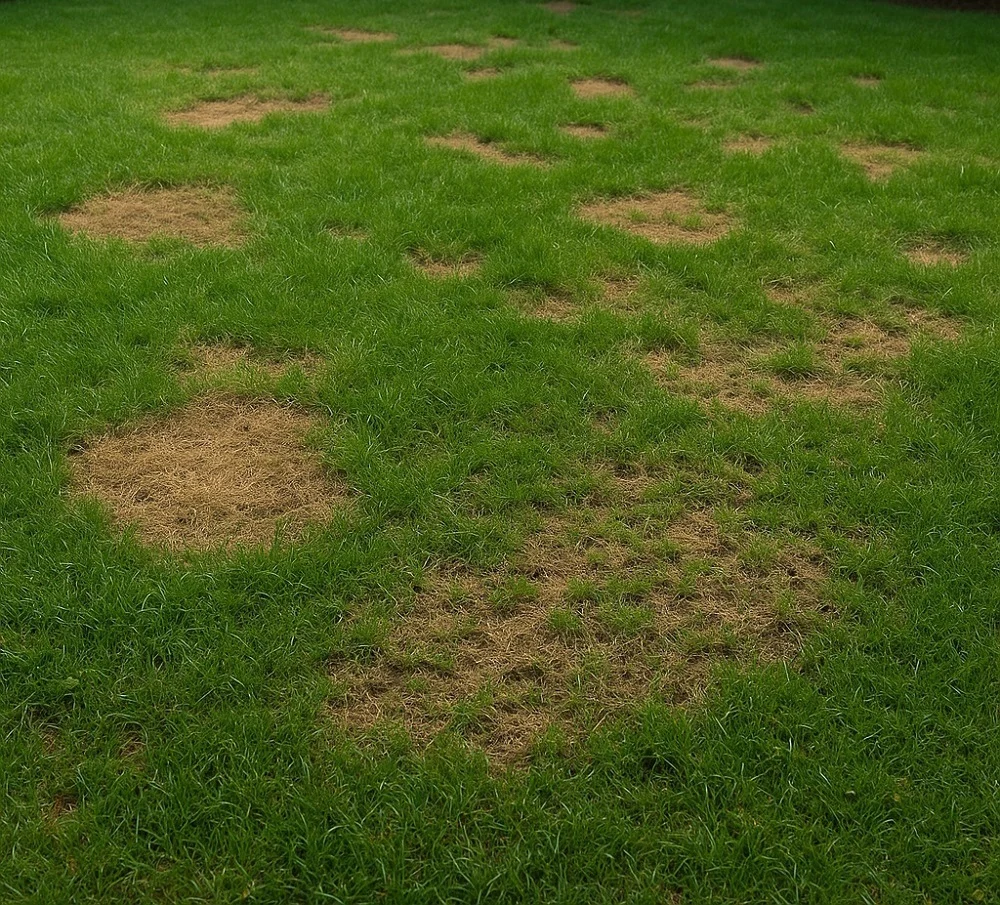
Image source: Bing (Web (fair-use with source credit))
Applying Preventive Products After Egg Hatch Has Already Happened
This is the single most common mistake and the most expensive one. If you apply a preventive product after grubs have already hatched and grown into second or third instars, the chemistry won't control them effectively. Producers of chlorantraniliprole-based products specifically note on product labels that the active ingredient is most effective when applied prior to or at peak egg hatch.
By late August in most regions, the preventive window has closed. Switch to a curative product if you're treating at that point.
Using Curative Products Too Early
The opposite error. Curative products, especially trichlorfon (Dylox), break down quickly. This active ingredient typically provides control within one to three days of ingestion by target organisms persists in soil for roughly one to two weeks due to rapid microbial and UV degradation.
Applying it in June means the chemistry is gone before peak egg hatch even occurs in mid-to-late July.
Curative products should go down when you can confirm active grubs near the soil surface, typically August through September in northern climates.
Skipping the Watering-In Step
Granular grub products need water to move the active ingredient from the granule into the soil where grubs are feeding. Per most product labels, you should water with at least 1/4 to 1/2 inch of irrigation after application. Without that watering, the chemistry stays in the granule at the soil surface, well above the feeding zone for most grub species.
This is especially critical for trichlorfon and chlorantraniliprole products. Imidacloprid is slightly more forgiving because of its systemic movement in plant tissue, but even it performs better with proper irrigation after application.
Not watering in after a granular application might as well be spreading sand on your lawn.
Confusing Grub Damage With Other Lawn Problems
We covered this in the diagnosis section, but it bears repeating: treat the actual problem, not what you assume is the problem. If you're seeing brown patches during a drought and your lawn isn't irrigated, the issue is probably lack of water. If you sprayed fungicide last week and the brown spots grew anyway, keep investigating.
Spraying insecticide on drought-stressed turf doesn't just waste money. The additional chemistry adds stress to already struggling plants.
Repeated Annual Preventive Applications Without Assessment
Applying preventive grub control every single year regardless of actual pest pressure is wasteful and unnecessary. Pennsylvania State Extension, UMass Extension, and Michigan State University's turf program all recommendThreshold-based treatment decisions based on scouting data, not calendar-driven routine applications.
If you had fewer than 5 Japanese beetle grubs per square foot last fall, you probably don't need a preventive application this year. If you had 20+, you absolutely do. The only way to know is to check.
Ignoring Pollinator Safety During Application
This one matters beyond your lawn. Many grub products, especially systemic neonicotinoids like imidacloprid, can be taken up by flowering weeds (clover, dandelions) in your lawn. When bees and other pollinators visit those flowers, they're exposed to the insecticide.
Current EPA label requirements for neonicotinoid products include pollinator protection language. Best practices from university extension programs recommend:
- Mow flowering weeds before application to remove blooms
- Avoid application when clover or other flowers are actively blooming in the lawn
- Apply in the evening when pollinators are less active
- Sweep any granules off hard surfaces (driveways, sidewalks, patios) to prevent washout into waterways
This isn't optional. It's both a legal requirement on the product label and an ecological responsibility.
What Grub Treatment Actually Costs
Let's talk numbers, because the cost of getting timing wrong adds up fast.
DIY vs. Professional Application
| Approach | Cost Per Application (5,000 sq ft lawn) | Frequency | Annual Cost |
|---|---|---|---|
| DIY granular preventive (GrubEx) | $35-$55 | 1x per year | $35-$55 |
| DIY granular curative (Dylox) | $25-$40 | 1-2x as needed | $25-$80 |
| DIY nematodes | $40-$80 per treatment | 1-2x per year | $40-$160 |
| Professional preventive service | $60-$120 | 1x per year | $60-$120 |
| Professional curative service | $50-$100 | 1-2x as needed | $50-$200 |
| Lawn renovation after severe grub damage | $0.50-$1.50 per sq ft | One-time | $2,500-$7,500 |
Prices reflect 2025 retail and service averages based on aggregate market data from home improvement retailers and lawn care service pricing.
The math makes a clear case for getting it right the first time. A $50 preventive application is a bargain compared to the $2,500+ it costs to renovate a lawn after severe grub damage. And the difference between a successful treatment and a failed one usually comes down to timing, not product quality.
When Spending More on Timing Saves Money on Product
Here's a scenario that plays out constantly: a homeowner buys a $50 bag of preventive granules in September, applies it, and sees brown patches the following spring. They spent $50 on a product applied at the wrong time. If they'd spent that same $50 on the same product in July, their lawn would likely be fine.
The product didn't fail. The timing did.
Conversely, spending $80 on a professional application in the correct window is far more cost-effective than spending $40 on a DIY curative treatment applied too late, followed by spending $3,000 on lawn renovation.
Your Decision Guide: Which Timing Path Is Right for You
Let's bring this all together into a clear decision framework. Answer these questions in order, and you'll land on the right timing for your situation.
Step 1: Did You Treat Last Year?
If yes, and your lawn looks healthy this spring/summer:
You likely have the situation under control. Scout your lawn in July with a soap flush test. If counts are below threshold, skip treatment this year.
If yes, and you're seeing brown patches again:
Either the timing was off, the product didn't reach the grubs, or you have a species mismatch. Get a proper diagnosis before re-treating.
If no, and this is your first grub problem:
Proceed to Step 2.
Step 2: What Month Is It Right Now?
May or June:
- If you've had grubs before and want to prevent: apply a preventive product now (imidacloprid or chlorantraniliprole)
- If you're seeing damage right now: it's too late for prevention this year; apply a curative product (trichlorfon) if grubs are still active near the surface, or wait until next year for prevention
July:
- Last reliable window for preventive application in most regions
- If you're seeing adult beetles feeding, apply preventive immediately
- If you've missed the preventive window, switch to curative
August through September:
- Curative treatment window
- Apply trichlorfon when grubs are actively feeding
- Nematode applications work well in this window too
- Assess damage to plan for next year's preventive strategy
October through April:
- Too late for effective treatment in most regions
- Grubs are deep in the soil and won't contact surface-applied products
- Plan your preventive strategy for next summer
- If damage is severe, budget for spring renovation
Step 3: What's Your Tolerance for Damage?
Low tolerance (high-visibility lawn, home on the market, HOA requirements):
- Preventive treatment annually, applied in the correct window
- Scout regularly and treat at first sign of adult beetle activity
Moderate tolerance (typical residential lawn):
- Scout in July, treat only if counts exceed threshold
- Preventive treatment every 2-3 years based on monitoring
High tolerance (low-maintenance lawn, large property area):
- Treat only when visible damage appears
- Accept some brown patches as part of a natural lawn ecosystem
- Focus on proper irrigation and fertility to help turf outgrow moderate grub feeding
Frequently Asked Questions
Can I treat for grubs in spring?
Spring treatment is generally ineffective for preventive control because the chemistry degrades before summer egg hatch. Curative products applied in spring can knock down overwintered grubs that resurface, but damage is already visible at that point. The better strategy is to treat preventively the previous summer and assess results in fall.
How long does grub control product last in the soil?
It depends on the active ingredient. Chlorantraniliprole (GrubEx) provides full-season control from a single application. Imidacloprid (Merit) persists for 8-12 weeks.
Trichlorfon (Dylox) breaks down in 1-2 weeks. Biological controls like milky spore can persist for 10-15 years once established.
Do I need to treat for grubs every year?
Not necessarily. University extension programs recommend threshold-based treatment decisions, not calendar-based ones. If your July scouting shows fewer grubs than the treatment threshold for your species, you can skip treatment.
Annual preventive applications without scouting waste money and add unnecessary product to your soil.
What's the difference between GrubEx and Dylox?
GrubEx (chlorantraniliprole) is a preventive product applied in early to mid-summer before grubs hatch. Dylox (trichlorfon) is a curative product applied in late summer or fall when grubs are already present and feeding. They work at completely different points in the grub life cycle and cannot be substituted for each other.
Will grub damage repair itself?
Minor grub damage often recovers on its own with proper watering, fertilization, and mowing practices. Healthy turf can tolerate moderate feeding. Severe damage (10+ grubs per square foot for Japanese beetles) typically requires renovation because the root system is too compromised to recover without reseeding or sodding.
Are grub control products safe for pets?
Most granular grub products are low-toxicity to mammals once watered in and the lawn is dry. Keep pets off the treated area until the product has been watered in and the grass has dried. Always read the specific product label for pet safety instructions.
If you're concerned about pet exposure, biological controls like beneficial nematodes are non-toxic to mammals.