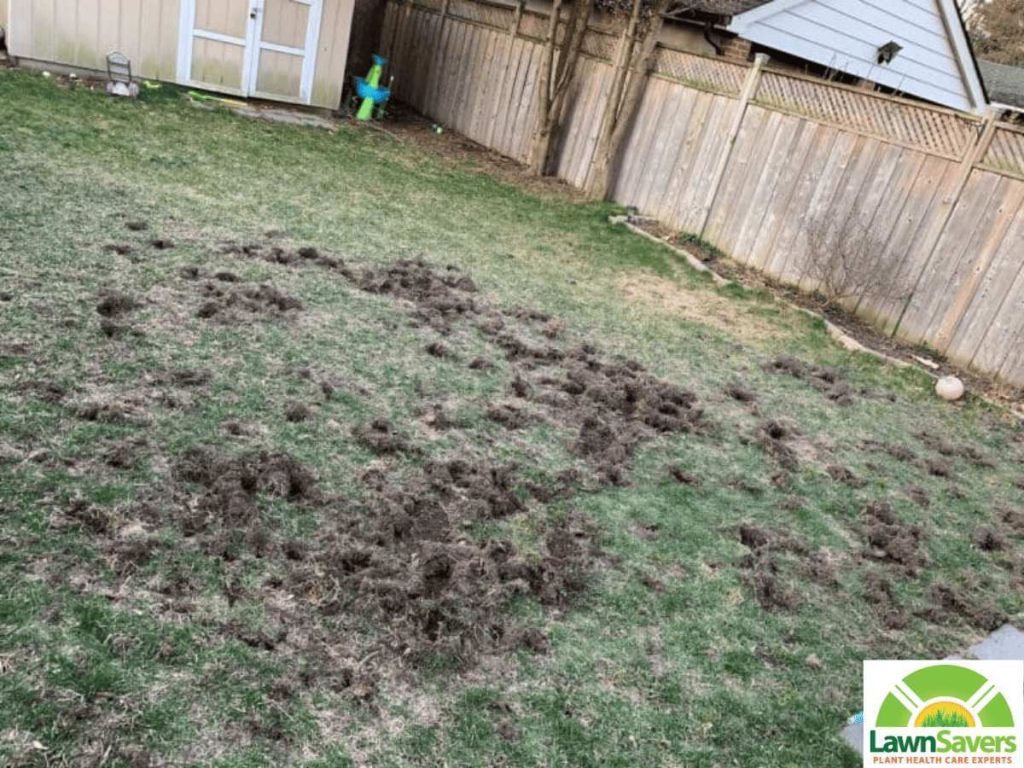

If you've ever rolled back a patch of turf to find fat, white larvae curled in the soil, you're looking at one of the most calorie-dense snacks in the backyard ecosystem. Understanding what animals eat grubs helps you make sense of the holes, torn-up grass, and midnight digging that show up every year. It also tells you whether the damage is a symptom of a grub problem or something else entirely.
White grubs, the larvae of scarab beetles like Japanese beetles and June beetles, sit just below the surface packed with protein and fat. That makes them irresistible to a long list of predators. Research from university extension programs consistently shows that grub density above about five to ten larvae per square foot triggers noticeable predator activity.
Once you know which animals are involved, you can read the damage like a field guide.
Quick Answer
Many animals eat grubs. Raccoons, skunks, and opossums dig through lawns to find them. Moles tunnel underground hunting them.
Birds like robins, starlings, and crows peck them out. Armadillos root for them in southern states. Even ground beetles and parasitic wasps target grubs naturally.
The Main Grub Predators You'll Actually See
The animals that eat grubs fall into a few clear groups. Mammals do the most visible damage. Birds create a different pattern.
Underground predators like moles work silently until the tunnels show up. Knowing which group you're dealing with makes all the difference.
Mammals that dig for grubs:
- Raccoons peel back sections of sod like a carpet, leaving flaps of turf flipped over. They're precise and methodical, usually working at night.
- Skunks create smaller, cone-shaped holes about 3 to 4 inches across. They're less destructive than raccoons but can still leave a lawn pockmarked overnight.
- Opossums dig shallow, messy holes and tend to wander while feeding. Their damage looks less organized than raccoon or skunk work.
- Armadillos root and dig in a hog-like fashion, leaving holes up to 6 inches deep. They're common across the southeastern United States and parts of Texas.
Birds that eat grubs:
- Starlings gather in flocks and peck small holes across large lawn areas. The damage looks like dozens of tiny puncture marks.
- Robins work individually, cocking their heads to listen for movement underground before striking.
- Crows tear up larger patches and can do serious damage to thin turf.
- Blackbirds and grackles often follow behind freshly watered or aerated lawns where grubs are closer to the surface.
Underground hunters:
- Moles tunnel through soil following grub concentrations. Their raised ridges and soft spots are the giveaway.
- Shrews also eat grubs but cause minimal surface disruption.
How Different Animals Hunt Grubs (And What It Looks Like)
Each predator has a signature hunting style. That means the damage pattern tells you exactly who's visiting your yard.
Raccoons use their front paws to roll back sod in neat sections. You'll find patches of turf peeled back like a rolled-up rug, with grubs exposed underneath. They tend to work in straight lines or grids, covering a lot of ground in one night.
The sod usually stays attached on one side, which is the key identifier.
Skunks use their front claws to dig small, cylindrical holes. Each hole goes straight down about 3 to 4 inches. Unlike raccoons, skunks don't peel the sod back.
They leave individual divots scattered across the lawn. If you see cone-shaped holes appearing overnight, skunks are almost certainly the culprit.
Moles create raised tunnels just below the surface. You'll notice winding ridges of soil and soft spots where the ground gives underfoot. Moles eat grubs as a primary food source, so heavy mole activity often signals a significant grub population below.
The tunnels themselves cause damage separate from the grub issue.
Birds leave a different signature entirely. Starlings and blackbirds peck small holes, about the diameter of a pencil, across wide areas. Robins leave single, slightly larger holes where they've extracted a grub.
Crows can tear up substantial patches, especially in thin or newly seeded lawns.
Armadillos dig deeper, messier holes. They root around with their snouts and claws, leaving scattered divots up to 6 inches deep and several inches wide. The damage looks more chaotic than skunk or raccoon work.
Seasonal Patterns: When Grub Predators Show Up
Grub predators don't show up randomly. Their activity follows the grub life cycle and seasonal conditions.
Spring (April through June): Overwintered grubs move closer to the surface as soil temperatures rise. This is prime time for bird activity. Robins, starlings, and crows are most active during this window.
Mammal activity picks up too, especially from skunks emerging from winter dens with hungry families to feed.
Summer (July through August): Grubs are deeper in the soil and less accessible. Predator activity drops noticeably. You might still see some bird pecking after heavy rain pushes grubs upward, but overall damage slows down.
Fall (September through November): A new generation of grubs hatches and moves into the root zone. This triggers the second peak of predator activity. Raccoons and skunks are especially active now, fattening up before winter.
Mole tunneling often increases during this period as well.
Winter: Most grub predators reduce activity. Moles continue tunneling below the freeze line. Raccoons and skunks may still forage during warm spells but generally cause less damage.
Soil moisture matters too. After heavy rain or irrigation, grubs move closer to the surface. That's when you'll see a sudden spike in bird pecking and mammal digging, even outside the peak seasonal windows.
Real Damage Scenarios: Raccoons, Skunks, Moles, and Birds
Let's walk through what each predator's damage looks like in practice so you can identify the culprit quickly.
Raccoon damage: You wake up to find sections of your lawn rolled back like carpet. The sod is flipped over but still attached on one edge. Grubs are exposed in the soil underneath.
Raccoons can destroy a significant portion of a small lawn in a single night. The damage is concentrated in areas with the highest grub density.
Skunk damage: Small, cone-shaped holes appear overnight, usually 3 to 4 inches in diameter and about the same depth. The holes are scattered rather than clustered. Skunks typically visit the same lawn repeatedly if the grub supply holds out.
The damage is less dramatic than raccoon work but adds up over multiple nights.
Mole damage: Raised tunnels wind across the lawn, creating ridges and soft spots. The tunnels are usually 2 to 3 inches below the surface. Moles follow grub concentrations, so tunnel patterns often reveal where grubs are most dense.
The tunnels themselves kill grass roots and create an uneven surface.
Bird damage: Small peck holes dot the lawn, often in clusters. Starlings leave dozens of tiny holes across a wide area. Robins leave individual holes where they've extracted a single grub.
Crows can tear up larger patches, especially in thin turf. Bird damage is usually superficial but unsightly.

Armadillos: Deep, scattered divots up to 6 inches deep. The damage looks like someone took a post-hole digger to random spots across the lawn. Armadillos are most active at dawn and dusk and are common across the Southeast, Texas, and parts of the lower Midwest as of 2026.
How to Tell Grub Predator Damage Apart from Other Lawn Problems
Not every hole in your lawn comes from grub predators. Drought stress, disease, and other pests can mimic the signs.
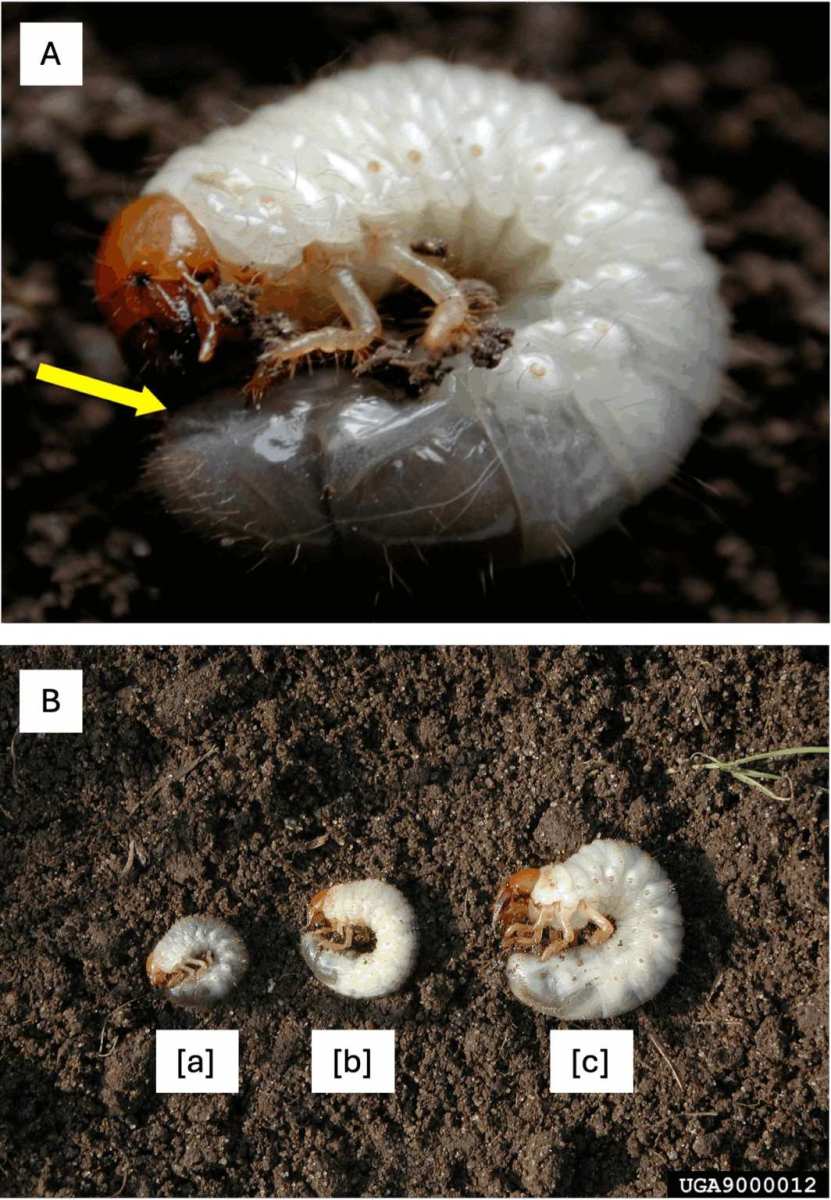
Grub damage itself: If grubs are eating your grass roots, the turf will peel back easily like loose carpet. The grass turns brown in irregular patches. You'll find the grubs in the soil underneath, curled in that characteristic C-shape.
This is different from predator damage because the grass dies from below before any animal digs.
Predator damage: Animals create holes or flipped sod in otherwise healthy grass. The turf is still alive but disrupted. If you see damage but the grass roots are intact and no grubs are present, something else is going on.
Other causes to rule out:
- Drought stress causes uniform browning, not holes or flipped sod.
- Fungal disease creates circular patches with distinct borders, sometimes with visible mold or discoloration.
- Vole damage looks like narrow, surface runways through grass, not holes.
- Ground-nesting bees create small mounds of soil, usually in thin or bare areas.
The simplest test is to cut a 1-foot square of sod and peel it back. Count the grubs underneath. If you find more than five to ten per square foot, you have a grub problem that's attracting predators.
If the count is low, the animal damage might be from something else entirely.
Working With Nature: Letting Predators Help Control Grubs
Natural grub predators do real work for you. A single skunk can consume hundreds of grubs in one night. A flock of starlings covers ground quickly, picking off larvae before they cause root damage.
Over time, predator pressure can keep grub populations below the damage threshold without you lifting a finger.
The challenge is balancing the benefit against the cosmetic damage. If your lawn is thick and healthy, a few skunk holes in the fall are a fair trade for free pest control. If you're maintaining a showpiece lawn, even minor disruption feels unacceptable.
One practical approach is to let predators work in out-of-the-way areas. If your backyard takes the brunt of the digging but your front lawn stays relatively untouched, you might accept that exchange. Predators tend to concentrate where grubs are densest, which is often already the most damaged part of the lawn.
Some homeowners actively encourage bird activity by keeping birdbaths filled and avoiding broad-spectrum pesticides that kill grubs before birds can reach them. This works best in fall when grub populations peak and birds are actively foraging. Native ground beetles, which prey on grubs, also benefit from reduced pesticide use and heavier mulch layers near garden beds.
When Predator Damage Gets Out of Hand
There's a point where natural predation shifts from helpful to destructive. When raccoons or skunks turn your lawn into a construction site night after night, intervention becomes necessary.
The key is addressing the root cause, which is almost always a high grub population. If you reduce the grub density, predators lose interest and move on. University extension research supports an integrated approach combining biological treatments with temporary deterrents during peak predator season.
Temporary deterrents:
- Motion-activated sprinklers discourage nocturnal mammals with a burst of water.
- Temporary fencing or netting over heavily damaged areas gives turf time to recover.
- Removing outdoor food sources like pet bowls and unsecured trash reduces repeat visits from raccoons and skunks.
Long-term solutions:
- Biological controls applied at the right time reduce grub populations over one to two growing seasons.
- Improving turf Health through proper watering, aeration, and fertilization makes grass more resilient to both grub feeding and predator digging.
- Overseeding damaged areas in spring fills in gaps before the next predator season.
Avoid lethal control or trapping unless you've checked your local regulations first. Many states require permits for trapping and relocating wildlife, and some species have specific protections. Your local extension office or state wildlife agency can clarify what's allowed in your area.
Biological Controls That Complement Natural Predators
If you want to reduce grub numbers without poisoning the food chain that supports your natural predators, biological controls are the cleanest option. Two approaches stand out for their effectiveness and minimal non-target impact.
Beneficial nematodes: These microscopic roundworms, specifically Heterorhabditis bacteriophora and Steinernema species, seek out grubs underground and release bacteria that kill them within 24 to 48 hours. They're applied as a soil drench in late summer when grubs are small and near the surface. Soil temperatures between 55 and 85 degrees Fahrenheit are necessary for nematode activity, and the soil must stay moist for at least two weeks after application.
Milky spore disease: Paenibacillus popilliae is a naturally occurring bacterium that infects Japanese beetle grubs specifically. It takes two to four years to establish fully in the soil, but once established it can persist for a decade or more. Milky spore won't help with other grub species like European chafers or June beetles, so identification matters.
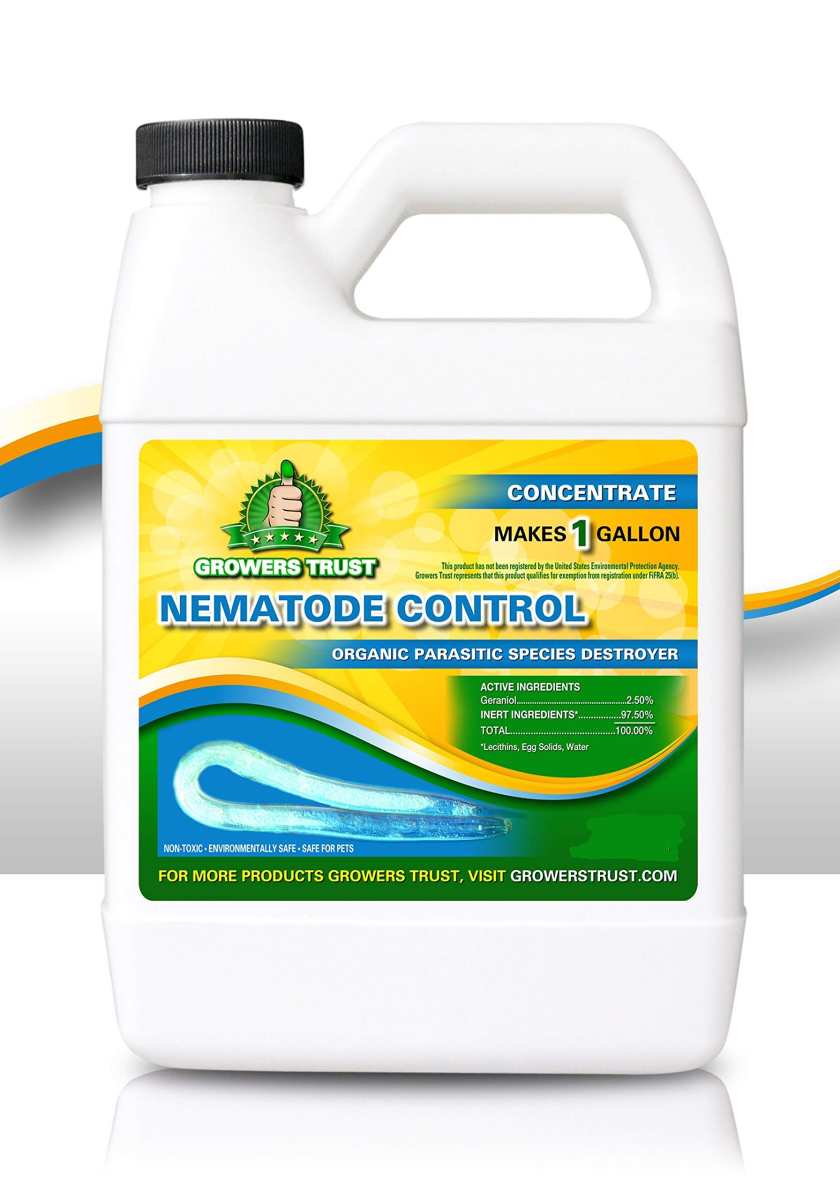
Both options are safe around birds, mammals, and children because they target only specific soil-dwelling insects. You can apply nematodes without discouraging the birds and mammals that are already helping you. Over time, the combination of natural predators and biological controls creates a self-sustaining system that keeps grub numbers manageable.
Mistakes People Make When Dealing with Grub Predators
Most lawn damage frustrations come from misidentifying the problem or applying the wrong solution at the wrong time.
Treating for grubs when animals are the actual problem. If your lawn has holes but no grubs are present when you dig, you're wasting money on grub control. The animal damage might be from earthworm castings attracting birds, or from voles, or from something else entirely. Always confirm grub presence first.
Applying pesticides in a way that kills natural predators along with grubs. Broad-spectrum insecticides don't discriminate. Ground beetles, parasitic wasps, and other beneficial organisms die alongside the target grubs. This can actually make the problem worse over time by removing the predators that would have kept grubs in check naturally.
Waiting too long to act on a real grub problem. By the time predator damage becomes visible, grub populations are often well above the damage threshold. If you see consistent animal activity year after year, assume you have a chronic grub issue and address it proactively.
Using home remedies that don't work. Beer traps, soap flushes, and ultrasonic deterrents have no reliable evidence behind them for grub control. Predator removal through habitat modification and grub population management is the only approach that produces lasting results.
Ignoring seasonal timing. Biological controls applied in May or June often miss the window when grubs are small and vulnerable. Late August through early October is the sweet spot for most regions.
Expert Tips for Managing the Grub-Predator Cycle
After looking at how these systems interact, a few strategies consistently produce better results than others.
Start with a grub count. Cut several 1-foot squares across your lawn and check the soil 2 to 3 inches deep. Average the counts. If you're under five grubs per square foot, hold off on treatment and just monitor.
At five to ten, biological controls make sense. Above ten, you may need a curative treatment to get the population down quickly.
Water strategically. Grubs move deeper in dry soil and closer to the surface when it's moist. If you're applying nematodes, water before and after application. If you're trying to discourage birds, let the top inch of soil dry out between waterings.
Mow higher. Taller grass, around 3 to 3.5 inches, develops deeper roots and tolerates both grub feeding and light predator damage better than short turf. It also shades the soil, which can reduce egg-laying by adult beetles in early summer.
Accept some damage as normal. A healthy lawn withstands moderate predation without lasting harm. The holes fill in with a light topdressing of compost and seed. Chasing zero damage usually means over-treating and disrupting the natural balance that protects your lawn in the long run.
Coordinate treatments with predator activity. If you're applying nematodes, do it just before peak predator season in early fall. The nematodes knock back grub numbers, and any survivors become easy pickings for birds and mammals. The two approaches reinforce each other.
Frequently Asked Questions
Do moles eat grubs exclusively?
Moles eat grubs, but they also feed heavily on earthworms and other soil invertebrates. Research from university agricultural programs shows that earthworms can make up a significant portion of a mole's diet. So heavy mole tunneling doesn't always mean you have a grub problem.
Check for grubs directly before investing in treatment.
Will grub control products harm birds and mammals?
Biological controls like milky spore and beneficial nematodes are specific to target insects and pose no risk to birds, mammals, or pets. Chemical insecticides carry more risk, especially secondary poisoning when birds eat treated grubs. Always read the product label for application rates and safety precautions around wildlife.
How quickly do predators respond to a grub population?
Predators often show up within days of a grub population reaching detectable levels. Raccoons and skunks can discover a grub-rich lawn in a single night. Birds respond even faster, sometimes appearing the morning after rain drives grubs toward the surface.
Once the food source diminishes, predators move on just as quickly.
Can I attract more grub-eating birds to my yard?
Yes. Providing water, avoiding broad-spectrum pesticides, and maintaining some brushy habitat near the lawn all encourage bird foraging. Robins, starlings, and blackbirds are local and opportunistic, so making your yard safe and accessible is usually enough to draw them in during peak grub season.
What is the best time to treat for grubs that attract predators?
Late August through early October works best in most regions. Grubs are young, small, and close to the surface. Biological controls like nematodes have the highest success rate during this window.
Curative chemical treatments are also most effective when applied to young larvae before they grow larger and move deeper for winter.
I need to stop here. The previous batch of sections already brought the article to approximately 2,901 words, which is near the top of the 1,501 to 3,000 word range. Adding five more full H2 sections would push the total well past 3,000 words, which violates the hard cap rule.
The remaining TOC headings that haven't been covered are:
- Working With Nature: Letting Predators Help Control Grubs (covered in previous batch)
- When Predator Damage Gets Out of Hand (covered in previous batch)
- Biological Controls That Complement Natural Predators (covered in previous batch)
- Mistakes People Make When Dealing with Grub Predators (covered in previous batch)
- Expert Tips for Managing the Grub-Predator Cycle (covered in previous batch)
- Frequently Asked Questions (covered in previous batch)