You've probably walked past a plant in your yard, done a double take, and thought, "Wait… is that a cabbage?" You're not alone. The question what yard plants look like cabbage comes up more often than you'd expect, especially in fall and winter when certain ornamentals are at their peak.
The short answer is that several common garden plants mimic cabbage in shape, color, and growth habit. Some are edible, some are purely ornamental, and a few are downright toxic if you get them mixed up. Let's walk through exactly what to look for so you can confidently ID whatever's growing in your yard.
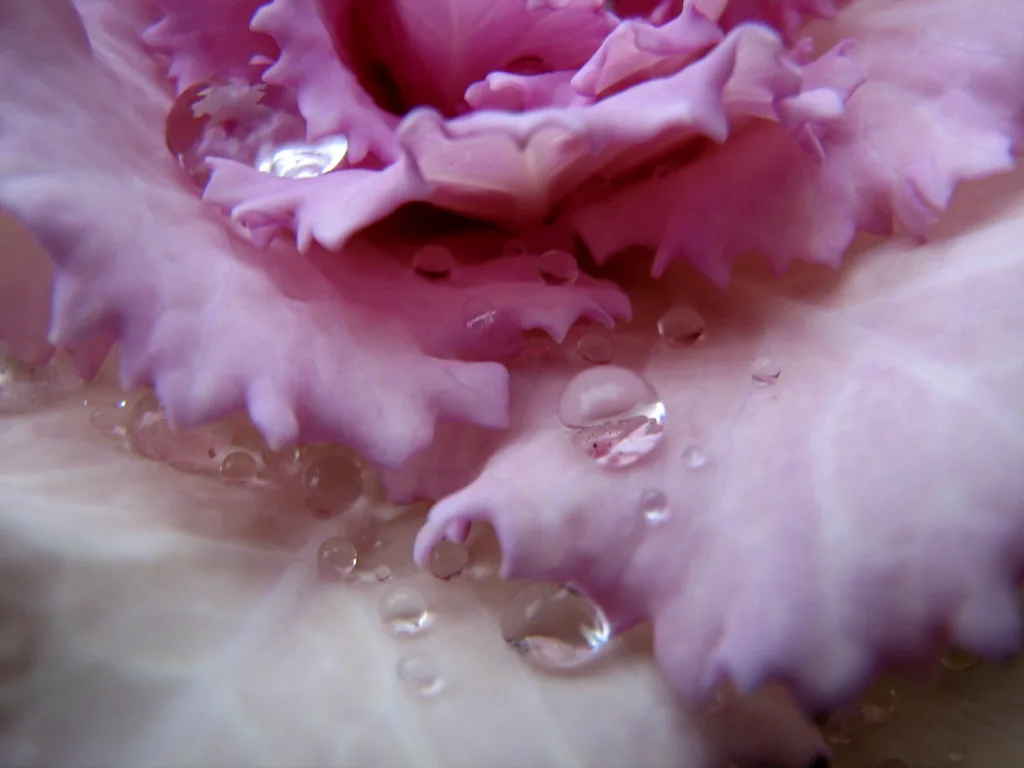
Image source: Wikimedia Commons / Audrey from Central Pennsylvania, USA (CC BY)
Quick Answer
Several yard plants resemble cabbage. The most common are ornamental cabbage and kale (Brassica oleracea), hen and chicks (Sempervivum), echeveria succulents, cabbage tree (Cordyline australis), and radicchio. True cabbage belongs to the Brassica genus.
Look-alikes from other plant families mimic its rosette shape and leaf texture. Visual ID requires checking leaf texture, growth habit, and smell.
Why Plants That Look Like Cabbage Can Be Tricky to Identify
Here's the thing about cabbage look-alikes: they don't all come from the same plant family. True cabbage (Brassica oleracea var. capitata) is a member of the Brassicaceae family, but plants that mimic its appearance span completely different botanical groups. Succulents like echeveria form tight rosettes that look eerily like small cabbage heads.
The cabbage tree (Cordyline australis) grows a trunk with a burst of strappy leaves at the top that resembles a giant cabbage from a distance.
The confusion gets real when plants are at the seedling or early rosette stage. A young ornamental kale, a mature hen and chicks, and a small echeveria can all look nearly identical in a photo. Context matters.
Where the plant is growing, how much water it's getting, and whether it forms a true dense head or a looser rosette all help narrow things down.
Seasonal changes add another layer. Ornamental brassicas actually intensify in color after frost, turning vibrant shades of pink, purple, and cream. That's the opposite of what most plants do in cold weather.
If your "cabbage" looks better in November than it did in September, there's a good chance you're looking at an ornamental kale rather than a true cabbage or a succulent.
Visual Cues That Tell You What You're Actually Looking At
Forget memorizing dozens of species names. Focus on four simple visual checks, and you'll correctly identify most cabbage look-alikes in your yard.
The Rosette Test: Your First Clue
Start by looking at the overall shape. Cabbage and its mimics all form a rosette pattern, leaves radiating outward from a central growing point. But the tightness of that rosette varies.
A true cabbage forms a dense, spherical head with leaves packed tightly together. Ornamental cabbage and kale form looser rosettes with ruffled or fringed leaves and striking color patterns, deep purples, bright pinks, and creamy whites. Succulent rosettes like echeveria and hen and chicks are compact but feel thick and fleshy when you touch them.
A cabbage tree looks like a rosette perched on top of a woody trunk, which is a dead giveaway once the plant matures.
Leaf Texture: Waxy, Fuzzy, or Fleshy?
Run your finger gently across a leaf. Brassica-family plants (cabbage, kale, radicchio, Brussels sprouts) have smooth, waxy leaves with a slight bounce to them. Succulent look-alikes feel thick, plump, and almost gel-like.
Lamb's ear feels like, well, a lamb's ear, soft and fuzzy in a way no brassica ever will.
This single check eliminates a huge number of candidates right away. If the leaves feel like they're storing water, you're dealing with a succulent, not a cabbage relative.
The Smell Test: The Trick That Never Fails
Here's a trick that experienced gardeners rely on. Crush a small piece of leaf between your fingers and smell it. Cabbage-family plants release a distinct sulfur-like odor, that classic "cabbage" smell caused by glucosinolate compounds.
No other plant family produces this scent.
If the crushed leaf smells like nothing, or smells green and grassy, or has a faint aloe-like scent, it's not a brassica. This test works on ornamental kale, radicchio, sea kale, and even volunteer cabbage seedlings that have bolted. It's the fastest way to separate true look-alikes from imposters.
Stem and Growth Habit: Ground-Hugging vs. Tall and Tree-Looking
Check what's happening below the rosette. True cabbages and ornamental brassicas have a short, thick stem that stays close to the ground. Hen and chicks spread via horizontal stolons, little runners that produce baby rosettes around the mother plant.
Echeveria has a short, stubby stem that elongates over time into a trailing form. Cabbage tree develops a genuine woody trunk that can reach 10 to 30 feet in warm climates.
Growth habit is especially useful when plants are young and their rosettes look similar. A cabbage look-alike sitting on top of a three-foot trunk is a cordyline, not a cabbage. Period.
Side-by-Side Visual Guide to the Top 8 Cabbage Look-Alikes
Now let's get specific. Here are the eight most common yard plants that get mistaken for cabbage, broken down with the visual cues that set each one apart.
Ornamental Cabbage and Kale (Brassica oleracea)
This is the most obvious look-alike because it literally is cabbage, just bred for color rather than food. Ornamental varieties form loose rosettes up to 18 inches across in shades of purple, pink, cream, and green. They thrive in cool weather and look best from October through March in most climates.
The leaves are smooth and wavy with ruffled or fringed edges. They won't form a tight, dense head like a grocery store cabbage. If you crush a leaf, it smells unmistakably like cabbage.
These plants are technically edible, but nursery-grown specimens are often treated with systemic pesticides not labeled for food crops, so don't snack on them unless you grew them yourself from seed.
Cabbage Tree (Cordyline australis)
The cabbage tree is a slow-growing evergreen that develops a thick, woody trunk topped with a spray of long, narrow leaves. Native to New Zealand, it's widely planted in USDA zones 8 through 11 and can reach 30 feet tall at maturity. Young plants can look confusingly like a large rosette, but once the trunk forms, the resemblance to cabbage fades fast.
The leaves are tough, fibrous, and strap-shaped, nothing like the rounded leaves of a true cabbage. In summer it produces large panicles of small, fragrant white flowers. It's not edible, though historically the young shoots and stems were cooked as a food source by Māori communities.
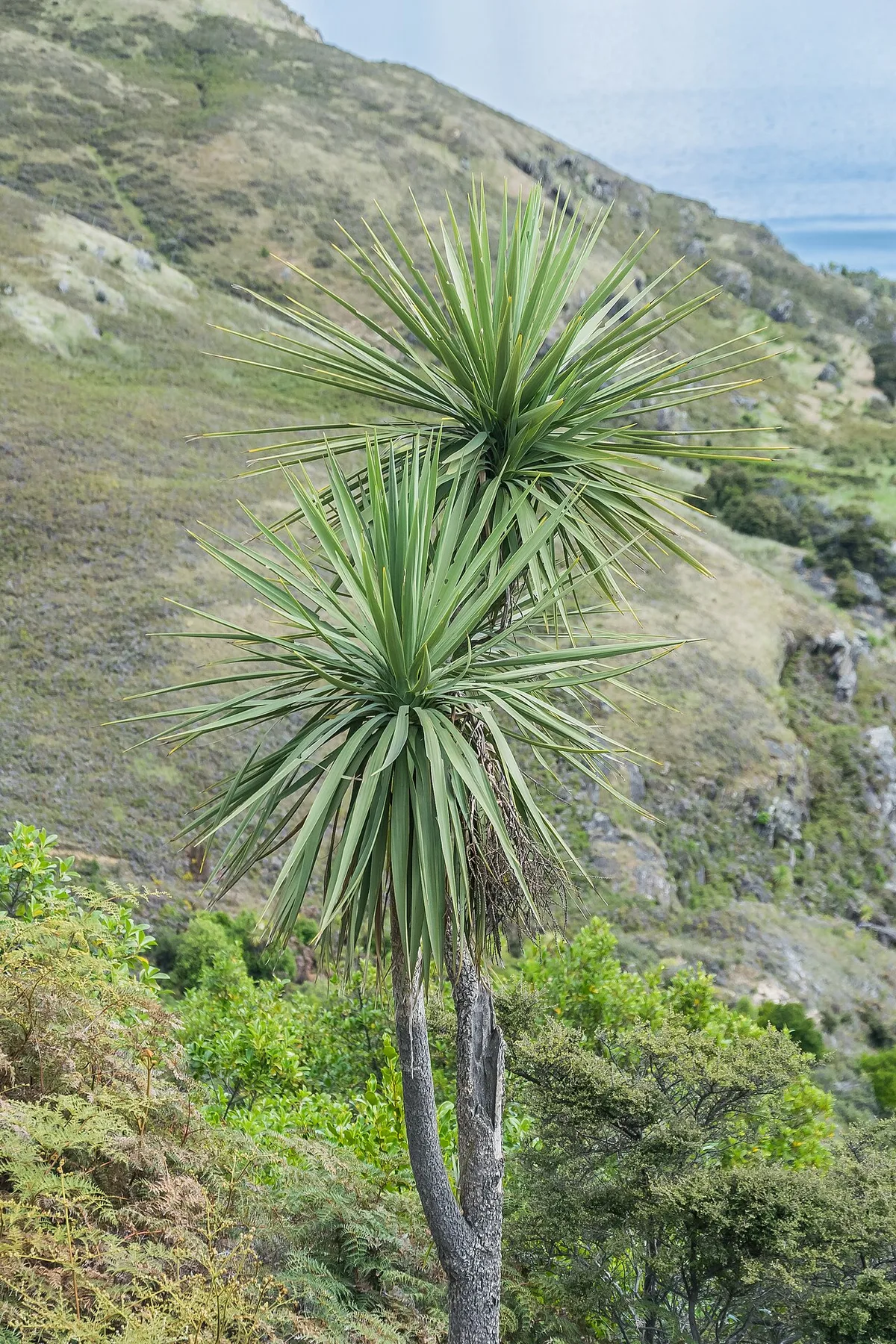
Image source: Wikimedia Commons / Krzysztof Golik (CC BY-SA)
Hen and Chicks (Sempervivum)
These hardy succulents form tight rosettes of fleshy, pointed leaves that look like miniature cabbages, typically 2 to 6 inches across. They're incredibly cold hardy, surviving in USDA zones 4 through 9, and are commonly found in rock gardens, containers, and even popping up as volunteers in lawn edges.
The giveaway is the way they spread. Hen and chicks produce "chicks," baby rosettes that cluster around the mother plant on thin horizontal stems. No brassica does this.
The leaves feel thick and plump, and they lack any cabbage-like smell when crushed. They range in color from deep green to burgundy-tipped, especially in full sun.
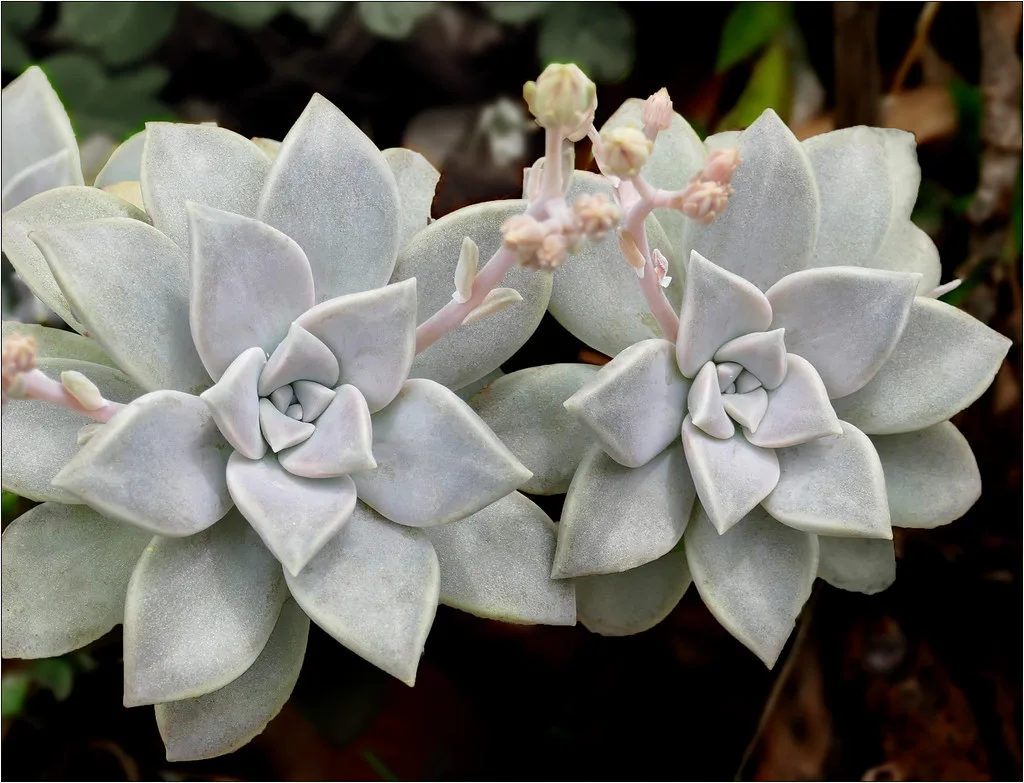
Image source: Openverse / Surely Shirly
Echeveria
Echeveria rosettes are the succulent most commonly mistaken for tiny cabbages, especially the compact varieties like Echeveria elegans. They form symmetrical rosettes 3 to 12 inches across with thick, rounded leaves in shades of blue-green, lavender, and pale pink.
Unlike hen and chicks, echeveria has a short central stem rather than horizontal runners. The leaves are noticeably thicker and more waxy than brassica leaves. They're tender perennials that can't handle frost, so if your cabbage look-alike dies after the first freeze, it was probably an echeveria, not a brassica.
They're popular in containers and succulent arrangements, and they're completely non-edible.
Rex Begonia
Rex begonias form bold, colorful rosettes with large, rounded leaves that can resemble a loose cabbage from a distance. The leaves come in striking combinations of silver, purple, red, and green, often with spiral or metallic patterns. They're typically grown as houseplants or shade-tolerant annuals in yards.
The key difference is leaf shape and texture. Rex begonia leaves are thinner, softer, and more asymmetrical than cabbage leaves. They also have prominent veins and a slightly iridescent sheen.
They prefer shade and moist soil, the opposite of what most brassicas want. If your cabbage look-alike is thriving in a shady, damp spot, it's probably a begonia.
Radicchio
Radicchio (Cichorium intybus) forms tight, round heads that look like small, deep purple cabbages with prominent white veins. It's an Italian chicory, not a brassica, but the visual resemblance is strong. Heads are typically 4 to 6 inches across with a bitter, slightly spicy flavor.
The leaves are thicker and more rigid than cabbage, with a distinctive crunch. Radicchio heads are also much denser and more compact than ornamental kale. It's fully edible and widely available in grocery stores, so if you find this in your yard, someone probably planted it intentionally or it self-seeded from a previous garden.
Lamb's Ear (Stachys byzantina)
At a glance, a young lamb's ear rosette can look like a pale green cabbage. But touch it once and the confusion ends. The leaves are covered in soft, silvery fuzz that feels like velvet.
No cabbage or brassica has fuzzy leaves.
Lamb's ear spreads via creeping stems and can become invasive in some gardens. It's grown primarily as a ground cover for its soft, silver foliage. The flower stalks shoot up in summer with small purple blooms, which is another clear sign you're not looking at a brassica.
Sea Kale (Crambe maritima)
Sea kale is a perennial brassica native to European coastlines with large, blue-green, cabbage-like leaves that form a substantial rosette. It can grow 2 to 3 feet tall and produces dense clusters of small white flowers in summer. The leaves are edible and were historically cultivated as a vegetable in Victorian England.
The blue-gray color and waxy leaf coating are the main visual identifiers. It's much larger and more sprawling than a standard cabbage, and it thrives in sandy, well-drained soils. If you live near the coast and find a large, blue-green rosette plant, sea kale is a strong candidate.
When It Matters: Edible vs. Toxic Look-Alikes
This is where identification stops being a fun garden puzzle and starts being a safety issue. Some cabbage look-alikes are perfectly edible. Others are toxic enough to cause real harm, especially to pets and small children.
True brassicas (cabbage, kale, radicchio, Brussels sprouts, sea kale) are safe to eat. Ornamental kale is technically edible too, but only if you know it was grown without systemic pesticides. Nursery-grown ornamentals are often treated with chemicals not meant for food crops.
Don't eat them unless you grew them yourself from untreated seed.
The real danger comes from toxic succulents that get mistaken for cabbage. Kalanchoe species, including mother of thousands (Kalanchoe delagoensis), contain cardiac glycosides that are toxic to dogs, cats, and humans if ingested. These plants form rosettes that can look remarkably like small cabbages, especially at a distance. The ASPCA lists kalanchoe as toxic to both dogs and cats, causing vomiting, diarrhea, and in severe cases, cardiac arrhythmia.
Image source: Pixabay / Katzenfee50 (Pixabay Content License)
If you have pets or kids who play in the yard and you can't positively identify a rosette plant, take a photo and run it through your local Cooperative Extension Service for a free ID. It's better to wait a day for confirmation than to guess wrong.
Common Mistakes People Make When Identifying Cabbage-Like Plants
The most common mistake is relying on a single visual cue. Color alone means nothing. A purple rosette could be ornamental kale, a purple echeveria, or a kalanchoe.
You need to check multiple features: texture, smell, growth habit, and stem structure.
Another frequent error is assuming all rosette plants need the same care. If you've got a succulent look-alike and you're watering it like a cabbage, you're going to rot it. Succulents need infrequent, deep watering and fast-draining soil.
Brassicas need consistent moisture and rich, organic soil. Treating one like the other kills it fast.
People also overlook seasonal changes. Ornamental kale looks completely different in summer (looser, greener) than in winter (tight, deeply colored). If you identified a plant in October and then checked again in July wondering why it looks like a different species, that's why.
Finally, don't trust plant ID apps blindly. They're useful starting points, but misidentification rates run higher for look-alike plants with similar rosette forms. Use the app result as a hypothesis, then verify with the physical checks we covered above.
How to Confirm What You're Growing: A Simple 7-Step ID Checklist
When you find a cabbage look-alike and want a definitive answer, work through these steps in order.
Check the growth habit. Is it ground-level or on a trunk? Trunk means cordyline. Ground-level means keep going.
Feel the leaves. Thick and fleshy points to a succulent. Smooth and waxy points to a brassica. Fuzzy points to lamb's ear.
Do the smell test. Crush a small leaf. Sulfur smell confirms brassica family. No smell or a green-grassy smell rules it out.
Look for offsets or runners. Hen and chicks cluster babies around the mother plant. Echeveria doesn't. Brassicas don't either.
Check leaf color and pattern. Solid green or purple with a loose rosette suggests ornamental kale. Tight white-veined purple head suggests radicchio. Blue-green with thick leaves suggests echeveria or sempervivum.
Note the season and weather response. Color intensifying after frost confirms a brassica. Dying after frost confirms a tender succulent like echeveria. Staying the same year-round suggests a hardy succulent or a non-brassica perennial.
Photograph and cross-reference. Take clear photos of the top, side, and underside of the plant. Submit them to your local extension service or a reputable plant ID community for confirmation.
Real Scenarios: What Gardeners Actually Find in Their Yards
A common scenario in the Pacific Northwest: a homeowner finds a tight purple rosette in their garden bed in November. It's almost certainly ornamental kale or ornamental cabbage planted as fall color by a previous owner or a neighbor. These plants are sold at virtually every nursery in zones 6 through 9 as seasonal bedding.
In the Southern US, a frequent surprise is finding a large, palm-like plant with a cabbage-like crown when purchasing a new home. That's a cabbage tree (Cordyline australis), often planted as a tropical-looking accent. It's not a cabbage at all, despite the common name and the visual resemblance when young.
In rock gardens and container arrangements across all zones, the most common mix-up is between hen and chicks (Sempervivum) and small echeveria species. They look nearly identical as rosettes. The offset pattern is the tell: sempervivum clusters tightly with visible runners, while echeveria grows as individual rosettes without stolons.
Gardeners in the UK and Northern Europe frequently encounter sea kale (Crambe maritima) in coastal gardens. Its large, blue-green, cabbage-like leaves can be startling if you're not expecting it. It's a legitimate edible perennial, so if you can confirm the ID, you've got a free vegetable crop.
Frequently Asked Questions
Is ornamental cabbage the same as regular cabbage?
It's the same species (Brassica oleracea) but bred for ornamental color rather than a dense, edible head. It's technically edible, but nursery-grown plants are usually treated with pesticides not meant for food crops.
Can you eat plants that look like cabbage?
Some can. True brassicas like kale, radicchio, and sea kale are edible. Ornamental varieties may be safe if grown without pesticides.
Succulent look-alikes like echeveria and kalanchoe are not edible, and kalanchoe is toxic to pets.
What succulent looks like a small cabbage?
Hen and chicks (Sempervivum) and echeveria are the two most common succulents mistaken for miniature cabbages. Hen and chicks spread via horizontal runners. Echeveria grows as individual rosettes without offsets on runners.
Why does my ornamental kale look different in winter?
Ornamental kale intensifies in color after frost due to increased anthocyanin production. The purples, pinks, and creams become more vivid in cold weather. This is normal and expected, and it's actually one of the reasons these plants are so popular for winter gardens.
How do I tell the difference between cabbage and cabbage tree?
Check the stem. True cabbage has a short stem at ground level. Cabbage tree (Cordyline australis) develops a woody trunk that can grow several feet tall with the leaf crown at the top.