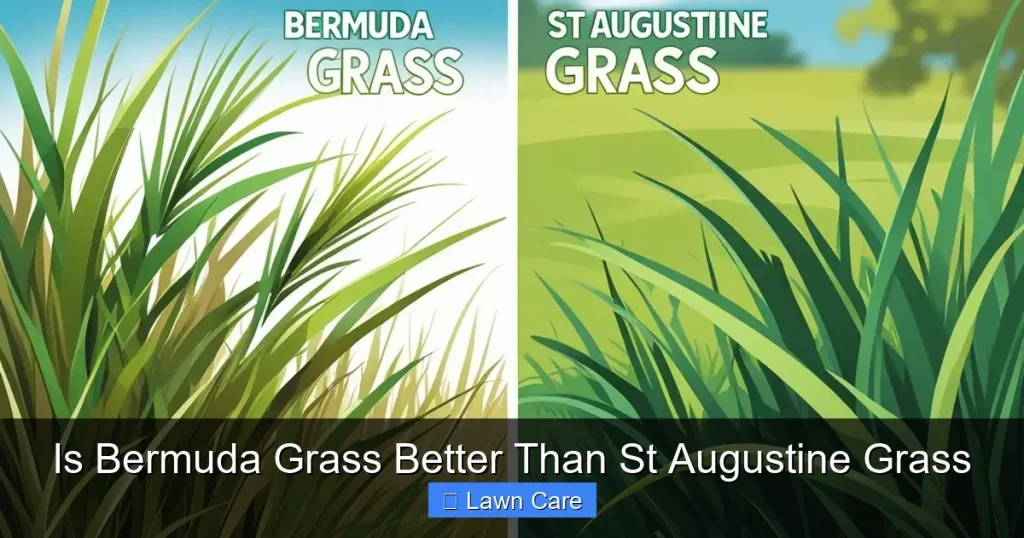
Choosing between Bermuda and St. Augustine grass depends on your climate and lawn needs. Bermuda grass thrives in heat and sun, offering durability, while St. Augustine grass prefers warmer, humid climates and tolerates some shade. Understanding their unique traits will help you make the ideal selection for a beautiful, healthy lawn.
So, you’re looking to get that perfect, carpet-like lawn, but you’re stuck between two popular contenders: Bermuda grass and St. Augustine grass. It’s a common dilemma for homeowners, especially in warmer regions of the United States. Both grasses have their legions of fans, and for good reason. They both create beautiful, green spaces that enhance curb appeal and provide a comfortable area for outdoor living.
But which one is truly “better”? The honest answer is, there’s no single “better” grass. The best choice for *your* lawn depends entirely on your specific environment, how you plan to use your yard, and the amount of effort you’re willing to put into its care. Think of it like choosing between a sleek sports car and a rugged SUV – both are great, but they’re designed for different purposes and terrains.
This article will dive deep into the characteristics of both Bermuda grass and St. Augustine grass, helping you to weigh their pros and cons. We’ll break down their preferences for climate, their resilience, their looks, and their maintenance needs. By the end, you’ll have a much clearer picture of which grass will make your lawn the envy of the neighborhood.
- Climate Suitability: Bermuda grass is ideal for hot, dry climates and full sun, while St. Augustine grass excels in warm, humid regions and can tolerate some shade.
- Durability & Traffic Tolerance: Bermuda grass is incredibly resilient and handles heavy foot traffic well, making it a great choice for active yards. St. Augustine grass is less tolerant of heavy wear.
- Aesthetic Appeal: Both offer lush green carpets, but Bermuda grass can have a finer texture, while St. Augustine grass has broader, darker green blades.
- Maintenance Requirements: Bermuda grass requires frequent mowing and can be prone to thatch. St. Augustine grass also needs regular mowing and is susceptible to chinch bugs and various fungal diseases.
- Dormancy: Bermuda grass goes dormant and turns brown in cooler temperatures, whereas St. Augustine grass may retain some green color or fade depending on the variety and severity of the cold.
- Establishment: Both can be established from sod or seed, though Bermuda is more commonly seeded, and St. Augustine is often laid as sod.
Quick Answers to Common Questions
What is the main advantage of Bermuda grass?
Bermuda grass’s main advantage is its exceptional heat and drought tolerance, along with its high resistance to wear and tear from foot traffic.
What is the main advantage of St. Augustine grass?
St. Augustine grass’s primary advantage is its tolerance for shade and its ability to thrive in hot, humid climates, making it a popular choice in the southeastern U.S.
Which grass is better for full sun?
Bermuda grass is generally considered better for full sun as it requires at least 6-8 hours of direct sunlight daily to perform at its best.
Which grass is better for shady areas?
St. Augustine grass is better for shady areas, as many varieties can tolerate 4-6 hours of sunlight per day, unlike Bermuda grass which struggles significantly in shade.
Which grass is more prone to pests?
St. Augustine grass is more prone to pests, particularly chinch bugs, and certain fungal diseases compared to Bermuda grass.
📑 Table of Contents
Bermuda Grass: The Sun-Loving Warrior
Bermuda grass is a warm-season grass known for its incredible toughness and its love for sunshine. If you live in a region that experiences hot summers and mild winters, Bermuda grass might just be your perfect match. It’s a workhorse of a grass, able to withstand a lot of punishment and bounce back beautifully.
Heat and Drought Tolerance
This is where Bermuda grass truly shines. It’s built for the heat. During the scorching summer months, when other grasses might be wilting and looking stressed, Bermuda grass is often at its prime, sporting a vibrant green color. Its deep root system allows it to seek out moisture even during dry spells, making it remarkably drought-tolerant once established. If you live in an area prone to heatwaves or water restrictions, Bermuda grass is a strong contender.
Durability and Traffic Tolerance
Got kids? Pets? A penchant for backyard sports? Bermuda grass can handle it. It’s one of the most wear-tolerant grasses available. Its dense growth habit and rapid rhizome and stolon development allow it to recover quickly from damage. Foot traffic, playful dogs, and even the occasional dropped barbecue grill are less likely to leave lasting scars on a well-maintained Bermuda lawn. This resilience is why you often see it on golf courses, athletic fields, and other high-traffic areas.
Sunlight Requirements
Bermuda grass absolutely loves the sun. It needs at least 6-8 hours of direct sunlight per day to thrive. If your yard is heavily shaded by mature trees or buildings, Bermuda grass will struggle to establish and maintain its health. In shady conditions, it will become thin, weak, and more susceptible to disease and weed invasion.
Growth Habit and Texture
Bermuda grass spreads aggressively via both rhizomes (underground stems) and stolons (above-ground stems). This makes it excellent at filling in bare patches and creating a dense, uniform turf. It typically has a fine to medium leaf texture, which gives it a soft feel underfoot. However, this aggressive growth can also be a downside, as it can easily invade garden beds and is notoriously difficult to remove once established elsewhere, as noted in discussions about how to get rid of Bermuda grass in St. Augustine.
Dormancy
A key characteristic of Bermuda grass is its dormancy. When temperatures drop in the fall, and especially with the first frost, Bermuda grass will start to turn brown. This is a natural survival mechanism. It’s not dead, just resting. It will remain dormant and brown throughout the winter and will begin to green up again in the spring as temperatures rise. This seasonal dormancy means you’ll have a brown lawn for several months of the year in many climates.
St. Augustine Grass: The Shade-Tolerant, Humidity-Loving Favorite
Visual guide about Is Bermuda Grass Better Than St Augustine Grass
Image source: greenlawnfertilizing.net
St. Augustine grass is another warm-season favorite, particularly popular in the southern United States, especially along the coasts and in humid, subtropical regions. It’s known for its broad leaves, rich green color, and its ability to handle conditions that might faze other grasses.
Climate and Humidity Preference
St. Augustine grass absolutely thrives in heat and humidity. It’s a staple in Florida, Texas, and other Gulf Coast states. It performs best in temperatures between 80°F and 100°F (27°C to 38°C). While it can tolerate some cooler temperatures, it’s not as cold-hardy as some other warm-season grasses and can be damaged by hard freezes. It also requires adequate moisture, so prolonged drought can be a challenge without supplemental watering.
Shade Tolerance
One of the biggest advantages of St. Augustine grass over Bermuda grass is its shade tolerance. While it prefers full sun, many varieties of St. Augustine grass can still grow reasonably well in partial shade, receiving as little as 4-6 hours of sunlight per day. This makes it a fantastic option for yards that have large trees or areas that don’t get direct sun all day long. Different cultivars offer varying degrees of shade tolerance, so choosing the right one for your specific conditions is important. For instance, ‘Seville’ is known for its better shade tolerance compared to some other types.
Traffic Tolerance and Durability
Compared to Bermuda grass, St. Augustine grass is less tolerant of heavy foot traffic. Its growth habit, while dense, is not as aggressive in its recovery from damage. It can become thin and worn down in high-traffic areas, especially if it’s not receiving enough sunlight or water. While it’s suitable for most residential lawns, if you have a very active family or regularly host large gatherings in your yard, you might find St. Augustine grass struggling to keep up.
Growth Habit and Texture
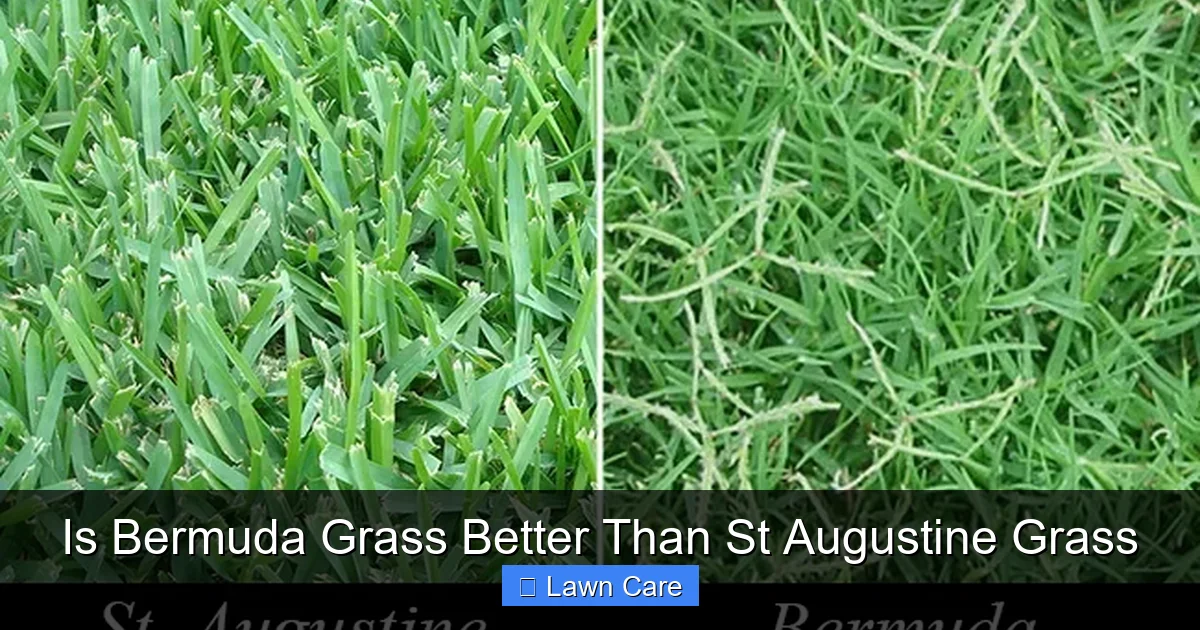
St. Augustine grass spreads via wide, flat stolons. This helps it form a dense turf, but it’s not as effective at filling in bare spots as quickly as Bermuda grass. It also has a distinctly broad leaf blade, which gives it a coarser texture and a deep green color that many homeowners find very attractive. This broader leaf can also help it outcompete some weeds.
Pest and Disease Susceptibility
While St. Augustine grass has its strengths, it’s also known to be more susceptible to certain pests and diseases than Bermuda grass. Chinch bugs are a common and problematic pest for St. Augustine. They feed on the grass blades, causing yellowing and eventually dead patches. Various fungal diseases, such as brown patch and gray leaf spot, can also plague St. Augustine lawns, particularly in humid conditions or when the grass is stressed. Understanding these potential issues is crucial for proper lawn care. If you notice your St. Augustine grass turning yellow, it’s important to investigate the cause, as it could be a sign of pests, diseases, or improper watering.
Direct Comparison: Bermuda vs. St. Augustine
Visual guide about Is Bermuda Grass Better Than St Augustine Grass
Image source: agreenhand.com
Now that we’ve looked at each grass individually, let’s put them head-to-head on key factors to help you decide which is better for your situation.
Climate and Region Suitability
* Bermuda Grass: Best for hot, dry climates and full sun. Thrives in the transition zone and southern U.S. Summers are its peak.
* St. Augustine Grass: Best for warm, humid, subtropical climates. Excels in the Deep South and along the Gulf Coast. Can tolerate some shade.
Sunlight Needs
* Bermuda Grass: Requires full sun (6-8+ hours daily). Poor shade tolerance.
* St. Augustine Grass: Prefers full sun but tolerates partial shade (4-6 hours daily).
Traffic Tolerance
* Bermuda Grass: Excellent. Highly resilient and recovers quickly. Ideal for high-traffic areas.
* St. Augustine Grass: Moderate. Less tolerant of heavy foot traffic; can thin out with excessive wear.
Maintenance and Mowing
* Bermuda Grass: Needs frequent mowing (often 2-3 times a week during peak season) to keep its dense growth in check. Can be prone to thatch buildup, requiring aeration.
* St. Augustine Grass: Needs regular mowing, typically once a week. Its broader blades mean it doesn’t grow as fast as Bermuda. It can also be prone to thatch, though perhaps less so than some Bermuda varieties.
Appearance and Texture
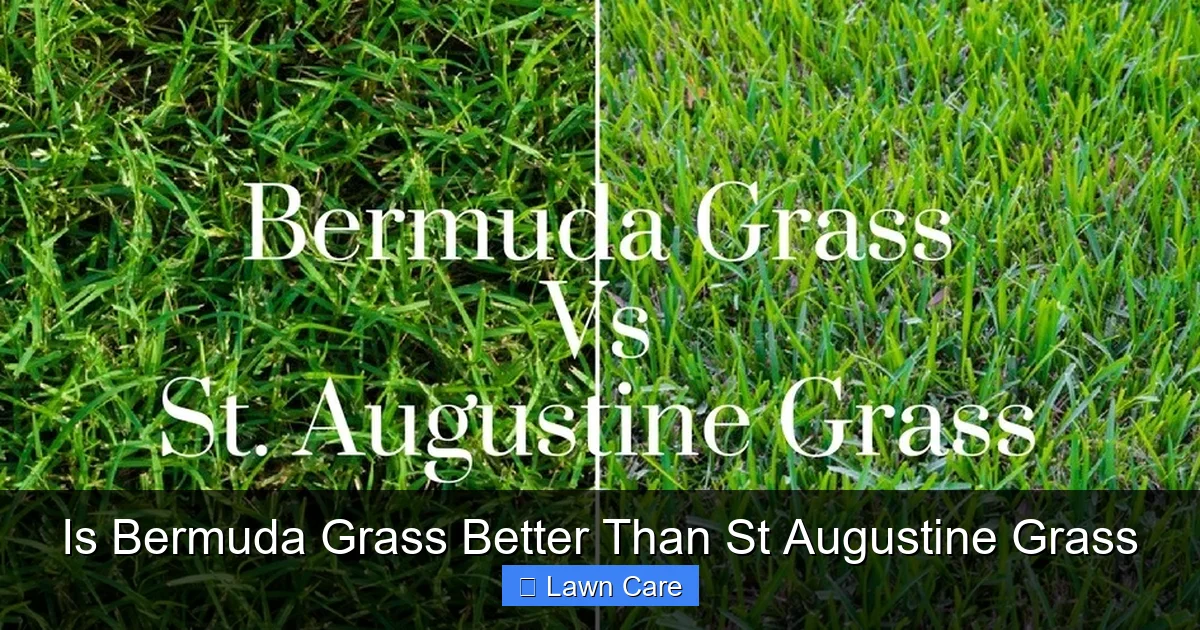
* Bermuda Grass: Fine to medium leaf texture, creating a dense, smooth turf. Color can range from light green to dark green depending on the variety.
* St. Augustine Grass: Broad leaf blade, giving it a coarse texture and a rich, dark green color. Very attractive visually.
Dormancy and Cold Tolerance
* Bermuda Grass: Goes fully dormant and turns brown in cooler temperatures and frost. Greens up in spring.
* St. Augustine Grass: Less cold-hardy than Bermuda. May go dormant or fade in color during cold snaps but often retains some green longer than Bermuda.
Pest and Disease Issues
* Bermuda Grass: Generally more resistant to common lawn pests and diseases, though it can be susceptible to dollar spot and grub worms.
* St. Augustine Grass: More prone to chinch bugs, grubs, and various fungal diseases like brown patch and gray leaf spot.
Establishment
* Bermuda Grass: Can be established from seed, sod, or plugs. Seed is a common and cost-effective method.
* St. Augustine Grass: Primarily established from sod or plugs due to its slower, less vigorous spreading habit from seed. This makes it more expensive to install initially.
Making the Right Choice for Your Lawn
Visual guide about Is Bermuda Grass Better Than St Augustine Grass
Image source: gardensnursery.com
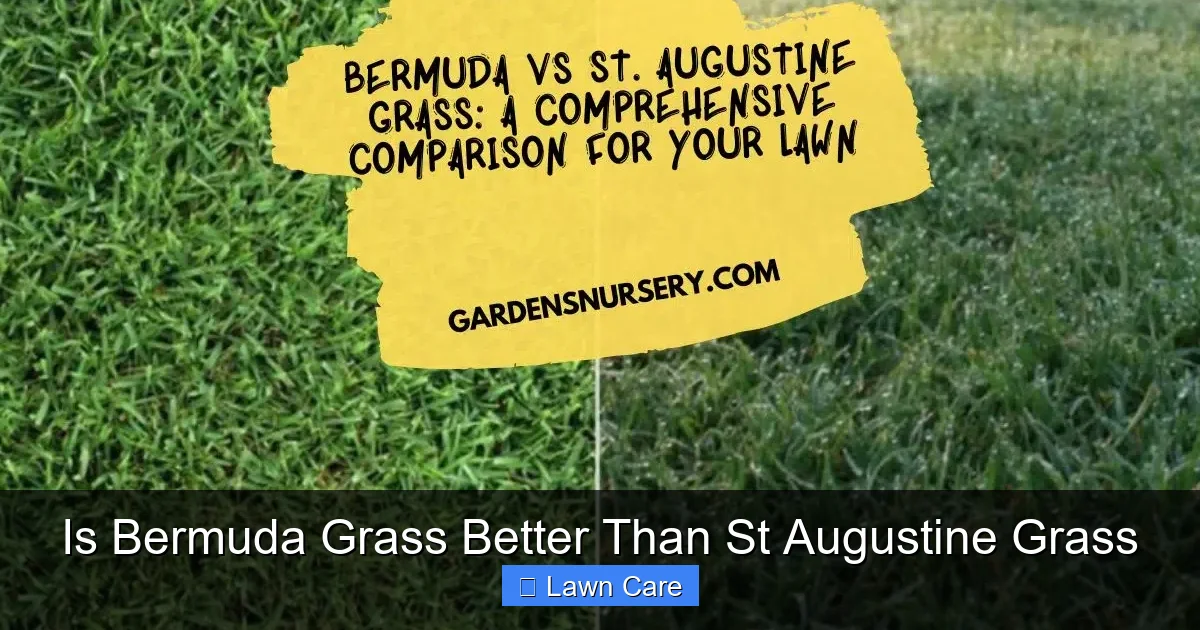
So, is Bermuda grass better than St. Augustine grass? As we’ve seen, it’s not about one being universally superior, but rather which one is superior *for you*.
Consider your location first. If you’re in a sweltering hot climate with plenty of sunshine and minimal shade, Bermuda grass is a powerhouse. It will give you a tough, beautiful lawn that can withstand the elements and heavy use. However, be prepared for its winter dormancy and its aggressive nature that might try to escape your borders.
On the other hand, if you live in a humid, subtropical environment and have areas of your yard that don’t get full sun all day, St. Augustine grass might be the more practical and aesthetically pleasing choice. Its shade tolerance and broad, lush blades are highly desirable. But you’ll need to be vigilant against pests like chinch bugs and be aware of its limitations with heavy foot traffic. It’s also important to note that mixing Bermuda and St. Augustine grass can be challenging due to their differing growth habits and needs; a homeowner might need to decide on one or the other for optimal results. Trying to kill Bermuda grass in St. Augustine can be a significant lawn care project.
Think about your lifestyle. If your lawn is a high-activity zone for sports, kids, and pets, Bermuda grass’s resilience is a major advantage. If your lawn is more for relaxing and enjoying the aesthetics, and you have some shade to contend with, St. Augustine grass offers that inviting, deep green look.
Ultimately, both Bermuda and St. Augustine grasses are fantastic options for creating a beautiful lawn in the right conditions. By understanding their unique strengths and weaknesses, you can confidently select the grass that will best suit your climate, your lifestyle, and your vision for your outdoor space. Whichever you choose, consistent care – proper watering, mowing, and fertilization – will be key to maintaining a healthy and vibrant lawn.
Frequently Asked Questions
Can Bermuda grass grow in the shade?
No, Bermuda grass requires full sun to thrive and will become thin and weak in shady conditions. It needs at least 6-8 hours of direct sunlight daily.
Is St. Augustine grass good for high-traffic areas?
St. Augustine grass is moderately tolerant of traffic but is not as resilient as Bermuda grass. Heavy foot traffic can cause it to thin and become worn.
Does Bermuda grass go dormant in the winter?
Yes, Bermuda grass is a warm-season grass that goes dormant and turns brown in cooler temperatures, typically with the first frost, and greens up again in the spring.
Which grass is more expensive to establish?
St. Augustine grass is generally more expensive to establish because it is primarily sold as sod or plugs, while Bermuda grass can be more economically established from seed.
Will St. Augustine grass survive in a cold climate?
St. Augustine grass is not very cold-hardy and can be damaged by hard freezes. It is best suited for warm, humid climates and may not survive harsh winters.
Which grass has broader leaves?
St. Augustine grass has noticeably broader leaf blades compared to the fine to medium texture of Bermuda grass.