So you've got skunk cabbage showing up in your yard and you're wondering whether it's worth the hassle to pull it out. The honest answer is, it depends. Skunk cabbage isn't automatically a villain.
In some settings it's a valuable native plant. In others, it's an aggressive invader that'll choke out everything else. The right call comes down to what species you have, where you live, and what you want your land to look like.
Here's the thing most people don't realize. Skunk cabbage has one of the deepest, toughest root systems of any wetland plant. Its contractile roots can reach 18 inches down and actually pull the crown deeper into the soil every year.
That means yanking it out isn't a quick weekend job. Before you grab a shovel, let's walk through exactly what you're dealing with and figure out the smartest move for your situation.
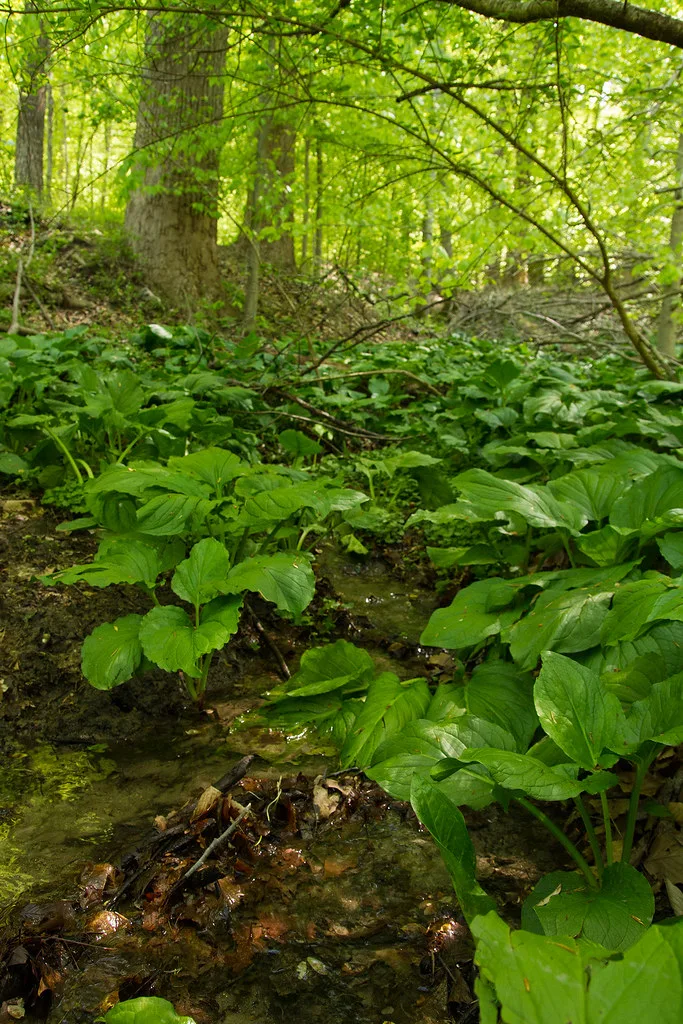
Image source: Openverse / NatureServe (PDM 1.0)
Quick Answer: Should You Remove It?
It depends on the species and your location. If you're in eastern North America with native Eastern skunk cabbage (Symplocarpus foetidus) and it's not in your way, leaving it alone is a solid choice. It supports early-season pollinators and stabilizes wet soil.
If you're in the UK, Ireland, or parts of northern Europe, Western skunk cabbage (Lysichiton americanus) is invasive and you should remove it. It's actually illegal to let it spread into the wild under the UK Wildlife and Countryside Act.
If it's growing where you don't want it, regardless of species, removal is reasonable. Just know it's a persistent plant and you'll likely need more than one attempt.
What Skunk Cabbage Actually Is — And Why It's in Your Yard
Skunk cabbage isn't actually a cabbage. It's a member of the Araceae family, related to peace lilies and jack-in-the-pulpit. The name comes from the pungent, skunk-like odor its flowers produce.
That smell isn't a flaw. It's a pollination strategy. The scent attracts flies and beetles that most other plants can't recruit.
There are three species people commonly run into.
Eastern skunk cabbage (Symplocarpus foetidus) is native to eastern North America, from Nova Scotia down to Tennessee and west to Minnesota. It produces a mottled purple-brown spathe in late winter, sometimes melting through snow with its own body heat. Yes, it generates heat.
It's one of the few thermogenic plants in North America.
Western skunk cabbage (Lysichiton americanus) is native to the Pacific Northwest. It has a bright yellow spathe and larger overall growth. It's the species that's become invasive in Europe.
White skunk cabbage (Lysichiton camtschatcensis) comes from northeastern Asia. It's also shown up as an invasive species in parts of the UK and Scandinavia.
All three love the same conditions. Consistently wet, boggy soil. Stream edges.
Swamp margins. Drainage ditches. If your yard has a low spot that stays soggy most of the year, that's skunk cabbage real estate.
How to Identify Which Skunk Cabbage You're Dealing With
Getting the ID right matters because your removal decision hinges on it. Here's how to tell them apart.
Eastern skunk cabbage has a hooded spathe that's dark purple to brown with greenish-yellow mottling. The leaves emerge after the flower and can grow up to 2 feet long. The whole plant has a strong, unpleasant smell when crushed.
It's the only skunk cabbage native to the eastern half of the US and Canada.
Western skunk cabbage has a bright yellow, open spathe that's much more showy. The leaves are larger, sometimes reaching 4 feet in length. It's native to the Pacific coast but has naturalized aggressively in the UK and parts of northern Europe.
White skunk cabbage looks similar to the Western species but with a pure white spathe. It's less common in gardens but has established invasive populations in the UK and Scandinavia.
If you're unsure, check the USDA PLANTS Database or contact your local university extension service. They can confirm species from a photo and tell you whether it's native to your county.
Image source: Pixabay / Hans (Pixabay Content License)
Where Skunk Cabbage Is Native vs. Invasive
This is the single most important factor in your decision. The same plant can be an ecological asset in one region and a serious problem in another.
Native range, keep it:
- Eastern skunk cabbage is native across the northeastern and north-central US and southeastern Canada. In a natural wetland, stream bank, or bog garden in this range, it's doing good work. It feeds early pollinators, stabilizes soil, and supports amphibian habitat.
- Western skunk cabbage is native to the Pacific Northwest, from Alaska down through British Columbia, Washington, and Oregon. Same story. It belongs there.
Non-native range, remove it:
- In the UK, both Lysichiton americanus and L. camtschatcensis are listed under Schedule 9 of the Wildlife and Countryside Act 1981. You're not required to remove it from your garden, but you must not allow it to escape into the wild. The Non-Native Species Secretariat provides specific guidance on control.
- Across northern Europe, including the Netherlands, Germany, and Scandinavia, Western skunk cabbage is classified as invasive. The European and Mediterranean Plant Protection Organization includes it on its list of invasive alien species of concern.
- In these regions, skunk cabbage forms dense colonies that shade out native wetland plants like marsh marigold, bog bean, and native sedges.
The rule of thumb is simple. If the species is native to your region and it's not causing a practical problem, let it be. If it's non-native or it's growing where you don't want it, removal makes sense.
Image source: Pixabay / 16081684 (Pixabay Content License)
When Skunk Cabbage Is a Problem (And When It Isn't)
Even native skunk cabbage can be unwelcome in the wrong spot. Here's how to think through whether yours is actually causing issues.
Reasons to remove it:
- It's growing in a lawn, garden bed, or near a patio where the odor bothers you
- It's shading out plants you actually want to grow
- It's in a drainage area where you need to manage water flow differently
- You have pets or small children and the calcium oxalate toxicity is a concern
- It's a non-native species in your region and spreading into natural areas
Reasons to leave it alone:
- It's in a natural wetland, bog, or stream bank where it belongs
- It's native to your region and not spreading aggressively
- You value early-season pollinator support
- You're managing erosion on a wet slope and the root system is helping
- You simply don't mind it being there
If you're dealing with a wet area that's been colonized and you'd rather have something more manageable, there are good native alternatives. Blue flag iris, native sedges, and bog bean all thrive in the same conditions without the aggressive spread. For more ideas on handling unwanted plants in tricky lawn and garden situations, our guide to weeds that grow in Bermuda grass covers identification and control strategies that apply to a range of persistent species.
The bottom line is this. Skunk cabbage isn't evil. It's just a plant that's extremely good at surviving in wet soil.
Your job is to decide whether it's in the right place.
Risks and Drawbacks of Keeping Skunk Cabbage
Let's be straight about the downsides. Skunk cabbage isn't for everyone, even when it's native.
The smell is real. The fetid, rotting-flesh odor is strongest during flowering in late winter and early spring. If the plant is near a patio, walkway, or window, it can be genuinely unpleasant. The smell attracts pollinators, but it won't win you any compliments from guests.
Toxicity is a legitimate concern. All parts of skunk cabbage contain calcium oxalate crystals. These are needle-shaped structures that cause intense oral irritation, drooling, and vomiting if chewed or eaten. The ASPCA lists skunk cabbage as toxic to dogs, cats, and horses.
If you have pets that graze or chew on plants, this matters.
It spreads aggressively in the right conditions. A single plant can form a dense colony over several years through both seed dispersal and root offsets. The large leaves, sometimes 4 feet long in Western species, create heavy shade that suppresses smaller ground-cover plants. If you're trying to maintain a diverse wetland edge, skunk cabbage can monopolize the space.
Once it's established, it's hard to get rid of. Those contractile roots pull the crown deeper every year. A plant that started at the surface may be a foot or more below grade within a few seasons. That's why removal requires serious digging, not just pulling the leaves.
Benefits of Skunk Cabbage in the Right Setting
On the flip side, this plant earns its keep in the right context.
Early pollinator support is huge. In late winter, when almost nothing else is blooming, skunk cabbage flowers are producing heat and nectar. They're one of the first food sources available to emerging flies, beetles, and native bees. In a healthy wetland, that early food web matters.
Erosion control is underrated. The dense root network holds wet, muddy banks together. If you're dealing with a stream bank or pond margin that washes out regularly, skunk cabbage does a better job than almost any ornamental you could plant there.
Wildlife habitat adds real value. The broad leaves shelter frogs, salamanders, and insects. Waterfowl eat the seeds. In a naturalized wetland setting, it's part of a functioning ecosystem, not just a single plant.
Zero maintenance where it belongs. Plant it, walk away. It doesn't need fertilizer, pruning, or watering. It's adapted to survive flooding, frost, and neglect.
That's a genuine advantage over fussier ornamentals.
The takeaway is that context is everything. In a natural bog or stream bank in its native range, skunk cabbage is an asset. In a curated garden bed or a UK countryside ditch, it's a problem.
Location and species determine everything.
How to Remove Skunk Cabbage Step by Step
If you've decided removal is the right call, here's how to do it properly. Half-measures won't work. This plant regenerates from root fragments, so you need to be thorough.
Step 1: Choose the right time
Late spring or early summer is ideal. The plant is actively growing, which means it'll translocate herbicide to the roots if you go that route. The soil is also usually soft from spring rains, making manual digging easier.
Step 2: Assess the size of the colony
A few small plants can be handled with a shovel. A large, established colony may require multiple seasons of effort. Be honest about what you're facing before you start.
Step 3: Dig out the entire root system
Use a sharp spade or shovel. Dig a wide circle around each plant, at least 12 inches out from the base. Go deep.
The root crown may be 12 to 18 inches below the surface in older plants. Lift the whole mass out intact.
Shake off excess soil and inspect for broken root pieces. Every fragment left behind is a potential new plant. Bag everything.
Do not compost root material.
Image source: Pixabay / ulleo (Pixabay Content License)
Step 4: Consider herbicide for stubborn regrowth
For large colonies or regrowth from missed roots, a glyphosate-based herbicide applied to actively growing foliage can be effective. In our research, foliar applications during active growth show kill rates around 80 to 90 percent.
If you're near a waterway, check local regulations first. Many jurisdictions restrict herbicide use near streams, wetlands, and ponds. Your county extension office can tell you what's permitted in your area.
Step 5: Monitor for at least two growing seasons
This is where most people fail. They dig once, see no regrowth that summer, and declare victory. Then the following spring, new shoots appear from root fragments they missed.
Plan to check the site every few weeks during the growing season and remove any new growth immediately.
Tools you'll need:
- Sharp spade or shovel
- Heavy-duty gloves
- Yard waste bags
- Optional: glyphosate herbicide and sprayer
- Optional: safety goggles and waterproof boots
Can I just mow it down?
No. Mowing removes the leaves but the root crown survives and sends up new shoots. Skunk cabbage can regenerate from a crown that's a foot underground.
Cutting the tops off just delays the inevitable.
What to Plant Instead: Native Alternatives for Wet Areas
Once you've removed skunk cabbage, don't leave the ground bare. Bare wet soil will invite skunk cabbage seeds back, or other unwanted species. Plant something purposeful.
Blue flag iris (Iris versicolor) is a strong native choice for US zones 3 to 8. It produces purple-blue flowers in late spring and thrives in the same soggy conditions skunk cabbage loves. It's showy, manageable, and supports native pollinators.
Native sedges (Carex species) are excellent ground covers for wet areas. They form dense clumps that stabilize soil without the aggressive spread. There are hundreds of native sedge species across North America, so you can find one matched to your region.
Bog bean (Menyanthes trifoliata) is a great option if you want something more unusual. It produces white, star-shaped flowers and spreads moderately in boggy conditions. It's native across the northern US, Canada, and Europe.
Marsh marigold (Caltha palustris) is another wetland native with cheerful yellow flowers in early spring. It stays compact and doesn't form dense monocultures.
In the UK, the Royal Horticultural Society recommends native water forget-me-not (Myosotis scorpioides) and marsh marigold as invasive skunk cabbage replacements for pond margins and damp garden beds. These give you color and ecological value without the legal headaches.
The goal is to fill the niche. Wet soil will grow something. You get the best results when you decide what that something is.
Common Mistakes People Make When Removing Skunk Cabbage
Experience from land managers and extension services highlights the same errors over and over.
Pulling instead of digging. The leaves snap off at the base and the crown survives underground. You need to excavate the root system, not yank the foliage.
Leaving root fragments in the soil. Contractile roots are brittle and break easily. If you don't carefully remove every piece, you've just multiplied the problem. Small fragments regenerate into full plants within one growing season.
Composting the removed material. Root fragments in a compost pile can survive and spread when you use the compost elsewhere. Bag it and dispose of it according to local guidelines. In areas where skunk cabbage is invasive, some jurisdictions require it to be treated as controlled waste.
Only treating aboveground growth. Cutting or mowing gives temporary relief but zero long term results. The root crown must be removed or killed, or the plant comes back.
Giving up after one attempt. Two to three rounds of removal over consecutive growing seasons is normal for established colonies. Expect it and plan for it.
Ignoring nearby seed sources. If skunk cabbage is growing wild on a neighboring property or in a nearby wetland, seeds will keep arriving. Talk to neighbors about coordinated removal, or plan for ongoing monitoring on your side of the property line.
Legal and Safety Considerations You Need to Know
Before you start digging, check the rules in your area. Skunk cabbage sits in a legal gray zone in several countries.
In the UK, Western skunk cabbage is listed under Schedule 9 of the Wildlife and Countryside Act 1981. You won't get in trouble for having it in your garden, but allowing it to spread into the wild is an offense. The Non-Native Species Secretariat recommends removing flowers before seeds mature to prevent dispersal.
Across the EU, Lysichiton americanus is on the Union list of invasive alien species of concern. Member states are required to prevent its spread and may require landowners to manage it.
In the US, there are no federal restrictions on native skunk cabbage. However, if you're using herbicide near wetlands or waterways, EPA regulations and state-level rules may apply. Always check with your county extension office before applying chemicals near water.
Safety-wise, wear gloves when handling the plant. The sap can irritate sensitive skin. Keep children and pets away from the area during removal, especially if you're using herbicide. The calcium oxalate crystals in the plant tissue cause real discomfort if chewed.
Decision Guide: Should You Get Rid of Your Skunk Cabbage?
Here's a quick framework to make your call.
Remove it if:
- It's a non-native species in your region (UK, EU, or outside its native North American range)
- It's spreading into areas where you don't want it
- The odor is a problem near living spaces
- Pets or children have access to the area
- It's crowding out plants you're trying to grow
Leave it if:
- It's native to your region and in a natural wetland or bog setting
- It's not causing practical problems
- You value the ecological benefits (pollinator support, erosion control, wildlife habitat)
- You're managing a restoration project where it belongs
Manage it in place if:
- It's native but in a slightly inconvenient spot
- You can contain it by removing flower heads before seed set
- You're willing to monitor and control its spread each year
The right answer isn't universal. It's specific to your property, your region, and your goals. If you're still unsure, your local university extension service can give you region-specific advice in a single phone call.
Frequently Asked Questions
Is skunk cabbage poisonous to dogs?
Yes. All parts of skunk cabbage contain calcium oxalate crystals that cause oral irritation, drooling, and vomiting if chewed or eaten. The ASPCA lists it as toxic to dogs, cats, and horses.
Keep pets away from areas where it's growing.
How deep do skunk cabbage roots go?
The root crown can sit 12 to 18 inches below the surface in mature plants. Contractile roots actively pull the crown deeper each year, which is why surface-level removal never works.
Can I compost skunk cabbage after pulling it?
No. Root fragments survive composting and can spread when you use the compost elsewhere. Bag the material and dispose of it according to local waste guidelines.
In regions where it's invasive, some jurisdictions require controlled disposal.
Does skunk cabbage come back after removal?
It often does if root fragments are left behind. Plan for two to three rounds of removal over consecutive growing seasons. Monitor the site regularly and pull new shoots as soon as they appear.
What's the best time of year to remove skunk cabbage?
Late spring to early summer. The plant is actively growing, which makes herbicide application more effective and the soil is usually soft enough for easier digging.
Is it illegal to grow skunk cabbage?
In the US, no. In the UK and EU, it's not illegal to grow in your garden, but you must prevent it from spreading into the wild. Check your local regulations to be sure.