We've all been there. You walk into the garden one morning and spot a plant that looks exactly like a cabbage, but you definitely didn't plant one there. The question "what is the weed that looks like cabbage?" comes up constantly because several common weeds form rosettes that are nearly indistinguishable from young brassica transplants at a glance.
The tricky part is that the answer isn't just one plant. Multiple weed species mimic cabbage depending on growth stage, region, and growing conditions. Marestail alone can produce around 200,000 seeds per plant, so correctly identifying what's in your garden matters before it takes over.
Let's walk through the most common culprits and how to tell them apart.
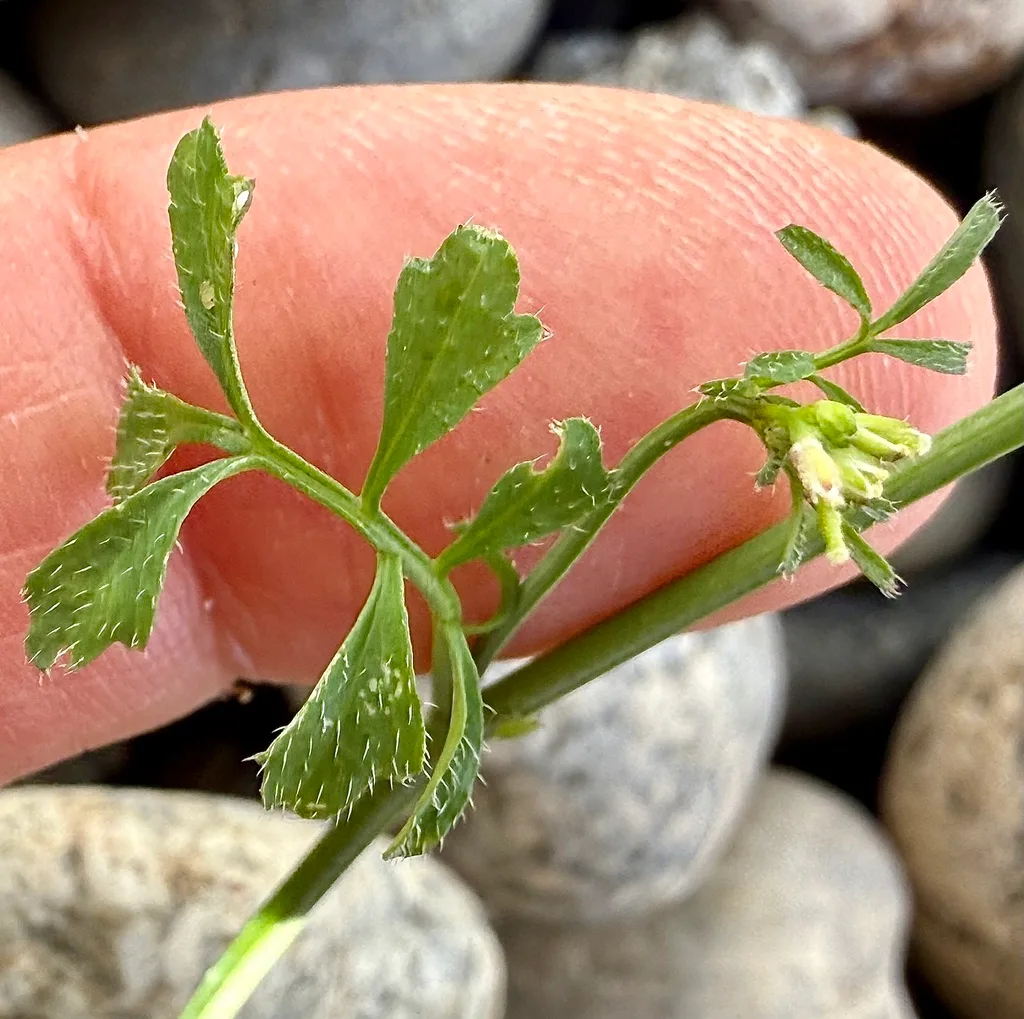
Image source: iNaturalist / Irene
Quick Answer
Several weeds look like cabbage at the rosette stage. The most common ones are wild mustard, wild radish, marestail, shepherd's purse, and common mullein. Wild mustard and wild radish belong to the same plant family as cabbage, which is why the resemblance is so strong.
Accurate identification requires checking leaf texture, root structure, and flowers.
Why Weeds and Cabbages Look So Similar at First Glance
The resemblance isn't a coincidence. Cabbage (Brassica oleracea) and several of its weedy lookalikes all belong to the Brassicaceae family, which means they share a common ancestor and a similar body plan. The basal rosette growth pattern, the waxy leaf surface, the broad leaf blade, these are all traits that evolved in this plant family because they work well for capturing sunlight close to the ground.
Even weeds outside the brassica family, like marestail and mullein, converge on the same rosette shape because it's simply an efficient survival strategy. A low, spreading rosette shades out competitors, conserves moisture, and stores energy for a rapid bolt when conditions are right. Evolution arrived at the same solution multiple times across unrelated plant families.
This is why a single photo can't always give you a confident answer. The visual overlap is real, and it's rooted in plant biology, not just superficial similarity.
What Weed Looks Like a Cabbage? The Most Common Culprits
Here's where things get interesting. The weeds that fool people into thinking they've got a volunteer cabbage in the garden come from several different plant families. Some are close relatives.
Others just happen to share a similar growth habit. Let's break down each one.
Marestail (Horseweed)
Marestail (Conyza canadensis) is one of the most widespread weeds in North America, and its rosette stage causes real confusion. Before it bolts upward, it sits low to the ground with narrow, toothed leaves radiating from a central point. The leaves are darker green than cabbage and much narrower, but at a quick glance, especially in poor light, the rosette shape tricks people every time.
Once it sends up a stem, identification gets easier. The mature plant can reach six feet tall with clusters of tiny white flower heads. Marestail is also notable for being one of the first weeds confirmed resistant to glyphosate across multiple U.S. states.
If you're dealing with it in a field or garden bed, pulling before it flowers is your best bet since those 200,000 seeds per plant add up fast.

Image source: Pixabay / Pexels (Pixabay Content License)
Wild Mustard
Wild mustard (Sinapis arvensis) is probably the single most common answer to this question, and for good reason. It's in the Brassicaceae family, the same one that includes cabbage, broccoli, and kale. The leaves look almost identical to cabbage seedlings: broad, blue-green, with wavy margins and a slightly waxy surface.
The giveaway is the flower. Wild mustard produces bright yellow four-petaled blooms in spring and early summer. If you're seeing yellow flowers on your "mystery cabbage," it's wild mustard, not a brassica you planted.
Another tell is the seed longevity. Wild mustard seeds can survive in the soil seed bank for up to 60 years, meaning plants can emerge long after you thought the problem was gone.
This one is also worth noting for anyone managing lawns or pastures. If you're dealing with broadleaf weeds in turf, understanding the difference between brassica-family weeds and grassy invaders changes your whole approach to control. For more on weed identification in turf settings, weeds that grow in bermuda grass covers how different weed types interact with warm-season lawns.
Wild Radish
Wild radish (Raphanus raphanistrum) is another brassica-family member that looks remarkably like a cabbage at the rosette stage. The leaves are deeply lobed and can appear almost identical to young cabbage foliage. The key difference is in the root.
Wild radish develops a swollen, fleshy taproot that looks like a small radish, hence the name.
The flowers are another distinguishing feature. Wild radish blooms are typically pale yellow or white with purple veins, unlike the solid yellow of wild mustard. The rosette diameter ranges from about 6 to 18 inches at maturity.
This weed has become an increasing problem in Australian wheat belts and is spreading across the Pacific Northwest as well.
Shepherd's Purse
Shepherd's purse (Capsella bursa-pastoris) forms a basal rosette that beginners frequently mistake for young cabbage. The leaves are deeply lobed and sit close to the ground. However, shepherd's purse leaves tend to be thinner and more delicate than cabbage, with a slightly gray-green cast.
The real identifier is the seed pod. Once shepherd's purse matures, it produces small, heart-shaped seed pods that are unmistakable. The plant flowers early, sometimes within four to six weeks of germination, with tiny white blooms.
It's cosmopolitan, found on every continent except Antarctica, so no matter where you are, this one is a possibility.
Common Mullein
Common mullein (Verbascum thapsus) takes a different approach to the cabbage mimicry. Its rosette is large, sometimes up to 24 inches across, with broad, soft, fuzzy leaves that feel like felt. The hairiness is the immediate giveaway.
Cabbage leaves are smooth and waxy. Mullein leaves are covered in dense, soft hairs that make them feel completely different to the touch.
Mullein is biennial, meaning it spends its first year as a rosette and sends up a tall flowering stalk in its second year. If you see a massive fuzzy rosette in your garden that looks like a cabbage from a distance, run your hand over it. If it feels like a wool blanket, it's mullein.
Canada Thistle
Canada thistle (Cirsium arvense) is the one that can actually hurt you if you grab it wrong. Its basal rosette features spiny, wavy-edged leaves that might look cabbage-like from across the garden, but up close, the spines are obvious. This is not a plant you want to pull bare-handed.
Canada thistle is listed as a noxious weed in over 35 U.S. states, which means landowners in many jurisdictions are legally required to control it. It spreads aggressively through both seeds and an extensive root system. If you're dealing with thistle in a lawn context, what kills Johnson grass but not Bermuda covers selective control strategies that also apply to thistle management in turf.
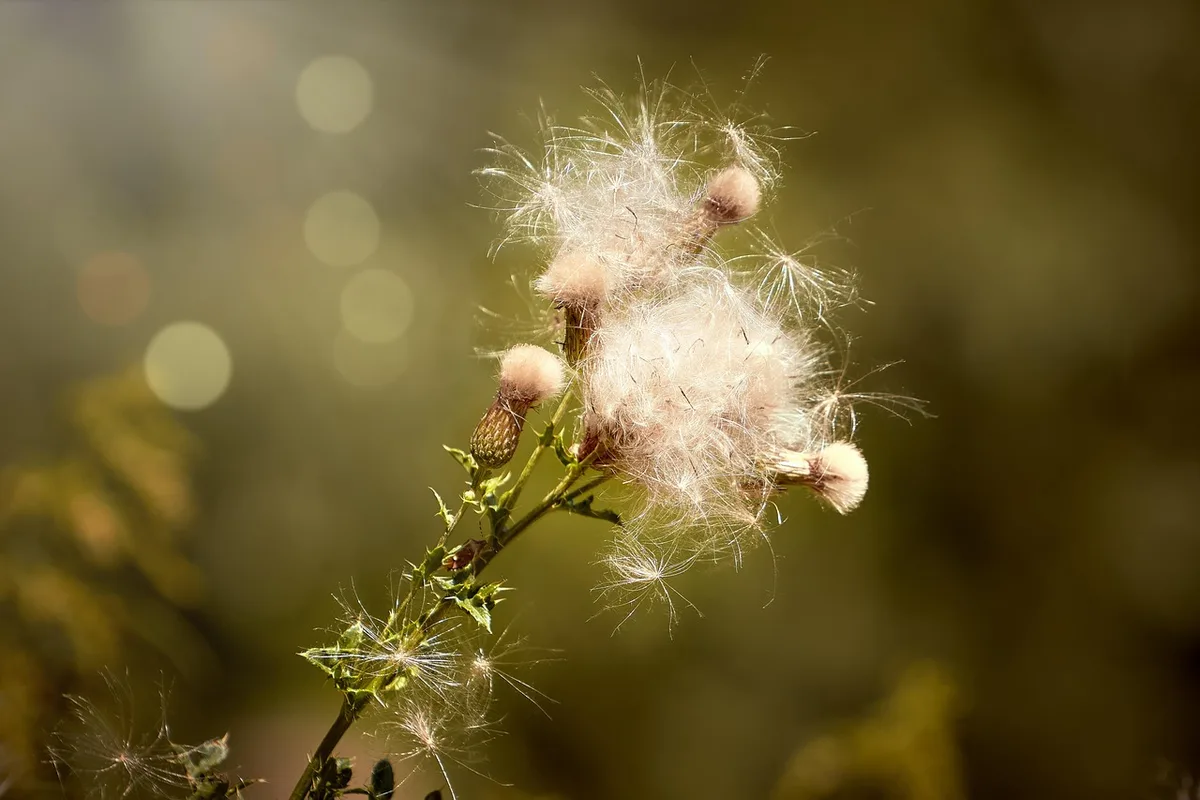
Image source: Pixabay / ThomasWolter (Pixabay Content License)
Dandelion (The Early-Stage Trickster)
Dandelion (Taraxacum officinale) rounds out the list. At the very early rosette stage, before the leaves fully develop their characteristic deep jagged edges, a dandelion can look surprisingly like a small cabbage. The leaves are green, radiate from a central point, and sit low to the ground.
The confusion clears up quickly as the leaves mature. Dandelion leaves develop their familiar deeply cut, tooth-edged shape. The thick taproot is another giveaway.
If you're unsure, wait a week. A dandelion will send up a hollow flower stalk soon enough, and then there's no question.
How to Tell Them Apart: A Visual Identification Checklist
When you're staring at a mystery rosette in your garden, here's what to check in order. This is the same process extension agents use when someone brings in a sample.
Leaf Shape and Margins
Start with the overall leaf outline. Cabbage leaves are broad, rounded, and smooth-edged with a waxy coating. Wild mustard leaves are similar but typically more deeply lobed.
Wild radish leaves are deeply cut almost to the midrib. Marestail leaves are narrow and toothed. Shepherd's purse leaves are thin and feathery.
Mullein leaves are broad but soft and fuzzy.
Surface Texture and Color
Run your hand over the leaf. Cabbage and wild mustard have smooth, waxy surfaces. Mullein feels like felt.
Shepherd's purse has a slightly gray-green tint. Marestail is darker green and leathery. Canada thistle is stiff and spiny.
Color and texture together eliminate half the possibilities immediately.
Root Structure
Gently dig around the base. A swollen, fleshy taproot means wild radish. A thin, branching root system points toward wild mustard or shepherd's purse.
Marestail has a shallow fibrous root. Mullein develops a deep, woody taproot. Canada thistle has creeping horizontal roots that make it particularly hard to eradicate.
Flowers and Seed Heads (The Tells That Don't Lie)
Flowers are the most reliable identifier. Once blooms appear, identification becomes straightforward.
- Wild mustard: bright yellow, four-petaled flowers
- Wild radish: pale yellow or white with purple veins
- Marestail: tiny white flower heads in dense clusters
- Shepherd's purse: small white flowers, heart-shaped seed pods
- Common mullein: tall spike with yellow flowers (second year)
- Canada thistle: purple flower heads on spiny stems
- Dandelion: single yellow flower head on a hollow stalk
Growth Habit Above the Rosette
Once the plant bolts, the growth habit tells the rest of the story. Marestail shoots up tall and slender. Mullein sends up a thick, fuzzy spike.
Wild mustard branches out with multiple flower stalks. Canada thistle develops spiny stems with purple blooms. If your "cabbage" is staying low and heading toward a central stalk, it's likely a biennial like mullein.
The Rosette Stage Is Where Everyone Gets Confused
Here's the core issue. Many of these weeds share a basal rosette growth pattern because it's an efficient way to capture sunlight close to the ground before bolting. Cabbage itself is grown for its dense rosette, which is essentially a giant terminal bud.
So when a weed forms a similar structure, your brain immediately flags it as "cabbage."
The rosette stage is also the hardest time to identify any plant. Flowers and mature leaves provide the most diagnostic features, and neither is present yet. This is why waiting even a week or two can make identification dramatically easier.
If you can afford to let the plant grow a bit before acting, you'll get a much clearer answer.
There's also a regional factor at play. Plant morphology shifts with soil type, moisture, altitude, and temperature. Wild mustard growing in arid conditions may have smaller, thicker leaves than the same species growing in a humid garden bed.
This variability is why a single photo in an identification guide doesn't always match what you're seeing in your yard.
Side-by-Side Comparison: Cabbage vs. Common Lookalike Weeds
This table breaks down the key visual differences so you can quickly narrow down what you're dealing with.
| Feature | Cabbage | Wild Mustard | Wild Radish | Marestail | Shepherd's Purse | Mullein | Canada Thistle |
|---|---|---|---|---|---|---|---|
| Leaf shape | Broad, rounded, smooth margins | Broad, wavy, lobed | Deeply lobed to midrib | Narrow, toothed | Thin, feathery, deeply cut | Broad, soft, felt-like | Wavy, spiny edges |
| Leaf texture | Waxy, smooth | Waxy, smooth | Waxy, smooth | Leathery, dark green | Thin, slightly hairy | Dense fuzzy hairs | Stiff, spiny |
| Leaf color | Blue-green to dark green | Blue-green | Blue-green | Dark green | Gray-green | Light green | Dark green |
| Rosette diameter | 12-24+ inches | 8-18 inches | 6-18 inches | 4-12 inches | 4-10 inches | Up to 24 inches | 6-18 inches |
| Root type | Fibrous, shallow | Thin taproot | Swollen fleshy taproot | Fibrous, shallow | Thin taproot | Deep woody taproot | Creeping horizontal |
| Flower color | Yellow (if bolted) | Bright yellow | Pale yellow/white with purple veins | White clusters | White, tiny | Yellow on tall spike | Purple |
| Flower shape | Four-petaled cross | Four-petaled cross | Four-petaled cross | Tiny daisy-like | Tiny, four-petaled | Five-petaled, tubular | Thistle-type pom-pom |
| Stem texture | Smooth, thick | Smooth, branching | Smooth, slender | Grooved, hairy | Smooth, slender | Thick, fuzzy | Spiny, winged |
| Plant family | Brassicaceae | Brassicaceae | Brassicaceae | Asteraceae | Brassicaceae | Scrophulariaceae | Asteraceae |
| Life cycle | Biennial (grown as annual) | Annual | Annual | Annual | Annual | Biennial | Perennial |
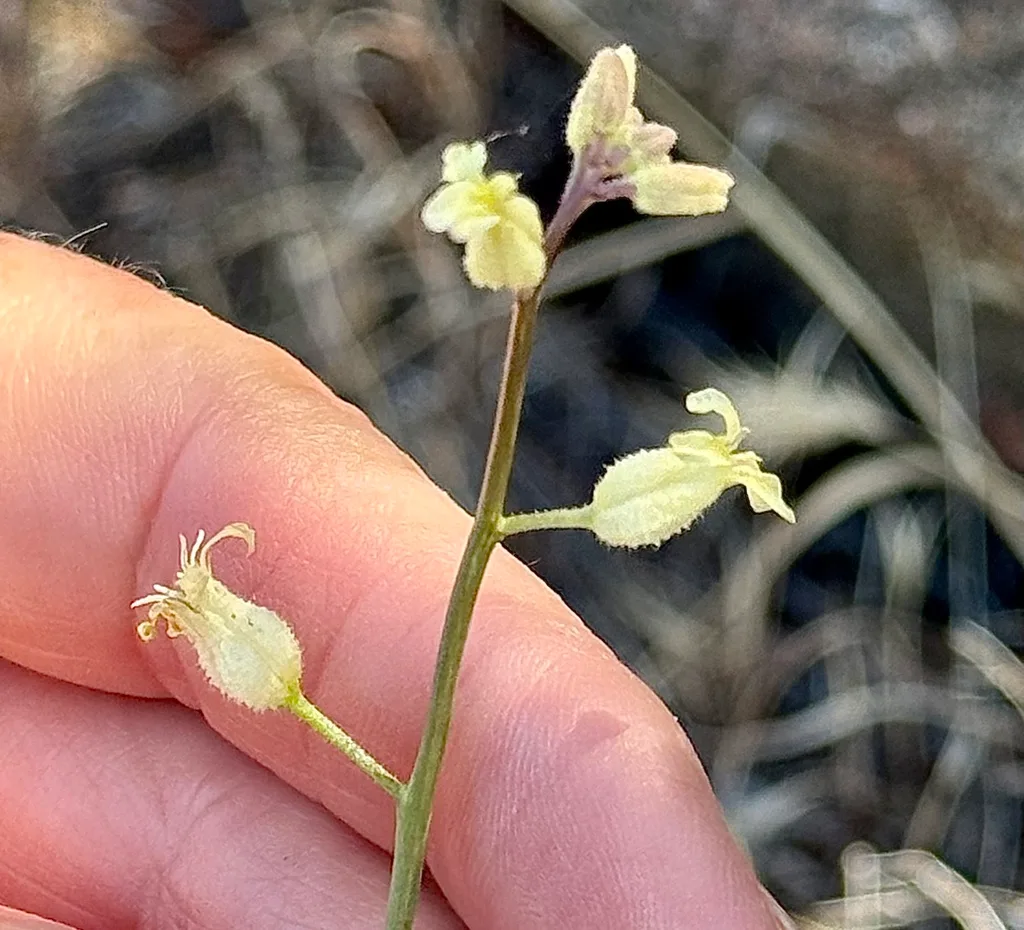
Image source: iNaturalist / Irene
What Matters When You're Deciding What to Do About It
Identifying the weed is step one. What you do next depends entirely on what you've got and where it's growing.
If it's wild mustard or wild radish in a garden bed, hand-pulling works fine before they set seed. Both are edible, so you can toss them in a salad instead of the compost if you're feeling adventurous. The leaves are nutritious and peppery.
If it's marestail, speed matters. This plant produces seeds prolifically and has developed herbicide resistance in many regions. Pulling before flowering is critical.
In lawn situations, a targeted broadleaf herbicide is often the more practical approach, especially for larger areas. For guidance on timing and product selection, best post emergent weed killer for Bermuda grass covers how to control broadleaf weeds without damaging your turf.
Canada thistle is the one that requires the most aggressive approach. Its creeping root system means incomplete pulling actually stimulates more growth. You need to exhaust the root system through repeated cutting or use a systemic herbicide that translocates down to the roots.
If it's in a noxious weed jurisdiction, you may be legally obligated to treat it.
Mullein and shepherd's purse are generally easy to manage. Hand-pull mullein before the second-year flower stalk develops. Shepherd's purse is small enough that it comes out easily, but it reproduces fast, so don't let it go to seed.
One more factor worth mentioning is timing relative to weather. Pulling weeds after a rain when the soil is moist gives you a much better chance of getting the full root system, especially for taprooted species like wild radish and mullein. Dry, compacted soil makes pulling harder and increases the chance of root breakage.
If you're dealing with Canada thistle in dry conditions, watering the area a day before you plan to treat it can improve herbicide uptake and make physical removal more effective.
When Identification Gets Serious
There are situations where misidentification carries real consequences. For livestock producers, wild mustard consumed in large quantities can cause photosensitization and gastrointestinal distress in cattle. If you're managing pasture or hay ground, correctly identifying brassica-family weeds isn't just a gardening question.
It's an animal health question.
Foragers need to be especially careful. Wild mustard, wild radish, and shepherd's purse are all edible and widely foraged. But confusing them with toxic lookalikes can be dangerous.
Never eat a wild plant based solely on a photo from the internet. Cross-reference with at least two reliable sources and, ideally, consult someone with local expertise.
Herbicide selection also depends on correct ID. A product that kills wild mustard won't necessarily control Canada thistle because they're in completely different plant families. Applying the wrong chemical wastes money and leaves the weed untouched.
Your local cooperative extension service can help confirm identification and recommend the right control strategy for your specific situation. Many offices will identify a weed from a photo emailed or brought in.
One more scenario worth noting is community gardens and shared growing spaces. If you can't confidently identify a plant, ask a fellow gardener or your local extension office before removing it. Sometimes the "weed" is actually another gardener's intentional planting.
Frequently Asked Questions
How do I know if it's a weed or a volunteer cabbage?
Check the growth pattern. Volunteer cabbage transplants usually appear in rows or clusters where you planted brassica crops the previous season. Weeds tend to appear singly or in scattered patterns.
Also, volunteer cabbage heads up tightly. Weeds bolt and flower without forming a dense head.
Can I just leave the weed if it looks like cabbage?
You can, but it depends on the species. Wild mustard and wild radish are annuals that will set seed and spread quickly. Marestail produces enormous numbers of seeds.
Canada thistle comes back from root fragments year after year. Mullein is biennial and less aggressive but still self-sows freely. Leaving any of these unchecked usually means more problems next season.
Do photo identification apps work for cabbage-like weeds?
Apps like iNaturalist and Seek can help, but they struggle with rosette-stage plants. The most diagnostic features aren't visible yet. Apps are more reliable once flowers or mature leaves are present.
For rosette-only photos, treat the app's suggestion as a starting point, not a final answer.
Is there a weed that looks like cabbage but comes back every year?
Yes. Canada thistle is a perennial that regrows from its root system each year. Common mullein is biennial, forming a rosette in year one and flowering in year two, but it self-sows prolifically so it seems to come back annually.
Wild mustard seeds persist in the soil for decades, creating the same recurring appearance.
What if I already pulled it and now I'm not sure what it was?
Don't panic. Most of these weeds are manageable even if you misidentified them once. The key lesson is to observe the next flush of growth in that spot.
The replacement plants will give you another chance to identify them, and they'll likely be at a more advanced growth stage that makes identification easier.
How do I know if it's a weed or a volunteer cabbage?
Check the growth pattern. Volunteer cabbage transplants usually appear in rows or clusters where you planted brassica crops the previous season. Weeds tend to appear singly or in scattered patterns.
Volunteer cabbage heads up tightly. Weeds bolt and flower without forming a dense head.
Can I just leave the weed if it looks like cabbage?
You can, but it depends on the species. Wild mustard and wild radish are annuals that will set seed and spread quickly. Marestail produces enormous numbers of seeds.
Canada thistle comes back from root fragments year after year. Mullein is biennial and less aggressive but still self-sows freely. Leaving any of these unchecked usually means more problems next season.