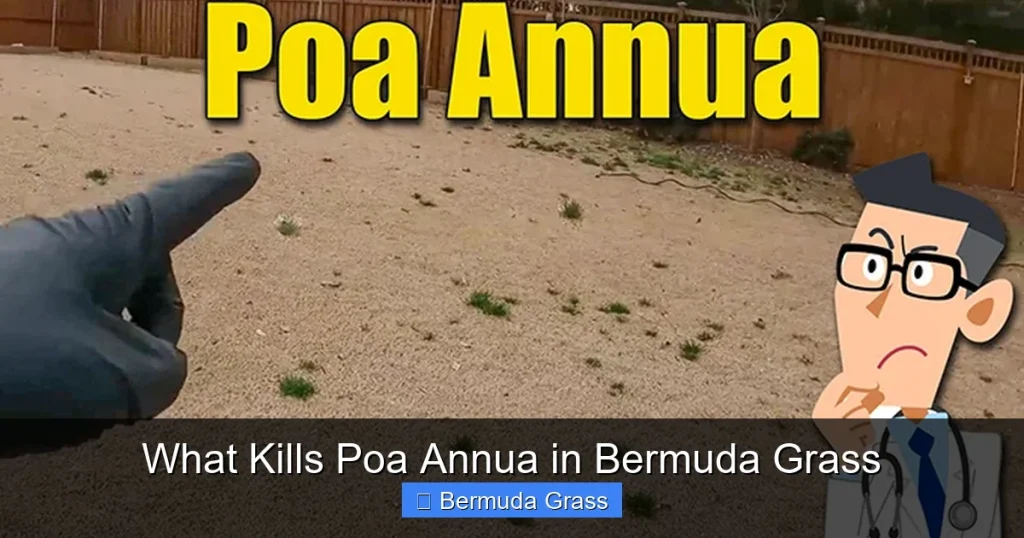
Eliminating Poa Annua from Bermuda grass requires a strategic, multi-faceted approach. Effective control involves precise timing of pre-emergent herbicides in fall and early spring, combined with selective post-emergent treatments for existing weeds. Implementing proper cultural practices, such as correct mowing, watering, and fertilization, is crucial to prevent re-infestation and ensure a healthy Bermuda lawn.
What Kills Poa Annua in Bermuda Grass
Do you dream of a lush, uniform Bermuda grass lawn, only to be frustrated by unsightly patches of bright green, clumpy grass appearing in the cooler months? Chances are, you’re battling Poa Annua, also known as Annual Bluegrass. This common grassy weed can be a real headache for Bermuda grass enthusiasts because it thrives when Bermuda is dormant or just waking up. But don’t worry! With the right knowledge and a strategic approach, you can learn what kills Poa Annua in Bermuda grass and reclaim your lawn.
This comprehensive guide will walk you through everything you need to know. We’ll cover how to identify Poa Annua, why it’s so tricky to control in Bermuda grass, and the best methods—from preventative measures to targeted treatments—to get rid of it. You’ll learn about crucial timing, effective products, and essential cultural practices that will help you achieve a healthier, weed-free Bermuda lawn.
Key Takeaways
- Timing is Crucial for Pre-Emergents: Apply pre-emergent herbicides in the fall (when soil temperatures consistently drop below 70°F) and late winter/early spring to prevent Poa Annua seeds from germinating.
- Use Selective Herbicides Wisely: When dealing with existing Poa Annua, choose post-emergent products specifically labeled for its control in Bermuda grass to avoid harming your desired turf. Always read the label!
- Cultural Practices are Key to Prevention: Maintain a healthy Bermuda lawn with proper mowing height, deep infrequent watering, and appropriate fertilization to naturally outcompete and suppress Poa Annua.
- Identify Correctly: Before applying any treatments, accurately identify Poa Annua. Misidentification can lead to ineffective weed control or accidental damage to your Bermuda grass.
- A Multi-Pronged Approach Works Best: Combining pre-emergent herbicides, selective post-emergent treatments (if necessary), and consistent cultural controls offers the most effective long-term solution.
- Patience and Persistence are Required: Eradicating Poa Annua isn’t an overnight process. Consistent effort over multiple seasons will yield the best and most sustainable results for a clean Bermuda lawn.
Understanding Poa Annua: The Unwanted Guest
Before we talk about how to kill Poa Annua in Bermuda grass, let’s understand your adversary. Poa Annua is a cool-season annual grassy weed. This means it germinates when soil temperatures drop in the fall, grows actively during the cool winter and early spring months, sets a ton of seeds, and then typically dies off as summer heat arrives.
You can spot Poa Annua by its distinct bright, almost apple-green color, often lighter than your Bermuda grass. It grows in clumps, has noticeable seed heads even when very short, and its leaf blades often have a characteristic “boat-shaped” tip. It loves moist, compacted soil and areas with poor drainage.
Why Killing Poa Annua in Bermuda Grass is a Challenge
Controlling Poa Annua in Bermuda grass presents unique challenges. Here’s why:
- Different Growing Cycles: Bermuda grass is a warm-season grass, meaning it’s dormant in winter. Poa Annua is a cool-season grass, actively growing when Bermuda is asleep. This makes finding a “one-size-fits-all” herbicide tricky. Many products that kill cool-season weeds might also harm dormant warm-season grasses.
- Seed Prolificacy: Poa Annua is an incredibly prolific seed producer. A single plant can produce hundreds, even thousands, of seeds in its short lifespan. These seeds can remain viable in the soil for years, waiting for the right conditions to germinate.
- Herbicide Selectivity: It’s hard to find herbicides that specifically target Poa Annua without damaging your Bermuda grass. Some herbicides might be safe for dormant Bermuda but not for actively growing Bermuda, or vice-versa.
Despite these challenges, controlling Poa Annua is entirely possible with a multi-pronged, consistent strategy.
The Arsenal Against Poa Annua: Methods of Control
When it comes to what kills Poa Annua in Bermuda grass, you’ll need to employ a combination of strategies. There are two main types of herbicide applications: pre-emergent and post-emergent, alongside crucial cultural practices.
Method 1: Pre-Emergent Herbicides – Stopping It Before It Starts
Pre-emergent herbicides are your first line of defense. They work by forming a chemical barrier in the soil that prevents seeds from germinating and growing. They do not kill existing weeds.
How Pre-Emergents Work
Once applied and watered in, pre-emergent herbicides create a protective zone in the top layer of the soil. As Poa Annua seeds attempt to germinate and push through this barrier, they absorb the chemical and die before they ever emerge from the soil as a visible plant.
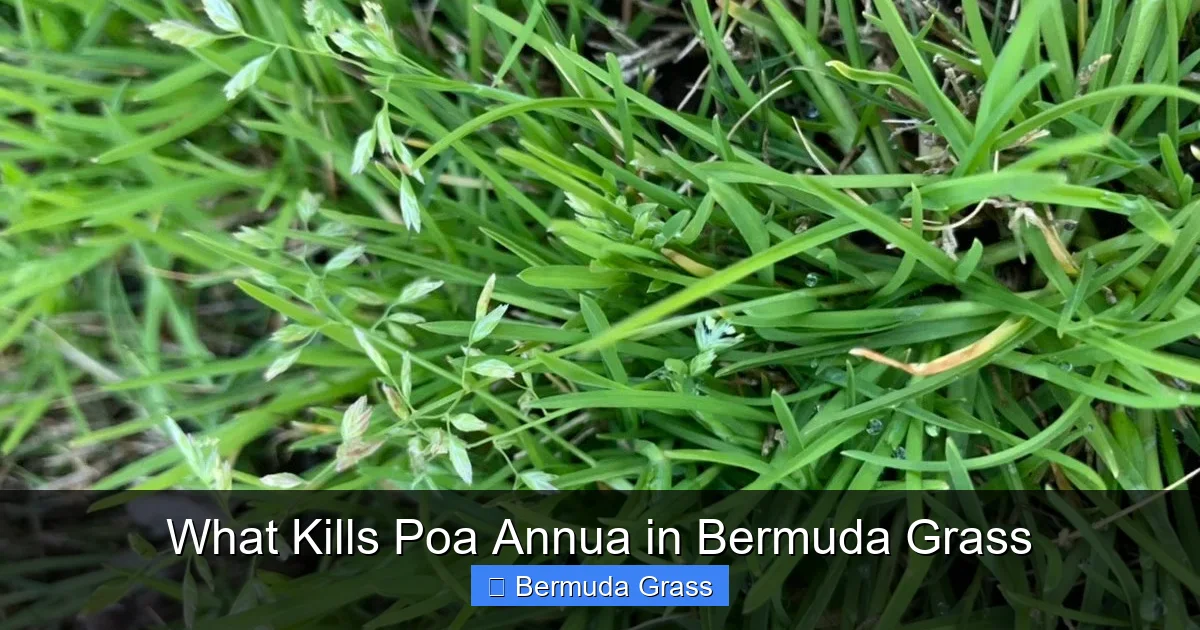
Visual guide about What Kills Poa Annua in Bermuda Grass
Image source: storables.com
Crucial Timing for Pre-Emergents
Timing is absolutely critical for pre-emergent success. You need to apply them before the Poa Annua seeds germinate. Since Poa Annua is a cool-season annual, it primarily germinates in the fall and sometimes in late winter/early spring.
- Fall Application: This is the most important application. Apply your pre-emergent when soil temperatures consistently drop below 70°F and are trending downwards, typically late August to early October, depending on your region. A soil thermometer is a great tool for this.
- Late Winter/Early Spring Application: A second application, often referred to as a “spring split,” can provide extended protection. Apply it when soil temperatures are consistently below 55°F but before they start to rise steadily. This targets any late-germinating seeds.
Remember, Bermuda grass is usually dormant during these application windows, making it safe for the turf.
Recommended Pre-Emergent Products
For home lawn use, active ingredients like Prodiamine (often found in products like Barricade) and Dithiopyr (found in Dimension) are excellent choices. They are generally safe for established Bermuda grass when applied according to label directions.
Application Tips for Pre-Emergents
- Read the Label: Always, always read the product label. It provides specific instructions for application rates, safety, and watering.
- Uniform Coverage: Use a spreader for granular products or a sprayer for liquid ones to ensure even coverage across your lawn. Overlapping slightly is better than missing spots.
- Water In: Most pre-emergents need to be watered into the soil shortly after application to activate them and create the barrier. Check the label for specific watering recommendations.
- No Seeding: Do not apply pre-emergents if you plan to overseed your Bermuda grass, as they will prevent desirable grass seeds from germinating too.
Pros and Cons of Pre-Emergents
- Pros: Highly effective at preventing new weeds, generally safe for dormant Bermuda, saves time compared to post-emergent treatments.
- Cons: Does not kill existing weeds, prevents all seed germination (so no overseeding), requires precise timing.
Method 2: Post-Emergent Herbicides – Battling Existing Weeds
If Poa Annua has already emerged and is actively growing, you’ll need a post-emergent herbicide. These products are designed to kill visible weeds.
How Post-Emergents Work
Post-emergent herbicides are absorbed through the leaves of the target weed. They then translocate within the plant, disrupting its growth processes and eventually leading to its demise. They typically need to be applied when the weed is actively growing for maximum effectiveness.
Crucial Timing for Post-Emergents
Apply post-emergent herbicides when Poa Annua is small and actively growing, typically in the late fall, winter, or early spring. Avoid applying when temperatures are too cold (below 40°F) or too hot (above 85°F), as this can reduce effectiveness and potentially harm your Bermuda grass.
Recommended Post-Emergent Products
Finding selective post-emergent options that kill Poa Annua without harming Bermuda can be challenging for homeowners. Here are some considerations:
- Atrazine/Simazine: Products containing Atrazine or Simazine are often used in Southern lawns. They can be effective against Poa Annua when Bermuda is dormant or just breaking dormancy. However, they are sensitive to temperature and can damage Bermuda if applied incorrectly or when temperatures are too high. Always read the label carefully for specific application instructions and temperature restrictions for Bermuda grass.
- Specialty Herbicides: For severe infestations, or if Atrazine/Simazine are not effective, professional-grade selective herbicides like Certainty (sulfosulfuron), Revolver (foramsulfuron), or Monument (trifloxysulfuron-sodium) can be highly effective. These are typically expensive, require precise application, and may only be available to licensed professionals. If your Poa Annua problem is extensive and stubborn, consulting a lawn care professional who has access to and expertise with these products is often the best course of action.
- Spot Treatment (Extreme Caution): For very small, isolated patches, a non-selective herbicide like glyphosate could be used as a spot treatment. However, this will kill any green plant it touches, including your Bermuda grass. Use with extreme caution, ideally with a foam marker or by carefully painting the leaves, to avoid collateral damage. This is generally not recommended for widespread infestations.
Application Tips for Post-Emergents
- Read the Label: This cannot be stressed enough. Labels contain vital information on application rates, safety gear, temperature ranges, and compatibility with Bermuda grass.
- Spray Actively Growing Weeds: Ensure the Poa Annua is actively growing and not stressed by drought or extreme temperatures.
- Avoid Rain: Most post-emergents need several hours to be absorbed before rain. Check the forecast.
- Don’t Mow Before/After: Wait a few days before and after application to mow, allowing the herbicide to be fully absorbed.
- Wear PPE: Always wear appropriate personal protective equipment (gloves, eye protection, long sleeves) when handling herbicides.
Pros and Cons of Post-Emergents
- Pros: Kills existing weeds you can see.
- Cons: Can be tricky to apply without damaging Bermuda, often more expensive, specific timing required, some products are for professional use only.
Method 3: Cultural Practices – The Foundation of Control
No matter what herbicides you use, strong cultural practices are essential for long-term control and to prevent Poa Annua from returning. A healthy Bermuda lawn is naturally more resistant to weeds.
Proper Mowing
Mow your Bermuda grass at its ideal height, which is typically low (0.5 to 2 inches) and frequently, during its active growing season. This helps Bermuda spread densely, shading out weed seeds. In the fall, when Poa Annua is germinating, avoid mowing too short as this can stress Bermuda and create open areas for weeds.
Strategic Watering
Water deeply and infrequently. This encourages Bermuda roots to grow deep, making it more drought-tolerant and competitive. Frequent, shallow watering keeps the topsoil consistently moist, which is exactly what Poa Annua seeds love for germination. Water early in the morning to allow the grass blades to dry, reducing fungal issues.
Intelligent Fertilization
Fertilize your Bermuda grass when it is actively growing (late spring through summer) with a balanced fertilizer. Avoid heavy nitrogen applications in the fall or winter. Fall nitrogen specifically stimulates cool-season weeds like Poa Annua. A soil test every few years can help you determine the exact nutrient needs of your lawn.
Aeration and Dethatching
Over time, soil can become compacted, hindering Bermuda root growth and creating conditions favorable for Poa Annua. Aerating (pulling small plugs of soil) can alleviate compaction. Dethatching removes excessive thatch. If you aerate, consider doing it just before your fall pre-emergent application, as aeration can bring dormant weed seeds to the surface.
Manual Removal
For small, isolated patches of Poa Annua, hand-pulling can be very effective, especially before the plants produce seeds. This is labor-intensive but chemical-free. Be sure to remove the entire plant, including the roots, to prevent regrowth.
Step-by-Step Guide: Your Action Plan to a Poa-Free Lawn
Here’s how to create a comprehensive strategy for what kills Poa Annua in Bermuda grass.
Step 1: Accurate Identification of Poa Annua
Before doing anything else, confirm that the weed you’re targeting is indeed Poa Annua. Look for its bright green color, clumpy growth, boat-shaped leaf tips, and early-forming seed heads. Misidentification can lead to ineffective treatments and wasted effort.
Step 2: Assess the Infestation Level
Determine how widespread the Poa Annua is. Is it just a few scattered clumps, or is it taking over large sections of your lawn? This will help you decide if hand-pulling, spot treatments, or a broadcast herbicide application is necessary.
Step 3: Develop Your Integrated Strategy
Based on your assessment, plan your approach. A multi-pronged strategy combining pre-emergents, post-emergents (if needed), and cultural practices is always best for long-term control.
Step 4: Implement Pre-Emergent Application (Fall & Spring)
This is your most important preventative step.
- Fall Application: Apply your chosen pre-emergent herbicide when soil temperatures consistently fall below 70°F (late summer/early fall).
- Spring Split Application: Apply a second round in late winter/early spring when soil temperatures are below 55°F to catch any later-germinating seeds.
Always follow the product label for application rates and watering instructions.
Step 5: Address Existing Weeds with Post-Emergents (If Necessary)
If you have existing Poa Annua that wasn’t prevented by pre-emergents:
- For small patches, consider careful hand-pulling or highly cautious spot treatment with a non-selective herbicide.
- For larger infestations, consider selective post-emergent herbicides like those containing Atrazine or Simazine. Strictly adhere to label instructions regarding temperature ranges and safety for Bermuda grass. For severe cases, consulting a professional for access to stronger, highly selective products is advisable.
Apply post-emergents when Poa Annua is actively growing and not stressed, and when Bermuda grass is not under stress.
Step 6: Master Cultural Practices for Long-Term Control
Continuously implement good lawn care practices:
- Mow your Bermuda grass at its optimal low height during its active growing season.
- Water deeply and infrequently to encourage strong roots and discourage surface germination of weed seeds.
- Fertilize Bermuda appropriately in its active growing season (spring/summer), avoiding heavy nitrogen in the fall.
- Consider aeration to reduce compaction.
Step 7: Monitor and Adjust Your Approach
Lawn care is an ongoing process. Regularly monitor your lawn for any new Poa Annua growth. If you see it returning, adjust your strategy for the next season. Perhaps you need to refine your pre-emergent timing or explore different product options.
Important Considerations & Expert Tips
Here are some additional tips to ensure your success when learning what kills Poa Annua in Bermuda grass:
Always Read the Label!
This cannot be stressed enough. Herbicide labels are legal documents containing vital information about application rates, safety precautions, environmental considerations, and what plants they are safe or unsafe for. Read it every time, even if you’ve used the product before.
Calibrate Your Sprayer
If you’re using liquid herbicides, properly calibrate your sprayer to ensure you’re applying the correct amount. Too little won’t be effective; too much can harm your Bermuda grass or the environment.
Protect Yourself
Wear appropriate personal protective equipment (PPE) when handling and applying any chemicals. This includes gloves, eye protection, long pants, and long sleeves.
Be Patient, Be Persistent
Getting rid of Poa Annua completely in Bermuda grass is not a quick fix. It often takes several seasons of consistent effort with pre-emergents, targeted post-emergents, and good cultural practices to significantly reduce and control its presence. Don’t get discouraged if you don’t see immediate, perfect results.
Consider Professional Help
If your Poa Annua infestation is severe, or if you’re uncomfortable using herbicides yourself, consider hiring a professional lawn care service. They have access to more powerful tools and chemicals and the expertise to apply them safely and effectively.
Troubleshooting Common Issues
Even with the best intentions, you might encounter some bumps in the road.
My Herbicides Aren’t Working!
- Wrong Product: Ensure you’re using the correct type of herbicide (pre-emergent for prevention, post-emergent for existing weeds) and that it’s labeled to kill Poa Annua.
- Bad Timing: This is the most common issue. Pre-emergents must be applied before germination. Post-emergents need to be applied when the weed is actively growing, within specific temperature ranges.
- Incorrect Application: Did you apply the correct rate? Was coverage even? Did you water in your pre-emergent as instructed?
- Environmental Stress: If the Poa Annua is stressed by drought or extreme temperatures, it may not effectively absorb post-emergent herbicides.
- Resistance: In some rare cases, Poa Annua can develop resistance to certain herbicides over time.
My Bermuda Grass is Getting Damaged!
- Misidentification: Did you confirm it was Poa Annua and not another grass type?
- Wrong Product: You might have used a non-selective herbicide or one not safe for Bermuda grass.
- Incorrect Application: Too high of a concentration or application during extreme heat can cause damage.
- Stress: Applying herbicides to stressed Bermuda grass (e.g., during drought, heat wave, or recent scalping) can increase susceptibility to damage.
Poa Annua Keeps Coming Back!
- Seed Bank: Poa Annua produces a massive amount of seeds that can lay dormant in the soil for years. Even if you kill current plants, new seeds will germinate. This is why consistent, annual pre-emergent application is vital.
- Missed Application Windows: Did you apply pre-emergents at the right time in both fall and spring?
- Cultural Practices: Are your mowing, watering, and fertilization habits creating an environment where Poa Annua can thrive? Review these practices.
- External Sources: Seeds can be brought in by wind, birds, animals, or even on your shoes or mowing equipment from neighboring infested areas.
Conclusion
Achieving a Poa Annua-free Bermuda grass lawn is an achievable goal, but it demands a strategic, patient, and consistent approach. Understanding “what kills Poa Annua in Bermuda grass” involves much more than just spraying a chemical. It requires smart timing with pre-emergent herbicides, careful application of post-emergents when needed, and a strong commitment to cultural practices that promote a healthy, resilient Bermuda lawn.
By following this guide, you’ll be well-equipped to tackle Poa Annua effectively. Remember, consistency over seasons will yield the best results, transforming your lawn into the vibrant, uniform Bermuda carpet you desire. Your patience and persistence will be rewarded with a beautiful, weed-free outdoor space.