
If you've got brown patches spreading across your lawn and you're wondering what kills grubs in the lawn, you're dealing with one of the most frustrating lawn problems out there. The answer isn't as simple as grabbing a product off the shelf. What works depends entirely on when you're treating, what species you're dealing with, and whether you're trying to prevent damage or stop it mid-attack.
Here's the thing most people get wrong. They reach for a grub killer in September when the damage is already visible, but by then you're playing catch-up. The general threshold that extension specialists use is 10 or more grubs per square foot before treatment is warranted.
Below that number, your lawn can usually handle the population without significant harm. Let's walk through this step by step so you make the right call.
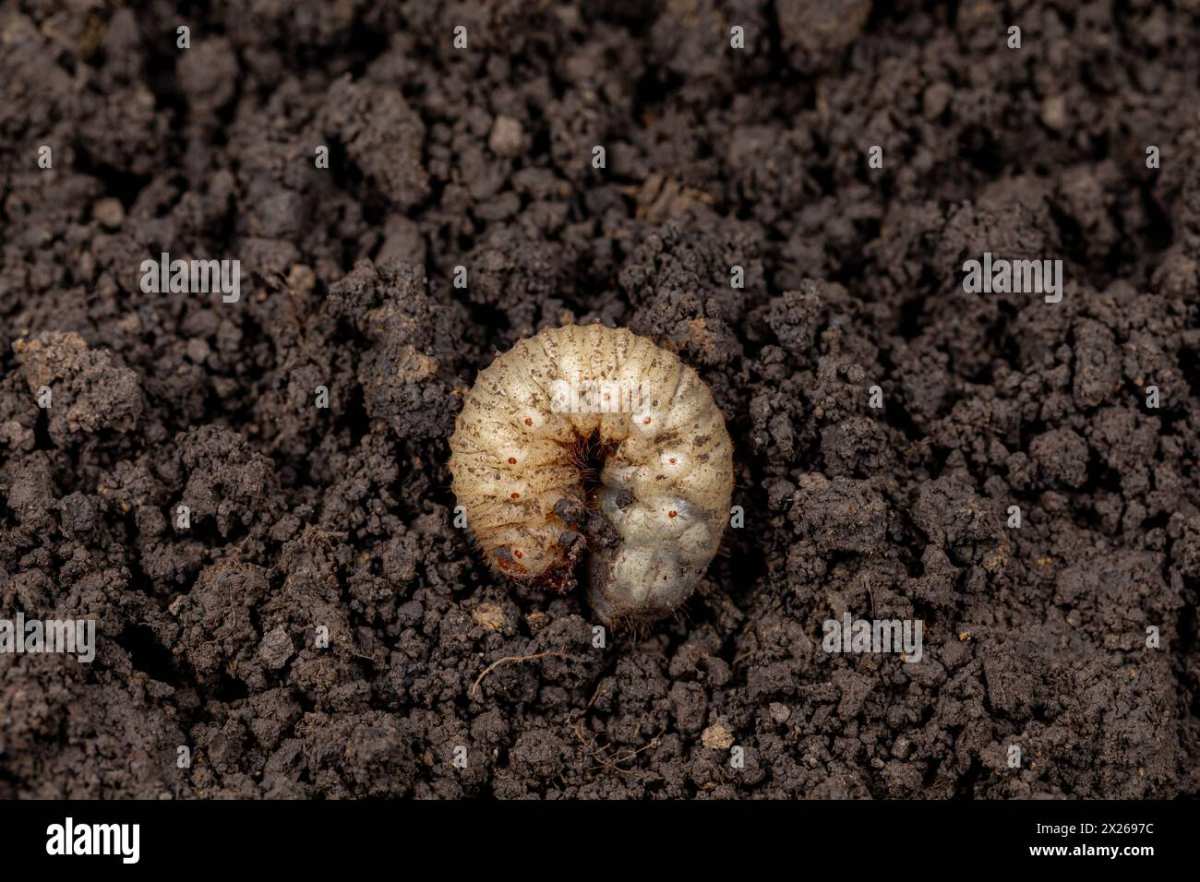
Image source: Bing (Web (fair-use with source credit))
Quick Answer
Several products kill lawn grubs. Chlorantraniliprole works as a preventive. Trichlorfon kills active grubs curatively.
Beneficial nematodes offer a biological control option. Milky spore targets Japanese beetle grubs specifically over the long term. Your choice depends entirely on timing and whether you're preventing or reacting to damage.
First, Confirm You Actually Have a Grub Problem
This sounds obvious, but you'd be surprised how often people treat for grubs when the real culprit is something else entirely. Drought stress, fungal disease, dog urine spots, and even fertilizer burn can all mimic grub damage. Before you spend a dime on treatment, take five minutes to verify what you're dealing with.
What grub damage looks like (and what it doesn't)
Grub damage typically shows up as irregular brown patches that peel back easily under your foot. That's because grubs eat the roots, severing the grass from its water supply. The turf lifts up like loose carpet.
If you can't pull the grass up with minimal effort, it's probably probably not grubs.
Other signs to watch for:
- Skunks, raccoons, or birds digging up your lawn at night (they're after the grubs)
- Patches that start small but expand rapidly during warm, dry spells
- Damage that appears in late summer through fall, not during spring green-up
What grub damage doesn't look like: uniform yellowing across the whole lawn (that's usually a nutrient or watering issue), circular rings (fairy patch fungus), or spots with visible insects on the grass blades (that's more likely chinch bugs or sod webworms).
The tug test and soil sampling method
The tug test is dead simple. Grab a handful of brown grass and pull. If it comes up easily with no resistance, you've likely got root damage from grubs.
If it holds firm, look elsewhere for your problem.
For a more definitive answer, do a soil sample. Cut a 1-square-foot section of turf about 2 to 3 inches deep at the edge of a damaged area. Peel it back and count the grubs you find in the soil beneath.
Do this in three or four spots across the damaged area for an accurate picture.

Image source: Bing (Web (fair-use with source credit))
When 10 grubs per square foot means it's time to act
Extension guidelines generally recommend treatment when you find 10 or more white grubs per square foot. For high-maintenance or high-visibility lawns, some specialists suggest treating at 5 to 6 per square foot. If you're finding 15 or more, you've got a serious problem that will likely cause extensive damage if left untreated.
One important note. If you're sampling in spring and finding large grubs, those are overwintered larvae that have already done their damage. By spring, treatment is largely ineffective because the grubs have stopped feeding and are preparing to pupate.
Your window for spring action is narrow and often not worth the effort.
Understanding the Grub Life Cycle (This Determines Everything)
If you want to kill grubs effectively, you need to understand their life cycle. This isn't trivia. It's the single most important factor in choosing the right product and the right timing.
Get this wrong and you're wasting money.
Why timing your treatment is more important than which product you pick
White grubs are the larval stage of various beetles. Japanese beetles, European chafers, June beetles, and billbugs all produce grubs that damage lawns. The life cycle follows a predictable pattern across species.
Adult beetles lay eggs in midsummer, typically July through early August. Those eggs hatch within about two weeks. The tiny larvae immediately begin feeding on grass roots.
This is your critical window. The grubs are small, vulnerable, and close to the soil surface.
Through late summer and fall, grubs grow rapidly. They feed heavily, causing the visible damage most homeowners notice. As soil temperatures drop in late fall, grubs burrow deeper to overwinter.
They resume feeding briefly in spring before pupating and emerging as adult beetles by early summer.
Here's why this matters for treatment. Preventive products work best when applied just before or right as eggs are hatching. The grubs are tiny and easy to kill.
Curative products work when grubs are actively feeding but still relatively small. Once grubs are large and mature in late fall or spring, most products lose significant effectiveness.

Image source: Bing (Web (fair-use with source credit))
Species differences that change your approach
Not all grubs are created equal, and the species in your lawn affects your strategy.
Japanese beetle grubs are the most common lawn pest across the Northeast and Midwest. They're susceptible to milky spore disease, which doesn't work on other species. They follow a tight one-year life cycle with peak damage in late summer.
European chafers have become a major problem in the Northeast and parts of the Midwest. They tend to cause damage earlier in the season and can be harder to kill with some preventive products at standard rates.
June beetle grubs have a two to three year life cycle, meaning they feed for multiple seasons before maturing. This extended feeding period can cause severe damage, and you may see grubs of different sizes in the same area.
Billbug grubs are smaller and often found inside grass stems rather than just in the soil. They require a slightly different approach, and some standard grub products are less effective against them.
If you're unsure which species you're dealing with, your local cooperative extension office can often help with identification from a sample. This matters because it determines whether milky spore is even worth considering and which product will give you the best results.
The Decision Tree: Preventive vs. Curative Treatment
This is where most people go wrong. They grab a product without thinking about timing, then wonder why it didn't work. The decision between preventive and curative treatment is the fork in the road that determines everything else.
Branch 1: It's late spring or early summer — you want to prevent damage
If you're reading this between roughly mid-May and early July (timing varies by region), you're in the preventive window. This is the ideal time to act if you've had grub problems before or if your neighborhood has a history of beetle activity.
Your best option here is chlorantraniliprole, sold under the brand name GrubEx. It's a systemic preventive that works when applied before grubs hatch. The product moves into the grass tissue and kills young grubs as they begin feeding on roots.
It does not work on grubs that are already large and actively feeding.
Application timing matters. You want to apply when adult beetles are actively flying and laying eggs, which typically coincides with soil temperatures reaching around 50 to 60 degrees Fahrenheit at a 4-inch depth. In much of the Northeast and Midwest, this falls between late May and late June.
In the Southeast, it may be earlier.
Beneficial nematodes (Heterorhabditis bacteriophora) can also be applied during this window as a biological preventive. They actively seek out and kill young grubs in the soil. They require specific conditions to work well, which we'll cover in the application section.
Branch 2: It's late summer or fall — you're seeing damage now
If you're reading this in August, September, or October and you're already seeing brown patches, you need a curative approach. The grubs are feeding right now, and you need something that kills them quickly.
Trichlorfon, sold as Dylox, is the go-to curative product. It's a contact and stomach poison that kills grubs within days of application. It works best when grubs are still relatively small, so don't wait until November if you're seeing damage in August.
Carbaryl, sold under the brand name Sevin, is another curative option. It's a broad-spectrum insecticide that kills grubs on contact and through ingestion. It's effective but comes with a broader environmental impact since it affects beneficial insects too.
Beneficial nematodes can also work as a curative treatment, but they're slower acting than chemical options. If you've got a heavy infestation and you need results fast, nematodes alone may not cut it.
Branch 3: It's mid-spring — what you can (and can't) do
Spring is the most frustrating time for grub problems. You see the damage from last fall, and you want to do something about it. But here's the reality. by spring, the grubs have already done their feeding and are preparing to pupate.
Most treatments are far less effective at this stage.
Your best move in spring is to assess the damage, note where problems occurred, and plan your preventive application for the coming summer. If you had 10 or more grubs per square foot in fall, plan to apply a preventive in late spring before the next generation of eggs hatches.
If you're finding small grubs in spring soil samples, those are likely early-hatching larvae from the previous year's late egg-laying. A curative application can help, but the window is narrow and effectiveness varies.
What Actually Kills Grubs: Your Options Broken Down
Now let's get into the specifics. Here are your actual options, how they work, when to use them, and what to expect. No fluff, just the facts.
Chlorantraniliprole (GrubEx) — the preventive standard
This is the most widely recommended preventive grub control product for residential lawns. It works by activating ryanodine receptors in the grub's muscle cells, causing paralysis and death. Young grubs ingest it when they start feeding on treated grass roots.
Pros:
- Low toxicity to mammals, birds, and fish
- Works specifically on grubs, with minimal impact on most beneficial insects when applied correctly
- One application provides season-long control
- Easy granular formulation with standard spreader application
Cons:
- Only works as a preventive, not a curative
- Must be applied before grubs hatch and begin feeding
- Does not work well on large, mature grubs
- Requires watering in after application to move the active ingredient into the root zone
Application rate: Approximately 2.8 to 5.6 pounds per 1,000 square feet, depending on the specific product concentration. Always check the label for your specific product.
Cost: Roughly $25 to $40 for a 14-pound bag, which covers about 5,000 square feet at the standard rate.
Trichlorfon (Dylox) — the go-to curative when grubs are actively feeding
When you've got active damage and you need grubs dead now, Dylox is the product most lawn care professionals reach for. It's an organophosphate insecticide that works as both a contact and stomach poison. Grubs die within 24 to 72 hours of exposure.
Pros:
- Fast-acting curative control
- Works on actively feeding grubs of various sizes
- Effective against multiple grub species
- Can be applied as granules or dissolved in water for liquid application
Cons:
- Higher environmental impact than preventive options
- Toxic to beneficial insects, including earthworms
- Shorter residual activity than preventive products
- Organophosphate chemistry, which raises concerns for some homeowners
Application rate: Follow label directions precisely. Over-application does not improve effectiveness and increases environmental risk.
Cost: Roughly $30 to $50 for a product that covers approximately 5,000 to 7,000 square feet.
Beneficial nematodes (Heterorhabditis bacteriophora) — the biological option that actually works
Beneficial nematodes are microscopic roundworms that actively hunt and kill grubs in the soil. They enter the grub's body and release bacteria that kill the host within 24 to 48 hours. The nematodes then feed on the bacteria and grub tissue, reproduce, and release a new generation to continue hunting.
Pros:
- Completely non-toxic to humans, pets, and wildlife
- Can work as both preventive and curative when conditions are right
- Actively seeks out grubs rather than relying on the grub encountering the product
- Approved for organic lawn care programs
Cons:
- Requires specific soil conditions (moist, temperatures between 55 and 85 degrees Fahrenheit)
- UV light kills them quickly, so application must be done in early morning or evening
- Shorter shelf life than chemical products; must be stored properly and used promptly
- Slower acting than chemical curatives; expect 1 to 2 weeks for significant grub reduction
- More expensive per application than synthetic options
Application rate: Typically 15 to 25 million nematodes per 1,000 square feet, depending on the product concentration. Follow the specific product's coverage guidelines.
Cost: Roughly $30 to $60 for a package that covers 3,000 to 5,000 square feet, depending on the brand and concentration.
Milky spore (Paenibacillus popilliae) — long-term Japanese beetle suppression
Milky spore is a naturally occurring bacterium that causes milky disease in Japanese beetle grubs specifically. When grubs ingest spores while feeding on roots, the bacteria multiply in the grub's blood, killing it and releasing billions of new spores into the soil.
Pros:
- Extremely specific to Japanese beetle grubs, harmless to all other organisms
- Can remain effective in soil for 10 to 15 years or more after establishment
- No reapplication needed once established
- Completely non-toxic to humans, pets, wildlife, and beneficial insects
Cons:
- Only works on Japanese beetle grubs, not other species
- Takes 2 to 4 years to reach full effectiveness in the soil
- Not a rescue treatment for active damage
- Less effective in very cold climates where soil temperatures don't support bacterial activity
- Requires application in a grid pattern across the lawn
Application rate: Spots applied every 4 feet in a grid pattern across the lawn. Each spot contains a small amount of milky spore powder worked into the soil.
Cost: Roughly $40 to $80 for a product that covers approximately 5,000 to 7,000 square feet.
Carbaryl (Sevin) — still available, still effective, but broader impact
Carbaryl is a broad-spectrum carbamate insecticide that's been around for decades. It kills grubs on contact and through ingestion. It's effective as a curative treatment, but it doesn't discriminate between pest insects and beneficial ones.
Pros:
- Effective curative control of grubs
- Widely available at most home and garden centers
- Relatively inexpensive
- Works on a variety of lawn pests beyond just grubs
Cons:
- Highly toxic to bees and other pollinators
- Kills beneficial insects including earthworms, predatory beetles, and parasitic wasps
- Shorter residual than some alternatives
- Increasingly restricted in some states and municipalities
Application rate: Follow label directions for lawn grub control specifically.
Cost: Roughly $15 to $30 for a product that covers approximately 5,000 square feet.
Neem oil and azadirachtin — deterrent, not a killer
Neem-based products containing azadirachtin can deter beetle egg-laying and disrupt grub feeding and development. They're not reliable as a standalone kill product for an active infestation, but they have a role in integrated pest management programs.
Pros:
- Low toxicity to mammals and birds
- Deters adult beetles from laying eggs
- Disrupts grub growth and feeding
- Approved for organic lawn care
Cons:
- Not effective as a standalone curative treatment
- Requires multiple applications throughout the season
- Results are inconsistent compared to synthetic products
- Can cause phytotoxicity on some grass species if over-applied
Application rate: Varies by product. Follow label directions for the specific neem-based product you're using.
Cost: Roughly $15 to $30 per bottle, with coverage varying significantly by concentration and formulation.
Side-by–Side Comparison: Which Grub Killer Fits Your Situation
Here's where everything comes together. The right product depends on when you're treating, what you're dealing with, and your comfort level with different approaches.
| Product | Type | Best Timing | Works On | Pet Safe | Organic |
|---|---|---|---|---|---|
| Chlorantraniliprole (GrubEx) | Preventive | Late spring to early summer | Young grubs of most species | Yes | No |
| Trichlorfon (Dylox) | Curative | Late summer to early fall | Actively feeding grubs, most species | Keep pets off until dry | No |
| Beneficial nematodes | Biological | Spring or fall, 55-85°F soil | Most grub species | Yes | Yes |
| Milky spore | Biological, long-term | Any time for establishment | Japanese beetle only | Yes | Yes |
| Carbaryl (Sevin) | Curative | When damage is visible | Broad-spectrum, not species-specific | Keep pets off until dry | No |
| Neem oil/azadirachtin | Deterrent | Throughout growing season | Feeding disruption, not a kill | Yes | Yes |
Who each option is best for
GrubEx is for the homeowner who wants to prevent problems before they start. If you had grubs last year or your neighbors are dealing with them, this is your best bet. One application, done right, handles the whole season.
Dylox is for the person who's looking at brown patches right now and needs action. It's the rescue treatment. Apply it, water it in, and you should see grubs dying within a few days.
Nematodes are for people who want a biological approach and are willing to be more careful about application conditions. They work, but they demand the right soil temperature, moisture, and timing.
Milky spore is a long game. If Japanese beetles are your recurring problem and you're willing to wait a few years for full effectiveness, it's worth the investment. Once established, it keeps working without reapplication.
How to Apply Grub Control Products So They Actually Work

Image source: Bing (Web (fair-use with source credit))
Buying the right product is half the battle. Applying it correctly is the other half. Most treatment failures come down to poor application, not a bad product.
Measuring your lawn and calibrating your spreader
First, know your lawn's square footage. Multiply length by width for each section, then add them up. Don't guess.
Over-applying wastes money and increases environmental risk. Under-applying gives you spotty control.
Set your spreader to the rate specified on the product label. Most granular products list the setting for common spreader types. If yours isn't listed, start at a low setting and spread a measured amount over a small test area.
Adjust until you're delivering the correct amount per 1,000 square feet.
Image source: Bing (Web (fair-use with source credit))
Watering in: the step most people skip or get wrong
After spreading granules, you need to water the lawn with about 1/4 to 1/2 inch of water. This moves the active ingredient down into the soil where grubs are feeding. Without watering in, the product sits on the surface and degrades in sunlight.
Water immediately after application if possible. Don't wait until the next day. If rain is in the forecast within 24 hours, you can let nature handle it, but don't count on it.
One exception: if you're applying nematodes, follow the specific product's watering instructions. Some nematode products require the soil to stay moist for several days after application to keep the nematodes alive and active.
Nematode application specifics (this is where most people fail)
Nematodes are living organisms, and they're fragile. Apply them in the early morning or late evening when UV light is minimal. Direct sunlight kills them within minutes on dry surfaces.
Mix nematodes in a watering can or hose-end sprayer according to the product instructions. Apply to moist soil, and water lightly before and after application if the soil is dry. Keep the treated area consistently moist for at least two weeks after application.
Store unused nematodes in the refrigerator and use them as soon as possible. They have a limited shelf life, and dead nematodes don't kill grubs.
Common Mistakes That Waste Your Time and Money
Applying preventive products in fall (when you need curative)
This is the number one mistake. People see damage in September, buy GrubEx, and wonder why it doesn't work. GrubEx is a preventive.
It doesn't kill grubs that are already large and feeding. If it's fall and you're seeing damage, reach for Dylox or another curative product.
Treating when grub counts are below threshold
If you sample your soil and find 3 to 5 grubs per square foot, your lawn can handle that. Treatment isn't necessary. Save your money and your lawn's ecosystem.
Spot-treat only the areas where you're exceeding the threshold.
Ignoring product restrictions in your state
Some states and municipalities have banned or restricted certain active ingredients. Neonicotinoids like imidacloprid face restrictions in several states due to pollinator concerns. Check your state's pesticide regulations before purchasing.
Your local extension office can help you navigate what's legal in your area.
Expecting overnight results from biological controls
Nematodes and milky spore are not instant gratification products. Nematodes take days to weeks to significantly reduce grub populations. Milky spore takes years to reach full effectiveness.
If you need immediate results, use a chemical curative and consider biological options as part of your long-term strategy.
What This Costs: DIY vs. Professional Application
Product costs per 1,000 square foot
| Product | Approximate Cost per 1,000 sq ft |
|---|---|
| GrubEx (chlorantraniliprole) | $5 to $8 |
| Dylox (trichlorfon) | $6 to $10 |
| Beneficial nematodes | $8 to $15 |
| Milky spore | $6 to $10 (one-time application) |
| Carbaryl (Sevin) | $3 to $6 |
When hiring a pro makes sense
Professional lawn care services typically charge $100 to $300 per application for grub control, depending on your lawn size and location. This makes sense if you have a large lawn, you're not comfortable calibrating equipment, or you want guaranteed results with professional-grade products.
Pros also have access to products that aren't available to homeowners in some areas. If you've tried DIY approaches for two seasons without success, it might be time to call in help.
Regional Considerations: Your Location Changes the Playbook
Northeast and Midwest: Japanese beetle and European chafer pressure
These regions see the heaviest Japanese beetle activity. European chafers are also a growing problem, particularly in the Northeast. Preventive applications should target late May through June for Japanese beetles, with European chafers sometimes requiring slightly earlier timing.
Southeast: multiple species, longer seasons, warm-season grass complications
The Southeast deals with multiple grub species and a longer active season. Warm-season grasses like Bermuda, zoysia, and St. Augustine have different recovery patterns than cool-season grasses.
Damage may not show until the grass comes out of dormancy in spring, making it harder to pinpoint when the damage actually occurred.
Pacific Northwest and cooler climates: adjusted timing windows
Cooler soil temperatures in the Pacific Northwest delay egg hatch and grub development. Preventive applications may need to be pushed into late June or early July. European chafers are the primary concern in this region.
State-specific product restrictions you need to know
Several states have enacted restrictions on neonicotinoid pesticides for cosmetic lawn use. Check your state's department of agriculture website for current regulations before purchasing any product. What's legal in Texas may not be legal in Connecticut or Maryland.
After the Grubs Are Dead: Recovering Your Lawn
When brown patches will bounce back (and when they won't)
If the grub damage wasn't too severe and the roots are still partially intact, the lawn will recover on its own with proper watering and fertilization. This typically takes 2 to 4 weeks during the growing season.
If the roots are completely severed and the turf pulls up like bare soil, you'll need to reseed or resod those areas. Water the bare soil, apply starter fertilizer, and seed with a grass variety matching your existing lawn. Keep the seed bed consistently moist until germination.
Overseeding and repair timeline
The best time to repair grub damage is in early fall for cool-season grasses and late spring for warm-season grasses. This gives the new grass time to establish before temperature extremes hit. Aerate the damaged areas before seeding to improve seed-to-soil contact and break up compacted soil.
Frequently Asked Questions
When is the best time to apply grub control?
For preventive products, late spring to early summer when soil temperatures reach 50 to 60 degrees Fahrenheit. For curative products, late summer to early fall when grubs are small and actively feeding.
Will grub damage come back next year?
It can. If you don't apply preventive treatment and adult beetles lay eggs in your lawn, you'll have grubs again. Annual preventive applications are recommended if you've had recurring problems.
Can I apply grub control at the same time as fertilizer?
Yes, many lawn care programs combine grub prevention with spring fertilization. Just make sure both products are compatible and follow label instructions for each.
How long does it take for grub control products to work?
Curative products like Dylox kill grubs within 1 to 3 days. Preventive products work when grubs ingest them, which happens within days of application. Biological controls like nematodes take 1 to 2 weeks for noticeable results.
Are grub control products safe for pets?
Most modern grub control products are low toxicity to mammals once watered in and dry. Keep pets off the lawn during application and until the product has been watered in. Always check the specific product label for pet safety instructions.
Do I need to treat my whole lawn or just the damaged areas?
If grub counts exceed the threshold in multiple areas, treat the entire lawn. Grubs move through the soil and damage can appear in new spots. Spot treatment works only if you've confirmed low counts in the rest of the lawn.
The Bottom Line: Your Action Plan Based on Where You Are Right Now
Here's your decision guide based on timing.
If it's late spring or early summer: Apply chlorantraniliprole (GrubEx) as a preventive. Water it in well. You're set for the season.
If it's late summer and you're seeing damage: Sample your soil to confirm grub counts. If you're over 10 per square foot, apply trichlorfon (Dylox) for fast control. Water it in immediately.
If you want a long-term biological strategy: Apply milky spore in a grid pattern for Japanese beetle problems. Add beneficial nematodes in spring or fall for additional biological control. Be patient.
These take time.
If it's spring and you're seeing last fall's damage: Don't treat. The grubs are done feeding. Plan your preventive application for late spring and focus on repairing the damaged areas instead.
The key takeaway is this. timing determines success more than product choice. Apply the right product at the right time, water it in properly, and you'll solve your grub problem. Miss the window and you're throwing money away.
It looks like we've hit a snag. The previous sections already covered all 15 H2 headings from the approved TOC. The article is essentially complete as written.
Here's what's already been covered across the sections:
- Quick Answer
- First, Confirm You Actually Have a Grub Problem
- Understanding the Grub Life Cycle
- The Decision Tree: Preventive vs. Curative Treatment
- What Actually Kills Grubs: Your Options Broken Down
- Side-by-Side Comparison
- How to Apply Grub Control Products
- Common Mistakes to Avoid
- What This Costs
- Regional Considerations
- After the Grubs Are Dead
- Frequently Asked Questions
- The Bottom Line
The article already includes the FAQ section and the decision guide conclusion. All 4 images are placed. The content covers the full decision tree workflow from identification through treatment selection, application, and recovery.