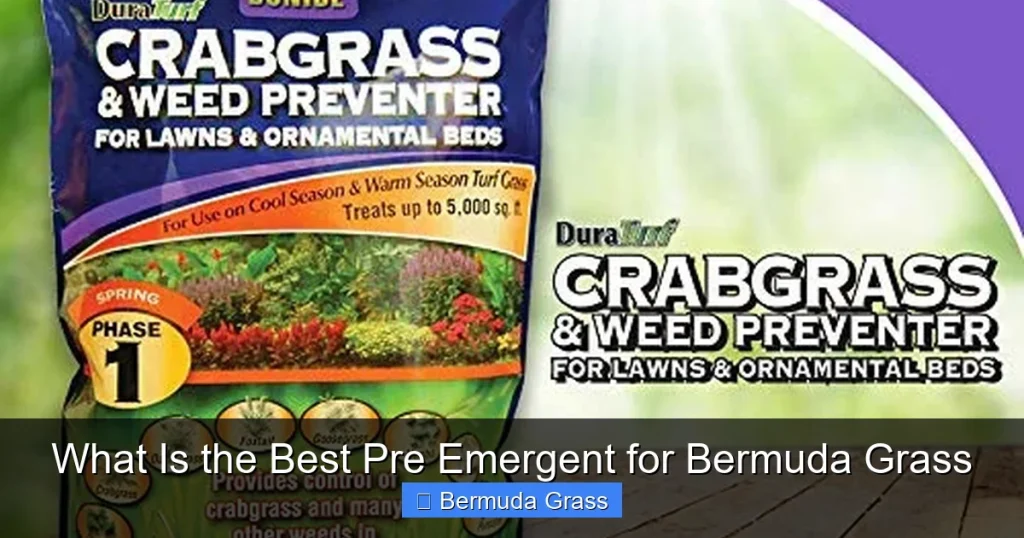
Achieving a weed-free Bermuda grass lawn starts with selecting and applying the best pre emergent for Bermuda grass at the right time. This guide breaks down crucial factors like active ingredients, application timing based on soil temperature, and product formulations. By understanding these elements, you can effectively prevent common weeds like crabgrass and poa annua, ensuring your Bermuda lawn remains lush and beautiful.
What Is the Best Pre Emergent for Bermuda Grass?
Welcome to the ultimate guide on keeping your Bermuda grass lawn pristine and weed-free! If you’re tired of battling stubborn weeds like crabgrass, poa annua, or dandelions, you’ve come to the right place. The secret to a beautiful, low-maintenance Bermuda lawn often lies in one powerful tool: a pre-emergent herbicide.
In this comprehensive guide, we’ll dive deep into everything you need to know about choosing and applying the best pre emergent for Bermuda grass. We’ll explore what pre-emergents are, how they work, the critical factors to consider when selecting a product, and provide step-by-step instructions for effective application. By the end, you’ll feel confident in tackling weed prevention like a pro, ensuring your Bermuda grass stays healthy, dense, and weed-free year-round.
Let’s get started on the path to a perfect lawn!
Key Takeaways
- Timing is Everything: The most crucial factor for effective pre-emergent application on Bermuda grass is applying when soil temperatures are consistently between 50-55°F in spring and again in fall when temperatures drop below 70°F.
- Understand Active Ingredients: Look for active ingredients like Prodiamine (long-lasting), Dithiopyr (some post-emergent activity on young crabgrass), or Pendimethalin. Isoxaben is excellent for broadleaf weed prevention.
- Target Specific Weeds: Identify your primary weed problems (grassy like crabgrass, or broadleaf like clover) to choose a pre-emergent specifically designed to combat them.
- Granular vs. Liquid: Both formulations are effective. Granular is often easier for homeowners; liquid offers more precise coverage but requires a sprayer. Choose based on your comfort and equipment.
- Always Water In: After applying a pre-emergent, it’s vital to water your lawn to activate the chemical barrier in the soil. Without activation, the product won’t work effectively.
- Consistency is Key: A single application often isn’t enough. Plan for two main applications per year (spring and fall) and potentially a mid-season touch-up, following product label instructions.
- Read the Label: Product labels provide critical information on application rates, safety precautions, watering requirements, and specific weeds controlled. Always follow them carefully.
Understanding Pre-Emergent Herbicides and How They Work
Before we declare what is the best pre emergent for Bermuda grass, it’s essential to understand what these products are and how they function. A pre-emergent herbicide is a chemical that forms a protective barrier in the top layer of your soil. It works by inhibiting cell division in germinating weed seeds, preventing them from establishing roots and shoots. Essentially, it stops weeds before you ever see them.
It’s crucial to remember that pre-emergents do *not* kill existing weeds. They target the seeds *before* they sprout. This is why timing is so incredibly important for the success of any pre-emergent application. For Bermuda grass, which is a warm-season turf, precise timing ensures you catch those pesky winter and summer annual weeds before they become a visible problem.
Key Factors for Choosing the Best Pre-Emergent for Bermuda Grass
Selecting the right pre emergent for Bermuda grass involves considering several key factors. Not all products are created equal, and what works for one lawn might not be ideal for another.
Target Weeds: Grassy vs. Broadleaf
The first step is to identify what types of weeds commonly plague your lawn. Are they mostly grassy weeds like crabgrass, goosegrass, or foxtail? Or do you see more broadleaf invaders like chickweed, henbit, or clover?
- Grassy Weed Prevention: Most popular pre-emergents are excellent at preventing grassy weeds, which are often the most problematic in Bermuda grass lawns.
- Broadleaf Weed Prevention: Some pre-emergents offer control for both, while specific products like those containing isoxaben are designed primarily for broadleaf weeds.
Knowing your enemy helps you choose the right weapon.
Active Ingredients: The Power Behind the Product
The “best” pre emergent for Bermuda grass often boils down to its active ingredient. Here are the most common and effective ones:
- Prodiamine (e.g., Barricade, Lesco Stonewall, generic Prodiamine): This is a very popular choice for Bermuda grass. Prodiamine is known for its long residual control, meaning it stays active in the soil for an extended period, often up to 4-6 months. It’s excellent for preventing a wide range of grassy weeds and some broadleaf weeds. Its long-lasting nature makes it ideal for areas needing extended protection.
- Dithiopyr (e.g., Dimension): Dithiopyr is another highly effective pre-emergent. A unique advantage of Dithiopyr is that it offers *some* limited post-emergent control on very young (one-tiller stage) crabgrass. This can be a lifesaver if you miss your timing by a week or two. It also provides good residual control.
- Pendimethalin (e.g., Prowl H2O): This active ingredient is also effective against a broad spectrum of annual grasses and some broadleaf weeds. It’s widely used and offers good control, though its residual activity might be slightly shorter than Prodiamine.
- Isoxaben (e.g., Gallery): If broadleaf weeds are your primary concern, Isoxaben is an excellent choice. It specifically targets a wide variety of broadleaf weed seeds while being safe for Bermuda grass. It’s often used in combination with other pre-emergents for comprehensive control.
For overall grassy weed control, Prodiamine and Dithiopyr are often considered top contenders for Bermuda grass.
Application Timing: The Golden Rule for Bermuda Grass Pre-Emergents
This cannot be stressed enough: *timing is everything* when applying a pre emergent for Bermuda grass. Apply too early, and the chemical barrier might degrade before all seeds germinate. Apply too late, and weeds will have already sprouted.
The key indicator for timing is soil temperature, not air temperature.
- Spring Application (Summer Annual Weeds like Crabgrass): Apply when soil temperatures are consistently reaching 50-55°F at a 2-4 inch depth for several consecutive days. This is typically when trees like forsythia are blooming. For most regions, this falls between late February and early April. A second spring application 6-8 weeks later can extend protection if your product allows.
- Fall Application (Winter Annual Weeds like Poa Annua, Chickweed): Apply when soil temperatures consistently fall below 70°F and are trending downwards, usually in September or October. This prevents cool-season weeds from germinating.
Invest in a soil thermometer or use online resources (like university extension sites) that track local soil temperatures.
Formulation: Granular vs. Liquid
Pre-emergents come in two main forms:
- Granular: These look like tiny pellets, often mixed with fertilizer. They are typically applied with a broadcast or drop spreader. Granular products are generally easier for homeowners to apply evenly and require watering in after application to activate the chemical.
- Liquid: These concentrates are mixed with water and applied with a pump sprayer or hose-end sprayer. Liquid formulations can offer more precise application and immediate activation upon watering, but require careful calibration and even spraying technique.
The “best” formulation depends on your comfort level and existing equipment. Both are effective when applied correctly.
Product Safety and Environmental Considerations
Always read the product label carefully for safety information regarding pets, children, and nearby plants or water bodies. Some pre-emergents have specific restrictions. If you have sensitive plants or a vegetable garden nearby, choose products that minimize drift or runoff.
Top Recommended Pre-Emergents for Bermuda Grass (by Active Ingredient)
While specific brand names can vary, focusing on the active ingredient is key. Here are some of the most effective options for your Bermuda grass:
1. Prodiamine-Based Pre-Emergents
Why it’s great for Bermuda: Prodiamine offers excellent, long-lasting control of a broad spectrum of grassy and some broadleaf weeds. Its extended residual activity means you might only need two applications per year (spring and fall) for season-long protection. It’s a very cost-effective option for large areas.
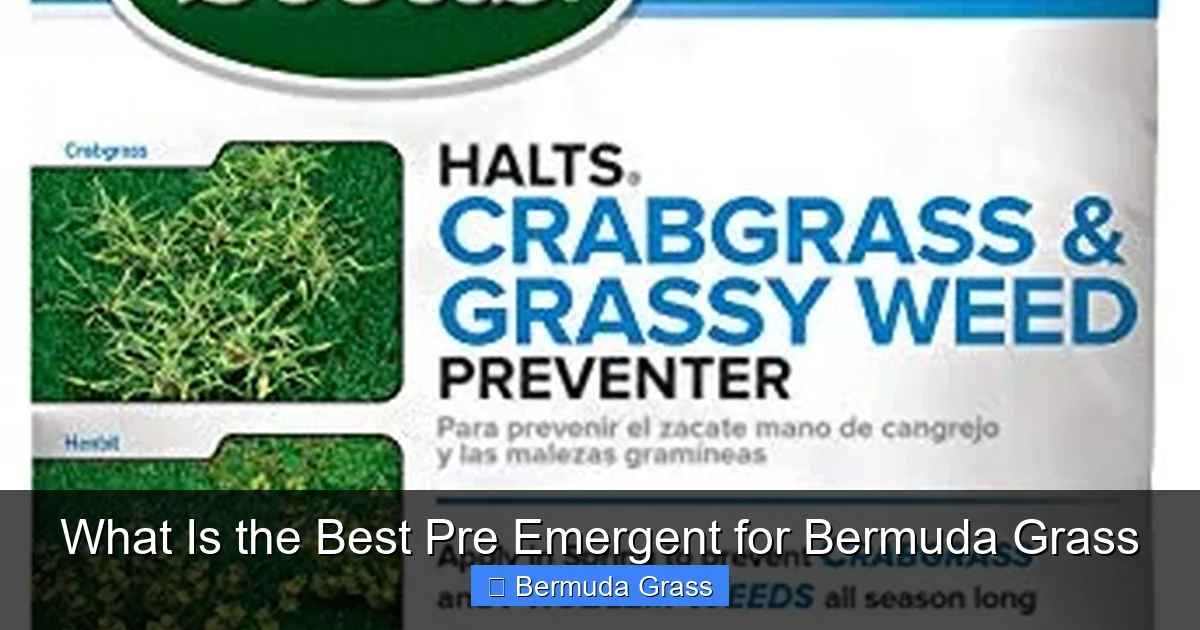
Visual guide about What Is the Best Pre Emergent for Bermuda Grass
Image source: m.media-amazon.com
Example Products: Barricade (brand name), Lesco Stonewall, Hi-Yield Weed and Grass Stopper (with Prodiamine), various generic Prodiamine formulations available online.
2. Dithiopyr-Based Pre-Emergents
Why it’s great for Bermuda: Dimension (Dithiopyr) provides robust pre-emergent control similar to Prodiamine but with the added benefit of limited early post-emergent control of crabgrass. This can offer a small window of forgiveness if your timing isn’t absolutely perfect. It’s also effective against many other annual grasses and broadleaf weeds.
Example Products: Dimension (brand name), Sta-Green Crab-Ex, Scotts Halts Crabgrass & Grassy Weed Preventer (check active ingredient as formulations can change).
3. Pendimethalin-Based Pre-Emergents
Why it’s great for Bermuda: Pendimethalin is a reliable choice for preventing annual grasses and certain broadleaf weeds. It provides a strong barrier and is widely available. While its residual might be slightly shorter than Prodiamine, it’s still a very effective pre emergent for Bermuda grass.
Example Products: Prowl H2O (professional grade), Green Light Crabgrass Preventer.
4. Isoxaben-Based Pre-Emergents (for Broadleaf Weeds)
Why it’s great for Bermuda: If broadleaf weeds are your major nemesis, Isoxaben is highly specialized to target them without harming your Bermuda grass. It’s often used in conjunction with a grassy weed pre-emergent for comprehensive coverage.
Example Products: Gallery SC (professional grade), products indicating broadleaf prevention specifically.
Many products available to homeowners are “combination products” which might include a pre-emergent and a fertilizer. While convenient, ensure the pre-emergent active ingredient is suitable for your needs and that the fertilizer analysis (N-P-K) is appropriate for the time of year you are applying it to Bermuda grass.
Step-by-Step Guide to Applying Pre-Emergents to Bermuda Grass
Now that you know what to look for, let’s walk through the application process for the best pre emergent for Bermuda grass.
Step 1: Monitor Soil Temperatures
This is your most critical step. Purchase a soil thermometer or use online resources. For spring applications, wait until soil temperatures consistently hit 50-55°F at a 2-4 inch depth. For fall applications, target when temperatures consistently drop below 70°F. Patience here pays off immensely!
Step 2: Prepare Your Lawn
Before applying any pre emergent for Bermuda grass, make sure your lawn is clean. Rake up any significant leaf litter or debris. Mow your lawn at its regular height a few days before application. Avoid heavy core aeration or disturbing the soil significantly *after* applying, as this can break the chemical barrier.
Step 3: Calibrate Your Spreader or Sprayer
Accurate application is vital. Too little, and it won’t be effective. Too much, and you risk damaging your lawn or the environment. Follow the product label’s instructions for calibration specific to your equipment (broadcast spreader, drop spreader, or sprayer).
- For Granular: Test your spreader over a known area (e.g., 100 sq ft) with an inert material like sand or sugar to verify the setting delivers the correct amount.
- For Liquid: Calibrate your sprayer by measuring how much water it takes to cover a known area evenly. Then, mix the concentrate according to the label for that volume of water.
Step 4: Apply the Pre-Emergent Evenly
Apply the product uniformly across your entire lawn.
- For Granular: Walk at a consistent pace, making overlapping passes to ensure complete coverage. Pay attention to edges and areas prone to weeds.
- For Liquid: Spray in a crisscross pattern (e.g., vertical then horizontal) to achieve thorough and even coverage, avoiding missed spots.
Do not skip areas, as weeds will find these unprotected zones and flourish.
Step 5: Water It In Immediately
After application, it’s absolutely crucial to water your lawn. This activates the pre-emergent by washing it off the grass blades and into the soil, where it forms its protective barrier. Check the product label for specific watering recommendations, but generally, about 0.5 inches of water is sufficient. If rain is expected within 24-48 hours, that can serve the same purpose.
Step 6: Plan Follow-Up Applications
Most pre-emergents for Bermuda grass offer protection for a certain duration (e.g., 3-5 months). To maintain season-long control, you’ll likely need a second application in late spring/early summer, and certainly a fall application for cool-season weeds. Always adhere to the re-application intervals stated on your product’s label to avoid over-applying or breaking down the barrier too early.
Common Weeds Targeted by Pre-Emergents in Bermuda Grass
Understanding which weeds a pre emergent for Bermuda grass can control will help you select the right product and confirm its efficacy. Here are some common ones:
- Crabgrass (Digitaria spp.): The most notorious summer annual grassy weed. Pre-emergents are highly effective against it.
- Goosegrass (Eleusine indica): Another challenging summer annual grassy weed, often found in compacted areas.
- Poa Annua (Annual Bluegrass): A cool-season annual grassy weed that germinates in fall. A fall pre-emergent application is vital.
- Foxtail (Setaria spp.): Various species of summer annual grassy weeds.
- Barnyardgrass (Echinochloa crus-galli): A coarse, summer annual grass.
- Chickweed (Stellaria media): A cool-season broadleaf weed.
- Henbit (Lamium amplexicaule): Another common cool-season broadleaf weed.
- Clover (Trifolium spp.): While some pre-emergents help, specific broadleaf products are more effective.
Troubleshooting & Common Mistakes When Applying Pre-Emergents to Bermuda Grass
Even with the best intentions, mistakes can happen. Here’s how to avoid common pitfalls and troubleshoot issues:
Mistake 1: Incorrect Timing
Issue: Applying too early, too late, or ignoring soil temperatures.
Solution: Invest in a soil thermometer and diligently track local soil temperatures. Mark your calendar based on historical data for your region, but always verify with current soil temps. Remember the 50-55°F spring window and the <70°F fall window.
Mistake 2: Uneven Application
Issue: Streaks of weeds appearing where the product was missed, or burned spots from over-application.
Solution: Calibrate your spreader or sprayer carefully. Use a consistent walking pace and overlapping passes. For granular products, it’s often helpful to apply half the recommended amount in one direction (e.g., north-south) and the other half in a perpendicular direction (east-west) for excellent coverage.
Mistake 3: Not Watering In Properly
Issue: Pre-emergent remains on the surface of the grass blades, not forming a barrier in the soil.
Solution: Always water your lawn thoroughly (about 0.5 inches) immediately after application. If no rain is expected, use your irrigation system. This step is non-negotiable for activation.
Mistake 4: Disturbing the Soil After Application
Issue: Activities like heavy raking, aerating, or tilling after applying pre-emergent can break the protective chemical barrier, allowing weeds to germinate.
Solution: Plan all soil-disturbing activities *before* your pre-emergent application. If you must disturb the soil, a spot treatment with a granular product can sometimes help re-establish a localized barrier, but it’s best to avoid it.
Mistake 5: Ignoring the Product Label
Issue: Not following specific instructions for application rates, re-entry intervals, or safety precautions.
Solution: The product label is your most important guide. It contains all the manufacturer’s recommendations for safe and effective use. Always read it thoroughly before applying any pre emergent for Bermuda grass.
Conclusion: Your Path to a Weed-Free Bermuda Lawn
Choosing and applying the best pre emergent for Bermuda grass is a cornerstone of effective lawn care. By understanding the science behind these products, carefully selecting active ingredients like Prodiamine or Dithiopyr, and adhering strictly to proper timing based on soil temperatures, you can dramatically reduce weed pressure.
Remember, consistency is key. A diligent spring and fall application, coupled with good cultural practices like proper mowing and watering, will empower your Bermuda grass to thrive and outcompete any determined weeds. With the knowledge from this guide, you’re now well-equipped to achieve that lush, dense, and envy-worthy Bermuda lawn you’ve always wanted. Happy weeding (or rather, happy *preventing* weeds)!