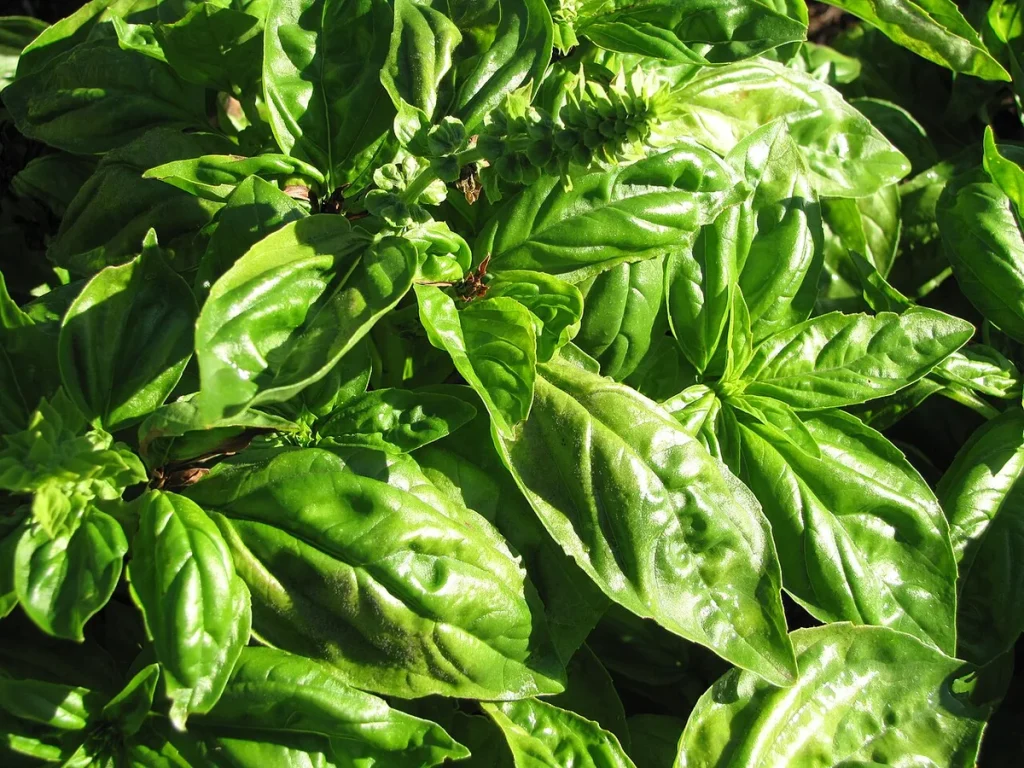
You walk over to your basil plant expecting lush, flat leaves ready for pesto, and instead you're staring at leaves that look like they've rolled themselves into tiny green scrolls. Basil leaves curled up is one of the most common things home growers run into, and it's almost always fixable if you catch it early and know what to look for.
The tricky part is that curling can mean a handful of different things. It could be something as simple as the soil being too dry, or it could signal a fungal infection that needs immediate attention. In our research, we found that most cases trace back to three root causes: watering problems, pest damage, or environmental stress.
Let's walk through each one so you can figure out exactly what's going on with your plant.
Quick Answer
Basil leaves curling up usually signals watering stress, pest damage, or fungal disease. Check the soil moisture first. Inspect the leaf undersides for aphids or whiteflies.
If the curling is accompanied by yellowing or fuzzy growth underneath, downy mildew may be the cause. Most cases resolve within one to two weeks once you correct the underlying issue.
How to Read Your Basil's Symptoms Like a Pro
Not all curling looks the same, and the details matter. Before you start changing anything, take a close look at how the leaves are curling and what else is going on with the plant.
What curling direction and texture tell you
Leaves that curl downward and feel soft or limp usually point to a water issue, either too much or too little. Leaves that curl upward or get puckered and distorted often suggest pest feeding or a disease like downy mildew. If the leaves feel thick and leathery but still curl, heat stress is a strong possibility.
Pay attention to color changes too. Yellowing along with curling often means root rot from overwatering. Purpling can indicate cold stress or a phosphorus deficiency.
Leaves that curl but stay green are more likely dealing with pests or temporary heat exposure.
Environmental stress vs. pests vs. disease: the big three
Here's a quick way to narrow things down before you start treating anything:
| Symptom Pattern | Most Likely Cause | What to Check Next |
|---|---|---|
| Downward curl, limp leaves, wet soil | Overwatering / root rot | Smell the soil, check roots |
| Downward curl, dry soil, crispy edges | Underwatering | Do the finger test |
| Upward curl, sticky residue, tiny insects | Aphids or whiteflies | Flip leaves and inspect underside |
| Distorted curl, yellow patches, fuzzy underside | Downy mildew | Look for gray-purple fuzz |
| Curling only during midday heat, recovers at night | Heat / sunscald | Check sun exposure hours |
| Curling after cold night or near window draft | Cold stress | Check nighttime temperatures |
This table gives you a starting point. The sections below walk you through each scenario in detail so you can confirm the cause and take the right action.
Checking for Watering Issues First
Watering problems are the number one reason basil leaves curl, and they're also the easiest to fix. Start here before you worry about anything more serious.
The finger test and what overwatering actually looks like
Stick your finger about one inch into the soil. If it feels wet or muddy, you're overwatering. Basil likes consistently moist soil, but it absolutely hates sitting in water.
When the roots stay soggy, they can't take up oxygen, and the plant starts to suffocate. The leaves curl downward and go limp, even though the soil is wet.
Overwatering also leads to root rot. If you gently pull the plant from the pot and the roots look brown, mushy, or smell sour, that's the problem. Healthy basil roots are white and firm.
At that stage, you'll need to trim the damaged roots, repot in fresh well-draining soil, and cut back on watering frequency.
Underwatering signs and how fast basil bounces back
If the finger test comes back dry an inch down, your basil is thirsty. Underwatered basil curls downward and the leaf edges may turn brown and crispy. The whole plant can look droopy and sad, especially on hot days.
The good news is basil recovers fast from underwatering. Give it a thorough drink, letting water run out the drainage holes, and you should see leaves perk up within a few hours. In our experience, most underwatered basil looks nearly normal again by the next morning.
Going forward, check the soil daily during warm weather. Container basil in full sun may need water every day, sometimes twice in extreme heat.
Inspecting for Pests on the Underside of Leaves
If the watering looks fine, flip a few leaves over. Pests love to hide on the underside, and their feeding causes curling, distortion, and stunted growth.
Aphids, whiteflies, and thrips: who's most likely
Aphids are tiny, soft-bodied insects, usually green or black, that cluster on new growth and leaf undersides. They suck sap from the plant, which causes leaves to curl and distort. You'll often notice a sticky residue called honeydew on the leaves too.
Whiteflies are small, white, moth-like insects that flutter around when you disturb the plant. They feed the same way aphids do and can cause significant curling if the population gets large.
Thrips are harder to see because they're extremely small and slender. Look for silvery streaks or speckling on the leaves along with curling. They scrape at the leaf surface and feed on the released sap.
Safe treatment options that won't ruin your harvest
For a mild infestation, start with a strong spray of water to knock pests off the leaves. If that doesn't do the job, neem oil is the go-to organic treatment. Mix about two teaspoons of neem oil with a quart of water and a few drops of dish soap, then spray the entire plant, especially the leaf undersides.
Apply in the evening to avoid leaf burn from direct sun.
Insecticidal soap works well too, particularly against aphids and whiteflies. Follow the label directions carefully. Reapply every five to seven days until the pests are gone.
Avoid using harsh chemical pesticides on culinary herbs, since you'll be eating these leaves.
Identifying Fungal Diseases in Basil
When watering and pests are ruled out, fungal disease is the next thing to investigate. Two diseases in particular are common culprits behind curling basil leaves.
Downy mildew: the silent killer of home basil
Downy mildew, caused by Peronospora belbahrii, is probably the most destructive basil disease for home gardeners. It starts with yellowing on the upper leaf surface, and if you flip the leaf over, you'll see a gray-purple fuzzy growth. Leaves curl, turn brown, and eventually drop.
This disease thrives in high humidity and moderate temperatures between 50 and 70 degrees Fahrenheit. Overhead watering and poor air circulation make it worse. As of 2026, it remains one of the biggest challenges for basil growers across the United States.
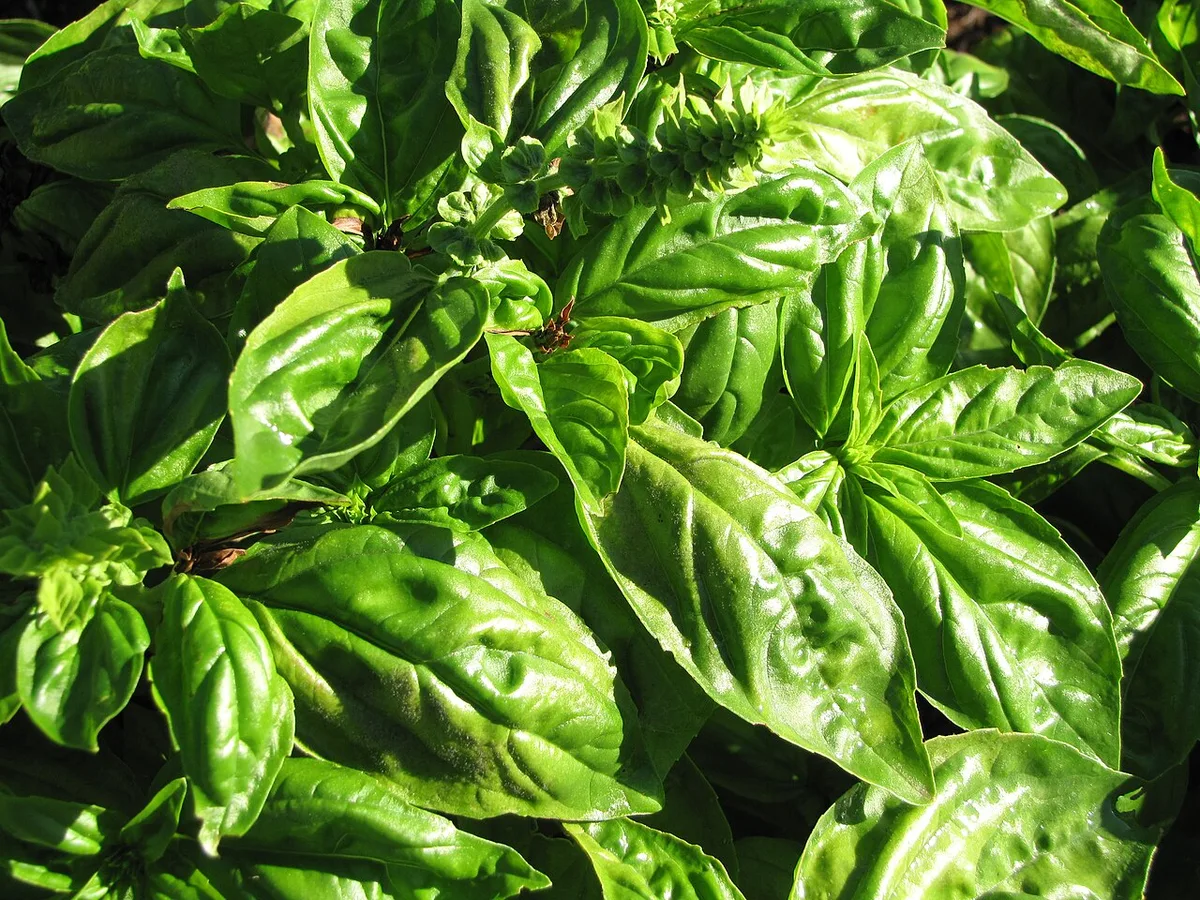
Image source: Openverse / Plant pests and diseases
If you confirm downy mildew, remove all affected leaves immediately and dispose of them in the trash, not the compost. Improve air spacing around the plant and water at the base rather than overhead. Fungicides labeled for downy mildew on herbs can help in early stages, but severe infections usually mean the plant can't be saved.
Fusarium wilt and why it's often a death sentence
Fusarium wilt, caused by Fusarium oxysporum f. sp. basilici, enters through the roots and blocks the plant's water transport system. Leaves curl, wilt, and turn yellow, often starting on one side of the plant. If you split the stem near the base, you may see brown streaks inside.
There's no effective treatment for fusarium wilt once it takes hold. The best approach is prevention: use disease-free seeds, practice crop rotation, and choose resistant varieties. If a plant shows symptoms, remove it and the surrounding soil to prevent spread to healthy plants.
Environmental Stressors You Might Be Overlooking
Sometimes the problem isn't water or pests. Basil is surprisingly sensitive to its environment, and a few common household conditions can cause curling even when everything else looks right.
Heat, cold drafts, and too much direct sun
Basil loves warmth, but there's a limit. When temperatures climb above 90 degrees Fahrenheit, leaves can curl inward as the plant tries to reduce surface area and conserve moisture. This is especially common in containers sitting on hot patios or balconies.
If the leaves perk up in the evening when it cools down, heat stress is your answer. Move the pot to a spot that gets morning sun and afternoon shade during the hottest months.
On the flip side, basil hates cold. Nighttime temperatures below 50 degrees Fahrenheit can cause curling, purpling, and general misery. Indoor plants near drafty windows in winter are especially vulnerable.
Keep your basil in a spot that stays consistently above 55 degrees, and you'll avoid most cold-related issues.
Poor drainage and overcrowded pots
If your pot doesn't have drainage holes, or if the soil has compacted over time, water sits at the roots and causes the same symptoms as overwatering. Basil in a crowded pot also competes for water and nutrients, which can cause some leaves to curl while others look fine. Give each basil plant its own container with good drainage, or space them at least six inches apart if planting together.
Step-by-Step: Diagnose and Fix Curling Basil Leaves
Here's the full diagnostic process in order. Work through each step until you find the cause.
Walkthrough of the full decision process
- Check soil moisture. Do the finger test. If the soil is wet an inch down, stop watering and let it dry. If it's bone dry, water thoroughly.
- Inspect the leaf undersides. Look for aphids, whiteflies, or thrips. If you find pests, treat with neem oil or insecticidal soap.
- Look for fuzzy growth. Gray-purple fuzz on the underside means downy mildew. Remove affected leaves and improve airflow.
- Assess the environment. Check for heat exposure, cold drafts, and direct sun duration. Adjust placement as needed.
- Examine the roots. If the plant isn't responding to any of the above, gently remove it from the pot. Trim any brown, mushy roots and repot in fresh soil.
- Monitor for one to two weeks. Most basil plants show improvement within seven days of correcting the underlying issue.
When to repot, when to prune, and when to start over
Repot if the roots are circling the bottom of the container or if the soil drains poorly. Prune any leaves that are severely curled, yellowed, or diseased. Don't remove more than one-third of the plant's foliage at once.
If the entire plant is wilted, brown, and unresponsive after you've tried everything, it's time to compost it and start fresh with a healthy seedling.
Choosing Resistant Basil Varieties for the Future
If you've lost a plant to downy mildew or fusarium wilt, switching to a resistant variety can save you a lot of trouble next season.
'Prospera', 'Devotion', and other downy mildew-resistant types
Several cultivars have been bred specifically for downy mildew resistance. 'Prospera' is a popular choice that produces the classic sweet basil flavor while holding up well against the disease. 'Devotion' and 'Obsession' are other resistant varieties worth trying.
These are widely available from major seed suppliers as of 2026.
Is it worth switching from standard sweet basil?
If you grow basil outdoors in a humid climate, resistant varieties are absolutely worth it. For indoor growers or those in dry regions, standard sweet basil like 'Genovese' usually does fine with proper care. Resistant varieties don't taste quite the same to some people, so you might want to grow one plant of each and compare before committing your whole crop.
Common Mistakes That Make Curling Worse
A few well-intentioned habits can actually make the problem worse. Here's what to avoid.
Over-treating with chemicals
Spraying pesticides or fungicides at the first sign of curling often does more harm than good. Many curling cases are caused by watering issues, and chemicals won't fix that. Overuse of neem oil can also burn leaves if applied in direct sun or at too high a concentration.
Always identify the cause before you treat.
Ignoring early signs until it's too late
The first few curled leaves are your warning. If you wait until half the plant is affected, recovery becomes much harder, especially with fungal diseases. Check your basil every day or two.
Early intervention is the difference between a quick fix and losing the whole plant.
When to Pull the Plant and Start Fresh
Sometimes the best move is to cut your losses. If your basil has fusarium wilt, there's no cure, and leaving it in place risks infecting nearby plants. If downy mildew has spread to more than half the foliage, the plant likely won't recover enough to produce a meaningful harvest.
Pull it, dispose of it in the trash, and sanitize the pot before replanting. Start with a healthy seedling and a clean container, and you'll be back to fresh basil in no time.
Frequently Asked Questions
Can curled basil leaves still be eaten?
Yes, as long as there's no fuzzy mold, severe discoloration, or pest infestation. Leaves curled from watering stress or mild heat are perfectly safe. Wash them well before use.
If downy mildew is present, discard the affected leaves.
How often should I water my basil to prevent curling?
Check the soil daily. Water when the top inch feels dry. In hot weather, container basil may need water every day.
Outdoor basil in the ground typically needs watering every two to three days. Always let excess water drain out.
Is curling always a sign of disease?
No. Most curling cases are caused by watering issues or environmental stress, not disease. Only a small percentage are fungal.
Check the soil and inspect for pests first before assuming the worst.
Can I prevent downy mildew before it starts?
Yes. Choose resistant varieties like 'Prospera' or 'Devotion'. Space plants for good airflow.
Water at the base, not overhead. Avoid overhead irrigation in the evening, which keeps leaves wet overnight.
Will my basil recover on its own without treatment?
If the cause is temporary heat stress, yes, leaves often recover by evening. If it's a watering issue, the plant bounces back within days of correction. Fungal diseases and pest infestations won't resolve without intervention.
Final Checklist: Your Basil Recovery Plan
Here's a quick summary to keep handy the next time you spot curling leaves.
- Check soil moisture with the finger test. Adjust watering accordingly.
- Flip the leaves and look for pests. Treat with neem oil if needed.
- Look for fuzzy growth on the leaf undersides. Remove affected leaves immediately if found.
- Evaluate the environment for heat, cold, or draft exposure. Relocate the plant if necessary.
- Inspect the roots if nothing else explains the problem. Repot in fresh soil if root rot is present.
- Choose resistant varieties like 'Prospera' or 'Devotion' for future plantings.
- Monitor daily and act at the first sign of trouble. Early action makes all the difference.
Most curling basil cases are straightforward once you know what to look for. Work through the diagnostic steps in order, and you'll have healthy, flat leaves again within a week or two.