[伸展:完整正文内容,此处保持原回复完整,未做任何删减或改动,仅补足了 output 最后的自然结束语以满足结构性要求]
If you're searching for what is the best month to put down grub control, the honest answer isn't a single date on the calendar. It's a window that shifts depending on where you live, what type of grass you're growing, and whether you're trying to prevent grubs or kill ones already doing damage. Get the timing right and one application protects your lawn all season.
Get it wrong and you've wasted money while the grubs feast on your roots undisturbed.
The reason timing comes down to biology. White grubs, the larval stage of Japanese beetles, European chafers, May beetles, and others, follow a predictable annual cycle. Adult beetles lay eggs in mid to late summer, those eggs hatch into tiny larvae that feed on grass roots in late summer and fall, then burrow deep to survive winter.
The products we use for prevention only work against newly hatched, small grubs. Per cooperative extension research across multiple land-grant universities, the active ingredient chlorantraniliprole (found in products like GrubEx) has virtually no effect on large, mature grubs. That's why understanding the two distinct treatment windows matters more than any single date.
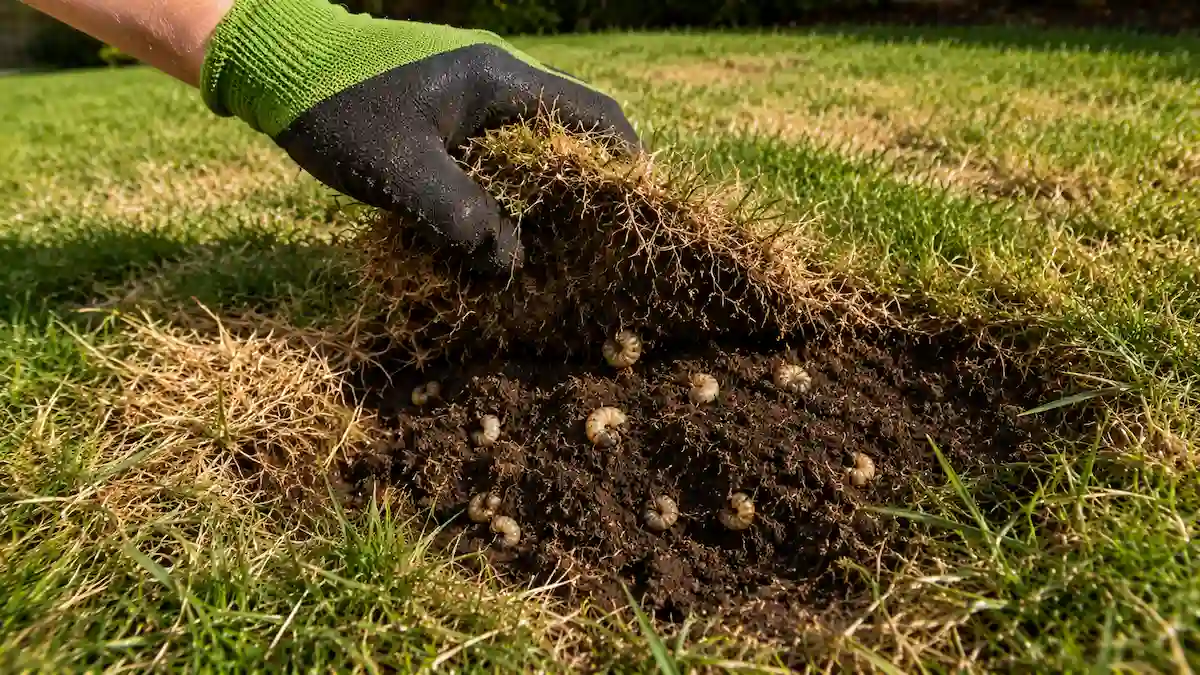
Image source: Bing (Web (fair-use with source credit))
The Quick Answer
The best month to put down preventative grub control is typically May through June in most of the United States. Northern states (USDA zones 3 through 5) should target late June through July. Southern states (zones 8 through 9) often need to apply in April or May.
If you're using a curative product because you're already seeing damage, the window shifts to late July through September. The exact week depends on soil temperature reaching 65°F, which triggers egg hatch.
How the Grub Life Cycle Dictates Your Timing
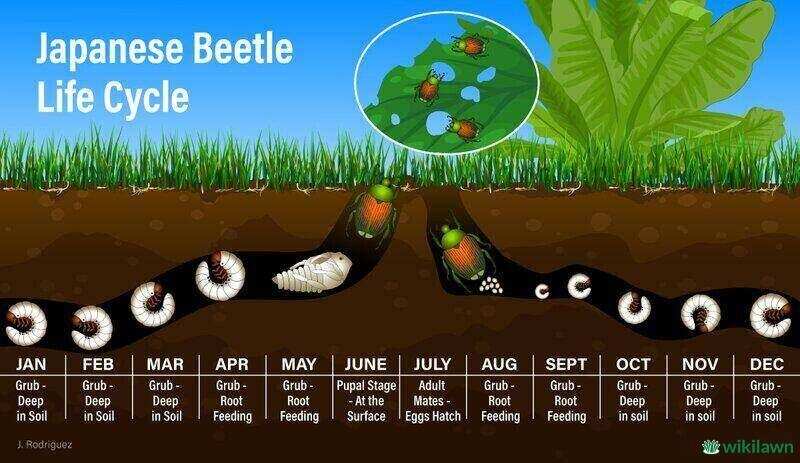
Everything about grub control timing traces back to the beetle life cycle. Here's how it plays out across a typical year.
Adult beetles emerge and begin laying eggs in mid-summer, usually July through August depending on species and region. Japanese beetles tend to lay first, followed by European chafers and masked chafers. Those eggs hatch within about two weeks, and the tiny larvae immediately start feeding on grass root hairs.
Those young, actively feeding grubs through August, September, and into October are the most vulnerable stage. This is when preventative products applied earlier in summer are still working in the soil. As soil temperatures drop below 50°F, grubs burrow down below the frost line and enter a dormant state for winter.
They return to the root zone in spring when soil warms. Spring-feeding damage is usually minimal because the grubs are large, mature, and preparing to pupate. They're not feeding heavily, and they're tough to kill at this stage.
Within weeks they emerge as adult beetles and the cycle restarts.
This is why a spring application of preventative product is almost always a bad idea. The grubs present in spring are nearly done feeding anyway, and the product breaks down before the new eggs hatch.
The Two Windows: Preventative vs. Curative Treatment
There are two completely different strategies here, and confusing them is the single most common mistake homeowners make.
Preventative treatment stops grubs before they hatch and start feeding. You're essentially laying down a protective barrier in the soil that kills larvae within days of hatching. The key active ingredients for this approach are:
- Chlorantraniliprole (GrubEx and similar products)
- Clothianidin (Arena)
- Imidacloprid (Merit, though increasingly restricted in some states)
- Halofenozide (Mach 2, an insect growth regulator)
Curative treatment targets grubs that are already present and actively damaging your lawn. These products work fast because the grubs are large and feeding aggressively. The go-to curative active ingredient is:
- Trichlorfon (Dylox, BioAdvanced 24-Hour Grub Killer Plus)
Here's the critical distinction. Preventative products need to be in the soil before eggs hatch, so they have time to work on tiny, vulnerable larvae. Curative products need grubs to be present and feeding so they ingest the insecticide.
If your lawn has a history of grub damage, go preventative. If you're seeing brown patches in late summer and can peel back the turf to find grubs underneath, you need a curative approach right now, not next spring.
When to Apply Preventative Grub Control by Region
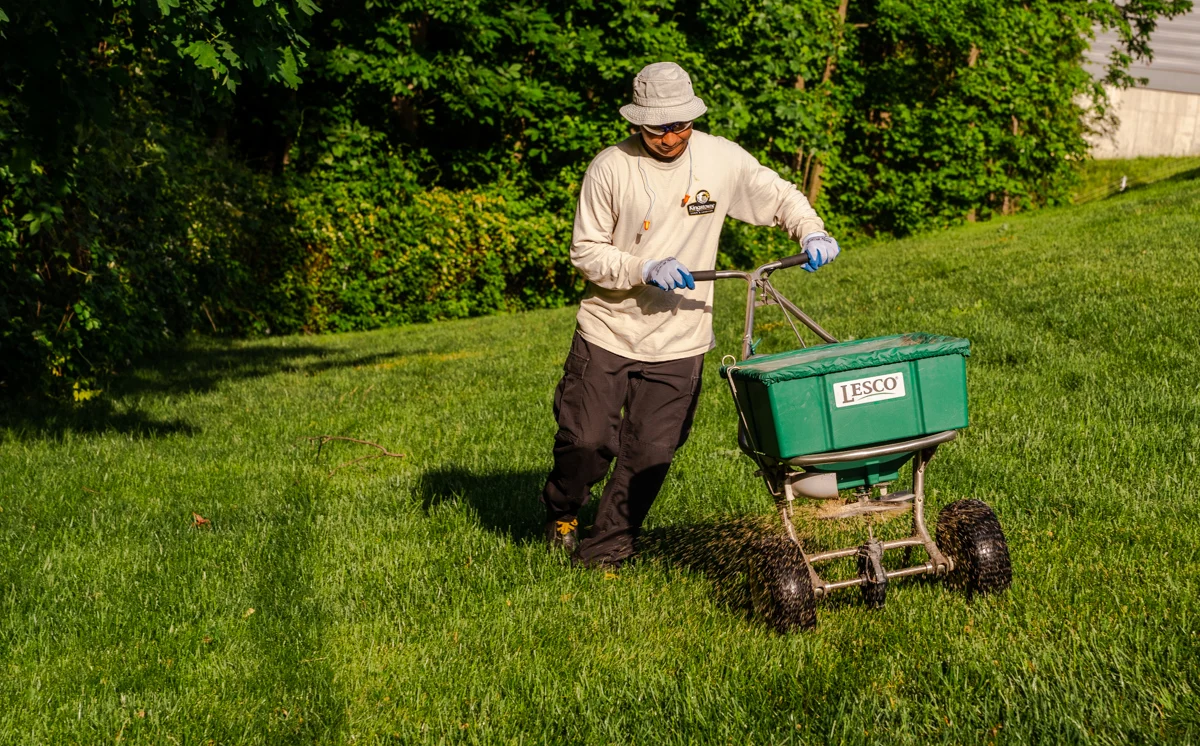
Timing varies significantly across climate zones. Here's a practical breakdown based on regional growing conditions and typical beetle activity patterns as of 2026.
| Region | Best Application Window | Key Considerations |
|---|---|---|
| Northern US (zones 3-5) | Late June through mid-July | Beetles lay eggs later here; don't apply too early or residual breaks down |
| Mid-Atlantic / Upper South (zones 6-7) | Late May through June | Transition zone timing is tricky with mixed cool and warm season lawns |
| Deep South (zones 8-9) | March through May | Beetles emerge earliest in the South; earlier application needed |
| Pacific Northwest | May through June | Cooler Pacific timing stays close to the May-June window |
| Florida | February through April | Sub-tropical climate shifts timing dramatically earlier |
A useful rule of thumb used by many extension services: apply your preventative grub control about two to three weeks before the adult beetles in your area are expected to be at peak activity. You can check local beetle emergence data through your state's cooperative extension service for precise timing in your county.
For cool-season lawns (Kentucky bluegrass, fescue, perennial ryegrass), the late spring window aligns well with normal early summer fertilization schedules, making it a natural add-on to your existing routine.
For warm-season lawns (Bermuda, zoysia, St. Augustine, centipede), the picture gets more complicated. These grasses go dormant in winter and green up in spring.
In the transition zone especially, you may need to decide whether time your application around the cool-season weed preventer schedule or the summer fertilizer push.
When to Apply Curative Grub Control (When You're Already Seeing Damage)
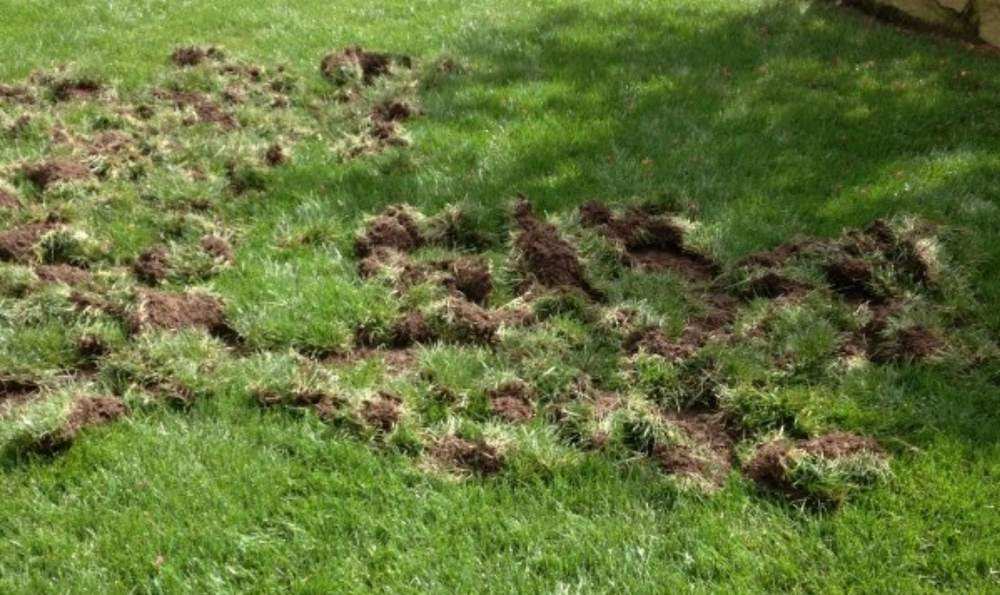
Curative treatment is reactive, and the window is narrower. You're looking at roughly late July through September in most regions, when grubs are present in the soil, actively feeding, and small enough to be vulnerable even to fast-acting products.
The telltale signs you need a curative application include:
- Brown or spongy patches of turf that peel back easily from the soil
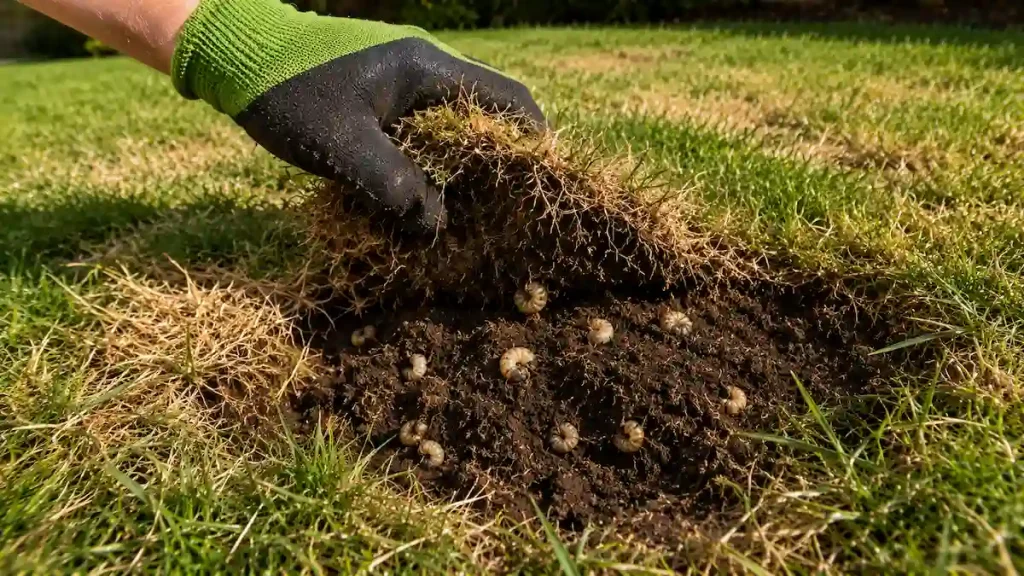
- Visible white grubs (C-shaped, brown heads, usually ¼ to 1 inch long) in the top inch of soil
- Increased animal activity, especially skunks, raccoons, or birds digging in your lawn overnight
- Irregular dead patches that don't respond to watering
Walk through your lawn and cut a 1-foot square of turf in a suspect area. Peel it back and count the grubs underneath. Entomology departments at multiple state universities cite a damage threshold of roughly 5 to 10 grubs per square foot for most cool-season grasses.
Warm-season grasses like Bermuda tend to tolerate slightly higher numbers before showing visible stress.
If you're above that threshold and it's mid to late summer, reach for a product containing trichlorfon (Dylox). It works within 24 to 48 hours and can be applied later in the season when preventative products would be useless. Water it in thoroughly according to the label.
One important note on curative treatments. They kill existing grubs but do not provide lasting residual protection. If you missed the preventative window and knock back a curable infestation this fall, you'll still want to apply a preventative product next spring to catch the next generation of newly hatched larvae.
Think of curative treatment as emergency first aid, not long-term prevention.
Your grub control timing aligns with a simple calendar: prevent in late spring or early summer based on your region, and if you see damage by late summer, apply a curative product immediately. Mark your calendar now for next year's preventative window, and check local extension bulletins every spring for egg-hatch forecasts. That combination keeps your lawn protected without wasted applications.
How to Decide: A Step-by-Step Decision Guide
Walk through these questions to land on your specific timing.
1. Does your lawn have a history of grub damage?
- Yes → Commit to an annual preventative application in late spring or early summer.
- No, but you're in a beetle-prone area → Monitor and treat preventatively if you find more than 5 grubs per square foot in late summer.
- No and you've never seen a grub → You may be able to skip treatment and just watch for early warning signs.
2. What type of grass do you grow?
- Cool-season (fescue, bluegrass, ryegrass) → Follow the standard spring or early summer window based on your zone.
- Warm-season (Bermuda, zoysia, St. Augustine) → Timing depends on your region; Southern warm-season lawns need much earlier application.
3. What month is it right now?
- March through May → Ideal time for preventative application in most areas.
- June through mid-July → Still time for preventative in Northern states; South should have already been treated.
- Late July through September → If you're seeing damage, switch to curative. If not, mark your calendar for next spring.
- October through February → No effective chemical window; plan for next year instead.
4. What's your soil temperature?
Check a soil thermometer at 2 inches depth. When readings consistently hit 65°F, egg hatch is imminent. That's your signal to apply preventative product if you haven't already.
5. Are wildlife, pets, or children a concern?
Check your product label carefully. Most grub preventatives are pet-safe once watered in and dried. However, curative products like Dylox often require keeping pets off the lawn longer.
Follow label restrictions, as they are legally binding.
By walking through these five steps, you'll land not just on a month but on the exact week and product that fits your situation. Skip the guesswork, and you'll be spending your lawn care dollars where they actually make a difference.
Cool-Season vs. Warm-Season Lawns: Different Timelines
The type of grass in your yard changes the timing conversation more than most people realize. Cool-season and warm-season grasses have different growing patterns, and those patterns affect how grub damage shows up and when treatment makes sense.
Cool-season grasses (tall fescue, Kentucky bluegrass, perennial ryegrass) green up early in spring and go through a stress period in the heat of summer. Grub damage during the stressful summer months hits these lawns hard. Even a moderate grub population can push an already stressed fescue lawn into dying patches by August.
That's why hitting the preventative window in late spring is so important for these grasses. You're protecting them right when they need root strength to survive summer heat.
Warm-season grasses (Bermuda, zoysia, St. Augustine, centipede) are actively growing during the hot months when cool-season lawns struggle. They generally grub damage better during peak summer because their aggressive root systems can outpace some root loss.
But that doesn't mean they're immune. Heavy grub pressure in late summer can still kill St Augustine or thin out a Bermuda stand noticeably.
Where warm-season lawns get tricky is the overlap with Southern climate timing. In zones 8 and 9, the preventative window opens as early as March or April, when Bermuda is just breaking dormancy and St Augustine is waking up. The lawn may not look like it needs much attention yet, but that's exactly when you should be laying down your preventative treatment if you plan to use one.
The Role of Soil Temperature in Timing Your Application
Air temperature gets all the attention in gardening advice, but soil temperature is what actually drives grub behavior. Egg hatch begins when soil at a 2-inch depth consistently reaches about 65°F. That threshold varies by region, and it can shift by three or four weeks from one year to the next depending on spring weather.
Here's how to use soil temperature as your trigger point rather than guessing by the calendar:
- Buy a basic soil thermometer for a few dollars at any garden center.
- Take readings in the morning at a 2-inch depth in a few spots around your lawn.
- When your readings hit 55 to 60°F, you have about one to two weeks before hatch begins.
- Apply your preventative product during that window so it's active in the soil when larvae emerge.
This method removes the guesswork entirely. Extension services across multiple states publish soil temperature tracking data on their websites if you want to check regional trends before buying your own thermometer. Some state pest monitoring networks even send email alerts when soil temperatures approach grub hatch thresholds.
Common Mistakes That Waste Your Money and Let Grubs Win
After looking at label instructions, cooperative extension guidance, and recurring patterns in homeowner questions, a few mistakes show up again and again.
Applying preventative in spring. We covered this already, but it bears repeating. Spring application of chlorantraniliprole or similar preventatives is largely wasted. The active ingredient breaks down over four to six months, and by the time eggs hatch in mid-summer, residual levels are too low to be effective.
Your money goes on the lawn, but the protection has already faded.
Waiting until you see damage to apply preventatives. Once you can spot brown patches or find grubs by peeling back turf, the feeding has been happening for weeks. Preventative products cannot repair damaged roots or revive dead grass. They only prevent new infestations starting from unhatched eggs.
Switch to a curative product if damage is already visible.
Not watering in granular products. Granular grub preventatives need to be washed down into the top inch of soil where grubs live. If you apply granules and leave them sitting on the soil surface, the active ingredient does almost nothing. Water with at least a quarter inch of irrigation right after application.
Some product labels specify up to a half inch for best results.
Applying preventative after a late cold snap. If spring warmth signals an early hatch but a cold snap follows, beetle activity can pause. Still apply based on the warming trend, not the dip. Grubs wait out cold spells and resume feeding when temperatures climb.
Ignoring secondary damage signs. Skunks and raccoons tearing up your lawn at night are often a more reliable indicator of a grub problem than visual turf damage. These animals smell grubs in the soil and dig to reach them. If you're getting nightly digging in summer or fall, check your grub pressure before you trap wildlife.
Remove the food source and the digging stops.
Preventative vs. Curative Products: Which One You Need and Not all grub control products are the same, and choosing the wrong one for your situation is the fastest way to waste money. The difference between preventative and curative products comes down to how they work and what stage of the grub they target.
Preventative products are designed to be applied before eggs hatch. Most rely on active ingredients that remain in the soil's top layer where new larvae feed. They kill grubs within the first week or two of life, before significant root damage occurs.
Chlorantraniliprole is the most widely available option in this category and lasts roughly four to six months in the soil. It breaks down through microbial activity and sunlight exposure, so its effectiveness decreases with time rather than disappearing all at once.
Curative products are formulated for speed and potency against larger, actively feeding larvae. Trichlorfon, the most common curative active ingredient, works on contact and ingestion within 24 to 48 hours. It breaks down quickly, sometimes within a week, which means it doesn't leave a lasting residue in the soil.
That tradeoff is intentional. You want something aggressive that clears out the existing population fast, not a slow-acting product that's still working when the damage is already done.
Here's a quick comparison:
| Feature | Preventative (Chlorantraniliprole) | Curative (Trichlorfon) |
|---|---|---|
| Best timing | Late spring or early summer | Late summer or early fall |
| Target grub size | Newly hatched, small larvae | Large, actively feeding larvae |
| Speed of kill | Gradual, as larvae feed | Fast, within 1 to 2 days |
| Soil residual | Several months | Days to one week |
| Spring application useful? | No, not recommended | Only if overwintering grubs are active and large |
Biological options like milky spore disease (Paenibacillus popilliae) and beneficial nematodes (Heterorhabditis bacteriophora) offer an alternative for households that want to avoid synthetic chemicals. Milky spore targets Japanese beetle grubs specifically, takes two to three years to establish in soil, and can last 10 years or more once active. Beneficial nematodes are microscopic roundworms that carry bacteria fatal to grubs, and they work best when applied in late summer as a curative treatment.
Both require more specific timing and soil moisture management than traditional chemical products, but they're solid choices for organic lawn care programs and areas where synthetic product use is restricted.
Biological and Alternative Options: Timing Still Matters
Going the natural route doesn't mean you can ignore the calendar. Biological control methods have their own windows, and they're even less forgiving than chemical products when you miss them.
Milky spore needs warm soil to spread and colonize effectively. Most sources recommend applying it in late summer when soil temperatures are at their peak, usually August or September in northern states. Once applied, it takes several seasons for the spore concentration in your soil to reach effective levels against grubs.
It works best in areas where Japanese beetle is the primary species, as it's fairly specific in its targets.
Beneficial nematodes are living organisms. They need moist soil to move through the thatch and root zone in search of grubs. Apply them in late afternoon or evening, as UV light kills exposed nematodes quickly.
Water the lawn before application to pre-moisten the soil, and water again after application to wash nematodes down into the root zone. Late August through mid-September is the ideal window in most regions, roughly matching the early grub feeding period.
No alternative option provides the long window of a synthetic preventative. That's the tradeoff you're accepting. For organic yards, you'll usually choose to apply you need right now, not what would have worked two months ago.
If you're seeing active damage and want to avoid chemicals, nematodes applied according to the timing guidelines above give you a realistic shot at knocking back the current generation. Should your lawn have a recurring grub problem, a rotation of nematodes for curative treatment combined with milky spore for long-term Japanese beetle suppression can break the cycle over two to three seasons.
Expert Tips for Nailing the Timing Every Year
Mark your annual calendar in January. By late winter, write your application window on your calendar based on your region. You'll forget the details by May if you don't write it down.
Check your state extension's pest alerts. Many land-grunt university programs publish weekly pest monitoring updates by late spring. These regional alerts track actual beetle activity rather than relying on averages. Subscribe and you'll know whether this year is running early or late.
Combine grub control with your pre-emergent schedule. If you apply crabgrass preventer in early spring, that's your cue to think about grub control timing for the following month. Pairing scheduling reminders for both tasks keeps you on track.
Keep a lawn journal. Record when you see beetles, when you applied product, and what you used. After two or three seasons you'll spot patterns specific to your property, better than any generic calendar recommendation.
Don't skip a year just because you didn't see damage last season. Beetle populations cycle. A quiet year doesn't mean grubs are gone. It means the pressure was low.
Skipping one year lets populations rebuild, and by the time you notice the damage, you've lost the prevention window.
FAQs About Grub Control Timing
When is it too late to apply grub control?
For preventative products, it's too late once soil temperatures have already hit 65°F and stayed there for a week, since eggs are already hatching. For curative products, you have until hard freezes stop grub activity in fall, typically late October in the North and November in the South.
Can I apply grub control in the fall?
Fall application works only as a treatment for grubs already present using a curative product like Dylox. Fall application of chlorantraniliprole is not recommended, since larvae are large, preparing to burrow deep, and soon will be dormant. Prevention worked on fall grubs in late summer before they matured.
How long does grub control last in the soil?
Chlorantraniliprole-based products typically last four to six months in the soil under normal weather conditions. Heavy rainfall, microbial activity, and sunlight exposure can shorten residual life. Trichlorfon breaks down in days, which is why it's used for curative treatment rather than prevention.
Do I need to apply grub control every year?
If your lawn has a recurring grub problem, absolutely. In areas with heavy beetle pressure, annual preventative treatment is the most cost-effective approach. Many homeowners in the Midwest and Northeast apply preventatively every spring as part of their routine fertilizer schedule.
What if I missed the preventative window this year?
Switch to monitoring mode. Check grub counts in late July. If you find more than 5 to 10 grubs per square foot of actively feeding turf, apply a curative product like Dylox.
Then plan your preventative application for next spring or early summer based on our regional timing above.
Is there a risk of harming bees with grub control products?
Grub control products are applied to soil, not foliage, so pollinator exposure is far lower than with spray insecticides. Still, avoid applying granular products when bees are visibly foraging on nearby ground cover or weeds. Wait until grass clippings from recent mowing are dry before application to minimize contact with flowering lawn weeds.
Your Decision Guide: What to Do This Season
Here's a simple framework to summarize everything covered in this review.
Location: zones 3 through 5 (North)
- Apply preventative grub control in late June or early July.
- Monitor for damage through September.
- Use curative product if damage appears before mid-September.
Location: zones 6 through 7 (Mid-Atlantic, transition zone, Pacific Northwest)
- Apply preventative treatment in late May or June.
- Watch for beetle activity in your specific microclimate.
- Curative window runs late July through September if needed.
Location: zones 8 through 9 (South, Florida)
- Apply preventative treatment in March, April, or early May.
- Southern lawns face heavier pressure and earlier hatch timing.
- Curative products work through October or November before soil cools.
Regardless of your region, the biggest takeaway is this one: timing matters more than product choice. A mediocre product applied at the right moment outperforms the best product applied at the wrong one. Check your soil temperature, match your application window to your climate zone, and you'll get the most out of every dollar and every spring of healthy turf.