Achieving a lush, green bermuda grass lawn starts with understanding what fertilizer to use and when to apply it. The key steps include getting a soil test to identify specific nutrient needs, selecting a fertilizer with the right N-P-K ratio, and applying it correctly at optimal times throughout the growing season. Following these guidelines will ensure your bermuda grass thrives, providing a beautiful and resilient lawn.
What Fertilizer to Use on Bermuda Grass
Welcome to the ultimate guide on fertilizing bermuda grass! If you dream of a thick, vibrant, carpet-like lawn, understanding what fertilizer to use and how to apply it is absolutely essential. Bermuda grass, a warm-season variety, is known for its resilience and beautiful deep green color, but it’s also a heavy feeder that requires specific nutrient management to truly thrive.
In this comprehensive guide, we’ll walk you through everything you need to know. We’ll cover how to determine your lawn’s specific needs, decode those confusing N-P-K ratios, explore different fertilizer types, and, most importantly, teach you the perfect timing and application techniques. By the end, you’ll have the knowledge to transform your bermuda grass into the envy of the neighborhood. Let’s get started on your journey to a healthier, greener lawn!
Key Takeaways
- Soil Test First: Always begin with a soil test to understand your bermuda grass’s exact nutrient deficiencies and pH levels, guiding your fertilizer choice precisely.
- Understand N-P-K Ratios: Bermuda grass is a heavy nitrogen feeder. Look for fertilizers with a high first number (N) in ratios like 4-1-2 or 3-1-2 for established lawns, and possibly higher phosphorus (P) for new lawns or root development.
- Timing is Crucial: Fertilize bermuda grass primarily during its active growing season, from late spring through late summer. Avoid fertilizing during dormancy or extreme heat.
- Choose the Right Type: Slow-release granular fertilizers are generally preferred for bermuda grass as they provide consistent feeding and reduce the risk of burn compared to quick-release options.
- Apply Correctly: Always read the fertilizer label, calibrate your spreader, and apply evenly to prevent burning or uneven growth. Water granular fertilizers in thoroughly after application.
- Don’t Over-Fertilize: More isn’t better. Excessive fertilizer can damage your bermuda grass, lead to weak growth, and cause environmental run-off. Follow recommended rates diligently.
Understanding Your Bermuda Grass’s Nutritional Needs
Bermuda grass is a vigorous grower, especially during the warm months, and this rapid growth demands a steady supply of nutrients. Just like any living thing, your bermuda grass needs a balanced diet, primarily consisting of nitrogen, phosphorus, and potassium, along with a host of micronutrients.
The Importance of N-P-K Ratios
When you look at a bag of fertilizer, you’ll see three numbers, like 16-4-8 or 10-10-10. These represent the N-P-K ratio, which stands for Nitrogen (N), Phosphorus (P), and Potassium (K) by weight. Each plays a vital role in your bermuda grass’s health:
- Nitrogen (N): This is the superstar for bermuda grass. Nitrogen is responsible for lush, green, leafy growth. It promotes density and that vibrant color everyone loves. Bermuda grass has a high nitrogen requirement, especially during its active growing season.
- Phosphorus (P): Phosphorus is crucial for strong root development, seedling growth, and flowering (though we usually don’t want bermuda to flower excessively). It’s particularly important for new bermuda grass lawns or when overseeding.
- Potassium (K): Often referred to as the “stress reliever,” potassium helps your bermuda grass withstand various environmental stresses like drought, heat, cold, and disease. It contributes to overall plant vigor and health.
Why a Soil Test is Non-Negotiable
While general recommendations exist, the absolute best way to know what fertilizer to use on your bermuda grass is to perform a soil test. Think of it as a doctor’s visit for your lawn. A soil test tells you exactly what nutrients are present or lacking in your soil and reveals your soil’s pH level (acidity or alkalinity), which affects nutrient availability. Without a soil test, you’re essentially guessing, which can lead to over-fertilization, nutrient imbalances, and wasted money.
Step 1: Get a Soil Test – Your Foundation for Success
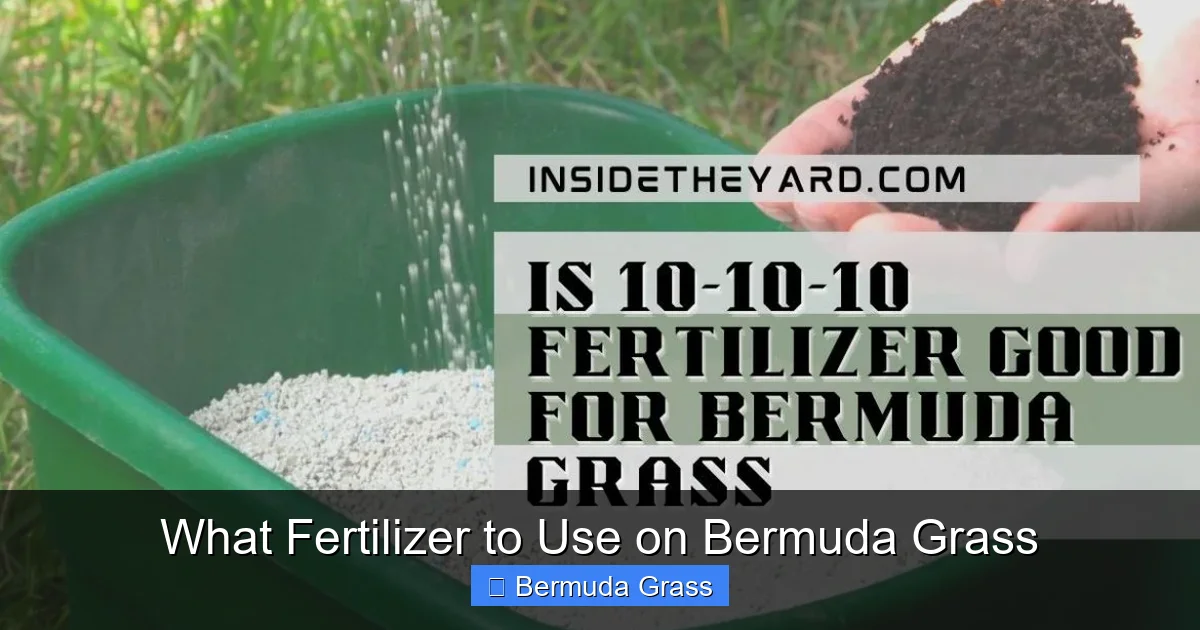
Visual guide about What Fertilizer to Use on Bermuda Grass
Image source: insidetheyard.com
A soil test is the single most important step in creating an effective fertilization plan for your bermuda grass. It eliminates guesswork and ensures you’re applying only what your lawn truly needs.
How to Perform a Soil Test
Performing a soil test is simpler than you might think.
- DIY Kits vs. Professional Labs: You can buy DIY kits at garden stores, but for the most accurate and comprehensive results, we highly recommend sending samples to your local university extension office or a reputable private lab. They provide detailed reports and often include specific fertilizer recommendations for your grass type.
- Taking Samples: Use a clean trowel or soil probe to collect 10-15 random samples from different areas of your lawn. Each sample should be about 4-6 inches deep. Avoid areas near structures, compost piles, or trees, as these might skew results.
- Prepare the Sample: Mix all the collected soil in a clean plastic bucket. Remove any grass, roots, or debris. Let the soil air dry (don’t bake it). Once dry, follow the specific instructions from your chosen lab for packaging and mailing.
Interpreting Your Soil Test Results
Once you receive your results, don’t be intimidated! Look for:
- pH Level: Bermuda grass thrives in slightly acidic to neutral soil, generally between 6.0 and 7.0. If your pH is too low or too high, certain nutrients become unavailable to the grass, even if they’re present in the soil. Your report will recommend amendments (like lime to raise pH or sulfur to lower it) if needed.
- N-P-K Levels: The report will show the current levels of nitrogen, phosphorus, and potassium, often classifying them as low, medium, or high. This is your direct guide for what N-P-K ratio to choose for your bermuda grass fertilizer. For example, if phosphorus is already high, you’ll want a fertilizer with a very low or zero P number.
- Micronutrients: The report might also include levels of essential micronutrients like iron, zinc, and manganese. If iron is low, for instance, your bermuda grass might appear yellow (chlorotic), and you might need an iron supplement or a fertilizer with added iron.
Step 2: Choose the Right N-P-K Ratio for Your Bermuda Grass
Armed with your soil test results, you can now select a fertilizer with the ideal N-P-K ratio.
High Nitrogen for Green Growth
For an established bermuda grass lawn during its active growing season, you’ll typically want a fertilizer that is high in nitrogen. Ratios like 4-1-2 or 3-1-2 are often recommended (e.g., 16-4-8, 15-5-10, or 21-7-14). This high nitrogen content encourages dense, lush, and deep green foliage. Remember, these are general guidelines, and your soil test will fine-tune these recommendations.
Phosphorus for Root Development (Starter Fertilizers)
If you’re planting new bermuda grass from seed or sod, or if your soil test indicates a phosphorus deficiency, a “starter fertilizer” is appropriate. These fertilizers have a higher middle number (P), such as 1-2-1 or 1-3-2 ratios (e.g., 5-10-5, 10-20-10, or 6-18-6). They promote strong root establishment, which is vital for new grass to take hold. For established bermuda grass, unless your soil test shows a clear deficiency, you typically won’t need a high-P fertilizer.
Potassium for Overall Health and Stress Resistance
Potassium is crucial for the overall health and resilience of your bermuda grass. It helps your lawn withstand environmental stresses and diseases. Many balanced maintenance fertilizers will include sufficient potassium. You might look for a slightly higher potassium ratio in late summer or early fall applications (sometimes called “winterizers”) to prepare your bermuda grass for dormancy, though a true “winterizer” for bermuda typically emphasizes potassium over nitrogen, or even eliminates nitrogen for very late applications.
Step 3: Select Your Fertilizer Type
Beyond the N-P-K ratio, you’ll also need to decide on the physical form and composition of the fertilizer.
Granular Fertilizers
Granular fertilizers are the most common type for lawns.
- Quick-Release Granular: These fertilizers provide a rapid burst of nutrients, leading to a quick green-up. However, they can also cause surge growth, require more frequent applications, and have a higher risk of burning your bermuda grass if not applied correctly or watered in. They are generally less expensive.
- Slow-Release Granular: These are often preferred for bermuda grass. Nutrients are coated, allowing them to release gradually over several weeks or even months. This provides more consistent feeding, reduces the risk of burning, and promotes more uniform growth. They are generally more expensive but require fewer applications. Look for terms like “slow-release nitrogen,” “controlled-release,” or “ureaform” on the label.
Liquid Fertilizers
Liquid fertilizers are diluted with water and applied with a sprayer. They offer very fast nutrient absorption, as the grass can take up nutrients through both its leaves and roots. They are excellent for a quick green-up or for applying micronutrients like iron. However, they require more frequent application than slow-release granular fertilizers and can be more difficult to apply evenly over large areas without specialized equipment.
Organic vs. Synthetic Fertilizers
The choice between organic and synthetic fertilizers depends on your priorities.
- Organic Fertilizers: These are derived from natural sources (e.g., compost, manure, bone meal, blood meal, corn gluten meal). They work by improving soil health and microbial activity, which in turn releases nutrients to the grass. They are typically slow-release, have a lower risk of burning, and are environmentally friendly. However, they often have lower N-P-K ratios and may take longer to show results.
- Synthetic Fertilizers: These are chemically manufactured and offer precise N-P-K ratios. They are generally fast-acting and readily available. While effective, they can deplete soil microbes over time and pose a higher risk of environmental runoff if not applied carefully.
Step 4: Master the Timing of Fertilizer Application for Bermuda Grass
Even the perfect fertilizer won’t do much good if applied at the wrong time. Timing is critical for bermuda grass.
Early Spring (Late March – Early May)
Your first fertilizer application for bermuda grass should happen *after* it has fully emerged from dormancy and soil temperatures are consistently above 65°F. This usually means late March to early May, depending on your climate. Don’t fertilize too early, as the grass won’t be actively growing and can’t absorb the nutrients. A light feeding with a high-nitrogen fertilizer will help kickstart spring growth and green-up.
Late Spring / Early Summer (May – June)
This is often considered the peak feeding period for bermuda grass. As temperatures rise and the grass enters its most active growth phase, it will benefit from a more substantial feeding. Apply a high-nitrogen fertilizer according to your soil test results and product instructions. This application will fuel vigorous growth and density.
Mid-Summer (July – Early August)
To sustain the lush growth of your bermuda grass through the hottest months, another application of high-nitrogen fertilizer is usually beneficial. This helps maintain color and density, especially if your bermuda grass is subjected to heavy use or stress.
Late Summer / Early Fall (Late August – September)
This application helps prepare your bermuda grass for dormancy. Reduce the amount of nitrogen and emphasize potassium (K) to improve its winter hardiness and root strength. A good “winterizer” type fertilizer for bermuda grass will have a lower N and higher K ratio. This isn’t about promoting green growth but about building reserves.
When to Avoid Fertilizing
- During Dormancy: Never fertilize dormant bermuda grass (late fall through winter). It can’t absorb nutrients, and the fertilizer will just sit there, potentially washing away or encouraging weed growth.
- Extreme Heat/Drought: Avoid fertilizing when temperatures are extremely high or during periods of drought stress. The grass is already under stress, and fertilizer can burn it.
Step 5: Apply Fertilizer Correctly for Best Results
Proper application is just as important as choosing the right fertilizer for your bermuda grass. Incorrect application can lead to uneven growth, burning, or nutrient runoff.
Read the Label!
This cannot be stressed enough. Every fertilizer product has specific instructions for application rates, spreader settings, and watering. The label is your ultimate guide for that particular product.
Calibrate Your Spreader
Whether you’re using a broadcast (rotary) or drop spreader, proper calibration is key to even application. Follow the manufacturer’s instructions for setting your spreader based on the fertilizer product and your desired application rate. Test it on a hard surface first to get a feel for the spread pattern.
Even Application is Key
Uneven application leads to stripes (where you’ve overlapped too much or not enough) or burnt spots.
- Overlap: For broadcast spreaders, ensure each pass slightly overlaps the previous one to avoid gaps.
- Half Rate Method: A common technique is to apply half the recommended amount in one direction (e.g., north-south), then apply the remaining half in a perpendicular direction (east-west). This helps ensure thorough and even coverage.
- Edges Last: Fertilize the perimeter of your lawn last, aiming the spreader inward to avoid throwing fertilizer onto sidewalks or driveways.
Water It In (Usually)
Most granular fertilizers need to be watered in immediately after application. This washes the fertilizer granules off the grass blades and into the soil, where they can be absorbed by the roots. Watering also helps prevent fertilizer burn, especially with quick-release products. Always check the label, as some specific products might recommend a different approach.
Safety First
Always wear appropriate protective gear, such as gloves and eye protection, when handling fertilizers. Keep children and pets off the lawn until the fertilizer has been watered in and the lawn is dry, usually a few hours to a day, depending on the product. Store fertilizers in a cool, dry place, out of reach of children and animals.
Practical Tips for a Lush Bermuda Grass Lawn
Beyond just fertilizer, integrate these practices for optimal bermuda grass health:
- Don’t Over-Fertilize: Applying too much fertilizer is worse than applying too little. It can burn your lawn, promote excessive thatch, lead to weak root systems, and contribute to environmental pollution. Stick to the recommended rates from your soil test and product labels.
- Combine with Proper Mowing: Bermuda grass thrives on frequent mowing at a low height (1-2 inches). Never remove more than one-third of the blade height in a single mowing. This encourages dense growth.
- Consistent Watering: Deep, infrequent watering (about 1 inch per week) encourages deep root growth, making your bermuda grass more drought-tolerant and efficient at nutrient uptake.
- Weed Control: While a healthy, dense bermuda grass lawn will naturally outcompete many weeds, an integrated weed control program (using pre-emergents in spring and fall, and spot treatments for existing weeds) is usually necessary.
- Aeration & Dethatching: Periodically aerating your lawn (pulling small plugs of soil) helps improve air circulation, water penetration, and nutrient uptake, especially if your soil is compacted. Dethatching removes excessive organic matter that can block water and nutrient access.
Troubleshooting Common Bermuda Grass Fertilization Issues
Even with the best intentions, issues can arise. Here’s how to tackle some common problems:
My Bermuda Grass is Yellow After Fertilizing
If your bermuda grass turns yellow shortly after fertilization, it could be a few things:
- Fertilizer Burn: This is common if too much quick-release fertilizer was applied, or if it wasn’t watered in immediately. The high salt content draws moisture out of the grass.
- Iron Deficiency: Sometimes, even with sufficient nitrogen, bermuda grass can look yellow or pale green, especially if your soil pH is high. This can indicate an iron deficiency. Your soil test should reveal this. Applying an iron supplement (often liquid) can quickly green up the lawn without promoting excessive growth.
- Over-Application of Nitrogen: While bermuda loves nitrogen, too much can lead to a lush green canopy at the expense of root development or can make other nutrient deficiencies (like iron) more pronounced.
My Lawn Looks Burned or Striped
This is almost always due to uneven application.
- Stripes: Occur when there are gaps or heavy overlaps between spreader passes. Calibrate your spreader and use the half-rate, perpendicular application method.
- Burn Spots: Result from fertilizer granules being concentrated in one area (e.g., if the spreader stops or is refilled on the lawn, or from spilled fertilizer).
For burned areas, water heavily to try and flush out some of the excess fertilizer. In severe cases, the grass may die and need to be reseeded or sodded.
Weeds are Still a Problem
Fertilizing your bermuda grass makes it grow stronger, but it also provides nutrients for weeds if they’re present. Fertilizer alone won’t get rid of weeds. You need a dedicated weed control strategy, which includes:
- Pre-emergent Herbicides: Apply in early spring and late summer/early fall to prevent weed seeds from germinating.
- Post-emergent Herbicides: Spot-treat existing broadleaf or grassy weeds as they appear. Always use products labeled safe for bermuda grass.
Conclusion
Achieving a beautiful, healthy bermuda grass lawn is a rewarding endeavor that relies heavily on a thoughtful fertilization strategy. Remember, the journey begins with a soil test to understand your lawn’s unique needs. From there, selecting the correct N-P-K ratio, choosing between granular or liquid, and understanding the organic vs. synthetic debate become much clearer.
Most importantly, timing your applications correctly throughout the active growing season and mastering the art of even application are the keys to success. With patience, consistency, and the practical tips outlined in this guide, you’ll be well on your way to enjoying a vibrant, resilient bermuda grass lawn that enhances your outdoor living space for years to come. Happy fertilizing!