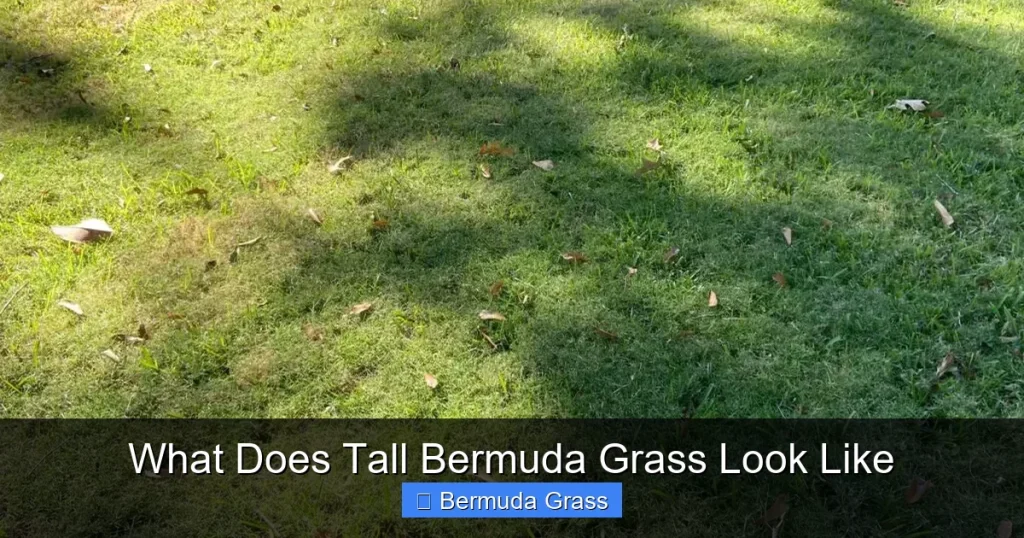
Tall Bermuda grass often signals a need for proper lawn care and can be easily identified by its distinct features. When unmowed, it develops an upright growth habit, showcasing characteristic bluish-green blades, prominent stolons, and highly recognizable ‘crow’s foot’ seed heads. Understanding what tall Bermuda grass looks like helps homeowners differentiate it from other weeds and manage their lawn effectively for optimal health and aesthetic appeal.
Key Takeaways
- Overall Growth: When unmowed, tall Bermuda grass exhibits a distinctly upright growth habit, often reaching 6-12 inches or more, while still maintaining its aggressive spreading nature through stolons and rhizomes.
- Leaf Characteristics: Look for narrow, folded blades that are typically bluish-green to dark green in color, sometimes showing a purplish tint at the base, and tapering to a pointed tip.
- Stems and Runners: A crucial identifier is the presence of sturdy above-ground stolons (creeping runners that root at nodes) and below-ground rhizomes, which become more noticeable and can appear woody when the grass is tall.
- Seed Heads: The most definitive sign of tall Bermuda grass going to seed is its unique ‘crow’s foot’ or ‘bird’s foot’ seed head, consisting of 3-7 (typically 4-5) finger-like spikes radiating from a central point.
- Environmental Context: Bermuda grass is a warm-season grass that thrives in full sun and hot climates, so its tall growth is usually observed during late spring, summer, and early fall in appropriate regions.
- Significance of Height: Tall Bermuda grass usually indicates a lack of regular mowing, maturity, or the grass preparing to go to seed, which can lead to a less manicured appearance and increased spread.
What Does Tall Bermuda Grass Look Like? A Comprehensive Guide
Welcome to your ultimate guide on identifying tall Bermuda grass! As a popular warm-season turfgrass, Bermuda is known for its resilience and ability to thrive in hot climates. However, when left unmowed or allowed to mature, it can transform from a neat, low-lying carpet into something much taller and wilder. This guide will walk you through exactly what tall Bermuda grass looks like, helping you distinguish it from other grasses and understand what its height means for your lawn.
Whether you’re trying to identify an unruly patch in your yard, understand why your lawn is suddenly growing upwards, or simply learn more about this common grass type, you’re in the right place. We’ll cover everything from its overall appearance and growth habits to the intricate details of its leaves, stems, and signature seed heads. By the end, you’ll be an expert at spotting tall Bermuda grass in any landscape.
What Exactly Is Bermuda Grass?
Before we dive into its tall appearance, let’s briefly define Bermuda grass. Cynodon dactylon, commonly known as Bermuda grass, is a highly aggressive and durable warm-season turfgrass. It’s cherished in southern states and other warm regions for its ability to withstand heat, drought, and heavy traffic. It spreads rapidly through both above-ground stolons and underground rhizomes, allowing it to quickly fill in bare spots and create a dense, beautiful lawn when properly maintained. Typically, Bermuda grass is mowed very short, often between 0.5 to 2 inches, which keeps it looking manicured and encourages lateral growth. But what happens when you let it grow past those ideal mowing heights?
Why Does Bermuda Grass Get Tall?
Bermuda grass generally gets tall for a few key reasons, and understanding these can help you manage your lawn better:
- Lack of Mowing: The most common reason for tall Bermuda grass is simply not mowing it frequently enough. When it doesn’t get its regular trim, the grass blades and stems naturally grow upwards.
- Maturity and Seeding: As Bermuda grass matures, especially during late spring, summer, and early fall, its natural growth cycle includes producing seed heads. To do this, it sends up taller stems, often significantly above the general blade height, to facilitate seed dispersal.
- Nutrient Availability: While not the primary cause, an abundance of nitrogen fertilizer can sometimes encourage more vertical growth, especially if the grass is already inclined to grow tall.
- Specific Varieties: While most common turf-type Bermudas are bred for a lower growth habit, some older or pasture varieties naturally grow taller.
Now that we know why it gets tall, let’s explore how to identify it.
Identifying Tall Bermuda Grass: A Step-by-Step Guide
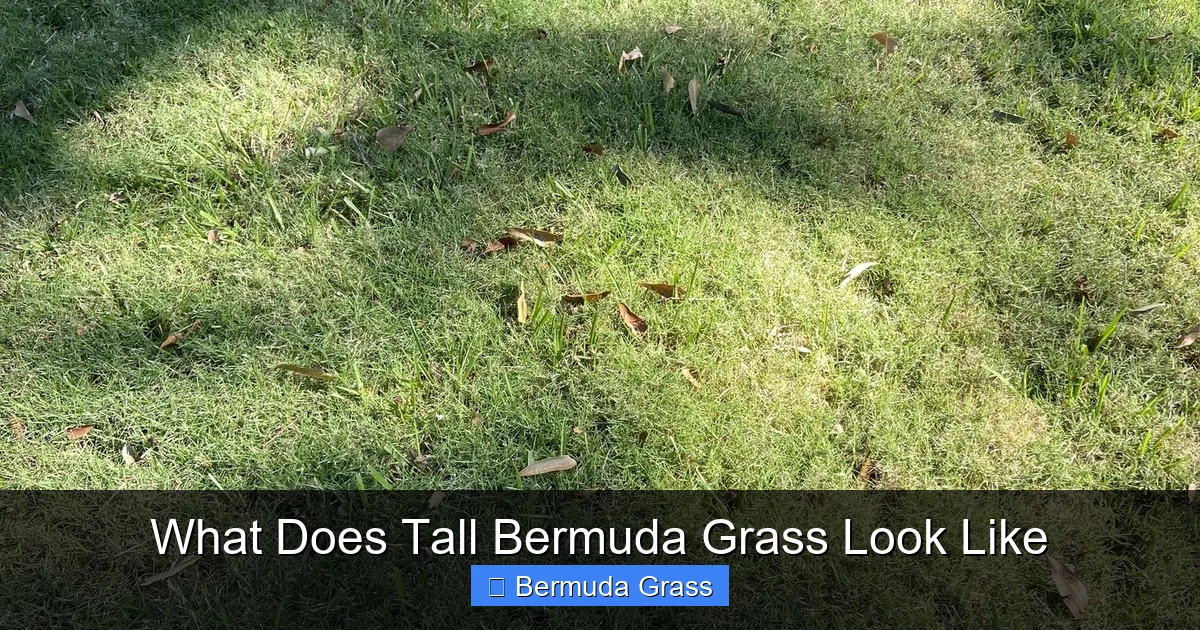
Visual guide about What Does Tall Bermuda Grass Look Like
Image source: batonrougesod.com
Identifying tall Bermuda grass requires a keen eye for several key features. Here’s how to do it:
Step 1: Observe Overall Height and Growth Habit
The first thing you’ll notice about tall Bermuda grass is its stature and how it grows.
Look for Upright Growth
When left unmowed, Bermuda grass will shoot upwards, often reaching heights of 6 to 12 inches, and sometimes even taller, especially when it’s going to seed. This is a significant departure from its usual tightly mown appearance. Instead of a dense, low carpet, you’ll see individual stems and blades reaching for the sky. The overall look can be quite unruly and shaggy. This vertical growth is an important indicator that you’re dealing with unmaintained Bermuda.
Note Its Spreading Nature
Even when tall, Bermuda grass retains its aggressive spreading habit. You’ll still see its distinctive runners (stolons) creeping along the ground, rooting at various points, and sending up new shoots. So, while the blades are growing upwards, the grass is simultaneously expanding horizontally. This combination of vertical and horizontal growth is characteristic of tall Bermuda grass. If you see tall clumps without significant runners, it might be a different type of grass.
Step 2: Examine Leaf Characteristics
The leaves of tall Bermuda grass offer crucial clues for identification.
Color and Texture
The color of Bermuda grass blades can range from a bluish-green to a medium to dark green. When it’s healthy and actively growing tall, it often has a vibrant, rich green hue. You might also notice a slight purplish tint at the very base of the leaf sheath, where the blade meets the stem. The texture of the blades is generally smooth to the touch, and they can feel somewhat stiff or rigid, especially compared to softer grasses like fescue.
Blade Shape and Width
Bermuda grass blades are relatively narrow, typically 2-4 millimeters (about 0.08 to 0.16 inches) wide, and usually 2-6 inches long. When the grass is tall, these blades might appear slightly wider than when they are tightly mowed, but they will still maintain their characteristic folded appearance in the bud and a sharp, pointed tip. Unlike some other grasses, Bermuda grass usually has a very short, fringed ligule (a small membrane or ring of hairs at the junction of the blade and sheath) and no auricles (ear-like projections).
Step 3: Inspect Stems and Stolons/Rhizomes
This step is often the most definitive for confirming Bermuda grass, regardless of its height.
Stolon and Rhizome Presence
Bermuda grass is famous for its extensive network of stolons and rhizomes. Stolons are above-ground runners that creep along the soil surface, rooting at nodes and sending up new shoots. When Bermuda grass grows tall, these stolons become very noticeable – they can be thick, wiry, and even woody, intertwining to form a dense mat. Rhizomes are similar but grow underground, also rooting and sending up new shoots. Digging up a small section (if permitted) will reveal these underground runners, which are typically white or light-colored and fleshy. The presence of both well-developed stolons and rhizomes is a strong indicator of Bermuda grass.
Stem Appearance
The stems that support the leaves and, eventually, the seed heads of tall Bermuda grass will be visible and often sturdy. These stems can take on a reddish or purplish tint, especially near the base or in areas exposed to strong sunlight. They provide the structural support for the grass to achieve its height.
Step 4: Look for Seed Heads
The seed head of Bermuda grass is one of its most distinctive and unmistakable features, especially when it’s tall and mature.
Describe the Characteristic Seed Head
When tall Bermuda grass goes to seed, it produces a unique inflorescence commonly described as a ‘crow’s foot’ or ‘bird’s foot’ shape. This structure consists of 3 to 7 (most commonly 4 to 5) slender, finger-like spikes or racemes that radiate outwards from a central point at the top of a leafless stem. Each spike is typically 1 to 3 inches long and carries small seeds. This distinctive shape is a dead giveaway for Bermuda grass, differentiating it from almost all other common lawn grasses.
Timing of Seed Head Emergence
Seed heads usually appear from late spring through summer and into early fall, when the grass is actively growing and has reached a certain level of maturity without being mowed. Their presence means the Bermuda grass is preparing to reproduce, which can lead to even more aggressive spreading if the seeds are allowed to mature and drop.
Step 5: Consider Location and Environment
Understanding the environmental context can also help confirm your identification of tall Bermuda grass.
Warm-Season Grass
Bermuda grass is a warm-season grass, meaning it thrives in hot temperatures (ideally 80-95°F / 27-35°C) and goes dormant in colder weather, turning brown. If you’re observing tall green grass in the middle of summer in a warm climate zone (USDA Zones 7-10 and warmer), it’s highly likely to be Bermuda grass. In cooler climates, it won’t survive or thrive to this extent.
Sun Requirements
Bermuda grass absolutely loves full sun. It struggles in shade. If your tall grass is in a sunny, open area, this further supports the identification of tall Bermuda grass. If it’s growing tall in a heavily shaded area, you might be looking at a different species.
Step 6: Compare with Other Tall Grasses
Sometimes, tall Bermuda grass can be confused with other common lawn invaders or turf types. Here’s how to tell the difference:
Differences from Tall Fescue
Tall Fescue (a cool-season grass) also grows tall and can form clumps. However, Tall Fescue has much wider blades, a coarser texture, prominent veins, and typically grows in a bunch-type habit without the aggressive stolons and rhizomes of Bermuda grass. Its seed head is also a branching panicle, not a ‘crow’s foot.’
Differences from Crabgrass
Crabgrass is an annual warm-season weed that can grow tall and spread. However, crabgrass typically has wider, lighter green blades, often with a distinct central point where the blades radiate from. Its seed heads are also spike-like, but they usually emerge directly from the stem or have a slightly different branching pattern than Bermuda’s ‘crow’s foot.’ Crabgrass also lacks the extensive rhizome system of Bermuda.
Differences from Dallisgrass
Dallisgrass is another perennial warm-season grass that forms coarse clumps and can grow quite tall. It has short, stout rhizomes but not the extensive stolons of Bermuda. Its seed head consists of two to seven racemes arranged alternately along a central stem, which is distinct from the radiating spikes of Bermuda.
Differences from St. Augustine Grass
St. Augustine grass also has prominent stolons, but its blades are much wider (often 5-9mm), have a rounded or blunt tip, and a distinct membranous ligule. It does not have rhizomes and its seed head is a spike with seeds partially embedded in the rachis, not the ‘crow’s foot’ of Bermuda.
What Tall Bermuda Grass Means for Your Lawn
Seeing tall Bermuda grass isn’t just an aesthetic issue; it has practical implications for your lawn’s health and management.
Aesthetic Impact
Unmowed, tall Bermuda grass can make a well-kept lawn look messy, unkempt, and wild. It loses its uniform, carpet-like appearance and can significantly detract from your home’s curb appeal. The upright seed heads can be particularly noticeable and contribute to an untidy look.
Health Concerns
While Bermuda grass is tough, prolonged tall growth can sometimes lead to issues.
- Increased Spreading: Allowing tall Bermuda grass to produce and drop seeds will intensify its spread, potentially into garden beds or neighboring properties, making it harder to contain.
- Thatch Buildup: A lot of tall growth, especially if mowed improperly afterward, can contribute to excess thatch, which can harbor pests and diseases.
- Reduced Air Circulation: Very dense, tall grass can sometimes reduce air circulation at the soil level, potentially creating conditions favorable for fungal diseases, although Bermuda is generally resistant.
Management Needs
Tall Bermuda grass is a clear signal that your lawn needs more frequent attention. It typically indicates that the grass has been allowed to grow past its ideal mowing height and requires a return to a consistent mowing schedule.
Troubleshooting and Management Tips for Tall Bermuda Grass
If you’ve identified tall Bermuda grass in your yard and want to bring it back to its manicured best, here are some practical tips:
Mowing Frequency and Height
This is the most critical step. Bermuda grass thrives on frequent mowing.
- Frequency: During its active growing season (summer), mow Bermuda grass every 3-5 days. If it’s growing particularly fast, you might even need to mow more often.
- Height: Maintain a mowing height of 1 to 2 inches for most common turf-type Bermudas. Never remove more than one-third of the blade height in a single mowing session. If your grass is very tall, you’ll need to gradually lower the height over several mowing sessions. For example, if it’s 6 inches tall, mow it down to 4 inches, then wait a few days, mow it to 3 inches, and so on, until you reach your desired height. This prevents “scalping” and stressing the grass.
Fertilization
Proper fertilization encourages healthy, horizontal growth rather than excessive vertical growth. A soil test will give you the best guidance, but a balanced fertilizer with a higher nitrogen ratio (e.g., 4-1-2) can be beneficial. Fertilize during the active growing season (late spring through summer).
Watering
Water deeply and infrequently. This encourages the roots to grow deeper, making the grass more drought-tolerant and less prone to shallow, rapid growth. Aim for about 1 inch of water per week, either from rain or irrigation, applied in one or two sessions. Avoid frequent, shallow watering, which promotes weed growth and weak surface roots.
Conclusion
Identifying tall Bermuda grass isn’t just about recognizing an unkempt lawn; it’s about understanding the unique characteristics of this resilient grass and what its growth patterns reveal about its care needs. By carefully observing its upright habit, the distinct bluish-green and narrow blades, the aggressive stolons and rhizomes, and especially its unmistakable ‘crow’s foot’ seed heads, you can confidently identify tall Bermuda grass.
Remember, tall Bermuda grass is often a sign of maturity or, more commonly, a lack of regular mowing. With the right management strategies – frequent, proper mowing, appropriate fertilization, and smart watering – you can transform that unruly, tall Bermuda back into the dense, beautiful, and low-lying lawn it’s known to be. Happy lawn caring!