
Bermuda grass, a warm-season turf, primarily stops growing and enters dormancy when soil temperatures consistently drop below 50-55°F (10-13°C), typically in late fall or early winter. You’ll notice it turn from green to a tan or brown color as it conserves energy to survive cold periods. Understanding when does Bermuda grass stop growing and what causes it helps you properly prepare your lawn for winter and ensure a robust green-up in spring.
When Does Bermuda Grass Stop Growing
If you’re a proud owner of a Bermuda grass lawn, you know its vibrant green color and resilience are truly impressive during the warmer months. But as the seasons change and the air gets crisp, you might start wondering, “When does Bermuda grass stop growing?” It’s a common question, and understanding this natural cycle is key to maintaining a healthy, beautiful lawn year-round.
This comprehensive guide will walk you through everything you need to know about Bermuda grass dormancy. We’ll explore the specific triggers that tell your lawn it’s time to rest, the signs to look for, and most importantly, how to prepare your Bermuda grass for its winter slumber and ensure a strong, healthy return in the spring. By the end of this guide, you’ll be an expert on the seasonal rhythms of your Bermuda grass.
Key Takeaways
- Temperature is Key: Bermuda grass enters dormancy primarily when consistent soil temperatures fall below 50-55°F (10-13°C), not just air temperature.
- Visual Signs of Dormancy: The most obvious sign is a gradual color change from vibrant green to a dull tan or brown, accompanied by a significant reduction in growth rate.
- Dormancy is a Survival Mechanism: This resting phase protects the grass from freezing temperatures, allowing it to conserve energy and nutrients until warmer conditions return.
- Timing Varies by Region: The exact timing for when Bermuda grass stops growing depends on your specific climate zone, with northern areas experiencing dormancy earlier and for longer durations than southern regions.
- Proper Winter Preparation is Crucial: Implementing practices like a final low mow, appropriate fall fertilization, and correct watering before dormancy helps ensure a healthier and quicker spring green-up.
- Spring Awakening: Bermuda grass typically resumes active growth and greens up when soil temperatures consistently rise above 60-65°F (15-18°C) in the spring.
Understanding Bermuda Grass: A Warm-Season Wonder
Bermuda grass (Cynodon dactylon) is a perennial warm-season turfgrass. This means it thrives in hot climates, loves direct sunlight, and grows most vigorously when temperatures are consistently warm. It’s known for its aggressive spreading habit, forming a dense, durable turf that can withstand heavy traffic and recover quickly from stress. Its ability to thrive in heat makes it a popular choice in the southern United States, where cool-season grasses struggle in the summer.
What Makes Bermuda Grass Unique?
Bermuda grass has a remarkable ability to tolerate heat and drought. It grows via stolons (above-ground runners) and rhizomes (underground runners), which allow it to spread rapidly and fill in bare spots. While this makes it excellent for lawns, it also means it needs specific care, especially when facing cooler temperatures. Its warm-season nature is the primary indicator for when it will stop growing and enter a dormant phase.
The Cycle of Growth: Active vs. Dormant
Throughout the spring and summer, Bermuda grass is in its active growth phase, busily photosynthesizing, spreading, and requiring regular mowing, watering, and feeding. However, like many warm-season plants, it has a built-in survival mechanism for when conditions become unfavorable. This mechanism is called dormancy. Dormancy is essentially a state of suspended animation where the grass stops actively growing, conserving energy and nutrients to survive harsh conditions, typically cold. This is exactly `when does Bermuda grass stop growing` and switches gears to simply endure.
The Primary Factor: Temperature Drop
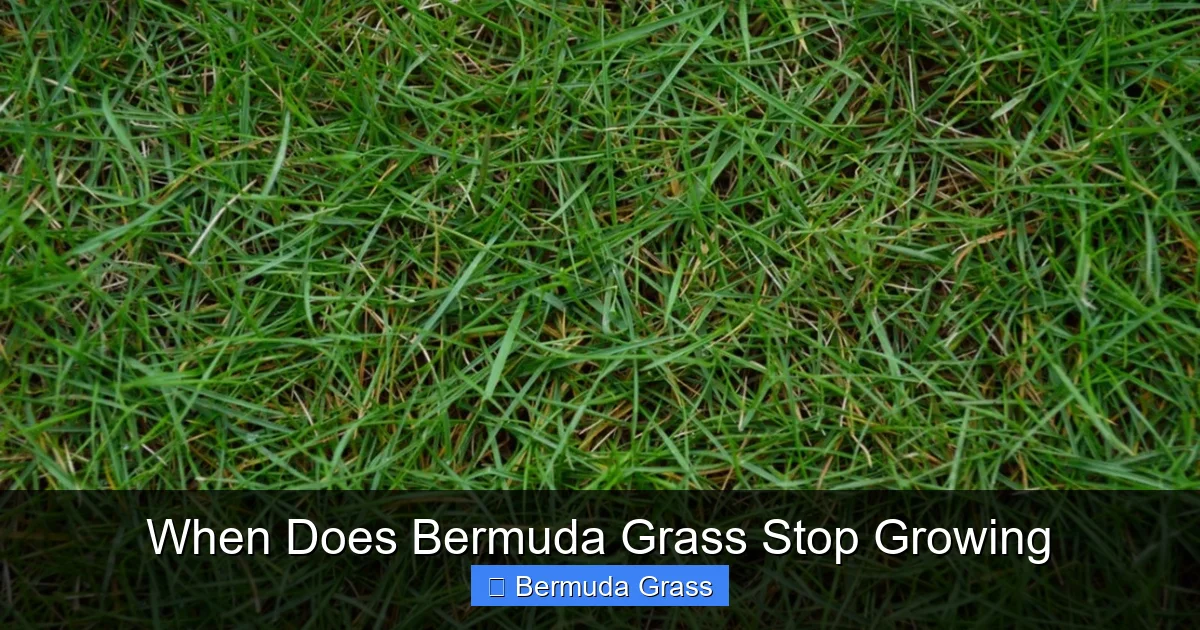
Visual guide about When Does Bermuda Grass Stop Growing
Image source: gardeningknowhow.com
The single most critical factor determining `when does Bermuda grass stop growing` is temperature, specifically consistent soil temperature. While air temperature gives you a good hint, it’s the temperature of the soil that truly dictates the grass’s physiological processes.
Critical Temperature Thresholds
Bermuda grass begins to slow its growth once air temperatures consistently dip below 65°F (18°C). However, it doesn’t typically enter full dormancy until soil temperatures consistently fall below 50-55°F (10-13°C). At these cooler temperatures, the grass’s metabolic processes significantly reduce, and photosynthesis slows to a crawl. The plant essentially puts itself to sleep, pulling energy and nutrients from its blades down into its roots and rhizomes for storage. This allows it to withstand freezing temperatures that would otherwise damage or kill actively growing tissue. This is `when does Bermuda grass stop growing` its green blades and starts to turn brown.
Gradual Cooling vs. Sudden Frost
The transition into dormancy can be gradual or more abrupt depending on your local weather patterns.
- Gradual Cooling: In regions with a slow transition from warm autumn days to colder winter nights, Bermuda grass will typically show a more gradual color change. You’ll notice it lose its vibrant green, perhaps becoming a duller green, then yellow, and finally tan or brown over several weeks. This allows the grass ample time to store nutrients.
- Sudden Frost: A sudden, sharp frost or freeze can cause a very rapid change in your Bermuda grass’s appearance. The cells in the blades can be damaged quickly by the cold, leading to an almost immediate browning. While the top growth might be killed back quickly, the root system is usually fine if the soil temperature hasn’t dropped below the critical threshold for an extended period. This rapid browning indicates `when does Bermuda grass stop growing` *visibly* above ground.
The Onset of Dormancy: Signs to Look For
You don’t need a thermometer buried in your lawn to tell `when does Bermuda grass stop growing` and enters dormancy, though monitoring soil temperatures can be helpful. Your lawn itself will give you plenty of visual and growth-related clues.
Color Change: From Green to Tan
This is the most obvious and universally recognized sign. As temperatures drop and growth slows, the chlorophyll (the pigment that gives grass its green color) breaks down. Your Bermuda grass will gradually lose its vibrant green hue, turning yellowish, then a dull tan or straw brown. This uniform color change across your lawn is a clear indicator that it has entered its dormant state.
Slowed or Stalled Growth
During its active growing season, Bermuda grass often needs mowing every 5-7 days, sometimes even more frequently. As it heads into dormancy, you’ll notice a significant decrease in growth. The need for mowing will reduce drastically, eventually ceasing altogether. This lack of visible growth is another strong sign `when does Bermuda grass stop growing` for the season.
Less Resilience
Actively growing Bermuda grass is tough and resilient. However, dormant Bermuda grass is more fragile. Its blades are dry and brittle, making it more susceptible to damage from foot traffic or heavy machinery. Walking on dormant grass can crush the brittle blades, leading to worn paths that might be slower to recover in the spring.
Factors Influencing Dormancy Timing and Duration
While temperature is the primary driver, several other factors can influence the exact timing of `when does Bermuda grass stop growing` and how long it remains dormant.
Geographic Location and Climate
This is perhaps the biggest secondary factor.
- Northern Regions (e.g., Transition Zone): In areas like the upper parts of the southern states, Bermuda grass will enter dormancy earlier in the fall (late October/early November) and remain dormant for a longer period, often not fully greening up until late April or May.
- Southern Regions (e.g., Deep South, Florida, Coastal Texas): In warmer climates, Bermuda grass might enter dormancy later (late November/December) or, in some very mild winters, might not enter full dormancy at all, simply slowing its growth significantly. Its dormant period will also be much shorter.
Sunlight Exposure
As autumn progresses, the days get shorter, and the angle of the sun changes. Reduced sunlight hours and intensity can contribute to the slowing of growth and hasten the onset of dormancy, even if temperatures are still somewhat mild. Less light means less photosynthesis.
Soil Moisture Levels
While Bermuda grass is drought-tolerant, extreme drought conditions in the late fall can stress the grass and encourage it to enter dormancy earlier than it would otherwise. Conversely, consistently wet, cold soils can sometimes exacerbate dormancy issues, especially if they lead to disease.
Nutritional Health of the Turf
A well-fed, healthy lawn that received proper fertilization throughout the growing season and a balanced fall application (especially potassium) is generally more robust. It might hold its color a bit longer and be better equipped to handle the stresses of dormancy and cold weather. A poorly nourished lawn might enter dormancy prematurely or struggle to recover.
Specific Bermuda Grass Cultivar
Not all Bermuda grass varieties are created equal. Some newer cultivars have been bred for improved cold tolerance and might stay green longer into the fall and green up earlier in the spring compared to older, less cold-hardy types. If you know your specific cultivar, you can research its characteristics.
Preparing Your Bermuda Grass for Winter Dormancy
Understanding `when does Bermuda grass stop growing` isn’t just about observation; it’s also about action. Proper preparation before your lawn enters dormancy is critical for its health and ensures a quicker, more robust green-up in the spring.
Last Mowing of the Season
As growth slows, gradually lower your mowing height. For the final mow of the season, aim to cut your Bermuda grass slightly shorter than your usual summer height, but not excessively short. A height of 1-1.5 inches is often recommended. This reduces the amount of leaf blade that could potentially get frost damage and helps prevent fungal diseases that thrive in tall, damp grass over winter.
Fall Fertilization
This is one of the most important steps. Apply a “winterizer” or fall fertilizer that is high in potassium (the third number in the NPK ratio, e.g., 5-10-20). Potassium helps strengthen the grass’s cell walls, improving its cold hardiness and root development. Apply this fertilizer several weeks before the typical onset of dormancy in your area, while the grass is still actively growing enough to absorb the nutrients. Avoid high-nitrogen fertilizers at this time, as nitrogen promotes lush top growth that is vulnerable to cold.
Appropriate Watering
While dormant grass requires less water than actively growing grass, it’s not entirely drought-proof.
- Before Dormancy: Continue watering as needed in the fall until temperatures consistently drop. Ensure the soil is moist (but not waterlogged) before the first hard freeze. This can help insulate the roots.
- During Dormancy: In areas with dry winters, occasional watering (once a month or less, if there’s no natural precipitation) on warmer days can prevent severe desiccation, especially for young lawns. Avoid watering if the ground is frozen.
Leaf Removal
If you have deciduous trees, ensure you remove fallen leaves from your Bermuda grass lawn before winter sets in. A thick layer of leaves can smother the grass, block essential sunlight (even dormant grass benefits from some light to the crowns), and create a damp, dark environment conducive to fungal diseases.
Weed Control
Fall is an excellent time to apply a pre-emergent herbicide to prevent winter weeds like poa annua (annual bluegrass) from germinating. These weeds can become a problem in your dormant Bermuda grass, competing for nutrients and water in the spring.
Awakening from Dormancy: Spring’s Arrival
Just as temperature signals `when does Bermuda grass stop growing`, it also dictates when it will wake up.
Rising Soil and Air Temperatures
Bermuda grass will typically begin to break dormancy and show signs of green-up when consistent soil temperatures rise above 60-65°F (15-18°C). This usually happens in early to mid-spring, depending on your geographic location. Air temperatures will also be consistently warmer, and day lengths will be increasing.
Gradual Greening
The green-up process is usually gradual. You might notice small patches of green appearing first, often in areas that receive more sunlight or are slightly warmer. Over several weeks, as temperatures continue to rise, the green will spread across the entire lawn. Don’t expect a sudden burst of green overnight; it’s a slow and steady process.
First Mowing and Fertilization
Once your Bermuda grass shows significant signs of greening up and active growth has resumed, you can begin your spring lawn care routine.
- Scalping: Many lawn enthusiasts “scalp” their Bermuda grass in early spring by mowing it much lower than usual. This removes the remaining dormant, straw-colored blades and encourages new green growth. Be sure the grass is actively growing and not just starting to green before scalping.
- Spring Fertilization: Apply a balanced fertilizer (e.g., 16-4-8 or similar) designed for spring green-up to provide the nutrients needed for robust growth.
Troubleshooting: Unexpected Dormancy or Poor Recovery
Sometimes, your Bermuda grass might not follow the expected dormancy pattern, or it might struggle to recover in the spring. Understanding `when does Bermuda grass stop growing` is also about knowing when it’s stopping too soon or not waking up right.
Early Dormancy
If your Bermuda grass turns brown significantly earlier than your neighbors’ or earlier than expected based on temperatures, it could be a sign of stress.
- Drought Stress: Lack of water in late summer or early fall can induce premature dormancy.
- Nutrient Deficiency: A lack of essential nutrients can weaken the grass, making it more susceptible to stress and earlier dormancy.
- Disease or Pest Issues: Fungal diseases or insect infestations can damage the grass, causing it to brown prematurely. Inspect your lawn closely for signs of disease (spots, irregular patterns) or pests.
Patchy Recovery
If your lawn greens up unevenly in the spring, with some areas remaining brown, consider these factors:
- Uneven Nutrients: Areas that didn’t receive adequate fall fertilization might be slower to recover.
- Compaction: High-traffic areas or compacted soil can hinder root growth and water penetration, leading to patchy recovery.
- Winter Damage: Severe winter conditions, prolonged deep freezes, or excessive foot traffic on dormant grass can damage specific areas, delaying or preventing their recovery.
Not Greening Up
If your Bermuda grass fails to green up at all by late spring when soil temperatures are consistently above 65°F, it’s a serious concern.
- Prolonged Cold: An unusually cold or extended winter might simply delay recovery. Be patient.
- Root Damage: Severe winter conditions can kill off the root system in extreme cases.
- Underlying Issues: Persistent disease, severe compaction, or chemical spills could be preventing recovery.
In these cases, soil testing can reveal nutrient deficiencies or pH imbalances, and professional consultation might be necessary.
Beyond Dormancy: Year-Round Care Considerations
Understanding `when does Bermuda grass stop growing` and its dormant period is a critical piece of the puzzle, but remember that overall year-round care plays a huge role in its health and resilience.
Consistent Maintenance is Key
Throughout its active growing season (late spring to early fall), consistent proper mowing, regular watering, and appropriate fertilization are vital. A healthy, robust lawn going into winter will always fare better and recover more quickly than a neglected one. Think of dormancy as a well-deserved nap for a hard-working athlete – they need to be in good shape beforehand to rest effectively and come back strong.
Understanding Your Specific Climate
While this guide provides general timelines, pay close attention to your local weather patterns. Use local agricultural extension resources for specific recommendations tailored to your region. They can often provide precise timings for when to apply fertilizers, when to expect dormancy, and when to prepare for spring green-up.
Conclusion
Knowing `when does Bermuda grass stop growing` is fundamental for any lawn care enthusiast in warm climates. It’s a natural and essential part of the life cycle of this remarkable warm-season grass. By recognizing the signs of dormancy – primarily driven by falling soil temperatures – and taking proactive steps to prepare your lawn for its winter rest, you set it up for success. A well-prepared dormant lawn is a protected lawn, ready to burst forth with vibrant green growth come spring. So, embrace the seasonal changes, give your Bermuda grass the care it needs, and look forward to another stunning, resilient lawn when warmer days return.