Image source: Bing (Web (fair-use with source credit))
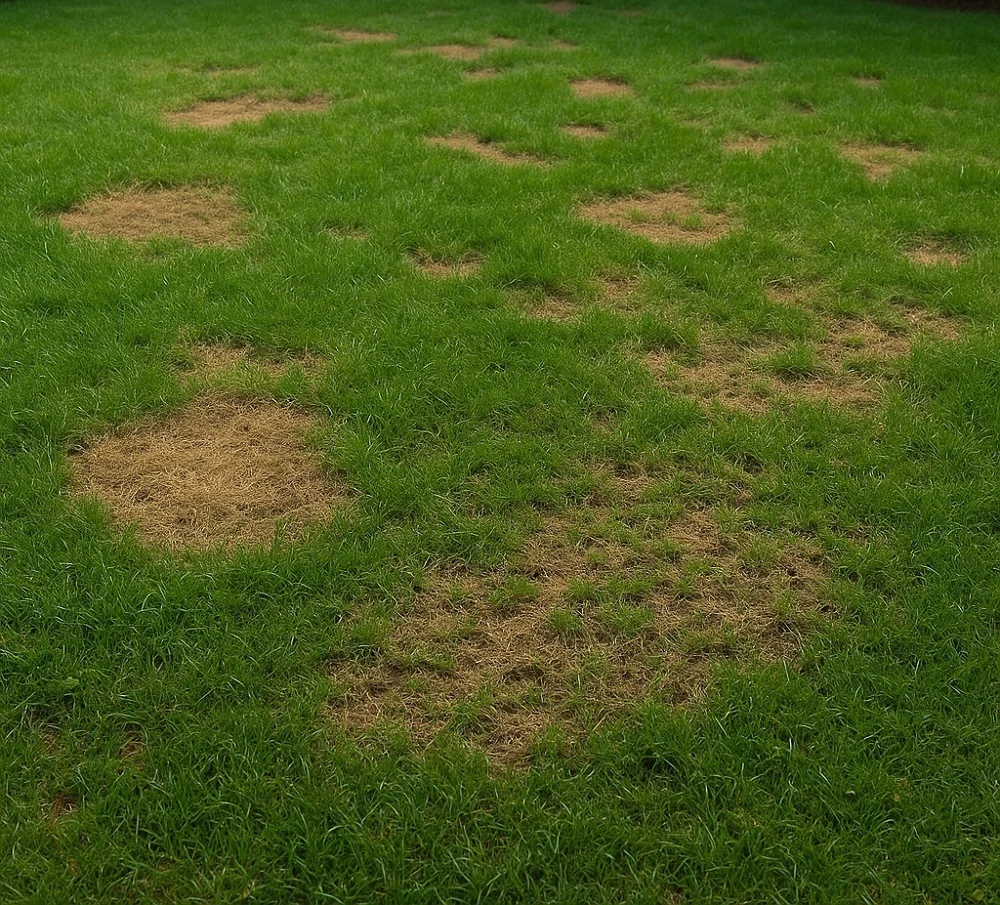
If you've ever walked across your lawn and noticed irregular brown patches that don't match the rest of the turf, you've probably wondered what does grub damage look like in a lawn. The answer isn't always obvious, because several common lawn problems produce nearly identical symptoms from a distance. Grubs feed on grass roots below the surface, so the damage shows up above ground only after the roots are already compromised.
The tricky part is that drought stress, fungal disease, and even dog urine can create brown spots that look remarkably similar. That's why accurate identification matters before you spend money on treatments. Research from university extension programs consistently shows that most homeowners misdiagnose grub damage at least once, often treating the wrong problem entirely.
Quick Answer
Grub damage appears as irregular brown patches of dead or dying grass. The turf feels spongy underfoot and pulls up easily like a loose carpet. You'll typically find C-shaped white larvae in the top 1 to 2 inches of soil beneath the damaged areas.
Animal digging from skunks or raccoons often accompanies heavy infestations.
Why Pictures Don't Tell the Whole Story
A photo of brown grass can show you the symptom, but it can't show you the cause. Grub damage shares its visual signature with at least five other common lawn problems. Without getting your hands in the soil, you're essentially guessing.
The real diagnostic work happens at ground level. You need to feel the turf, lift it, and count what's underneath. That's the only way to confirm grubs are actually responsible for what you're seeing above the surface.
Here's what makes visual-only diagnosis unreliable:
- Drought stress creates brown patches that follow sun exposure and soil type, not root damage patterns.
- Fungal diseases like brown patch produce similar discoloration but often show characteristic lesions on individual grass blades.
- Dog urine spots have a distinctive green ring around a dead center, which grub damage never produces.
- Snow mold appears in early spring in circular patterns, while grub damage peaks in late summer and fall.
- Chinch bug damage looks nearly identical but occurs in hot, sunny areas and requires completely different treatment.
The bottom line is that treating based on appearance alone wastes time, money, and often makes the problem worse by delaying the right intervention.
The Three Things to Look for Before You Treat
Before you reach for any product, run through these three checks. They'll tell you whether grubs are actually your problem or whether you're dealing with something else entirely.
1. The tug test. Grab a handful of brown grass and pull upward gently. If the sod lifts away from the soil with almost no resistance, the roots have been severed.
Healthy grass holds firm even when you pull hard. Grub-damaged turf peels back like a carpet because the root system is gone.
2. The spongy feel. Walk across the affected area in bare feet or flat shoes. Grub-damaged ground feels soft and bouncy underfoot, almost like walking on a mattress.
This happens because the thatch layer has separated from the soil beneath it after root destruction.
3. The dig test. Cut a 1-square-foot flap of sod with a spade or trowel and peel it back. Count the grubs you see in the top 1 to 2 inches of soil.
This is the only definitive way to confirm an active infestation.
If all three checks point the same direction, you've got grubs. If only one or two match, keep investigating before you treat.
What Grub Damage Actually Looks Like in Grass
Grub damage follows a predictable progression once you know what to watch for. It rarely appears as a uniform brown lawn. Instead, it shows up as scattered, irregular patches that expand over weeks.
Early signs include slight yellowing in isolated areas that don't respond to watering. The grass looks thirsty even when the surrounding turf is green and healthy. This happens because the grubs have already damaged enough roots to limit water uptake.
As feeding continues, the yellow patches turn brown and die. The dead areas expand outward from the initial feeding zone, often merging with neighboring patches. By late August or September, you might have large sections of dead turf that seem to appear almost overnight.
The damage pattern is typically random across the lawn, not following irrigation lines or sun exposure the way drought stress does. You'll see healthy grass right next to dead grass with no gradual transition zone.
Seasonal timing matters here. Grub damage becomes visible from mid-summer through fall, peaking in September and October in most regions. If you're seeing brown patches in May or June, grubs are unlikely to be the cause.
That's more likely winter injury, spring disease, or early drought stress.
The Spongy Lawn Test That Everyone Skips

Image source: Bing (Web (fair-use with source credit))
Most homeowners skip the spongy lawn test entirely, and it's arguably the fastest way to confirm grub activity without digging. The test takes about 30 seconds and requires no tools.
Walk slowly across the brown areas and pay attention to how the ground feels beneath your feet. Grub-damaged turf has a distinctly soft, cushiony feel because the root structure that normally anchors the sod has been destroyed. The thatch layer essentially floats on top of loose soil.
Compare that feeling to a healthy section of lawn. Firm ground means intact roots. Spongy ground means something has severed those roots, and grubs are the most common culprit in mid-to-late summer.
This test works because grub feeding physically disconnects the grass from its root system. The sod remains in place visually, but it's no longer anchored. That separation creates the spongy sensation you can feel through the soles of your shoes.
If the ground feels firm and the grass resists when you pull it, your brown patches are probably caused by something else. Move on to checking for fungal signs, irrigation issues, or other stress factors before assuming grubs are involved.
What the Grubs Look Like When You Dig
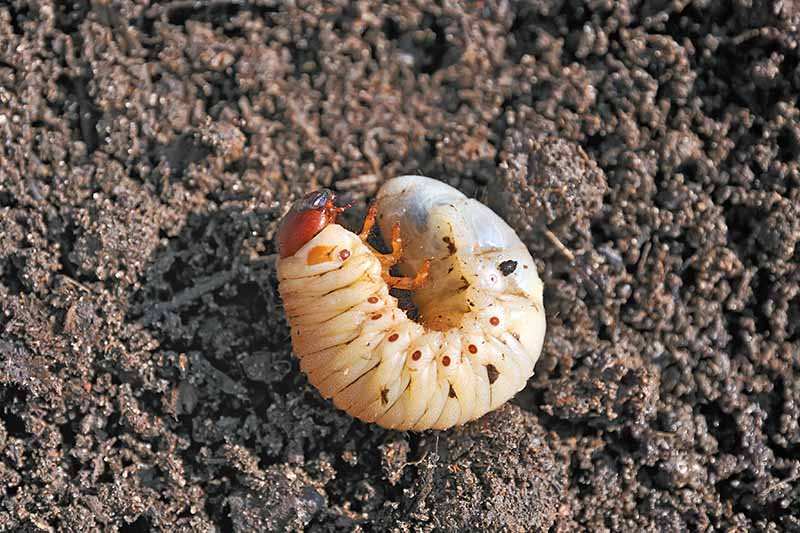
Image source: Bing (Web (fair-use with source credit))
Once you cut that square of sod and flip it over, here's what you're looking for. True white grubs are C-shaped, off-white or cream-colored larvae with a distinct tan or brown head capsule. They have three pairs of legs clustered near the head and a slightly darkened area at the rear end, which is their last body segment containing partially digested grass.
Japanese beetle grubs typically reach about 1 inch long when fully grown. European chafer grubs are slightly smaller, usually around 0.75 inches. May/June beetle grubs can grow larger, sometimes exceeding 1.25 inches depending on the species.
Size alone won't confirm identification, though. The raster pattern, a series of tiny spines arranged on the underside of the last body segment, is what entomologists use to distinguish between species. You'd need magnification to see that pattern clearly, and for most homeowners, it's not necessary.
What matters more is whether you find enough grubs to justify treatment. Extension guidelines from land-grank universities generally cite 10 or more grubs per square foot as the threshold for cool-season turf. If you're counting 5 to 9 per square foot, monitor the area closely but don't panic.
Lower numbers rarely cause visible damage.
Grub Damage vs. Everything Else That Looks Like It
This is where most homeowners go wrong. Brown grass is brown grass from a distance, and the list of possible culprits is long enough to frustrate anyone trying to self-diagnose.
Here's how to tell the difference between grub damage and other common lawn problems:
| Problem | Key Identifiers | Timing | Root Check |
|---|---|---|---|
| Grub damage | Spongy turf, pulls up easily, C-shaped larvae in soil | July through October | Roots severed, minimal attachment |
| Drought stress | Follows sun exposure and soil type, uniform browning | Hot, dry periods | Roots intact, grass recovers with water |
| Fungal disease (brown patch) | Lesions on individual blades, frog-eye pattern | Warm, humid weather | Roots intact, damage follows moisture |
| Dog urine | Dead center with bright green outer ring | Any time | Roots intact, very localized |
| Chinch bug damage | Hot, sunny areas, bugs visible at soil line | Mid-summer heat | Roots intact, bugs present in thatch |
The root check is your most reliable differentiator. Grubs destroy roots. Almost everything else doesn't.
If the grass pulls away from the soil with no resistance and you can't find intact root systems, grubs are almost certainly involved.
Fungal diseases can sometimes cause root rot, but they typically show above-ground symptoms first. Look for lesions on the grass blades, webbing in the thatch, or distinctive patterns like the frog-eye rings that brown patch produces.
When Raccoons and Skunks Beat You to the Diagnosis
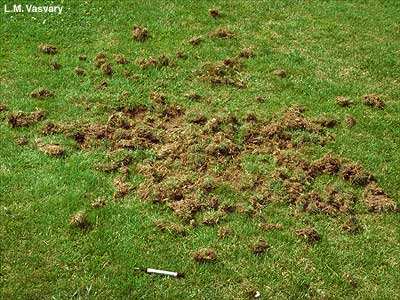
Image source: Bing (Web (fair-use with source credit))
If you wake up to find patches of torn-up sod scattered across your lawn, congratulations. The local wildlife has just confirmed what you suspected. Skunks, raccoons, and birds all feed on white grubs, and their digging activity is a reliable indicator of significant grub populations.
Skunks tend to create shallow, cone-shaped holes as they nose through the thatch. Raccoons are more destructive, sometimes rolling back entire sections of sod to reach the grubs underneath. Birds leave smaller pecking holes but can indicate lighter infestations.
Animal damage usually appears in late summer and early fall when grub populations peak and the larvae are large enough to be worth the effort. If you're seeing this activity, your grub count is almost certainly well above the treatment threshold.
The downside is that animal digging causes its own damage to the turf. Even if you treat the grubs successfully, you'll need to repair the torn areas. Reseeding or replacing sod in early fall gives the best chance of establishment before winter.
How Many Grubs Are Too Many?
Not every grub in your lawn requires action. Healthy turf can tolerate low populations without showing visible damage. The threshold for treatment depends on your grass type and overall lawn condition.
For cool-season grasses like Kentucky bluegrass, tall fescue, and perennial ryegrass, most extension programs recommend treatment when you find 10 or more grubs per square foot. Warm-season grasses such as Bermudagrass and zoysiagrass can often handle slightly higher numbers before showing stress.
Here's a practical breakdown:
- 0 to 4 grubs per square foot: No treatment needed. Monitor the area next season.
- 5 to 9 grubs per square foot: Borderline. Treat if the lawn is already stressed by heat, drought, or heavy use.
- 10 or more grubs per square foot: Treat. Visible damage is likely already occurring or will appear soon.
Keep in mind that these thresholds assume average lawn conditions. A well-maintained lawn with deep roots and proper irrigation can tolerate higher numbers than a stressed, thin lawn on compacted soil.
When It's Worth Treating and When It's Not
Treatment decisions should be based on confirmed grub counts, not just brown patches. If your dig test comes back with fewer than 5 grubs per square foot, save your money. The turf will likely recover on its own with proper watering and fall fertilization.
Treatment makes sense when you've confirmed populations above the threshold and the damage is actively spreading. It also makes sense as a preventive measure if you've had grub problems in previous years, since adult beetles tend to return to the same areas to lay eggs.
Curative treatments work best when applied while grubs are small and actively feeding, typically July through early September in most regions. By October, many grubs have moved deeper into the soil and become harder to reach with surface-applied products.
If you're seeing damage in spring, the grubs have already done their feeding and are preparing to pupate. Treatment at that point is largely ineffective. Focus instead on repairing the damaged turf and planning a preventive strategy for the following summer.
The Timing Trap That Wastes Money Every Year
Most grub treatment failures come down to timing, not product choice. Apply too early and the insecticide breaks down before grubs are active. Apply too late and the larvae have already caused their damage and moved deep into the soil.
The window for curative treatment is narrow. In most regions, mid-July through early August catches grubs when they're small, actively feeding, and still near the surface. By September, many species have grown larger and started descending beyond the reach of standard products.
Preventive treatments work on a completely different schedule. These products need to be applied in late May through early July, before adult beetles lay their eggs. The active ingredient needs to be in the soil when the young grubs hatch and begin feeding.
Once the grubs are visible and damage has started, preventive products won't help.
Here's the key distinction:
- Curative products target existing grubs. Apply when you find active larvae, ideally while they're still small.
- Preventive products target newly hatched grubs. Apply before you see any damage, based on history or regional beetle activity.
Confusing these two approaches is the most common expensive mistake homeowners make. Reading the product label carefully will tell you whether it's designed for curative or preventive use.
A Quick Grub Damage Checklist You Can Print
If you're walking your property and want to run through a systematic check, use this list. Work through each item before deciding on treatment.
- Brown patches present in irregular, non-uniform patterns
- Damage appeared between July and October
- Turf feels spongy or soft when walked on
- Grass pulls up easily with minimal root attachment
- Dig test reveals 10 or more grubs per square foot
- Grubs are C-shaped, cream-colored, with tan head capsules
- Animal digging (skunks, raccoons) observed in damaged areas
- Damage does not follow irrigation patterns or sun exposure
- Individual grass blades show no lesions or fungal signs
- Multiple areas affected, not just isolated spots
If you can check off at least seven of these items, grubs are your likely culprit. Fewer than five suggests you're dealing with something else entirely.
Frequently Asked Questions
Can grub damage heal on its own?
Yes, if the grub population stays below the damage threshold. Healthy grass with intact roots can recover from light feeding. Once grubs exceed 10 per square foot, though, the root loss is usually too severe for natural recovery without intervention.
How fast does grub damage spread?
Noticeable expansion happens over 2 to 4 weeks during peak feeding in August and September. A small patch in early August can become a large dead zone by early October if grub populations are high. Early detection and treatment can stop this progression before it becomes severe.
Will dead grass grow back after grubs are treated?
Dead grass itself doesn't regenerate. You'll need to reseed or replace the dead sections in early fall. The key benefit of treatment is preventing further damage to surrounding healthy turf.
Treated areas can recover fully if reseeded promptly while soil temperatures are still warm.
Do all brown patches mean grubs are present?
No. Brown patches have many causes including drought, disease, compaction, and chemical spills. The combination of spongy turf, easy lifting, and confirmed grub presence is what distinguishes grub damage from other issues.
Always verify with a dig test before treating.
Is grub damage worse in certain types of grass?
Cool-season grasses like Kentucky bluegrass and perennial ryegrass tend to show damage more visibly than some warm-season species. However, any grass type can suffer significant damage when grub populations are high enough. Lawns under stress from heat, drought, or heavy use will show symptoms sooner than healthy, well-maintained turf.