
Image source: Wikimedia Commons / Сарапулов (CC BY)
Why Your Lawn Is Dying (And Why It Might Not Be Grubs)
You're staring at brown patches spreading across your lawn, and the first thing that pops into your head is grubs. It's a fair guess, but here's the thing: most lawn damage blamed on grubs turns out to be something else entirely. Drought stress, fungal disease, compacted soil, and even pet urine can create patches that look almost identical to grub damage from a distance.
Before you spend money on treatments or tear up your turf, it's worth learning how to tell if you have grubs for real. The process is straightforward, takes about ten minutes, and only requires a spade. In our research, university extension services consistently report that fewer than half of the lawn samples homeowners send in actually have grub populations high enough to warrant treatment.
Quick Answer
You can tell if you have grubs by digging up a one-square-foot section of damaged turf and counting the larvae in the top three inches of soil. White grubs are C-shaped, cream-colored, with brown heads and three pairs of legs. If you find more than five to ten per square foot, treatment is typically recommended.
Fewer than that, and your lawn can usually recover on its own.
What Grub Damage Actually Looks Like vs. Everything Else
Grub damage follows a pattern that's distinct once you know what to look for. The patches tend to be irregular, not perfectly circular. They start small and expand outward as larvae feed on grass roots through late summer and fall.
The affected turf feels spongy underfoot because the root system has been severed from the soil.
Here's where it gets tricky. Drought stress also causes brown patches, but those usually appear during hot dry spells and improve with watering. Fungal diseases like brown patch create more defined rings or "smoke rings" at the edges.
Grub damage doesn't respond to water or fungicide because the roots are physically gone.
The most reliable visual clue is turf that lifts away from the soil like a loose carpet. When grubs chew through the roots, nothing holds the sod down. If you can grab a handful of brown grass and pull it up with almost no resistance, that's a strong indicator of grub activity.
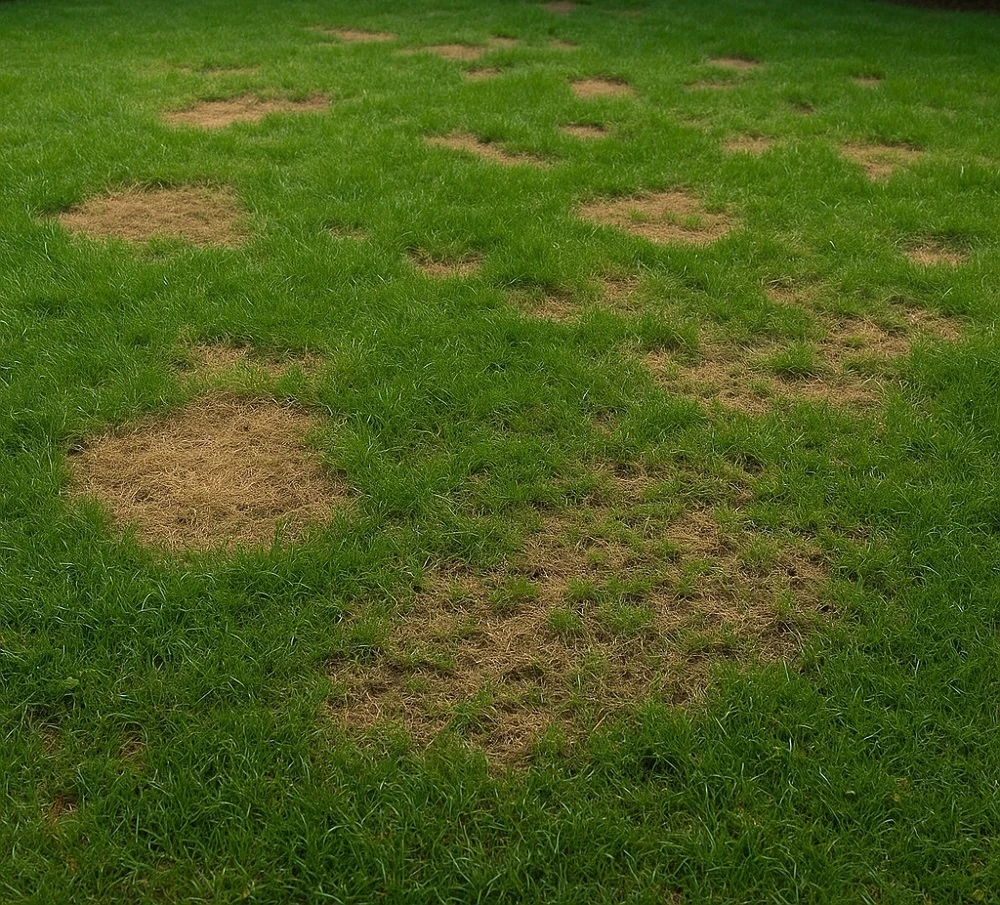
Image source: Bing (Web (fair-use with source credit))
Animal digging is another indirect sign. Skunks, raccoons, and birds tear up lawns at night searching for grubs. If you notice small cone-shaped holes or patches of disturbed sod appearing overnight, something underground is attracting them.
| Damage Type | Pattern | Response to Water | Turf Lift Test |
|---|---|---|---|
| Grubs | Irregular, expanding | No improvement | Lifts easily |
| Drought stress | Uniform in sunny areas | Improves within days | Roots hold firm |
| Fungal disease | Circular with defined edges | No improvement | Roots hold firm |
| Pet urine | Small, concentrated spots with green outer ring | No improvement | Roots hold firm |
| Chinch bugs | Irregular, starts in hot sunny areas | No improvement | Roots hold firm |
The Step-by-Step Dig Test: How to Check Your Lawn Properly
Visual clues only get you so far. The only way to confirm grubs is to physically check the soil. This test takes about ten minutes and gives you a definitive answer.
Start by choosing a spot where damaged turf meets healthy grass. That transition zone is where grubs are most active. Avoid the center of a completely dead patch because grubs may have already moved on or died off.
Step 1: Cut the outline. Use a sharp spade to cut a square about one foot across, slicing about three inches deep on three sides only. Think of it like opening a flap of sod.
Step 2: Peel back the turf. Gently fold the sod back like a hinged door. Try to keep the roots intact so you can see what's been feeding on them.
Step 3: Examine the soil. Look through the top two to three inches of soil in that square foot. White grubs are usually curled into a C-shape and range from a quarter inch to over an inch long depending on the species and age.
Step 4: Count what you find. Count every grub in that square foot. Then check two or three more spots around the lawn to get an average.
Step 5: Replace the sod. Press the flap back down and water it well. The turf should re-root within a week or two if the roots are still partially intact.
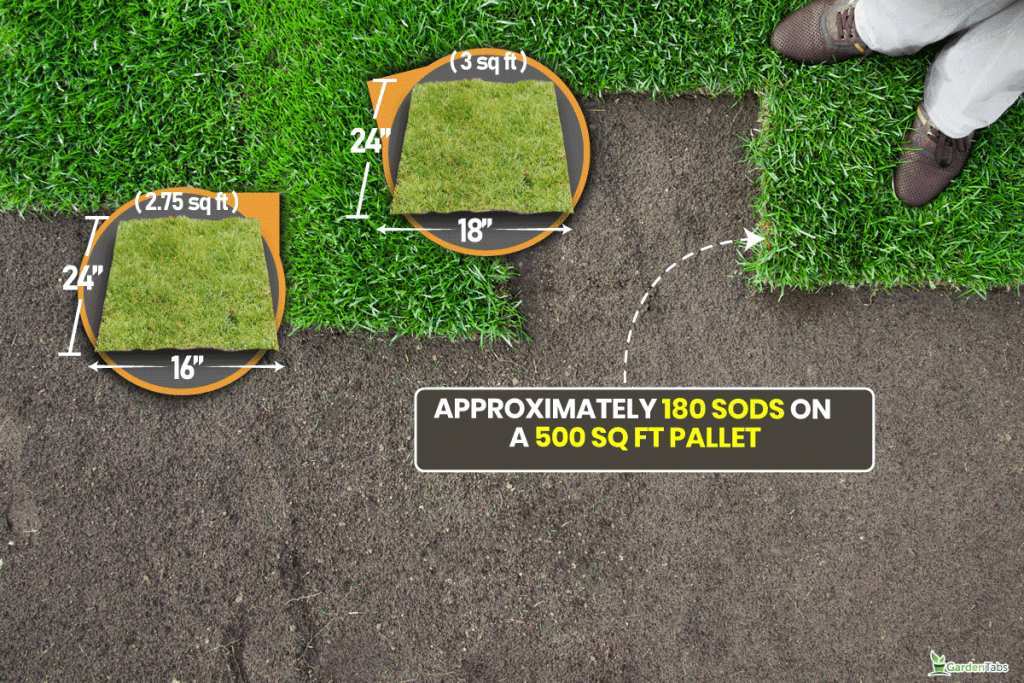
Image source: Bing (Web (fair-use with source credit))
The best time to run this test is late August through October. That's when grubs are actively feeding near the surface and large enough to spot easily. Spring testing is less reliable because grubs have either pupated into adult beetles or moved deeper into the soil.
How Many Grubs Is Too Many? The Threshold That Matters
Finding a few grubs doesn't mean you have a problem. Healthy lawns tolerate low populations without any visible damage. The key number is the treatment threshold, and it varies by species and turf type.
For Japanese beetle grubs, most university extension guidelines recommend treatment when you find five to eight grubs per square foot. European chafers are slightly more damaging at lower numbers, so the threshold drops to around five per square foot. Masked chafers and June beetles often require ten or more per square foot before treatment makes sense.
Here's why this matters. If you treat when counts are below threshold, you're spending money on product that isn't needed. You're also introducing chemicals into the environment for no benefit.
On the flip side, waiting too long means the damage is already done and recovery takes much longer.
| Species | Treatment Threshold (per sq ft) | Peak Feeding Period |
|---|---|---|
| Japanese beetle | 5–8 | August–October |
| European chafer | 5–6 | September–November |
| Masked chafer | 8–10 | August–October |
| June beetle | 10–12 | September–November |
| Black turfgrass ataenius | 15–20 | July–September |
If your count falls below the threshold for your species, skip treatment entirely. Water the lawn well, apply a fall fertilizer, and let the grass recover on its own. Most cool-season turfgrasses can handle minor root damage without any intervention.
What Species Are You Dealing With? Why It Changes Everything
Not all grubs are created equal. The species determines when they're most vulnerable to treatment, how much damage they cause, and which control methods work best. Identifying the species isn't always necessary for a homeowner, but it helps if you're dealing with recurring problems.
The easiest way to tell species apart is by looking at the raster pattern. That's the arrangement of hairs and spines on the underside of the grub's last abdominal segment. You need a magnifying glass or loupe to see it clearly, but the pattern is unique to each species.
Japanese beetle grubs have a V-shaped raster pattern. European chafers have two parallel rows of hairs forming a Y-shape. Masked chafers have a more random, scattered pattern.
If you're not comfortable identifying them yourself, most state cooperative extension services will identify grubs from a sample you mail in.

Image source: Wikimedia Commons / Tim Gage (CC BY-SA)
The life cycle timing also varies by species. Japanese beetles lay eggs in July, so their grubs are small and easiest to kill in August. European chafers hatch later, pushing the optimal treatment window into September.
June beetles have a three-year life cycle, meaning you'll see grubs in your lawn for multiple seasons before the population naturally declines.
If you're seeing damage in spring, it's almost never worth treating. By that point, grubs have finished feeding and are pupating into adults. Spring treatments are largely ineffective and a waste of money.
Focus your efforts on late summer and fall when young grubs are small, actively feeding, and vulnerable.
Signs Animals Are Digging for Grubs (The Indirect Clue)
Sometimes the best evidence of grubs isn't the grubs themselves. It's the mess animals leave behind when they come looking for them. Skunks, raccoons, and armadillars are the usual suspects, and they're remarkably efficient at finding grub concentrations underground.
Skunks create small cone-shaped holes, about three to four inches across, where they've punched through the turf to snatch grubs. Raccoons are messier. They'll roll back sections of sod like they're unrolling a carpet.
Bird activity, especially crows and starlings, shows up as small pecking holes scattered across damaged areas.
The timing matters here. Animal digging usually peaks in early spring and late fall, which is exactly when grubs are feeding near the surface. If you're seeing fresh digging in those windows, it's worth running the dig test to confirm what's attracting them.
One important note: animal damage can look worse than the grub damage itself. A single skunk can tear up a surprising amount of lawn in one night searching for a relatively small grub population. Don't assume heavy animal activity means you have a massive infestation.
Check the soil to get the real picture.
When to Treat and When to Leave It Alone
This is where most people get it wrong. They see grubs, panic, and buy the first product they find on the shelf. But treatment isn't always the right call, and timing is everything.
If your dig test comes back below the treatment threshold for your species, skip treatment entirely. Your lawn can recover from low-level feeding with proper watering and a good fall fertilizer application. Over-treating wastes money and exposes beneficial organisms in your soil to unnecessary chemicals.
If you're above threshold, the next question is timing. Curative treatments work best when grubs are small and actively feeding, typically August through September in most regions. By October, grugs are larger and harder to kill.
They've also done most of their root damage by that point.
Spring treatment is almost never worth it. Grubs have stopped feeding and are preparing to pupate into adult beetles. Products applied in spring hit a target that's about to leave anyway.
Save your money and plan for the following fall instead.
There's one exception: if you had severe damage the previous fall and want to prevent a repeat, a preventive application in June or July can stop the next generation before they cause harm. This approach uses different active ingredients than curative treatments, so read labels carefully.
Curative vs. Preventive Treatment: Which One You Actually Need
These two approaches use different products, different timing, and different logic. Mixing them up is one of the most common mistakes homeowners make.
Curative treatments target grubs that are already present and causing damage. Products containing trichlorfon or carbaryl work fast, often killing grubs within 24 to 72 hours. They're your go-to when you've confirmed an active infestation above the treatment threshold.
Apply them in late summer when grubs are small and feeding near the surface.
Preventive treatments are applied before grubs are a problem. Products with imidacloprid or chlorantraniliprole are applied in June or July, before adult beetles lay eggs. They create a residual barrier in the soil that kills young grubs as they hatch and start feeding.
This approach works well if you've had recurring grub problems year after year.
Here's the key difference: preventive products won't fix an existing infestation. They're designed to stop the next generation, not kill the ones already feeding. If you apply a preventive product in September after finding grubs, you've wasted your money.
| Treatment Type | Active Ingredients | Application Timing | Best For |
|---|---|---|---|
| Curative | Trichlorfon, carbaryl | August–September | Active infestations above threshold |
| Preventive | Imidacloprid, chlorantraniliprole | June–July | Recurring problems, peace of mind |
| Biological | Milky spore, beneficial nematodes | August–September | Long-term suppression, organic approach |
Biological controls deserve a mention here. Milky spore disease targets Japanese beetle grubs specifically and can provide suppression for years after application. Beneficial nematodes, specifically Heterorhabditis bacteriophora, actively seek out and kill grubs in the soil.
Both work best in warm, moist soil and require patience. They won't deliver overnight results like chemical options.
Common Mistakes People Make When Diagnosing Grub Problems
The biggest mistake is treating without confirming. Brown patches have dozens of causes, and grubs are just one of them. If you haven't done a dig test, you're guessing.
Guessing leads to wasted money and sometimes makes the real problem worse.
Another common error is checking at the wrong time. Spring inspections are nearly useless because grubs have moved deep into the soil or already pupated. Late summer and early fall give you the most accurate picture of what's happening underground.
People also tend to overestimate how many grubs they've found. A handful of grubs in a square foot sounds alarming, but it's actually below the treatment threshold for most species. Always compare your count to the threshold for the specific species you're dealing with.
Using the wrong product for the season trips people up too. Applying a preventive product when you already have an active infestation won't solve the problem. Similarly, applying a curative product in spring when grubs aren't feeding is throwing money away.
Finally, ignoring the rest of the lawn's health is a mistake. Grubs thrive in stressed turf. If your lawn is already struggling from poor soil, improper watering, or heavy thatch, it's more vulnerable to grub damage.
Fix the underlying issues and your lawn becomes more resilient overall.
Expert Tips for Getting It Right the First Time
Start with the dig test before you do anything else. It's free, it's fast, and it gives you a definitive answer. Everything else flows from what you find in that square foot of soil.
Check multiple spots. Grub populations aren't evenly distributed across a lawn. One area might have twenty grubs per square foot while another has two.
Sample at least three or four locations to get an accurate average.
Water the lawn well a day or two before you dig. Moist soil makes it easier to cut cleanly and peel back the turf without tearing roots. It also brings grubs closer to the surface where you can spot them.
Keep records. Note the date, location, species if you can identify it, and the count per square foot. This helps you track whether populations are increasing or decreasing year to year.
It also helps you decide if preventive treatment is worth the investment.
If you're unsure about species identification, contact your state cooperative extension service. Most will identify grubs from a sample at no cost. Knowing the exact species helps you time treatment correctly and choose the most effective product.
Don't forget about cultural practices. Proper mowing height, adequate watering, and fall aeration all help lawns recover from minor grub damage without any chemical intervention. A healthy lawn is your best long-term defense against any pest problem.
Frequently Asked Questions About Grub Detection
Can I see grubs without digging?
Not reliably. Adult beetles are visible in summer, but the larvae live underground. Surface signs like brown patches or animal digging suggest grubs, but only a dig test confirms them.
What month is best for checking grubs?
Late August through October gives the most accurate results. Grubs are actively feeding near the surface and large enough to spot easily during this window.
Do all grubs damage lawns?
No. Some scarab beetle larvae feed on decaying organic matter, not living grass roots. Only certain species like Japanese beetles, European chafers, and June beetles cause significant turf damage.
How deep do grubs live in the soil?
Most damaging species feed in the top two to three inches of soil. During winter they move deeper, sometimes six to eight inches down, which is why spring testing is unreliable.
Will my lawn recover from grub damage on its own?
If grub counts are below the treatment threshold, yes. Water deeply, apply fall fertilizer, and the grass usually re-roots and fills in by the following spring.
Is it normal to find a few grubs in every lawn?
Absolutely. Low populations are common and harmless. Treatment only makes sense when counts exceed the threshold for your specific species.
Your Decision Guide: What to Do Based on What You Find
If your dig test shows fewer than five grubs per square foot, do nothing. Water your lawn, fertilize in fall, and monitor next year. Your turf will recover without intervention.
If you're between five and ten per square foot, identify the species first. Japanese beetles and European chafers at that level warrant treatment. Masked chafers and June beetles at that level usually don't.
If you're above ten per square foot, treat with a curative product in late summer. Choose trichlorfon or carbaryl for fast results. Water the product into the soil according to label directions.
If you had severe damage this year and want to prevent a repeat, plan a preventive application for June or July next year. Use imidaclordiprid or chlorantraniliprole and mark your calendar.
If you're still unsure, contact your state cooperative extension service. They'll help you interpret your findings and recommend the right approach for your region and turf type.