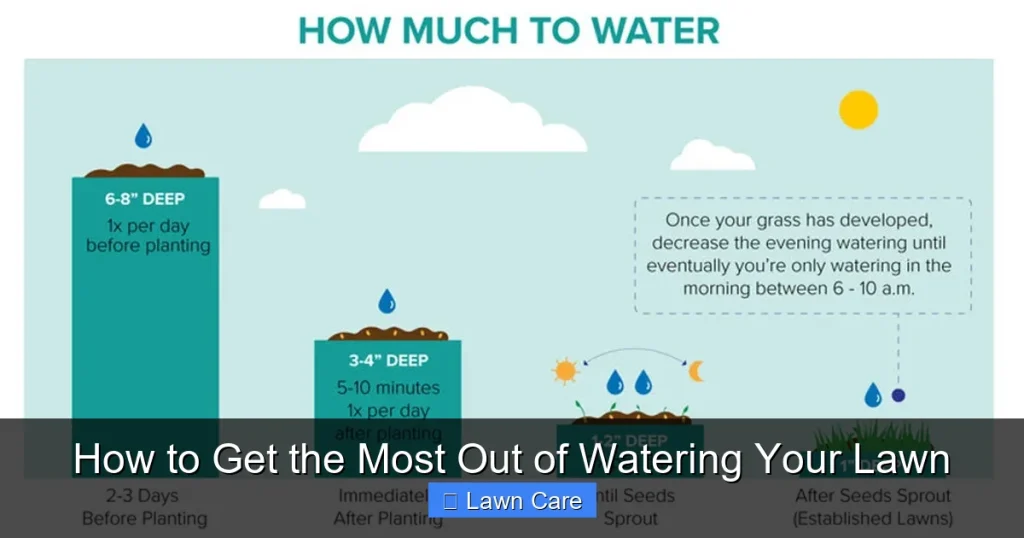
Watering your lawn correctly is key to a lush, healthy green space. This guide explains how to get the most out of watering your lawn by focusing on depth, timing, and frequency. Understanding your lawn’s needs and using the right techniques will save water and promote stronger root growth.
You’ve probably spent time and effort getting your lawn looking just right. You’ve mowed it, maybe even fertilized it, and you’re aiming for that perfect carpet of green. But are you giving it the best drink it can get? Watering your lawn might seem straightforward – turn on the spigot, let the water flow – but there’s a real art and science to it. Getting the most out of watering your lawn isn’t just about keeping the grass alive; it’s about helping it thrive.
Many homeowners make common mistakes that can actually harm their lawns, leading to shallow roots, increased disease, and wasted water. Overwatering can lead to problems like mushrooms popping up and can even invite pests. Underwatering, of course, stresses the grass and makes it susceptible to browning and thinning. The good news is that with a few simple adjustments to your watering habits, you can transform your lawn from just surviving to truly flourishing. Let’s dive into how to get the most out of watering your lawn and create a yard you’ll love.
## Understanding Your Lawn’s Thirst: The Science of Watering
Think of watering your lawn like giving it a deep, nourishing drink rather than a quick sip. Grass needs water to photosynthesize, grow, and stay healthy. However, the way you deliver that water makes a huge difference. The goal is to get moisture down to the roots, where the grass can actually use it, and to do so efficiently.
### The Power of Deep Watering
The most critical principle for effective lawn watering is to water deeply and infrequently. This means giving your lawn a good, long drink when you do water, rather than light, daily sprinklings. Why is this so important? When you water deeply, the moisture penetrates further into the soil. This encourages your grass’s roots to grow deeper in search of water.
* **Benefits of Deep Roots:** Deeper roots make your lawn more resilient. It can better withstand dry periods because the roots can access water stored deeper in the soil. Deep roots also help anchor the grass, making it more resistant to foot traffic and erosion.
* **How to Achieve Deep Watering:** Instead of watering for 5-10 minutes every day, aim for longer watering sessions, perhaps 20-30 minutes, but only a few times a week. The exact duration will depend on your sprinkler system and soil type, but the principle remains the same: soak the soil thoroughly.
### The Problem with Shallow Watering
Frequent, short watering sessions tend to keep the surface layer of the soil moist. This sounds good, but it has drawbacks. Grass watered this way develops shallow root systems. These shallow roots are much more vulnerable to drying out. If you stop watering for even a short time during a hot spell, the grass will quickly wilt and suffer. It’s like a person only ever taking small sips of water; they stay hydrated for a short while, but they aren’t truly nourished.
## Timing is Everything: When to Water Your Lawn
The time of day you water your lawn significantly impacts its health and how much water actually benefits your grass. There’s a sweet spot that minimizes water loss and reduces the risk of disease.
### The Best Time: Early Morning Watering
The ideal time to water your lawn is between 4 AM and 9 AM. There are several excellent reasons for this:
* **Reduced Evaporation:** During these early morning hours, temperatures are cooler, and there’s less wind. This means much less water is lost to evaporation before it can soak into the soil.
* **Disease Prevention:** Watering in the morning allows the grass blades to dry off relatively quickly as the sun rises and the day warms up. If you water late in the evening, the grass can stay wet all night long. This damp environment is a breeding ground for fungal diseases, which can lead to unsightly brown spots and other problems.
* **Efficient Absorption:** Grass can absorb water more efficiently when temperatures are cooler and the sun isn’t beating down.
### What About Other Times?
* **Midday Watering:** Watering in the heat of the day is largely a waste of water. A significant portion will evaporate before it even reaches the roots. While it might temporarily cool the grass blades, it’s not an effective use of your resources.
* **Evening Watering:** As mentioned, this is the least desirable time. It increases the risk of fungal diseases because the grass stays wet for extended periods.
For more detailed guidance, check out the best time of the day to water your lawn.
## How Much Water Does Your Lawn Really Need?
Figuring out the right amount of water can feel like a guessing game, but there are ways to take the guesswork out of it. The general recommendation for most lawns is about 1 to 1.5 inches of water per week, either from rainfall or irrigation. However, this can vary greatly depending on several factors.
### Factors Influencing Watering Needs
* **Grass Type:** Different grass species have different water requirements. Cool-season grasses (like fescue and bluegrass) generally need more water than warm-season grasses (like Bermuda and Zoysia), especially during hot weather.
* **Soil Type:** This is a big one!
* **Sandy Soils:** These drain quickly. They can’t hold much water, so they require more frequent watering, but you still want to water deeply each time to push water down past the root zone if possible.
* **Clay Soils:** These soils hold water very well but drain slowly. They require less frequent watering, but you need to be careful not to overwater, as this can lead to waterlogging and root rot. It’s also important to water slowly to allow the clay to absorb the water without runoff.
* **Loam Soils:** This is the ideal soil type, a good balance of sand, silt, and clay, providing good drainage and water retention.
* **Weather Conditions:** Hot, dry, and windy weather will increase your lawn’s water needs. Conversely, cool, cloudy, or rainy periods will reduce them. Don’t water if you’ve had sufficient rainfall.
* **Sun Exposure:** Lawns in full sun will need more water than those in shady areas.
* **Slope:** Sloped areas can experience runoff more easily, meaning water doesn’t have as much time to soak in. You might need to water these areas more slowly or in cycles.
### The Tuna Can Test (or Similar Methods)
A simple way to measure how much water your sprinklers are applying is the “tuna can test.” Place several empty, flat-bottomed cans (like tuna cans or cat food cans) around your lawn in different zones. Run your sprinklers for a set amount of time (e.g., 15 minutes). After you’ve finished watering, measure the depth of the water in each can. Average the measurements. This will tell you how long you need to run your sprinklers to achieve a certain depth of water. For example, if you get 0.5 inches of water in 15 minutes, you’ll need to run them for 30 minutes to get 1 inch.
### Recognizing Signs of Thirst
Your lawn will tell you when it’s thirsty. Learn to recognize these signals:
* **Footprint Test:** Walk across your lawn. If your footprints remain visible for a while before the grass springs back, it’s a sign of thirst. Healthy, well-watered grass springs back quickly.
* **Color Change:** The grass may start to take on a dull, bluish-gray tint when it’s stressed from lack of water.
* **Leaf Blade Curling:** Some grass types will curl their leaf blades inward to conserve moisture.
If you see these signs, it’s time to water, and to water deeply.
## Optimizing Your Sprinkler System for Maximum Efficiency
The best watering practices can be undone by an inefficient sprinkler system. Ensuring your sprinklers are working correctly and are set up for even coverage is crucial to getting the most out of watering your lawn.
### Checking for Even Coverage
Uneven watering leads to dry spots and overwatered areas. Walk your lawn after watering and look for:
* **Dry Patches:** Areas that appear dry and lighter in color.
* **Standing Water:** Puddles that don’t drain away quickly.
* **Watering Rings:** Concentric circles of water from rotary sprinklers that don’t overlap sufficiently.
Adjust sprinkler heads, check for blockages, and consider the type of sprinkler you’re using. Pop-up spray heads are good for smaller areas, while rotors are better for larger lawns. Drip irrigation is excellent for garden beds but not typically used for entire lawns.
### Sprinkler Maintenance and Adjustments
* **Nozzles:** Ensure nozzles are clean and not clogged. Replace worn or damaged nozzles.
* **Head Alignment:** Sprinkler heads can get knocked out of alignment by lawnmowers, pets, or foot traffic. Straighten them to ensure they water the intended area.
* **Coverage Overlap:** For optimal coverage, the spray from one sprinkler head should reach the edge of the next one. This creates a uniform watering pattern.
* **Sprinkler Type:** Consider upgrading to more efficient sprinkler heads or systems if yours are old and inefficient. Smart controllers that adjust watering based on weather data can also save water and ensure your lawn gets what it needs.
## Beyond Watering: Complementary Lawn Care Practices
Watering is essential, but it’s just one piece of the puzzle. Other lawn care practices work in tandem with proper watering to create a healthy, resilient lawn.
### The Role of Aeration
Aeration involves creating small holes in the soil to allow air, water, and nutrients to penetrate deeper. This is especially important for compacted soils. When soil is compacted, water tends to run off the surface and doesn’t reach the roots effectively. Proper aeration improves water penetration and root growth, making your watering efforts much more effective. You can learn more about the importance of lawn aeration and how to do it right.
### Soil Health and Microbes
Healthy soil is alive with beneficial microbes that help break down organic matter and make nutrients available to your grass. Watering practices can impact these microbes. Overwatering can drown them, while consistent, deep watering encourages a healthy soil ecosystem. Considering ways to boost soil health, perhaps through organic matter or specific soil amendments, can complement your watering strategy.
### Dealing with Common Lawn Issues
Sometimes, problems arise that watering alone can’t fix. For instance, if you’re noticing mushrooms, it might indicate overwatering or excess thatch. Addressing these issues can improve overall lawn health. Similarly, a lawn struggling with pests or diseases may not respond well to watering alone; these issues often require targeted treatments. It’s also important to know how to deal with specific invaders like nutsedge or undesirable grasses. For example, learning how to get rid of nutsedge in your lawn can prevent it from choking out your desirable grass.
## Water Conservation: Smart Watering for a Greener Planet
Getting the most out of watering your lawn also means being mindful of water conservation. It’s good for your wallet and for the environment.
### Rainwater Harvesting
Consider installing rain barrels to collect rainwater from your roof. This free, natural water source is excellent for your lawn and garden. You can use it to supplement your regular watering schedule.
### Drought-Tolerant Grasses
If you live in a region prone to drought, consider overseeding your lawn with drought-tolerant grass varieties or establishing a new lawn with them. These grasses require less water once established.
### Mulching and Ground Cover
While not directly for the lawn, using mulch in garden beds around your lawn can help retain soil moisture, reducing the need for supplemental watering in those areas.
### Watering Restrictions
Always be aware of and adhere to any local watering restrictions. These are often put in place during dry periods to conserve community water resources.
By implementing these strategies, you can ensure your lawn receives the water it needs to thrive, all while being a responsible water user. Getting the most out of watering your lawn is a journey of observation, adjustment, and understanding your lawn’s unique needs. A little knowledge goes a long way in creating a beautiful, healthy, and sustainable green space.
Key Takeaways
- Water Deeply and Infrequently: Encourage deep root growth by watering for longer periods less often, rather than short, frequent sprinklings.
- Water in the Early Morning: The best time to water is between 4 AM and 9 AM to minimize evaporation and reduce the risk of fungal diseases.
- Know Your Soil Type: Different soils absorb water at different rates; sandy soils need more frequent watering than clay soils.
- Observe Your Lawn’s Signals: Learn to read your grass for signs of thirst, such as a bluish-gray tint or footprints that remain visible.
- Adjust for Weather Conditions: Increase watering during hot, dry spells and reduce it during cooler, rainy periods.
- Use the Right Tools: Ensure your sprinklers are efficient and covering the lawn evenly to avoid dry spots and overwatering.
Quick Answers to Common Questions
Why is deep watering better than frequent watering?
Deep watering encourages grass roots to grow deeper into the soil, making the lawn more drought-tolerant and resilient. Frequent, shallow watering leads to shallow roots that dry out quickly.
What is the best time of day to water my lawn?
The best time is in the early morning, between 4 AM and 9 AM. This minimizes water loss due to evaporation and reduces the risk of fungal diseases.
How can I tell if my lawn needs water?
Look for signs like footprints that remain visible after walking on the grass, a bluish-gray tint, or the grass blades curling inward.
Does soil type affect how often I should water?
Yes, sandy soils need more frequent watering because they drain quickly, while clay soils need less frequent watering because they retain moisture longer.
What is the “tuna can test” for lawn watering?
It’s a method where you place empty cans on your lawn, run your sprinklers, and measure the water depth in the cans to determine how long you need to water to achieve a desired depth.
Frequently Asked Questions
How much water does my lawn need per week?
Most lawns need about 1 to 1.5 inches of water per week, but this can vary based on grass type, soil, and weather conditions. It’s better to water deeply less often than lightly every day.
What happens if I overwater my lawn?
Overwatering can lead to shallow root development, increased susceptibility to fungal diseases, and can even encourage pests and weeds. It can also cause waterlogging of the soil.
How can I improve my sprinkler system’s efficiency?
Ensure sprinkler heads are clean, properly aligned, and adjusted for even coverage. Consider upgrading to more efficient sprinkler heads or using a smart controller that adjusts watering based on weather.
Should I water my lawn when it’s raining?
No, if your lawn has received adequate rainfall, you generally do not need to water. Your sprinkler system can often be programmed to skip watering cycles when rain is detected.
What is the difference between watering cool-season and warm-season grasses?
Cool-season grasses typically require more water, especially during the summer heat, while warm-season grasses are often more drought-tolerant once established.
Can watering my lawn affect soil health?
Yes, consistent, deep watering promotes a healthy soil environment, including beneficial microbes. Overwatering can harm these microbes and lead to soil compaction and disease.