If you've pulled back some turf and found mysterious pale larvae curled in the soil, you're probably wondering what do grass grubs look like so you can figure out if they're actually the problem. The identification matters. Wrong ID leads to wasted treatment money or, worse, spraying a lawn that doesn't need it.
In our research across New Zealand pest references, we've found that Costelytra zealandica, the New Zealand grass grub, has several consistent visual traits homeowners can learn. A fully grown third-instar larva reaches roughly 25 to 30 mm in length, according to Manaaki Whenua, Landcare Research pest data. Once you know what features to check, separating grass grubs from black beetle larvae and porina caterpillars becomes straightforward.
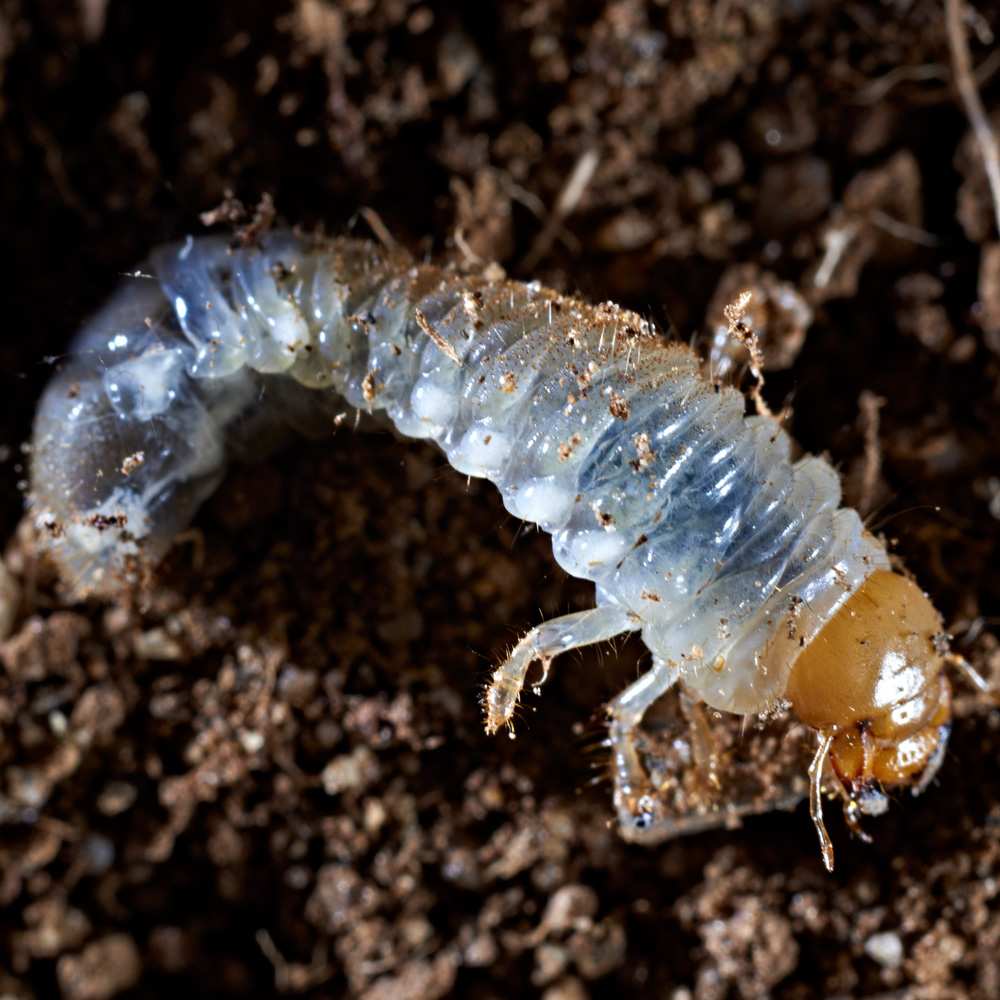
Image source: Bing (Web (fair-use with source credit))
Quick Answer
Grass grubs are creamy white to pale yellow scarab beetle larvae with a distinct brown head capsule. They curl into a C-shape when disturbed, have three pairs of legs near the head, and grow up to 25 to 30 mm long. The tail end often shows darker gut contents visible through their translucent body wall.
Distinguishing them requires checking the head color, leg placement, and body curve.
Why Seeing Grass Grubs Clearly Makes Your Lawn Treatment Actually Work
Here's the thing: people spend money on grub killer every autumn for a pest they haven't properly confirmed. We've seen countless forum threads and garden center conversations where homeowners describe "white grubs." That description covers at least four different larvae living in New Zealand lawns right now.
Getting the visual identification right narrows down whether you need a specific product at all. Grass grubs feed on ryegrass and fescue root systems from late autumn through early spring. Black beetle grubs eat the same roots but may require a completely different seasonal timing for control.
Porina caterpillars attack the crown and leaves above ground, so a soil-applied grub product won't touch them.
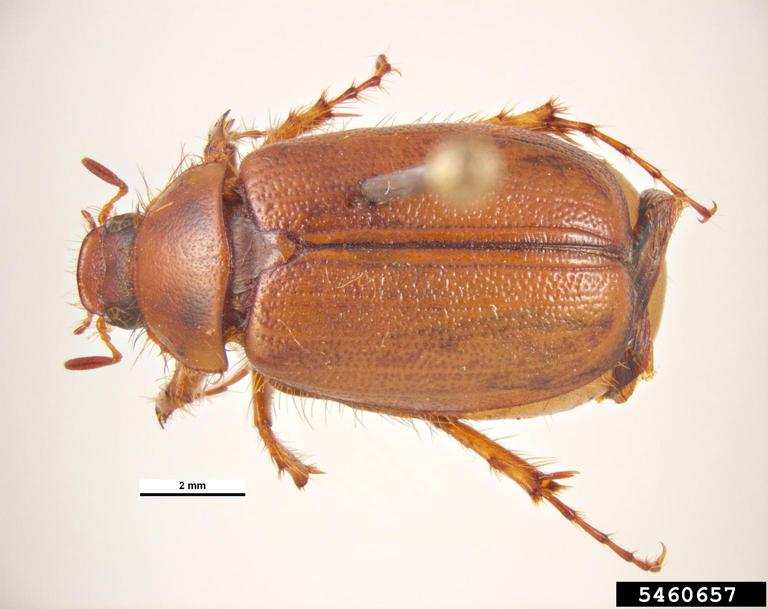
Image source: Bing (Web (fair-use with source credit))
When, and only when, you've visually confirmed grass grubs, you can check your local treatment threshold. Current regional council pest guides for New Zealand suggest roughly 50 to 100 grubs per square metre as the economic threshold for managed lawns. That's about 5 to 10 grubs in a 10 cm by 10 cm spade cut.
Anything below that, and natural parasitic flies and birds may keep the population in check for free.
What a New Zealand Grass Grub Looks Like at Every Growth Stage
Grass grub development follows three feeding stages called instars, separated by moults, plus a non-feeding pupal stage before the adult beetle emerges. Each instar looks different enough that beginners often describe them as separate species.
| Instar stage | Body length | Key visual changes |
|---|---|---|
| First instar (newly hatched) | ~5 mm | Nearly translucent, pale white, legs visible only under magnification |
| Second instar | ~12 to 15 mm | Deeper cream color, head capsule more obviously brown |
| Third instar (mature) | ~25 to 30 mm | Full brown head, dark tail region, strong C-curve posture |
| Pre-pupa | ~20 to 25 mm | Shrinking body length, stops feeding, prepares to burrow deeper |
| Adult beetle | ~12 to 15 mm | Yellowish brown scarab with ridged wing casings, active in summer evenings |
The third-instar larva is the form most people find from March through August. This full-grown stage is also the one your lawn damage will be visible alongside. Pulling up turf and finding multiple larvae of this size alongside patchy brown grass gives strong confirmation of a true infestation.
First-instar larvae, by contrast, are so small and translucent that you'd practically need a hand lens. Finding newly hatched grubs in late spring usually points to active beetle egg-laying. That's your early-warning window before summer feeding pressure builds.
Body Features That Tell You It's a Grass Grub (Not Something Else)
The overall body plan is remarkably consistent across scarab beetle larvae worldwide. Grass grubs share that pattern. But several specific features separate Costelytra zealandica from the larvae you might confuse it with.
The body is soft and slightly squishy rather than firm or leathery. That's your first tactile clue when you're handling one. Most porina caterpillars have a more uniform texture throughout, with visible segmentation and prolegs along the full abdomen.
Grass grub bodies show a distinct color gradient. The dorsal surface is creamy white to pale yellow. The ventral surface, pressed to the soil, is often slightly more translucent.
Best of all for identification, the last few segments of the abdomen are visibly darkened. That's gut contents and soil particles showing through the thin body wall. This "dark tail" feature appears consistently in mature grass grubs and is one of the easiest field markers we've found in our research.
Key Traits: The Head, Legs, Body Curve, and Tail
Now let's walk through the checklist. These are the four features our research showed repeatedly separated true grass grubs from everything else homeowners were finding in their lawns.
The head capsule. Grass grub larvae have a hardened, brown to orange-brown head capsule that's wider than it is long. It's clearly distinct from the pale body behind it. The contrast is visible without magnification in second- and third-instar larvae.
Manaaki Whenua, Landcare Research pest keys specifically call out this darkened capsule as a primary character for C. zealandica.
The three pairs of legs. Like all scarab larvae, grass grubs have three pairs of jointed legs clustered right behind the head capsule. These legs are functional, clearly segmented, and a few millimetres long. When resting, a grass grub can extend them slightly.
That clustering near the front is one way to rule out moth or butterfly caterpillars, which may have five pairs of legs spread along the body.
The overall C-curve. This is the classic resting posture of scarab larvae. After hatching from eggs laid in spring or early summer soil, grass grub larvae instinctually curl into that crescent shape. When disturbed, they maintain or even tighten the curve.
If you find a pale larva that lies flat and straight instead, you're likely looking at a different species altogether.
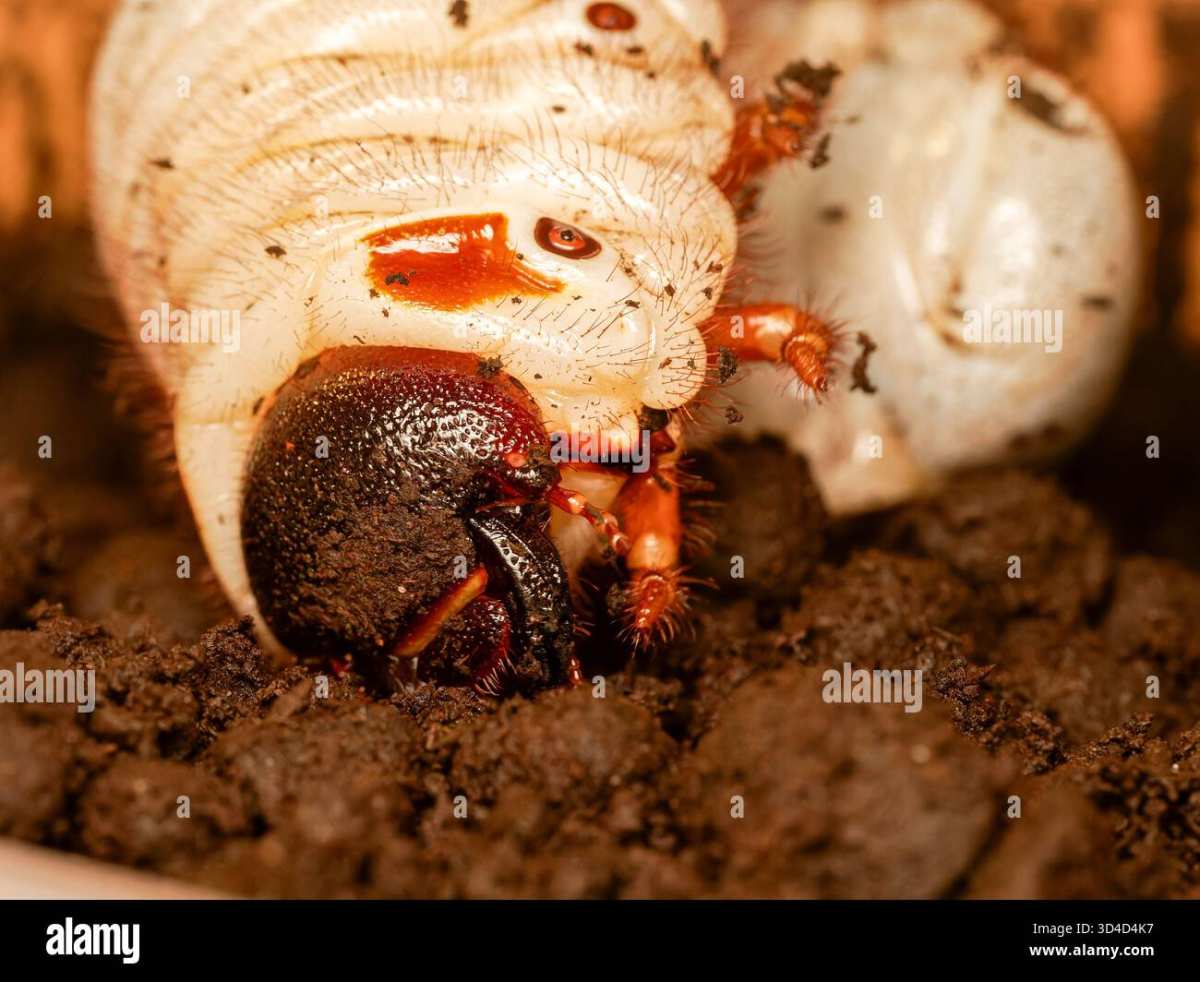
Image source: Bing (Web (fair-use with source credit))
The darkened tail. The last three to four abdominal segments carry visible gut contents, creating that almost gelatinous dark patch at the rear. Non-scarab larvae don't show this combination of pale front and translucent-dark tail. It's one of the quickest visual shortcuts our research flagged for fast lawn-side identification, no specialist equipment needed.
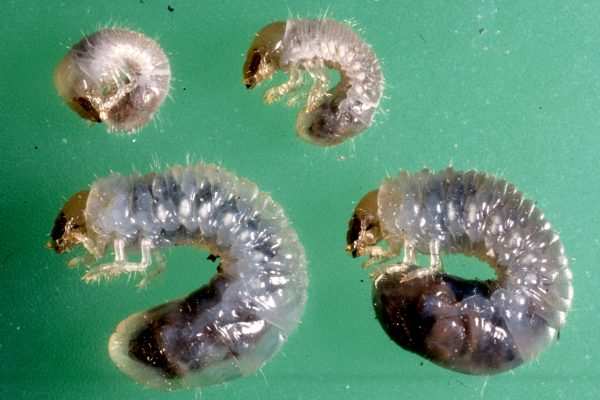
Image source: Bing (Web (fair-use with source credit))
Common Lookalike Larvae That Get Misidentified as Grass Grubs
Almost every lawn pest conversation we've researched online involves someone confusing two or three larvae species. That confusion drives wrong purchases. If you can't tell grass grubs apart from lookalikes, you're spending money on timing or chemistry that doesn't match the pest you actually have.
Let's walk through the three most common mixups we found across New Zealand lawn and pasture discussions.
Black Beetle Larvae
African black beetle (Heteronychus arator) larvae are the most frequent lookalike people find in New Zealand lawns. They share that classic creamy white C-shape and brown head capsule. At first glance, they're nearly identical to grass grubs.
Several distinction points help separate them. Black beetle larvae tend to be slightly thicker-bodied at equivalent length. The head capsule leans more orange-brown compared to the darker brown of a grass grub.
Ventral body texture can show fine dark striations in black beetle larvae that grass grubs lack.
Black beetle damage also looks different on inspection above ground. Adults chew stems at the soil surface, creating a different damage signature than the root-pruning caused by grass grubs. Finding adult black beetles alongside larvae makes the identification much easier.
Porina Caterpillars
Porina are moth caterpillars, not beetle larvae, and they sit in an entirely different pest category. Visually they're longer and more uniformly pale grey or cream. Their bodies show clear segmentation with visible prolegs along the abdomen.
The quick behavioral distinction is movement. Porina larvae are active surface feeders that travel across lawns in the evening. If you go out with a torch after dark and see caterpillars crossing visible turf, those probably aren't grass grubs.
Grass grub larvae stay underground. They don't surface-feed.
Porina also leave obvious silk-lined burrow entrances in the lawn surface. Grass grub damage doesn't include that silk evidence.
Earthworms and Other Soil Distractors
Earthworms get reported as grubs occasionally. That one's easier than people think. Earthworms are elongated, soft-bodied, and lack any hardened head capsule.
They're also much longer than a mature third-instar grass grub. A typical garden earthworm measures twice the length of the biggest grass grub you'll ever find.
Cicada nymphs occasionally surface during digging too. Those are larger, with well-developed front legs adapted for digging. The head shape is robust and rounded, quite different from the clearly defined brown capsule of a grass grub.
Ground beetle larvae are elongated, fast-moving predators with prominent mandibles at the front. They're commonly found in root zones but hunt other insects rather than feeding on grass roots. Finding one in a grub survey means you've got natural pest control working for you.
How Big Are Grass Grubs Compared to What You'll Actually See in Your Lawn
Size is one of the most practical identification cues. Most people think of grubs as uniformly tiny. That's not true for mature Costelytra zealandica larvae.
A third-instar grass grub fully stretched measures roughly 25 to 30 mm. That's just over an inch. At that size, it's clearly visible to the naked eye sitting on a spade blade.
It's about the diameter of a standard pencil. Mature larvae have real heft and visual presence once you're looking at them against soil.
| Comparison object | Approximate size |
|---|---|
| Newly hatched grass grub (first instar) | ~5 mm, roughly a match head |
| Mature third-instar grass grub | ~25 to 30 mm, just over an inch |
| Adult grass grub beetle | ~12 to 15 mm |
| Earthworm (common garden species) | ~80 to 150 mm |
| Porina caterpillar (mature) | ~40 to 45 mm |
That adult beetle size matters when you're doing seasonal checks. If you see small brownish beetles fluttering over the lawn in warm evenings between October and January, that's the adult grass grub beetle. Finding these adults a few weeks after you spotted grubs in the soil helps confirms the lifecycle timing.
When and Where to Find Grass Grubs in Your Lawn or Pasture
Timing is everything for grub checks. Different seasons put them at different depths. Different lawn and pasture regions in New Zealand associate with different population hot spots.
Late summer to early autumn (February through April): Adult beetles are laying eggs in the soil surface, starting a new larval cycle. If you're checking now, you'll find first- and early second-instar larvae at about 50 to 150 mm depth in moist soil. They're tiny.
Damage at this stage is minimal.
Mid-winter (June through August): This is prime detection season for mature larvae. They've migrated lower in the soil but remain within the root zone. Third-instar grubs are at their largest and most visible.
Lawn damage from root feeding becomes obvious now, with brown patches that lift easily like loose carpet.
Early spring (September through October): Larvae begin moving deeper to pupate. Finding them becomes harder. Damage from the previous winter may still be visible, but the larvae themselves are transitioning out of the feeding stage.
Summer (November through January): Adult beetles emerge, fly, and mate. You won't find larvae in the soil during this window. The next generation is still eggs or just hatching.
Geographically, grass grubs are most prevalent in the North Island of New Zealand, particularly in Waikato, Bay of Plenty, and Hawke's Bay pastures. They're also common in Canterbury and Otago lawns. Warm, well-drained soils with ryegrass or fescue turf are their preferred habitat.
Heavy clay soils and shaded, damp lawns tend to have lower populations.
Simple Visual Check Method Using a Spade and Your Fingers
You don't need specialist equipment to confirm grass grubs. A standard garden spade and a few minutes of focused digging will give you a reliable answer.
Step 1: Choose your spot. Look for lawn areas showing early damage signs. Brown patches, turf that lifts easily, or areas where birds have been pecking are all good candidates. Healthy lawn sections nearby serve as your comparison.
Step 2: Cut a spade square. Push your spade straight down to its full depth, roughly 150 mm. Cut a second cut perpendicular to the first, then two more to create a square. Lift the turf block and set it aside carefully.
Step 3: Break apart the soil. Use your fingers or a hand fork to crumble the soil block from the bottom up. Grass grubs sit in the root zone, so focus on the top 100 mm of soil. Place any pale larvae you find on the spade blade or a flat surface for inspection.
Step 4: Count and identify. Count the larvae you find in that single spade square. Remember the threshold: roughly 50 to 100 grubs per square metre means about 5 to 10 in a 10 cm by 10 cm cut. Check the head capsule color, leg placement, and body curve against the identification features we covered earlier.
Step 5: Repeat in multiple spots. One spade cut gives you a snapshot. Three to five cuts across the damaged area give you a reliable population estimate. If you're finding mature third-instar grubs consistently across multiple spots, you've confirmed an active infestation.
Step 6: Replace the turf. Press the soil block back into place and water it in. The lawn will recover if the root system is still partially intact. This minimal disturbance approach lets you check without making the damage worse.
Mistakes People Make When Identifying Grass Grubs by Sight
We've reviewed dozens of online identification threads and extension service Q&A records. Several recurring mistakes show up every time.
Mistake 1: Assuming all white grubs are grass grubs. As we covered, black beetle larvae, porina caterpillars, and several other species share that pale coloration. Color alone is not a reliable identifier. You need to check the head capsule, leg placement, and body posture together.
Mistake 2: Confusing larval stage with species. A newly hatched first-instar grass grub looks dramatically different from a mature third-instar. People who've seen photos of large grubs sometimes dismiss tiny larvae as a different pest. They're the same species at different growth stages.
Mistake 3: Ignoring the dark tail feature. That visible gut content patch at the rear abdomen is one of the most consistent field markers for grass grubs. If you're not checking the tail end, you're missing a key identification clue.
Mistake 4: Relying on lawn damage alone. Brown patches in a lawn can come from drought, fungal disease, dog urine, or nutrient deficiency. Grub damage has a specific signature: the turf lifts away easily because the root system has been severed. If the turf doesn't lift like loose carpet, grubs may not be your problem.
Mistake 5: Checking at the wrong time of year. Looking for larvae in midsummer when they've already pupated leads to false negatives. Late autumn through early spring gives you the best chance of finding active feeding larvae.
Mistake 6: Not using magnification when needed. First-instar larvae and some ventral identification features benefit from a simple 10x hand lens. If you're serious about confirming species, a basic magnifying glass is a worthwhile investment.
When to Treat vs. When You're Looking at a Harmless Soil Critter
Finding a few grubs doesn't automatically mean you need to treat. The economic threshold for managed lawns sits at roughly 50 to 100 grubs per square metre. Below that level, natural predators like parasitic flies, birds, and ground beetles often keep populations in check.
If you're finding one or two grubs per spade square and the lawn looks healthy, hold off on treatment. Over-applying broad-spectrum products kills beneficial soil invertebrates along with the target pest. That can actually make future infestations worse by removing natural control agents.
Treatment timing matters as much as treatment choice. Target second- and early third-instar larvae in autumn through early winter. That's when they're feeding actively in the root zone and most vulnerable.
By late winter, mature larvae are preparing to pupate and most products become less effective.
Lawn Damage Clues That Back Up What You're Seeing Underground
Grub damage has a signature look that helps confirm your identification. The turf turns brown in irregular patches. The key test is lifting: grab the brown area and pull.
If it comes away easily like loose carpet, the root system has been severed below.
Bird activity is another clue. Starlings, blackbirds, and mynas pecking at the lawn surface often indicate larvae underneath. You'll see small holes or disturbed soil where birds have been probing.
Drought stress can mimic grub damage. The difference is that drought-stressed turf stays anchored. It doesn't lift away from the soil.
If you're unsure, water the area deeply and wait a week. Drought stress recovers. Grub damage doesn't.
Verified New Zealand Resources for Confirming Grass Grub Identification
When visual identification leaves you uncertain, several authoritative New Zealand resources can help confirm what you've found.
Manaaki Whenua, Landcare Research maintains a species database with detailed morphological descriptions and images. Their pest keys include ventral ridge patterns on the rear abdominal segment that separate Costelytra zealandica from similar scarab larvae.
Regional council pest fact sheets from Waikato Regional Council and Auckland Council provide local identification guides tailored to common lawn pests in those areas. These are freely available and written for non-specialists.
Massey University's pasture pest identification resources cover both lawn and agricultural contexts. Their guides include lifecycle timing charts that help you match what you're finding to the expected seasonal stage.
AgResearch NZ publishes technical publications on soil pest management that include detailed species comparisons. These are more technical but useful if you're managing larger pasture areas.
Frequently Asked Questions
How can I tell grass grubs apart from black beetle larvae?
Check the body thickness and head capsule color. Black beetle larvae tend to be slightly thicker with a more orange-brown head. Grass grubs have a darker brown head capsule and a more uniform body width.
Finding adult beetles alongside larvae also helps confirm which species you're dealing with.
What time of year are grass grubs easiest to find?
Late autumn through early winter, roughly March through August in New Zealand. That's when third-instar larvae are at their largest and feeding actively in the root zone. Summer checks usually turn up adult beetles rather than larvae.
Are all white grubs in my lawn grass grubs?
No. Several species share that pale coloration, including black beetle larvae and porina caterpillars. You need to check the head capsule, leg placement, body curve, and tail features together to confirm species.
Color alone is not reliable.
How many grass grubs per square metre is considered a problem?
Current New Zealand regional council guidelines suggest roughly 50 to 100 grubs per square metre as the economic threshold for managed lawns. Below that level, natural predators may keep the population under control without treatment.
Do grass grubs come back every year?
Yes, they have an annual lifecycle. Adult beetles emerge in summer, lay eggs in the soil, and the new larvae begin feeding through autumn and winter. Without intervention, populations can build over several seasons, especially in warm, well-drained soils with ryegrass or fescue turf.