You've probably flipped over a shovelful of soil and found those pale, C-shaped larvae curled up in the dirt. Maybe you're staring at brown patches in your lawn and wondering what's happening underground. The question "what do beetle grubs eat" seems simple, but the answer changes dramatically depending on which species you're looking at and where you found it.
Here's the thing most articles skip: not all beetle grubs are pests. Some are quietly breaking down organic matter and improving your soil. Others are destroying your turf from below.
The University of Kentucky's entomology department notes that treatment thresholds for lawn-damaging scarab grubs typically start at around 6 to 10 larvae per square foot, which means a few grubs in your garden bed are usually nothing to worry about. Let's walk through how to tell what you're actually dealing with and what it means for your yard.
Quick Answer
Beetle grubs eat different things depending on the species. Scarab beetle larvae feed on plant roots and decaying organic matter in soil. Wood-boring beetle larvae eat dead or dying wood.
Predatory beetle larvae hunt and eat other insects. The species you find determines whether they're helping or harming your yard.
The Big Problem With Generic "Grub" Advice
Most advice online treats every grub the same. That's a mistake. The word "grub" just means a beetle larva, and there are over 350,000 known species of beetles worldwide.
Their larvae have wildly different diets and behaviors.
When someone tells you "grubs eat roots," they're usually talking about scarab beetle larvae, the ones that damage lawns. But if you've got grubs in your compost pile, those might be beneficial decomposers breaking down kitchen scraps. And if you find larvae under rotting logs, some of them could be predators eating other pest insects.
The real question isn't just what beetle grubs eat. It's which beetle grubs you have and whether their diet is a problem for you.
First Question: What Species Are You Looking At?
Before you can understand what the grubs in your yard are eating, you need to know what kind they are. This is where most people go wrong. They see a white, C-shaped larva and assume it's a lawn pest.

Image source: iNaturalist / Irene
Identifying the Most Common Grubs People Find
The grubs most homeowners encounter fall into a few main groups. Scarabaeidae family larvae, often called white grubs, are the ones responsible for lawn damage. This group includes Japanese beetles, June bugs, European chafers, and May beetles.
They're cream-colored with brown heads, C-shaped, and typically found in the top few inches of soil.
Wood-boring beetle larvae look different. Families like Cerambycidae (longhorn beetles) and Buprestidae (metallic wood-boring beetles) have larvae that are elongated, pale, and legless or nearly legless. You'll find them inside dead or dying wood, not in open soil.
Predatory beetle larvae, like those from ground beetles (Carabidae), are more active and often have visible legs and darker coloring. They move quickly through soil and leaf litter hunting prey.
Key Trait: What the Raster Pattern Tells Us
Entomologists use something called the raster pattern to identify scarab grub species. That's the arrangement of hairs, spines, and sensory organs on the underside of the larva's last abdominal segment. You'd need a hand lens to see it clearly, but it's the most reliable way to tell species apart.
For practical purposes, most homeowners don't need species-level identification. You just need to know whether you're dealing with root-feeding scarabs, wood-borers, or something else entirely. Location and behavior will tell you most of what you need.

Image source: Bing (Web (fair-use with source credit))
What Lawn-Invading Scarab Grubs Eat
This is the group most people are asking about. Scarab beetle larvae feed primarily on the roots of grasses and other plants. They also consume decaying organic matter in the soil, but living turf roots are their main food source when populations are high.
Japanese beetle grubs, one of the most destructive species in the United States, feed on the roots of cool-season turfgrasses like Kentucky bluegrass, perennial ryegrass, and fescue. European chafer grubs have an even wider appetite and will feed on most grass species. June beetle grubs tend to prefer the roots of oaks and other hardwood trees in their natural habitat, but they'll also damage turf when populations build up.
How They Damage Your Turf
The damage happens below ground first. As grubs chew through fine root hairs, the grass loses its ability to take up water and nutrients. You won't see the problem until the turf starts showing drought stress, even when the soil is moist.
The first visible sign is usually irregular brown patches that peel back easily. That's because the root system has been severed. If you lift a square foot of sod and it rolls up like carpet, you've got a significant grub problem.
By that point, the larvae have been feeding for weeks or months.
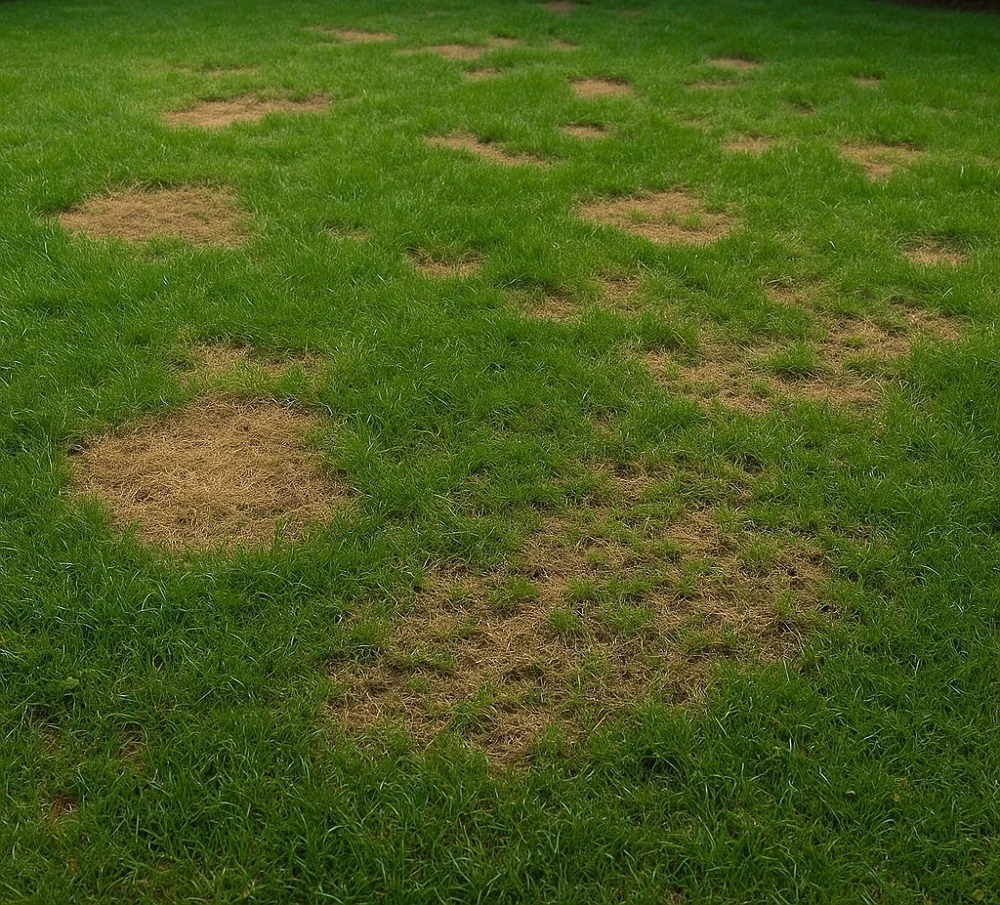
Image source: Bing (Web (fair-use with source credit))
Seasonal Feeding Windows That Matter
Scarab grubs don't feed at the same intensity year-round. In temperate climates, they have two peak feeding periods. The first is in spring, when overwintering larvae move back into the root zone and feed heavily before pupating.
The second is in late summer and early fall, when newly hatched larvae are small but numerous and feeding aggressively.
Fall feeding tends to cause the most visible damage because the larvae are growing fast and consuming large amounts of root tissue. Spring damage can be severe too, but lawns often recover more quickly with warmer temperatures and active grass growth.
During winter, scarab grubs burrow deeper into the soil, below the frost line, and enter a dormant state. They don't feed during this period. The same happens during hot summer months in some regions, when they move deeper to find moisture.
What Wood-Boring Beetle Larvae Eat
If you're finding larvae in dead trees, fallen logs, or old lumber, you're probably looking at wood-boring beetle larvae. These grubs eat cellulose and lignin in dead or dying wood. They're nature's recyclers, breaking down woody material that would otherwise pile up in forests.
Longhorn beetle larvae (Cerambycidae) tunnel through dead hardwood and softwood. Their feeding creates the galleries you see in weathered logs. Metallic wood-boring beetle larvae (Buprestidae) feed in the cambium layer just under the bark, which can kill stressed trees but rarely affects healthy ones.
These grubs aren't eating your lawn. They're not eating your garden plants. They're eating wood that's already dead or in serious decline.
In most cases, they're doing you a favor by accelerating decomposition.
The exception is when wood-boring beetles infest structural lumber in buildings. Old house borers and some powderpost beetles can damage seasoned wood in homes. That's a different situation entirely and usually requires a professional assessment.
What Predatory Beetle Larvae Eat
Not all beetle grubs are herbivores or decomposers. Many species are predators, and their diet consists almost entirely of other insects and invertebrates. Ground beetle larvae (Carabidae) are among the most common predatory grubs you'll encounter in garden soil.
These larvae actively hunt springtails, small fly larvae, aphids, and other soft-bodied insects. Some species will even attack pest caterpillars and slug eggs. Rove beetle larvae (Staphylinidae) have a similar diet and are often found in compost and leaf litter.
If you find a grub that's moving quickly, has visible legs, and doesn't look like the typical C-shaped scarab larva, there's a good chance it's a predator. These are the grubs you want in your garden. They're providing free pest control.
What Decomposer Grubs Eat
Some beetle larvae are detritivores, meaning they feed on decaying organic matter. You'll find these in compost piles, under mulch, and in leaf litter. Their diet includes rotting plant material, dead leaves, decomposing wood, and the microorganisms that break down organic matter.
Dung beetle larvae (subfamily Scarabaeinae) feed on animal feces. That might not sound appealing, but they're incredibly important for nutrient cycling in pastures and grasslands. Hide beetle larvae (Dermestidae) feed on dried animal remains, including skin, hair, and feathers.
In your compost pile, decomposer grubs are working alongside earthworms and bacteria to turn kitchen scraps and yard waste into usable soil. They're not eating your plants. They're eating the dead stuff you want broken down.

Image source: iNaturalist / Irene
Why They're Actually Helping
Decomposer grubs speed up the breakdown of organic matter. As they feed, they create channels in the compost that improve aeration and water movement. Their waste adds beneficial microorganisms to the mix.
If you're finding grubs in your compost and they're not near living plants, leave them alone. They're doing exactly what you want a compost pile to do. Removing them would actually slow down the decomposition process.
Compost Pile Grubs: Friend or Foe?
This comes up a lot. People find grubs in their compost and panic, assuming they're the same pests damaging lawns. In most cases, compost grubs are either decomposer species or the larvae of beetles attracted to the warm, moist environment.
Soldier beetle larvae are common in compost and are voracious predators of pest insects. Some scarab species will also lay eggs in compost piles, and their larvae will feed on the decaying material without causing any problems.
The only time compost grubs become an issue is if you're using unfinished compost around living plants. Scarab larvae in fresh compost could potentially feed on plant roots if you apply it directly to root zones. Letting compost finish breaking down before use eliminates that risk.
When to Worry and When to Leave Them Alone
Not every grub in your soil needs to be eliminated. The decision to treat depends on the species, the population density, and where they're located.
A few grubs in a garden bed are normal and usually harmless. They're part of a healthy soil ecosystem. Even in lawns, low populations don't cause visible damage.
The grass can outgrow the minor root loss.
You should start paying attention when you find more than a few grubs per square foot in turf areas. That's when feeding pressure starts to exceed the grass's ability to recover.
Grub Count Thresholds for Taking Action
Most university extension services use a threshold of 6 to 10 grubs per square foot for cool-season turfgrasses. Warm-season grasses like Bermuda and zoysia can tolerate slightly higher numbers because of their aggressive growth habits.
These thresholds assume you're dealing with a damaging species like Japanese beetle or European chafer. If you're finding predatory or decomposer grubs, the threshold doesn't apply. Those species aren't harming your turf.
The best time to sample is late summer, when larvae are actively feeding near the surface. Cut a square foot of sod, peel it back, and count the grubs you find in the top 3 to 4 inches of soil. Repeat this in several spots to get an average for your lawn.
How to Figure Out What You're Dealing With
Identifying your grubs doesn't require a degree in entomology. A few simple observations will tell you most of what you need to know.
Step 1: Lift a Square Foot of Sod
Use a shovel to cut a 1-foot by 1-foot square of turf, about 3 inches deep. Peel it back and examine the soil underneath. Count the grubs you find and note their size and location.
Step 2: Check Species-Specific Cues
Look at the grub's body shape and color. Scarab larvae are C-shaped with brown heads and three pairs of legs. Wood-boring larvae are more elongated and often found in wood, not soil.
Predatory larvae are more active and may have darker coloring.
Step 3: Match Behavior to Treatment
If you're finding scarab-type grubs in turf at high densities, you may need to consider treatment. If you're finding grubs in compost, under logs, or in garden beds away from turf, they're probably beneficial or neutral.
Common Mistakes People Make With Grub Problems
The biggest mistake is treating every grub as a pest. People see larvae in the soil and immediately reach for insecticides. That kills beneficial species along with any actual pests and disrupts the soil ecosystem.
Another common error is treating at the wrong time. Insecticides work best when grubs are small and actively feeding, usually in late summer. Spring treatments are often less effective because larvae are larger and may have already caused most of the damage.
Overwatering lawns in fall can also make grub problems worse. Scarab beetles prefer moist soil for egg-laying. If you're irrigating heavily in August and September, you're creating ideal conditions for the next generation of grubs.
Expert Tips for Managing Grubs Year-Round
Focus on building healthy turf that can tolerate some grub feeding. Proper mowing height, adequate fertilization, and deep, infrequent watering all help grass outgrow minor root damage.
If treatment is necessary, consider biological controls first. Entomopathogenic nematodes (Heterorhabditis bacteriophora) are microscopic worms that parasitize scarab grubs. Milky spore disease (Paenibacillus popilliae) provides long-term control of Japanese beetle grubs specifically.
Chemical insecticides should be a last resort and applied according to label directions. Products containing chlorantraniliprole are effective and have lower environmental impact than older options. Always follow local regulations regarding pesticide application.
Grub Control Options at a Glance
| Control Method | Best For | Timing | Notes |
|---|---|---|---|
| Entomopathogenic nematodes | Japanese beetle, European chafer | Late summer, when grubs are small | Requires moist soil for application |
| Milky spore | Japanese beetle only | Any time of year | Takes 2-3 years to establish |
| Chlorantraniliprole | Multiple scarab species | Mid to late summer | Low toxicity to beneficial insects |
| Cultural practices | All situations | Ongoing | Builds long-term turf resilience |
Decision Guide: Is This Grub a Threat to Your Care?
Ask yourself three questions. First, where did you find the grub? In turf, compost, wood, or garden soil?
Second, what does it look like? C-shaped and cream-colored, elongated and pale, or active and dark? Third, how many are there?
A few per square foot or dozens?
If you're finding C-shaped, cream-colored larvae in turf at more than 6 to 10 per square foot, you likely have a damaging scarab species. If you're finding grubs in compost, under logs, or in small numbers in garden beds, they're probably beneficial or neutral.
When in doubt, contact your local cooperative extension office. Many offer free or low-cost insect identification services. They can tell you exactly what species you're dealing with and whether treatment is warranted.
Frequently Asked Questions
Do all beetle grubs eat plant roots?
No. Only certain species, primarily scarab beetle larvae, feed on living plant roots. Many beetle larvae eat decaying organic matter, wood, or other insects.
The diet depends entirely on the species.
Are grubs in my compost harmful?
Almost never. Compost grubs are typically decomposer or predator species that help break down organic matter. They won't harm your plants unless you apply unfinished compost directly to root zones.
How can I tell if grubs are damaging my lawn?
Look for irregular brown patches that peel back easily, indicating severed roots. Wildlife like skunks and raccoons digging up turf is another sign. Cut a square foot of sod and count the grubs underneath to confirm.
When is the best time to treat for grubs?
Late summer, when larvae are small and actively feeding near the soil surface, is the most effective treatment window. Spring treatments are less reliable because grubs are larger and feeding is winding down.
Will grub damage go away on its own?
Minor damage often recovers with proper lawn care. Severe infestations may require treatment, especially if turf is already stressed by drought or other factors. Healthy grass can tolerate some grub feeding without intervention.
Are there beneficial grubs I should protect?
Yes. Predatory beetle larvae like ground beetles and rove beetles eat pest insects. Decomposer grubs break down organic matter and improve soil health.
These species should be preserved whenever possible.
Regional Differences in Grub Species and Diets
What you're finding in your yard depends a lot on where you live. Japanese beetles dominate the eastern and midwestern United States, while European chafers are more common in the northern states and parts of the UK. The Great Plains states deal primarily with May beetle species that have multi-year larval development cycles.
In the southeastern United States, you're more likely to encounter green June beetle larvae. These grubs are larger, more active, and feed on decaying organic matter near the surface rather than deep in the root zone. They can still cause lawn damage, but their feeding pattern is different from Japanese beetle grubs.
Australia has its own set of problematic scarab species, including the African black beetle and the prasio beetle. These species feed on the roots of pasture grasses and can cause significant damage in turf and agricultural settings. The diets are similar, but the seasonal timing shifts with the Southern Hemisphere calendar.
Life Stage and How It Affects Diet
Not all grubs eat the same thing throughout their development. Newly hatched scarab larvae feed primarily on fine root hairs and organic matter in the soil. As they grow through their instars (developmental stages), they shift to coarser roots and consume much larger quantities of plant tissue.
Third-instar larvae, the largest stage before pupation, do the most damage to turf. These grubs can be over an inch long and have voracious appetites. A single large larva can destroy several inches of root system in a week.
Some scarab species have larval periods that last one year. Others, like certain May beetles, remain in the larval stage for two to three years. The longer-lived species cause cumulative damage that's harder to reverse without intervention.
Signs You Have a Grub Problem Beyond Brown Patches
Brown turf is the obvious symptom, but it's not the only one. Increased bird activity on your lawn, especially starlings and grackles, often indicates a grub population below ground. These birds are digging for larvae and can cause their own damage in the process.
You might also notice spongy or soft turf underfoot. That happens when root systems are compromised and the sod loses its anchoring strength. In severe cases, the turf lifts away from the soil with almost no resistance.
Another early warning sign is wilting during mild dry spells. If your grass shows drought stress after just a day or two without water, the root system may be compromised even before you see browning.
Soil Conditions That Affect Grub Feeding and Survival
Scarab beetles prefer moist, well-drained soil for egg-laying. Overwatered lawns are more attractive to adult beetles looking for oviposition sites. That's why reducing irrigation in late summer can help prevent future grub problems.
Soil temperature plays a role too. Grubs move up and down in the soil profile to stay in their preferred temperature range. During hot spells, they go deeper where it's cooler.
During mild fall weather, they stay near the surface where food is abundant.
Heavy clay soils tend to hold moisture longer and can support higher grub populations than sandy, fast-draining soils. That doesn't mean sandy soils are immune, but the damage threshold may be slightly different in those conditions.
What to Do If You Find Grubs While Gardening
If you turn up grubs while planting or weeding, don't panic. Assess what you're looking at. Are they C-shaped and cream-colored?
Are there more than a few per square foot? Are they in an area with visible plant stress?
If the answer to all three is yes, you might have a root-feeding species that warrants monitoring. If the grubs are scattered and the plants look healthy, leave them be. They're likely decomposer or predator species doing useful work in your soil.
For garden beds, the simplest approach is to focus on building healthy soil. Compost applications, proper watering, and avoiding over-fertilization all encourage plant root growth that can tolerate minor grub feeding.
Frequently Asked Questions
How long do beetle grubs stay in the larval stage?
Most lawn-damaging scarab species complete their larval development in one year. Some species, like certain May beetles, remain as larvae for two to three years before pupating.
Do grubs come back in the same spot every year?
Yes, scarab beetles tend to return to favorable areas for egg-laying. If you had a grub problem one year, the adults may return to the same area the following summer to lay eggs.
Can pets get sick from eating grubs?
Most beetle grubs are not toxic to pets. However, some pets may experience mild stomach upset if they eat large quantities. The bigger concern is pets digging up your lawn while hunting for grubs.
Do all white grubs turn into pest beetles?
No. Many white grub species develop into beetles that don't cause significant damage. Some are beneficial pollinators or decomposers.
Proper identification is key before assuming the worst.
Will grub-damaged lawn recover on its own?
Minor damage often recovers with proper watering and fertilization. Severe damage may require reseeding or sodding, especially if the turf has been completely severed from its root system.
How Birds and Other Predators Affect Grub Populations
Natural predators keep grub numbers in check most of the year. Robins, starlings, and grackles all feed heavily on scarab larvae. A single starling can consume dozens of grubs in a morning of foraging.
Ground beetles are another major predator. Both adult and larval ground beetles hunt scarab grubs in the soil. Moles, skunks, and racoons also feed on grubs, though their digging causes its own damage to turf.
Encouraging natural predators reduces the need for chemical interventions. Avoiding broad-spectrum insecticides preserves ground beetle populations and other beneficial organisms that keep grub numbers below damaging thresholds.
Organic Approaches to Grub Management
Biological controls offer effective grub management without synthetic chemicals. Entomopathogenic nematodes in the genus Heterorhabditis seek out grubs in the soil and release bacteria that kill the larvae within 48 hours.
Milky spore disease targets Japanese beetle grubs specifically. The bacteria multiply in the soil and can provide control for 10 to 15 years after a single application. It takes a few years to establish fully, but it's a long-term solution for persistent Japanese beetle problems.
Encouraging deep, strong turf rooting through proper cultural practices is another organic approach. Grass that roots deeply can tolerate more grub feeding than shallow-rooted turf dependent on frequent watering.
When Chemical Treatment Makes Sense
There are situations where chemical intervention is justified. When grub counts exceed 15 to 20 per square foot, biological controls alone may not prevent significant turf loss. Newly established lawns with shallow root systems are also more vulnerable.
Chlorantraniliprole-based products are a lower-impact option. They target caterpillars and beetle grubs specifically and have minimal effect on earthworms and most beneficial insects. Application timing is critical.
These products work best in mid to late summer when grubs are small and actively feeding.
Carbaryl and trichlorfon are traditional options for curative control. They kill existing grubs quickly but offer no residual protection. They also have broader impacts on non-target organisms, so use them only when necessary.
Preventing Future Grub Problems
The best long-term strategy is making your lawn less attractive to egg-laying adult beetles. This means reducing irrigation in late summer when adults are active. It means maintaining a higher mowing height to encourage deeper rooting.
Removing thatch buildup helps too. Thatch provides protective cover for eggs and young larvae. Core aeration in fall or spring reduces thatch and improves soil drainage.
If you're dealing with a recurring annual problem, consider a preventive nematode application every few years. This maintains a reservoir of biological control agents in the soil without relying on chemical products.
Bottom Line
Beetle grubs eat different things depending entirely on what species they are. Scarab larvae in turf feed on roots and can cause serious damage at high populations. Decomposer species break down organic matter and improve soil health.
Predatory larvae hunt pest insects and provide free biological control.
The key is knowing which type you're looking at before taking action. A few grubs in healthy soil are normal and beneficial. Finding over six to ten scarab-type larvae per square foot in turf means it's time to consider treatment.
When in doubt, sample your lawn, identify what you're seeing, and consult your local extension office. They can confirm the species and recommend whether intervention is actually needed. Most grub problems turn out to be less urgent than they first appear.
Bottom Line
Beetle grubs eat different things depending entirely on what species they are. Scarab larvae in turf feed on roots and can cause serious damage at high populations. Decomposer species break down organic matter and improve soil health.
Predatory larvae hunt pest insects and provide free biological control.
The key is knowing which type you're looking at before taking action. A few grubs in healthy soil are normal and beneficial. Finding over six to ten scarab-type larvae per square foot in turf means it's time to consider treatment.
When in doubt, sample your lawn, identify what you're seeing, and consult your local extension office. They can confirm the species and recommend whether intervention is actually needed. Most grub problems turn out to be less urgent than they first appear.