
Choosing the right cutting width for your mower makes all the difference in large yards. A wider cut means fewer passes, less fatigue, and a more uniform look—but it’s not just about size. Terrain, grass type, and mower type all matter. This guide helps you pick the ideal cutting width for your big yard so you spend less time mowing and more time enjoying your green space.
Key Takeaways
- Cutting width affects mowing speed and efficiency: A wider cutting swath means fewer passes over the same area, saving time and effort on large yards.
- Terrain and slope matter: On hilly or uneven ground, a wider mower may tip or struggle, so narrower widths often work better for safety and control.
- Grass type influences optimal width: Thick or tall grasses may require a wider cut to avoid overloading the mower, while fine lawns can handle narrower blades.
- Fuel and maintenance trade-offs: Wider mowers use more fuel and can be harder to maneuver, but they complete big jobs faster with less physical strain.
- Mulching vs. bagging affects width choice: If you mulch clippings, a wider cut helps distribute nutrients evenly; if you bag, narrower widths may be more practical for cleanup.
- Consider mower type and power: Gas mowers typically support wider cuts, while electric or reel mowers may be limited by motor strength and battery life.
- Test before you buy: Rent or demo different widths on your yard to see what feels right before investing in a mower.
Quick Answers to Common Questions
What is the ideal cutting width for a 1/2-acre yard?
For a 1/2-acre yard, a mower with a 42- to 48-inch cutting width is ideal. This width reduces mowing time significantly and works well on flat to moderately sloped lawns. It offers a good balance between efficiency and maneuverability.
Can a wide mower be used on hills?
It depends. Very wide mowers (52+ inches) can be unstable on steep slopes due to their high center of gravity. For hilly yards, choose a mower with a lower profile, strong engine, and good traction—often a narrower width (30–36 inches) is safer.
Does cutting width affect fuel consumption?
Yes. Wider mowers generally use more fuel because they require more power to move the deck and cut through thick grass. However, they complete the job faster, so total fuel use per mowing session may be similar or even lower than narrower mowers.
Is a wider mower better for mulching?
Not necessarily. Mulching depends on the blade design and deck airflow, not just width. However, a wider mower can help distribute clippings more evenly, which supports healthy mulching. Just ensure your mower has a mulching kit.
How often should I change my mower blades?
You should sharpen or replace mower blades every 20 to 25 hours of use, or once per growing season. Dull blades tear grass, which weakens the lawn and increases disease risk. Regular maintenance keeps your mowing efficient and your lawn healthy.
📑 Table of Contents
- The Role of Cutting Width in Mowers for Big Yards
- Why Cutting Width Matters for Large Lawns
- Choosing the Right Cutting Width for Your Yard Size
- Terrain and Slope Considerations
- Grass Type and Cutting Width Compatibility
- Mower Types and Their Cutting Width Ranges
- Practical Tips for Maximizing Efficiency
- Conclusion: Finding the Perfect Fit for Your Big Yard
The Role of Cutting Width in Mowers for Big Yards
Imagine this: It’s a sunny Saturday morning, and your big yard stretches out like a green carpet. You fire up the mower, and instead of cruising smoothly across the lawn in a few passes, you’re making dozens of back-and-forth trips. You’re tired, the grass is uneven in spots, and you’re already thinking about how to get this done faster next time.
Sound familiar? If you’ve ever struggled with mowing a large property, you know the frustration. But here’s the good news: cutting width plays a huge role in how efficiently and effectively you can manage your lawn. It’s not just about how big the mower looks—it’s about how much ground it can cover in one pass, how it handles your terrain, and how well it matches your grass type. Choosing the right cutting width can mean the difference between a quick, satisfying mow and a back-breaking chore.
In this article, we’ll break down everything you need to know about cutting width for big yards. From understanding the science behind swath size to practical tips on selecting the best mower for your property, you’ll walk away with a clear plan to make your mowing routine easier, faster, and more enjoyable.
Why Cutting Width Matters for Large Lawns
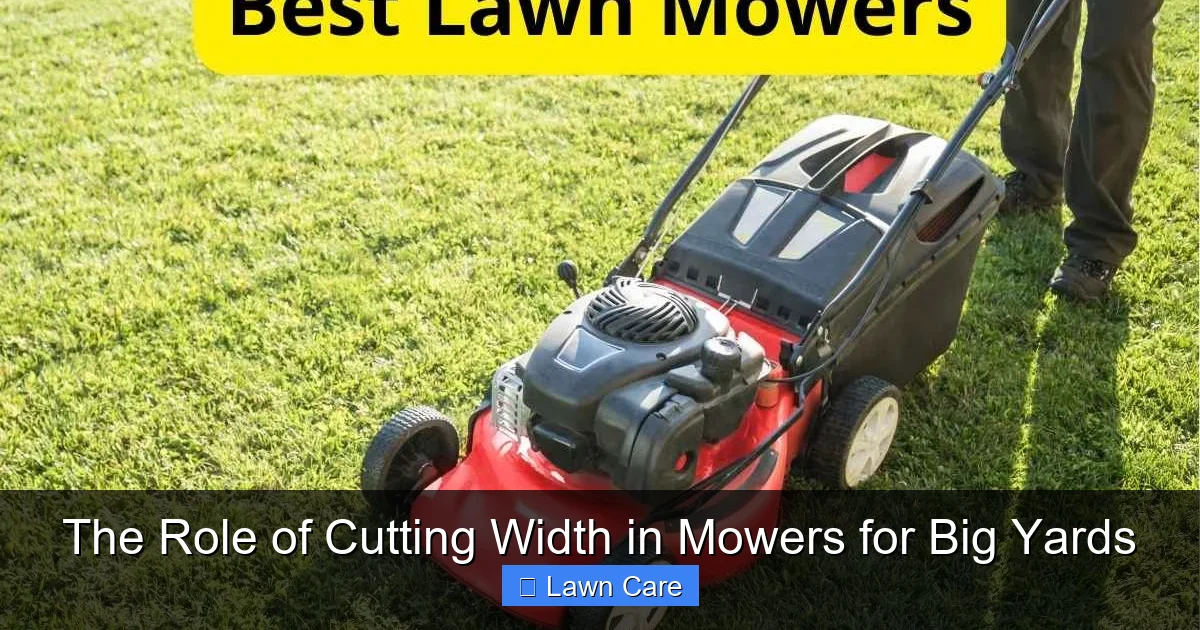
When you’re dealing with acres of grass, every minute counts. A wider cutting swath means your mower covers more ground in each pass. For example, a mower with a 48-inch cutting width will cut twice as much ground as one with a 24-inch width—in theory, cutting your mowing time in half. That’s a massive time saver, especially on properties over half an acre.
Visual guide about The Role of Cutting Width in Mowers for Big Yards
Image source: lawnstarter.com
But it’s not just about speed. A consistent, wide cut also leads to a more uniform lawn appearance. Narrow cuts can leave behind visible wheel tracks and uneven patches, which not only look messy but can also create ideal conditions for weeds to take root. On the other hand, a well-chosen cutting width helps you maintain a smooth, even finish across the entire yard.
Another benefit? Reduced physical strain. Mowing a big yard by hand or with a push mower can take hours and leave your back sore. A wider mower, especially a self-propelled or riding model, lets you glide across the lawn with less effort, reducing fatigue and making the job feel more like a stroll than a workout.
How Cutting Width Affects Mowing Time
Let’s do a quick math example. Suppose your yard is 100 feet wide and 200 feet long. With a 24-inch mower, you’d need about 10 passes to cover the width. At 5 minutes per pass, that’s 50 minutes of mowing. But with a 48-inch mower, you’d only need 5 passes—just 25 minutes total. That’s more than a 40% time savings!
This doesn’t even account for turning time, which adds up quickly with narrow mowers. Wider mowers allow for longer, straighter passes, reducing the number of turns and further cutting down on total mowing time.
The Trade-Offs of Wider Cuts
Of course, wider isn’t always better. A 60-inch mower might seem like the ultimate solution, but it can be harder to maneuver in tight spaces, around trees, or along garden beds. It may also require more power, which can lead to higher fuel consumption and maintenance costs.
Additionally, very wide mowers can struggle on steep slopes or uneven terrain. The wider the deck, the more likely it is to tip over or lose traction on hills. For properties with rolling hills or rocky patches, a narrower width—say, 36 to 42 inches—might offer a better balance of efficiency and safety.
Choosing the Right Cutting Width for Your Yard Size
So how do you pick the ideal cutting width? Start by evaluating your yard’s size and layout. Here’s a general guideline:
Visual guide about The Role of Cutting Width in Mowers for Big Yards
Image source: npseymour.co.uk
- Under 1/4 acre: A 20- to 21-inch mower is usually sufficient. Narrower widths are easier to control and ideal for small to medium lawns.
- 1/4 to 1/2 acre: A 30- to 36-inch mower offers a good balance of efficiency and maneuverability.
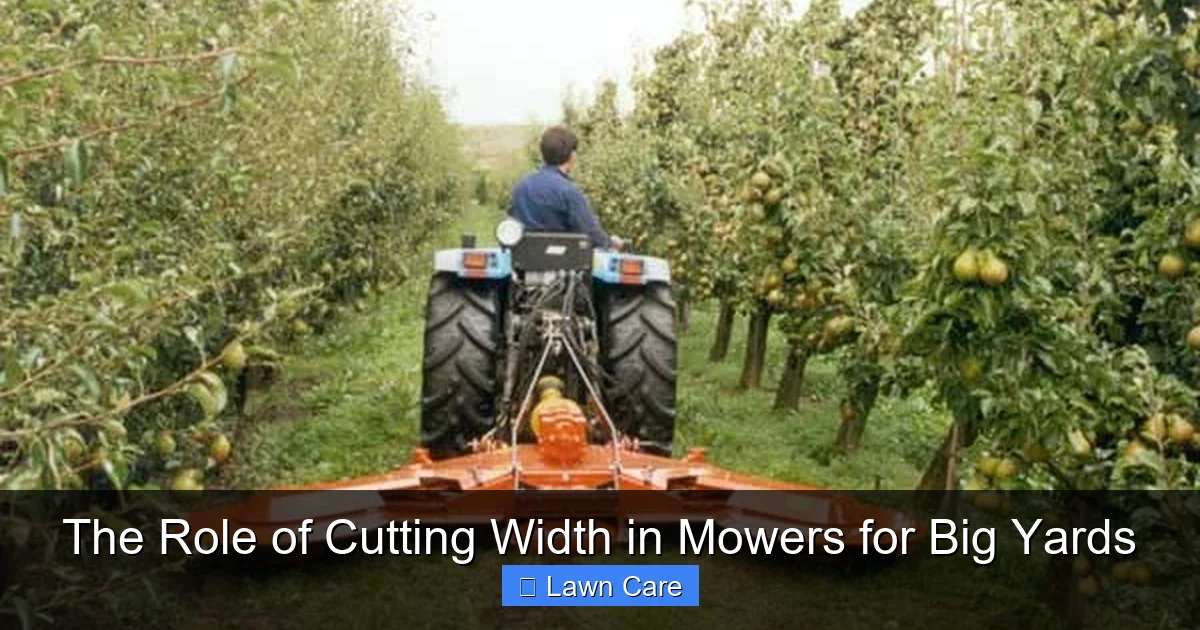
- 1/2 to 1 acre: Go for a 42- to 48-inch mower. This width significantly reduces mowing time and is ideal for large, flat lawns.
- Over 1 acre: Consider a 52-inch or wider riding mower or a zero-turn model. These are built for speed and efficiency on expansive properties.
Keep in mind that these are just starting points. Your final decision should also consider your lawn’s shape, obstacles, and personal comfort level.
What About Obstacles and Tight Spaces?
If your yard has trees, flower beds, or winding paths, a wider mower might not be practical. In such cases, a mid-width mower (30 to 36 inches) with good turning radius and front-wheel steering can be a smart compromise. It still offers decent efficiency but allows you to navigate around obstacles without constant stopping and starting.
Also, consider the turning radius of the mower. A zero-turn mower with a tight turning radius can make wide cuts more manageable, even in tighter spaces. These are especially popular among homeowners with large but irregularly shaped yards.
Terrain and Slope Considerations
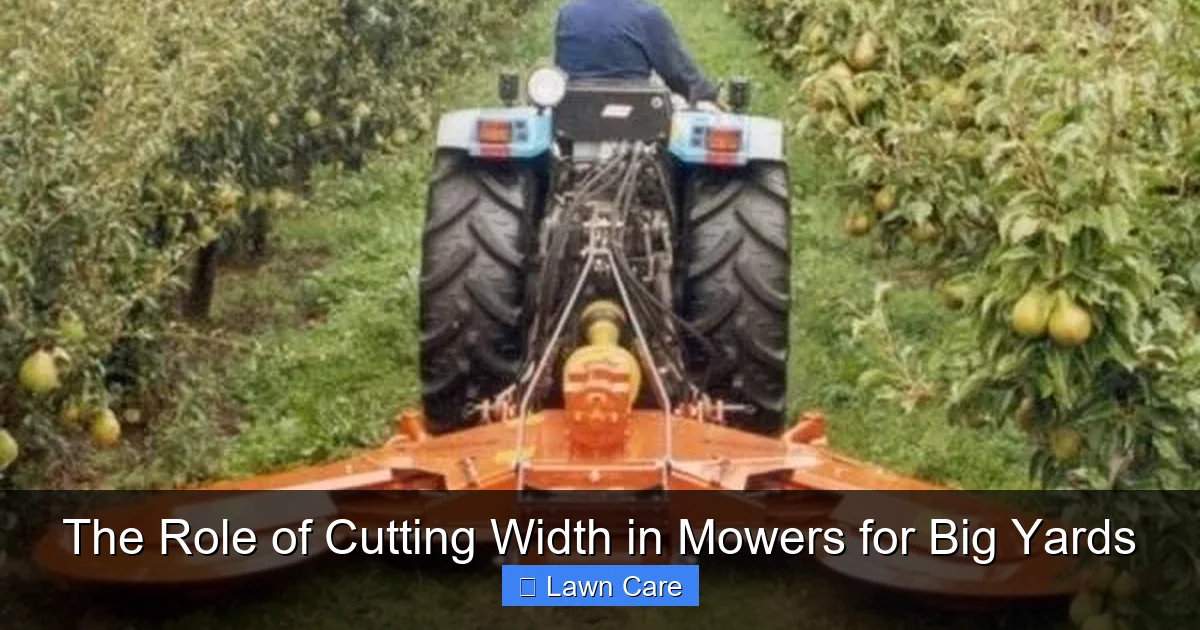
Your yard’s topography plays a critical role in selecting the right cutting width. If you have hills, slopes, or uneven ground, a wider mower can be a liability.
Visual guide about The Role of Cutting Width in Mowers for Big Yards
Image source: superbhorticulture.com
Wider mowers have a higher center of gravity, which increases the risk of tipping on inclines. They also require more torque to climb hills, which can strain the engine and reduce battery life on electric models. For sloped yards, a mower with a narrower cutting width (30 to 36 inches) or a model specifically designed for hills (with low center of gravity and powerful engines) is often a safer choice.
Additionally, consider the weight distribution of the mower. Front-wheel drive models tend to perform better on hills because they keep the front wheels on the ground, improving traction. Rear-wheel drive can lift the front on steep slopes, making steering difficult and increasing the risk of tipping.
Flat vs. Rolling Lawns: What Works Best?
On flat, open lawns, wider mowers shine. They allow for long, straight passes and minimize turning time. A 48-inch mower on a 1/2-acre flat yard can cut the job down to under an hour—something a 24-inch mower would take over three hours to do.
But on rolling or hilly terrain, narrower mowers (30 to 36 inches) offer better control and safety. They’re easier to handle on inclines and can navigate around dips and bumps without losing stability. If your yard has significant elevation changes, it’s worth investing in a mower with hill-climbing capabilities, regardless of cutting width.
Grass Type and Cutting Width Compatibility
The type of grass you have also influences the ideal cutting width. Different grasses grow at different rates and heights, and some are thicker or more fibrous than others.
- Tall fescue and Kentucky bluegrass: These cool-season grasses grow quickly and can become tall. A wider mower helps prevent overloading the deck, which can lead to clumping and poor mulching.
- Bermuda and zoysia: These warm-season grasses are dense and fast-growing. A wider cut helps manage thick growth without clogging the mower.
- Fine fescue: This grass is delicate and grows slowly. A narrower mower is often better to avoid tearing the blades instead of cutting them cleanly.
Also, consider how you plan to handle clippings. If you mulch, a wider mower ensures clippings are evenly distributed, acting as a natural fertilizer. If you bag clippings, a narrower mower may be easier to maneuver around tight spaces during cleanup.
Mulching vs. Bagging: Which Is Better for Big Yards?
Mulching is often the preferred method for large lawns because it returns nutrients to the soil and reduces the need for bagging. However, it requires a mower with a mulching blade and a well-designed deck to function properly.
A wider cutting width helps with mulching because it spreads clippings more evenly. But if your mower doesn’t have a mulching kit, you might be better off bagging, especially if you have a lot of clippings from fast-growing grass.
Keep in mind that bagging adds extra weight to the mower, which can affect performance on hills or uneven terrain. If you’re using a bagging mower, a slightly narrower width (30 to 36 inches) might be easier to manage.
Mower Types and Their Cutting Width Ranges
Different mower types offer different cutting width options. Understanding these can help you narrow down your choices.
- Push mowers: Typically 18 to 21 inches. Best for small yards and fine fescue lawns. Not ideal for large properties.
- Self-propelled mowers: Usually 24 to 30 inches. Great for medium yards and offer better control than push mowers.
- Rear-engine riding mowers: 42 to 54 inches. Excellent for large, flat lawns. Easy to operate and efficient.
- Zero-turn mowers: 42 to 60+ inches. Ideal for big yards with obstacles. Offer the fastest mowing times but are more expensive.
- Electric mowers: Generally 20 to 30 inches. Best for small to medium yards. Battery life can limit use on very large properties.
When choosing a mower type, consider your budget, yard size, and how much time you want to spend mowing. For big yards, riding or zero-turn mowers are usually the best investment.
Gas vs. Electric: Which Supports Wider Cuts?
Gas mowers typically support wider cutting widths because they have more powerful engines. This makes them ideal for large yards with thick grass or hills.
Electric mowers, especially corded ones, are limited by power and reach. Battery-powered models are improving, but many top widths (42+ inches) still require significant battery life. If you choose an electric mower for a big yard, look for models with high-capacity batteries and fast-charging capabilities.
Also, consider noise and emissions. Electric mowers are quieter and eco-friendly, but they may not have the muscle needed for wide cuts on tough terrain.
Practical Tips for Maximizing Efficiency
Even with the right cutting width, you can optimize your mowing routine to save even more time and effort.
- Adjust mowing height: Cutting grass too short stresses the lawn and requires more frequent mowing. Most grasses do best at 2.5 to 3.5 inches. Taller grass shades the soil, reducing weeds and retaining moisture.
- Mow when grass is dry: Wet grass clogs mower decks and leads to uneven cuts. Aim to mow in the morning after dew has dried.
- Overlap passes slightly: This ensures no grass is missed and prevents visible lines. A wider mower naturally overlaps more, but it’s still worth checking.
- Maintain your mower: Sharp blades cut cleaner and reduce strain on the engine. Clean the deck regularly to prevent clogs.
- Use a mowing pattern: Alternate directions each time you mow (e.g., east to west, then north to south). This prevents soil compaction in one direction and promotes even growth.
Also, consider mulching grass clippings instead of bagging. It saves time, reduces waste, and feeds your lawn naturally. Just make sure your mower is designed for mulching and your cutting width is wide enough to distribute clippings evenly.
Conclusion: Finding the Perfect Fit for Your Big Yard
Cutting width is more than just a number on a spec sheet—it’s a key factor in how efficiently you can care for your big yard. The right width saves time, reduces fatigue, and helps you maintain a healthier, more attractive lawn. But it’s not a one-size-fits-all solution. Your ideal cutting width depends on your yard’s size, terrain, grass type, and personal preferences.
Start by assessing your property and trying out different mower widths if possible. Rent a few models or demo at a local store to see how they perform on your lawn. Once you find the balance of width, power, and maneuverability that works for you, you’ll wonder how you ever mowed without it.
Remember, a well-maintained lawn isn’t just about appearance—it’s about creating a space where you can relax, play, and enjoy the outdoors. With the right mower and the right cutting width, that big yard won’t feel so big anymore.
Frequently Asked Questions
What is the best cutting width for a 1-acre lawn?
For a 1-acre lawn, a 48- to 52-inch cutting width is recommended. This allows you to cover large areas quickly while maintaining control. Riding or zero-turn mowers in this range are ideal for big, flat or gently rolling yards.
Can I use a narrow mower on a big yard?
Technically yes, but it will take much longer and require more physical effort. A narrow mower may be suitable only if your yard has many obstacles or steep slopes where a wider mower wouldn’t work safely.
Does cutting width affect grass health?
Indirectly, yes. A proper cutting width ensures clean cuts and even mulching, which supports grass health. Overloading a narrow mower with thick grass can lead to clumping and poor mulching, while a wide mower on thin grass may tear blades.
Should I choose a wider mower for faster mowing?
Yes, wider mowers cover more ground per pass, reducing total mowing time. However, speed also depends on mower type, terrain, and operator skill. A zero-turn mower with a 54-inch deck will mow faster than a push mower with a 21-inch cut.
Are wider mowers harder to store?
Yes, wider mowers take up more space in storage. Consider your garage or shed size when choosing a cutting width. A 60-inch mower may require a dedicated storage area or a larger shed door.
Can I adjust the cutting width on my mower?
No, cutting width is fixed based on the mower’s deck size. However, some mowers allow you to adjust the cutting height, which affects how the grass looks and performs. Always follow recommended height guidelines for your grass type.