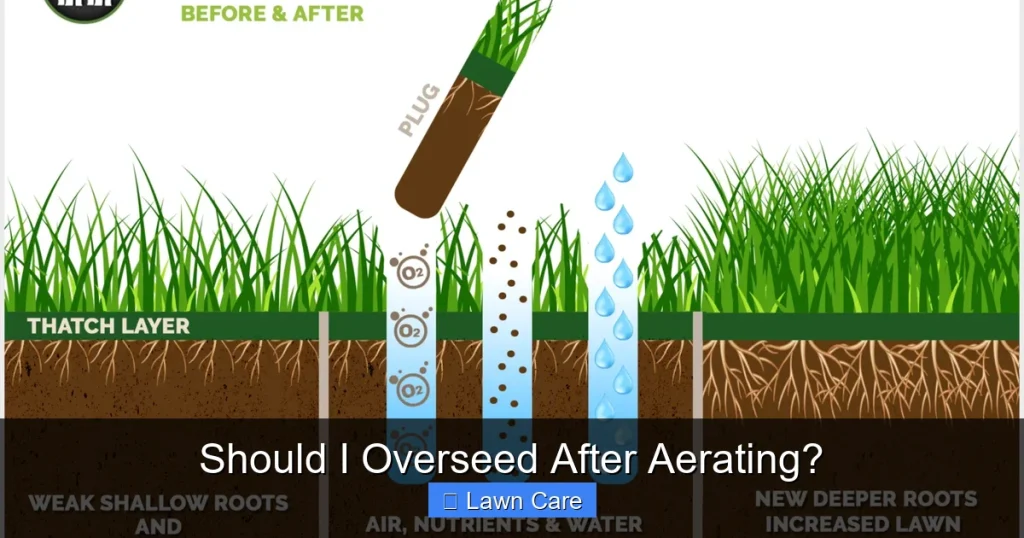
Yes, you should almost always overseed after aerating if your goal is to improve lawn density and health. Aeration creates the perfect environment for new grass seed to establish, leading to a thicker, greener lawn. This guide covers why, when, and how to do it for the best results.
Have you ever looked at your lawn and thought, “It’s okay, but it could be *better*”? Maybe it’s a bit thin in spots, or perhaps you’re just aiming for that perfect, carpet-like appearance. If you’ve been digging into lawn care, you’ve likely come across two popular practices: aeration and overseeding. Aeration involves poking holes into your soil, and overseeding means spreading new grass seed over your existing lawn. The big question on many minds is: should I overseed after aerating? The short answer is, for most lawns and most goals, absolutely yes!
Aeration and overseeding are a dynamic duo for lawn health and aesthetics. Think of aeration as preparing the perfect bed for new life. It loosens compacted soil, which is often the main culprit behind a struggling lawn. This loosening allows air, water, and nutrients to reach the grass roots more effectively. But the benefits don’t stop there. Those little plugs of soil pulled out of your lawn? They create tiny, welcoming pockets where something new can thrive. And that’s where overseeding comes in.
When you overseed after aerating, you’re capitalizing on the optimal conditions created by the aeration process. The new grass seed gets a direct path to the soil, protected from being blown away or drying out on the surface. This dramatically increases the chances of successful germination and establishment. So, if you’re looking to thicken your lawn, repair bare patches, or introduce a more resilient grass variety, combining aeration with overseeding is one of the most effective strategies you can employ. Let’s dive into why this combination is so powerful and how to do it right.
## Why Overseed After Aerating? The Perfect Partnership
Aeration is fundamentally about improving the soil’s ability to support healthy grass growth. Compacted soil suffocates grass roots, prevents proper drainage, and makes it difficult for nutrients to penetrate. Aeration alleviates these issues by creating channels for air, water, and nutrients. But what does this mean for overseeding? It means that the new grass seed you’re about to spread has a much better chance of survival and growth.
### Creating an Ideal Seedbed
When you aerate, you’re essentially creating a natural divot or pocket in your lawn. These small holes are the perfect place for grass seed to land. Instead of sitting on top of dense, compacted soil where it might get washed away or dry out, the seed falls into these open spaces. This direct contact with the soil is absolutely critical for germination. It provides the moisture and nutrients the seed needs to sprout and begin its journey toward becoming a healthy blade of grass.
### Filling in Thin Spots and Patchy Areas
Over time, lawns can develop thin areas due to wear and tear, disease, pests, or poor soil conditions. Aeration helps to loosen the soil in these areas, making them more receptive to new growth. By overseeding after aeration, you’re strategically introducing new seeds precisely where they are needed most. This is a far more effective method than just scattering seed over a compacted or thin lawn, where germination rates will be significantly lower.
### Introducing Improved Grass Varieties
Perhaps you’re unhappy with the current type of grass in your lawn. Maybe it’s prone to disease, doesn’t handle drought well, or just doesn’t look as good as you’d like. Aeration provides the perfect opportunity to introduce a superior grass seed mix. The aeration process ensures that this new seed has the best possible chance to compete with and eventually replace the older, less desirable grass.
### Enhancing Lawn Density and Overall Health
The ultimate goal for many homeowners is a thick, lush, and green lawn. Aeration alone improves soil health, allowing existing grass to grow more vigorously. When combined with overseeding, you’re actively increasing the number of grass plants in your lawn. This leads to a denser turf that is better able to suppress weeds, withstand foot traffic, and maintain a more uniform color and texture. It’s a two-pronged approach to a healthier, more beautiful lawn.
## When is the Best Time to Overseed After Aerating?
The timing of your overseeding efforts is just as important as the act itself. While aeration can be done at various times, the ideal window for overseeding after aeration is dictated by your grass type and the climate you live in. Generally, the cooler seasons are best for overseeding.
### For Cool-Season Grasses (Fescue, Ryegrass, Bluegrass)
If you have cool-season grasses, the prime time to overseed after aerating is in the **fall**. This is typically from late August through mid-October, depending on your region. The soil is still warm from the summer, but the air temperatures are beginning to cool down. This provides ideal conditions for germination. Cool-season grasses thrive in these moderate temperatures and have ample time to establish before the harshness of winter sets in. They will then be ready to grow strong in the spring. You can also overseed in the **early spring** (March to April) after the last frost, but fall is generally considered superior for establishment and long-term success.
### For Warm-Season Grasses (Bermuda, Zoysia, St. Augustine)
Warm-season grasses have a different growth cycle. They are most actively growing during the hot summer months and go dormant in the cooler weather. Therefore, the best time to overseed these grasses after aeration is in **late spring to early summer**. This would be around May through June. This allows the new seeds to germinate and establish while the weather is warm and conducive to their growth. However, be aware that overseeding warm-season grasses can be trickier as they don’t form a dense turf as quickly as cool-season grasses, and weeds can be more competitive during the establishment period. It’s important to select the right variety of warm-season grass seed for your region.
## How to Prepare Your Lawn for Overseeding After Aerating
Proper preparation is the backbone of any successful lawn care task, and overseeding after aeration is no exception. You want to maximize the benefits of both practices.
### Mowing Before Aeration
Before you even grab your aerator, it’s a good idea to mow your lawn. Mow it a little shorter than you normally would. This helps to reduce the amount of excess grass material that might interfere with the aeration process and ensures better seed-to-soil contact later on. If you have a lot of thatch (that spongy layer of dead grass and roots), it’s also a good time to consider dethatching if it’s severe. However, be cautious; excessive dethatching can stress your lawn.
### Raking After Aeration
Once you’ve aerated, you’ll have those lovely plugs of soil scattered across your lawn. The general advice is to leave these plugs to break down naturally. They will decompose and return nutrients to the soil. You can help this process along by lightly raking over the lawn. This breaks up the plugs and helps to expose more soil, creating an even better seedbed. This is also a good time to remove any large debris or clumps of soil that might smother the newly sown seeds. Should your lawn be raked after aeration? Generally, a light raking is beneficial.
### Weed Control Considerations
If you have a significant weed problem, you might wonder about weed control before or after aeration and overseeding. It’s generally best to address major weed issues **before** you aerate and overseed. If you’re using a pre-emergent herbicide, be mindful of the application dates. Many pre-emergent herbicides, like those used for crabgrass prevention, will also prevent your new grass seed from germinating. Always check the product label for reapplication restrictions or whether it’s safe to overseed after use. Can I overseed after crabgrass preventer? This is a crucial question to answer to avoid wasting your seed. Addressing weeds after overseeding is best done manually or with spot treatments to avoid harming your new seedlings.
## The Art of Overseeding: Technique and Seed Selection
Simply spreading seed after aeration isn’t enough. You need to use the right seed and apply it properly to ensure success.
### Choosing the Right Grass Seed
This is a critical step. You want to select a grass seed that is well-suited to your climate, soil conditions, and sunlight exposure. For overseeding an existing lawn, it’s usually best to choose a seed mix that is compatible with your current grass type. This ensures a uniform appearance. If your current lawn is struggling, consider a blend that includes disease-resistant or drought-tolerant varieties.
* **Cool-Season Blends:** Often contain a mix of perennial ryegrass, fine fescue, and Kentucky bluegrass.
* **Warm-Season Blends:** Might include specific varieties of Bermuda grass or Zoysia grass.
Always buy high-quality seed from a reputable supplier. The price might be higher, but the germination rates and purity are usually much better, leading to fewer weeds and a healthier stand of grass.
### Application Techniques for Best Seed-to-Soil Contact
This is where aeration truly shines. The holes created by the aerator are your allies.
1. **Spread the Seed:** Use a spreader (broadcast or drop spreader) to apply the seed evenly across the lawn. A general recommendation is to apply about 5-10 pounds of seed per 1,000 square feet, but always check the seed bag for specific recommendations.
2. **Ensure Seed Falls into Holes:** The goal is for the seed to fall into the aeration holes. If you have a broadcast spreader, the wind might blow some seed away, but many will find their way into the soil pockets.
3. **Lightly Rake or Drag:** After spreading, you can lightly rake the area or use a drag mat. This helps to push some of the seed into the holes and covers it with a thin layer of soil. A very light covering of compost or topsoil can also be beneficial, but don’t bury the seed too deeply – about 1/8 to 1/4 inch is ideal.
4. **Rolling (Optional):** In some cases, especially if the ground is a bit uneven, you might consider lightly rolling the area. This further improves seed-to-soil contact. However, avoid over-compacting the soil.
## Post-Overseeding Care: Nurturing Your New Seed
You’ve done the hard work of aerating and overseeding, but the job isn’t quite done. Proper post-seeding care is essential for germination and establishment.
### Watering is Key
This is arguably the most critical factor in successful overseeding. Newly sown grass seed needs consistent moisture to germinate and establish strong roots.
* **Keep it Moist:** The seeded areas should be kept consistently moist, but not waterlogged. This means light, frequent watering. You might need to water once or twice a day, depending on your climate and soil type.
* **Avoid Washing Away Seed:** Water gently. Use a sprinkler with a fine spray setting. Avoid heavy watering that can wash the seeds away from the aeration holes.
* **Continue Watering:** Once the seedlings emerge, continue to water them regularly. As the grass grows, you can gradually transition to deeper, less frequent watering to encourage deep root growth. This helps the new grass become more resilient. How often should I water my lawn? is a good general question, but for new seed, the rules change temporarily.
### Fertilizing After Overseeding
Should you fertilize right after overseeding? It’s generally recommended to use a starter fertilizer when you overseed. These fertilizers are formulated with a higher phosphorus content, which is crucial for root development. Apply the starter fertilizer at the recommended rate, usually at the same time you spread the seed. Avoid using a high-nitrogen fertilizer immediately, as this can encourage top growth before the roots are well-established. If you aerated and are not overseeding, you might consider fertilizing. Should you fertilize right after aerating? is a common query, and the answer often depends on whether you’re overseeding.
### Mowing Your Newly Seeded Lawn
Patience is a virtue when it comes to mowing your new grass. You should wait until the new grass reaches about one-third taller than your desired mowing height. For cool-season grasses, this might be around 3 to 4 inches.
* **Mow High:** When you do start mowing, always mow high. This helps to shade the soil, conserve moisture, and encourage the new grass to tiller (spread outwards).
* **Sharp Blades:** Ensure your mower blades are sharp. Dull blades can tear the delicate new grass, leading to damage and potential disease.
* **Avoid Heavy Traffic:** For at least the first month, try to keep foot traffic, pets, and lawn equipment off the newly seeded areas as much as possible. This allows the young grass to establish strong roots without being disturbed. Understanding how long to wait to mow lawn after aerating is important, but for new seedlings, it’s even more critical.
## When You Might Skip Overseeding After Aerating
While overseeding after aeration is generally a fantastic idea, there might be rare instances where it’s not strictly necessary.
### Extremely Dense and Healthy Lawns
If your lawn is already incredibly dense, free of weeds, and perfectly uniform, overseeding might be an optional step. Aeration will still benefit your lawn by improving soil structure and nutrient penetration, leading to even healthier existing grass. However, if you’re not looking to fill any gaps or introduce new varieties, the primary benefit of overseeding – increasing density – is already achieved.
### Specific Lawn Renovation Projects
In some cases, a complete lawn renovation might be planned, which could involve different approaches. For instance, if you’re planning to kill off the old lawn and start fresh with sod, overseeding after aeration might not be part of that specific process.
However, for the vast majority of homeowners aiming for a lush, healthy, and resilient lawn, combining aeration with overseeding is a highly effective strategy that yields noticeable improvements. It addresses underlying soil issues while actively promoting new, healthy growth.
## Conclusion: The Power of Combination
So, should you overseed after aerating? In almost all scenarios, the answer is a resounding yes. Aeration creates the perfect conditions for grass seed to germinate and establish. It loosens compacted soil, allowing air, water, and nutrients to reach the roots, and it provides ideal micro-sites for new seeds. When you pair this with the strategic application of high-quality grass seed, you’re setting yourself up for a significantly thicker, greener, and healthier lawn.
Remember to time your efforts correctly based on your grass type and climate, prepare your lawn meticulously, choose the right seed, and provide diligent post-seeding care, especially with watering. By treating aeration and overseeding as a team, you’re investing in the long-term vitality and beauty of your lawn. This powerful combination is one of the most effective ways to transform an average lawn into the envy of the neighborhood.
- Aeration creates an ideal seedbed: The small holes left by aeration allow grass seed to make direct contact with the soil, greatly improving germination rates.
- Overseeding fills thin spots: It’s the perfect opportunity to introduce new seed to areas of your lawn that are sparse or have patchy growth.
- Timing is crucial: The best time to overseed after aerating depends on your grass type and climate, typically during the cooler months for cool-season grasses.
- Preparation is key: Mow low before aerating, and consider removing excess thatch. After aerating, rake lightly to expose more soil and remove large debris.
- Seed-to-soil contact is vital: Ensure the seed falls into the aeration holes and lightly cover it with soil for maximum germination.
- Post-overseeding care: Keep the newly seeded areas consistently moist and avoid heavy traffic until the grass is established.
- Not always necessary: If your lawn is already very dense and healthy, overseeding after aeration might be optional, but it’s generally beneficial.
Quick Answers to Common Questions
What is the primary benefit of overseeding after aerating?
The primary benefit is creating an ideal seedbed. Aeration loosens soil and creates small pockets, allowing grass seed to make direct contact with the soil for much higher germination rates.
Can I overseed immediately after aerating?
Yes, you can typically overseed immediately after aerating. In fact, doing so while the aeration holes are fresh is ideal for maximizing seed-to-soil contact.
What is the best time of year to overseed after aerating for cool-season grasses?
For cool-season grasses like fescue, ryegrass, and bluegrass, the best time to overseed after aerating is in the fall, typically from late August through mid-October.
Should I fertilize when I overseed after aerating?
Yes, it’s highly recommended to use a starter fertilizer that is rich in phosphorus when you overseed. This promotes strong root development for the new grass seedlings.
How much water does newly overseeded grass need?
Newly overseeded grass needs consistent moisture. It’s best to water lightly and frequently, keeping the soil moist but not waterlogged, until the seedlings are well-established.
Frequently Asked Questions
Will overseeding after aerating make my lawn thicker?
Absolutely. Overseeding introduces new grass plants to your lawn, filling in thin spots and increasing overall density. When done after aeration, the new seeds have a much better chance of establishing, leading to a visibly thicker turf.
What kind of grass seed should I use when overseeding after aerating?
You should choose a high-quality grass seed blend that is suitable for your climate and the specific conditions of your lawn (sunlight, soil type). Ideally, select a mix that is compatible with your existing grass type for a uniform look.
How soon can I mow my lawn after overseeding and aerating?
You should wait to mow until the new grass seedlings reach about one-third taller than your desired mowing height. This usually means waiting until the grass is around 3 to 4 inches tall, then mowing high to promote healthy growth.
Do I need to pick up the plugs after aerating if I plan to overseed?
No, generally you do not need to pick up the plugs. Leaving them to break down naturally returns nutrients to the soil. Lightly raking can help break them up and further improve seed-to-soil contact.
What if my lawn is mostly weeds? Should I still overseed after aerating?
It’s usually best to address significant weed issues before aeration and overseeding. If weeds are a major problem, consider weed control methods that are safe for seeding or plan a renovation. Overseeding into a heavily weed-infested lawn will likely yield poor results.
How important is soil contact for the grass seed when overseeding after aerating?
Soil contact is critically important. Aeration naturally helps with this by creating holes for the seed to fall into. Ensuring the seed is in direct contact with the soil, possibly with a light covering, is key to successful germination and establishment.