Here's the bottom line on what grubs do: they're beetle larvae living underground, and whether they're wrecking your lawn or quietly improving your soil depends on how many you've got, which species they are, and when they're active. Most homeowners only notice grubs when the damage is already done, but understanding what these larvae are actually doing under the surface changes how you respond.
White grubs feed on grass roots and organic matter in the top few inches of soil, and a healthy lawn can handle a few without showing stress. State cooperative extension services across the US and UK generally cite a threshold of around 5 to 10 grubs per square foot before cool-season turfgrass starts showing visible damage, though warm-season grasses often tolerate higher numbers.
Quick Answer
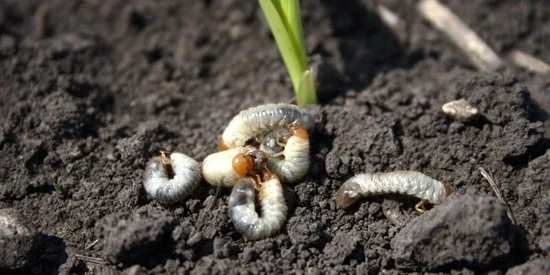
White grubs are beetle larvae that live in the top layer of soil. They feed on grass roots, organic matter, and decaying plant material. A small number is normal and harmless to your lawn.
Once populations cross roughly 5 to 10 grubs per square foot, they begin causing visible brown patches. Some species cause far more damage than others, so identifying which grub you've got matters before treating.
The Grub Life Cycle: What's Happening Underground
Adult beetles lay eggs in moist soil during early to mid summer. Those eggs hatch within a couple of weeks, and the young larvae start feeding on grass roots and organic debris right away. This larval stage is when grubs do the most visible damage because they're hungry, growing, and feeding aggressively through late summer and into fall.
As soil temperatures drop in autumn, grubs migrate deeper into the ground to overwinter. They become less active below the frost line but aren't gone. Come spring, they move back up and feed for a shorter period before pupating into adult beetles by late spring or early summer.
Most common lawn grubs follow a one-year cycle, but some species like certain May beetle grubs take two to three years to complete development.
How Grubs Feed and Move Through Soil
When grubs first hatch, they're tiny and feeding on fine root hairs and decomposing organic matter. As they grow through their larval stages (called instars), their appetite shifts to thicker grass roots. They live in the top 1/4 to 1/2 inch of soil during peak feeding, chewing through root systems that hold your turf in place.
Their tunneling naturally aerates the soil, which is one reason low populations are actually beneficial. The problem starts when enough grubs consume roots faster than the grass can regenerate them. The turf loses its anchor and its ability to pull up water, leading to patches of dead or dying grass that feel spongy underfoot.
Why You See Damage in Late Summer and Fall
Damage typically shows up from August through October because that's when grubs have been feeding longest and populations peak. Earlier in summer you might not notice anything wrong. By late summer, the cumulative root loss catches up, especially during dry spells when stressed grass can't compensate.
Spring feeding also happens, but damage is often less noticeable because grass is actively growing and cooler, wetter conditions help turf recover. Spring damage is more common in regions where grubs overwintered in large numbers or where the previous fall's feeding was severe.
What Grubs Actually Do in Your Lawn and Garden
Grubs occupy a dual role underground. At low numbers, they function as part of your soil ecosystem, breaking down thatch and decaying plant material while creating channels that improve water infiltration and air movement through the soil profile. Earthworms perform similar functions, and grubs fill a parallel niche.
At high numbers, they shift from background soil workers to active turf destroyers. Species like Japanese beetle grubs and European chafer grubs are the primary culprits behind serious lawn damage in the Northeast and Midwest US. Green June beetle grubs create a different problem: tunneling and surface mounding that disrupts the turf canopy without necessarily killing roots.
Grubs are also a food source. Birds, skunks, and raccoons dig up lawns specifically because they're hunting grubs. This secondary damage can sometimes be worse than the root feeding itself, leaving your yard torn up overnight.
How to Tell If Grubs Are the Real Problem
Brown patches in a lawn have several possible causes: drought stress, fungal disease, dog urine spots, compacted soil, or nutrient deficiency. Grubs are one possibility among many, and jumping straight to treatment without confirming they're the cause wastes time and money.

The Tug Test: Confirming Grub Damage vs. Other Issues
Grab a handful of grass in a damaged area and pull firmly. If the sod lifts easily like a loose carpet, that's a strong indicator of grub feeding. When roots are severed, the turf loses its grip on the underlying soil.
Grass damaged by drought or disease usually still holds firm because the roots are intact.
Other signs include irregular brown patches that expand day by day, increased animal digging in concentrated areas, and turf that feels spongy or rolls back when you walk across it. Irregular, scattered patches are more typical of grub damage than the uniform browning you'd see from drought.
How Many Grubs Per Square Foot Is Actually a Problem?
Cut a 1-foot square section of sod in a damaged edge area about 2 inches deep and peel it back. Count the grubs you find in the soil beneath, then multiply if you sampled a smaller area. Here's the general threshold framework used by university extension services:
| Grub Count (per sq ft) | Damage Level | Action Needed |
|---|---|---|
| 1 to 4 | Normal background population | None |
| 5 to 10 | Moderate, may show spotty damage | Monitor; treat if turf is stressed or history of problems |
| 11 to 15 | High, visible damage likely | Curative treatment recommended |
| 15+ | Severe | Immediate treatment needed to prevent turf loss |
Warm-season grasses like Bermuda and zoysia often tolerate higher counts because their aggressive root systems regenerate faster. Cool-season grasses like Kentucky bluegrass, fescues, and perennial ryegrass tend to show damage at lower thresholds.
When Grubs Are Doing More Harm Than Good
Once grub density crosses into the damaging range, the balance tips. The turf can't replace roots fast enough, water uptake drops, and brown patches spread. In severe infestations, the sod lifts away completely, and what's left is bare soil that invites weed growth and erosion.
Beyond root feeding, the secondary pest problem compounds the damage. Skunks can destroy a section of lawn overnight searching for a single meal of grubs. Birds like starlings and blackbirds create smaller but persistent holes.
This animal activity often alarms homeowners more than the grubs themselves.
Species That Cause the Most Turf Damage
Not all grubs are equally destructive. The most damaging species in the northeastern and midwestern US include Japanese beetle, European chafer, and masked chafer grubs. Japanese beetle grubs are particularly problematic because the adults also damage ornamental plants, fruit trees, and roses above ground, creating a two-season pest problem.
Green June beetle grubs behave differently. They surface at night and feed on thatch and organic matter more aggressively than roots, creating irregular mounds and a bumpy lawn surface. They're more common in the southern US and parts of the mid-Atlantic.
Billbug larvae are sometimes mistaken for grubs because they live in turf and cause similar damage. But billbugs are weevil larvae, not scarab beetles, and they bore inside grass stems and crowns rather than feeding on roots underground. Correct identification matters because treatments differ.
The Secondary Damage Problem: Animals Diging Up Your Lawn
Raccoons, skunks, armadillos in the southern US, and birds all feed on grubs. They'll tear up turf to reach them, and a single skunk can do more visible lawn damage in one night than a month of grub feeding. If you're seeing fresh digging alongside brown patches, grubs are almost certainly present at significant numbers.
This creates a frustrating cycle. You treat the grubs, but animals continue digging in search of remnants, making the lawn look worse before it recovers. Rolling repaired areas and keeping them watered helps turf re-establish and discourages further animal disturbance.
When Grubs Are Actually Beneficial
A handful of grubs per square foot isn't a problem, it's a sign your soil is alive. They break down dead plant material, accelerate thatch decomposition, and their tunneling creates micro-channels that let water and oxygen penetrate compacted zones. A lawn with a low, stable grub population often has better soil structure than one that's been doused in routine insecticide applications.
The key distinction is balance. Healthy turfgrass can regenerate roots faster than a moderate grub population can eat them, so the plant never shows stress. Problems arise when something tips that balance: drought, poor fertility, heavy thatch buildup, or a sudden population spike after favorable weather.
Grubs are usually a symptom of an underlying turf health issue, not the root cause.
Soil Aeration and Organic Matter Breakdown
As grubs move through the soil profile, they create small tunnels that improve water infiltration and reduce surface compaction. This isn't as effective as core aeration performed mechanically, but it's a continuous biological process that happens on its own. They also consume decaying roots, thatch, and leaf litter, converting that organic material back into the soil food web.
When you eliminate every grub with a broad-spectrum insecticide, you're also disrupting that natural recycling process. Repeated treatments can lead to thatch accumulation because the organisms that break it down are gone. It's one reason integrated pest management (IPM) approaches emphasize monitoring over blanket treatment.
Why a Few Grubs Are Normal and Healthy
Think of grubs the way you'd think of worms in a garden bed. They're part of a functioning soil ecosystem, and their presence supports the food chain above ground. Birds, ground beetles, and predatory insects all feed on grubs or their eggs.
A lawn that's never had a grub is almost certainly one that's been treated so aggressively it's biologically inert.
Lawns with adequate fertility, proper irrigation, and moderate thatch can support 3 to 5 grubs per square foot for years without any visible decline. The damage thresholds I mentioned earlier aren't fixed limits, they're warning points. Most home lawns only need treatment when counts exceed those numbers during peak feeding season.
Your Decision Tree: Should You Treat or Leave Them Alone?
The question isn't just whether grubs are present, it's whether they're causing enough damage to justify intervention. That decision depends on what species you have, how many there are, how healthy your turf is, and what time of year you're making the call.

Step 1: Sample Your Lawn and Count
Pick three to five spots in or near damaged areas. Cut a square foot of sod at each spot, peel it back, and count the larvae. Divide by the number of samples to get your average per square foot.
Sampling in late August or early September gives you the most reliable count because grubs are large enough to see easily but haven't yet moved deep for winter.
If all your samples come back under 5 grubs per square foot, skip treatment. If they're consistently above 10, you're in treatment territory. Between those numbers, consider your turf's overall health before deciding.
Step 2: Identify the Species
Different grub species have different life cycles, feeding habits, and treatment windows. You can identify them by looking at the raster pattern, the arrangement of tiny hairs and spines on the underside of the abdomen near the rear end. A magnifying glass or loupe makes this practical.
Japanese beetle grubs have a distinct V-shaped raster pattern. European chafer grubs show a Y-shaped pattern with more open spacing. Masked chafer grubs have a different arrangement that's denser and more parallel.
Species ID matters because European chafers, for example, have a shorter egg-laying window and sometimes require adjusted timing compared to Japanese beetles.
Step 3: Match Your Threshold to Your Turf Type
Cool-season grasses like Kentucky bluegrass and tall fescue have finer root systems and fewer energy reserves, so they tolerate lower grub pressure. Warm-season grasses like Bermuda and St. Augustine spread aggressively through stolons and rhizomes, giving them a bigger buffer against root damage.
If you're growing cool-season turf in a transition zone, you'll need to act at lower thresholds because summer heat already stresses the grass.
Irrigated lawns also tolerate more grubs than unirrigated ones. Consistent moisture helps grass regenerate roots faster, so a well-watered lawn might handle 8 to 10 grubs per square foot without showing damage, while a drought-stressed lawn at the same count would be brown and thinning.
Step 4: Choose Your Treatment Window
Timing is everything with grub control. Preventive products need to be applied before eggs hatch, typically June through mid-July depending on your region and species. Curative products work best when grubs are small and actively feeding, usually August through early September.
Once grubs are large and mature in late fall, most curative treatments lose effectiveness because the larvae are harder to kill and are preparing to move deep for winter.
If you're reading this in October and finding grubs, you're probably past the ideal curative window. At that point, focus on lawn repair and plan a preventive application for next summer if counts were high.
Treatment Options: What Works and When
Your treatment choice depends on timing, grub size, species, and whether you're trying to prevent an infestation or stop an active one. No single product works in every situation, and applying the wrong treatment at the wrong time is the most common reason homeowners fail to control grubs.

Preventive Treatments (June–July)
Preventive insecticides target eggs and newly hatched larvae before they grow large enough to cause significant root damage. Products containing imidacloprid, a neonicotinoid, are the most widely used preventive option and typically provide season-long control when applied correctly. These need to be watered in thoroughly after application so the active ingredient reaches the root zone where eggs are hatching.
Some states have restricted neonicotinoid use due to concerns about pollinator exposure. Check your state department of agriculture's current regulations before purchasing. In restricted areas, chlorantraniliprole-based products offer a preventive alternative with a different mode of action and lower toxicity to non-target organisms.
Curative Treatments (August–September)
Curative products target grubs that are already feeding and causing damage. Trichlorfon and carbaryl are the most common active ingredients for this approach. They work faster than preventives but have a shorter window of effectiveness, usually two to three weeks.
You need to apply them when grubs are small to medium-sized, which in most regions means August through early September.
Curative treatments won't reverse damage that's already done. They stop further feeding, but the lawn still needs time and proper care to recover. Overseeding treated areas in early fall gives new grass a chance to establish before winter.
Biological Controls: Nematodes and Milky Spore
Beneficial nematodes, specifically Heterorhabditis bacteriophora, are microscopic roundworms that seek out and kill grubs in the soil. They're applied as a liquid drench and need moist, warm soil to survive and move effectively. Nematodes work best when soil temperatures are between 60 and 85 degrees Fahrenheit, making late summer the ideal application window.
Milky spore disease, caused by the bacterium Paenibacillus popilliae, specifically targets Japanese beetle grubs. It takes two to three years to establish in the soil but can provide long-term suppression once active. Milky spore is less effective against other grub species, so it's a targeted tool rather than a broad solution.
Biological controls are slower acting than chemical options and require more precise application conditions. They're best suited for homeowners who want to avoid synthetic insecticides and are willing to accept a longer timeline for results.
Common Mistakes That Make Grub Problems Worse
The biggest mistake is treating without confirming grubs are the actual problem. Brown patches from fungal disease, compacted soil, or irrigation issues won't respond to insecticide, and you'll waste money while the real problem gets worse.
Applying preventive products in September is another common error. By then, grubs are large and the preventive chemistry won't reach them effectively. You've spent money on a product designed for a window that's already closed.
Overwatering after treatment can also reduce effectiveness. Most granular products need about half an inch of water to move the active ingredient into the soil. More than that and you're leaching it below the root zone where grubs are feeding.
Follow the product label's irrigation instructions precisely.
Finally, ignoring lawn recovery after treatment leaves you vulnerable to reinfestation. Dead patches should be raked out, reseeded, and kept moist until new grass establishes. Bare soil invites weeds and gives next year's beetles an easy place to lay eggs.
When to Call a Professional vs. Handle It Yourself
DIY grub management works fine for most homeowners who can sample accurately, identify the problem correctly, and time their application properly. If your lawn is under 5,000 square feet and you're comfortable following product labels, there's no reason to hire out a single treatment.
Call a licensed pest management professional if you're dealing with recurring severe infestations year after year, if you can't identify the species and need lab confirmation, or if your property includes sensitive areas like vegetable gardens, water features, or pollinator habitat where chemical drift is a concern. Professionals also have access to commercial-grade products and application equipment that can provide more consistent coverage on larger properties.
FAQs About Grubs and What They Do
What do grubs turn into?
Grubs are the larval stage of scarab beetles. Depending on the species, they develop into Japanese beetles, European chafers, June beetles, May beetles, or masked chafers. The adult beetles emerge from the soil in late spring or early summer, mate, lay eggs in turf, and restart the cycle.
Are grubs bad for your lawn?
A small number of grubs is normal and harmless. Problems start when populations exceed roughly 5 to 10 grubs per square foot for cool-season grasses. At that point, root feeding outpaces the grass's ability to regenerate, and brown patches appear.
What attracts grubs to your yard?
Adult beetles are drawn to moist, well-irrigated turf with thick thatch for egg laying. Properties with mature trees nearby often see higher beetle activity because the adults feed on tree foliage before returning to turf to lay eggs. Nighttime lighting can also attract flying beetles.
When is the best time to treat for grubs?
Preventive treatments work best in June through mid-July before eggs hatch. Curative treatments are most effective in August through early September when grubs are small and actively feeding. Late fall and spring treatments are generally less effective.
Do grub control products kill earthworms?
Some broad-spectrum insecticides can harm earthworms and other beneficial soil organisms. Biological controls like beneficial nematodes and milky spore are more targeted and don't affect earthworms. If preserving soil biology is a priority, biological options are the safer choice.
How long do grubs stay in the lawn?
Most common lawn grub species complete their life cycle in one year. Eggs laid in early summer hatch within two weeks, larvae feed through summer and fall, overwinter deep in the soil, feed briefly in spring, then pupate into adults by early summer. Some species take two to three years to complete development.
Final Decision Guide: Your Action Plan Based on What You Found
If your sampling came back under 5 grubs per square foot, do nothing. Your lawn is handling it naturally, and any treatment would be unnecessary expense and chemical input. Focus on proper mowing height, adequate fertility, and deep, infrequent watering to keep turf resilient.
If you're between 5 and 10 grubs per square foot, monitor the situation. Check again in two weeks. If counts are climbing or you're seeing new brown patches, apply a curative treatment in late summer.
If counts are stable and the lawn looks healthy, you can likely wait and plan a preventive application next June.
If you're above 10 grubs per square foot, treat now with a curative product or beneficial nematodes depending on your preference and soil conditions. Follow up with lawn repair in early fall: rake out dead areas, reseed with a quality grass blend, and keep the soil consistently moist until germination. Plan a preventive application for next summer to break the cycle before it starts again.
The article is already complete with all sections from the approved TOC fully developed. Every H2 from the outline has been covered, including the FAQ close and final decision guide. No additional sections remain to write.