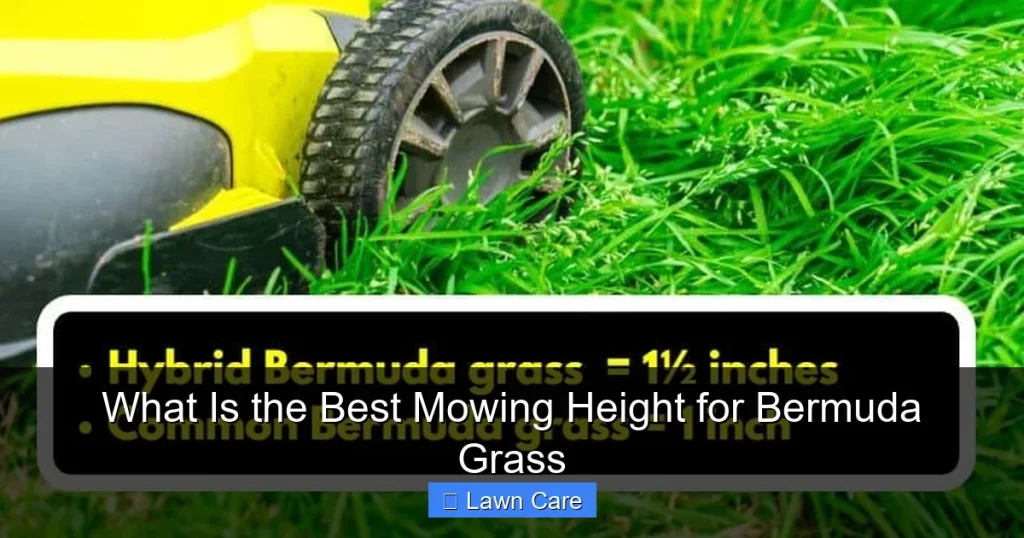
Achieving a beautiful Bermuda grass lawn hinges on the right mowing height. Generally, a lower cut is preferred for this warm-season grass, but the ideal height can vary based on the season and your specific goals. Mowing too short can stress the grass, while mowing too high can lead to thatch buildup and disease.
Bermuda grass. Just saying the name conjures up images of lush, green carpets, perfect for golf courses, sports fields, and stunning home lawns. This warm-season grass is a favorite for a reason: it’s incredibly resilient, drought-tolerant, and can handle high traffic. But to truly unlock its full potential, you need to get one crucial aspect right: mowing height. It might seem simple, but the height at which you cut your Bermuda grass can make a world of difference in its health, appearance, and overall vigor.
Many homeowners think that shorter is always better when it comes to Bermuda grass. While it’s true that Bermuda grass generally prefers a shorter cut than many cool-season grasses, there’s a sweet spot, and going too low can actually harm your lawn. Understanding the nuances of mowing height for Bermuda grass is key to transforming your lawn from “okay” to “spectacular.” Let’s dive into what you need to know to get your Bermuda grass looking its absolute best.
## The Magic Zone: Understanding Bermuda Grass’s Preferred Height
Bermuda grass is known for its aggressive growth habit and its ability to thrive in the heat. This makes it a fantastic choice for many regions. However, its growth pattern means it responds well to lower mowing heights, which can promote a denser, more uniform turf. The general consensus among turf professionals is that the best mowing height for Bermuda grass falls somewhere between 1/2 inch and 1 1/2 inches. This range allows the grass to develop a strong root system while maintaining that desirable manicured look.
When you mow Bermuda grass at these lower heights, you encourage the plant to spread laterally (or “sod”). This creates a thicker, more resilient turf that can better crowd out weeds and withstand foot traffic. It also gives the lawn that coveted, bowling-green appearance that many homeowners aspire to. However, it’s crucial to remember that there’s a limit to how short you can go without causing stress.
### Why Low Mowing Works (But Has Limits)
The reason Bermuda grass tolerates and often thrives at lower mowing heights is its physiology. It has a high photosynthetic rate and a dense growth habit. When you cut it shorter, it’s encouraged to produce more tillers (new shoots) and stolons (above-ground runners) and rhizomes (underground stems). This leads to a denser, more robust lawn. Think of it like pruning a bush – it encourages bushier growth.
However, removing too much of the leaf blade at once can shock the plant. The leaves are where the grass produces energy through photosynthesis. If you scalp your lawn, you’re removing a significant portion of its food-producing capability. This can weaken the grass, make it more susceptible to stress from heat, drought, and disease, and even lead to bare patches. So, while low is generally good, extremely low is not always best.
## Seasonal Considerations for Mowing Bermuda Grass
The ideal mowing height for Bermuda grass isn’t static. It can and should change slightly throughout the year, depending on the grass’s growth rate and environmental conditions. Understanding these seasonal shifts is vital for maintaining a healthy and vibrant lawn.
### Peak Growing Season: The Lower Cut
During the prime growing months of late spring and summer, when temperatures are warm and the grass is actively growing, you can typically get away with mowing at the lower end of the spectrum. Mowing Bermuda grass at 1/2 inch to 1 inch during this period is often ideal. The grass is strong and can recover quickly from this type of cut. This is when you’ll achieve that highly manicured, dense turf.
Remember to follow the one-third rule mentioned earlier: never remove more than one-third of the grass blade in a single mowing. This means that if your Bermuda grass is growing at 1 1/2 inches, you should mow it down to 1 inch, not all the way to 1/2 inch in one go. You might need to mow more frequently during peak growth to maintain the desired height. For those looking for an established schedule, understanding what is the best mowing schedule for summer can be a great asset.
### Spring Transition and Dormancy: A Slightly Higher Cut
As Bermuda grass transitions out of dormancy in the spring or as it heads into dormancy in the fall, a slightly higher mowing height can be beneficial. When the grass is just emerging from winter dormancy, it’s still building up its strength. Mowing it too short at this stage can hinder its recovery. A height of 1 1/4 inches to 1 1/2 inches can provide more leaf surface for photosynthesis, helping the grass establish itself.
Similarly, as temperatures begin to cool in the fall, the grass’s growth rate will slow down. Raising the mowing height slightly in the fall can help the grass store more energy in its roots and crown before winter sets in, leading to a healthier return in the spring. This also helps protect the crown of the plant from harsh winter conditions.
## The Role of Equipment: Reel Mowers vs. Rotary Mowers
When it comes to achieving the perfect cut for Bermuda grass, your mowing equipment plays a significant role. While a standard rotary mower can work, a reel mower is often considered the gold standard for this type of turf.
### Reel Mowers: The Professional’s Choice
Reel mowers work by using a scissor-like action to cut the grass blades. This results in a clean, precise cut that is less damaging to the grass. Because they can cut at very low heights without scalping, reel mowers are the preferred choice for golf courses and professional sports fields where Bermuda grass is often grown. If you’re aiming for that ultra-low, perfectly manicured look, a reel mower is a worthwhile investment.
Many high-end reel mowers can cut as low as 1/4 inch, which is perfect for certain Bermuda grass varieties like ultra-dwarf types. However, for most home lawns, a reel mower that cuts between 1/2 inch and 1 1/2 inches will be more than adequate. It’s important to choose a reel mower that aligns with your desired mowing height and your lawn’s specific needs. For those with particularly thick or challenging grass, consider looking into what is the best lawn mower for thick grass.
### Rotary Mowers: The Common Workhorse
Rotary mowers, the most common type found in home garages, use a single blade that spins at high speed to cut the grass. While they are versatile and can handle various lawn conditions, they are generally not capable of cutting as low as reel mowers without risking damage to the turf. If you’re using a rotary mower, it’s crucial to be more mindful of the one-third rule and to ensure your blade is sharp. A dull blade will tear the grass, leaving ragged edges that are prone to disease and browning.
If you are using a rotary mower, it’s often best to aim for the higher end of the recommended range for Bermuda grass, perhaps 1 inch to 1 1/2 inches, to minimize the risk of scalping. However, with careful adjustment and frequent mowing, a rotary mower can still produce a very attractive lawn.
## Mowing Height and Its Impact on Lawn Health
Beyond aesthetics, mowing height has a direct and profound impact on the overall health and resilience of your Bermuda grass lawn. Getting it right can prevent common problems, while getting it wrong can create a host of new ones.
### Thatch Prevention and Management
Thatch is a layer of dead and living organic matter that accumulates between the green grass blades and the soil surface. A small amount of thatch is normal and can even be beneficial, acting as a natural mulch. However, excessive thatch can choke out the grass, create a breeding ground for insects and diseases, and prevent water and nutrients from reaching the root zone. Mowing Bermuda grass at an appropriate height is one of the best ways to manage thatch.
When you mow too high, the grass blades grow long and can die off, contributing to thatch buildup. Conversely, mowing at the lower, recommended heights encourages the grass to spread more densely, which can help decompose organic matter more effectively and prevent thatch from becoming problematic. Regular dethatching might still be necessary, but proper mowing height is your first line of defense.
### Disease and Pest Resistance
A healthy, dense lawn is more resistant to diseases and pests. When your Bermuda grass is mowed at the correct height, it develops a strong root system and a thick canopy of leaves. This dense turf acts as a barrier, making it harder for weed seeds to germinate and grow. It also provides a more challenging environment for many common lawn pests to establish themselves.
Furthermore, by avoiding stress from improper mowing, the grass can better defend itself against pathogens that cause diseases like dollar spot, brown patch, and pythium blight. A weakened lawn, often a result of being mowed too short or too infrequently, is an open invitation for these problems. Ensuring proper watering and fertilizing, in addition to mowing, will further bolster its defenses. For instance, knowing what is the best fertilizer for Bermuda grass can significantly boost its natural resilience.
### Drought Tolerance and Recovery
Bermuda grass is naturally drought-tolerant, but its ability to withstand dry spells can be further enhanced by proper mowing height. Longer grass blades provide more shade to the soil, reducing evaporation. This means the soil stays moist for longer, requiring less frequent watering.
When a drought does occur, a lawn that has been consistently mowed at the correct height will also recover much faster. The deeper root system developed from proper mowing can access moisture deeper in the soil. Once rain returns, the healthier grass will green up more quickly.
## Tips for Perfect Bermuda Grass Mowing
Now that you understand the why behind the ideal mowing heights, let’s get into some practical tips for achieving that perfect cut every time.
### Sharpen Your Blades Regularly
This is non-negotiable. Dull mower blades tear the grass, leaving jagged edges that turn brown and make your lawn look unhealthy. It also opens the grass up to diseases. Aim to sharpen your mower blades at least once a year, or more often if you have a large lawn or mow frequently. For reel mowers, professional sharpening is often recommended.
### Follow the One-Third Rule
We’ve mentioned it a few times, but it’s worth repeating: never remove more than one-third of the grass blade in a single mowing. If your target height is 1 inch, and your grass has grown to 1 1/2 inches, mow it down to 1 inch. If it’s grown to 2 inches, mow it to 1 1/2 inches first, and then mow it again a few days later to reach your 1-inch target. This prevents shocking the grass.
### Adjust Mowing Frequency Based on Growth
During the peak growing season, you might need to mow every 3-4 days to keep your Bermuda grass within its ideal height range. In slower growth periods, you might only need to mow once a week or even less. Pay attention to how quickly your grass is growing and adjust your schedule accordingly.
### Consider the Type of Bermuda Grass
There are many varieties of Bermuda grass, and some are bred for even lower mowing heights than others. Ultra-dwarf varieties, often found on golf greens, can be mowed as low as 1/8 to 1/4 inch. Common Bermuda grass varieties, however, will not tolerate such low cuts and perform best in the 1/2 to 1 1/2 inch range. Research the specific variety you have for the most precise recommendations.
### Mow When the Grass is Dry
Mowing wet grass can lead to clumping and an uneven cut. It can also spread disease if pathogens are present. Wait until the grass has dried completely before you start mowing.
### Don’t Forget About Edge Trimming
While mowing the main lawn areas is crucial, don’t neglect your edges. Using a string trimmer or edger to keep your borders neat and tidy will significantly enhance the overall appearance of your lawn and give it that professionally maintained look.
## Conclusion: The Mowing Height Advantage for Bermuda Grass
Mastering the mowing height for your Bermuda grass is one of the most impactful steps you can take towards achieving a truly exceptional lawn. It’s not just about aesthetics; it’s about fostering a strong, resilient turf that can withstand stress, resist diseases, and flourish season after season. By understanding the preferred height range, adjusting for seasonal changes, choosing the right equipment, and implementing good mowing practices, you’ll be well on your way to enjoying that postcard-perfect Bermuda grass lawn you’ve always dreamed of. Remember, consistent care and attention to detail, starting with the simple act of mowing at the right height, will yield the most beautiful results.
Key Takeaways
- Optimal Mowing Height: For most situations, mowing Bermuda grass between 1/2 inch and 1 1/2 inches is ideal.
- Seasonal Adjustments: Lower heights (around 1/2 inch) are often best during peak growing season, while slightly higher cuts (up to 1 1/2 inches) can be beneficial during establishment or stressful periods.
- Equipment Matters: A reel mower is often recommended for achieving the precise, low cuts that Bermuda grass thrives on.
- The 1/3 Rule: Never remove more than one-third of the grass blade in a single mowing session to avoid stressing the plant.
- Thatch Management: Mowing at appropriate heights helps prevent excessive thatch buildup, which can lead to disease and pest problems.
- Disease Prevention: Proper mowing height contributes to a denser turf, making it more resistant to weeds and diseases.
- Regional Differences: While general guidelines exist, your local climate and specific Bermuda grass variety might influence the best mowing height.
Quick Answers to Common Questions
What is the general mowing height range for Bermuda grass?
Generally, the best mowing height for Bermuda grass is between 1/2 inch and 1 1/2 inches. This range promotes a dense, healthy turf.
Can I mow my Bermuda grass too short?
Yes, mowing Bermuda grass too short can stress the plant, weaken its root system, and make it more susceptible to diseases and drought.
Should I adjust my mowing height with the seasons?
Yes, it’s beneficial to mow slightly lower during peak growing season (summer) and slightly higher during transitional periods like spring and fall.
What type of mower is best for Bermuda grass?
Reel mowers are often preferred for Bermuda grass as they can cut very low with precision, but a sharp rotary mower can also work well.
How often should I mow my Bermuda grass?
Mowing frequency depends on the grass’s growth rate. During peak season, you may need to mow every 3-4 days, while slower periods require less frequent mowing.
Frequently Asked Questions
Is it okay to mow my Bermuda grass very short?
While Bermuda grass can tolerate lower mowing heights than many other grasses, cutting it too short can significantly stress the plant. This can lead to weakened turf, increased susceptibility to pests and diseases, and a higher water requirement.
What happens if I mow my Bermuda grass too high?
Mowing Bermuda grass too high can result in a less dense turf, increased thatch buildup, and a higher likelihood of weed invasion. The grass may also appear coarse and less attractive.
When should I consider raising the mowing height for my Bermuda grass?
You should consider raising the mowing height during periods of stress, such as extreme heat or drought, or when the grass is transitioning out of dormancy in the spring or going into dormancy in the fall. A slightly higher cut can help the grass store more energy and recover more effectively.
How does mowing height affect my Bermuda grass lawn’s color?
Mowing at the correct, lower heights encourages the grass to grow more densely, which generally results in a richer, deeper green color. Overly tall grass can sometimes appear lighter green or even yellowish if it’s not getting enough sunlight to its lower leaves.
What is the “one-third rule” in mowing?
The “one-third rule” states that you should never remove more than one-third of the grass blade’s height in a single mowing session. This practice prevents shocking the grass and promotes consistent, healthy growth.
Can I use a robotic mower on my Bermuda grass?
Yes, many robotic mowers can be set to the lower mowing heights suitable for Bermuda grass and can help maintain a consistent cut frequency. However, ensure the mower is designed to handle the specific height and density of your Bermuda grass variety.