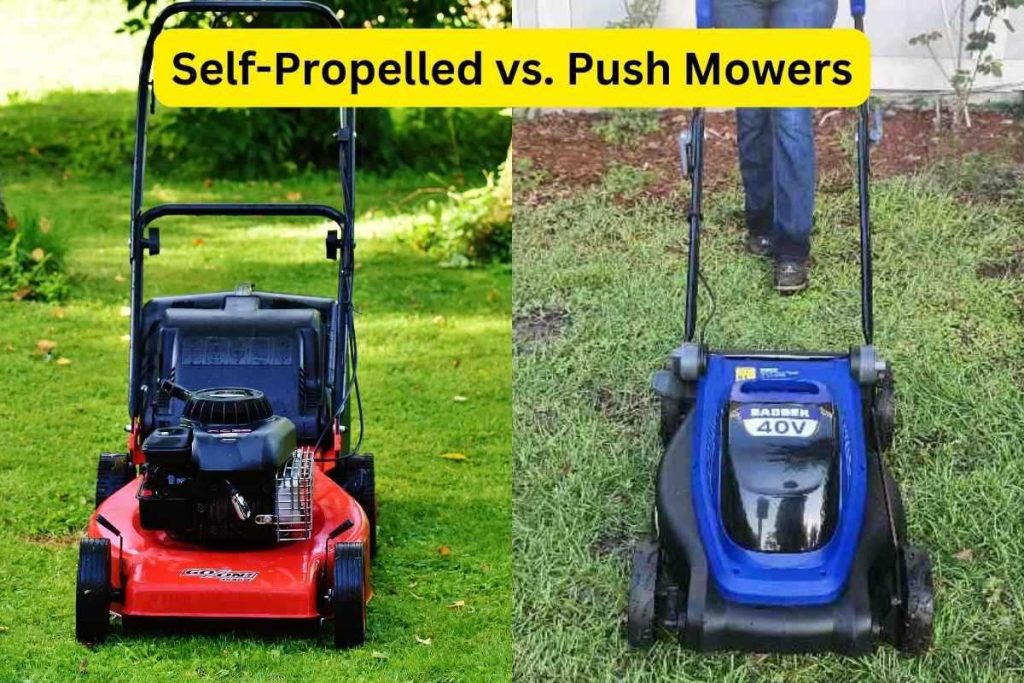
Deciding between a push mower and a self-propelled mower can significantly impact your lawn care experience. If you have a small, flat yard, a simple push mower might be enough. But for larger, hilly terrains or if you want to save time and effort, a self-propelled mower could be worth the investment.
In short, choose a push mower for smaller, flat lawns to keep costs low and maintenance simple. Opt for a self-propelled model if your yard is larger or uneven, and you want to reduce physical strain. Your choice depends on your yard size, terrain, and personal comfort level.
Getting the right mower is all about matching your lawn’s needs with your physical ability and budget. A bit of thought now will make mowing quicker, easier, and more enjoyable in the long run.

Should I Get a Push Mower or Self-Propelled? A Complete Guide
Understanding the Difference Between Push and Self-Propelled Mowers
When choosing a lawn mower, the first thing to consider is whether you want a push mower or a self-propelled one. A **push mower** requires you to do all the work to move it across the grass. Meanwhile, a **self-propelled mower** has a motor that helps drive the wheels, reducing the effort needed to mow the lawn. This difference impacts ease of use, especially on different terrains.
How Self-Propelled Mowers Make Gardening Easier
Self-propelled mowers are designed for comfort and efficiency. They often feature a **drive system** that can be adjusted to control speed. This means less physical exertion, especially on **hilly or uneven terrains**. Even larger lawns become manageable with a self-propelled model.
Benefits of a Push Mower
Push mowers tend to be **lighter** and more affordable. They are often easier to store because they have fewer parts. For small, flat lawns, they can be enough and are more straightforward to operate.
Factors to Consider When Choosing Between the Two
Choosing the right mower depends on several factors:
- Size of Lawn: Larger lawns may benefit from self-propelled models to save time and physical effort. Small lawns can be handled with a push mower.
- Terrain: Flat terrain suits push mowers, but hilly areas make self-propelled models much more convenient.
- Physical Strength and Health: People with mobility issues or less strength might prefer self-propelled mowers for easier operation.
Types of Self-Propelled Mowers and Their Features
Self-propelled models come in different styles based on how they drive:
Front-Wheel Drive
These are ideal for flat lawns. They are generally lighter and more affordable but may struggle on hills. The drive system powers the front wheels, making steering easier on flat terrain.
Rear-Wheel Drive
Best suited for hilly or uneven land. The drive powers the rear wheels, providing better traction and control. They offer more power and can handle tougher grass conditions.
All-Wheel Drive
These models provide the most control and are versatile for varying terrain types. They are often more expensive but offer the best performance across different lawns.
Cost Comparison and Budget Considerations
Push mowers tend to be less expensive, often costing between $100 and $300. Self-propelled mowers usually start around $300 and can go over $700 for high-end models with advanced features. Consider your budget and how much you will use the mower.
Maintenance and Durability
Both types require regular maintenance, such as oil changes, blade sharpening, and cleaning. Self-propelled mowers have additional components like drive systems, which may need extra care over time. Investing in quality models can reduce repair costs and extend lifespan.
Ease of Use and Storage
Self-propelled models often come with **adjustable speeds** and ergonomic handles, making mowing less tiring. Push mowers are generally simpler and easier to store because of fewer parts. Think about your storage space and comfort preferences.
Environmental Impact and Fuel Efficiency
Both types can be gas-powered or electric. Electric models are quieter and produce no emissions, making them eco-friendly choices. However, gas models often have longer run times and more power for demanding lawns. Consider your environmental concerns and local noise restrictions.
Additional Features to Look For
When selecting your mower, keep an eye out for features like:
- Adjustable Cutting Heights: Allows customizing the grass length.
- Bagging and Mulching Options: Helps with lawn cleanup and fertilization.
- Comfortable Handles: Ensures ease of use during longer mowing sessions.
- Lightweight Design: Makes maneuvering and storage easier.
Choosing between a push mower and a self-propelled model depends on your lawn size, terrain, budget, and personal comfort. For small and flat lawns, a push mower might be enough and more economical. Larger or hilly lawns benefit from a self-propelled mower, making the task less tiring. Assess your needs carefully to pick the best mower that will give you efficient and comfortable mowing experience.
Remember, investing in the right mower can save you time and effort, keeping your lawn looking its best with less hassle. Happy mowing!
Frequently Asked Questions
What factors should I consider when choosing between a push mower and a self-propelled mower?
Evaluate your lawn size, terrain, and your physical strength. A push mower works well for small, flat lawns and if you prefer to control each cut manually. A self-propelled mower is ideal for larger or uneven terrains, making mowing easier and less tiring, especially if you have mobility concerns.
How does the maintenance differ between push and self-propelled mowers?
Both mower types require regular maintenance such as blade sharpening, oil changes, and cleaning. Self-propelled mowers often have more complex drive systems, which may need additional checks or repairs. Push mowers are simpler, usually needing less maintenance, making them easier to service for casual users.
Will a self-propelled mower save me time and effort during mowing?
Yes, self-propelled mowers reduce the physical effort required by moving forward automatically, allowing you to focus on steering and maneuvering. This can significantly cut down the time spent mowing, especially on large lawns or challenging terrains, compared to pushing a traditional mower manually.
Are there cost differences I should be aware of between these mower types?
Generally, self-propelled mowers cost more upfront due to their advanced features and power mechanisms. Push mowers tend to be more affordable but may require more effort during use. Consider your budget and how much value you place on ease of use when choosing between the two.
How does storage space influence my choice between a push and a self-propelled mower?
Self-propelled mowers are typically larger and heavier, requiring more storage space. Push mowers are usually more compact and lightweight, making them easier to store in small sheds or closets. Think about your available storage when deciding which mower suits your needs best.
Final Thoughts
Choosing between a push mower or self-propelled depends on your lawn size and physical ability. If your yard is small and relatively flat, a push mower suffices. For larger or hilly lawns, a self-propelled mower reduces effort and speeds up the job.
Consider your comfort and stamina, as a self-propelled model offers convenience and less fatigue. Evaluate your budget and how often you mow to make the best choice.
Should I get a push mower or self propelled? Opt for a push mower for simple, small lawns, and a self-propelled mower for efficiency on larger properties.