Achieve a beautiful, healthy lawn by following our expert-backed guide on planting new grass seed best practices. From choosing the right seed to ensuring proper watering, we cover all the steps for a successful start. This comprehensive approach will set your lawn up for long-term success and a vibrant green appearance.
Dreaming of a lush, green carpet of grass that enhances your home’s curb appeal and provides a perfect spot for outdoor activities? Planting new grass seed can seem straightforward, but a healthy, thriving lawn starts with understanding and implementing the best practices right from the beginning. Rushing the process or skipping crucial steps can lead to patchy growth, weed invasion, and a disappointing outcome.
This guide is your roadmap to planting new grass seed best practices, ensuring your lawn gets the strongest possible start. We’ll walk you through everything from selecting the right seed for your region to nurturing those delicate seedlings into a robust, beautiful lawn. Think of this as your friendly chat with a gardening expert, sharing all the insider tips to help you succeed.
## 1. The Perfect Time to Sow: Timing is Everything
When you choose to sow your grass seed can make or break your lawn’s success. Different grass types have different ideal planting windows. Generally, there are two main windows that work best for most cool-season and warm-season grasses.
### Cool-Season Grasses: Fall is Your Friend
Cool-season grasses, like fescues and ryegrasses, thrive in cooler temperatures. The absolute best time to plant them is in the fall, typically between late August and mid-October in most regions. Why fall? The soil is still warm from summer, which encourages seed germination, but the air temperatures are cooling down. This combination is perfect for seedlings.
Another key benefit of fall planting is that weeds are less competitive. Many annual weeds have finished their life cycle by fall, giving your new grass a better chance to establish without a major battle. Plus, fall often brings consistent moisture from rain, aiding in germination.
Early Spring Planting
If you miss the fall window, early spring (March to May) is the next best option for cool-season grasses. However, you’ll face more competition from spring weeds and potentially hotter summer temperatures sooner, which can stress young grass. You’ll need to be extra diligent with watering.
### Warm-Season Grasses: Spring and Early Summer
Warm-season grasses, such as Bermuda, Zoysia, and St. Augustine, love the heat. The ideal time to plant these is in late spring to early summer, after the last frost and when soil temperatures consistently reach 65°F (18°C) or higher. This usually falls between April and June.
Planting warm-season grasses when it’s consistently warm ensures they have a long growing season ahead to establish a strong root system before cooler weather arrives. Waiting too long into summer can expose them to drought stress.
Key Takeaways
- Timing is Crucial: Planting grass seed in the right season, typically fall or early spring, is vital for germination and establishment.
- Soil Preparation is Key: Loosening, amending, and ensuring good drainage of your soil provides the foundation for healthy grass growth.
- Seed Selection Matters: Choose grass varieties suited to your climate, soil type, and intended use for the best results.
- Proper Seeding Technique: Even distribution of seed at the correct depth ensures uniform germination and prevents wasted seed.
- Consistent Moisture is Essential: Maintaining a consistently moist seedbed, without waterlogging, is critical for germination.
- Protect Your Investment: Keeping off the new grass and protecting it from birds and heavy foot traffic is crucial for establishment.
- Feeding for Growth: Using the right starter fertilizer supports root development and encourages vigorous growth.
Quick Answers to Common Questions
When is the best time to plant grass seed?
The best time to plant grass seed depends on your grass type and climate. Generally, fall is ideal for cool-season grasses, while late spring to early summer is best for warm-season grasses.
How deep should I plant grass seed?
Grass seed should typically be planted at a depth of 1/8 to 1/4 inch. This ensures they get enough light and moisture while still being protected.
How often should I water new grass seed?
New grass seed needs consistent moisture. Water lightly two to three times a day, or as needed to keep the top inch of soil consistently moist, but not waterlogged.
Can I walk on newly seeded areas?
No, it’s best to avoid walking on newly seeded areas until the grass is well-established and has been mowed at least once, typically 4-6 weeks after seeding.
What is a starter fertilizer and why is it important?
A starter fertilizer is formulated with higher phosphorus to promote strong root development in new grass seedlings, helping them establish quickly and become more resilient.
📑 Table of Contents
2. Preparing the Groundwork: Soil is Your Foundation
Just like building a house, a strong foundation is essential for a healthy lawn. Proper soil preparation is arguably the most critical step in planting new grass seed best practices. Ignoring this step can lead to poor drainage, nutrient deficiencies, and a weak lawn that’s prone to problems.
Clearing the Area
First, clear the existing area of any debris. This includes rocks, old roots, sticks, and any weeds or dead grass. For existing lawns, you might consider removing the old sod. If you’re starting from scratch on bare soil, simply remove any unwanted vegetation.
Loosening the Soil
Grass seeds need good contact with the soil to germinate, and their roots need to penetrate easily. If your soil is compacted, the seeds won’t root well, and water won’t penetrate properly. Use a tiller or a garden fork to loosen the soil to a depth of at least 4-6 inches. This is especially important for clay soils. If you’re overseeding an existing lawn, you might only need to lightly aerate.
Amending the Soil
Most soils benefit from amendments to improve their structure and fertility. A soil test can tell you what your soil is lacking.
*
Compost: This is a universal soil improver. It adds nutrients, improves drainage in clay soils, and enhances water retention in sandy soils.
*
Peat Moss: Good for improving water retention and aeration, especially in sandy soils.
*
Sand: Can help improve drainage in heavy clay soils, but use it cautiously and in larger quantities, or it can create a concrete-like texture.
Work these amendments into the loosened soil. For new lawns, aim for a mix of about 70% topsoil and 30% compost. If you are dealing with challenging soil conditions like heavy clay, exploring resources like best grass seed for clay soil can be very helpful.
Leveling and Raking
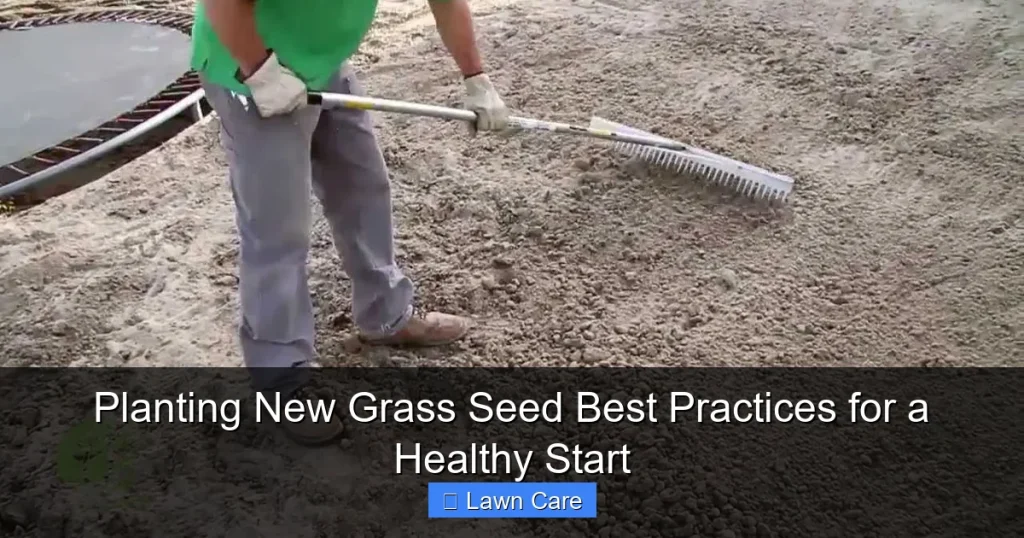
After amending, rake the soil smooth. Remove any remaining clumps of soil or debris. Create a slightly sloped surface away from your house to ensure water drains properly. A final raking can create a nice, even seedbed. Avoid over-compacting the soil at this stage.
3. Choosing Your Champion: Selecting the Right Grass Seed
With so many types of grass seed available, choosing the right one can feel overwhelming. However, selecting a grass type that’s suited to your specific needs is crucial for planting new grass seed best practices. Consider your climate, sunlight exposure, soil type, and how you’ll use your lawn.
Know Your Climate Zone
*
Cool-Season Grasses: These are best for northern regions with cold winters and moderate summers. Examples include Kentucky Bluegrass, Perennial Ryegrass, and Fine Fescues.

Visual guide about Planting New Grass Seed Best Practices for a Healthy Start
Image source: thumbs.dreamstime.com
*
Warm-Season Grasses: These are ideal for southern regions with hot summers and mild winters. Examples include Bermuda Grass, Zoysia Grass, and Centipede Grass.
If you’re unsure about your grass type, reading up on what is the best grass type for a healthy lawn can be a great starting point.
Sunlight and Shade Tolerance
Some grass varieties love full sun, while others can tolerate shady conditions. A lawn with a mix of sun and shade needs a blend of seeds that can handle both. Fine fescues, for example, are generally good for shady areas.
Traffic Tolerance
Do you have kids and pets who will be playing on the lawn? If so, you’ll need a durable grass that can withstand heavy foot traffic. Perennial ryegrass and tall fescue are known for their toughness. For more specific needs, like dogs, there are even 5 best grass seed for dogs options available.
Your Location Matters
Regional recommendations are also important. For instance, if you’re in South Carolina, you might look into best Bermuda grass seed for South Carolina. Always research what performs best in your specific state or region.
Consider a Blend or Mix
Often, a blend of different grass varieties is best. A blend uses multiple varieties of the same species (e.g., different types of fescue), offering disease resistance and adaptability. A mix uses different species (e.g., fescue and ryegrass), providing a broader range of benefits. Many commercially available seeds are already formulated as blends or mixes for optimal performance. You can find great options within lists of 5 best grass seed for a new lawn.
4. The Art of Sowing: Applying the Seed Correctly
Once your soil is prepped and your seed is chosen, it’s time to sow. The goal here is to ensure even distribution at the right depth for optimal germination.
Methods of Application
*
Broadcast Spreader: This is a popular choice for most homeowners. You can use a handheld spreader for smaller areas or a push spreader for larger lawns. Calibrate it according to the seed bag’s instructions to ensure an even spread.
*
Drop Spreader: These spreaders drop seed directly in a straight line, making it easier to achieve uniform coverage, especially when you overlap passes. They are ideal for precise application.
*
By Hand: For very small areas, you can carefully scatter the seed by hand. Toss it in a few different directions to ensure good coverage.
Ensuring Even Distribution
The key to a uniform lawn is even seed distribution. A common mistake is applying seed too thickly in some areas and too thinly in others.
Tip: Divide your lawn area into sections. Measure out the amount of seed recommended for one section and spread it. Then, do the same for the next section. For spreaders, it’s often recommended to do two passes at half the recommended rate – one going north-south and the other east-west.
Seed Depth Matters
Most grass seeds are very small and need to be near the surface to get sunlight and moisture. The general rule is to plant grass seed about 1/8 to 1/4 inch deep.
*
Too Deep: If planted too deep, the seeds won’t have enough energy to push through the soil to the surface.
*
Too Shallow: If left completely on the surface, they are more vulnerable to birds, washing away, and drying out.
After sowing, gently rake the area to lightly cover the seed with soil. You can also lightly press the seed into the soil using a roller or by walking over it. This ensures good soil-to-seed contact.
## 5. The Critical Care: Watering and Protection
The journey doesn’t end once the seed is sown. Consistent moisture and protection are paramount for successful germination and the early growth of your new grass.
Watering for Germination
This is where many new lawn projects go wrong. New grass seed needs consistent moisture to germinate. This doesn’t mean soaking the ground, but rather keeping the top inch of soil consistently moist.
*
Frequent, Light Watering: Water lightly two to three times a day, especially during warm, sunny weather. The goal is to keep the seedbed damp, not waterlogged.
*
Adjust as Needed: As temperatures fluctuate and rainfall varies, you’ll need to adjust your watering schedule. Check the soil moisture regularly.
*
Avoid Heavy Watering: A strong blast from the hose can wash away the tiny seeds, creating bare patches. Use a gentle sprinkler or mist setting.
Protecting Your Seedlings
Young grass seedlings are delicate and vulnerable. You need to protect them from various threats.
*
Foot Traffic: Keep people and pets off the newly seeded area until the grass is well-established (typically 4-6 weeks, and after its first mow). Their weight can crush the fragile seedlings.
*
Birds and Pests: Birds love to feast on freshly sown grass seed. You might consider using bird netting or reflective scare tape for the first few weeks. Row covers can also help. For specific pest issues, you might research best post emergent weed killer for bermuda grass to understand preventative measures.
*
Erosion: If you’re on a slope, heavy rain can wash away seed. Consider using straw mulch (lightly applied so light can still reach the seeds) or erosion control blankets to hold the soil in place.
## 6. Feeding Your New Lawn: Fertilization for Growth
While good soil preparation provides initial nutrients, a little boost from a starter fertilizer can make a big difference in establishing your new lawn.
Why Starter Fertilizer?
Starter fertilizers are specifically formulated to promote root growth. They typically have a higher phosphorus content, which is essential for seedling development. Phosphorus helps the young grass establish a strong root system, making it more resilient to stress like drought and heat.
When to Apply
You can apply a starter fertilizer a few days before seeding or immediately after sowing. Follow the instructions on the fertilizer packaging carefully. Over-fertilizing can damage new seedlings, so adherence to the recommended rates is crucial.
Choosing the Right Fertilizer
Look for a fertilizer labeled as a “starter fertilizer” or one with a higher middle number (Phosphorus) in its N-P-K ratio. For example, a 10-20-10 fertilizer would be a good choice.
Example: If you’re planting Kentucky 31 Fescue, understanding the best fertilizers for it can give you an extra edge. Resources like Top 4 Best Fertilizers For Kentucky 31 Fescue For A Lush Healthy Lawn can offer specific guidance.
Once the grass is established and has been mowed a few times, you can transition to a regular lawn fertilizer program that balances nitrogen, phosphorus, and potassium for ongoing health and greenness.
Conclusion: Patience and Persistence for a Perfect Lawn
Planting new grass seed best practices is a journey that requires attention to detail, patience, and a commitment to consistent care. By carefully selecting your seed, preparing your soil meticulously, sowing with precision, and providing diligent watering and protection, you are setting your lawn up for a vibrant and healthy future.
Remember that every lawn is unique, and some trial and error might be involved. Don’t get discouraged by minor setbacks. Celebrate the small victories – the first sprouts of green, the steady growth, and the eventual lushness. With these best practices in mind, you’re well on your way to achieving the beautiful, healthy lawn you’ve always dreamed of. Happy seeding!
Frequently Asked Questions
What if my grass seed isn’t germinating?
If your grass seed isn’t germinating, check if the soil is consistently moist. Ensure it hasn’t dried out, as this is the most common reason for failed germination. Also, verify that the seed was planted at the correct depth and that the temperature is suitable for your grass type.
How long does it take for grass seed to sprout?
The germination time for grass seed varies greatly depending on the species, temperature, and moisture. Some fast-growing varieties like perennial ryegrass can sprout in 5-7 days, while others like Kentucky Bluegrass might take 2-3 weeks.
Should I cover my newly seeded lawn with straw?
A light layer of straw can be beneficial to help retain moisture and prevent erosion, especially on slopes. However, it should be applied thinly so that light can still reach the seeds, and removed once the grass starts to grow taller.
How do I know if I have the right grass seed for my area?
You can determine the right grass seed by considering your local climate (cool-season vs. warm-season), sunlight exposure (full sun, shade), soil type, and intended use of the lawn. Consulting local gardening resources or extension offices can provide tailored recommendations.
What is the difference between a grass seed blend and a mix?
A grass seed blend contains multiple varieties of the same grass species (e.g., different types of fescue), offering better adaptability and disease resistance. A grass seed mix contains different species of grasses (e.g., fescue and ryegrass), providing a broader range of benefits and resilience.
When can I mow my new grass for the first time?
You should wait until the new grass reaches about one-third taller than its recommended mowing height, and it should be at least 3-4 inches tall. This typically occurs 4-6 weeks after germination, and it’s crucial to use a sharp mower blade and avoid cutting off more than one-third of the grass blade.