Image source: Bing (Web (fair-use with source credit))
Is it too late to treat for grubs? That's the question most of us end up asking when we spot brown patches spreading across the lawn in late summer. The brown, spongy turf that lifts up like loose carpet. The skunks tearing up the yard at night looking for an easy meal.
The guilt of knowing you skipped preventive treatment earlier in the year, now facing a full-blown white grub infestation with no clear playbook.
The honest answer is it depends on three things: what size your grubs have reached, how warm your soil still is, and whether you're willing to act right now. In our research of state extension guidelines and product manufacturer data, the threshold treatment window extends much further into fall than most homeowners expect, but it does have a hard cutoff you need to understand.
Quick Answer
You can still treat for grubs if larvae are small and near the soil surface. Ideal grub size for treatment is under 1 inch long. Soil must be warm enough, above 50°F at 4-inch depth.
Grubs deeper than 3 inches or larger than 1 inch become very difficult to kill. Call your local extension office if you're unsure about timing in your area as of 2026.
The Short Answer: It Depends on Timing and Grub Size
Stop spiraling for a second. "Too late" isn't a fixed date on your calendar. It's a moving target driven by biology, weather, and how far those grubs have developed.
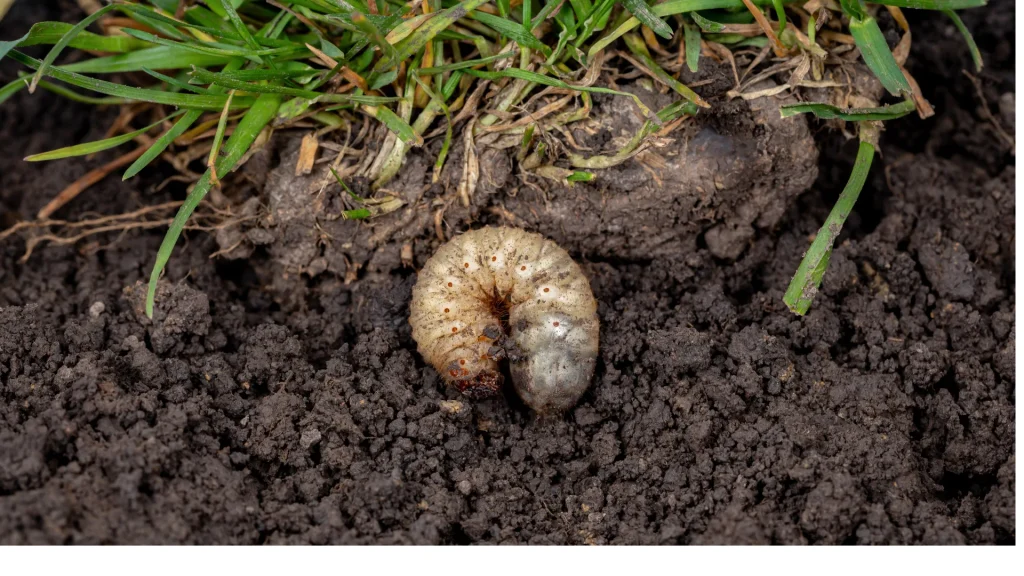
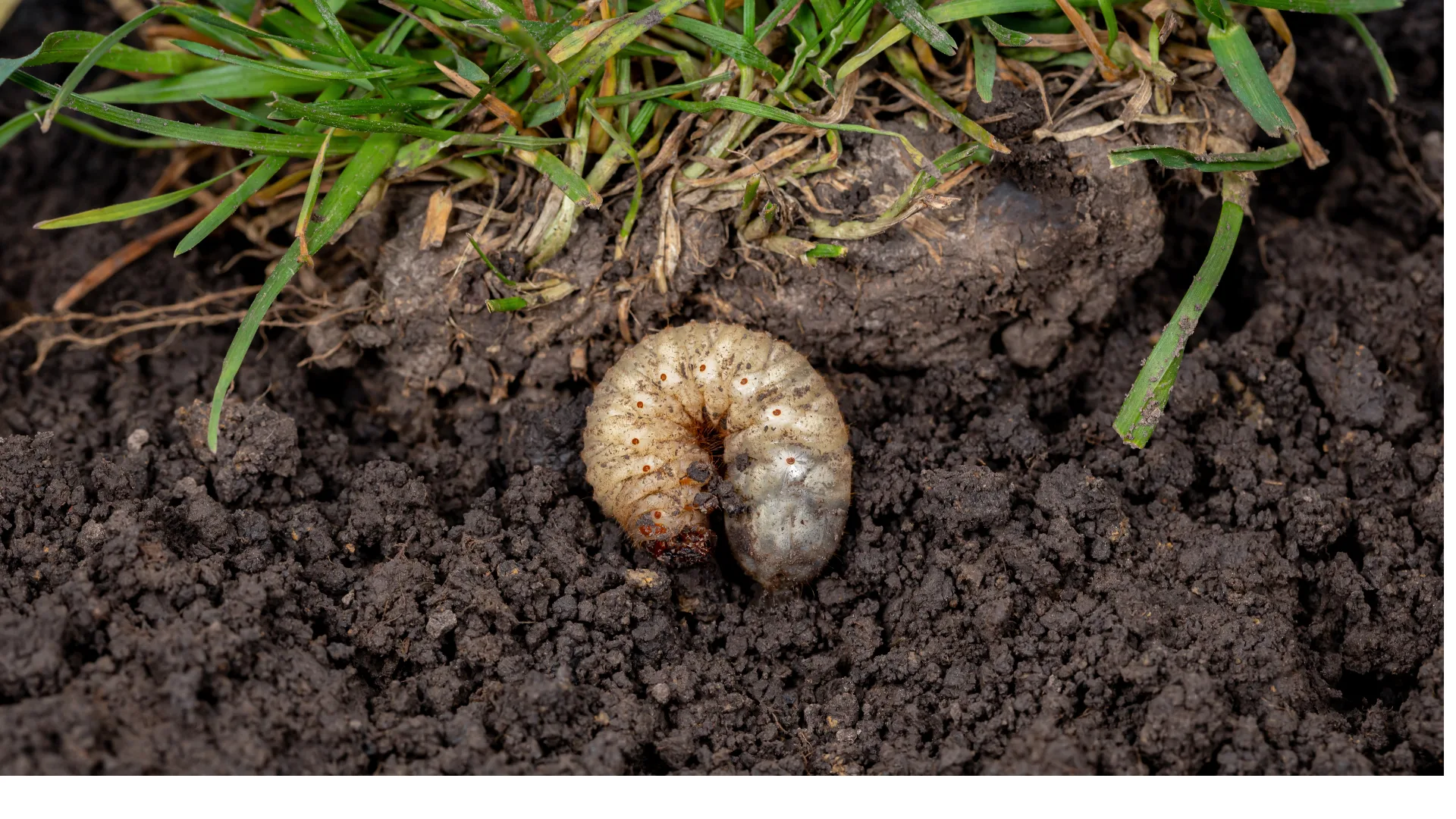
White grubs are the larval stage of scarab beetles, and the most common culprits in North American lawns are Japanese beetles, European chafers, June bugs, and Oriental beetles. They hatch from eggs laid in summer, feed on grassroots through late summer and fall, then burrow deep into the soil to survive winter. That feeding window in August through October is when they do the most visible damage to your turf.
Here's what matters most: when grubs are small, usually under ½ inch long, they're feeding close to the surface and are vulnerable to virtually every curative product on the market. Once they grow past about 1 inch and start moving deeper into the soil profile in response to cooling temperatures, most granular treatments simply can't reach them effectively. That's when it genuinely becomes too late for a practical chemical treatment this year.
The good news is that early- to mid-fall often lines up perfectly with the sweet spot for curative treatment. Grubs hatched from eggs laid in July are typically at their most vulnerable size during August and September. Even into October, many populations are still within reach if soil temperatures stay above 50°F at a 4-inch depth.
You need to dig around and find out what's actually happening beneath the damaged grass before deciding anything.
How to Check If You're Still in Window for Curative Treatment
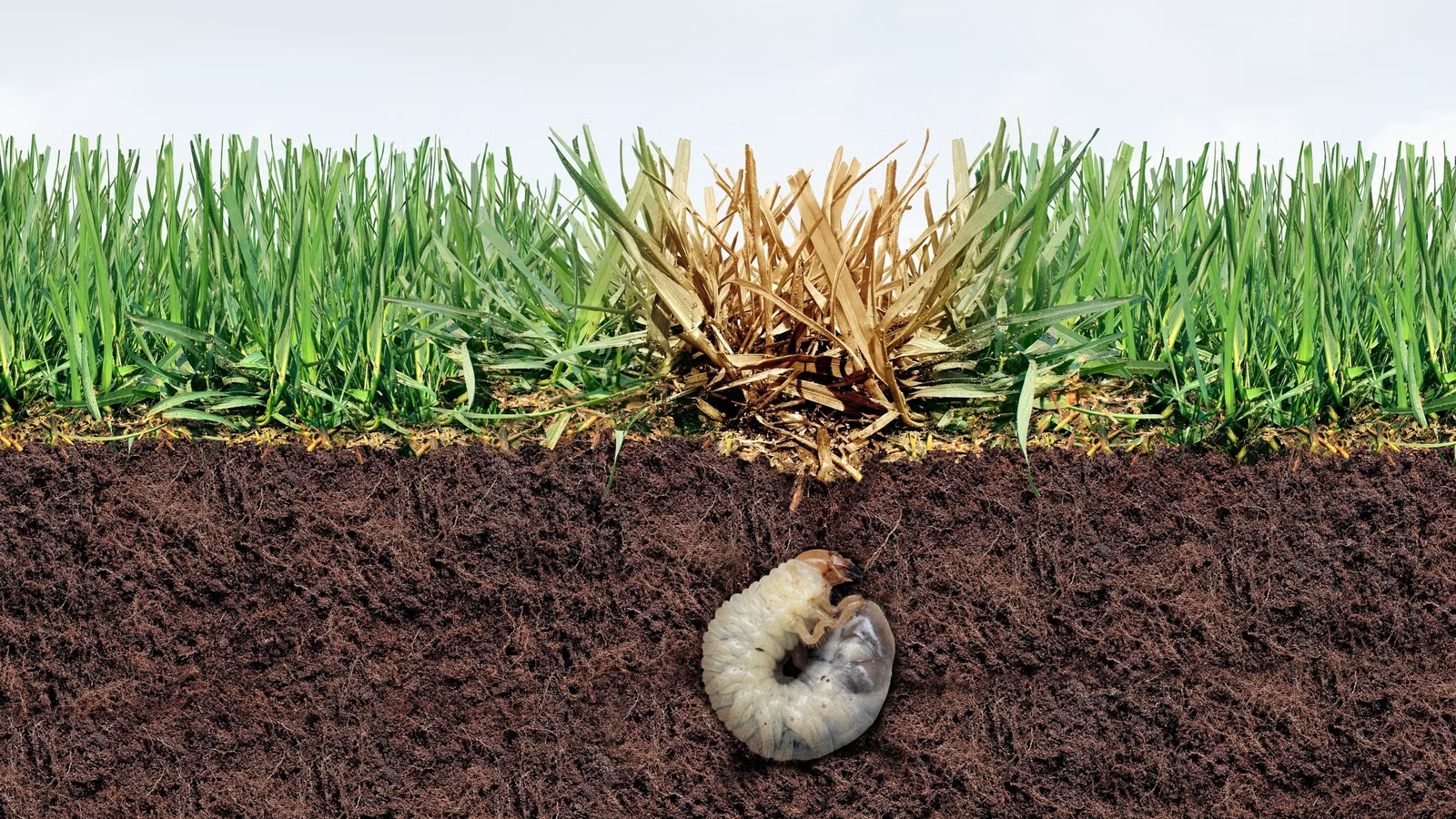
Image source: Bing (Web (fair-use with source credit))
This is where most homeowners skip a critical step and either waste money treating a problem that's already past or ignore one that's very much treatable. You need to know exactly what you're dealing with down there.
What to sample and how to count grubs
Scouting your lawn takes about ten minutes and costs nothing. Here's how to do it properly.
Cut a square-foot section of turf in an affected area using a spade or sharp knife. Go about 2 to 3 inches deep and peel back the grass like a flap. Count every grub you see in the exposed soil and thatch layer.
Do this in at least three or four spots across the damaged area to get a reliable average.
The general treatment threshold for cool-season turfgrasses like Kentucky bluegrass, fescue, and perennial ryegrass is 6 to 10 grubs per square foot. Below that, your turf can often tolerate the feeding without lasting damage. Above it, active treatment is warranted if the timing is right.
Roll the turf back into place after counting and water it down. The grass will re-root within a week or two if the crowns haven't been completely destroyed.
What grub size tells you about your options
This is the single most important factor in determining whether treatment makes sense right now. Grab a ruler or just eyeball it against your finger.
- Under ¼ inch long: These grubs just hatched within the last couple of weeks. You're in an excellent window for virtually any curative product.
- ¼ to ½ inch long: This is the prime treatment zone. Grubs are actively feeding, still near the surface, and highly susceptible to chemical controls.
- ½ to 1 inch long: You're getting toward the tail end of the workable window. Trichlorfon-based products will still perform well here.
- Over 1 inch long: Grugs this size are getting large, tougher to kill, and starting to migrate deeper. Treatment success rates drop sharply at this stage.
Grub color can also help you identify species. Japanese beetle grubs have a distinct V-shaped raster pattern on their underside near the tail end, though you'd need magnification to see it. For practical purposes, size and location matter more than exact species identification when deciding whether to treat right now.
The Two Windows You Need to Understand: Preventive vs. Curative
Grub control products fall into two completely different categories, and mixing them up leads to wasted money and frustration. Understanding which camp you're in right now changes everything about what you do next.
| Feature | Preventive Treatment | Curative Treatment |
|---|---|---|
| Goal | Stop grubs from establishing | Kill active grub populations |
| Best timing | Late June through July | Late August through October |
| Main active ingredients | Chlorantraniliprole, imidacloprid | Trichlorfon, carbaryl |
| How it works | Stops larvae from molting | Directly kills on contact or ingestion |
| Works on existing grubs? | No, only newly hatched | Yes, if grubs are small enough |
| Residual length | Months | Days to a week |
| Soil water needed | Yes, moderate | Yes, critical for activation |
Preventive products like those containing chlorantraniliprole or imidacloprid work beautifully when applied before eggs hatch. They disrupt the molting process of newly hatched grubs so they never reach damaging size. But if you're reading this because you already see brown patches and animals digging, preventive products won't help you this year.
Curative products are what you need right now. These are designed to knock back an established population that's actively feeding on your lawn. They work faster and for shorter duration, which is exactly the trade-off you need when you're trying to stop current damage rather than prevent future problems.
The key difference is that curative products need to actually reach the grubs. Since most white grubs feed in the thatch and upper soil layers, granular curative insecticides must be watered in thoroughly immediately after application. The carrier needs to dissolve and move the active ingredient down into the feeding zone.
Skip this step and you've wasted the entire application.
Early Fall Is Your Best Curative Shot: Here's Why
Late August through mid-October represents the peak curative treatment window for most regions in the northern United States and similar latitudes. Several factors line up to make this timefall the most effective period for knocking back a grub population that's already present.
First, the grubs are feeding aggressively at this stage. They're storing energy to survive winter, which means they're actively moving through the soil profile and consuming product particles along with grassroots. Higher feeding activity translates directly into higher product uptake and better kill rates.
Second, soil temperatures in early fall typically range from 55°F to 70°F at the 4-inch depth. That's within the active feeding range for most grub species and keeps them in the upper soil layers where treatments can reach them. Once soil temperatures consistently drop below 50°F, grubs begin their downward migration toward overwintering depth and become increasingly difficult to contact with surface-applied products.
Third, the grubs are still relatively small compared to what they'll become by late fall or following spring. Third-instar grubs, the largest and final larval stage, are significantly tougher to kill than first and second instars. Early fall treatments hit them before they reach that final, most resilient life stage.
Research from university extension programs consistently shows that curative applications made during this early-fall window achieve 80 to 95 percent control rates when products are applied correctly and watered in properly. That drops to 50 to 70 percent or lower when the same products are applied in late October or November as grubs grow larger and move deeper.
When It's Actually Too Late (and What Happens Then)
There are concrete scenarios where attempting treatment this season will likely disappoint you. Knowing these boundaries saves you product cost, labor, and false hope.
Grubs too large and too deep
When grubs exceed 1 inch in length and soil temperatures begin dipping into the low 40s Fahrenheit, they're on a downward trajectory you can't easily reverse. Large third-instar grubs have thicker cuticles and slower metabolisms, making them more resistant to chemical treatments. Their depth in the soil at this stage, often 4 to 6 inches or more, puts them below the effective reach of most granular insecticide applications even with thorough watering.
If you sample your lawn and find predominantly large grubs in cooler soil, your best bet shifts from attempted chemical control to planning for spring recovery and next year's preventive strategy.
Cold soil pushing larvae below the treatment zone
This is the scenario that catches people off guard. A stretch of cold nights in late fall can trigger rapid downward migration even before you expected it. Grubs are remarkably responsive to soil temperature cues and will move several inches deeper within days when cooling accelerates.
Check your local soil temperature readings at the 4-inch depth. When readings consistently fall below 50°F, many grub species are already moving out of the effective treatment zone. Below 45°F, you're almost certainly wasting product on a curative application.
Waiting until spring
This is the biggest mistake in grub management. People see damage in fall, decide to wait, and plan to treat in spring when they see brown patches reappear. By spring, grub feeding is minimal as they pupate and emerge as adult beetles.
Products applied in spring are largely ineffective because the grubs are no longer feeding enough to ingest lethal doses. The damage you see in spring was actually done the previous fall.
If you've passed the fall treatment window, shift immediately to recovery mode: rake out dead areas, apply starter fertilizer in early spring if needed, and plan a proper preventive application for the following summer. A chlorantraniliprole-based product applied the following season resets the clock and prevents that new generation of grubs from ever establishing.
Curative Products That Work When Timing Is Right
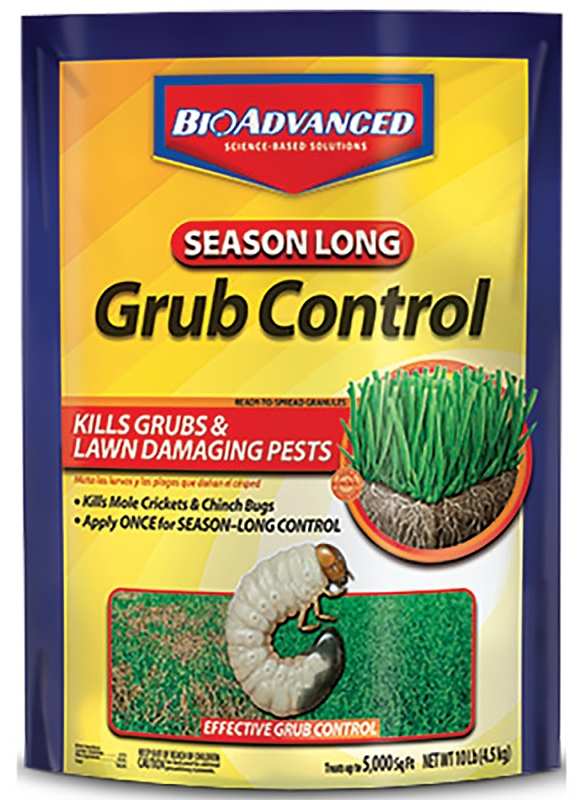
Image source: Bing (Web (fair-use with source credit))
Not all grub killers perform the same. The product you choose depends on how far along your grubs are, what the weather's doing, and how fast you need results. Here's what actually works in the curative window.
Fast-acting: Trichlorfon (Dylox)
Trichlorfon is the go-to when time is running out and grubs are larger. This is the only curative active ingredient that reliably kills bigger, third-instar grugs through both contact and ingestion. It works fast, often showing grub mortality within one to three days of application when soil conditions are right.
The trade-off? Trichlorfon has a very short residual in the soil. It breaks down quickly, particularly in alkaline soils above pH 7.5.
That's not necessarily a problem since you're treating an existing infestation, not building a barrier for next year. But it does mean you need to time the application carefully and not expect lasting protection beyond the current generation.
Product labels typically recommend about 2 to 3 pounds of granular product per 1000 square feet. Calibrate your spreader, apply evenly, and water in with at least ¼ inch of irrigation within hours. Trichlorfon is one of the few options that still works reasonably well on larger grubs up to 1 inch, which is why it's the default recommendation from many extension specialists for late-season curative applications.
One important note: according to state extension pest management bulletins, trichlorfon is restricted for use on sod farms and some commercial properties in certain states. Always check with your local department of agriculture if you're in a regulated zone.
Slower but more versatile: Chlorantraniliprole (Acelepryn)
Chlorantraniliprole sits somewhere between preventive and curative. It's primarily a preventive active ingredient, but manufacturer data indicates it has comparable efficacy to trichlorfon on newly hatched and first-instar grubs when applied in early fall. It won't touch large, mature grugs as effectively but offers much longer residual activity.
The big advantage here is flexibility. If you apply this product to a lawn that has small grugs, it will likely reduce those populations to a level that prevents further lawn damage. It's also safer for bees and beneficial insects since the mode of action is highly selective to target pests when applied to soil.
Watering requirements are critical, just like with any granular product. Plan on ¼ to ½ inch of irrigation post-application to move the product into the root zone where feeding grugs can encounter it.
Biological options: Beneficial nematodes and milky spore
These products take a completely different approach by introducing living organisms into the soil system rather than using synthetic chemistry. They require more precise conditions to succeed but avoid many of the regulatory and environmental concerns tied to conventional insecticides.
Beneficial nematodes (Heterorhabditis bacteriophora): These microscopic roundworms hunt and kill soil-dwelling insect grugs. They're most effective when soil temperatures are between 60°F and 85°F and adequate moisture is maintained.
Milky spore (Paenibacillus popilliae): A bacterial organism that infects Japanese beetle grugs after being ingested. It requires soil temperatures in the 60°F to 70°F range for effective spore germination and builds slowly over multiple years.
Neither biological option acts fast enough for an actively damaging infestation, but they work well as part of a multi-season grub management program.
Biological and Organic Alternatives for Late-Season Treatment
If synthetic insecticides aren't an option for your property, biology-based controls can contribute to grub management alongside cultural practices. Understanding their limitations prevents wasted spending.
Beneficial nematodes (Heterorhabditis bacteriophora)
These microscopic roundworms actively hunt grugs in the soil, entering their bodies and releasing symbiotic bacteria that kill the host within 24 to 48 hours. They're sold live and shipped refrigerated, so handling and timing are everything.
For nematode applications to have any chance of soil penetration, soil temperatures must be between 60°F and 85°F at application time. You also need to keep the treated area consistently moist for at least two weeks after application. Letting the soil dry out kills the nematodes before they can establish.
A standard application rate is about 1 billion nematodes per 3000 square feet, though product labels vary. Apply them in the early morning or late evening since UV light kills nematodes rapidly. Water the lawn before application, apply the nematodes using a sprayer or watering can, and irrigate again immediately after to wash them into the soil profile.
Research from university entomology departments shows that beneficial nematode applications applied in early fall can achieve 60 to 80 percent grub reduction under ideal soil conditions. Expect lower rates in dry conditions or clay soils.
Milky spore (Paenibacillus popilliae)
Milky spore is a naturally occurring bacterium that specifically targets Japanese beetle grugs. When grugs ingest the spores while feeding on roots, the bacteria multiply inside the grub's body, eventually turning the hemolymph milky white and killing the larva.
This product takes patience. Milky spore needs several years to build up sufficient spore concentrations in the soil to significantly suppress grug populations. But once established, it can persist for 15 years or more, which aligns with Japanese beetle developmental cycles.
It's best viewed as part of a long-term, multi-season grub management program rather than an immediate solution.
Apply milky spore in late summer or early fall when soil temperatures are in the 60°F to 70°F range. Use a grid pattern across your lawn placing small amounts of powder every 4 feet in rows spaced 4 feet apart. Water lightly after application to begin the spore's integration into the soil profile.
The major limitation is species specificity. Milky spore primarily targets Japanese beetle grugs and offers little to no control of European chafers, June bugs, or other scarab species. If your lawn has a mixed grub population, milky spore alone won't solve the problem.
What to do right now: step-by-step action plan
Here's a practical sequence to follow today based on where you are in the season and what your grugs look like.
Step 1: Sample your lawn today. Cut several square-foot sections in damaged areas and count grugs. Calculate your average per square foot. Confirm you're above the treatment threshold, typically 6 to 10 grugs per square foot for most cool-season turf types.
Step 2: Identify grub size and count. Measure the largest grugs you find. Small grugs under ½ inch give you the most product options and highest success rates. Larger grugs limit you to trichlorfon-based products.
Step 3: Check your local soil temperature. Push a soil thermometer 4 inches deep into the lawn. Temperatures above 55°F mean grugs are still actively feeding near the surface. Below 50°F and you're likely past the window for practical curative treatment.
Step 4: Choose the right product for your situation. Match your grub size and species to the products discussed in the previous section. For mixed or heavier infestations, consider rotating products across multiple seasons.
Step 5: Apply and water in immediately. Follow the product label exactly. Calibrate your spreader, apply evenly, and irrigate with at least ¼ inch of water to move the active ingredient into the feeding zone. Check the label for any re-entry intervals.
| Product Type | Grug Size | Best For | Kill Speed | Residual |
|---|---|---|---|---|
| Trichlorfon (Dylox) | Up to 1 inch | Larger grugs, late fall | 1–3 days | Short |
| Chlorantraniliprole (Acelepryn) | Small | Early fall grugs, multi-mode | Moderate | Long |
| Nematodes | Any | Small grugs, organic lawns | Moderate | Milky spore only |
| Milky spore | Any | Japanese beetle grugs, multi-season | Long-term | Ongoing after establishment |
What If You're Already Past the Treatment Window?
Image source: Bing (Web (fair-use with source credit))
If your soil temperature has dropped below 50°F, your grugs are oversized, and treatments have limited effectiveness, shift focus to recovery and prevention. Document the damage this fall by noting where the worst patches are. Mark these areas mentally or physically so you can target them in spring.
Come spring, dead areas can be reseeded or sodded once soil temperatures stabilize above 50°F. Before renovating, dig a test hole to confirm that grugs are truly gone or have pupated. Sometimes spring damage reveals itself and it's tempting to treat, but by then grugs are typically non-feeding.
Better to confirm the problem before applying anything.
Apply a preventive grub control product the following spring or early summer. Chlorantraniliprole-based products applied in mid-summer will intercept next year's generation of newly hatched grugs before they ever reach damaging size. That's the single most effective way to break the cycle and move forward.
Avoid the temptation to apply curative products in early spring when you first see established bare patches. The grugs responsible for that damage are no longer in a susceptible stage. Spring applications of curative insecticides perform poorly.
Planning Next Year's Preventive So You Never Face This Again
Dealing with an active grub outbreak is stressful. The best long-term strategy is preventing infestations through proactive management and staying on a consistent schedule. Most preventive products need to be applied before adult beetles lay eggs.
Adult Japanese beetles and similar scarab beetles typically fly and lay eggs in late June through northern areas, starting earlier and extending into July across the southern portions of their range. State extension services annually track adult beetle emergence and egg deposition timing, so checking local pest alert bulletins each spring helps you anticipate arrival.
The optimal preventive treatment timing is typically 60 to 90 days before peak grub hatch. Chlorantraniliprole-based products applied in late spring or early summer can provide season-long protection. Products containing imidacloprid also offer excellent preventive control when applied 60 days before peak beetle flight.
Soil moisture plays a large role in product performance. Plan your application so you can water it in promptly after applying granules. Ideal conditions include a healthy soil profile with normal moisture levels.
Combining preventive cultural habits with precise timing is the winning formula. Here are strategic steps that make a difference.
Track adult beetle activity. Monitor for adult beetles on ornamental plants or feeding on foliage in early to mid-summer. Their presence signals approaching egg-laying activity.
Set a calendar reminder for preventive application. Use mid-May to late June as a planning window depending on your region. Many local extension offices publish annual pest forecasting guides.
Choose a product based on your soil and management goals. Chlorantraniliprole works well for multi-season protection and pollinator safety. Imidacloprid is another effective option but requires awareness of pollinator safety near blooming plants.
Evaluating your lawn's production landscape carefully can guide which product fits best.
Common Mistakes People Make When Treating Grubs Late
Even when timing is adequate, execution failures ruin outcomes. These errors show up repeatedly in extension agent calls.
Applying curative product during the heat of midday instead of early morning or evening leads to rapid product degradation. Granular insecticides left on the surface in direct sunlight lose potency before they're watered into the soil.
Watering too lightly or not at all is even more damaging. Without adequate irrigation, granules dissolve slowly and active ingredients never reach the feeding zone.
Treating during a drought when lawns are already drought-stressed creates compounding damage. The combined stress of feeding plus chemical application can push damaged turf past recovery. Water the lawn thoroughly a day or two before treatment if soil is dry.
Soil moisture helps move product into the root zone and reduces chemical stress on already-damaged grass.
Counting only in the worst-skimmed areas gives you a skewed picture. Grug populations cluster. Sample across the entire lawn, including edges, sunny areas, and shaded strips.
Grug pressure varies significantly even within the same yard.
Confusing grub damage with other lawn problems is surprisingly common. Brown patch disease, fungal infections, compacted soil, and dog urine spots can all mimic grub damage. The distinguishing feature of grub damage is that the turf lifts easily from the soil because the root system has been eaten away.
If the grass resists lifting when you tug on it, grugs probably aren't the cause.
Finally, expecting overnight results leads to unnecessary repeat applications. Most curative products need several days to achieve full mortality, especially in cooler soil. Wait at least 7 to 10 days before evaluating effectiveness and resist the urge to add more product.
When to Call a Lawn Care Professional Instead
Some situations require expertise beyond what a homeowner can reasonably tackle.
Severe infestations with more than 20 grugs per square foot across large portions of lawn often need commercial-grade equipment and calibrated application rates that ensure thorough coverage. Professional applicators also have access to products at concentrations not typically available to homeowners.
Properties near water bodies or in environmentally sensitive areas may require specialized application techniques to prevent runoff. State regulations in some jurisdictions prohibit certain products within buffer zones around lakes, streams, and wetlands.
If you've applied products in previous seasons without success, a professional soil analysis may reveal underlying issues like improper pH, compaction, or thatch buildup that are reducing product effectiveness.
Frequently Asked Questions
How late in fall can I still apply grub treatment?
Treatment remains viable as long as soil temperatures stay above 50°F at the 4-inch depth and grugs are small enough to be active near the surface. In northern states, this often extends into mid-October. Southern regions may have workable conditions into November.
Can I treat for grugs in spring instead of fall?
Spring treatment of existing grugs is largely ineffective because the grugs are no longer feeding actively. They've stored enough energy to pupate and emerge as adult beetles. Products applied in spring perform poorly against these non-feeding stages.
Focus recovery efforts on spring renovation and plan preventive treatment for that summer.
How many grugs per square foot is too many?
The commonly cited threshold for cool-season turf is 6 to 10 grugs per square foot. Some guidelines suggest treating as low as 5 in high-maintenance turf or when multiple stress factors are present. Warm-season grasses like bermudagrass can often tolerate slightly higher numbers due to aggressive rhizome recovery.
Will my lawn recover from grub damage without treatment?
Lawn recovery depends on the extent of root damage. Turf with intact crowns and some remaining root system can regrow with adequate moisture and fertility. Severely damaged areas where crowns are completely destroyed will not recover on their own and require renovation.
Fall provides the cool conditions favorable for seed germination in cool-season grasses.
Are grub treatments safe for pets and children when used as directed?
When applied according to label instructions and allowed to dry, most curative grub products have low risk to pets and children. The primary safety window is during application and until granules are watered in and the area is dry. Always check product labels for specific re-entry interval recommendations.
Your Decision Guide: Should You Treat Right Now or Wait?
Use this quick framework to make your call.
If your soil temperature is above 55°F, your grugs are under 1 inch, and you're counting more than 5 to 6 per square foot, treat now with a trichlorfon-based product. Water it thoroughly and monitor for results over the following week.
If soil temperature has dropped below 50°F or your grugs are predominantly large and found deep in the soil profile, this year's treatment window has closed for practical purposes. Focus instead on documenting damage areas, planning spring renovation, and scheduling preventive treatment for next season.
The single most important takeaway is to act quickly once you confirm an active infestation. Every week of delay allows grugs to grow larger, move deeper, and cause more irreversible damage to your turf's root system. Sample your lawn today, check your soil temperature, and make a decision.
Waiting rarely works in your favor with these pests.