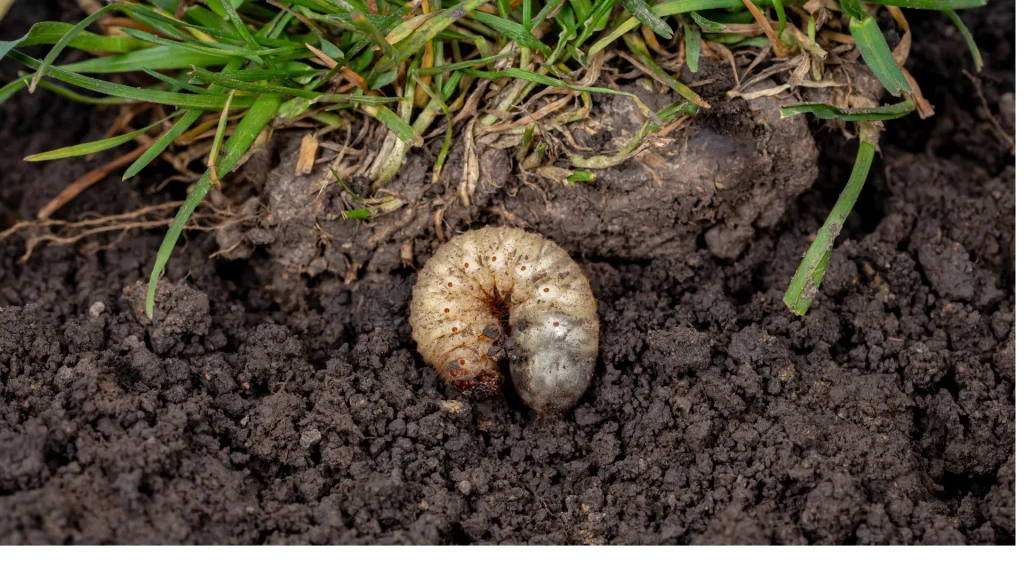
If you've hit the point where your lawn is spongy, brown patches roll up like carpet, and skunks are tearing up your grass at night, you're already behind on grub control. The real answer to when is the best time to use grub control isn't a single week on the calendar. It's tied to what you're trying to accomplish (prevention vs. repair), the products you're using, and the lifecycle stage of the grubs already living in your soil.
Research from Penn State's Center for Turfgrass Science shows that preventative grub treatments only work when they're in the soil before newly hatched larvae start feeding, while curative products need to hit when grubs are small and actively eating. Apply either type at the wrong point in that cycle and you're mostly pouring money into the ground. Let's walk through how to match your treatment timing to what's actually happening under your lawn.
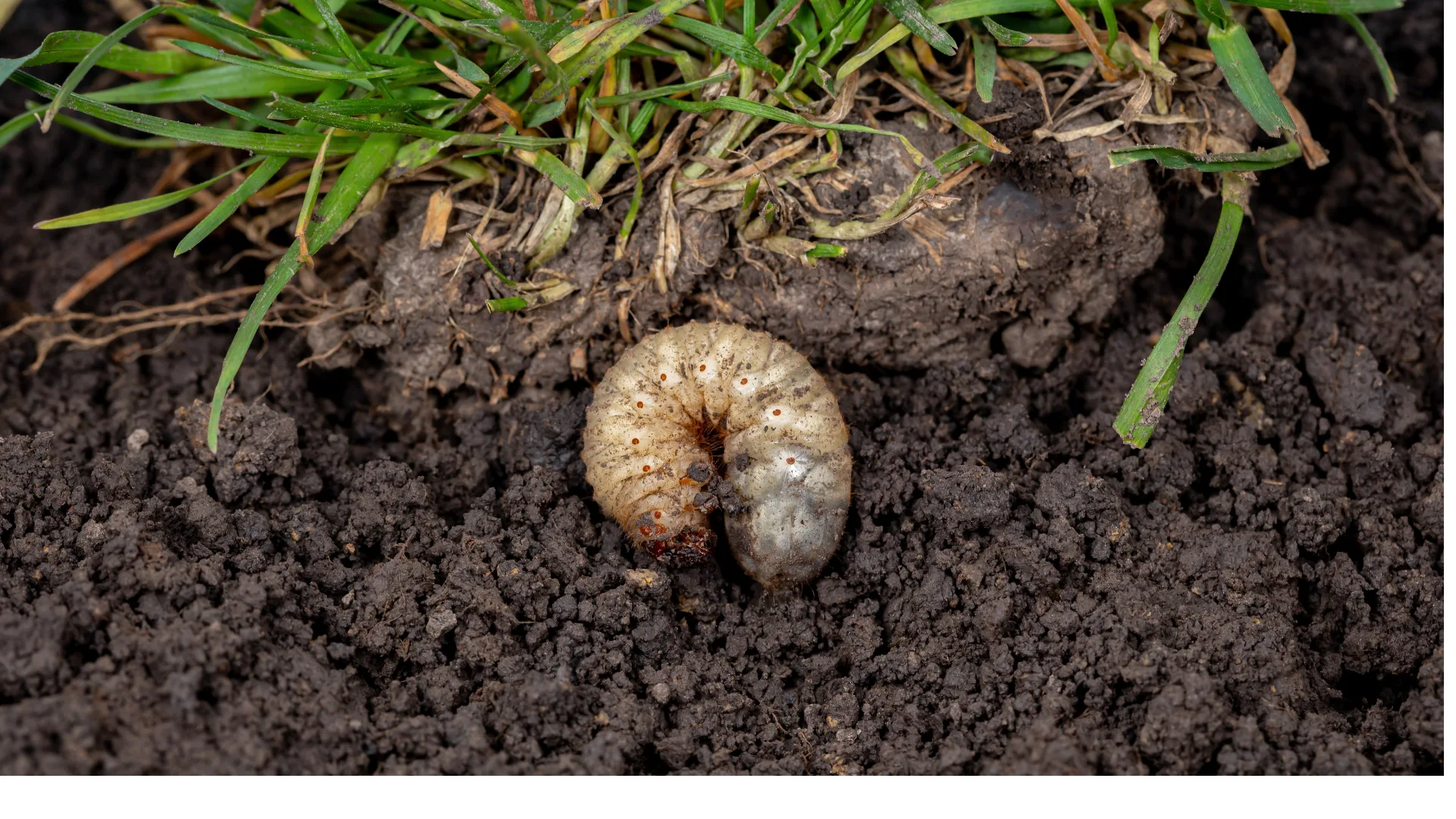
Image source: Bing (Web (fair-use with source credit))
Quick Answer
The best time to use preventative grub control is late spring to early summer, roughly May through July in most northern U.S. regions, applied just before beetle egg hatch. For curative (repair) treatments, the window shifts to late July through September when young grubs are actively feeding near the soil surface. Soil temperature at 4 inches deep of about 65 to 70°F reliably signals that grub activity is ramping up in most regions.
If you're dealing with visible damage right now, skip the preventative and go straight for a curative product like trichlorfon. The single biggest mistake is applying a preventative after damage is already showing because, by then, the larvae are too large for that chemistry to work.
Why Grub Control Timing Is the Make-or-Break Factor
Here's the thing that catches most homeowners off guard. Grubs aren't actively damaging your lawn for most of the year. White grubs, the larval stage of Japanese beetles, European chafers, May beetles, and other scarab species, spend roughly 10 months underground in various lifecycle stages.
The narrow window where they're small, feeding close to the surface, and vulnerable to treatments is surprisingly short.
Throughout most of our research into turf management practices, the pattern is clear: timing failures, not product failures, account for the majority of unsuccessful grub control efforts. People grab the same product their neighbor swears by, treat in August when they finally notice damage, and then wonder why the lawn still looks terrible by October.
The product itself is rarely the problem. It's the mismatch between the chemicals' mode of action and the grub's development stage. Preventative products like those containing chlorantraniliprole need to be absorbed into the turf zone before eggs even hatch.
Wait until you see grubs with your own eyes and you've likely missed that window by four to six weeks.
The Quick Answer: When to Apply Based on Your Goal
Skip the calendar and match your treatment to one of these situations:
If you want to prevent damage next year:
- Apply a preventative product like chlorantraniliprole from May through early July in northern regions.
- For warm-season lawns in the South, late April through June is more typical because beetle flight starts earlier.
- One application is usually enough because this chemistry leaves active residue in the soil for up to four months.
If you're seeing damage right now:
- Switch to a curative product like trichlorfon (Dylox).
- Apply as soon as damage becomes visible, ideally when grubs are still small and actively feeding.
- Expect visible results within 1 to 3 days because trichlorfon works on contact and by ingestion.
If you're not sure what you're dealing with:
- Pull back a square foot of turf in a damaged area and count the grubs.
- Finding more than 5 to 10 per square foot means treatment is justified.
- Confirm you're actually dealing with grubs and not drought stress, compaction, or fungal disease.
If you prefer a biological or long-term approach:
- Milky spore (Paenibacillus popilliae) targets Japanese beetle grubs specifically and can persist in the soil for 15 years or more once established.
- Beneficial nematodes (Heterorhabditis bacteriophora) work as curative treatments and need to be applied when soil temperatures are above 60°F.
- Both require more precise moisture management than conventional chemical options.
How Grub Lifecycles Actually Drive Your Timing
Understanding the grub lifecycle is the foundation of getting timing right. Adult beetles emerge from the soil in late spring to early summer, depending on species and region. Japanese beetles typically peak in June and July across the Northeast and Midwest.
European chafers fly a few weeks earlier, often in May and June. May beetles (sometimes called June bugs) follow a similar pattern but can vary more by latitude.
After mating, female beetles burrow back into the soil and lay eggs, usually within the top 2 inches. Those eggs hatch in roughly 10 to 21 days, depending on soil temperature and moisture. The newly hatched larvae, tiny and close to the surface, begin feeding on grass roots almost immediately.
This is the stage where preventative products do their work because the larvae ingest the treated soil as they feed.
As summer progresses, grubs grow larger and feed more aggressively. By late August and September, they're causing the most visible damage. Then, as soil temperatures drop in fall, grubs burrow deeper to overwinter, often below the frost line.
They return to the root zone the following spring for one more feeding cycle before pupating.
This lifecycle explains why a single calendar date doesn't work everywhere. In Minnesota, peak egg hatch might not happen until mid-July. In North Carolina, it could be late May.
Your local soil temperature and beetle species are the real drivers, not the month on your phone.
Preventative vs. Curative: Two Completely Different Windows
This is where most of the confusion lives. Preventative and curative grub control products aren't interchangeable, and they don't work at the same time of year.
Preventative products (chlorantraniliprole being the most common as of 2026) are designed to be in the soil before eggs hatch. They work by affecting the molting process of young larvae, so they only work on small, newly hatched grubs. Apply too late and the chemistry is sitting there doing nothing while mature grubs chew through your roots.
Curative products (trichlorfon is the primary fast-acting option still widely available) kill grubs on contact and through ingestion. They work on larger, actively feeding larvae. The trade-off is short residual activity, often just 1 to 2 weeks, so they won't protect your lawn through the entire season.
They're a rescue treatment, not a prevention plan.
Here's a side-by-side comparison:
| Feature | Preventative (Chlorantraniliprole) | Curative (Trichlorfon) |
|---|---|---|
| Best application window | May to July (before egg hatch) | Late July to September (active damage) |
| Works on | Newly hatched, small larvae | Small to large, actively feeding larvae |
| Speed of action | Slow (affects molting over days) | Fast (1 to 3 days) |
| Residual activity | Up to 4 months | 1 to 2 weeks |
| Use case | Preventing future damage | Stopping current damage |
| Reapplication needed | Usually once per season | May need follow-up if pressure is high |
Some homeowners try to use both in the same season, and that's a legitimate strategy in high-pressure areas. Apply the preventative in late spring, then scout in August. If you're still finding grubs, a targeted curative application can clean up what the preventative missed.
Just don't apply them at the same time because the curative's short window doesn't complement the preventative's long residual.
The Decision Tree: Which Timing Path Fits Your Lawn
Let's simplify this into a decision flow you can follow based on what you're seeing right now.
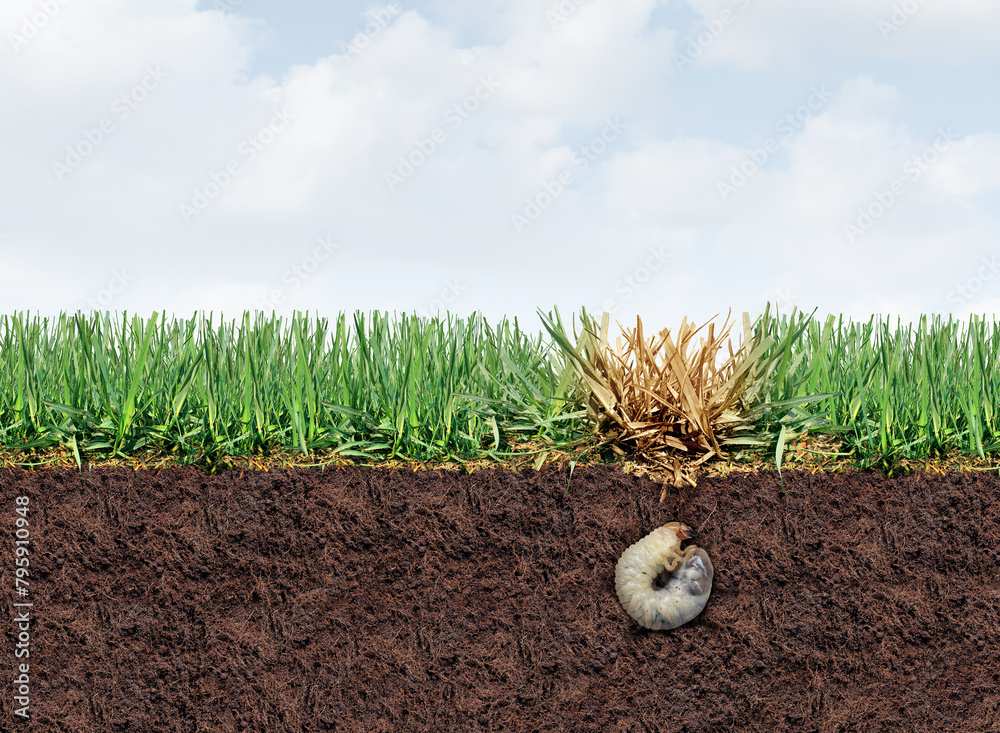
Image source: Bing (Web (fair-use with source credit))
Branch 1 — You Want to Prevent Damage Next Season
If your lawn looked fine last year but you've had grub problems in previous seasons, or your neighbor's lawn got hit hard, prevention is your best bet. Apply a chlorantraniliprole-based product in late spring to early summer, timed to 2 to 4 weeks before peak beetle activity in your area. Water it in with about 1/4 to 1/2 inch of irrigation after application so the active ingredient moves into the root zone where eggs will hatch.
Branch 2 — You're Seeing Damage Right Now
Brown patches that peel back easily, increased bird or animal activity on the lawn, or visible grubs when you dig all point to active infestation. Skip the preventative entirely at this point because it won't work on established larvae. Grab a trichlorfon-based curative product, apply according to the label, and water it in promptly.
You should see reduced grub activity within a few days, though the existing turf damage won't recover until you reseed or the grass regrows.
Branch 3 — You're Unsure and Need to Diagnose First
Not every brown lawn has grubs. Drought, fungal diseases like brown patch or dollar spot, dog urine, and compacted soil can all mimic grub damage. Cut a 1-square-foot section of turf at the edge of a damaged area and peel it back.
Count the grubs you find in the top 2 to 3 inches of soil. If you're seeing fewer than 5 per square foot, your lawn can probably recover on its own with proper watering and fertilization. Above 10 per square foot, treatment is justified.
Between 5 and 10, consider your lawn's overall health and how much damage you're willing to tolerate.
Soil Temperature: The Real Trigger, Not the Calendar
If you want to get serious about timing, stop relying on the date and start checking soil temperature. Grub activity is driven by how warm the soil is, not what month it is. A cool, wet spring can delay beetle emergence and egg hatch by two to three weeks compared to a warm, dry one.
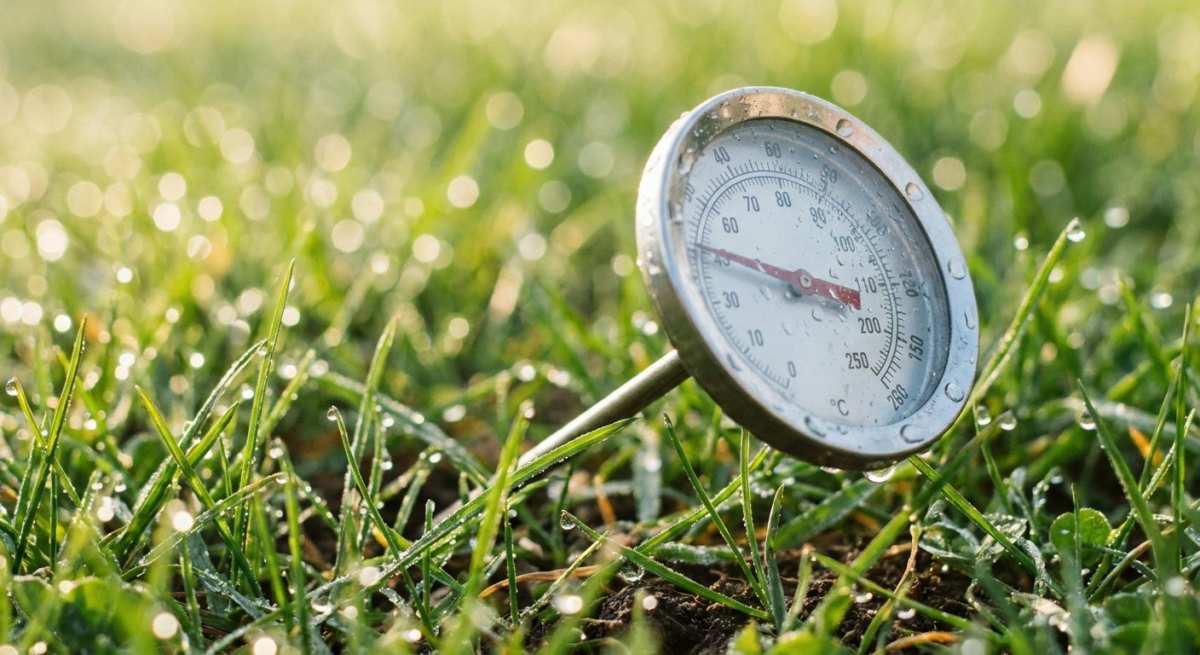
Image source: Bing (Web (fair-use with source credit))
Use a soil thermometer pushed 4 inches into the turf. When you're consistently reading 65 to 70°F, beetle activity is ramping up and eggs are likely being laid. That's your cue to get preventative products down within the next 1 to 2 weeks.
Many university extension services publish regional soil temperature maps during spring, which can help you track this without buying your own gauge.
For curative timing, soil temperature matters less because you're responding to visible damage. But it still matters for biological controls. Beneficial nematodes, for example, need soil temperatures above 60°F to actively seek out and infect grubs.
Apply them too early in a cold spring and they'll die before finding a host.
Regional Timing Differences You Can't Ignore
The "May to July" preventative window works for much of the Northeast, Midwest, and Mid-Atlantic. But it doesn't translate everywhere.
In the Southeast and Gulf Coast states, beetle flight can start as early as April, pushing preventative applications into late April or May. Warm-season grasses like bermudagrass and zoysiagrass also have different root structures and recovery patterns, which affects how much grub damage they can tolerate before showing visible symptoms.
In the Pacific Northwest, European chafer pressure is significant in areas like Portland and Seattle, and the timing window is similar to the Northeast but shifted slightly earlier due to milder springs. In the Mountain West, lower humidity and different beetle species mean grub pressure is often lighter, but irrigation can create localized hotspots where grubs thrive.
Your county extension office is the best source for region-specific timing recommendations. They track local beetle populations and can tell you when peak flight is expected in your area, often within a one-to-two-week window.
Product-Specific Timing: Chlorantraniliprole, Trichlorfon, Milky Spore, and Nematodes
Different products demand different timing strategies. Here's how the major options break down:
Chlorantraniliprole (GrubEx and similar products):
- Apply May through July in northern regions, April through June in the South.
- Must be watered into the soil after application.
- One application provides season-long control for most grub species.
- Works only on small, newly hatched larvae, so late applications are ineffective.
Trichlorfon (Dylox):
- Apply when active damage is visible, typically late July through September.
- Works fast, often within 1 to 3 days.
- Short residual means it won't prevent later-hatching grubs from a second generation.
- Can be applied in spring in areas with overwintering grub activity, but this is less common.
Milky spore (Paenibacillus popilliae):
- Best applied in late summer or early fall when Japanese beetle grubs are actively feeding and can ingest the spores.
- Takes 2 to 5 years to fully establish in the soil.
- Once established, can persist for 15 to 20 years.
- Only effective against Japanese beetle grubs, not other species.
Beneficial nematodes (Heterorhabditis bacteriophora):
- Apply when soil temperatures are consistently above 60°F.
- Work best as a curative treatment in late summer.
- Require moist soil before, during, and after application.
- Shelf life is short, so buy from a reputable source and use immediately.
Step-by-Step: How to Time Your Application This Season
Here's a practical workflow you can follow this year:
- Identify your goal. Are you preventing or repairing? This single question determines everything else.
- Check your region's beetle activity window. Contact your local extension office or search their website for current-year beetle flight predictions.
- Monitor soil temperature. Start checking daily averages at 4 inches deep in mid-spring.
- Scout for early damage. In late June and July, walk your lawn and look for thinning, yellowing, or spongy areas.
- Dig a test square. If something looks suspicious, cut and peel back a 1-square-foot section and count grubs.
- Choose your product based on timing and goal. Match the product to where you are in the lifecycle, not just what's on sale.
- Calibrate your spreader. Granular products only work if they're applied at the right rate. Check the label for your spreader setting.
- Apply and water in. Most granular grub controls need 1/4 to 1/2 inch of water after application to move the active ingredient into the root zone.
- Evaluate results. For curative treatments, check grub activity 5 to 7 days after application. For preventatives, scout in late August to confirm control.
- Record your timing and results. Next year, you'll know exactly what worked and when.

Image source: Bing (Web (fair-use with source credit))
Common Timing Mistakes That Waste Money and Let Grubs Win
Even when people buy the right product, timing errors undermine the whole effort. Here are the ones we see most often:
- Applying preventatives in August or September. By then, grubs are too large for chlorantraniliprole to affect. You're paying for season-long control that never actually starts.
- Waiting for visible damage before treating. Once you see brown patches, the grubs have been feeding for weeks. Earlier scouting catches problems before they become visible.
- Applying curative products too early in spring. Trichlorfon's short residual means a May application will be gone before peak grub feeding in August.
- Ignoring soil moisture. Granular products need water to activate. Applying before a dry spell without irrigation leaves the granules sitting on the surface.
- Treating the whole lawn when only one area has grubs. Spot-treating saves money and reduces unnecessary chemical use.
- Assuming one year of treatment solves the problem. In high-pressure areas, annual preventative applications are often necessary because new beetles fly in every summer.
What to Do If You Missed the Window
If you're reading this in September and your lawn is already torn up, you're not out of options. Apply a trichlorfon-based curative product as soon as possible. It won't reverse existing damage, but it will stop the grubs from doing more harm before they burrow deep for winter.
Then shift your focus to recovery. Reseed damaged areas in early fall while soil temperatures are still warm enough for germination. Water consistently and hold off on any preventative application until the following spring.
Trying to apply a preventative to a lawn that's already been damaged is a common double-spend that doesn't help either this year or next.
Expert Tips From Turf Professionals
A few practices that separate successful grub control from wasted effort:
- Scout before you spend. Digging a test square takes five minutes and tells you whether you even need to treat.
- Keep a lawn journal. Note when you first see beetles, when damage appears, and what you applied. After two or three years, you'll have a personalized timing guide for your property.
- Don't ignore thin or stressed lawns. Grubs do the most damage to turf that's already struggling from drought, poor nutrition, or compaction. Healthy grass can tolerate a higher grub population before showing symptoms.
- Consider professional soil testing. Knowing your soil's organic matter, pH, and moisture retention helps you predict where grubs are most likely to thrive.
- Rotate strategies if you're in a high-pressure area. Relying on the same product every year can reduce its effectiveness over time, especially with biological controls.
Frequently Asked Questions
Can I apply grub control in the fall?
Fall applications only make sense for curative products like trichlorfon, and only if grubs are still actively feeding near the surface. Once soil temperatures drop below 50°F, grubs have usually burrowed too deep for any product to reach them effectively. Milky spore is an exception because it's designed to be ingested by grubs and establish in the soil over time.
How do I know if I need preventative or curative treatment?
If you've had grub damage in the past two years or your area has known beetle pressure, go preventative in late spring. If you're seeing active damage right now, go curative. When in doubt, dig a test square and count grubs.
More than 10 per square foot means treat. Fewer than 5 means you can probably wait.
Does rain affect when I should apply grub control?
Rain after application is actually beneficial for granular products because it helps move the active ingredient into the soil. But heavy rain immediately after application can wash granules off slopes or out of the target area. Aim for light to moderate rain or plan to irrigate after applying.
Is one application of GrubEx enough for the whole season?
In most situations, yes. Chlorantraniliprole provides residual control for up to 4 months, which covers the primary egg hatch window for most grub species. In areas with extended beetle flight periods or multiple species with different hatch times, a second application might be warranted, but this is uncommon.
Can I use grub control and fertilizer at the same time?
You can, and many combination products exist. Just make sure both products are applied at rates specified on their labels. Over-applying fertilizer alongside grub control won't improve either product's performance and can contribute to nutrient runoff.
What's the best time of day to apply grub control?
Early morning or late afternoon works best, primarily because you want to water in the product before the heat of the day evaporates soil moisture. Avoid applying during peak sun or when the lawn is already drought-stressed because the granules need consistent moisture to activate properly.
Your Seasonal Grub Control Decision Guide
Here's a simple seasonal framework to keep on hand:
| Season | Action | Product Type |
|---|---|---|
| Early Spring (March to April) | Scout for overwintering damage, plan your strategy | None yet |
| Late Spring (May to June) | Apply preventative if needed, monitor soil temperature | Chlorantraniliprole |
| Early Summer (June to July) | Continue scouting, confirm preventative is watered in | Chlorantraniliprole (if not yet applied) |
| Late Summer (August) | Scout for active damage, apply curative if needed | Trichlorfon |
| Early Fall (September) | Final curative window, begin lawn recovery and reseeding | Trichlorfon (if damage is active) |
| Late Fall to Winter | No treatment needed, grubs are deep and inactive | None |
The bottom line is that grub control timing isn't complicated once you stop thinking about it as a single date and start treating it as a response to what's happening in your soil. Match your product to your goal, watch soil temperature instead of the calendar, and scout before you spend. That's the formula that actually works.
Product-Specific Timing Recap and Key Reminders
Here's a final consolidated checklist to keep handy throughout the season:
- Chlorantraniliprole: Apply May through July, water in within 24 hours, one application per season for most lawns.
- Trichlorfon (Dylox): Apply late July through September when damage is visible, expect results in 1 to 3 days, short residual so it won't carry into next season.
- Milky spore: Apply late summer or early fall, patience required for establishment, long-term solution for Japanese beetle grubs only.
- Beneficial nematodes: Apply when soil is above 60°F, keep soil moist for 2 weeks after application, use fresh product only.
The single most important takeaway is this: your timing is dictated by the grub's lifecycle stage, not the calendar date. Scout early, match your product to your goal, and adjust based on what you find in the soil. That approach will outperform any generic "treat in June" advice every time.
Common Timing Mistakes That Waste Money and Let Grubs Win
Even when people buy the right product, timing errors undermine the whole effort. Here are the ones we see most often:
- Applying preventatives in August or September. By then, grubs are too large for chlorantraniliprole to affect. You're paying for season-long control that never actually starts.
- Waiting for visible damage before treating. Once you see brown patches, the grubs have been feeding for weeks. Earlier scouting catches problems before they become visible.
- Applying curative products too early in spring. Trichlorfon's short residual means a May application will be gone before peak grub feeding in August.
- Ignoring soil moisture. Granular products need water to activate. Applying before a dry spell without irrigation leaves the granules sitting on the surface.
- Treating the whole lawn when only one area has grubs. Spot-treating saves money and reduces unnecessary chemical use.
- Assuming one year of treatment solves the problem. In high-pressure areas, annual preventative applications are often necessary because new beetles fly in every summer.
What to Do If You Missed the Window
If you're reading this in September and your lawn is already torn up, you're not out of options. Apply a trichlorfon-based curative product as soon as possible. It won't reverse existing damage, but it will stop the grubs from doing more harm before they burrow deep for winter.
Then shift your focus to recovery. Reseed damaged areas in early fall while soil temperatures are still warm enough for germination. Water consistently and hold off on any preventative application until the following spring.
Trying to apply a preventative to a lawn that's already been damaged is a common double-spend that doesn't help either this year or next.
Expert Tips From Turf Professionals
A few practices that separate successful grub control from wasted effort:
- Scout before you spend. Digging a test square takes five minutes and tells you whether you even need to treat.
- Keep a lawn journal. Note when you first see beetles, when damage appears, and what you applied. After two or three years, you'll have a personalized timing guide for your property.
- Don't ignore thin or stressed lawns. Grubs do the most damage to turf that's already struggling from drought, poor nutrition, or compaction. Healthy grass can tolerate a higher grub population before showing symptoms.
- Consider professional soil testing. Knowing your soil's organic matter, pH, and moisture retention helps you predict where grubs are most likely to thrive.
- Rotate strategies if you're in a high-pressure area. Relying on the same product every year can reduce its effectiveness over time, especially with biological controls.
Frequently Asked Questions
Can I apply grub control in the fall?
Fall applications only make sense for curative products like trichlorfon, and only if grubs are still actively feeding near the surface. Once soil temperatures drop below 50°F, grubs have usually burrowed too deep for any product to reach them effectively. Milky spore is an exception because it's designed to be ingested by grubs and establish in the soil over time.
How do I know if I need preventative or curative treatment?
If you've had grub damage in the past two years or your area has known beetle pressure, go preventative in late spring. If you're seeing active damage right now, go curative. When in doubt, dig a test square and count grubs.
More than 10 per square foot means treat. Fewer than 5 means you can probably wait.
Does rain affect when I should apply grub control?
Rain after application is actually beneficial for granular products because it helps move the active ingredient into the soil. But heavy rain immediately after application can wash granules off slopes or out of the target area. Aim for light to moderate rain or plan to irrigate after applying.
Is one application of GrubEx enough for the whole season?
In most situations, yes. Chlorantraniliprole provides residual control for up to 4 months, which covers the primary egg hatch window for most grub species. In areas with extended beetle flight periods or multiple species with different hatch times, a second application might be warranted, but this is uncommon.
Can I use grub control and fertilizer at the same time?
You can, and many combination products exist. Just make sure both products are applied at rates specified on their labels. Over-applying fertilizer alongside grub control won't improve either product's performance and can contribute to nutrient runoff.
What's the best time of day to apply grub control?
Early morning or late afternoon works best, primarily because you want to water in the product before the heat of the day evaporates soil moisture. Avoid applying during peak sun or when the lawn is already drought-stressed because the granules need consistent moisture to activate properly.
Your Seasonal Grub Control Decision Guide
Here's a simple seasonal framework to keep on hand:
| Season | Action | Product Type |
|---|---|---|
| Early Spring (March to April) | Scout for overwintering damage, plan your strategy | None yet |
| Late Spring (May to June) | Apply preventative if needed, monitor soil temperature | Chlorantraniliprole |
| Early Summer (June to July) | Continue scouting, confirm preventative is watered in | Chlorantraniliprole (if not yet applied) |
| Late Summer (August) | Scout for active damage, apply curative if needed | Trichlorfon |
| Early Fall (September) | Final curative window, begin lawn recovery and reseeding | Trichlorfon (if damage is active) |
| Late Fall to Winter | No treatment needed, grubs are deep and inactive | None |
The bottom line is that grub control timing isn't complicated once you stop thinking about it as a single date and start treating it as a response to what's happening in your soil. Match your product to your goal, watch soil temperature instead of the calendar, and scout before you spend. That's the formula that actually works.