
Don’t let that old tree stump ruin your front yard’s look. With a little creativity, you can transform it into a charming garden feature, seating area, or decorative focal point. This guide walks you through safe removal options and 10+ stunning reuse ideas.
Key Takeaways
- Tree stumps don’t have to be removed: Many creative projects use the stump as a base, saving time and money.
- Safety first: Always check for pests, rot, or structural weakness before building on or around a stump.
- Mulch and soil help integrate stumps: Use them to blend the stump naturally into your landscape design.
- Lighting adds drama: Solar-powered lights or string lights can turn a stump into a nighttime feature.
- Plants soften the look: Mosses, ferns, and flowering vines create a lush, natural appearance.
- Consider drainage: If using the stump as a planter, drill drainage holes to prevent root rot.
- Match your home’s style: Choose finishes and plants that complement your exterior for maximum curb appeal.
Introduction: What to Do With a Tree Stump in Your Front Yard
So, you’ve had a tree removed—but the stump remains. It’s bulky, hard to mow around, and honestly, a bit of an eyesore. But before you call a stump grinder or haul it away, consider this: that stump could become the coolest feature in your front yard.
In this guide, we’ll show you how to turn a tree stump from a lawn liability into a landscaping asset. Whether you want a rustic planter, a whimsical fairy garden, or a functional side table, we’ve got step-by-step ideas that are easy, affordable, and safe. You’ll learn how to assess your stump, choose the right project, and maintain it so it lasts for years.
And don’t worry—if removal *is* your best option, we’ll cover that too. But first, let’s explore the fun, creative ways to reuse what’s already there.
Assess Your Stump: Is It Safe to Reuse?
Before you start painting or planting, take a close look at your stump. Not all stumps are created equal.
Check for Rot and Stability
Press on the wood. If it feels spongy or crumbles easily, it’s rotting and may not support weight or hold soil. A solid, dry stump is ideal for most projects.
Look for Pests
Inspect for holes, sawdust, or insect activity. Termites, carpenter ants, and beetles love old wood. If you spot signs of infestation, consider removal or treatment. For help identifying and managing pests, check out our guide on how to prevent termites in your yard.
Measure the Size
Note the diameter and height. A wide, flat stump works well for seating or planters. Taller, narrower stumps are great for lanterns or bird feeders.
Option 1: Turn It Into a Planter
One of the most popular and attractive uses for a tree stump is as a natural planter. It blends seamlessly into your garden and adds texture.
Step 1: Hollow Out the Center
Use a drill with a large auger bit or a chisel and hammer to remove the inner wood. Go about 6–8 inches deep, depending on the stump size. Leave the outer ring intact for structure.
Step 2: Add Drainage
Drill 3–4 small holes in the bottom to prevent waterlogging. Without drainage, roots can rot—especially in rainy climates.
Step 3: Line and Fill
Line the cavity with landscape fabric to keep soil from washing out. Fill with potting mix—not garden soil—for better drainage and nutrients.
Step 4: Plant It Up
Choose shade-tolerant plants if the stump is under a tree canopy. Ferns, hostas, and mosses work well. For sun, try petunias, sedum, or lavender. Add a layer of mulch to retain moisture.
Pro Tip:
Group multiple stumps with different plants for a cohesive garden feature. Or, use overseeding techniques around the base to blend it into your lawn.
Option 2: Create a Stump Seat or Side Table
A flat-topped stump makes a charming outdoor seat or rustic table for plants, lanterns, or drinks.
Step 1: Smooth the Surface
Sand the top with coarse-grit sandpaper to remove splinters. Wipe clean with a damp cloth.
Step 2: Seal the Wood
Apply a weatherproof sealant or outdoor wood stain to protect against rain and UV damage. Reapply every 1–2 years.
Step 3: Add Cushions or a Glass Top
For seating, add a weather-resistant cushion. For a table, place a circular glass top (cut to size) for a modern touch.
Pro Tip:
Pair your stump seat with a small bistro set or bench to create a cozy front yard nook. Just ensure the area is level and safe for sitting.
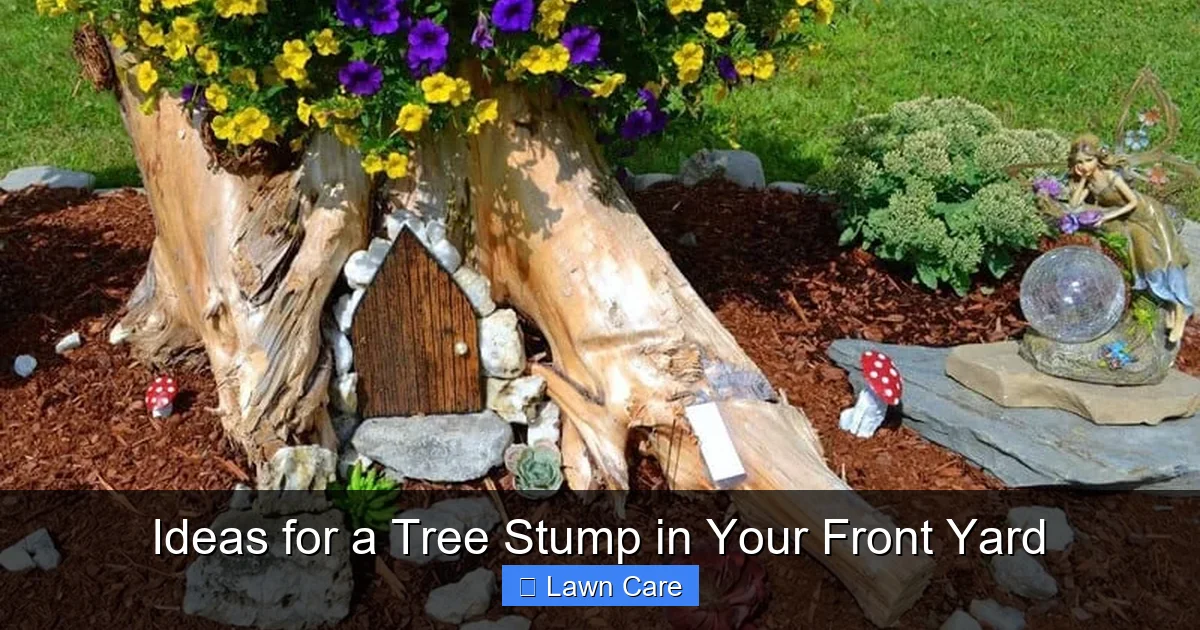
Option 3: Build a Fairy Garden or Mini Landscape
This whimsical idea is perfect for families or anyone who loves a touch of magic.
Step 1: Carve Out Small Areas
Use a chisel to create tiny shelves, caves, or steps in the stump. Be gentle to avoid cracking.
Step 2: Add Miniature Features
Place tiny houses, fairy doors, or miniature animals. Use moss, pebbles, and small plants to create a miniature world.
Step 3: Illuminate at Night
Add battery-powered LED tea lights or solar-powered garden lights for a magical glow.
Pro Tip:
Involve kids in the design! It’s a fun weekend project that encourages creativity and outdoor play.
Option 4: Use It as a Base for Decor
Stumps make excellent stands for seasonal decor.
Step 1: Clean and Seal
Wipe down the stump and apply a clear sealant to protect it from the elements.
Step 2: Mount Decorative Items
Use screws or strong adhesive to attach items like:
- Solar lanterns
- Bird feeders
- Wind chimes
- Seasonal signs or holiday decorations
Pro Tip:
Rotate decor with the seasons—pumpkins in fall, poinsettias in winter, Easter baskets in spring. It keeps your yard looking fresh year-round.
Option 5: Grow a Living Stump Garden
Encourage natural regrowth by planting directly into the stump.
Step 1: Encourage Moss Growth
Moss thrives on damp, shaded wood. Mix buttermilk and moss in a blender, paint it on the stump, and keep it moist. Within weeks, you’ll see green coverage.
Step 2: Add Climbing Plants
Train ivy, creeping Jenny, or morning glory to grow up and around the stump. Use small stakes or twine to guide them.
Step 3: Mulch the Base
Spread mulch around the stump to retain moisture and suppress weeds. This also helps integrate it into your lawn.
Pro Tip:
For a polished look, edge the area around the stump using a lawn edging technique to create a clean border.
Option 6: Turn It Into a Bird Bath or Feeder
Attract wildlife with a functional stump feature.
Step 1: Create a Shallow Basin
Hollow out the top to form a shallow dish (2–3 inches deep). Sand the edges smooth.
Step 2: Seal and Waterproof
Apply a non-toxic sealant to prevent leaks. For extra protection, line with a flexible pond liner.
Step 3: Add Water or Seed
Fill with fresh water for a bird bath, or scatter birdseed for a feeder. Clean regularly to prevent mold.
Pro Tip:
Place near shrubs or trees so birds have cover. Avoid areas with heavy foot traffic to keep them safe.
When to Remove the Stump Instead
Sometimes, reuse isn’t the best option. Here’s when removal makes sense:
- The stump is rotting and poses a tripping hazard.
- It’s in the way of mowing, walking, or future landscaping.
- Pests are active and spreading to other plants.
- You’re planning a major yard redesign.
Removal Options
- Grinding: Hire a professional to grind the stump below ground level. Fast and effective.
- Chemical Removal: Apply potassium nitrate to speed up decay. Takes several weeks.
- Manual Digging: Labor-intensive but chemical-free. Best for small stumps.
After removal, fill the hole with soil and reseed. For best results, follow our guide on how to overseed your lawn to restore a lush, even surface.
Troubleshooting Common Issues
Problem: Stump is Leaning or Unstable
Solution: Reinforce with stakes or remove if unsafe. Never build on a wobbly base.
Visual guide about Ideas for a Tree Stump in Your Front Yard
Image source: i.pinimg.com
Visual guide about Ideas for a Tree Stump in Your Front Yard
Image source: yardandgardenguru.com
Problem: Plants Aren’t Thriving
Solution: Check drainage, sunlight, and soil quality. Replace with plants suited to the conditions.
Problem: Wood is Splintering
Solution: Sand regularly and reapply sealant. Avoid placing heavy items on cracked areas.
Problem: Animals Are Digging Around It
Solution: Install a low fence or use natural deterrents. Learn more in our article on how to stop animals digging in your yard.
Conclusion: Make the Most of Your Tree Stump
A tree stump doesn’t have to be a problem—it can be a conversation starter, a garden feature, or a functional piece of your landscape. With a little creativity and care, you can turn what was once an eyesore into a highlight of your front yard.
Whether you choose to plant, paint, perch, or preserve, the key is to work with nature, not against it. Assess your stump, pick a project that fits your style, and maintain it over time. And if removal is the right choice, do it safely and restore your lawn with proper seeding and care.
Your front yard should reflect your personality and welcome guests with charm. Let that old stump be part of the story—not a stumbling block.