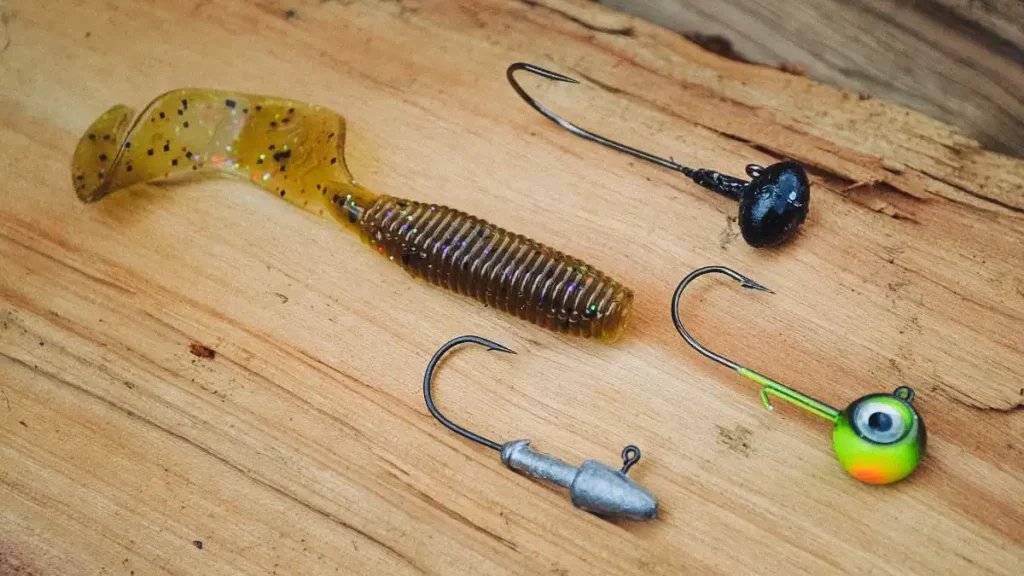
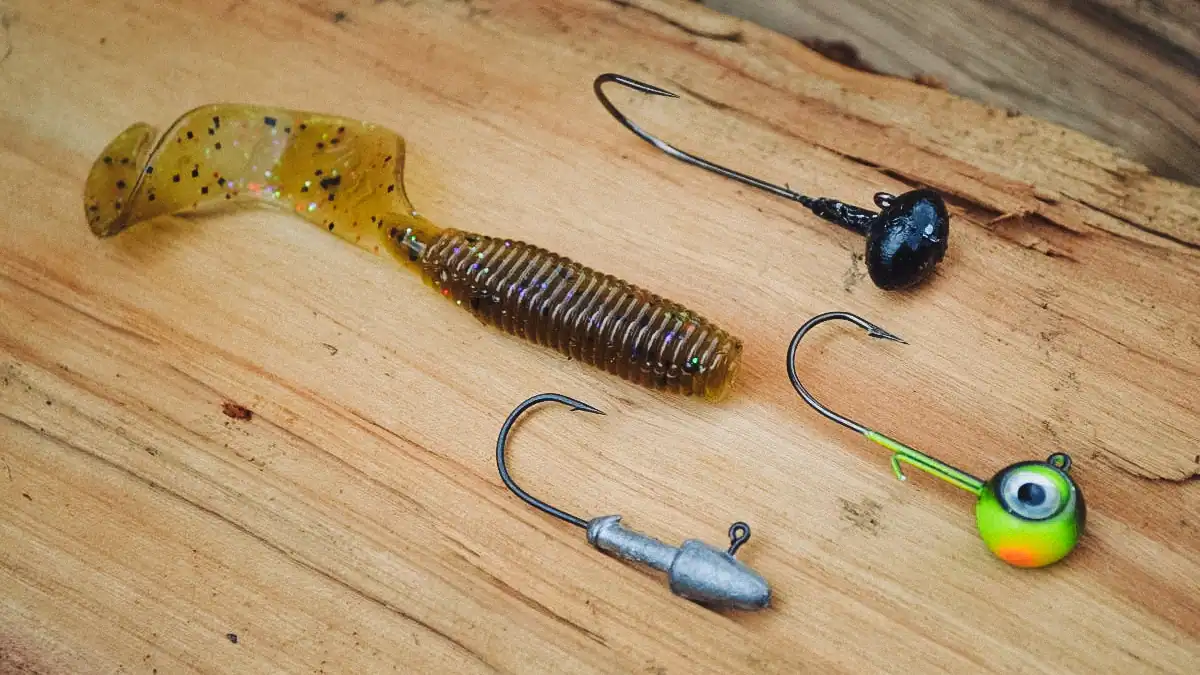
Learning how to rig a curly tail grub is one of those skills that separates anglers who catch fish from those who just get follows. The problem most people run into isn't the concept. It's the small details that make the bait swim right, stay on the hook, and actually get bit.
Get the rigging wrong and your grub spins, tears off after two fish, or hides the hook point so well that bass suck it up and spit it out before you ever feel a thing. Get it right and you've got one of the most versatile soft plastics in fishing. A standard 3-inch curly tail grub paired with a 1/0 or 2/0 round bend hook and a 1/8 to 1/4 ounce jig head covers the vast majority of freshwater situations you'll encounter as of 2026.
Quick Answer
Rig a curly tail grub by inserting the hook point into the nose, threading it straight through the body, and bringing the point out the belly side near the front of the body. Rotate the hook 180 degrees, then seat the point so it sits exposed above the back of the grub. Match your hook size to the grub length.
A 1/0 hook works for a 3-inch grub. Use a jig weight based on depth and current.
Why Rigging a Curly Tail Grub Right Matters
A curly tail grub gets its action from the tail vibrating as water flows over it during the retrieve. That vibration only happens when the bait tracks straight through the water column. If the hook is off-center, inserted at an angle, or seated too deep, the whole body tilts and the tail spins uselessly instead of swimming.
The hook placement also determines your hookup ratio. Bury the point inside the plastic and you'll miss fish after fish. Leave it fully exposed and the bait snags on everything.
The sweet spot is having the point sitting just above the body, clear of the plastic, ready to grab flesh the moment a fish inhales the bait.
Then there's bait longevity. A grub rigged with the hook pushed through the wrong spot tears easily. One good cast into rocky structure and you're re-rigging.
Proper placement keeps the plastic intact for dozens of fish instead of one or two.
What You Need: Hooks, Jigs, and Grub Sizes
Before you start pushing hooks through plastic, you need the right combination of components. Mismatched gear is the number one reason grubs fail.
Jig heads come in a few styles, but the ball jig head is the standard for curly tail grubs. It has a round weight, a collar with a small bait keeper barb, and a hook that comes straight out the top. The bait keeper barb slides inside the grub's nose to hold it in place.
Hook size needs to match the grub body. Too small and the point won't reach far enough out of the bait to set. Too large and you're tearing up a small grub for no reason.
Here's a reliable pairing chart:
| Grub Length | Hook Size | Jig Weight (calm water) | Jig Weight (wind/current) |
|---|---|---|---|
| 2 inch | 1/0 | 1/16 oz | 1/8 oz |
| 3 inch | 1/0–2/0 | 1/8 oz | 1/4 oz |
| 4 inch | 2/0–3/0 | 1/4 oz | 3/8 oz |
| 5 inch | 3/0–4/0 | 3/8 oz | 1/2 oz |
Grub body style matters too. A standard 3-inch curly tail grub with a solid body and a 2.5 to 3-inch tail is the workhorse. Thicker-bodied grubs hold up better on a jig head.
Thin, flimsy grubs tear at the nose after a few fish.
Stick with a round bend hook for grubs. Extra wide gap hooks work better for thicker baits like creature baits or large worms. For a standard curly tail, a round bend gives you the right geometry for clean hooksets.
Step-by-Step: How to Rig a Curly Tail Grub
This is where the visual reference matters most. If you've never seen it done, the written steps can feel abstract. Picture the grub lying flat on a table, nose pointing left, tail curling to the right.
Step 1: Pinch the nose and insert the hook point. Hold the grub between your thumb and forefinger at the very tip of the nose. Push the hook point straight in, perpendicular to the body. Don't angle it up or down.
Straight in.
Step 2: Thread the hook through the body. Push the hook shank forward through the grub's body, keeping it centered. The hook eye should eventually meet the nose of the grub. The bait keeper barb on the jig collar should slide inside the nose.
Step 3: Rotate the hook 180 degrees. Once the hook eye is seated against the nose, rotate the hook so the point faces upward, toward the top (back) of the grub. This is the step most beginners skip, and it's the reason their grubs spin.
Step 4: Push the hook point through the belly side of the nose. Bring the point out through the underside of the grub, right where the nose meets the body. Not the top. Not the middle.
The belly side, near the front.
Step 5: Seat the hook and check alignment. Pull the hook through until the eye is snug against the nose. The point should sit exposed, just above the top of the grub's body. The grub should hang straight, not tilted or twisted.
Step 6: Verify the tail action. Hold the jig head by the eye and let the grub dangle. Give it a gentle shake. The tail should kick side to side.
If it spins in a circle, the hook is off-center. Pull it out and start over.
Visual Cues: What a Properly Rigged Grub Looks Like

A properly rigged curly tail grub has a few telltale signs you can check before you ever make a cast.
The hook eye sits flush against the nose. There's no gap between the jig head collar and the grub body. If you can see daylight between them, the bait keeper barb isn't seated and the grub will slide down the hook on the first cast.
The hook point is visible above the back of the bait. Look at the grub from the side. You should see the hook point and a small portion of the bend sitting just above the plastic. Not buried.
Not sticking out two inches. Just clearing the body.
The body hangs straight. Hold the jig by the eye and let it dangle. The grub should hang horizontally, nose and tail in the same plane. If the tail points up or down, the hook is angled inside the body.
The tail has free movement. The curly tail should be able to move independently of the jig head. If the hook point came out too far back, near the tail, it restricts the tail's action and kills the vibration.
The nose isn't torn. A small, clean puncture at the nose is normal. A ripped or split nose means the hook was forced through at the wrong angle or the grub plastic is too thin for the hook size.
Common Rigging Mistakes (and How to Fix Them)
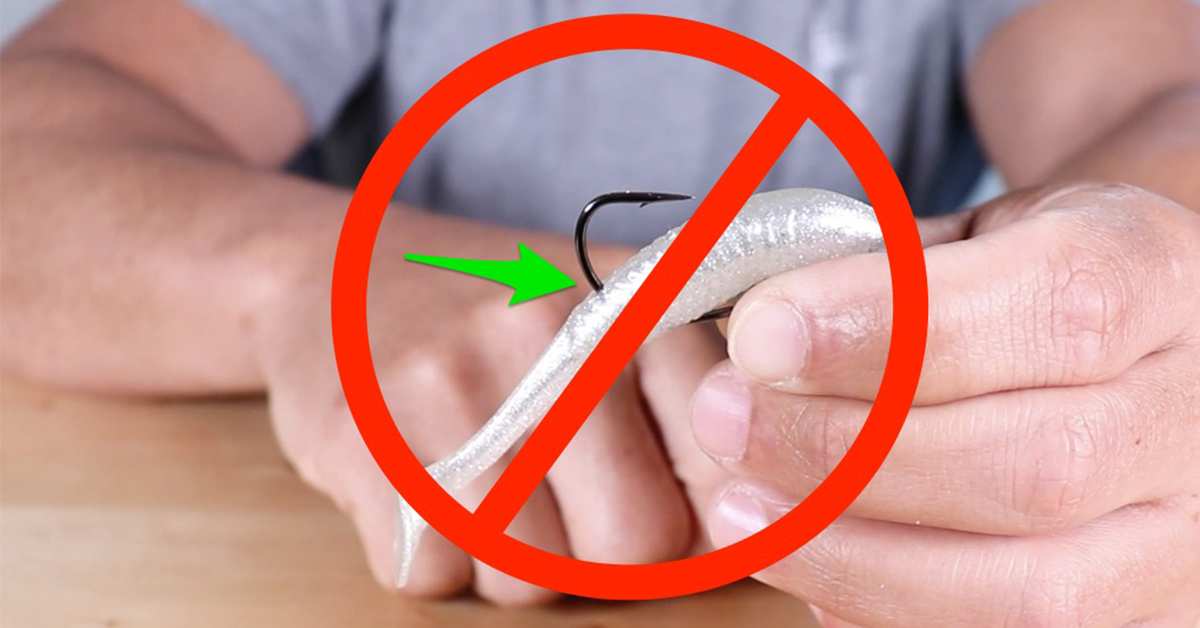
Image source: Bing (Web (fair-use with source credit))
Even experienced anglers make these mistakes, especially when they're in a hurry on the water.
Mistake 1: Skipping the 180-degree rotation. If you push the hook straight through and leave the point buried in the body, you'll miss almost every fish. The point needs to face upward and exit the belly side of the nose. Always rotate.
Mistake 2: Exiting the hook point too far back. Some anglers bring the point out halfway down the body, thinking it gives a better hookset. It doesn't. It restricts the tail action and makes the grub spin.
Keep the exit point near the front third of the body.
Mistake 3: Using a hook that's too large. A 4/0 hook in a 3-inch grub tears the body apart and makes the bait look unnatural. Match the hook to the grub. When in doubt, go one size smaller rather than one size larger.
Mistake 4: Not seating the bait keeper. The small barb on the jig collar needs to slide inside the grub's nose. If it's sitting outside the plastic, the grub will slide down the hook shank on every cast. Push the collar all the way in.
Mistake 5: Angling the hook during insertion. If you insert the hook at an angle instead of straight through the centerline, the grub will track sideways and the tail won't swim properly. Take an extra second to make sure the hook is going in straight.
Mistake 6: Reusing a torn grub. Once the nose is split or the body is torn, the grub won't track right and it'll fall off the hook. Replace it. Grubs are cheap.
Wasted casts aren't.
Hook and Jig Size Pairings by Grub Length
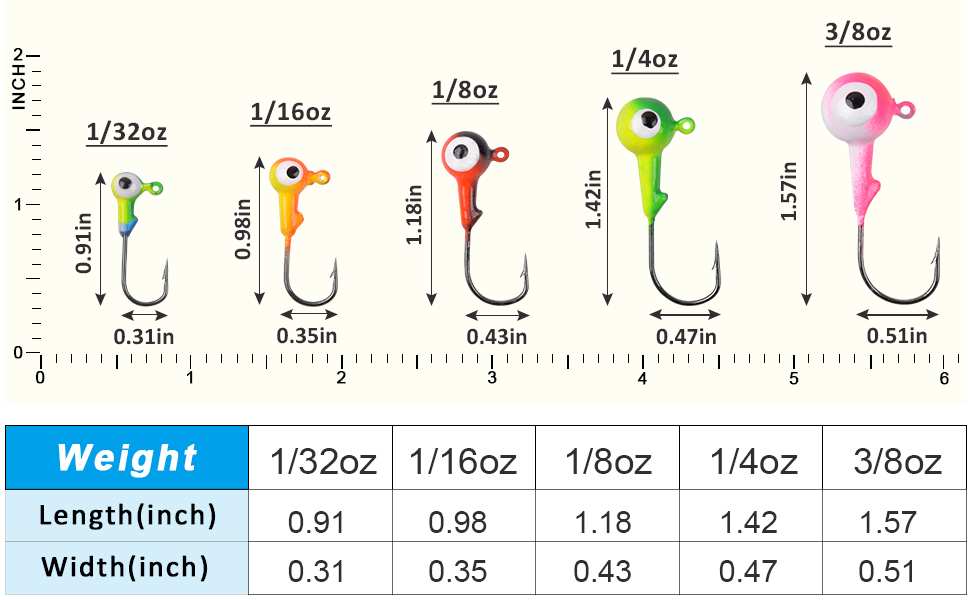
Getting the hook-to-grub ratio right solves half your problems before you ever touch water. The hook needs to be long enough that the point clears the body when seated, but not so long that it sticks out past the tail.
For a standard 3-inch curly tail grub, a 1/0 or 2/0 round bend hook is the sweet spot. The 1/0 gives a more natural profile and works great for panfish and smaller bass. The 2/0 provides a wider gap for better hooksets on larger fish.
Step up to a 4-inch grub and you're in 2/0 to 3/0 territory. The 3/0 gives you more steel for fighting bigger bass, but it also adds weight and can affect the bait's action if the jig head is too heavy.
For the 2-inch finesse grubs, drop down to a 1/0. Some anglers even use a 1/0 on a 2-inch body for panfish, which works, but you'll lose fish if the hook gap is too wide for their mouths.
Jig weight follows depth more than grub length, but there's a relationship. A heavier jig head needs a larger hook to maintain the right proportions. Pairing a 3/8 ounce jig with a 1/0 hook on a 3-inch grub looks wrong and fishes worse.
Match the hook to the jig, and match both to the grub.
When to Use a Curly Tail Grub vs. Other Soft Plastics
A curly tail grub isn't always the right choice, and knowing when to reach for it saves you time on the water.
Use a curly tail grub when: you need a bait that covers water quickly. The vibrating tail triggers reaction strikes from bass that aren't actively feeding. It's also your best bet when fish are suspended or holding in open water, because you can count it down to the right depth and maintain contact throughout the fall.
Reach for a straight tail worm instead when: fish are pressured and refusing moving baits. A Texas-rigged straight tail worm crawled along the bottom gets bit when grubs get ignored. Clear, cold, or high-pressure conditions often favor a slower presentation.
Choose a creature bait when: you're fishing heavy cover like thick weeds, laydowns, or brush piles. Creature baits have more appendages and displace more water, which helps bass locate them in dirty water or thick cover.
Stick with the grub in these scenarios: windy days when you need to cast far and maintain contact, rocky smallmouth rivers where the tail action imitates a fleeing crawfish, and anywhere you're searching for active fish across points, flats, and channel edges.
Rigging for Different Depths and Conditions
The same 3-inch curly tail grub rigged the same way fishes differently depending on your jig weight and retrieve speed.
Shallow water (under 4 feet): Use a 1/16 to 1/8 ounce jig head. The lighter weight gives a slower fall, which matters when bass are cruising shallow flats. A slow, steady retrieve just keeps the tail vibrating.
Pause occasionally and let the grub flutter down.
Mid-depth (4 to 12 feet): A 1/4 ounce jig is the workhorse here. It gets down quickly but doesn't fall so fast that fish can't track it. Hop it along the bottom with a lift-and-fall retrieve.
Let it sit for two to three seconds between hops.
Deep water (12 to 20+ feet): Step up to 3/8 or 1/2 ounce. The heavier weight keeps your line tight so you can feel bites on the fall. In deep water, most strikes happen when the grub is sinking, not when it's being retrieved.
Keep your rod tip low and watch your line for ticks or pauses.
Current situations: Add one weight size heavier than you'd use in still water. A river with moderate current will sweep a 1/4 ounce jig downstream and keep it off the bottom. A 3/8 ounce gets down and stays in the strike zone.
Cold water: Slow down and go lighter. A 1/8 ounce jig with a 3-inch grub, fished with long pauses, works when water temperatures drop below 55°F. The slower fall and longer hang time give sluggish fish time to commit.
Pro Tips for Better Hookups and Longer Bait Life
Small adjustments make a big difference over a full day of fishing.
Wet the hook before insertion. Dip your jig head in the lake or river before pushing it into the grub. The water lubricates the plastic and reduces friction. You'll get a cleaner entry hole and less tearing.
Stretch the nose slightly before inserting the hook. Gently pull the tip of the grub nose to elongate the plastic. This makes it easier to push the hook through without bunching or folding the material.
Check your hook point after every fish. A dull point slides off bone and cartilage. Run your thumb lightly across the point after each catch. If it doesn't grab your skin, touch it with a hook file or replace the jig.
Store grubs away from heat. Soft plastic baits deform in hot tackle boxes. Leave your grubs in their original packaging and keep them in a cooler part of the boat. A deformed grub won't track straight no matter how well you rig it.
Match your line to the jig weight. Use 8 to 10 pound monofilament or fluorocarbon for 1/8 to 1/4 ounce jigs. Step up to 12 to 15 pound for 3/8 ounce and heavier. Lighter line on a heavy jig kills the action.
Heavier line on a light jig feels clunky and spooks fish.
Set the hook with a sweep, not a jerk. When you feel a bite on a grub, sweep the rod sideways rather than jerking it upward. A sweeping motion drives the hook point into the fish's mouth without tearing the soft plastic. A hard jerk often pulls the bait away from the fish or rips the hook through the grub body.
FAQs
Can you rig a curly tail grub weedless?
Yes. After seating the hook point above the body, push the point back into the plastic just enough to bury the tip. The point will still penetrate when a fish bites and you set the hook.
This works well around weeds and wood, but you'll sacrifice some hookup ratio compared to a fully exposed point.
What's the best color curly tail grub?
In clear water, natural colors like smoke, watermelon, and green pumpkin produce the most bites. In stained or muddy water, go with chartreuse, white, or black and blue. Match the local forage when you can.
Shad-imitating colors work in reservoirs. Crawfish patterns shine in rivers.
How far should the hook point stick out of the grub?
The point should clear the body by about 1/8 to 1/4 inch. Any more and you'll snag vegetation constantly. Any less and you'll miss fish.
If you can see the entire hook bend sticking out, the hook is too big for the grub.
Can you use a curly tail grub on a drop shot rig?
You can, but it's not the standard presentation. A 2-inch curly tail grub on a drop shot rig works for finicky panfish and smallmouth. Use a light wire hook and a 1/8 to 1/4 ounce drop shot weight.
The tail vibrates with subtle rod tip twitches.
How many fish can you catch on one grub before replacing it?
A quality grub on a properly sized hook will catch 10 to 20 fish before showing significant wear. Replace it when the nose starts to tear, the body loses its shape, or the tail stops vibrating freely. Cheap grubs with thin plastic might only last two or three fish.
Do you need to use a bait keeper on the jig head?
Most ball jig heads come with a small wire or molded barb on the collar. Use it. Slide it inside the nose of the grub during rigging.
Without it, the grub slides down the hook shank after a few casts and the bait won't track right.
Final Takeaway
Rigging a curly tail grub correctly comes down to three things: straight hook insertion, proper rotation, and the right hook-to-grub ratio. Master those and you'll have a bait that swims true, stays on the hook, and catches fish in almost any freshwater situation.
Start with a 3-inch grub, a 1/0 or 2/0 round bend hook, and a 1/4 ounce ball jig head. That combination covers the majority of bass, walleye, and panfish scenarios. Adjust your weight for depth and your hook size for the grub body.
The best way to get good at this is to rig five or six grubs before your next trip. Do it at the kitchen table where you can see what you're doing. By the time you're on the water, it'll be second nature.
Frequently Asked Questions
Can you fish a curly tail grub in winter?
Yes. Slow down the retrieve and use a lighter jig head. A 1/8 ounce jig with a 3-inch grub, fished with long pauses near deep structure, works for winter bass and walleye.
The key is keeping the bait in the strike zone longer.
Should you add scent to a curly tail grub?
It helps in pressured waters or cold water. Apply a gel scent focused on the tail and body. Garlic and shad scents are the most popular.
Reapply every 15 to 20 casts.
What rod action works best for fishing grubs?
A medium or medium-heavy fast action rod gives the best balance. You need enough backbone to drive the hook, but enough flex to keep the fish pinned on light line. A 7-foot casting rod is the standard choice.