Yes, you can absolutely repair a grub-damaged lawn, and most homeowners can do it themselves without calling in a pro. The key is knowing whether those grubs are still active right now or have already moved on, because that single detail determines your entire repair plan. Get the timing right and you'll have thick, healthy grass again by the following season.
White grubs are the larval stage of scarab beetles, and they feed on grass roots just below the soil surface. Once the roots are severed, the turf browns out and lifts away like loose carpet. The economic damage threshold is around 5 to 10 grubs per square foot, according to turfgrass extension research.
Let's walk through exactly how to assess your situation and fix it step by step.
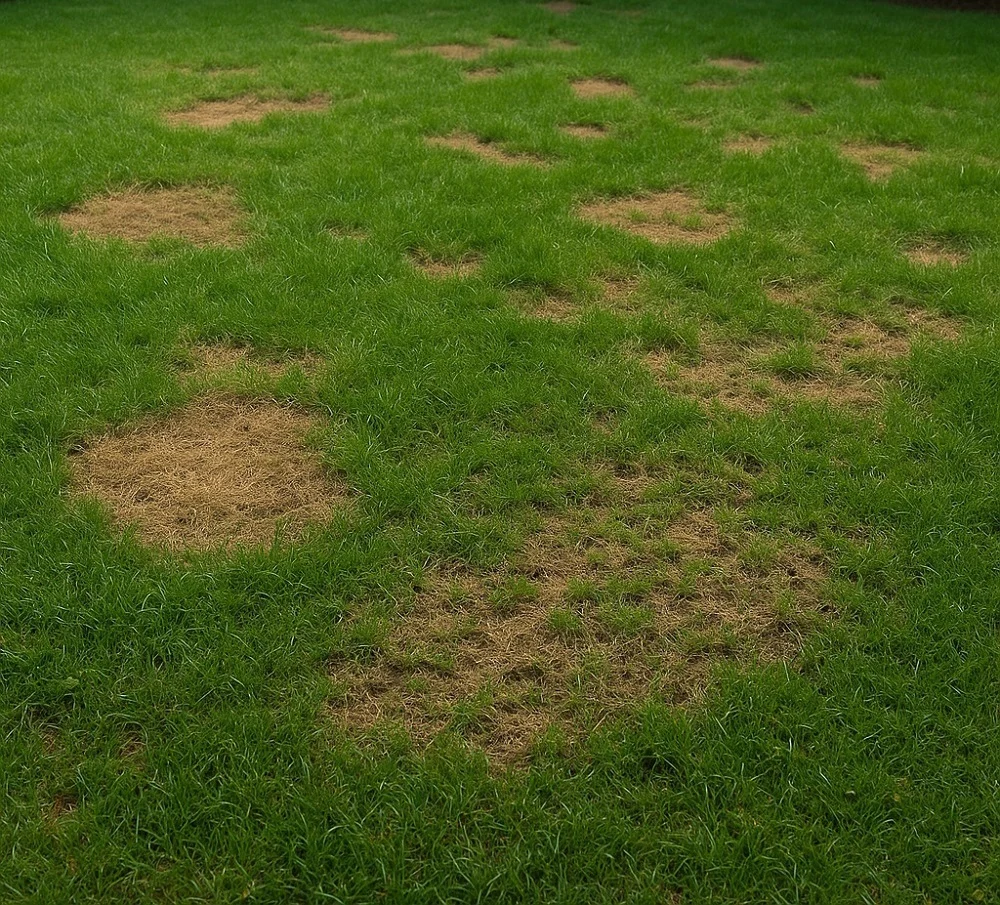
Image source: Bing (Web (fair-use with source credit))
Quick Answer
To repair a grub-damaged lawn, first confirm grubs are the cause by checking for 5 or more per square foot. If grubs are still active, apply a curative insecticide immediately. Wait the label-specified interval, then remove dead grass, loosen the soil, and overseed with a matching grass variety.
Water lightly and frequently until new grass establishes. Apply a preventive grub treatment the following June or July to stop recurrence.
How to Tell If Grubs Are Really the Problem
Brown patches in a lawn can come from a dozen different causes, and treating for grubs when you actually have a fungal issue wastes time and money. Before you buy a single product, you need to confirm what's actually happening under that dead turf.
The simplest diagnostic method is the tug test. Grab a handful of the brown grass at the edge of a damaged patch and pull firmly. If the turf lifts away from the soil like a loose rug with almost no resistance, something has destroyed the root system.
Grubs are a prime suspect, but you'll want visual confirmation.
Cut a one-square-foot section of turf at the border between dead and healthy grass. Peel it back and examine the top inch of soil. White grubs are C-shaped, cream-colored larvae with brown heads and six distinct legs near the head.
Count what you find in that square foot.
Here's how to interpret what you find:
- 0 to 4 grubs per square foot: Grubs are not your primary problem. Look at irrigation, soil compaction, fungal disease, or dog urine spots instead.
- 5 to 9 grubs per square foot: Moderate infestation. Damage is likely. Treatment is warranted, especially if you see active feeding.
- 10 or more grubs per square foot: Severe infestation. You'll almost certainly see visible damage, and animals like skunks or raccoons may be tearing up your lawn to feed on them.
Also check the condition of the grubs themselves. Small, actively feeding larvae in late summer or early fall mean treatment is urgent. Large, sluggish grubs in late fall or early spring may be preparing to pupate, which changes your approach entirely.
The Grub Damage Repair Decision Tree
Your repair path depends on three variables: whether grubs are still active, how much of the lawn is damaged, and what time of year it is. Here's the decision framework.
If grubs are still active and feeding (late summer through early fall):
Apply a curative insecticide first. Do not reseed until the grubs are dead or the product label's waiting period has passed. Overseeding into an active grub infestation is throwing seed away.
If grubs are gone but damage is visible (late fall or early spring):
Skip insecticide entirely. Focus on reseeding or sodding the dead patches. Apply a preventive grub treatment the following summer to stop the cycle from repeating.
If damage covers less than 30 percent of the lawn:
Spot-repair the affected areas. You don't need to treat or reseed the entire lawn.
If damage covers more than 30 percent of the lawn:
Consider a broader approach. A full curative treatment followed by overseeding large sections may be more practical than patch-by-patch repair.
If you're in late fall and the ground is cooling:
Prioritize cleanup and planning. Seed now only if you have at least four to six weeks before the first hard frost. Otherwise, mark the damaged areas and plan for early spring repair.
This decision tree keeps you from making the two most common mistakes: treating when you don't need to, or reseedling while grubs are still eating the roots.
Step 1: Confirm You Actually Have Grubs (The Tug Test)
We covered the basics above, but let's get into the specifics so you can diagnose with confidence.
Start at the edge of a brown patch where dead grass meets healthy grass. This transition zone is where grubs are most concentrated because they feed outward from a central point. Push your fingers into the turf and try to lift it.
Healthy grass resists. Grub-damaged turf peels back with almost no effort because the roots are gone.
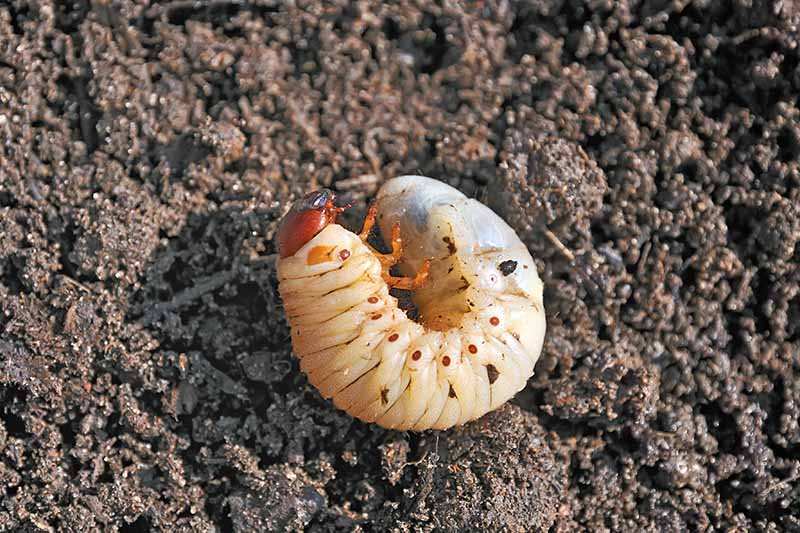
Once you've peeled back the turf, dig down about two inches into the soil and break it apart. Look for the C-shaped larvae. They range from a quarter inch to over an inch long depending on the species and age.
Japanese beetle grubs tend to be on the larger side, while masked chafer grubs are smaller.
Check at least three or four spots across the damaged area. Grub populations are often unevenly distributed, so a single sample might not tell the full story. If you find high numbers in multiple spots, you've confirmed the problem.
One important note: if you see grubs but the turf doesn't lift easily, the damage may be recent and repairable with less aggressive intervention. The grass may recover with proper watering and a single curative treatment if you catch it early enough.
Step 2: Decide If You Need to Treat Right Now
Not every grub situation calls for insecticide. The decision hinges on grub life stage, time of year, and whether you're dealing with a current infestation or cleaning up after one.
Treat now if:
- You find 5 or more active, feeding grubs per square foot
- It's August through early October and grubs are small and near the soil surface
- Animals are actively digging in your lawn to feed on grubs
- The turf is still partially alive and you want to save it
Do not treat now if:
- Grubs are large, deep in the soil, and preparing to pupate (late October onward in most regions)
- You find fewer than 5 grubs per square foot with minimal damage
- The damage happened last year and grubs are no longer present
- It's spring and the grubs you find are mature and about to emerge as adult beetles
In that second scenario, skip the insecticide and move straight to repair. Applying curative products to large, late-stage grubs is less effective because they're about to stop feeding anyway. Your money and effort go further on reseeding and preventive planning for next year.
If you're unsure about timing, your local cooperative extension office can provide region-specific guidance on grub life cycles. They track local beetle species and can tell you exactly when curative treatment windows open and close in your area.
Step 3: Choose the Right Treatment Based on Timing
This is where most people either succeed or waste an entire season. The grub treatment you pick, and when you apply it, makes the difference between a quick fix and a recurring nightmare.
Curative insecticides target grubs that are actively feeding right now. The two most reliable active ingredients for curative control are carbaryl and trichlorfon. Trichlorfon works fastest, often killing grubs within 24 to 72 hours, which is why it's the go-to when you need to stop active damage before reseeding.
Carbaryl takes slightly longer but is widely available at most garden centers.
Apply curative products when grubs are small, typically August through early October in most northern regions. The grugs are feeding near the soil surface then, so the product reaches them easily. Once soil temperatures drop below 50°F in late fall, grubs descend deeper and become much harder to kill with surface applications.
Preventive insecticides work entirely differently. Products containing imidacloprid, chlorantraniliprole, or thiamethoxam are applied in June to early July, before beetle eggs hatch. They create a residual barrier in the thatch layer that kills newly hatched grubs as they start feeding.
These are your best bet for stopping the problem next year once you've cleaned up this year's damage.
Biological options deserve consideration too. Beneficial nematodes, specifically Heterorhabditis bacteriophora, are microscopic worms that seek out and kill grubs in the soil. They're completely safe around people, pets, and beneficial insects.
The catch is that they need to be applied in cool, overcast conditions and watered in immediately, because UV light kills them fast. Milky spore, Paenibacillus popilliae, targets Japanese beetle grubs specifically and can persist in the soil for over a decade. The tradeoff is that it takes two to three years to become fully effective.

Here's a quick comparison to help you decide:
| Treatment Type | Active Ingredient Examples | When to Apply | Best For |
|---|---|---|---|
| Curative chemical | Carbaryl, trichlorfon | August to early October | Active infestations, immediate kill |
| Preventive chemical | Imidacloprid, chlorantraniliprole | June to early July | Stopping next year's grubs |
| Beneficial nematodes | Heterorhabditis bacteriophora | Late August to September, cool conditions | Organic lawns, pet-safe option |
| Milky spore | Paenibacillus popilliae | Any time soil is workable | Long-term Japanese beetle control |
Always read the product label for the waiting period between application and reseeding. Most curative products require at least two to four weeks before you can safely seed. Skipping this step means the new grass roots encounter chemical residue that can stunt or kill seedlings.
Step 4: Repair the Dead Patches
Once the grubs are handled, it's time to bring the lawn back. The approach depends on the size of the damaged area.
For small to medium patches, overseeding is the fastest and most cost-effective route. Start by removing all the dead grass from the damaged spots. A hand rake or dethatching rake works well for this.
You want bare soil showing, not a mat of dead debris that blocks seed-to-soil contact.
Loosen the top inch or two of soil with your rake. Grass seed needs to settle into small crevices to germinate properly. Throwing seed on hard, compacted ground gives you poor results.
Choose a grass seed that matches what's already in your lawn. If you're unsure, a blend of Kentucky bluegrass and perennial ryegrass works well in cool-season regions. For warm-season lawns, match your existing variety as closely as possible.
Spread the seed by hand or with a drop spreader for even coverage, following the rate on the seed bag. Lightly rake the seed into the soil so it's barely covered. A thin layer of compost or starter fertilizer over the top helps retain moisture and gives seedlings nutrients.
Water is the make-or-break factor here. Keep the seeded areas consistently moist for the first two to three weeks. This usually means light watering two to three times per day in warm weather.
The goal is to never let the surface dry out completely before germination. Once the grass is about two inches tall, you can reduce to deeper, less frequent watering to encourage root growth.
For large dead areas where over seeding would take too long to fill in, sod replacement is worth the extra cost. Cut out the dead section in clean edges, loosen the soil base, and lay fresh sod strips tight together. Water daily for the first two weeks until the roots knit into the soil beneath.

Step 5: Prevent Grubs From Coming Back Next Year
Repairing the damage is only half the battle. Without a preventive plan, you'll likely be doing this all over again in twelve to eighteen months.
The single most effective prevention step is a properly timed preventive insecticide application. Apply a product containing chlorantraniliprole or imidacloprid in June or early July, before adult beetles lay their eggs. The exact timing varies by region, but the general rule is to apply when you start seeing adult beetles flying around.
Many extension services track local beetle flights and publish timing alerts.
For homeowners who prefer to avoid synthetic chemicals, beneficial nematodes applied in late August offer a biological preventive approach. You'll need to water them in thoroughly and reapply annually since they don't persist in the soil like a chemical residual does.
Healthy lawns recover from moderate grub pressure better than stressed ones. Deep, infrequent watering, proper mowing height, and regular fertilization build dense root systems that can tolerate some feeding damage. Mow cool-season grasses at three to four inches, which shades the soil and makes the environment less favorable for egg-laying beetles.
If you've had repeated grub problems in the same area for multiple seasons, milky spore is a long game worth playing. Apply it once to affected areas and give it two to three years to establish in the soil. After that, it provides ongoing suppression of Japanese beetle grub populations with minimal effort.
The Best Time to Repair Grub Damage (Fall vs. Spring)
Timing your repair correctly can mean the difference between full establishment and a wasted effort. Both seasons have their strengths, but one is clearly better for most situations.
Fall is the ideal window for reseeding in cool-season grass regions. The soil is warm from summer, which speeds germination, and the air is cooling, which reduces heat stress on young grass. You typically have six to eight weeks before the first hard frost to get new grass established.
Fall weeds are also less competitive than spring weeds, giving seedlings more room to fill in.
Spring seeding works but comes with challenges. The new grass has less time to mature before summer heat arrives, and spring weed pressure is intense. Crabgrass and other annual weeds will compete with your new seedlings for light and nutrients.
If you must seed in spring, use a starter fertilizer that contains a crabgrass pre-emergent compatible with new grass seed, or hand-pull weeds diligently.
For warm-season grasses like Bermuda or zoysia, late spring to early summer is prime seeding time. These grasses need warm soil to germinate and a full growing season to establish before winter dormancy.
A practical approach for severe damage: put down seed in fall for the main repair, then assess again in spring and touch up any thin spots. Two light passes often produce better results than one heavy effort.
Common Mistakes That Keep Grubs Coming Back
Even homeowners who go through the full repair process sometimes find themselves dealing with grubs again the following year. Here's what usually goes wrong.
Applying preventive insecticide too late is the number one error. If you wait until you see brown patches in August, you've already missed the June through July preventive window. The grubs are large and feeding heavily by then, and preventive products simply won't work on big larvae.
Overseeding before killing active grubs is another frequent mistake. The new grass germinates, starts putting down roots, and immediately gets eaten. You've paid for seed and water for nothing.
Relying solely on milky spore for immediate results doesn't work. It's a long-term biological control, not a quick fix. Pair it with another treatment in the short term while it establishes.
Ignoring the animal damage signal costs you time. Skunks and raccoons tearing up your lawn at night are telling you something. That digging means grub populations are high enough to attract predators.
Use it as an early warning to check your lawn before the damage becomes visible during the day.
Skipping the preventive step after repair is the most frustrating mistake of all. You do the work, the lawn looks great, and then next summer the cycle starts over. Mark your calendar for June of the following year and apply preventive treatment on schedule.
When to Call a Professional vs. DIY
Most grub repair is well within the ability of a handy homeowner. There are situations where a professional lawn care service is worth the cost.
DIY makes sense when you have moderate damage covering less than a third of the lawn, you're comfortable reading and following product labels, and you have a weekend to dedicate to the work. The cost of materials for a typical suburban lawn runs $30 to $75 for insecticide plus seed.
Call a pro when the damage is widespread across the entire property, when you've tried DIY repair twice without success, or when you're dealing with a large property where even application matters. Professionals have commercial-grade spreaders and sprayers that deliver more consistent coverage. They also have access to products not available at retail stores.
If you have pets or young children and are concerned about chemical exposure, a professional can advise on the lowest-risk effective options and proper re-entry intervals after application.
Quick-Reference: Grub Repair Cheat Sheet
Here's the full process condensed into a checklist you can follow season by season.
Late Summer (August to September):
- Inspect lawn for spongy patches and animal digging
- Perform the tug test and count grubs per square foot
- If 5 or more grubs found, apply curative insecticide immediately
- Water the product in according to label directions
Early Fall (September to October):
- Wait the label-specified period after treatment
- Remove dead grass from damaged areas
- Loosen soil and overseed with matching grass variety
- Keep seeded areas moist until germination
Late Fall (October to November):
- Mow new grass once it reaches three inches
- Apply winterizer fertilizer to established turf
- Note damaged areas that need spring touch-up
Following June to July:
- Apply preventive grub insecticide before beetle egg hatch
- Monitor lawn for adult beetle activity
- Maintain proper mowing height and watering schedule
Frequently Asked Questions
How long does it take for a grub-damover to recover?
Overseeded areas typically show germination in 7 to 21 days depending on grass species. Full fill-in of damaged patches takes four to eight weeks during the active growing season. Sodded areas establish root contact within two weeks with proper watering.
Can I just water my way through grub damage?
No. Water helps healthy grass tolerate some root loss, but once grubs sever the majority of roots in a patch, that turf is dead and will not recover on its own. You need to reseed or replace those areas.
Do I need to treat my whole lawn or just the damaged spots?
If grub counts exceed the threshold in multiple areas, treat the entire lawn. Grubs often spread beyond visible damage zones. If only one section tests positive, spot-treating that area is sufficient.
Will grub damage come back next year?
It will if you skip preventive treatment. Adult beetles return annually to lay eggs. A single preventive application in June or July breaks the cycle for the following season.
Is it safe to apply grub killer and seed on the same day?
No. Most curative insecticides require a waiting period of two to four weeks before seeding. Check the specific product label for exact timing.
Seeding too soon exposes new roots to chemical residue.
What if I find grubs in spring?
Spring grubs are usually mature and preparing to pupate. Curative treatment is less effective at this stage. Focus on repairing damage and plan a preventive application for the following summer instead.