Image source: Bing (Web (fair-use with source credit))
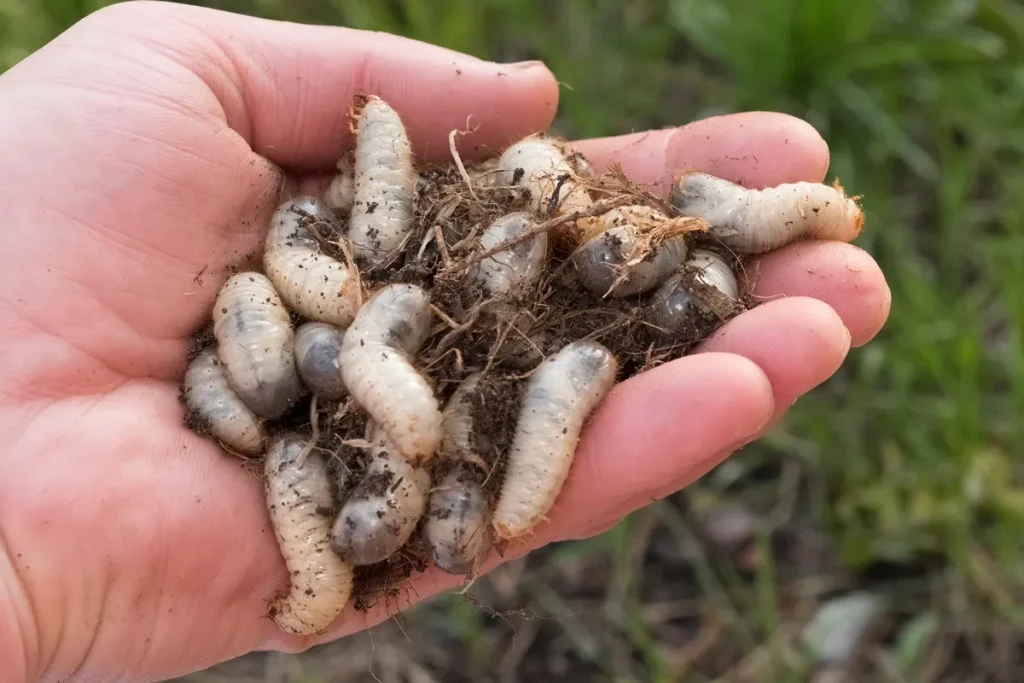
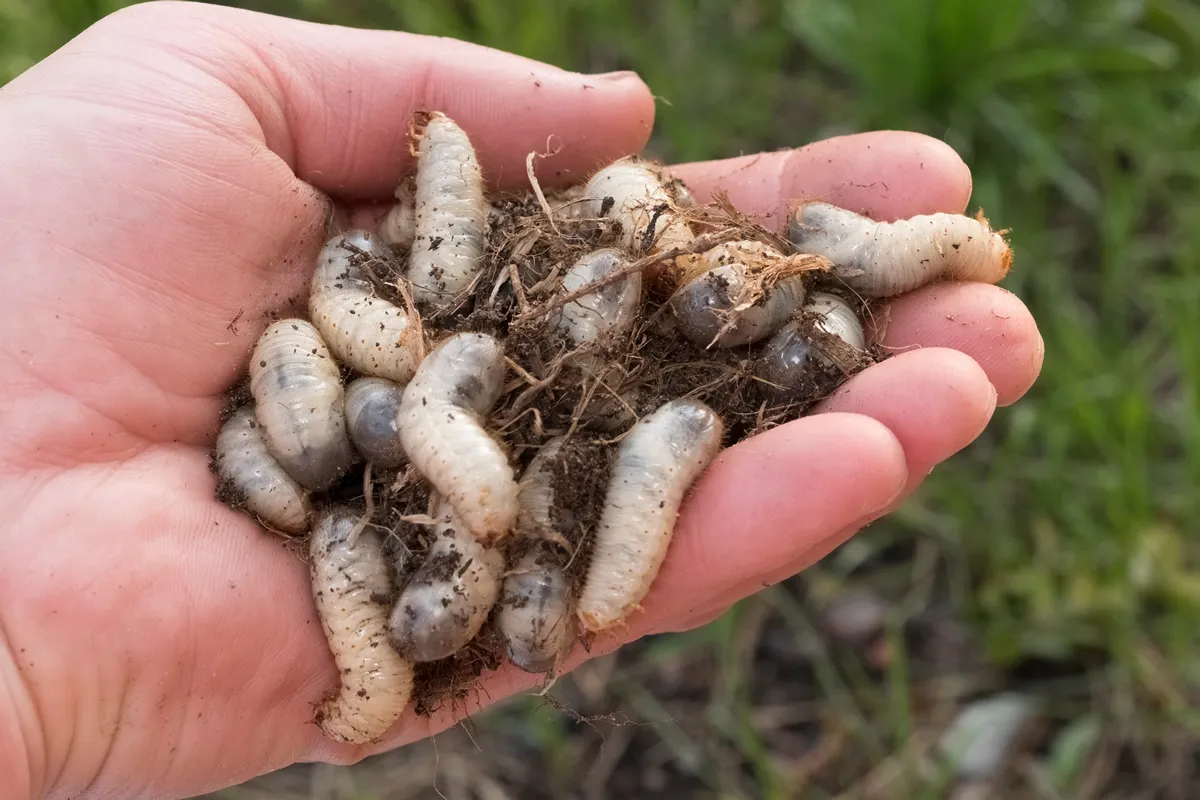
Most people find themselves asking "can grubs bite" after flipping over a piece of sod and finding those pale, C-shaped larvae wriggling in the soil. It's a fair question. You've just discovered something living in your lawn, and you want to know if it's dangerous before your kids or pets spend time out there.
No, grubs cannot bite you. White grubs lack the mouthparts and behavior needed to bite humans or animals. Let's break down exactly what these lawn pests are, what they actually do, and when they become a problem worth solving. The Cooperative Extension Service at Penn State identifies the treatment threshold at around 10 or more grubs per square foot before intervention makes sense for most cool-season lawns.
Can Grubs Bite You? The Straight Answer
Grubs are the larval stage of scarab beetles in the family Scarabaeidae. Common species found in North American lawns include Japanese beetle grubs, European chafer grubs, June beetle grubs, and masked chafer grubs. None of these have the ability to bite humans.
Their mouthparts are designed for chewing roots, not penetrating skin. You can pick a grub up barehanded without risk of a bite. They don't carry venom, transmit diseases to people, or infest homes.
The real issue with grubs isn't personal safety. It's what they do to your lawn over time. Large populations feeding on grass roots will eventually create dead patches that peel back like loose carpet.
That's the actual problem homeowners need to watch for.
What Grubs Actually Are (And Why People Worry)
Grubs represent the immature life stage of several common beetles. The life cycle runs egg, larva, pupa, then adult beetle. The larval stage is the one your lawn hosts, and it's the stage causing the most turf damage.
Most species common to residential lawns have a one-year life cycle. Eggs hatch in mid to late summer, larvae feed on roots through fall, move deeper into the soil to overwinter, then return to the root zone briefly in spring before pupating. Emerging adults fly off to lay eggs and restart the cycle.
People worry because finding a dozen grubs in a small section of lawn feels alarming. Add in the fact that these same grubs attract skunks, raccoons, armadillos, and birds that tear up your turf digging for them, and it's no wonder the discovery causes stress. The digging animals cause often more visible damage than the grubs themselves.
What Grub Mouthparts Are Designed For

Image source: Bing (Web (fair-use with source credit))
Grub mouthparts consist of chewing mandibles adapted for grinding organic material, specifically grass roots and decaying matter in the top few inches of soil. These mandibles open and close laterally, like tiny pincers slicing sideways. They're built for shredding fibrous root tissue, not for piercing or gripping anything tough like human skin.
The grub's head capsule is typically brown or amber, hardened compared to the soft pale body behind it. That hard head houses the mandible muscles. Behind the head you'll see three pairs of short true legs, which some people mistake for biting appendages.
They're just for crawling through soil.
Even a large, mature grub measuring over an inch long can't break human skin with its mandibles. The pressure they generate is sufficient for root material only. If you've ever held one and felt that faint tickle, that's just its legs and body shifting against your palm.
The Real Risks Grubs Pose to Your Lawn
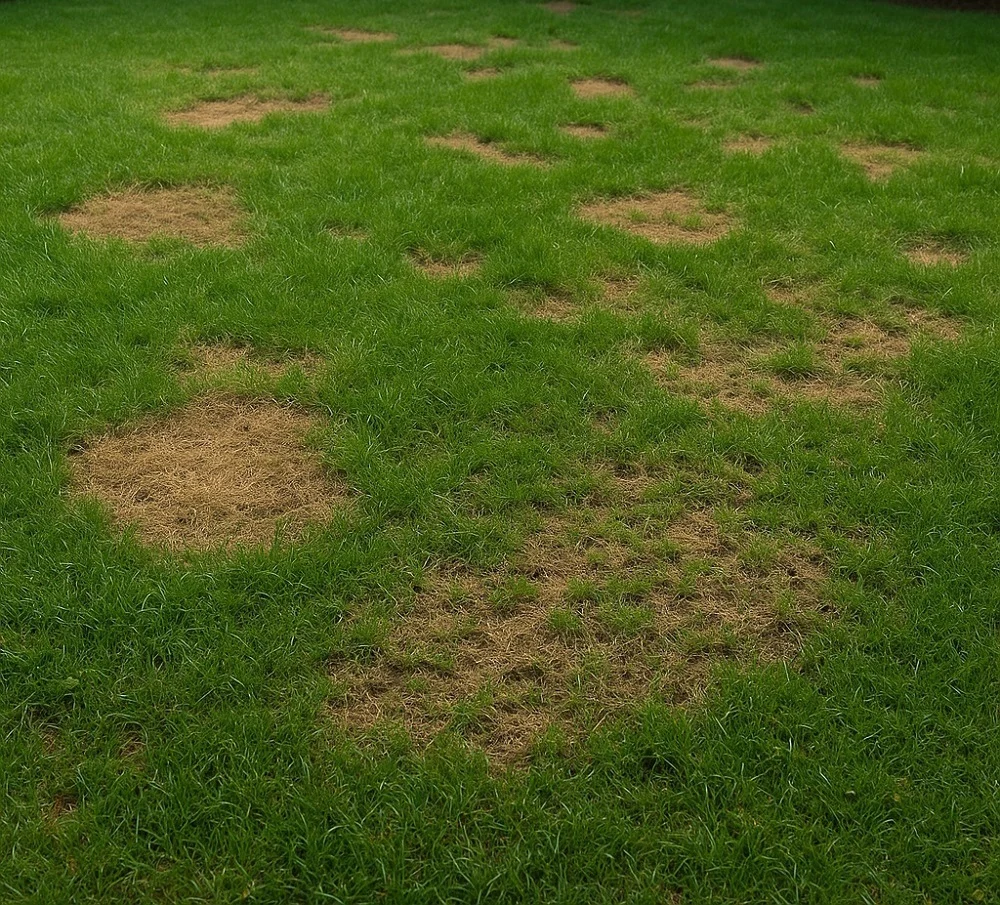
Image source: Bing (Web (fair-use with source credit))
Image source: Bing (Web (fair-use with source credit))
White grubs feed on the roots of turfgrass, severing the plants' ability to take up water and nutrients. Early symptoms show as irregular brown patches that don't respond to watering. As feeding intensifies, the turf begins to feel spongy underfoot because the root system has been chewed away.
The damage becomes most visible in late summer and early fall when heat stress compounds the root loss. In severe cases, you can roll back sections of sod like a carpet with little resistance. That's the classic sign of heavy grub activity.
Here's what to watch for in terms of thresholds:
| Grubs per Square Foot | Lawn Action Needed |
|---|---|
| 1 to 5 | Usually monitor only, healthy turf tolerates this |
| 5 to 9 | Consider treatment if turf is stressed or irrigation is limited |
| 10 or more | Treatment recommended for most cool-season grasses |
| 20+ | Significant damage likely without intervention |
Animal digging often pushes homeowners to act sooner than the numbers alone would suggest. Raccoons and skunks can destroy a section of lawn overnight searching for grubs. That secondary damage sometimes hurts more than the feeding itself.
When Grub Problems Attract Animals That Do Bite
This is where the biting concern actually comes from, not the grubs, but the animals they attract. Skunks, raccoons, armadillos, and some bird species dig through turf to feed on white grubs. Several of these animals can bite or scratch if encountered up close, and raccoons in particular can carry rabies.
If you're noticing deep divots, flipped-over sod, or cone-shaped holes appearing overnight, predators are likely foraging in your lawn. That's a sign grub populations are high enough to be a food source. The animals themselves pose a more direct safety concern to pets and children than the grubs ever could.
Addressing grub populations removes the food source and discourages digging. Once the grubs are reduced below the threshold, animal activity typically declines within a few weeks.
How to Tell Grubs Apart from Pests That Actually Bite
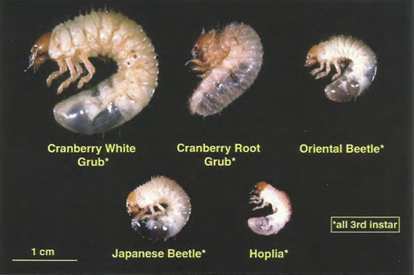
Image source: Bing (Web (fair-use with source credit))
Not every pale larva in your lawn is a white grub, and some turf pests do have the ability to bite or irritate skin. Proper identification matters before you decide whether to treat or leave things alone.
True white grubs have a distinct C-shaped body, cream-white coloring, a brown head capsule, and three pairs of true legs clustered near the head. The rear end often appears slightly darker due to soil visible through the body wall. When disturbed, they tend to curl tighter into that C shape.
Here's how to distinguish grubs from lookalikes that may cause concern:
| Feature | White Grubs | Billbug Larvae | Sod Webworms |
|---|---|---|---|
| Body shape | C-shaped, plump | C-shaped, similar | Caterpillar-like, elongated |
| Legs | 3 pairs near head | 3 pairs near head | 5+ pairs including prolegs |
| Head color | Brown, hardened | Brown, hardened | Brown, smaller |
| Bite risk | None | None | None |
| Damage type | Root feeding | Stem/hole boring | Blade chewing above ground |
Chinch bugs are worth mentioning because they actually can bite humans. These small, black-and-white insects suck sap from grass blades and can deliver a mild pinching bite if they land on skin. They're surface dwellers, not soil larvae, so you'll find them at the base of grass plants rather than underground.
Armyworms and cutworms are caterpillars that chew grass blades at night. They don't bite people, but their presence can be confused with grub damage because both create brown patches. The difference is that armyworm and cutworm damage appears above ground first, while grub damage starts below the surface.
When Grub Numbers Mean You Should Act
Finding a few grubs doesn't automatically call for treatment. Healthy, well-maintained turf with adequate irrigation can tolerate low populations without visible damage. The threshold most extension services use is around 10 grubs per square foot for cool-season grasses like Kentucky bluegrass, fescue, and perennial ryegrass.
Warm-season grasses such as Bermuda, zoysia, and St. Augustine tend to recover faster from root damage due to their aggressive spreading growth. Thresholds for these species often run slightly higher, around 15 per square foot, though local extension recommendations vary by region.
Timing matters as much as numbers. Small, newly hatched grubs in late summer and early fall are the most vulnerable stage for treatment products. By spring, grubs are larger, deeper in the soil, and much harder to control.
Curative treatments applied in spring often underperform because the damage is already done and the larvae are preparing to pupate.
If you're seeing animal digging activity, that's a practical signal regardless of exact counts. Predators can detect grub concentrations below the threshold that would concern a homeowner visually. Their presence suggests the population is high enough to be a reliable food source.
Safe Ways to Check Your Lawn for Grubs
Checking for grubs is straightforward and doesn't require any special equipment. The simplest method is the "cigarette roll" test, named because the damaged turf rolls back like a loose cigarette paper when roots have been severed.
Cut a one-foot-square section of turf in an area showing symptoms. Peel it back and examine the top two to three inches of soil. Count the grubs you find in that square foot.
Repeat this in several spots across the affected area to get an average.
For a less destructive approach, wait until evening and look for grubs near the soil surface. Some species, particularly green June beetle grubs, crawl on top of the soil at night and leave distinct raised tunnels in the lawn surface. You can spot these without cutting into the turf.
Avoid applying any treatment based on a single sample point. Grub populations cluster unevenly across a lawn. One square foot might have 20 grubs while an adjacent square has none.
Sampling multiple locations gives you a realistic picture of the overall infestation level.
Treatment Options: What Works and When
Grub control products fall into two categories: preventative and curative. Understanding which to use and when makes the difference between effective control and wasted effort.
Preventative products contain active ingredients like chlorantraniliprole or imidacloprid. These work best when applied in late spring to early summer, before eggs hatch. They target newly hatched grubs during their most vulnerable stage.
A single application typically provides season-long protection.
Curative products use active ingredients like trichlorfon or carbaryl. These are applied in late summer or early fall when grubs are actively feeding and damage is visible. They work faster but have a shorter window of effectiveness.
You need to time the application when grubs are small and near the soil surface.
Biological controls offer an alternative for homeowners avoiding synthetic chemicals. Milky spore disease, caused by Paenibacillus popilliae, specifically targets Japanese beetle grubs. It takes several years to establish in the soil but can provide long-term suppression.
Beneficial nematodes in the genus Heterorhabditis actively seek out and kill grubs within 48 hours of application.
Here's a quick comparison of common approaches:
| Treatment Type | Timing | Speed of Control | Duration | Best For |
|---|---|---|---|---|
| Preventative insecticide | Late spring to early summer | Slow, preventive | Full season | Known recurring problems |
| Curative insecticide | Late summer to early fall | Fast, 1-3 days | 1-2 weeks | Active damage visible |
| Milky spore | Any time, spring through fall | Very slow, 2-3 years | 10+ years | Japanese beetle specific |
| Beneficial nematodes | Late summer, moist soil | Moderate, 2-5 days | Single season | Organic lawn programs |
Watering after application matters for all granular and liquid products. The active ingredient needs to move into the root zone where grubs are feeding. Most product labels specify watering in with about a quarter inch of irrigation or rainfall after application.
Common Mistakes People Make with Grub Problems
The most frequent mistake is treating too late in the season. By the time brown patches appear in late summer, grubs have already caused significant root damage. Spring applications of preventative products won't help because the grubs from the previous year have already pupated and flown off.
Another common error is overwatering grub-damaged turf in an attempt to green it up. Without intact roots, the grass can't take up that water. You're just creating favorable conditions for fungal diseases on already-stressed plants.
Applying grub control products without confirming grub presence wastes money and introduces unnecessary chemicals into the environment. Drought stress, fungal diseases, dog urine spots, and nutrient deficiencies can all create brown patches that mimic grub damage. Always verify the cause before treating.
Using the wrong product for the timing is another pitfall. Applying a preventative product in September won't control the large grubs already feeding. Similarly, applying a curative product in June targets a stage that hasn't hatched yet.
Match the product category to the grub life stage present in your lawn.
Finally, ignoring the threshold leads to unnecessary treatment. Finding two or three grubs per square foot in a healthy lawn doesn't warrant intervention. Save your effort and budget for situations where populations actually threaten turf health.
When to Call in a Professional
Most grub problems are manageable on your own, but some situations warrant bringing in a licensed pest control or turf management professional.
Call for help if you've tried a curative treatment and grub populations remain high after two weeks. That could indicate a resistant species, improper timing, or a larger underlying issue with your lawn's health that's masking recovery.
You should also consider professional help if animal digging has become persistent and destructive. Professionals can apply commercial-grade products not available to homeowners and coordinate trapping or exclusion services for raccoons or skunks if needed.
Large properties, golf courses, and sports fields often benefit from professional soil sampling and integrated pest management programs. These services provide species-specific identification and custom treatment timing based on local beetle flight patterns and degree-day models.
If you're unsure whether the damage is actually from grubs, a professional diagnosis prevents wasted effort. Many university extension offices offer low-cost soil testing and pest identification services. That's a good first step before committing to any treatment plan.
Quick Reference: Grub Facts at a Glance
Here's a summary of the key facts homeowners need:
- Grubs are the larval stage of scarab beetles including Japanese beetles, European chafers, and June beetles.
- Grubs cannot bite humans or pets. Their mouthparts are built for chewing grass roots, not penetrating skin.
- The treatment threshold is typically 10 or more grubs per square foot for cool-season lawns.
- Small grubs found in late summer and early fall are the easiest to control.
- Animal digging by skunks and raccoons often signals grub populations above the threshold.
- Preventative treatments work best when applied before eggs hatch in late spring to early fall.
- Curative treatments target actively feeding grubs and work fastest when larvae are small.
- Healthy lawns with proper irrigation can tolerate low grub populations without visible damage.
Frequently Asked Questions
Can grubs hurt my kids or pets if they play in the yard?
No. Grubs don't bite, sting, or transmit diseases to humans or animals. Kids and pets can safely play in yards with grub populations.
The only indirect concern is the animals that dig for grubs, so supervise pets if skunk or raccoon activity is present.
Do grubs turn into beetles that bite?
No. Adult Japanese beetles, June beetles, and other scarab beetles don't bite people. They feed on plant foliage but lack the mouthparts to bite skin.
Some beetles can pinch defensively, but this is rare and harmless.
How fast can grubs damage a lawn?
Under heavy infestation, grubs can create visible brown patches within a few weeks during late summer when heat stress compounds root loss. Severe cases with 20 or more grubs per square foot can destroy sections of turf in a single season.
Can I just ignore a few grubs in my lawn?
Yes. Healthy turf can tolerate low populations without any treatment. Finding a few grubs during garden work is normal and doesn't indicate a problem.
Monitor the population and act only if counts exceed the threshold.
What time of year should I worry about grubs?
Late summer through early fall is when damage becomes most visible and when curlate-stage grubs are actively feeding near the surface. Spring brings a second wave of concern as overwintered grubs feed briefly before pupating, though damage is usually less severe.
Are natural grub control options effective?
Beneficial nematodes provide reliable curative control when applied correctly to moist soil in late summer. Milky spore works well for Japanese beetle grubs specifically but takes two to three years to establish. Both are solid options for homeowners avoiding synthetic insecticides.