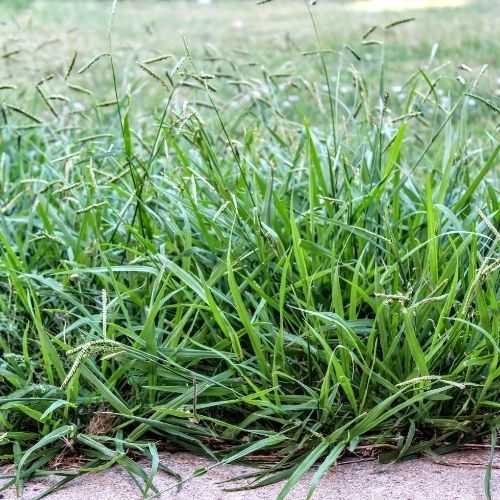
Quick Answer: To identify crabgrass, look for grassy weeds with wide blades that form a low-lying clump-like structure. Crabgrass has a distinct light green color and grows much faster than surrounding turf grasses. In summer, it produces flower spikes that resemble fingers reaching out from the center of the plant. This invasive weed spreads quickly and can take over your lawn if left unchecked. In this article, we will explore the various characteristics of crabgrass and provide you with practical tips on how to identify and control this nuisance in your yard.
—
Imagine this: you diligently care for your lawn, meticulously watering, mowing, and fertilizing to achieve a lush, green carpet. But one day, you notice an intruder, a weed that seems to have taken root and is slowly overpowering your precious grass. You want to tackle the issue head-on, but where do you start? Well, it’s time to get acquainted with crabgrass.
Crabgrass is a common grassy weed that can swiftly invade lawns and gardens. Its wide blades form a low-lying clump-like structure, and its light green hue makes it easily distinguishable from the surrounding turf grasses. This intruder tends to grow faster than your desired grass, disrupting the uniformity of your lawn. In the summer, it even produces finger-like flower spikes that protrude from the center of the plant.
But fear not! In this article, we will guide you through the process of identifying crabgrass and provide effective strategies to keep it in check. So, let’s get started on this mission to restore your lawn’s natural glory.

How to Identify Crabgrass
Crabgrass can be a nuisance in your lawn or garden, quickly taking over and choking out desired plants. Identifying crabgrass early on is essential in order to effectively eliminate it before it spreads. In this article, we will explore various characteristics of crabgrass to help you identify it and take the necessary steps to control its growth.
1. Appearance
One of the key features of crabgrass is its distinct appearance. Understanding the physical characteristics of crabgrass can help you distinguish it from other grasses. Here are some visual indicators to look out for:
- Crabgrass has a low-growing and spreading habit, with stems that radiate from a central base.
- The leaves are light green to yellowish in color and can be wider and coarser compared to other grass types.
- Each leaf has a prominent midrib with parallel veins extending to the blade.
- The blades are typically folded in the bud, resembling the shape of a crab’s legs, hence the name “crabgrass.”
- Crabgrass seed heads are distinctive and form at the end of long, branching stems, resembling fingers or spokes on a wheel.
2. Growth Habit
Crabgrass has a rapid growth rate, and its ability to quickly spread and reproduce can make it challenging to control. Understanding its growth habit can aid in identifying and managing crabgrass effectively:
- Crabgrass thrives in warm-season regions and grows best in hot and sunny areas.
- It commonly germinates in late spring or early summer when soil temperatures reach around 55 to 60 degrees Fahrenheit (13 to 15 degrees Celsius).
- Young crabgrass plants form a dense mat with a shallow root system, making it easy to pull up.
- As crabgrass matures, it produces additional tillers, or side shoots, which create a clumpy appearance.
- Crabgrass can produce thousands of seeds per plant, which can remain dormant in the soil and germinate in subsequent years.
3. Environmental Preferences
Crabgrass has specific environmental requirements that can help you identify its presence in your lawn or garden:
- Crabgrass prefers full sun and is often found in areas with thin or sparse turf.
- It thrives in compacted soil, lawns with poor drainage, or areas where the turf is weak.
- Crabgrass is commonly seen on the edges of driveways, walkways, or areas where the lawn is frequently disturbed.
- It is more prevalent in lawns with improper mowing, watering, and fertilization practices.
4. Seasonal Cues
Being aware of the specific times when crabgrass is most active can aid in identification and control efforts:
- Crabgrass typically starts germinating in late spring or early summer when soil temperatures are favorable.
- As temperatures cool in the fall, crabgrass plants lose their vitality and eventually die.
- During winter, crabgrass remains dormant in the soil and does not actively grow.
- Understanding these seasonal cues can help you time your control measures more effectively.
5. Take Action!
Once you have identified crabgrass in your lawn or garden, taking immediate action is crucial to prevent its spread. Here are some effective methods for controlling crabgrass:
- Hand pulling: For small infestations, manually removing crabgrass plants, including their roots, can be effective.
- Mowing height: Maintaining an appropriate mowing height of 2.5 to 3 inches (6 to 8 cm) can help shade the soil, preventing crabgrass seeds from germinating.
- Pre-emergent herbicides: Applying pre-emergent herbicides in early spring before crabgrass germination can provide effective control.
- Post-emergent herbicides: If crabgrass has already emerged, selective post-emergent herbicides can target and eliminate it while sparing desirable turfgrass.
- Improving lawn health: Encouraging a healthy, well-maintained lawn through proper watering, fertilization, and aeration can prevent crabgrass infestations.
Identifying crabgrass early on is essential for effective control. By familiarizing yourself with its appearance, growth habit, environmental preferences, and seasonal cues, you can accurately identify crabgrass in your lawn or garden. Implementing appropriate control measures, such as hand pulling, herbicide applications, and improving lawn health, will help keep crabgrass at bay and maintain a beautiful and weed-free landscape. Regular monitoring and proper lawn maintenance will ensure long-term prevention and control of crabgrass.
How to identify and control Crabgrass
Frequently Asked Questions
What does crabgrass look like?
Crabgrass is a low-growing weed with a spreading habit and coarse leaves. The leaves are typically light green or yellowish-green in color and have a distinct crab-like appearance, hence the name. It can also produce small, inconspicuous flowers in clusters.
How can I differentiate crabgrass from other grasses?
Crabgrass can be identified by its wide, coarse leaves that have a lighter color compared to most lawn grasses. Unlike most grasses, crabgrass spreads horizontally, producing stems that root wherever they touch the ground. It also has a distinct bunching or clumping growth habit.
When does crabgrass start to appear?
Crabgrass typically starts germinating in late spring or early summer when soil temperatures reach around 55 to 60 degrees Fahrenheit (about 13 to 15 degrees Celsius). It thrives in warm weather and tends to die off with the arrival of frost in the fall.
Where does crabgrass commonly grow?
Crabgrass can grow in a variety of locations, but it commonly invades lawns, gardens, flower beds, and areas with thin or bare soil. It particularly thrives in areas with poor soil quality, excessive moisture, or compacted soil.
How can I prevent crabgrass from spreading in my lawn?
Preventing crabgrass involves maintaining a healthy, dense lawn. Regularly mowing at the proper height, fertilizing appropriately for your grass type, and watering deeply but infrequently can help create unfavorable conditions for crabgrass growth. Additionally, applying a pre-emergent herbicide in early spring can help inhibit crabgrass seed germination.
What are effective methods for crabgrass control?
For small infestations, manually pulling up crabgrass plants along with their roots can be effective. It’s important to remove them before they have a chance to produce seeds. Applying post-emergent herbicides specifically formulated for crabgrass can also help eliminate existing plants. However, it’s crucial to follow the product instructions carefully to avoid damaging desirable grass species.
Final Thoughts
Crabgrass can be easily identified by its thin, light-green blades that sprout in a star pattern from a central point. It has a coarse texture and can quickly invade lawns, gardens, and other areas where it’s unwanted. Another distinguishing feature is its ability to grow close to the ground, forming dense patches that can choke out desirable plants. Additionally, crabgrass produces seedheads that resemble miniature crab claws, hence the name. By understanding these defining characteristics, you can successfully identify and address crabgrass issues in your landscape. Don’t overlook the importance of recognizing the signs of crabgrass and taking effective measures to control its growth.