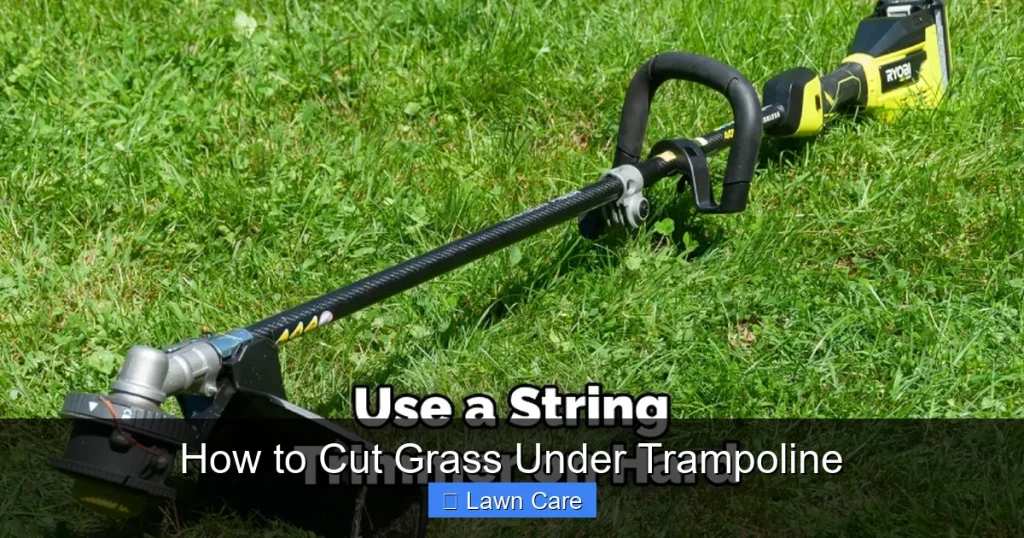
Keeping the grass under your trampoline tidy is essential for safety and aesthetics. This guide provides simple, step-by-step instructions on how to cut grass under a trampoline, covering everything from preparation to safe equipment use. You’ll learn how to achieve a neat lawn without damaging your trampoline or yourself.
Having a trampoline is fantastic for outdoor fun, but it can create a challenging situation for lawn care. The area directly underneath a trampoline often becomes a neglected patch of overgrown grass, making your backyard look untidy and potentially harboring pests. But don’t worry, cutting grass under a trampoline doesn’t have to be a daunting task. This comprehensive guide will walk you through everything you need to know to get that pesky patch looking neat and tidy again.
We’ll cover the best methods, the safest approaches, and practical tips to help you achieve a well-maintained lawn, even in those tricky spots. By the end of this guide, you’ll feel confident in tackling the grass under your trampoline and keeping your entire yard looking its best.
- Safety First: Always prioritize safety by ensuring the trampoline is stable, the area is clear of obstructions, and you wear appropriate protective gear before starting.
- Trampoline Preparation: Safely disassembling or lifting the trampoline is crucial for easy access and to prevent damage to the mat, springs, or frame.
- Tool Selection: Choosing the right tool is key. Options range from manual trimmers and string trimmers to specialized smaller mowers or even hand tools for tight spaces.
- Cutting Techniques: Employ specific techniques to avoid damaging the trampoline and to effectively cut the grass, whether it’s long or short.
- Post-Cutting Cleanup: Properly clean up grass clippings and debris to maintain a tidy area and prevent them from accumulating under the trampoline.
- Regular Maintenance: Establishing a routine for cutting grass under the trampoline ensures it doesn’t become an unmanageable jungle and helps maintain a pleasant play area.
Why is Cutting Grass Under a Trampoline Important?
Before we dive into the “how-to,” let’s quickly touch on why this task is worth the effort.
Firstly, it’s about aesthetics. An overgrown patch of grass can really detract from the overall look of your backyard. Secondly, it’s about safety and hygiene. Long, unkempt grass can become a breeding ground for insects and other small creatures, which isn’t ideal for a play area. It can also make the ground uneven and potentially hazardous if someone were to fall under the trampoline. Lastly, it helps prolong the life of your trampoline. Excessive moisture trapped by long grass can lead to rust on the metal frame and damage to the mat over time.
Safety First: Preparing for the Task
Safety is paramount when dealing with any yard work, and cutting grass under a trampoline is no exception. The trampoline itself can be a hazard if not handled correctly.
Assess the Situation
Before you even pick up a tool, take a good look at the trampoline and the grass. How tall is the grass? Is it dry and matted, or is it lush and thick? Is there anything stored under the trampoline that needs to be removed? Understanding the conditions will help you choose the right approach.
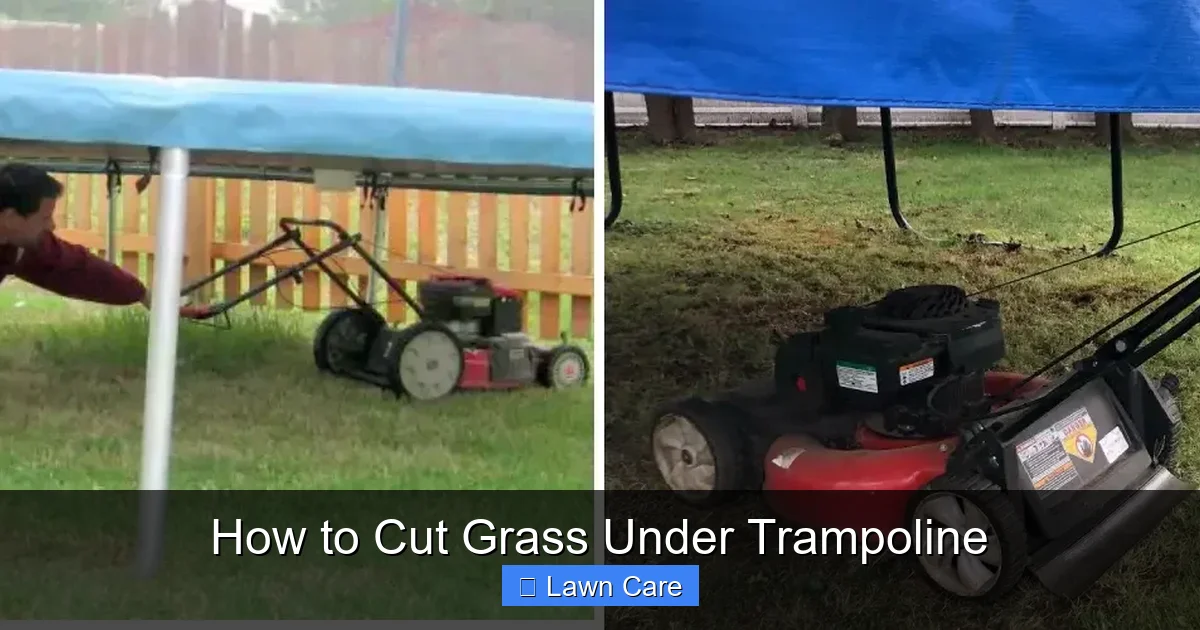
Visual guide about How to Cut Grass Under Trampoline
Image source: outdoorfixes.com
Gather Your Safety Gear
Always wear appropriate personal protective equipment (PPE) when working with lawn equipment. This includes:
- Safety glasses or goggles: To protect your eyes from flying debris.
- Work gloves: To protect your hands and provide a better grip.
- Sturdy footwear: Closed-toe shoes or boots are essential to protect your feet.
- Hearing protection: If you’ll be using a loud power tool like a string trimmer.
Clear the Area
Remove any toys, equipment, or other items that might be under or around the trampoline. This prevents them from being damaged or becoming projectiles.
Methods for Cutting Grass Under a Trampoline
There are several ways to approach cutting grass under a trampoline, and the best method for you will depend on the size of your trampoline, the tools you have available, and how much grass needs to be cut.
Method 1: Partially Disassembling the Trampoline
This is often the most effective method for achieving a thorough cut and ensuring the safety of your trampoline. It allows you direct access to the entire area.
Step 1: Lift or Remove the Trampoline Mat
This is the most crucial and potentially the trickiest step. You need to get access to the springs and the area around the frame legs. The best way to do this is usually by lifting the edge of the trampoline mat. You might need a helper for this. The mat is attached to the frame by springs. You’ll need to detach these springs to lift the mat.
Visual guide about How to Cut Grass Under Trampoline
Image source: outdoorfixes.com
Visual guide about How to Cut Grass Under Trampoline
Image source: outdoorfixes.com
- Helper is Recommended: Having one or two people to help you lift and hold the mat is highly recommended.
- Spring Removal: Carefully unhook the springs from the frame. It’s often easiest to start at one point and work your way around. Some people use a spring puller tool, but often you can do it by hand if you’re careful.
- Secure the Mat: Once the springs are detached, carefully lift and fold the mat away from the frame. You can prop it up against the trampoline legs or even lay it flat on a tarp if you have enough space. Ensure it’s out of the way and won’t get damaged.
Step 2: Access the Grass
With the mat lifted, you now have a clear view and access to the grass growing underneath and around the trampoline legs.
Step 3: Choose Your Cutting Tool
Now that you have access, you can choose the best tool for the job.
- String Trimmer (Weed Wacker): This is often the most versatile tool for cutting grass under a trampoline. It can easily get into tight spaces around the legs and frame. If the grass is long, you might need to make multiple passes or use a thicker trimmer line. For tips on using a string trimmer effectively, check out our guide on how to cut long grass with a good trimmer technique.
- Small Electric Mower: If you have a very small trampoline or a compact electric mower, you might be able to maneuver it under the trampoline. However, this is less common and can be difficult due to the frame.
- Hand Shears or Scissors: For very small areas or if you prefer a manual approach, sturdy garden shears or even strong scissors can work. This is time-consuming but very precise.
- Manual Mower: A reel mower could potentially be pushed under if the frame allows, but this is also uncommon.
Step 4: Cut the Grass
Start cutting the grass. Be mindful of the trampoline frame and legs. You don’t want to hit or damage the metal components. If using a string trimmer, use a sweeping motion and keep the guard close to the ground.
- Start with Long Grass: If the grass is very long, you might want to cut it in stages. First, cut it to a manageable length, and then do a second pass to get it closer to the desired height.
- Work Around Obstacles: Carefully trim around each leg and any other parts of the frame.
Step 5: Reassemble the Trampoline
Once the grass is cut and the area is clean, it’s time to put your trampoline back together.
- Clean the Frame: Before reattaching the mat, quickly wipe down the frame legs and any parts of the mat that might have gotten dirty.
- Reattach Springs: Carefully hook the springs back into place, working your way around the trampoline. It’s often easiest to attach springs opposite each other to keep the tension even.
- Lower the Mat: Once all springs are reattached, the mat should naturally settle into place.
Method 2: Using a String Trimmer Without Full Disassembly
This method is best for situations where the grass isn’t excessively long or thick, and you want to avoid the effort of partially disassembling the trampoline.
Step 1: Clear Underneath
Remove all items from under the trampoline. Ensure there’s nothing that could be damaged or get tangled in the trimmer line.
Step 2: Assess Access
Look at the clearance between the bottom of the trampoline mat and the ground, as well as the space between the legs. You need enough room to safely maneuver your string trimmer.
Step 3: Choose Your Tool Wisely
A string trimmer is almost always the best tool for this method. Consider:
- Corded vs. Cordless: Cordless trimmers offer more freedom of movement, which is beneficial in tight spaces.
- Trimmer Head Type: Some trimmer heads are designed for easier maneuvering.
- Trimmer Line Strength: Use a line that’s strong enough to cut the grass but not so aggressive that it could damage the trampoline mat or springs.
Step 4: Trim Carefully
This requires patience and precision.
- Angle the Trimmer: You’ll likely need to angle the trimmer head significantly to get under the mat and around the legs. Be careful not to hit the springs or the underside of the mat.
- Short Bursts: Use short, controlled bursts of power. This gives you more control and reduces the risk of damage.
- Sweep Motion: Use a gentle sweeping motion to cut the grass. Don’t try to force the trimmer.
- Work in Sections: Tackle one area at a time. It’s better to take longer and do it right than to rush and risk damage.
- Height Considerations: Be aware of how high you’re cutting. You don’t want to cut the grass too short, which can harm the roots. Check out our how short to cut Bermuda grass guide for general recommendations, though adjust for your specific grass type and conditions.
Step 5: Clean Up
After trimming, use a broom or leaf blower to clear away all grass clippings and debris from under and around the trampoline.
Method 3: Using Smaller, Specialized Tools
If you have a particularly tight space or prefer not to use power tools, there are other options.
Step 1: Manual Trimming
A good pair of strong garden shears or even heavy-duty scissors can be used to snip away at the grass. This is best for smaller trampolines or if the grass has only grown a little.
Step 2: Handheld Grass Shears
Some battery-powered or manual handheld grass shears are designed for edging and trimming in tight spots. These can be effective.
Step 3: Consider a Small Electric Mower (with caution)
There are very small electric mowers designed for very small yards or specific tasks. If the frame of your trampoline has enough clearance, one of these *might* fit. However, this is rare and requires careful measurement and maneuvering.
Tips for Success
No matter which method you choose, here are some extra tips to make the process smoother.
Timing is Everything
Try to cut the grass when it’s dry. Wet grass can clump together, making it harder to cut and increasing the chances of it sticking to the trampoline mat. For more on this, see our guide on how to tell if grass is dry enough to cut.
Don’t Cut Too Short
Just like with the rest of your lawn, avoid cutting the grass too short under the trampoline. This can stress the grass and make it more susceptible to weeds and pests. A general guideline for most grasses is to never remove more than one-third of the blade length at a time. You might find our grass cutting height chart helpful.
Frequency Matters
The more often you address the grass under the trampoline, the easier the task will be. Try to incorporate it into your regular lawn maintenance schedule. Instead of waiting for a jungle to grow, a quick trim every few weeks will keep it manageable. Consider how often you cut grass generally, and try to maintain a similar frequency for this area, adjusted for its growth rate.
Consider a Tarp or Weed Barrier
For a more permanent solution, you could consider laying down a heavy-duty tarp or weed barrier fabric under the trampoline. Ensure it’s well-secured. This will prevent grass growth altogether. However, make sure it allows for some drainage to prevent moisture buildup.
Troubleshooting Common Issues
Even with the best intentions, you might run into a few problems.
Issue: Grass is Extremely Long and Matted
Solution: If the grass is exceptionally long, it’s best to use a string trimmer set to a higher height first, or even a weed eater designed for tall weeds. You might need to make multiple passes, first cutting it down to a manageable length, and then trimming it to your desired height. If it’s a real jungle, you might even consider our tips for how to cut long grass.
Issue: Can’t Get Trimmer Head Under the Mat
Solution: If there’s very little clearance, you might be forced to partially disassemble the trampoline. If that’s not an option, try angling the trimmer head at a steeper angle or using a smaller trimmer head if possible. Sometimes, you might have to accept a slightly less perfect cut around the very edges.
Issue: Damaging the Trampoline Mat or Springs
Solution: This is where careful work and the right tool are crucial. If you’re repeatedly hitting the springs or mat, stop and reassess. Ensure you’re using a string trimmer with sufficient guard, or consider manual tools for those very delicate areas. If you accidentally nick the mat, try to assess the damage. For minor nicks, it might be okay, but significant tears could compromise safety. If you find yourself needing to repair other lawn issues, you might find our guide on how to save grass that was cut too short helpful, though that’s for grass, not trampoline mats!
Issue: Grass Clippings Clumping Under the Trampoline
Solution: Use a broom or leaf blower to thoroughly clean up after mowing. If clippings are getting stuck, try to catch them as they fall or blow them away immediately. If they’ve already clumped, you’ll need to manually remove them.
Conclusion
Cutting grass under a trampoline might seem like a hassle, but with the right approach, it’s a manageable part of yard maintenance. Prioritizing safety, choosing the appropriate method and tools, and performing regular upkeep will ensure your trampoline area remains neat, safe, and enjoyable for everyone. Whether you opt for partial disassembly, careful trimming, or specialized tools, the key is patience and attention to detail. Your well-kept backyard will thank you for it!