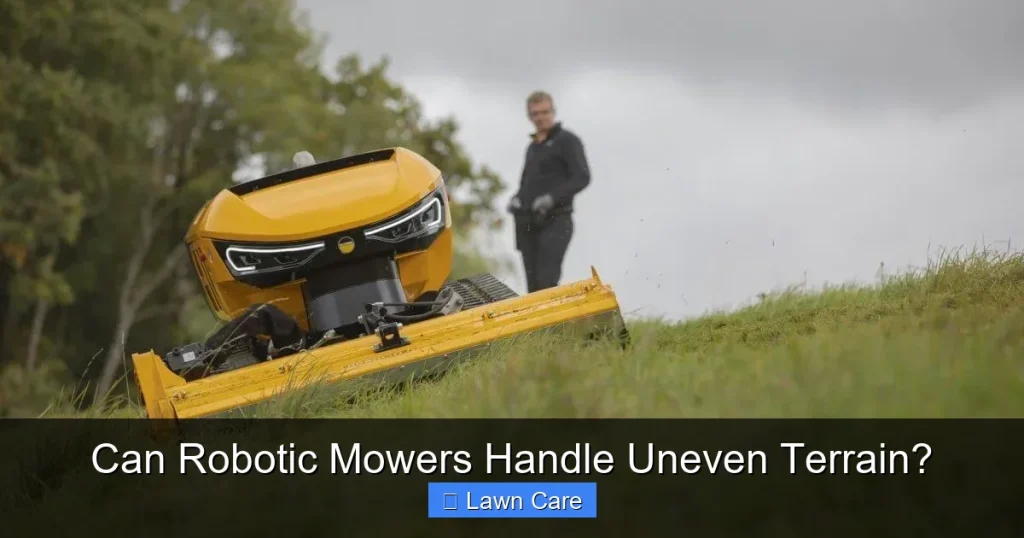
Robotic mowers are getting smarter every year, but can they really handle bumpy, sloped lawns? Yes—but only if you choose the right model and prepare your yard properly. Most modern robotic mowers use advanced sensors and GPS to navigate rough ground safely, but they still have limits. This guide breaks down what to look for, how to set up your lawn, and when it might be time to consider a manual mower instead.
Have you ever looked at your backyard and wondered, “Will a robotic mower even survive this terrain?” Maybe you’ve got a gentle slope that crests over a small hill, or perhaps your lawn has noticeable bumps from tree roots and old drainage issues. You’re not alone—many homeowners love the idea of automated lawn care, but worry about whether their robotic mower can handle the bumps, slopes, and general roughness of real-world yards.
The good news? Today’s robotic mowers are far more capable than they used to be. Thanks to advances in robotics, sensor technology, and smart mapping, many models can now tackle moderately uneven ground with confidence. But understanding exactly what “uneven” means—and setting realistic expectations—is key to success.
In this article, we’ll walk through everything you need to know about robotic mowers and uneven terrain: how they detect slopes, which brands perform best, what you can do to prepare your lawn, and when it might make sense to pair your robot mower with other tools. By the end, you’ll feel confident deciding whether a robotic mower fits your yard—or if you’re better off looking elsewhere.
Key Takeaways
- Modern robotic mowers use gyroscopes and inclinometers to detect slopes and adjust cutting height automatically, making them safer on uneven terrain.
- Slope handling varies by brand and model—most can manage up to 15–20 degrees, but steep hills may require special settings or accessories.
- Bump detection and obstacle avoidance are key features that help robotic mowers navigate rocks, roots, and sudden elevation changes without tipping.
- Proper boundary wire installation is critical; it helps define safe zones and prevents the mower from straying into dangerous areas.
- Regular maintenance keeps performance high—cleaning sensors, checking wheels, and updating software ensures reliable operation on rough ground.
- Soil preparation improves results; leveling major dips and ruts makes life easier for both your mower and your grass.
- Some models include multi-zone mowing, allowing different cutting heights or schedules for hilly sections of your lawn.
Quick Answers to Common Questions
Can robotic mowers climb steep hills?
Yes, many modern robotic mowers can handle slopes up to 20 degrees (about 35% grade), especially models with all-wheel drive or specialized hill-climbing algorithms. Always check your specific model’s specs before assuming it can handle your steepest inclines.
Do robotic mowers tip over on uneven ground?
They’re designed to detect steep angles and stop cutting if the slope exceeds safe limits. However, extremely steep or loose soil can still cause instability. Proper boundary wire placement and regular maintenance reduce tipping risks.
Will a robotic mower damage my lawn on bumps?
Not if set up correctly. Features like auto-leveling blades, variable cutting heights, and mulching help prevent scalping. Just avoid letting the mower operate on wet, muddy patches where it might slip and tear grass.
Can I use a robotic mower on rocky terrain?
Generally no—rocks can damage blades, block sensors, or get stuck in the mechanism. Remove large debris before mowing, and consider installing extra boundary wires around hazardous areas.
How often should I clean my robotic mower’s sensors?
At least once a week, especially after heavy rain or during pollen season. Clean the cliff sensors, bump sensors, and underside with a soft brush or cloth to maintain accurate navigation on uneven surfaces.
📑 Table of Contents
How Do Robotic Mowers Detect and Handle Slopes?
One of the biggest concerns people have about robotic mowers is their ability to climb hills without falling over or losing control. The answer lies in something called an inclinometer—essentially a built-in tilt sensor that tells the mower how steep the ground is. When combined with a gyroscope and sometimes accelerometers, this data helps the mower decide whether it’s safe to proceed.
Most quality robotic mowers will stop cutting and return to base if the slope exceeds their maximum angle limit—usually between 15 and 20 degrees (that’s about 26% to 35% grade). Some premium models go even higher, especially those designed for commercial or large residential properties.
But detection isn’t just about stopping—it’s also about adaptation. Many robots adjust their wheel speed dynamically, using differential drive systems to keep traction and prevent slipping. Others lower their cutting deck slightly on inclines to reduce strain and improve stability.
For example, Husqvarna’s Automower® models use something called “Hill Handling Mode,” which modifies blade engagement and movement patterns when ascending or descending slopes. Similarly, Worx Landroid mowers feature auto-leveling blades that stay parallel to the ground, reducing scalping on uneven patches.
This kind of intelligent response means your mower won’t panic when it hits a bump—it’ll assess, adapt, and keep going (or come home safely if needed).
Which Brands Perform Best on Uneven Terrain?

Visual guide about Can Robotic Mowers Handle Uneven Terrain?
Image source: mowrator.com
Not all robotic mowers are created equal when it comes to rough ground. While budget models might struggle with anything steeper than a gentle incline, mid-range and high-end units often include features specifically engineered for challenging topography.
Let’s compare a few top performers:
– Husqvarna: Known for durability and precision, Husqvarna’s Automower® series includes models like the 435X AWD, which boasts true all-wheel drive and handles slopes up to 45% (yes, that’s steep!). Their boundary wire system is robust, and the GPS-assisted navigation helps avoid obstacles like garden beds or tree roots.
– Worx: The Landroid V400 and newer LX4 models offer excellent hill-climbing ability—up to 20 degrees—and include features like anti-theft alarms and smartphone control. Worx machines also have self-leveling blades and can mow in rain, which is helpful on damp, uneven soil.
– Robomow: Popular in Europe and growing in North America, Robomow RS630 and similar models use triple-wheel drive and can manage slopes up to 28%. They’re especially praised for navigating tight spaces around flower beds and stepping stones without getting stuck.
– Gardena: Though more budget-conscious, Gardena’s Sileno Life models have improved significantly. They handle slopes up to 15 degrees well and include soft start/stop technology to reduce jarring impacts on rough patches.
When choosing a model, check the manufacturer’s stated slope limit and read user reviews focused on hilly yards. Real-world feedback often reveals quirks—like one owner who found their mower couldn’t quite conquer a 25-degree bank until they installed additional boundary wire loops.
Preparing Your Lawn for a Robotic Mower
Visual guide about Can Robotic Mowers Handle Uneven Terrain?
Image source: homelivinghandbook.com
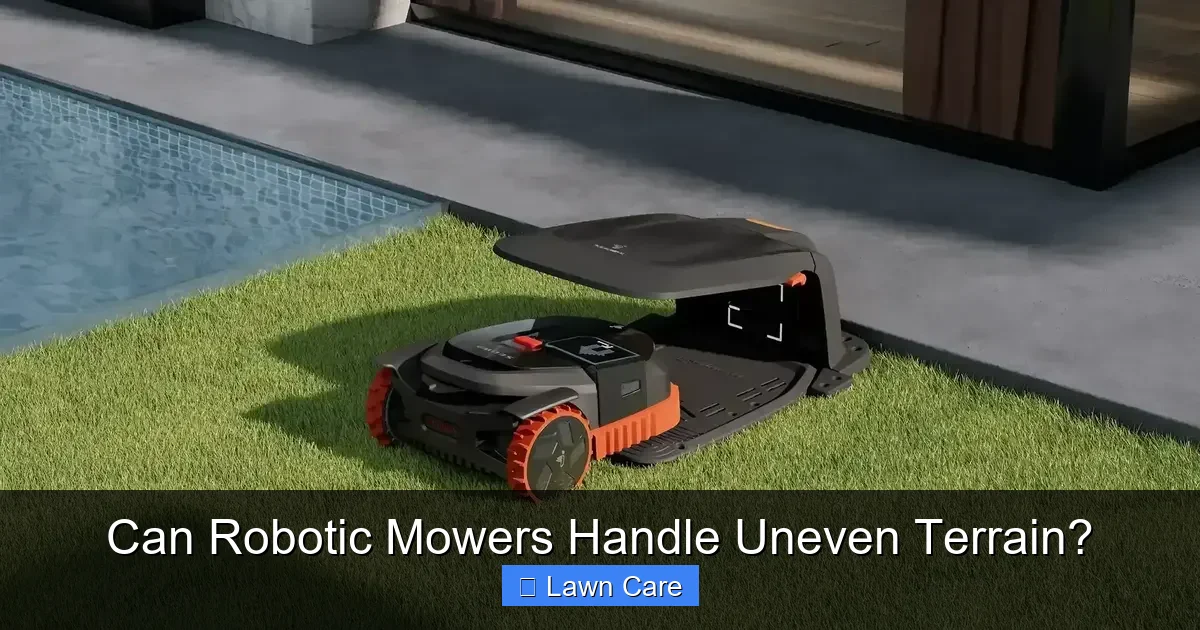
Even the most advanced robotic mower can’t compensate for extreme unevenness—like a crater or a half-meter drop-off. But minor imperfections? Those are usually manageable with a bit of prep work.
Start by assessing your lawn. Walk around and note any large rocks, exposed roots, or deep ruts. These aren’t just tripping hazards—they can damage the mower’s undercarriage or get tangled in the blades. Remove debris before installing your boundary wire.
Next, consider grading. If you have broad, shallow depressions or raised ridges, you might try leveling your lawn yourself. Simple techniques like adding topsoil, using a rake, or aerating can smooth out moderate unevenness. Just remember: robotic mowers prefer gradual transitions over sharp changes in elevation.
Boundary wire placement is another crucial step. Run it along edges of flower beds, patios, or steep drop-offs to create a clear “no-go” zone. Some users even install extra perimeter wires around particularly tricky spots—like near a retaining wall or a tree with spreading roots. This gives the mower room to maneuver without risking a fall.
Finally, think about mulching vs. bagging. On uneven terrain, clippings can collect in low spots and create mulch mats that interfere with blade movement. Opting for mulching (which most robots do anyway) helps distribute grass evenly across the surface, reducing the chance of scalping in depressions.
Common Challenges and How to Fix Them

Visual guide about Can Robotic Mowers Handle Uneven Terrain?
Image source: mowersboy.com
Despite their intelligence, robotic mowers can run into trouble on uneven lawns. Here are some common issues—and practical fixes:
– Getting Stuck in Low Spots: If your mower keeps getting lodged in dips, it might be because the wheels can’t gain enough traction. Try reducing grass height slightly in problem areas or manually pushing it out once or twice during the first week of mowing. Over time, consistent mowing will help lift those spots naturally.
– Scalping on Humps: When blades cut too low on raised areas, you get thin, patchy grass. To prevent this, ensure your mower’s default cutting height is set appropriately (usually between 1.5″ and 2.5″). Also, enable “multi-height” modes if available—this lets different zones have custom settings.
– Tipping Over on Steep Slopes: If your mower flips backward while climbing, it could be due to excessive slope or worn-out tires. Check the manual for max incline specs, and replace rubber tracks or wheels if they’re cracked. Adding weight to the rear (some owners use sandbags) can also improve stability.
– Boundary Wire Damage from Roots: Tree roots can push up cables, causing signal loss. Use conduit tubing or bury wires deeper (at least 3 inches) where possible. Alternatively, opt for wireless boundary systems like GPS-based ones (available on select high-end models), which don’t rely on physical wires.
– Inconsistent Cutting Across Zones: Uneven terrain often leads to patchy mowing. Use the mower’s scheduling feature to give hilly sections more frequent passes, or consider investing in a dual-blade model that covers wider swaths per trip.
Remember: no robotic mower is perfect. But with patience and the right setup, most can handle surprisingly rugged landscapes.
When a Robotic Mower Might Not Be the Right Choice
While robotic mowers shine on moderate slopes and gentle undulations, there are limits. If your property has:
– Slopes steeper than 25 degrees consistently,
– Large rocks, boulders, or exposed tree roots,
– Deep gullies or erosion channels,
– Frequent flooding or standing water,
…then a traditional push mower or riding tractor might serve you better. In these cases, safety and reliability outweigh convenience.
Also, if you have pets or children who play frequently in the yard, double-check that your chosen model has pinch protection and doesn’t pose a tripping hazard near the charging station.
And finally, keep in mind that robotic mowers work best with established turfgrass—not freshly seeded or sodded areas. Young grass is fragile and prone to scalping on uneven ground, so hold off on automation until your lawn is mature and stable.
Tips for Maximizing Performance on Rough Ground
Want your robotic mower to last longer and perform better on bumpy terrain? Follow these best practices:
– Update Firmware Regularly: Manufacturers release improvements that enhance slope handling, obstacle detection, and battery efficiency. Enable automatic updates in your app.
– Clean Sensors Weekly: Dirt, grass clippings, or spiderwebs on the cliff sensors (those little black dots on the front) can cause false readings. Wipe them gently with a dry cloth.
– Use Mulching Blades: They’re gentler on uneven surfaces and reduce the risk of tearing rather than clean cutting.
– Monitor Battery Life: Steeper climbs drain power faster. If your mower keeps returning early, it might be struggling with elevation changes. Adjust schedule frequency or consider a larger battery model.
– Pair With Other Tools: For severe cases, combine your robot with a manual edger or string trimmer for hard-to-reach spots. Or look into hybrid solutions like tow-behind spreaders that complement robotic mowing.
By treating your robotic mower like a smart appliance—not a magic solution—you’ll enjoy years of trouble-free service, even on tricky ground.
Frequently Asked Questions
What is the maximum slope a robotic mower can handle?
Most entry-level models handle up to 15 degrees (26% grade), while premium units like Husqvarna’s 435X AWD can manage slopes up to 45% (80 degrees!). Always verify your model’s specifications before relying on it for steep terrain.
Do robotic mowers work well on bumpy lawns?
Yes, provided the bumps are moderate and the mower has proper slope detection and adaptive cutting features. Avoid extreme irregularities, but many homeowners successfully mow gently rolling or slightly uneven ground without issues.
Can I install my own boundary wire on a sloped yard?
Absolutely. Just bury the wire at least 3 inches deep and secure it well—especially around trees where roots may shift it. Use conduit tubing in high-traffic areas to protect against wear.
Will a robotic mower get stuck in ditches or low spots?
It’s possible if the spot is too deep or the mower lacks sufficient torque. If this happens frequently, try manually lifting the mower out occasionally or consider leveling the area slightly with soil.
Are robotic mowers worth it for hilly lawns?
If your hills are within the mower’s rated slope limit and you take time to set up boundaries properly, yes—robotic mowers save time, reduce fatigue, and maintain consistent cuts. For very steep or rugged terrain, however, a riding mower may be more practical.
Can I use a robotic mower on newly seeded lawns?
No—freshly seeded or sodded areas are vulnerable to scalping on uneven ground. Wait until grass is well-established (usually 6–8 weeks) before introducing robotic automation.