Kentucky bluegrass typically takes about 2 to 3 weeks to germinate and reach a semblance of maturity, but full establishment usually requires around 1 to 2 growing seasons. For a lush, dense lawn, patience is key as the grass gradually fills in and develops a strong root system. If you’re eager to enjoy a vibrant green space, understanding the growth timeline can help set realistic expectations and ensure proper care. In just a matter of weeks, you’ll start seeing the first signs of life, but achieving a perfectly lush lawn needs consistent watering, fertilizing, and proper maintenance over several months. So, while quick germination is possible, full growth and optimal density take time, typically spanning one to two growing seasons, depending on your climate and care practices.
Growing Kentucky bluegrass is a rewarding process that begins unexpectedly fast but requires patience to see its full glory. As a popular choice for lawns due to its beautiful color and durability, knowing how long it takes to establish helps manage expectations and plan your maintenance schedule effectively. In general, you can expect germination within a couple of weeks, but for a thick, healthy lawn, it may take a full season or more. Proper watering, fertilizing, and consistent care are essential for quick and healthy growth. Whether you’re starting from seed or sod, understanding these timelines will help you achieve that picture-perfect lawn you’ve been dreaming of.

How Long to Grow Kentucky Bluegrass
Kentucky bluegrass is a popular choice for lawns because of its rich color and fine texture. Knowing how long it takes to grow this grass helps homeowners plan their lawn projects better. In this article, we will explore the growth process step by step, so you understand what to expect.
Understanding the Growth Cycle of Kentucky Bluegrass
Kentucky bluegrass follows a specific growth pattern that includes several stages. Each stage impacts how long it will take for your lawn to be fully established. The primary stages are germination, seedling development, tillering, and mature growth.
Germination Stage
This is the initial phase where the seed begins to sprout. It usually takes between 5 to 14 days for Kentucky bluegrass seeds to germinate, depending on soil temperature and moisture levels.
Seedling Development
After germination, small grass blades start to appear. During this stage, the grass is delicate and needs proper care. It typically lasts 2 to 4 weeks, allowing the grass to establish a solid root system.
Tillering and Vegetative Growth
In this stage, the grass begins producing new shoots called tillers. Kentucky bluegrass spreads through rhizomes and tillers, helping the lawn become dense. This phase can take 4 to 6 weeks after germination.
Establishment of a Full Lawn
By about 8 to 12 weeks from seeding, the lawn usually looks like a mature and lush carpet of grass. However, full maturity for optimal health and density might take up to 12 to 18 months, especially in cooler climates.
Factors Influencing Growth Rate
Several conditions impact how fast Kentucky bluegrass grows. Understanding these factors helps gardeners manage expectations and care routines.
Soil Temperature
Kentucky bluegrass prefers soil temperatures between 60 and 75°F (15.5 to 24°C). Seeds tend to germinate faster within this range. Cooler or hotter soils slow down growth.
Sunlight Exposure
This grass thrives in full sun but can tolerate light shade. Adequate sunlight encourages quicker growth and healthier turf. Insufficient sunlight may delay growth and impact density.
Watering Practices
Consistent moisture is key for rapid germination and growth. Overwatering can drown seeds, while underwatering delays development. Plants usually need around 1 to 1.5 inches of water weekly during establishment.
Soil Quality and Preparation
Well-drained, fertile soil with proper pH levels (around 6.0 to 7.0) promotes faster growth. Preparing the soil by aerating and adding compost can significantly improve results.
Expected Growth Timeline
Understanding the timeline helps set realistic expectations for your lawn project. Here is a typical growth schedule for Kentucky bluegrass from seeding to maturity.
| Stage | Time Frame | Details |
|---|---|---|
| Germination | 5-14 days | Seeds sprout, tiny shoots emerge |
| Seedling establishment | 2-4 weeks | Roots develop, grass begins to grow |
| Tillering and spreading | 4-6 weeks | New shoots and rhizomes spread |
| Full establishment | 8-12 weeks | Grass looks like a complete lawn |
| Optimal maturity | Up to 18 months | Maximum density and health achieved |
Tips for Promoting Faster Growth
While growth rate depends on many factors, certain practices can speed up the process. Here are some helpful tips:
- Proper soil preparation: Ensure your soil is well-drained and enriched with organic matter.
- Timely seeding: Sow during early fall or spring when temperatures are ideal.
- Consistent watering: Keep soil evenly moist without overwatering.
- Fertilization: Use a balanced fertilizer suited for cool-season grasses to promote healthy growth.
- Regular mowing: Keep grass at an ideal height of 2.5 to 3 inches to encourage dense growth.
Maintenance and Care During Growth
Taking care of your Kentucky bluegrass lawn during its growth phase ensures successful establishment. Regular practices include mowing, watering, fertilizing, and aeration. Proper maintenance prevents disease and promotes quick development.
Mowing Tips
Keep the height consistent at around 2.5 to 3 inches. Mowing too short can stress new growth, while too high might cause shading and slow down development.
Watering Recommendations
Water deeply once or twice weekly, depending on rainfall. Avoid frequent shallow watering, which can weaken roots. Light, consistent moisture supports healthy growth.
Fertilization Schedule
Apply a slow-release fertilizer every 6 to 8 weeks during the growing season. Use a fertilizer high in nitrogen to stimulate lush growth.
Growth in Different Climates
Climate plays a big role in how fast Kentucky bluegrass grows. Cooler regions may experience slower growth, while warmer zones can see quicker development.
Cool-Climate Regions
In areas with mild summers and cold winters, expect longer establishment periods. Seeding in early fall is ideal for these zones.
Warm-Climate Regions
In warmer environments, Kentucky bluegrass might grow faster during cooler months. Proper watering and shade can help manage growth during hot summer days.
Common Challenges that Delay Growth
Several issues can slow down Kentucky bluegrass development. Recognizing and addressing these problems helps maintain steady progress.
Poor Soil Quality
Compacted, acidic, or nutrient-deficient soils hinder root growth.
Inadequate Watering
Too little or inconsistent watering causes stress and delays germination.
Seeding at the Wrong Time
Seeding during unsuitable seasons extends the time needed for lawn establishment.
Pest and Disease Problems
Fungal infections or pests can damage young grass and impede growth.
Final Thoughts on How Long It Takes to Grow Kentucky Bluegrass
Generally, expect your Kentucky bluegrass to be visibly lush and healthy within three months after seeding. Achieving a fully mature, dense lawn might take up to 18 months, especially in cooler climates or with less-than-ideal conditions. With patience and proper care, your lawn will develop into a beautiful, green space ready for outdoor enjoyment.
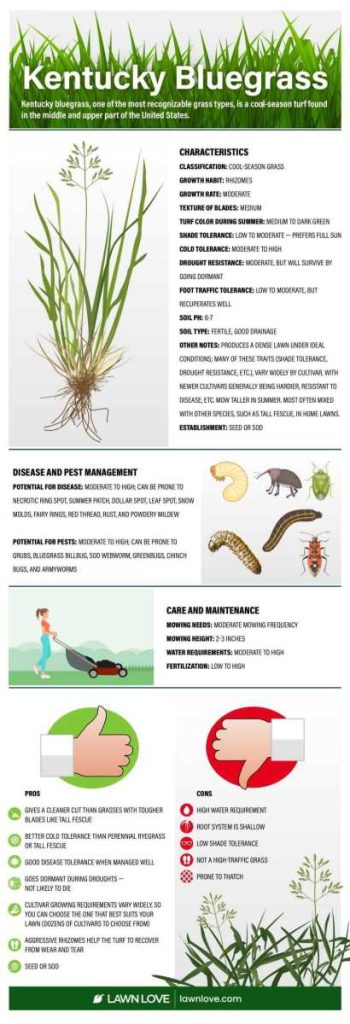
Kentucky Bluegrass Pros and Cons
Frequently Asked Questions
How long does it typically take for Kentucky bluegrass to establish a full, green lawn?
Kentucky bluegrass usually takes about 3 to 4 weeks to germinate after planting. However, it requires 60 to 90 days of consistent growth and maintenance to establish a dense and healthy lawn. Proper watering, fertilization, and mowing practices help speed up this process and ensure a lush, uniform appearance.
What factors influence the growth rate of Kentucky bluegrass?
The growth rate depends on several factors, including soil quality, climate, watering schedule, and fertilization. Cooler areas with moderate rainfall and well-drained soil promote faster establishment. Adequate sunlight and proper lawn care routines also play essential roles in the grass’s development timeline.
When can I expect to see my Kentucky bluegrass lawn ready for regular use?
You can typically expect your Kentucky bluegrass lawn to become suitable for regular use around 3 to 4 months after planting. During this period, the grass develops enough root and shoot systems to withstand foot traffic and weather conditions. Consistent maintenance supports a quicker recovery and full maturity.
Is it possible to speed up the growth process of Kentucky bluegrass?
While you cannot drastically shorten the natural growth cycle, following best practices such as proper watering, fertilizing at appropriate intervals, and mowing at recommended heights can promote healthier and faster growth. Ensuring optimal growing conditions encourages quicker lawn establishment.
How does seasonal timing affect Kentucky bluegrass growth duration?
Planting Kentucky bluegrass during early spring or early fall allows for faster establishment due to favorable temperatures and moisture levels. Growing conditions in these seasons typically lead to quicker germination and root development, reducing the overall time needed for a mature, well-established lawn.
Final Thoughts
The time it takes to grow Kentucky bluegrass varies based on soil conditions and care. Typically, it takes about 2 to 3 weeks for seeds to germinate under optimal conditions.
Once established, Kentucky bluegrass develops a dense, lush lawn within 6 to 12 months with proper watering and fertilization.
In conclusion, understanding how long to grow Kentucky bluegrass helps set realistic expectations. Generally, patience is key as it usually takes several months for the grass to fully mature and thrive.