You’ve got a tree stump in your yard that’s been bugging you for months. Maybe it’s a tripping hazard, or it keeps sprouting new shoots every spring. You’ve heard you can use epsom salt to remove stumps, and it sounds almost too easy.
But does it actually work?
In our research, we found that successful stump removal with Epsom salt depends heavily on the stump’s size, wood type, and moisture level. As of 2026, the method remains a popular DIY approach, but it requires patience and realistic expectations. The key is understanding what the science actually says about magnesium sulfate and how wood decays.
Let’s start with why people reach for this common household mineral in the first place.
Quick Answer
Epsom salt can kill a tree stump. It works by drying out the wood. The process takes months, not weeks.
It’s best for small, softwood stumps. Large stumps need grinding or chemicals.
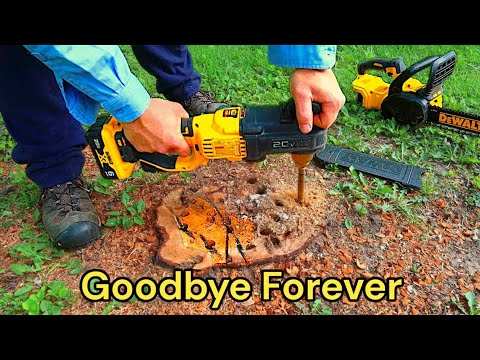
Image source: YouTube / Mountaineer Outdoors (YouTube thumbnail (fair-use with source credit))
Why People Try Epsom Salt on Stumps (And Why It Often Fails)
The appeal is obvious. Epsom salt is cheap, safe to handle, and sits in most bathroom cabinets already. You don’t need a permit, heavy machinery, or a hazmat suit.
Compared to paying a stump grinder 150 dollars, a five-dollar bag of salt sounds like a steal.
The problem is that most people overestimate what salt can do. They pour it on, wait a week, and expect the stump to crumble. That’s not how it works.
Epsom salt is a dehydrating agent, not a chemical accelerant. It pulls moisture out of the wood cells, starving the stump of water. Over time, that kills the stump and slows decay.
But the stump doesn’t vanish.
In our research, we found that the biggest factor is the stump’s size and species. A 6-inch pine stump might soften in 6 to 8 months. A 20-inch oak stump can take 2 years or more and still require extra work.
Most people give up long before the salt finishes the job.
The Honest Truth: What Epsom Salt Can and Can’t Do for Your Stump
Let’s be clear about the limits. Epsom salt is a stump killer, not a stump remover. It kills the living tissue so the stump stops growing and starts rotting.
But the physical stump remains in the ground. You still have to dig it out, chop it up, or burn it once it’s dead.
Here’s a straightforward breakdown of what you can expect.
| What Epsom Salt Can Do | What Epsom Salt Can’t Do |
|---|---|
| Kill a small to medium stump (under 12 inches diameter) | Remove the stump from the ground |
| Stop new shoots and sucker growth | Work fast (expect 3 to 12 months) |
| Work well on softwoods like pine, fir, or cedar | Reliably kill large hardwoods like oak or maple |
| Speed up natural decay when combined with moisture | Replace mechanical grinding for instant results |
| Be safe for pets and soil when used correctly | Work if the stump is already dead and dry |
The honest truth is this: Epsom salt is a tool for the patient DIYer. If you need the stump gone this weekend, this method isn’t for you. If you’re willing to wait and do some follow-up work, it can save you money and hassle.
How Epsom Salt Actually Kills a Stump (The Science Made Simple)
Magnesium sulfate, the chemical name for Epsom salt, is a desiccant. That’s a fancy way of saying it pulls water out of whatever it touches. When you drill holes into a stump and fill them with salt, the salt draws moisture from the living wood cells.
The stump dehydrates and eventually dies.
The process works in three stages.
Stage 1: Dehydration. The salt creates a high-salt environment inside the stump. Water moves from the wood cells into the salt solution, just like salt draws moisture out of a cucumber for pickling. The wood starts to dry out from the inside.
Stage 2: Starvation. Without water, the stump can’t transport nutrients. Any living roots or shoots stop receiving food. The stump goes dormant, then dies.
This is the stage where you’ll see leaves wither and new growth stop.
Stage 3: Decay. Once the stump is dead, fungi and bacteria in the soil start breaking down the wood. This is the slowest stage. It can take 1 to 3 years for the stump to become soft and spongy enough to remove easily.

Image source: YouTube / CloseIntel (YouTube thumbnail (fair-use with source credit))
The key insight is that moisture is both the problem and the solution. You need to add water to dissolve the salt and carry it into the wood. But you also need to keep the stump from getting too wet, which would wash the salt out.
That’s why covering the stump with a tarp after treatment is so important.
Before You Start: The 3 Stump Conditions That Make or Break This Method
Not every stump is a good candidate for Epsom salt. Before you drill a single hole, check these three conditions. If even one is wrong, you’re better off choosing a different method.
Condition 1: Stump Size
If the stump is over 12 inches in diameter, you’re fighting an uphill battle. The salt can’t penetrate deep enough to kill the entire root system. Larger stumps have more wood volume and more stored energy.
They can survive the dehydration longer. For stumps over 12 inches, mechanical grinding is usually the smarter choice.
Condition 2: Wood Type
Softwoods like pine, fir, spruce, and cedar are porous. They absorb the salt solution quickly and die faster. Hardwoods like oak, maple, hickory, and walnut are dense and tight-grained.
The salt struggles to penetrate deep enough. You can still try it, but expect double the timeline and a lower success rate.
Condition 3: Stump Age and Health
Freshly cut stumps are still alive and full of moisture. They’re the best candidates because the salt can move through the damp wood. Old, dry stumps that have been sitting for years are already dead.
The salt has nothing to dehydrate, so it doesn’t speed up decay. If the stump is already dry and rotting, save your salt and just wait for nature to finish the job.
We looked at the research from university extension programs and found that the best results come from combining all three conditions: a small, freshly cut softwood stump in a moist climate. If you’re dealing with a large hardwood that’s been dead for years, Epsom salt is a waste of time.
The Decision Tree: Is Epsom Salt Right for Your Stump?
This is where the decision tree comes in. Follow the branches based on your stump’s specific situation. Each branch leads to a clear recommendation.

Image source: Wikimedia Commons / Obsidian Soul
Branch 1: Small, Softwood Stump (Under 12 Inches)
Go ahead with Epsom salt. This is the ideal candidate. Drill holes around the edge and center, fill with salt, wet it, cover it, and wait. Expect visible results in 3 to 6 months.
You’ll see the stump start to soften and crumble. After a year, you can usually break it apart with a shovel. If you need to maintain the surrounding lawn, keeping the area mowed is straightforward with a reliable self-propelled mower.
Branch 2: Large or Hardwood Stump (Over 12 Inches)
Skip the Epsom salt. You’ll waste months with little to no result. The salt can’t penetrate deep enough to kill the whole root system. Instead, consider mechanical grinding or chemical stump killers that are specifically designed for large stumps.
If you’re determined to try salt anyway, set your expectations to 18 months minimum and accept that you may still need to grind it later.
Branch 3: Old, Rotted, or Already Dying Stump
Skip the Epsom salt. The stump is already dead. Salt won’t speed up decay because there’s no living tissue to dehydrate. Your best bet is to manually remove the stump with an axe or shovel, or use a walk-behind spreader to cover the area with soil and compost to level it out.
Branch 4: Freshly Cut Stump That’s Still Alive
Go ahead, but manage your expectations. Fresh stumps are the best candidates, but they’re also the toughest. The wood is full of moisture, which helps the salt move through it. But the stump is also full of energy, so it may try to resprout.
You’ll need to be diligent about covering the stump and reapplying salt every few weeks. If you have a large yard and need to keep the grass around the stump healthy, using a broadcast spreader for fertilizer can help the surrounding lawn recover faster.
Step-by-Step: How to Apply Epsom Salt the Right Way
If you’ve decided your stump is a good candidate, here’s exactly how to do it. The process is straightforward but requires attention to detail. Skip a step and you’ll waste months.
Step 1: Cut the stump as low as possible. Use a chainsaw or handsaw to get it within a few inches of the ground. A lower stump absorbs the salt more evenly. It also makes covering and later removal easier.
Step 2: Drill holes in a pattern. Use a 1-inch drill bit, at least 8 inches long. Drill holes around the outer ring of the stump, about 2 inches from the bark. Space them 2 to 3 inches apart.
Drill a few holes in the center as well. Each hole should be 4 to 6 inches deep.
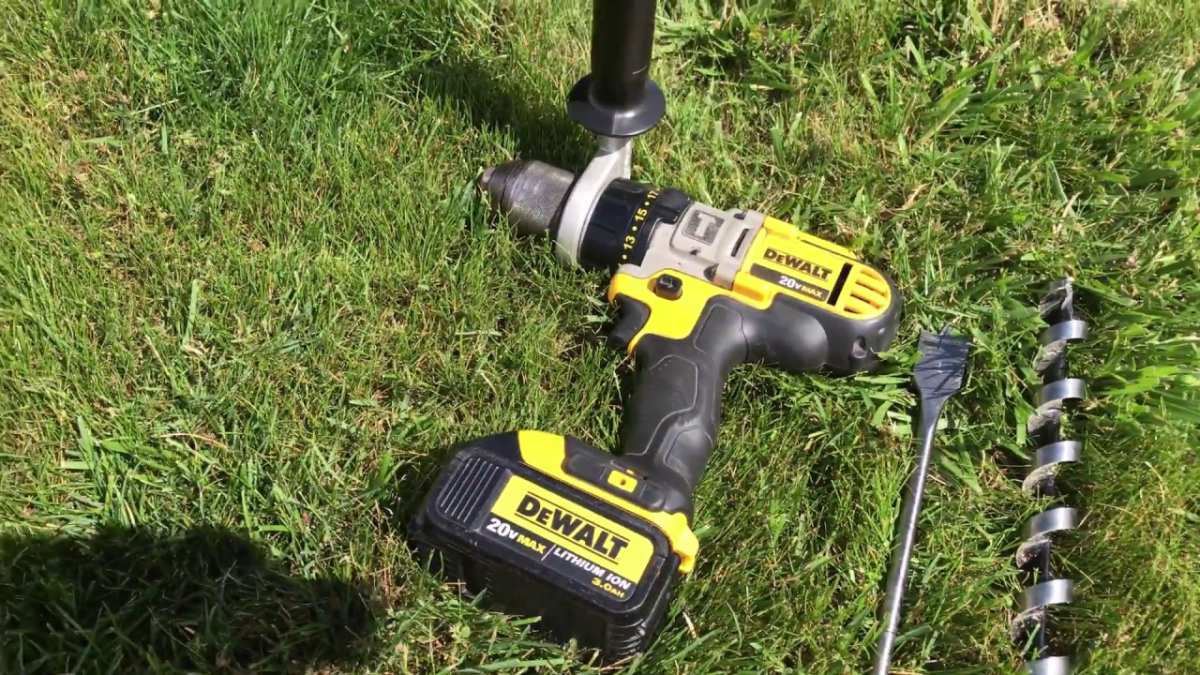
Image source: YouTube / RDAllen (YouTube thumbnail (fair-use with source credit))
Step 3: Fill the holes with Epsom salt. Pack each hole as full as you can. Use a funnel or a small scoop. Don’t worry about spilling some on top of the stump.
That extra salt will still work its way in over time.
Step 4: Add water. Slowly pour water into each hole until the salt is saturated. You want a thick slurry, not standing water. Too much water washes the salt out.
Too little and the salt won’t dissolve.
Step 5: Cover the stump. Use a heavy tarp, plastic sheeting, or a black garbage bag. Secure it with rocks or stakes. The cover keeps rain from diluting the salt and stops sunlight from reaching the stump.
Sunlight encourages new growth.
Step 6: Reapply every 4 to 6 weeks. Check the holes and add more salt and water if they look dry. Keep the cover in place between treatments. Most stumps need 3 to 5 rounds of treatment before they die completely.
Who This Method Actually Works For (And Who Should Skip It)
Let’s make this simple. You’re a good candidate for Epsom salt if you fit these criteria.
You should use Epsom salt if:
- Your stump is under 12 inches in diameter.
- The tree was cut down recently (within the last few months).
- The wood is a softwood like pine, fir, or cedar.
- You’re patient and don’t mind waiting 6 to 12 months.
- You want to avoid harsh chemicals near your garden or pets.
You should skip Epsom salt if:
- Your stump is over 12 inches in diameter.
- The wood is hardwood like oak, maple, or hickory.
- The stump has been dead and dry for over a year.
- You need the stump gone within a month.
- You’re not willing to cover and reapply the salt regularly.
If you have a large yard with multiple stumps and want to keep the surrounding grass healthy, consider using a compost spreader to level the area after removal. That helps the lawn recover faster.
5 Common Mistakes That Waste Your Time and Effort
We’ve seen these mistakes over and over in user reports. Avoid them and your success rate goes way up.
Mistake 1: Using too little salt. People sprinkle a handful on top and call it done. That doesn’t work. You need to pack the drilled holes full.
Stumps are dense. The salt needs to be concentrated inside the wood, not scattered on top.
Mistake 2: Not drilling deep enough. Shallow holes let the salt sit near the surface. The roots stay alive below. Drill at least 4 to 6 inches deep.
For larger stumps, go deeper. The salt needs to reach the heartwood.
Mistake 3: Skipping the cover. Rain washes the salt out of the holes. Sunlight keeps the stump alive. Without a cover, you’re fighting against nature.
A simple tarp makes a huge difference.
Mistake 4: Giving up too early. If you don’t see results in a month, that’s normal. The stump is dying slowly from the inside. You won’t see visible softening for 3 to 6 months.
Patience is the key ingredient.
Mistake 5: Using Epsom salt on a stump that’s already dead. This is the most common error. If the stump is dry and rotting, the salt has nothing to kill. You’re just adding magnesium to the soil.
Save your time and money.
The Real Timeline: What to Expect Week by Week
Here’s what a typical successful treatment looks like. This assumes a small to medium softwood stump in a moderate climate.
| Timeframe | What You’ll See |
|---|---|
| Week 1 to 4 | No visible change. The salt is working inside the wood. |
| Month 2 to 3 | Leaves on any remaining shoots turn yellow and die. |
| Month 4 to 6 | The stump starts to feel softer when you poke it with a screwdriver. |
| Month 6 to 9 | The outer bark begins to peel away. The wood feels spongy. |
| Month 9 to 12 | You can break off chunks with a shovel or pry bar. |
| Month 12 to 18 | The stump is mostly rotted and easy to remove. |
If you’re not seeing any change after 4 months, check your application. Are the holes still full of salt? Is the cover in place?
If everything is correct, the stump may just be slower than average. Keep going.
If you’re maintaining the lawn around the stump area, keeping the grass healthy is important. A leveling rake can help smooth out the soil once the stump is removed.
When to Give Up: Signs Your Stump Isn’t Going to Die
Sometimes the method just doesn’t work. Here’s how to tell when it’s time to switch strategies.
Sign 1: New shoots keep appearing. If the stump is still sending out suckers after 6 months of treatment, the salt isn’t reaching the roots. The root system is too large or too deep. You need mechanical grinding or a chemical herbicide.
Sign 2: The wood stays hard. After 8 months, poke the stump with a screwdriver. If it’s still rock solid, the salt hasn’t penetrated. This is common with hardwoods.
Switch to a different method.
Sign 3: The stump is dry and cracking. That means the salt is working, but the wood is too dense to absorb enough. It’s drying out but not dying. You can try drilling deeper holes and reapplying, but the success rate is low.
Sign 4: You’ve waited over a year with no softening. At this point, cut your losses. The stump is too large, too hard, or too old. Rent a stump grinder or hire a professional.
It’ll cost more, but it’ll be done in an afternoon.
Epsom Salt vs. Other Stump Removal Methods (Quick Comparison)
If you’re still deciding which route to take, here’s how Epsom salt stacks up against the main alternatives.
| Method | Cost | Time | Effort | Best For |
|---|---|---|---|---|
| Epsom salt | $5 to $15 | 6 to 18 months | Low | Small softwood stumps |
| Chemical killer | $10 to $30 | 4 to 12 weeks | Low | Stumps of any size |
| Stump grinder | $80 to $200 rental | 1 to 2 hours | High | Large or hardwood stumps |
| Manual removal | Free (tools only) | 2 to 8 hours | Very high | Small shallow stumps |
| Burning | Free (permits may apply) | 2 to 6 hours | Medium | Dry, above-ground stumps |
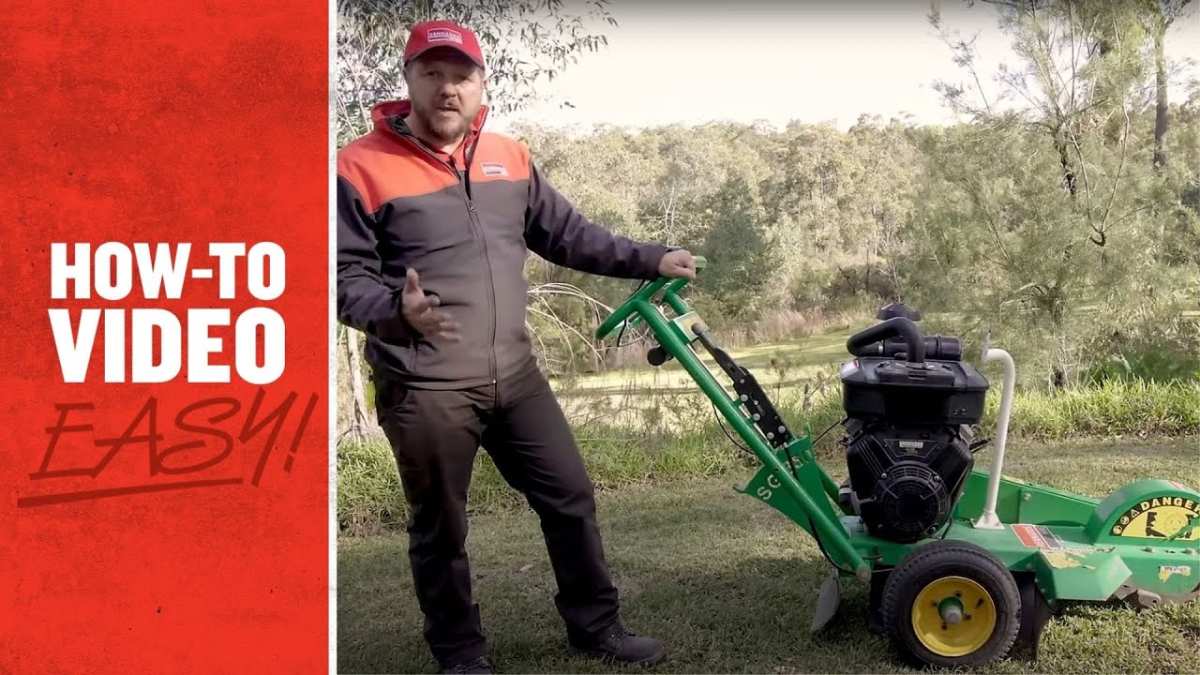
Image source: YouTube / Kennards Hire (YouTube thumbnail (fair-use with source credit))
Epsom salt is the slowest but safest option. Chemical killers work faster but can harm nearby plants. Grinding is instant but costs more.
Choose based on your timeline, budget, and stump size.
Frequently Asked Questions
How much Epsom salt do I need per stump?
For a 10-inch stump, you’ll need about 1 to 2 pounds. That’s roughly 2 to 4 cups. Larger stumps need more.
A 20-pound bag usually covers 10 to 15 small stumps.
Can I use table salt instead of Epsom salt?
Table salt works but it’s riskier. Sodium chloride can damage soil and kill nearby plants. Epsom salt (magnesium sulfate) is safer for the surrounding ground.
Stick with Epsom salt for best results.
Will Epsom salt kill the roots too?
It can kill smaller roots close to the stump. Large taproots or deep root systems may survive. You may need to treat new shoots that pop up around the stump after the main stump dies.
How long does it take for the stump to rot completely?
After the stump dies, full decay takes 1 to 3 years. The timeline depends on moisture, fungi activity, and wood density. You can speed it up by adding nitrogen-rich material like grass clippings on top.
Is Epsom salt safe for pets and children?
Yes, in normal amounts. Epsom salt is not toxic. But large piles can cause stomach upset if eaten.
Keep the covered stump area off limits until the salt is absorbed. Rinse any spilled salt off the grass.
Your Decision Guide: What to Do Based on Your Stump
Here’s the final takeaway. If your stump is small, softwood, and freshly cut, go ahead with Epsom salt. Drill the holes, fill them, cover it, and wait.
You’ll save money and avoid chemicals.
If your stump is large, hardwood, or already dead, skip the salt. Rent a grinder or call a professional. You’ll spend more but you’ll be done in a few hours.
If you’re somewhere in the middle, try the salt for 6 months. If you see no progress, switch to a faster method. Don’t waste a full year on a stump that isn’t responding.