When someone asks "does zeta cypermethrin kill grubs," the honest answer isn't a simple yes or no. Zeta-cypermethrin is a synthetic pyrethroid insecticide, and it absolutely can kill certain soil-dwelling larvae under the right conditions. But whether it's the right tool depends on what species you're dealing with, how big those grubs are, and when you apply it.
The real truth is messier than most lawn care articles admit. According to manufacturer specifications and university extension research, zeta-cypermethrin (the active ingredient in products like Mustang Maxx) has a narrow window of effectiveness against white grubs, and a lot of homeowners waste money using it at the wrong time or on the wrong species. Let's break down exactly where this product works, where it fails, and what you should use instead if the situation calls for it.

Image source: Wikimedia Commons / Сарапулов (CC BY)
Quick Answer
Zeta-cypermethrin does kill certain white grubs, but only small first instar larvae. It works poorly against large or second- to third-instar grubs. Timing matters more than the product itself.
Most turf professionals reserve it as a supplemental tool, not a primary grub management solution.
Does Zeta-Cypermethrin Actually Kill Grubs? The Honest Answer
Yes, zeta-cypermethrin kills grubs. The critical part no one wants to hear is that it only works on specific species at a very specific life stage, and even then it's inconsistent for grub management. Zeta-cypermethrin is an enriched isomer formulation of cypermethrin.
It delivers the same pest-killing punch at roughly half the application rate. That efficiency is great for surface-feeding insects and adult beetles, but it doesn't translate as reliably to larvae buried in soil and thatch.
Here's why. Grubs live below the surface, protected by a thatch layer and packed soil, while zeta-cypermethrin binds tightly to organic matter and degrades rapidly under UV light. University of Kentucky extension research on pyrethroid performance in turf shows that most pyrestroids (especially Type II pyrethroids like cypermethrin) fail to deliver consistent control of third-instar grubs.
The chemical simply doesn't move down into the root zone where established grubs feed.
There's another layer that matters. Zeta-cypermethrin is heavily relied on for surface-feeding pests like annual bluegrass weevil adults, billbugs, and armyworms, where it excels. Many lawn care operators reach for it on grub calls because it's already in the sprayer.
The results vary and often disappoint the homeowner who expected grub control.
What Zeta-Cypermethrin Is and How It Works on Soil Pests
Zeta-cypermethrin belongs to the Type II pyrethroid class. It works by disrupting sodium channels in an insect's nervous system, causing paralysis and death. This is the same mode of action as the original cypermethrin, but zeta-cypermethrin contains a higher concentration of the biologically active enantiomers (specifically the cis-isomers).
FMC Corporation developed this formulation to deliver equivalent or better knockdown at reduced application rates compared to older cypermethrin products.
The chemistry tells an important story for grub control. Zeta-cypermethrin has extremely low water solubility and a high soil binding coefficient. That means it sticks to organic matter in the top half-inch of soil and doesn't readily move downward with irrigation.
When you're trying to reach grubs feeding two to three inches below the surface, the product never makes it to the target in lethal concentrations.
Here's the core mechanism in simple terms:
| Property | Effect on Grub Control |
|---|---|
| Low water solubility | Does not leach down to deep-feeding grubs |
| High soil binding (Koc ~50,000+) | Traps it in thatch and topsoil |
| Rapid photodegradation | Breaks down in sunlight within hours to days |
| Contact and stomach tox. | Must be physically reached by the grub or ingested |
| Neurotoxic mode of action | Works best on small, thin-skinned larvae |
The practical takeaway is straightforward. Zeta-cypermethrin sits where you put it. If it stays near the surface, it kills surface pests well.
If your grubs are deeper, they'll survive.
Which Grub Species It Hits Hard — and Which Ones It Doesn't
Not all grubs respond the same way. The "white grub complex" covers dozens of scarab beetle species across the United States, each with different body sizes, feeding depths, and cuticle thicknesses. Those biological differences directly affect whether zeta-cypermethrin can deliver a lethal dose.
Species most susceptible (small, shallow-feeding, early instar):
- Black turfgrass ataenius (Ataenius spretulus), tiny grubs, shallow feeders
- Annual bluegrass weevil larvae (technically a weevil, not a scarab, but similar treatment window)
- Early-instar Japanese beetle (Popillia japonica) when applied before mid-August in northern states
Species where it fails to deliver consistent control:
- Third-instar European chafer (Amphimallon majale)
- May / June beetle larvae (Phyllophaga spp.) regardless of instar
- Green June beetle grubs (Cotinis nitida), larger bodies, deeper burrows
- Any white grub species past the second instar
Penn State Extension's grub management guidelines note that pyrethroid insecticides are generally classified as having poor to fair efficacy against established white grub populations. The recommendation consistently points to neonicotinoids like imidacloprid for preventive applications, and diamides like chlorantraniliprole or organophosphates like trichlorfon for curative treatments.
If you're dealing with Japanese beetles or black turfgrass ataenius in their earliest larval stages, zeta-cypermethrin can suppress numbers. But for the large, C-shaped curled grubs you're finding in October or the following spring, don't expect this chemical to rescue your lawn.

Image source: Wikimedia Commons / Perissinotto R, Šípek P, Ball J (CC BY)
The Timing Problem Most People Get Wrong
Timing is the single most important factor in grub management, and it's where most people fail with zeta-cypermethrin. Adult Japanese beetles start laying eggs in early to mid-summer. Those eggs hatch into tiny first-instar grubs within two to three weeks.
The grubs are smallest, most vulnerable, and closest to the soil surface during August through mid-September in northern states, and the window can run even earlier in the South.
Zeta-cypermethrin needs to be applied when grubs are in that early instar stage. If you wait until October or, worse, the following spring when the grubs are fully grown, you'll be spraying chemistry that physically cannot reach them in lethal concentrations. The mature grubs have a thicker cuticle, greater body mass, and are feeding too deep for a surface-active pyrethroid.
Here's the practical timeline that determines whether this product works for you:
| Timing | Grub Stage | Zeta-Cypermethrin Performance |
|---|---|---|
| Late June – July | Adults, egg-laying | Excellent against adult beetles if present |
| August – mid-September | First instar grubs (small) | Variable suppression, shallow application critical |
| Late September – October | Second instar transitioning to third | Declining effectiveness |
| November – following April | Large third instar, deep in soil | Fails to control |
University of Missouri extension guidance recommends that pyrethroids be applied to soil only when grubs are still small and actively feeding near the surface. Rutgers turf research has similarly documented that late-season pyrethroid applications show significantly lower grub mortality compared to early-season diamide or neonicotinoid applications.
The soil temperature metric matters too. White grubs move deeper into the soil profile as temperatures drop past roughly 50°F at a four-inch depth. If you're treating in late fall after the grubs have already migrated below the treatment zone, you're simply not going to get consistent results.
How to Apply Zeta-Cypermethrin for Grub Control (Step by Step)
If you've determined your grub species and timing align with the narrow window where this product can work, proper application technique becomes the deciding factor. Going through the motions without attention to detail will waste your effort.
Here's the sequence that gives you the best chance of success:
Confirm species and grub size. Dig several one-foot-square sections to a depth of three inches near damaged areas. Count the grubs per square foot. If you're finding large C-shaped larvae over half an inch long, stop here and switch to a different product.
Remove excess thatch. Thatch deeper than half inch acts like a sponge and traps zeta-cypermethrin before it reaches the soil. Core aerate or dethatch before application.
Measure treated area square footage. Calculate precisely. The labeled rate for Mustang Maxx against grubs is 2.2 to 4.3 fluid ounces per 1,000 square feet in enough water to penetrate the soil profile.
Use sufficient water volume. Apply in two to five gallons of water carrier per 1,000 square feet. The water pushes the active ingredient down through the thatch and into the root zone. Low-volume spot sprays rarely deliver enough penetration.
Calibrate your sprayer. Over-applying wastes product and increases environmental risk. Under-applying delivers sublethal concentrations. Check nozzle output before you fill the tank.
Water in immediately after application. Irrigate with a quarter to half inch of water post-treatment. This is critical. Without the irrigation step, zeta-cypermethrin degrades on the surface before grubs encounter it. The post-application watering moves the chemical into the soil zone where early-instar grubs feed.
Avoid application to blooming weeds or flowering ground covers. Pyrethroids are highly toxic to bees and other pollinators on contact.
Note the re-entry interval and safety window. Keep people and pets off treated turf until the spray has dried. Signage is required for commercial applications.

Image source: Bing (Web (fair-use with source credit))
What the University Trial Data Actually Shows
University extension trial results paint a consistent picture, and it's not flattering for zeta-cypermethrin as a primary grub tool. The data across multiple institutions shows relatively low efficacy percentages for pyrethroids against third-instar grubs compared to other product categories.
Michigan State University field trials have documented that pyrethoid treatments (cyfluthrin, bifenthrin, zeta-cypermethrin) typically show significantly lower control of third-instar grubs than chlorantraniliprole or trichlorfon. The treatment window matters enormously. Early-stage grub applications show better suppression than late-season treatments.
A review of published turf insecticide efficacy data reveals performance based on product class:
| Product Category | Typical Third-Instar Grub Control (Curative) | Best Use Case |
|---|---|---|
| Chlorantraniliprene (Acelepryn) | High (preventive), Moderate-high | Preventive, early curative |
| Imidacloprid (Merit) | High (preventive), Moderate (curative) | Preventive applications mid-summer |
| Trichlorfon (Dylox) | High (curative), short residual | Knockdown of established grubs |
| Zeta-cypermethrin | Low | Surface-feeding insects, adult beetles, early instars in narrow window |
| Carbaryl (Sevin) | Moderate | General turf use |
The pattern is clear across multiple seasons and locations. If you're looking at a curative situation with established third-instar grubs, zeta-cypermethrin is going underperform. It's simply not the chemical class that soil insect management programs rely on for that job.
Zeta-Cypermethrin vs. Other Grub Products: Where It Fits
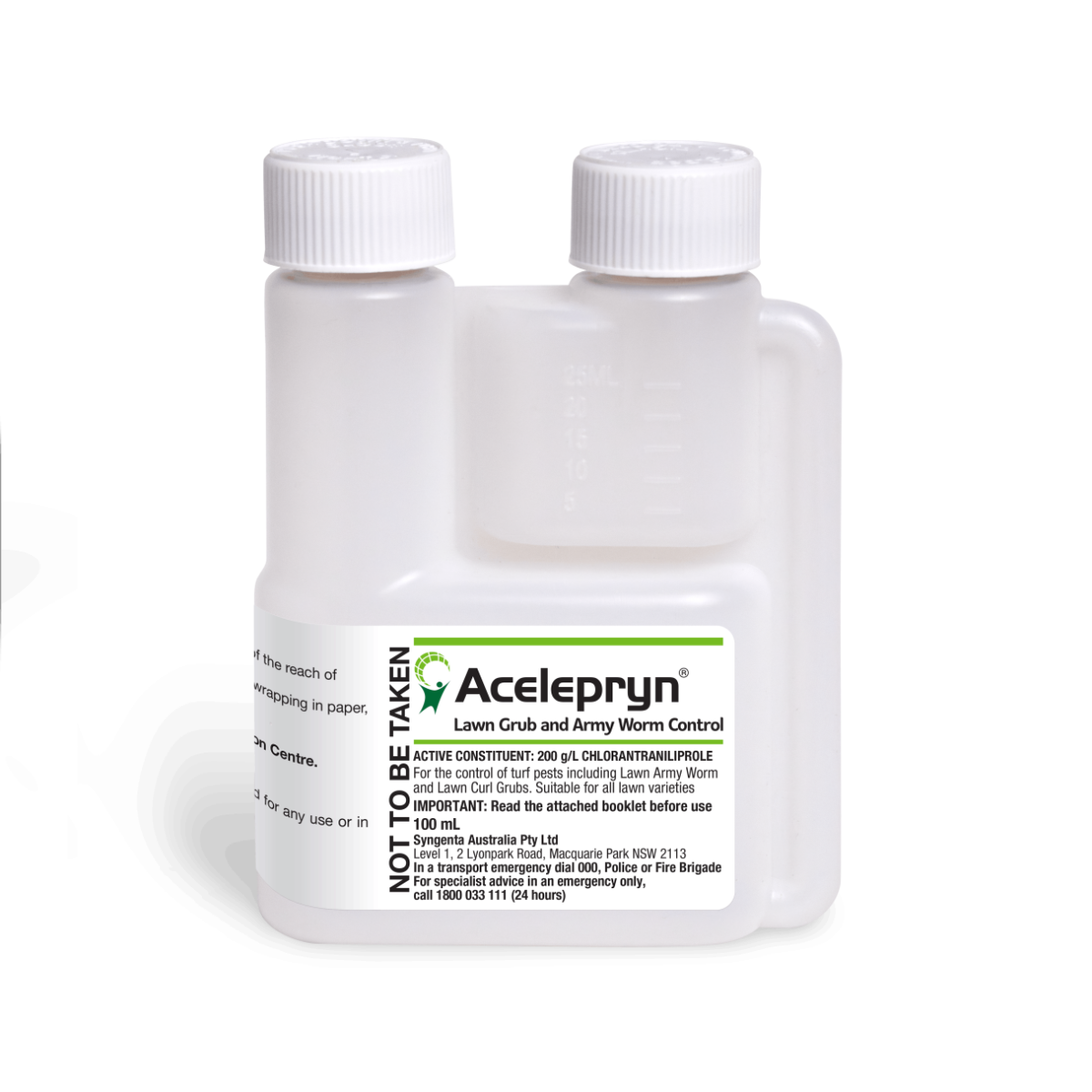
Image source: Bing (Web (fair-use with source credit))
Stacking zeta-cypermethrin against other options helps clarify when, if ever, to use it. Each product class has a distinct role. Confusing those roles leads to wasted applications and frustrated homeowners managing white grub situations.
Zeta-cypermethrin (Mustang Maxx, Respect):
- Best for surface-feeding insects and adult beetles. Some suppression of early-instars if timing is perfect. Fast knockdown. Poor residual past a few days.
Chlorantraniliprene (Acelepryn):
- Full-season preventive protection against all white grub species. Very low toxicity to bees. Slower acting but excellent long-term management. Often the turf manager's first choice for scheduled preventive programs.
Imidacloprid (Merit):
- Standard preventive chemistry for over two decades. Applied mid-summer before grubs establish. Systemic properties mean it contacts grubs feeding on treated roots. Restricted near blooming plants and pollinator habitat.
Trichlorfon (Dylox):
- The go-to curative option for active grub infestations. Kills within 24 to 72 hours. Short residual means it needs precise application timing. Strongly effective on third-instar grubs.
Heterorhabditis bacteriophora nematodes (beneficial nematodes):
- A biological option. Needs warmth and moisture. Multiple applications sometimes required. Zero chemical residue. Challenging application logistics for large properties.
The honest assessment based on compiled performance data and manufacturer documentation: zeta-cypermethrin sits at the bottom of the list for dedicated grub management. Its strength is elsewhere.
When Zeta-Cypermethrin Is the Right Call for Your Lawn
There are scenarios where this product makes strategic sense, despite its limitations. It's not about whether zeta-cypermethrin kills grubs in general. It's about whether it fits your specific situation.
Cases where it aligns with standard IPM practices:
You're maintaining a mixed insect management program and already applying zeta-cypermethrin for annual bluegrass weevil, billbugs, or armyworm pressure. First-instar white grubs may receive incidental control.
Your scouting shows small, early-stage black turfgrass ataenius larvae (tiny, shallow-feeders) alongside the target pest you're already treating.
An adult beetle flight is actively depositing eggs, and you're applying a barrier treatment to reduce egg-laying and kill newly hatched larvae before they burrow deep.
Budget constraints mean you have one application slot, and you have surface-feeding pests plus an early-stage grub flush. Zeta-cypermethrin addresses the broadest spectrum.
Cases where you should look elsewhere:
You have a history of heavy Japanese beetle or European chafer damage.
You're finding more than eight to ten grubs per square foot in fall sampling.
Grubs are already one inch or more in length by the time you're making the call.
Your area has pollinator plantings, ponds, or waterways near the treatment zone.
You need full-season, worry-free prevention without monitoring chore complication.
In those situations, switching to chlorantraniliprene or a properly timed imidacloprid application will deliver more reliable results. Trichlorfon is the fallback for curative rescue if the timing window for preventive options has already closed.
)*
Common Mistakes That Waste Your Money and Kill Your Results
The most frequent error is treating grub problems with zeta-cypermethrin too late in the season. People notice damage in October or the following spring and call a professional. By that point the grubs are large and deep in the soil.
No amount of pyrethroid will salvage the situation at that stage.
Skipping the irrigation step comes in as the second most common failure mode. Zeta-cypermethrin left on the thatch surface breaks down quickly without soil contact. That degradation is fast under UV.
If you spray and walk away without watering in, you've wasted almost the entire application.
Overlooking species identification is another critical pitfall. Treating Phyllophaga June beetle grubs with zeta-cypermethrin is a losing proposition at virtually any time. Those grubs are large, robust, and deep-feeding by nature.
The species list earlier in this article flags where this product falls short.
Finally, many applicators assume a standard spray volume will penetrate the soil profile. One gallon per thousand square feet barely wets the thatch. Without the correct carrier volume, that quarter-inch irrigation afterward can't move the chemical anywhere useful.
Penn State's turf management bulletins consistently stress that irrigation after pyrethroid application is non-negotiable for any level of soil-pest activity.
The bottom line ties it together: zeta-cypermethrin kills grubs only when conditions line up perfectly. Late-season treatments on large grubs fail almost every time. Early prevention, correct species, precise application, and immediate irrigation open the narrow path to success.
In every other scenario, reach for something designed for the job.
Safety, Legal, and Environmental Considerations You Can't Ignore
Zeta-cypermethrin carries real risks that deserve attention before you spray. This is a broad-spectrum insecticide. It kills beneficial insects just as readily as pests.
Ground beetles, parasitoid wasps, and predatory mites all take a hit when pyrethroids blanket a turf area.
Pollinator toxicity is serious. The EPAclassifies zeta-cypermethrin as highly toxic to bees on contact. Apply only when blooming weeds and clover are mowed or absent from the treatment zone.
Many states have specific pollinator protection language on pesticide labels. You're required to follow it.
Aquatic toxicity matters if you're near water. At parts-per-billion levels, zeta-cypermethrin is lethal to fish and aquatic invertebrates. Keep applications away from ponds, streams, and storm drains.
Runoff after heavy irrigation can carry residues off-site. Several Midwestern states restrict aerial or broadcast pyrethroid use near waterways, so check your state regulations before applying.
Some states classify Mustang Maxx as a restricted-use product. That's Wisconsin, for example, where the label carries EPA Restricted Use Pesticide designation. You may need a commercial pesticide applicator license to purchase and apply.
Check your state's pesticide regulatory agency website for the current classification as of 2026.
Expert Tips from Turf Professionals Who Use This Stuff
Experienced superintendents and lawn care operators know the limits of this product. Their advice reflects actual field performance, not label claims. Here's what repeatedly comes up in professional communications and industry trade publications.
- Scout before treating. Dig, identify species, and count grubs. A calendar-based spray without scouting wastes product and misses the real problem.
- Use zeta-cypermethrin for what it does best. Surface pests, adult beetles, and short-residual knockdown. Leave grub-specific products for the grub program.
- Alternate modes of action across the season. This reduces resistance pressure in surface-feeding insects like annual bluegrass weevil, where pyrethroids still play a major role.
- Tank-mixing with a soil surfactant can improve penetration through heavy thatch. The product alone will bind to organic matter without a surfactant carrier.
- Document every application. Species present, grub size, soil temperature, product rate, water volume, irrigation timing. Your records show next year what actually worked and what didn't.
Real Scenarios: What Works, What Doesn't, and Why
Consider what typically plays out with early-season insect applications. If you're applying zeta-cypermethrin in early August targeting adult billbugs, and scouting reveals six to eight small Japanese beetle grubs per square foot nearby, you may see some suppression. That's the best-case scenario: the timing matches early instar larvae and the surface application reaches them during routine irrigation.
But the grub control is incidental, not guaranteed.
Alternatively, treating a backyard in early October after the homeowner notices skunks digging is almost always ineffective. The grubs are large, deep, and feeding below the treatment zone. Switching to trichlorfon usually produces much better results.
A common comparison case involves a golf course on a routine preventive calendar. Applying zeta-cypermethrin for adult annual bluegrass weevil control on putting greens during spring egg-laying failed to prevent the larvae from damaging green surfaces once they hatched. Following that, courses switched to chlorantraniliprene for their preventive program, and the following year's issue resolved completely.
The lesson reinforced by this scenario is that adult control does not equal larval control. Products and their functions have specific roles.
Frequently Asked Questions
Can I use Mustang Maxx instead of GrubEx?
No. Mustang Maxx contains zeta-cypermethrin, while GrubEx contains chlorantraniliprene. Those are completely different chemical classes with different strengths.
Chlorantraniliprene is the better dedicated grub preventive by a wide margin.
Will zeta-cypermethrin kill grubs in my lawn?
It may suppress first-instar larvae of certain species if applied perfectly. It will not reliably control established white grub populations. For consistent results, manage with chlorantraniliprene, imidacloprid, or trichlorfon as discussed earlier based on timing and grub stage.
How soon after applying zeta-cypermethrin do grubs die?
On susceptible surface-contacting insects, death occurs within hours. That rapid knockdown doesn't extend to grubs in the soil profile because the product never reaches them in the required concentration.
Is zeta-cypermethrin safe for pets once dried?
The EPA considers zeta-cypermethrin low in mammalian toxicity once the spray has dried. Keep dogs and cats off treated turf until dry, usually one to two hours under normal conditions. The real danger is to fish, bees, and aquatic organisms, not pets, though ingestion of treated grass should still be avoided.
Does zeta-cypermethrin work better than bifenthrin for grubs?
Both are pyrethroids with similar limitations. Neither delivers reliable grub control. Bifenthrin has slightly longer soil residual but shares the same penetration problems.
Is zeta-cypermethrin restricted in certain states?
Yes. Mustang Maxx carries restricted-use classification in Wisconsin and potentially other states. Always review your state's pesticide regulatory agency guidance before purchasing.
The Bottom Line: Should You Use It?
Here's the honest answer you came here with, now that you have the full context. Zeta-cypermethrin does kill grubs in a narrow set of conditions that rarely align with typical grub management decisions. If that sounds like your situation, you're in the minority.
For most people asking this question, zeta-cypermethrin is not the right tool for grub control.
Use it for what it does well: surface-feeding insects, adult beetles, and mixed-pest management where grubs are secondary. For dedicated grub prevention, reach for chlorantraniliprene or imidaclopride. For curative rescue of an active infestation, trichlorfon remains the fastest-acting solution.
The smart approach combines scouting, species identification, and matching chemistry to the problem. Once you do that, you stop wasting money on products that can't reach the target and start getting the results you're paying for.