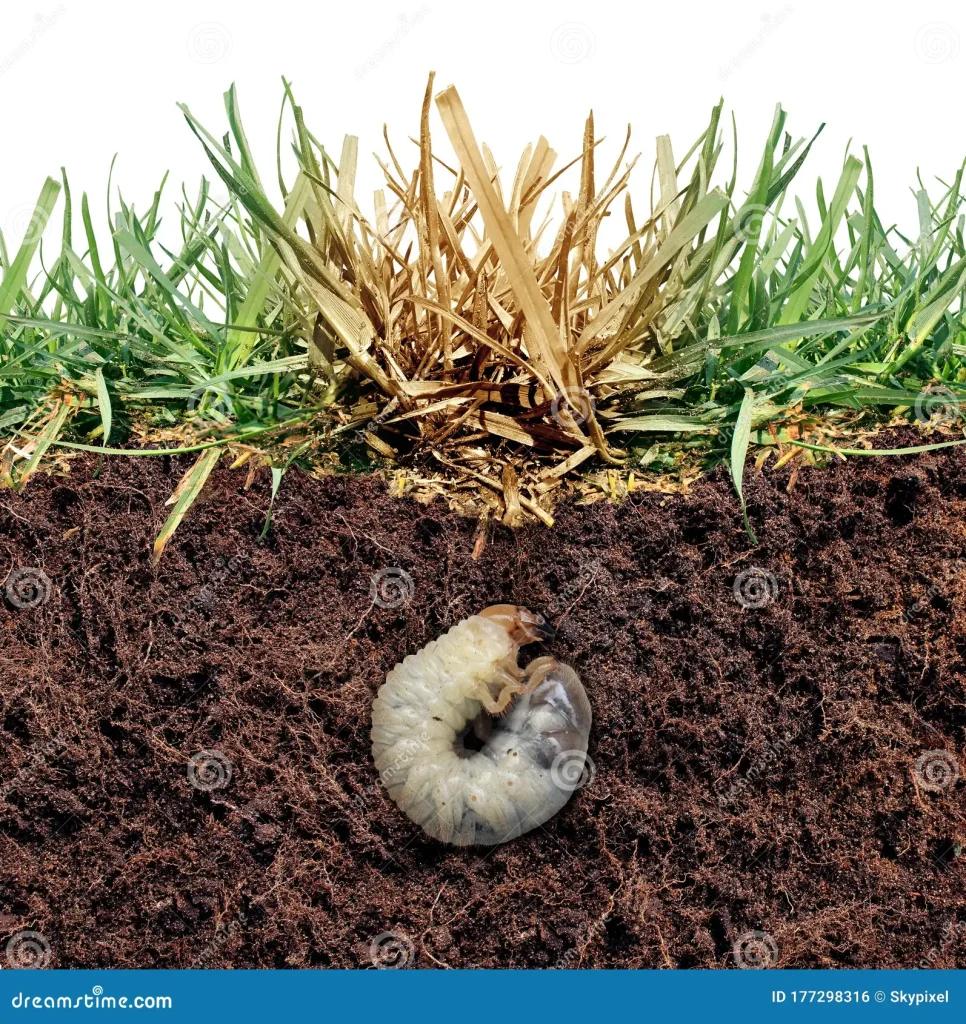
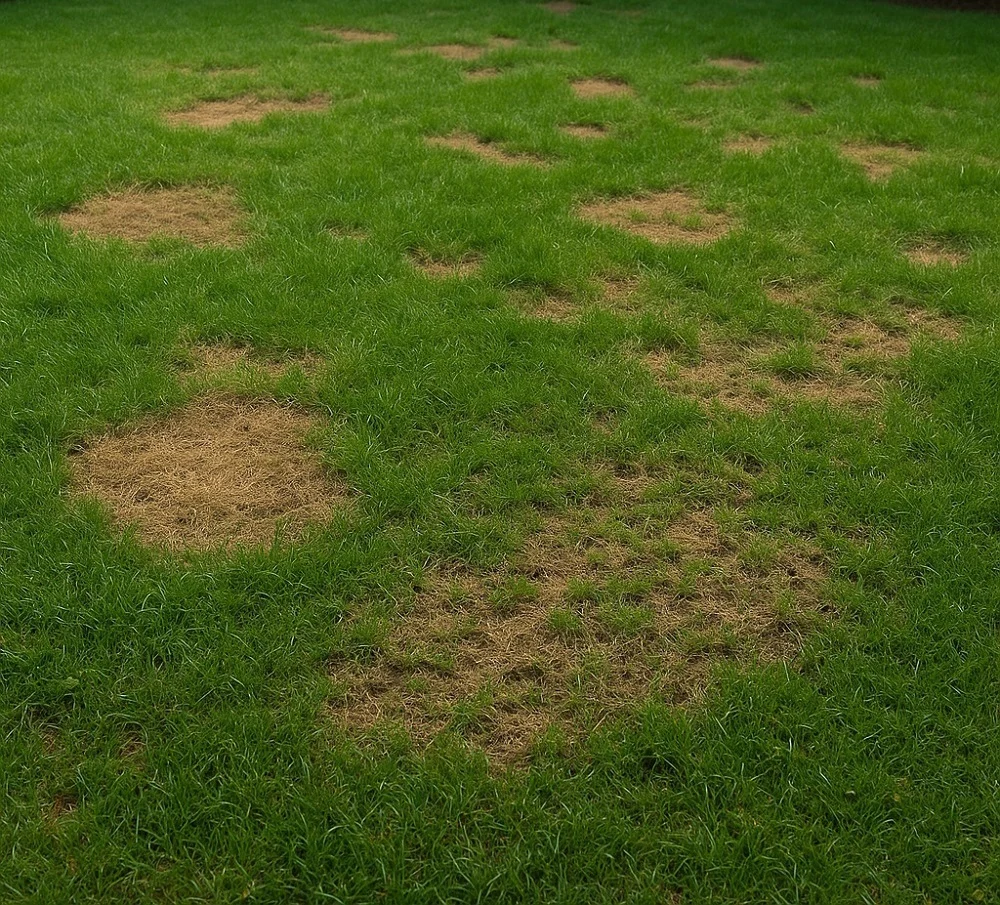
So you've spotted brown patches in your lawn, dug around, and found those telltale C-shaped white larvae curled in the soil. Now you're wondering: does triazicide kill grubs? It's a fair question, and the short answer is yes, but only if you're using the right product at the right time against the right species.
That's where most people get tripped up.
The longer answer involves understanding which Triazicide formulation you have, what grub species you're dealing with, and whether you're treating preventively or after damage has already started. Manufacturer specifications and university extension research both confirm that timing and species identification matter just as much as the product itself. Let's walk through exactly what you need to know before you spread a single granule.
Quick Answer
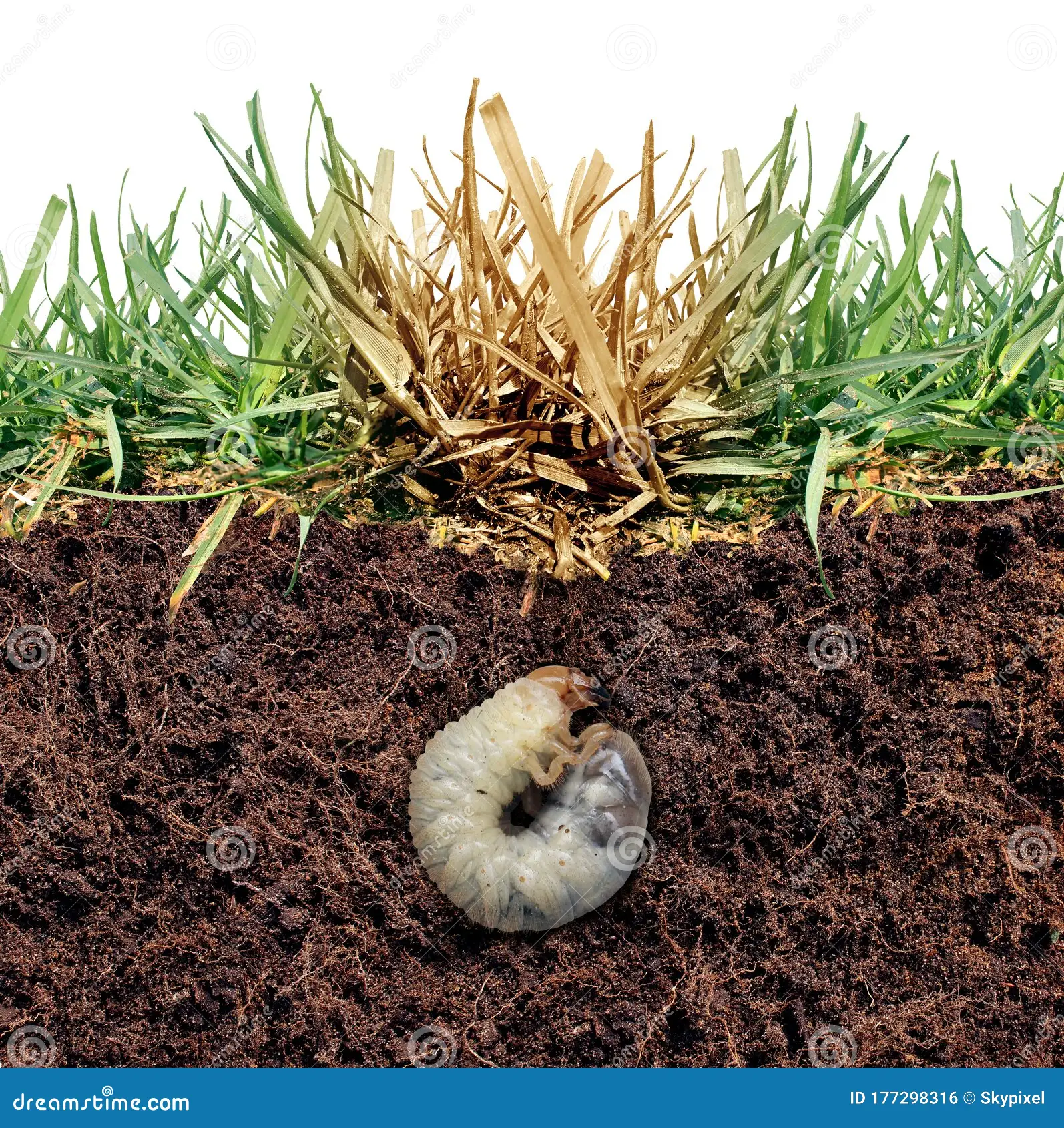
Yes, certain Triazicide products do kill grubs. The active ingredient chlorantraniliprole is effective against multiple scarab beetle larvae species. It works best as a preventive treatment applied before grubs hatch.
Results depend on correct identification, timing, and proper application. Not all Triazicide formulations target grubs, so checking the label is essential.
The Quick Answer: Yes, But Only Under the Right Conditions
Here's the deal. Triazicide products containing chlorantraniliprole are labeled for grub control and will kill larvae when applied correctly. But "Triazicide" isn't just one product.
It's a brand name that has covered multiple formulations over the years, and some of those use gamma-cyhalothrin instead. That chemistry has different strengths.
The products that work against grubs are the ones where the label explicitly lists white grubs, Japanese beetle larvae, or specific scarab species. If your bottle or bag doesn't list grubs on the label, it doesn't matter what the internet says. The label is what's legally registered for that use.
So before you do anything else, grab your product and check the active ingredient and the pest list. That single step tells you whether you're holding the right tool for the job.
Why the Answer Isn't Simple: What Changes Everything
Three big variables determine whether Triazicide will actually solve your grub problem. Miss any one of them and you're probably wasting your money.
The product formulation matters. Triazicide has been sold under several different active ingredients. Chlorantraniliprole-based formulations target lepidopteran and coleopteran larvae effectively. Gamma-cyhalothrin-based formulations are broader-spectrum neurotoxins.
They don't perform the same way against grubs.
The grub species matters. Japanese beetle larvae, European chafers, May/June beetle larvae, and black turfgrass ataenius larvae all have slightly different life cycles and susceptibility windows. A product that nails Japanese beetle grubs may underperform against chafers if the timing is off.
The timing matters most of all. Preventive applications target newly hatched larvae when they're most vulnerable. Curative applications against large third-instar grubs require different chemistry entirely. This is where most homeowners get frustrated.
They apply a preventive product too late and wonder why it didn't work.
Which Triazicide Product Are You Actually Using?
This is where confusion starts. The Triazicide name has been attached to multiple products with different active ingredients. You need to know which one you have.
| Product | Active Ingredient | Grub Control Labeled? | Best Use |
|---|---|---|---|
| Triazicide Insect Killer for Lawns (granular) | Gamma-cyhalothrin 0.08% | Some formulations list grubs | Curative, broader target range |
| Triazicide Insect Killer for Lawns (liquid) | Gamma-cyhalothrin 0.04% | Varies by label revision | Spot treatment, surface feeders |
| Ortho Triazicide Insect Killer for Lawns | Chlorantraniliprole (some versions) | Yes, white grubs listed | Preventive, systemic action |
Check the front label for the active ingredient. Then flip to the back and find the table of controlled pests. If you see "white grubs," "Japanese beetle grubs," or specific scarab species listed, you're good.
If not, this product isn't your grub solution regardless of what the marketing implies.
A quick note. Product formulations change. Ortho has revised labels and active ingredients over the years.
What was true in 2022 may not match what's on shelves in 2026. Always verify the current label on the specific product in your hands.
What Type of Grubs Are in Your Lawn?
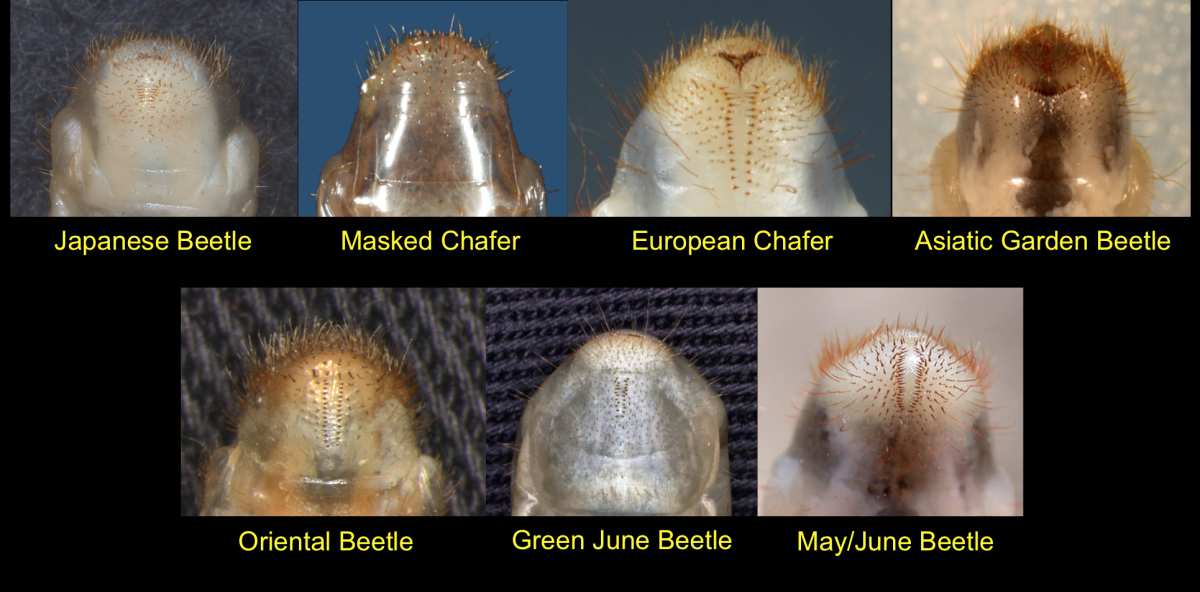
Not all grubs are the same, and knowing what you're dealing with changes your entire approach. The term "grubs" covers dozens of scarab beetle species, but a handful cause most of the lawn damage in the United States.
Japanese beetle larvae are the most common culprit in the Northeast, Midwest, and Mid-Atlantic. They're C-shaped, white with a brown head capsule, and have a distinctive V-shaped raster pattern (the arrangement of hairs and spines on their underside). They're about ¾ to 1 inch long when fully grown.
European chafers look similar but have a Y-shaped raster pattern. They tend to cause damage later into fall and are common in New England and the upper Midwest.
May/June beetle larvae are larger, sometimes over 1.5 inches, and have a longer life cycle. They can feed for two to three years before pupating.
Black turfgrass ataenius larvae are much smaller, about ¼ inch, and tend to damage golf course fairways and high-maintenance turf more than residential lawns.
Here's why this matters. Chlorantraniliprole-based Triazicide products work well against Japanese beetle larvae and European chafers when applied preventively. Against large, late-season larvae of May/June beetles, you'll get less control.
The product isn't failing. The grubs are just too big and too deep for optimal uptake.
If you can't identify your grubs, dig up a few samples from the edge of a damaged area and take them to your local cooperative extension office. They'll ID them for free or a small fee. That 10-minute step saves you from treating for the wrong pest entirely.
Timing Is Everything: Preventive vs. Curative Treatment Windows
This is the single biggest factor in whether Triazicide works for you. Get the timing right and you'll get solid control. Miss the window and you'll think the product is junk.
Preventive window. Apply chlorantraniliprole-based products in late spring to early summer, typically May through early July depending on your region. The goal is to have the active ingredient in the soil when eggs hatch and larvae begin feeding on roots. This is when they're most vulnerable.
University extension trials consistently show 85 to 95 percent control with properly timed preventive applications.
Curative window. If you're finding damage in late summer or early fall, you're in curative territory. Small first-instar larvae can still be controlled with some products. But once grubs reach third instar stage (usually late August through October in most regions), chlorantraniliprole becomes less effective.
At that point, trichlorfon (Dylox) is the go-to curative option because it acts faster and kills larger larvae on contact.
Regional timing varies. In southern states like Georgia or Alabama, Japanese beetle egg hatch starts in late May. In northern states like Connecticut or Massachusetts, peak hatch doesn't hit until mid-July. Your local extension service can give you specific timing for your area based on degree-day models.
Here's a practical rule of thumb. If you're counting more than 10 grubs per square foot in a preventive scenario, you're within the treatment threshold and should apply. If you're finding 15 or more per square foot in fall, you've got a serious infestation and a curative product will serve you better than a preventive one applied this late.

How to Tell If Triazicide Will Work for Your Situation
Let's cut through the noise. Use this quick decision framework to figure out if Triazicide is your answer or if you need a different approach.
Triazicide (chlorantraniliprole) is a good fit if:
- You're treating preventively in late spring or early summer
- You've confirmed small, newly hatched larvae (under ½ inch)
- Your grub species is Japanese beetle, European chafer, or similar scarab
- You have moderate infestation levels (under 15 grubs per square foot)
- You can water the product into the soil after application
Triazicide is NOT your best option if:
- You're treating large, mature grubs in late fall
- You need fast knockdown of an active, damaging infestation
- Your product contains gamma-cyhalothrin and doesn't list grubs on the label
- You cannot water in the product after application
- You're dealing with a species not listed on the product label
The bottom line. If you've got the right product, the right timing, and the right grub species, Triazicide with chlorantraniliprole is one of the most reliable preventive grub control options available to homeowners. It has excellent residual activity, low mammalian toxicity, and it won't nuke every beneficial insect in your yard the way older broad-spectrum products do.
But if you're reading this in September with brown, dying turf and fat grubs sitting 4 inches deep, save your money. Grab a curative product instead, or plan to use Triazicide next spring before the cycle starts again.
Step-by-Step: How to Apply Triazicide for Grub Control
Assuming you've confirmed Triazicide is the right product for your situation, here's how to get the application right. Skipping steps here is why most people fail.
Step 1: Confirm grub presence. Cut a 1-square-foot section of turf 2 to 3 inches deep. Flip it over and count the grubs. If you're finding 10 or more per square foot, treatment is warranted.
Step 2: Mow the lawn. Mow to your normal height before application. This helps granules reach the soil surface instead of getting trapped in tall grass.
Step 3: Calculate your lawn area. Measure the square footage of the treatment area. Don't guess. Over-applying wastes money and increases environmental load.
Under-applying gives you poor control.
Step 4: Calibrate your spreader. Use a rotary or drop spreader. Set it to the rate listed on the product label, typically 2 to 3 pounds per 1,000 sq ft for granular formulations. Test on a small area first to ensure even distribution.
Step 5: Apply the product. Spread granules evenly across the lawn. Overlap your passes slightly to avoid streaks. Work in a consistent pattern, either back-and-forth rows or a crisscross pattern for better coverage.
Step 6: Water in. This is the step most people skip or do wrong. Apply ¼ to ½ inch of water after granular application. This moves the active ingredient down through the thatch and into the root zone where grubs are feeding.
Don't skip this. Without watering in, the product sits on the surface and degrades before it ever reaches the target.
Step 7: Keep pets and kids off the treated area. Wait until the lawn is completely dry after watering in before allowing traffic. The label will specify the exact reentry interval.
Step 8: Monitor and evaluate. Check for grub activity 2 to 3 weeks after application by digging another test square. You should see significantly fewer live larvae. If populations haven't dropped, you may have a timing issue, a resistant species, or an application problem that needs troubleshooting.
What to Expect After Application: Timeline and Results
Chlorantraniliprole doesn't work like a neurotoxin. You won't see grubs convulse and die on the surface within hours. That's actually a good thing.
It means the product is working systemically.
After ingestion, larvae stop feeding within a few hours. Death follows within 2 to 5 days as the compound disrupts muscle function. You probably won't see dead grubs on the surface.
They'll die down in the soil where they feed.
Visible lawn recovery takes longer. If grubs have already damaged the root system, those brown patches won't green up overnight. The grass needs time to regrow roots and recover, assuming the grubs are controlled.
In heavily damaged areas, you may need to overseed in fall or the following spring.
Residual protection from a single preventive application typically lasts 4 to 8 weeks under normal conditions. Heavy rainfall, extreme heat, or heavy irrigation can shorten that window. If your region has an extended egg hatch period, a second application may be warranted per label directions.
Common Mistakes That Make Triazicide Fail
People blame the product when the real problem is almost always the application. Here are the mistakes we see over and over.
Applying too late. This is number one by a wide margin. If grubs are already large and causing visible damage, a preventive product applied in September isn't going to save your lawn. Mark your calendar for late May or June next year.
Not watering in granular products. The granules need to reach the soil. Without irrigation, they sit on the surface and break down in sunlight. The active ingredient never gets to the root zone.
Using the wrong spreader setting. Too little product gives you spotty control. Too much wastes money and risks environmental impact. Calibrate.
It takes 5 minutes and makes a real difference.
Confusing product names. "Triazicide" sounds like one thing. It's not. Check the active ingredient.
If you're not sure, call the manufacturer or check the EPA label database online.
Expecting a cure from a preventive. This is a mindset problem. Preventive products stop future damage. They don't resurrect dead grass.
If your lawn is already brown, you need a curative approach or patience for recovery.
Ignoring reinfestation pressure. If your neighbor's lawn is untreated and crawling with beetles, you'll get reinfested year after year. Sometimes the best strategy is a neighborhood conversation, not another bag of granules.
Triazicide vs. Other Grub Control Options
Triazicide isn't the only game in town. Here's how it stacks up against the most common alternatives for residential grub control.
| Product/Active Ingredient | Type | Best Timing | Speed | Residual | Notes |
|---|---|---|---|---|---|
| Triazicide (chlorantraniliprole) | Preventive | Late spring/early summer | Slow (days) | 4-8 weeks | Low toxicity, systemic action |
| Imidacloprid (Merit) | Preventive | Late spring/early summer | Slow (days) | 8-12 weeks | Neonicotinoid, longer residual |
| Trichlorfon (Dylox) | Curative | Late summer/fall | Fast (hours) | Short | Best for active infestations |
| Milky spore | Preventive | Any time | Very slow | Years | Japanese beetle specific only |
| Beneficial nematodes | Preventive/curative | Late summer/fall | Moderate | 2-4 weeks | Biological, needs moist soil |
When Triazicide wins. It offers a good balance of effectiveness, safety, and ease of use for preventive applications. It's less toxic to mammals than older chemistries and doesn't require special equipment.
When other options win. If you need fast knockdown of an active infestation, trichlorfon is your product. If you want the longest residual protection, imidacloprid edges out chlorantraniliprole. If you prefer a biological approach, beneficial nematodes work well when soil conditions are right.
The milky spore caveat. Milky spore disease only targets Japanese beetle grubs. It takes years to establish in the soil and won't help with European chafers or other scarab species. If you have mixed grub populations, it's not a complete solution.
When to Skip Triazicide and Use Something Else
There are specific situations where Triazicide isn't your best move, and recognizing them saves you time and money.
Active, heavy infestations in fall. If you're digging up 20-plus grubs per square foot in September, you need a curative product. Trichlorfon (Dylox) is the standard recommendation because it kills large larvae within 24 to 48 hours. Triazicide applied at this stage will underperform.
Species not on the label. If your extension office identifies a grub species that isn't listed on your Triazicide product label, you're gambling. Switch to a product that explicitly covers that species.
Organic or biological preference. If you're committed to organic lawn care, Triazicide doesn't fit. Look into beneficial nematodes (Heterorhabditis bacteriophora) or milky spore as alternatives. They require more careful handling but align with organic management principles.
Water restrictions. If you can't water in the product after application due to drought conditions or watering bans, granular Triazicide won't reach the target zone. Consider a liquid formulation or wait until conditions improve.
High earthworm populations you want to protect. While chlorantraniliprole is less harmful to earthworms than older chemistries, it's not zero-impact. If you're actively managing for soil biology, weigh that factor.
Safety, Pets, and Environmental Considerations
Chlorantraniliprole has a favorable safety profile compared to many older insecticides, but "safer" doesn't mean "no precautions needed."
Pets. Keep dogs and cats off the treated lawn until it's completely dry after watering in. Once dry, the risk is minimal. The compound has low mammalian toxicity, but the granular form can cause stomach irritation if ingested in quantity.
Children. Same rule applies. Dry lawn, no problem. Wet granules, keep them away.
Store the product in its original container out of reach.
Pollinators. Chlorantraniliplower has low toxicity to adult bees. However, if your lawn contains clover or other flowering plants, those flowers are attracting pollinators. Mow off any blooms before application to minimize exposure.
Water sources. Don't apply near ponds, streams, or storm drains. While the compound binds well to soil organic matter, you don't want it entering waterways. Follow all label restrictions regarding buffer zones.
Personal protective equipment. The label will specify minimum PPE. At minimum, wear gloves when handling granules and closed-toe shoes during application. Long sleeves and pants are good practice.
Read the label. This isn't a formality. The label is a legal document that specifies exactly how the product can and cannot be used. Following it protects you, your family, and your lawn.
The Decision Guide: Should You Use Triazicide for Your Grubs?
Let's bring it all together. Here's your decision framework.
Use Triazicide (chlorantraniliprole) if:
- It's late spring or early summer
- You're treating preventively before damage appears
- You've confirmed Japanese beetle, European chafer, or labeled scarab species
- Grub counts are under 15 per square foot
- You can water in the product after application
Use a curative product like trichlorfon (Dylox) if:
- It's late summer or fall
- You're seeing active lawn damage
- Grubs are large (over ¾ inch)
- Grub counts exceed 15 per square foot
- You need results within days, not weeks
Consider biological controls if:
- You prefer organic management
- You have Japanese beetle grubs specifically
- You can maintain consistent soil moisture
- You're willing to accept slower, less predictable results
Don't treat at all if:
- You're finding fewer than 5 grubs per square foot
- Your lawn shows no signs of damage
- Grubs are present but turf is healthy and tolerating the population
The honest truth is that most lawns can tolerate a low to moderate grub population without treatment. The damage threshold exists for a reason. If your turf is thick, well-watered, and healthy, it can handle some root feeding.
Save your money and your product for when you actually need them.
Frequently Asked Questions
How long does it take for Triazicide to kill grubs?
Grubs stop feeding within hours of ingesting chlorantraniliprole. Death typically occurs within 2 to 5 days. You won't see dead grubs on the surface.
They die in the soil where they feed.
Can I apply Triazicide in the fall?
You can, but it's not ideal for curative control. Fall applications work best on very small, newly hatched larvae. If grubs are already large, use a curative product like trichlorfon instead.
Is Triazicide safe for pets after it dries?
Yes. Once the lawn is dry after watering in, the risk to dogs and cats is minimal. Chlorantraniliprole has low mammalian toxicity.
Keep pets off during application and watering in.
How often should I apply Triazicide for grub control?
One preventive application per year is standard for most regions. In areas with extended beetle flight periods, a second application 4 to 6 weeks later may be warranted per label directions.
Will Triazicide kill earthworms?
Chlorantraniliprole has relatively low toxicity to earthworms compared to older insecticides. It's not zero-impact, but it's a better choice than broad-spectrum alternatives if earthworm health is a priority.
What's the difference between Triazicide and GrubEx?
GrubEx typically contains chlorantraniliprole as its active ingredient, the same chemistry found in some Triazicide formulations. The main difference is branding and specific product formulation. Compare labels to confirm active ingredients and application rates.