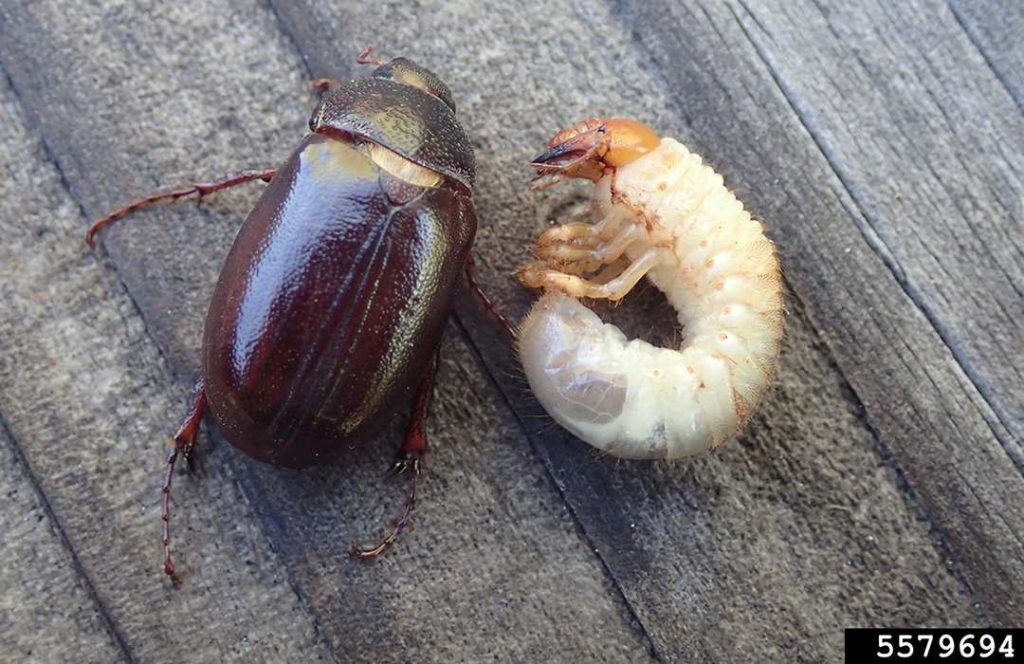
If you've ever flipped over a patch of dead turf and found fat, C-shaped white larvae curled in the soil, you've probably wondered what they are and where they came from. The short answer to "do grub worms turn into June bugs" is yes, many of them do, but the full picture is a bit more nuanced than that simple answer suggests.
White grubs are the larval stage of several scarab beetle species, and true June bugs (genus Phyllophaga) are just one of them. Understanding which grub you're actually looking at matters because treatment timing, damage severity, and control methods all depend on the species. Let's walk through what you need to know to identify what's in your lawn and what it'll become.
Quick Answer
Yes, many grub worms turn into June bugs. White grubs are the larval stage of scarab beetles, including true June bugs (Phyllophaga species). Not all white grubs are June bug larvae, though.
Japanese beetles, European chafers, and masked chafers all produce nearly identical-looking grubs. Correct identification requires examining the grub's raster pattern, the arrangement of hairs on the tip of its abdomen.
What Grubs Actually Look Like vs. What You'd Expect
Most people picture a generic "worm" when they hear "grub worm," but these larvae look nothing like earthworms. White grubs have a distinct C-shaped body, a well-developed brown or tan head capsule, and three pairs of true legs right behind the head. Their bodies are creamy white to pale yellow, and they range from about a quarter inch long in early growth stages to over a full inch by the time they're mature.
The size varies significantly by species and age. A first-instar June bug grub is tiny, barely visible without close inspection. By the third instar, which is the stage causing the most lawn damage, these grubs can be as thick as your pinky finger.
The body is soft and slightly translucent, and you can sometimes see the dark contents of the gut through the skin on the lower half of the body.
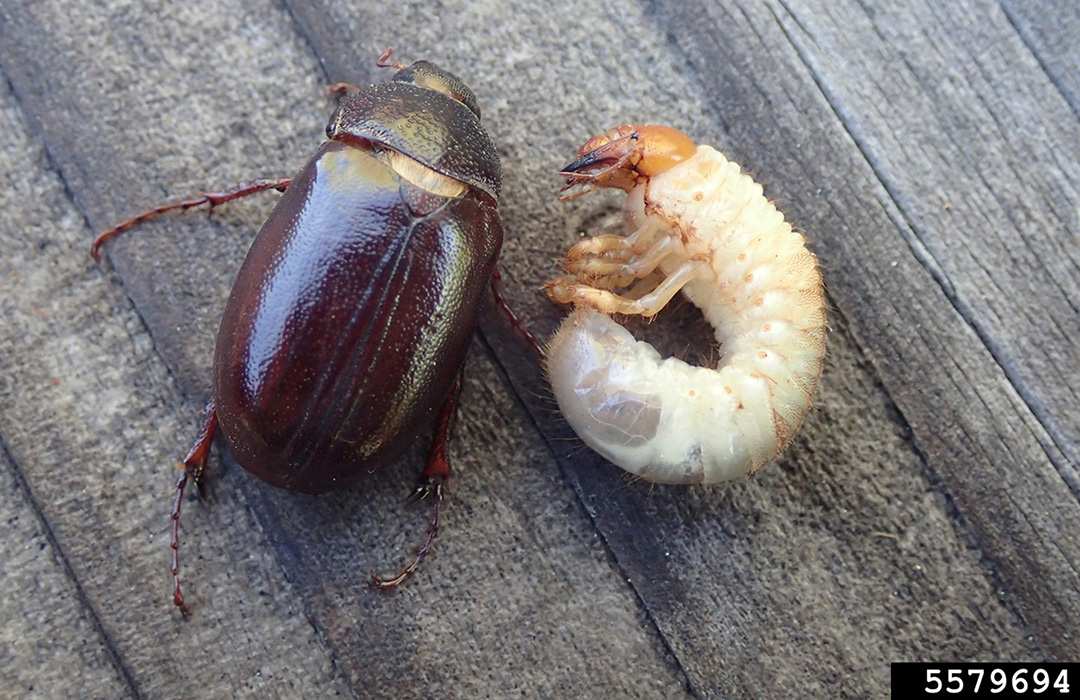
One thing that surprises people is how active these grubs are when you dig them up. They don't just sit there. They wriggle and curl, and if you place them on a hard surface, you'll see them crawl on their backs using the stiff hairs on their body segments for traction.
That's actually a useful field identification clue, since some look-alike larvae move differently.
The Complete Life Cycle: Egg to Beetle
The transformation from grub to June bug follows a complete metamorphosis, which means the insect passes through four distinct stages: egg, larva, pupa, and adult. The entire cycle takes one to three years depending on the species and climate, though most June bug species in the eastern and central United States complete their cycle in two to three years.
Adult June bugs emerge from the soil in late spring, typically May through July depending on latitude and species. They're the clumsy brown beetles that bonk into porch lights and screen doors on warm evenings. After emerging, adults feed on tree and shrub foliage for a few weeks, mate, and then females burrow back into the soil to lay eggs.
A single female can lay 25 to 60 eggs over her adult lifespan, depositing them two to six inches below the soil surface in grassy areas. The eggs hatch in about two to three weeks, and the tiny first-instar grubs begin feeding on grass roots and organic matter in the soil. This is the stage most people never notice because the larvae are so small.
The grubs go through three instars, molting between each one as they grow. The third instar is the largest and most destructive, feeding heavily in late summer and again in spring after overwintering deep in the soil. When soil temperatures drop in fall, grubs burrow below the frost line, sometimes eight inches or deeper, and go dormant until spring.
Pupation happens in late spring. The grub stops feeding, forms a pupal cell in the soil, and transforms over two to three weeks into an adult beetle. The newly formed adult stays in the soil for a short period before emerging to start the cycle again.
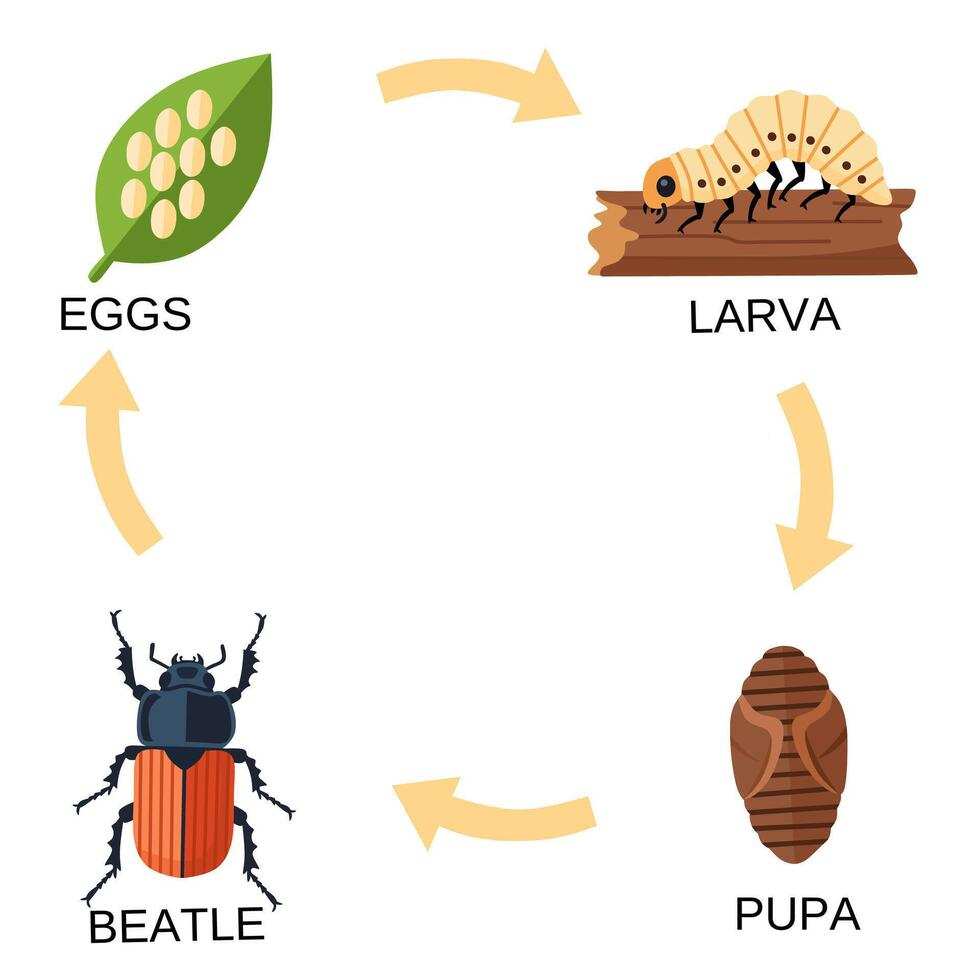
Here's a simplified breakdown of the timeline for a typical two-year June bug species:
| Stage | Timing | What's Happening |
|---|---|---|
| Egg | Mid to late summer | Laid 2-6 inches deep in soil |
| First instar larva | Late summer | Tiny grubs begin feeding on fine roots |
| Second instar larva | Fall | Growing grubs feed actively before cold |
| Overwintering | Winter | Dormant below frost line |
| Third instar larva | Spring | Heavy feeding on grass roots |
| Third instar larva | Late spring | Continued feeding, peak damage period |
| Pupa | Late spring to early summer | Transformation in soil cell |
| Adult beetle | Summer | Emergence, mating, egg-laying |
How to Tell June Bug Grubs Apart From Other White Grubs
This is where things get tricky, and honestly, it's where most people get confused. June bug grubs look almost identical to Japanese beetle grubs, European chafer grubs, and several other scarab larvae. Telling them apart requires looking at a feature most people don't even know exists: the raster pattern.
The raster is the arrangement of hairs, spines, and bare areas on the underside of the grub's last abdominal segment, right around the anal slit. Each scarab species has a distinct raster pattern, and entomologists use this as the primary identification tool. Under magnification, the difference between a June bug grub and a Japanese beetle grub becomes clear, but to the naked eye they're nearly indistinguishable.
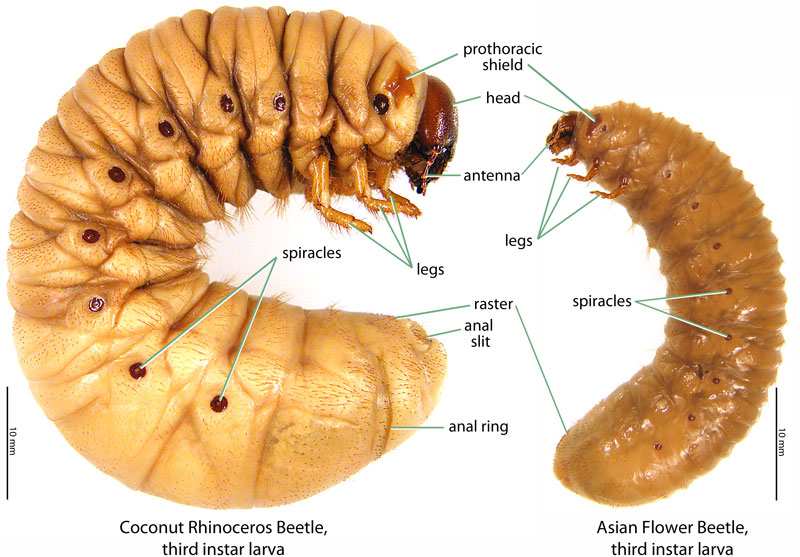
Here are some general field characteristics that can help narrow things down before you need a hand lens:
June bug grubs (Phyllophaga): Raster pattern has two distinct rows of short spines with a gap between them. These are among the largest white grubs, often exceeding one inch at maturity. Common across the eastern and central United States.
Japanese beetle grubs: Raster has a distinctive V-shaped arrangement of spines. Slightly smaller than June bug grubs at maturity. More common in the Northeast and Mid-Atlantic but expanding range as of 2026.
European chafer grubs: Raster pattern has two parallel rows of spines that converge at the tip (Y-shaped). These grubs tend to be active later into fall and earlier in spring than other species. Predominant in the Northeast and upper Midwest.
Masked chafer grubs: Smaller than the others, usually under three-quarter inch. Raster pattern is less distinct, with scattered spines. Common in the Midwest and Northeast.
Black turfgrass ataenius larvae: Much smaller, about a quarter inch, with a distinct reddish-brown head. Often found in golf course turf and lawns with thick thatch.
If you're trying to identify grubs in your lawn, the most practical approach is to collect several specimens and examine the raster area with a 10x hand lens or macro camera. Many university extension offices will also identify grubs from clear photos if you can get a good close-up of the tail end.
Adult June Bugs: What They Look Like and What They Do
Once the grub completes its transformation, the adult June bug that emerges is a stout, oval beetle typically half an inch to one inch long. Most species are reddish-brown to dark brown, with a somewhat velvety texture to their wing covers. They have clubbed antennae that fan out, which is a characteristic feature of the scarab family.
Adult June bugs are strongly attracted to lights, which is why they're such a nuisance around porches and windows during summer evenings. They're not aggressive, they don't bite, and they don't infest homes. They just fly clumsily toward light sources and end up tumbling around on your doorstep.
The adult feeding damage is separate from the grub damage. Adult June bugs feed on the foliage of oak, maple, pine, and various fruit trees, chewing irregular holes between the leaf veins. Heavy feeding can skeletonize leaves, but healthy trees usually tolerate this without lasting harm.
The real destruction happens underground during the larval stage.
Adults are most active from May through July, with peak emergence varying by species and region. In the southern United States, some species emerge as early as April. In northern areas, peak activity might not hit until late June or early July.
After mating and egg-laying, the adults die off, and the next generation is already developing in the soil below.
One thing worth noting: the adult stage is relatively short, usually just a few weeks. The grub stage is where the insect spends the vast majority of its life, sometimes two to three years underground before emerging for that brief summer as a beetle. That's why targeting control efforts at the larval stage is almost always more effective than trying to manage adults.
Other Beetles That Start as "Grub Worms"
June bugs aren't the only beetles that begin life as white grubs in your soil. Several other scarab species produce larvae that look nearly identical to the untrained eye, and each one has slightly different feeding habits, seasonal timing, and damage patterns.
The Japanese beetle (Popillia japonica) is probably the most economically significant grub-producing beetle in the United States. Its larvae are now established across most of the eastern half of the country and continue expanding westward as of 2026. Japanese beetle grubs tend to cause damage earlier in the season than June bug grubs, starting heavy feeding in early spring when soil temperatures reach the mid-50s.
The adults are even more destructive than June bugs, feeding on over 300 plant species including roses, grapes, lindens, and fruit trees.
European chafers (Amphimallon majale) are another major lawn pest, particularly in the Northeast and upper Midwest. Their grubs are active later into the fall and earlier in the spring than most other species, which means the damage window is longer. European chafers also tolerate drier soils better than June bugs, so you might see damage in areas that stay relatively dry during summer.
The green June beetle (Cotinis nitida) produces a grub that behaves differently from the others. These grubs are larger, sometimes reaching two inches, and they're more mobile. Unlike most white grubs that feed on roots, green June beetle grubs also come to the surface and feed on organic matter in the thatch layer.
They're common in the Southeast and Mid-Atlantic, and their tunneling activity can push up small mounds of soil that look like earthworm castings.
Masked chafers (Cyclocephala species) are smaller beetles whose grubs are usually under three-quarters of an inch at maturity. They tend to fly lower than June bugs, often in large numbers just above the turf canopy in early summer. Their grubs are most common in the Midwest and can build up significant populations in lawns near adult trees where the beetles feed.
| Species | Grub Size at Maturity | Primary Range | Peak Damage Period |
|---|---|---|---|
| June bug (Phyllophaga) | 1 inch | Eastern, Central US | Late summer, early spring |
| Japanese beetle | 3/4 inch | Eastern US, expanding | Early spring |
| European chafer | 3/4 inch | Northeast, Upper Midwest | Fall and early spring |
| Green June beetle | 1.5-2 inches | Southeast, Mid-Atlantic | Late summer |
| Masked chafer | 1/2 to 3/4 inch | Midwest, Northeast | Late summer |
Signs You've Got Grubs (And How Bad It Really Is)
Grub damage doesn't always look the way you'd expect. The most obvious sign is irregular patches of brown, dead turf that pull up easily because the roots have been severed. If you can peel back a section of sod like a carpet and it comes up with almost no resistance, grubs are likely the cause.
But early damage often mimics other problems. Slight wilting in hot weather, yellowing patches, or areas that don't respond to watering can all be early indicators. People frequently mistake grub damage for drought stress, fungal disease, or dog urine spots.
The key difference is that grub damage patches tend to expand over time and don't recover with watering.
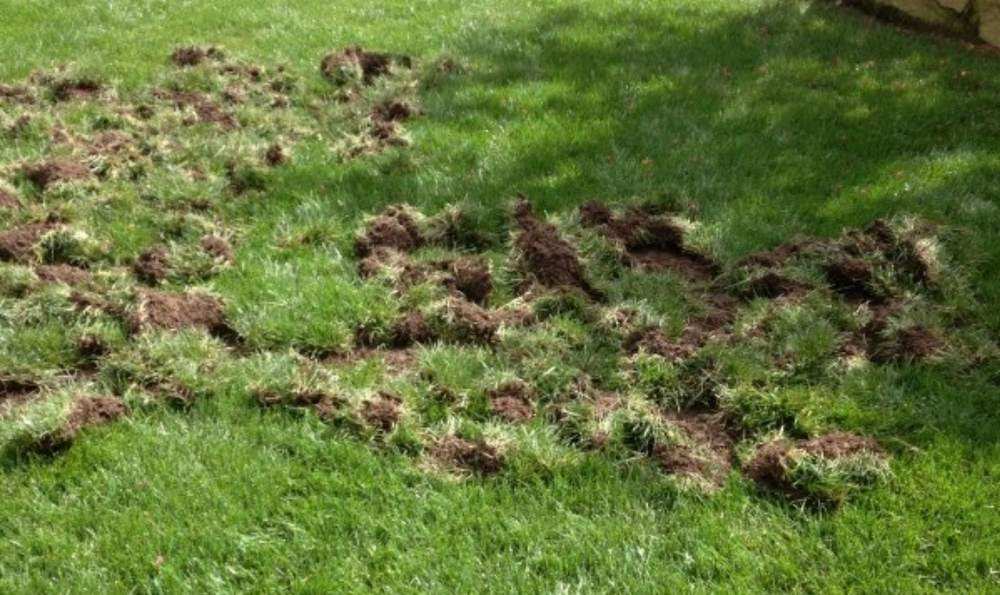
Secondary damage is another reliable clue. Skunks, raccoons, and armadillars love grubs and will dig up turf at night to get to them. If you're finding patches of torn-up lawn each morning, especially in late summer or fall, you almost certainly have a significant grub population.
Birds feeding heavily on the lawn surface can also indicate grubs, though birds eat plenty of other soil insects too.
The widely cited treatment threshold is 5 to 10 grubs per square foot, though this varies by turf type and species. Kentucky bluegrass and fine fescue tend to show damage at lower populations than tall fescue or perennial ryegrass. Higher-maintenance lawns with irrigation can tolerate more plants than stressed, unwatered turf.
How to Confirm What You're Dealing With
The only reliable way to identify your grubs is to dig them up and look at them. Cut a square foot of turf about two inches deep in a damaged area, peel it back, and count what you find in the soil and root zone. Flip the sod over and examine the soil underneath, since grubs often fall out when you lift the patch.
You'll want to check multiple spots because grub populations aren't evenly distributed. They tend to cluster in moist, well-drained areas of the lawn and are often concentrated near sidewalks and driveways where the soil warms up faster. Focus your sampling on the edges of damaged areas rather than the center of dead patches, since the grubs may have already moved on from the worst spots.
If you want a species identification, collect several intact grubs and examine the raster area on the tip of the abdomen with a hand lens. Two rows of spines with a gap in between suggests June bugs. A V-shaped pattern points to Japanese beetles.
Parallel rows that converge at the tip are European chafers.
Many people skip the identification step and just treat whatever grubs they find. That can work if you're using a broad-spectrum product, but knowing the species helps you time your treatment correctly and avoid wasting effort on the wrong approach.
When and How to Treat Grubs Effectively
Timing matters more than product choice. There are two main windows for grub control, and picking the wrong one can make even a good product ineffective.
Preventive treatments target the egg and newly hatched first-instar larvae. Products containing imidacloprid, chlorantraniliprole, or clothianidin are typically applied in June or July, before the eggs hatch. These products work best when applied just before or during the adult flight period so they're present in the soil when the tiny larvae start feeding.
The preventive window is narrow. Apply too early and the product breaks down before the eggs hatch. Apply too late and the grubs are already large enough to survive exposure.
For most regions, the sweet spot is mid-June through mid-July, though this shifts later in northern areas.
Curative treatments go after the grubs you can already see. Products containing trichlorfon or carbaryl work faster and can be applied in late summer or early fall when grubs are small and actively feeding near the surface. This approach requires you to confirm you actually have a problem first, since you're treating based on what you've found rather than anticipating it.
Here's a practical timeline based on grub size and season:
| Timing | Grub Size | Treatment Type | Product Examples |
|---|---|---|---|
| June-July | Eggs, tiny | Preventive | Imidacloprid, chlorantraniliprole |
| August-October | Small-medium | Curative | Trichlorfon, carbaryl |
| November-April | Large, deep | Wait | Treat next summer |
Watering after application is critical for most granular products. The active ingredient needs to move down into the root zone where the grubs are feeding. A good soaking of about a quarter inch of water after application helps carry the product into the soil.
Without irrigation or rainfall, granular treatments sitting on the surface won't reach the target.
Natural and Biological Control Options
If you'd rather avoid synthetic pesticides, several biological controls can reduce grub populations, though they require more patience and realistic expectations.
Beneficial nematodes, specifically Heterorhabditis bacteriophora, are microscopic roundworms that seek out and kill grubs in the soil. They work best when soil temperatures are between 60 and 85 degrees Fahrenheit, which typically means late summer application. The nematodes carry bacteria that kill the grub within 24 to 48 hours of infection.
They need moist soil to move through, so watering before and after application is essential.
Milky spore disease (Paenibacillus popilliae) is a bacterium that specifically targets Japanese beetle grubs. It doesn't work well on June bug grubs or other species, so it's only useful if you've confirmed Japanese beetles are your problem. Milky spore takes two to four years to build up effective levels in the soil, but once established it can persist for 10 to 15 years.
It's a long-term investment rather than a quick fix.
Neem oil and azadirachtin products have some repellent and growth-regulating effects on grubs, though they're less reliable than other options. They work best as part of an integrated approach rather than a standalone solution.
Cultural practices also help. Keeping your lawn healthy with proper mowing height, adequate fertilization, and deep, infrequent watering makes turf more tolerant of grub feeding. Tall fescue and perennial ryegrass generally withstand more grub pressure than Kentucky bluegrass.
Reducing thatch through core aeration also removes the organic layer where some species feed and lay eggs.
Frequently Asked Questions
Do all white grubs turn into June bugs?
No. White grubs are the larvae of several scarab beetle species, including June bugs, Japanese beetles, European chafers, and masked chafers. Each species produces similar-looking larvae, which is why examining the raster pattern is essential for accurate identification.
What is the treatment threshold for grubs in a home lawn?
The generally accepted threshold is 5 to 10 grubs per square foot, though this varies by turf type and species. Tall fescue tolerates more grubs than Kentucky bluegrass. If you're seeing skunk or bird digging, the population is likely well above the damage threshold.
When is the best time to treat for grubs?
For preventive control, apply products in June or July before eggs hatch. For curative control, treat in August or September when grubs are small and actively feeding near the surface. Avoid treating in late fall when large grubs are deep underground and less vulnerable.
How long do June bugs live?
Adult June bugs live only a few weeks to a couple of months. The full life cycle from egg to adult death typically takes one to three years depending on species and climate, with the grub stage accounting for the vast majority of that time.
Can grub damage be confused with other lawn problems?
Yes. Grub damage often resembles drought stress, fungal disease, or dog urine spots. The key difference is that grub-damaged turf pulls up easily because roots have been severed, and the patches expand over time without recovering from watering.